
Kerala Police initiates inquiry into alleged custodial harassment of Dalit woman at Peroorkada police station
While the woman was booked under Section 306 (theft by a clerk or servant) of the BNS, it is now deemed that the accusation was false The Kerala Police have instituted an inquiry into the alleged custodial harassment of a Dalit woman at the Peroorkada police station after being falsely accused of theft. Bindu R., a domestic worker and mother of two children, was taken into custody on April 23 after a complaint was filed by her employer, alleging that she had stolen 2.5 sovereigns of gold. While she took up the job at the house in Ambalamukku on April 14, she worked only for three days until April 19 before discontinuing. She was purportedly called to the police station around 3.30 p.m. and “detained” for nearly 20 hours. During her time at the station, Ms. Bindu alleges she was subjected to inhumane treatment, including being told to drink water from the washroom when she asked for water. She claims the officers coerced her into confessing to the theft by threatening to implicate her two minor daughters, and her husband in the case. Despite a search of her residence yielding nothing, she was booked under Section 306 (theft by a clerk or servant) of the Bharatiya Nyaya Sanhita (BNS). She also alleged that she spent the night at the police station and was denied food until the following afternoon. The accusations eventually unravelled when the complainant informed the police that the missing gold necklace had been found at their own residence. Ms. Bindu has since filed formal complaints with the Chief Minister, State Police Complaint Authority and the State SC/ST Commission. The Commission has initiated an inquiry and has instructed the Thiruvananthapuram City Police to submit a report in this regard. Seeks action against cop Leader of Opposition V.D. Satheesan called for strict legal action against the officers involved in the issue. He also criticised the perceived inaction of the Home department in redressing the complainant’s grievance. He further alleged that the absence of accountability in the department and the political patronage of law enforcement enables such abuse of power. He said that the conduct of the police officers amounts to gross violation of human rights and the law. Courtesy : The Hindu Bureau, The Hindu Note: This news is originally published on https://thehindu.com/ and is for use by the non-military/non-commercial community, especially those in the human rights sector.
Kerala police crack 15-year-old missing case, confirm murder of dalit woman through DNA evidence
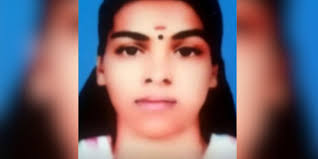
Years of relentless efforts by Reshma’s family, including a 2021 habeas corpus plea and CBI probe demands, kept the case alive until the Crime Branch took charge in December 2024 under SP Prajeesh Thottathil Synopsis: Kerala Police have cracked a 15-year-old missing case, confirming the murder of 18-year-old Dalit woman Reshma through DNA testing of a recovered bone fragment. Reshma vanished in 2010 after traveling to Kanhangad for teacher training. Her disappearance remained unresolved for years until the arrest of a longtime suspect, bringing long-awaited answers in a case marked by delays and persistent advocacy In a major breakthrough, Kerala Police have confirmed the murder of an 18-year-old Dalit woman who went missing in 2010, following the arrest of a long-suspected perpetrator and DNA confirmation from a recovered bone fragment. Reshma, a resident of Balamthode in Kasaragod district, was last seen on 6 June, 2010, in Kanhangad city, where she had gone to pursue a teacher training course after completing her plus two studies. Her disappearance remained a mystery for over a decade, with limited progress in the investigation — until now. Case finally cracked The case was cracked after the arrest of Biju Paulose, a civil contractor from Bappunkayam in Panathur, by a special investigation team led by Crime Branch IG P Prakash. Paulose, who had been accused for years by Reshma’s family and Dalit rights groups, is now formally charged with sexual assault and murder. According to police sources, Paulose had been in a live-in relationship with Reshma since her school days, while concealing his marriage and family. Her father, MC Raman, had filed a complaint in January 2011 alleging that Paulose had lured her with false promises of a job and marriage. Initially treated as a missing person’s case, the investigation saw repeated delays and jurisdictional transfers — from Ambalathara Police to Bekal Police, and later to the Crime Branch on High Court orders. In earlier police statements, Paulose had allegedly admitted to killing Reshma and dumping her body in a river, but the lack of physical evidence had stalled legal action. Relentless efforts by Reshma’s family Years of persistence by Reshma’s family, including a habeas corpus petition filed in 2021 and demands for a CBI probe, kept the case in the spotlight. The turning point came after the Crime Branch officially took over the case in December 2024, under the leadership of Kannur SP Prajeesh Thottathil. A bone fragment recovered from an undisclosed location was sent for forensic testing — and DNA results confirmed the remains belonged to Reshma. Authorities are continuing their interrogation of Paulose and are searching for the exact site where the murder took place and the body was disposed of. A formal police statement is expected shortly. Reshma’s case, long emblematic of systemic failures and delayed justice in crimes against Dalit women, may finally see closure — thanks to relentless advocacy by her family and renewed investigative efforts (Edited by Ananya Rao with inputs from Dileep V Kumar) Courtesy : TSF Note: This news is originally published on https://thesouthfirst.com/ and is for use by the non-military/non-commercial community, especially those in the human rights sector.
The funds are not reaching the Dalits in Bihar… Why did Rahul Gandhi make this allegation? Nitish is upset!
Bihar politics: Rahul Gandhi, who reached Darbhanga before the Bihar assembly elections, raised many big political questions in his address. Now brainstorming is going on in Bihar regarding these questions. Rahul Gandhi’s questions are about the facilities and funds given to the Dalits. According to a report, the Bihar government transfers the funds allocated to the Dalits to general schemes. Patna: During a recent interaction with students at the government-run Ambedkar Kalyan hostel in Darbhanga, Bihar, Leader of Opposition in Lok Sabha Rahul Gandhi alleged that Scheduled Castes are not getting benefits from the Scheduled Caste Sub-Plan (SCSP) fund, which is a set of resources set aside for their development. The Congress MP raised this question at the inaugural meeting of the Congress’ “Shiksha Nyay Samvad” campaign on Thursday. In this meeting, Rahul Gandhi put forth his point on many issues. Let us know, what is the whole truth? Especially why is Rahul Gandhi saying this? What is Scheduled Caste Sub-Plan? SCSP is a strategy of the central government aimed at ensuring proportionate flow of resources for the development of Scheduled Castes through implementation of infrastructure, education, health and other welfare schemes in areas with substantial Dalit population. SCSP was launched in 1980 by then Prime Minister Indira Gandhi to reach out to Dalits. SCSP funds are channelled through the Union Ministry of Social Justice and Empowerment, which provides special central assistance. There are three categories of SCSP schemes: fully centrally funded, fully state-funded, and hybrid schemes that are divided in the ratio of 60:40 between the Centre and the state. How much does Bihar spend? According to a recent report by the Comptroller and Auditor General (CAG), the Bihar government allocated Rs 16,777 crore for its SCSP schemes in 2021-22, but allegedly diverted Rs 10,799 crore to general schemes. Similarly, out of Rs 19,688 crore allocated for SCSP schemes in 2022-23, Rs 18,450 crore was allegedly diverted to non-SC schemes. In 2023-24, the state government allegedly spent Rs 11,796 crore on general schemes out of the total SCSP funds of Rs 16,939 crore. Where was the money spent? Some of the major SCSP schemes include income-generating initiatives, financial assistance for construction or upgradation of houses, providing free land for housing, education and skill development schemes such as free distribution of books and school uniforms. After the latest CAG report on the performance of the Bihar government highlighted problems in the SCSP funds, nine Bihar MLAs, including CPI(ML)(L) MLA Satyadev Ram, had questioned the JDU-led state government in the Assembly in March over the alleged diversion of funds. Though the state government did not reject the CAG’s findings, it said the auditor had not used the word “diversion” but only described the department-wise allocation of SCSP funds. Understand the matter For instance, the CAG report said that out of Rs 16,939 crore of SCPS funds in 2023-24, Rs 1,447 crore was allocated for Chief Minister Local Area Development Scheme and flood control, Rs 3,465 crore for construction of medical colleges, Rs 394 crore for construction of government buildings and Rs 212 crore for other projects like construction of state hospitals and healthcare buildings. Debt of Rs 460 crore of state power companies was also repaid using SCSP funds. SCSP fund utilisation rules The Parliamentary Committee on Welfare of Scheduled Castes and Scheduled Tribes presented a report on social justice in both the Houses of Parliament in August 2018, in which it expressed concern about the utilisation of funds earmarked for the Scheduled Castes. The report said that under the allocation for the welfare of Scheduled Castes, diversion of funds is not acceptable and the funds are earmarked for Scheduled Castes only, but due to the general nature of the schemes of some ministries/departments, the funds are not fully utilised. The committee has also recommended that the Niti Aayog monitor the funds allocated for the welfare of Scheduled Castes to ensure that they are not under-utilised or diverted. Letter written to the Centre According to a report in the ‘Indian Express’, social activist Rajeev Kumar, who has written several letters to the Centre on the matter, said that neither the Centre nor the state government is ready to admit that the funds have been misused, while the money was “blatantly used by other departments”. How does this fit with the Congress’ electoral agenda? Rahul Gandhi is likely to make it a political issue ahead of the assembly elections later this year, as Dalits constitute 19.65% of the state’s population. Rahul Gandhi is making the issue Gandhi told the students in Darbhanga that there is no place for you in this country; there is no place for 90% of the people of the country. From senior bureaucracy to the top management of the Government of India, High Court and educational and medical (institutions), 90% of the population has no representation. But MNREGA is full of your people. The SCSP fund set for the Scheduled Castes is not reaching them. All the wealth is with 5-10% people. Although the Congress has raised the issue of alleged misuse of SCSP funds at the national level from time to time, but this is the first time that the party is raising this issue in Bihar. In the 2020 assembly elections, the Congress won 19 seats. Four of its MLAs are Dalits. About the author Ashutosh Kumar Pandey Active in print, digital and electronic journalism for more than 16 years. Degree in Political Science and Journalism. Started writing in Jansatta, Hindustan and Dainik Jagran in 2003. Worked for ETV, Maurya TV, Focus TV, Union Information and Broadcasting Ministry, Prabhat Khabar.com and Network 18. Reported in four Lok Sabha elections and many assembly elections. Courtesy: Hindi News
UP horror: Dalit teen found hanging from tree was gang-raped
AGRA: A Class 11 student, who was found hanging from a tree under mysterious circumstances in Mainpuri district on Thursday evening, was brutally gang-raped and strangled to death by her 23-year-old cousin and two others and then hanged with her scarf from the tree branch to mislead investigators, police said on Saturday. Police added the 17-year-old’s autopsy report on Friday evening confirmed “sexual assault and stated the cause of her death to be strangulation”. Her family suspected her cousin’s involvement and he was subsequently arrested after a brief encounter late on Friday. His brother-in-law and a friend, believed to be accomplices, were held on Saturday. The cousin — allegedly the main accused — sustained a bullet injury in his leg “in the crossfire”. He is a resident of Farrukhabad. Mainpuri SP (rural), Arun Singh, said, “Autopsy report clearly indicates that the girl was killed and then hanged. All three accused were arrested and sent to jail. Further probe is on.” An FIR was registered under BNS sections 70-2 (under 18 years raped by one or more persons) and 103 (murder) along with Pocso Act at a local thana following a complaint by the victim’s family. Both the victim and the accused belong to Dalit community. The girl left home on Thursday morning for school but never reached there. When she did not return home by evening, the family began looking for her. They later received a call from a relative in Farrukhabad, informing them that “the girl was in a farm on the village outskirts” in Mainpuri. The family thereafter rushed to that farm only to find her hanging from a tree. Police initially didn’t rule out suicide and sent the body for autopsy. No formal complaint was filed till Friday evening. Things quickly changed once the autopsy report was out and the girl’s family told the cops that they suspected her cousin. Police then laid a trap to apprehend him at night. (The victim’s identity has not been revealed to protect her privacy as per Supreme Court directives on cases related to sexual assault) Courtesy : TOI Note: This news is originally published on https://timesofindia.com/ and is for use by the non-military/non-commercial community, especially those in the human rights sector.
80 Dalit Families in Gujarat’s Surat Defy Two-Year Delays, Embrace Buddhism
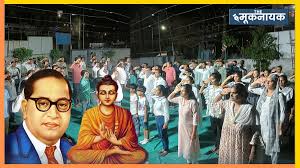
SSD members describe the administration’s approach as a deliberate “Delay and Destroy” tactic, designed to discourage applicants from conversion. Surat- After enduring two years of bureaucratic roadblocks, 80 Dalit families in Surat, Gujarat, have embraced Buddhism in a poignant ceremony held on May 14, at Anand Buddha Vihar, Bombay Colony, Amroli. The families, driven by the vision of equality espoused by Dr. B.R. Ambedkar and the serene teachings of Lord Buddha, overcame persistent administrative delays to secure their right to convert. The Swayam Sainik Dal (SSD), a grassroots organization championing Dalit rights, played a pivotal role in navigating the systemic hurdles, making this a landmark victory for social justice and self-determination. A Protracted Battle Against Bureaucracy The journey began in 2023 when these people submitted applications to formally adopt Buddhism, seeking liberation from the caste-based discrimination embedded in traditional Hindu practices. Under Gujarat’s regulations, conversion applications (Form A) must be verified and approved by the District Collector within one month. However, the process was mired in delays, stretching over two years. SSD members describe the administration’s approach as a deliberate “Delay and Destroy” tactic, designed to discourage applicants. “For six months, we were tangled in paperwork. Then, the issuance of approval letters was stalled,” said an SSD representative. Across Gujarat, an estimated 40-50 thousand similar applications, filed by SSD and other Bahujan organizations, remain pending. Common excuses include staff shortages, officer transfers, or incomplete documentation, forcing applicants to make repeated visits to government offices. Many, exhausted by the ordeal, fail to complete the final step (Form C), resulting in their applications being quietly archived. “The system is rigged to frustrate those seeking to embrace Buddhism,” the SSD member added. “It’s not just inefficiency—it’s a strategy to maintain the status quo.” Despite these challenges, the families remained steadfast, supported by SSD’s unwavering advocacy. The Surat unit of SSD emerged as the backbone of this struggle. Through persistent phone calls, visits, and meticulous follow-ups, they kept the pressure on. As the delays dragged on, SSD escalated their efforts. Last week, they issued a stern ultimatum to the authorities: “Approve the applications, or we protests on the streets.” This bold stance compelled the administration to act, granting approvals to the pending applications. On May 14, the families gathered at Anand Buddha Vihar for an emotional ceremony. As they chanted the Buddha Vandana and reiterated the 22 vows given by Baba Sahab, the air resonated with a sense of liberation and hope. The event was not just a religious milestone but a powerful rejection of caste oppression, echoing Dr. Ambedkar’s call for social equality. SSD says the government delays conversions formalities on purpose to stop people from leaving Hinduism. How Buddhism changed their life Among those celebrating was Mayurraj Nag, a machine operator in a Surat diamond factory and an SSD member. Mayurraj, who embraced Buddhism in 2019, shared that of the 2023 applications, 110 have now been cleared, including the latest 80. His own journey reflects the transformative power of this path. “Eight years ago, I was lost—smoking, chewing gutkha, ignoring my family,” he said. “Meeting SSD in 2017 and learning about Babasaheb changed me. I quit my habits, started caring for my parents, and found purpose.” Mayurraj’s wife, Ashmita, whom he married four years ago in a love marriage blessed by their families, also embraced Buddhism. “I explained Buddhist teachings to her during our courtship. She understood, and now our family lives simply and happily,” he said. Mayurraj feels a newfound respect in his community. “People call me ‘bhai’ now, but it’s with respect. They listen when I speak, and that’s because of Buddhism.” Chandrika Shakya, a 30-year-old schoolteacher and member of SSD’s Jhalkari Brigade, has followed Buddhism for a decade. Despite her newborn keeping her from active outreach, she remains committed to empowering women. “I used to visit Dalit colonies, telling women about Babasaheb’s fight for equality,” she said. “We don’t push Buddhism first—we share his story, and people see it’s the way out of discrimination.” Chandrika’s family has also benefited financially. “We stopped spending on festivals like Holi or Diwali—no sweets, no puja items. That money now goes to our family’s future.” The administrative delays reflect a broader resistance to religious conversion, particularly to Buddhism, which challenges the caste hierarchy of Hinduism. SSD members allege that the system deliberately obstructs conversions to preserve traditional structures. “Buddhism has no rituals or caste divisions, which threatens the old ways,” an SSD member explained. “The delays are meant to tire people out, but we won’t let that happen.” SSD’s Broader Mission Founded in 2006 in Rajkot by 50 Dalit activists, SSD is dedicated to eradicating social inequalities and fostering a humane society. Rejecting hierarchies, every member is a “swayam sainik” (self-soldier). SSD conducts “chintan shivirs” (reflection camps) in rural areas to educate marginalized communities about their rights. Their ambitious goal is to facilitate the return of 20 million indigenous people to Buddhism by 2028, with planned mass conversion events on Ambedkar Jayanti from 2024 to 2028 in cities like Delhi, Kolkata, Bangalore, Bhopal, and Mumbai. “SSD empowers communities by raising awareness about constitutional rights and exposing the divisive rituals of Hinduism,” a senior member said anonymously. “We encourage people to shape their own futures.” Buddhism, with its rejection of caste and rituals, is seen as a pathway to dismantle discriminatory practices, aligning with SSD’s vision of equality. Courtesy : Geetha Sunil Pillai, The Mooknayak Note: This news is originally published on https://themooknayak.com/ and is for use by the non-military/non-commercial community, especially those in the human rights sector.
Is communicating with Dalits a sin, asks Congress over Rahul Gandhi’s Darbhanga address permission
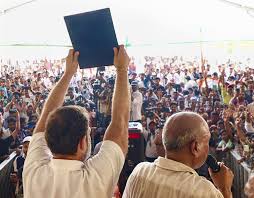
It is the height of dictatorship that the JDU-BJP government prevented Rahul Gandhi from attending the ‘Shiksha Nyay Samvad’ program at the Ambedkar Hostel in Darbhanga, Bihar, says Congress president Mallikarjun Kharge Congress president Mallikarjun Kharge on Thursday (May 15, 2025) hit out at the JDU-BJP government in Bihar, accusing it of sheer dictatorship by “preventing” Leader of Opposition in Lok Sabha Rahul Gandhi from holding a ‘Shiksha Nyay Samvad’ in Darbhanga. Mr. Gandhi addressed students at Mithila University’s Ambedkar Hostel, despite being allegedly denied permission to hold the event. “Is communicating with Dalit, deprived and backward class students against the Constitution? Is it a sin to talk to them about their education, their recruitment exams and jobs,” asked Mr. Kharge. “It is the height of dictatorship that the JDU-BJP government prevented Rahul Gandhi from attending the ‘Shiksha Nyay Samvad’ program at the Ambedkar Hostel in Darbhanga, Bihar,” he said in a post on X in Hindi. Kharge said the birthplace of democracy Bihar will remember this “injustice” and will give a befitting reply to JDU-BJP when the time comes. Congress general secretary Jairam Ramesh shared a video of police action in preventing Gandhi from going to the Ambedkar students hostel in Darbhanga. “India is a democracy, it is governed by the Constitution, not by dictatorship. No one can stop us from raising our voice for social justice and education,” Ramesh said in his post on X. The Congress had also expressed outrage on the suggestion by the authorities to change the venue to an alternative site. Addressing the students, Gandhi claimed that Prime Minister Narendra Modi had agreed to hold a caste census “out of fear” of the country’s deprived population, to which the opposition was lending its voice. The leader of the opposition made the remark at a charged-up interaction with students in Darbhanga district of Bihar. “As you all are aware, my car was stopped at the gate (of Mithila University). But I did not relent. I got out and took a circuitous route to reach here on foot,” said the Rae Bareli MP, who launched ‘Shiksha Nyay Samvad’, a public interaction programme in Bihar where assembly polls are due later this year. Courtesy : The Hindu Note: This news is originally published on https://thehindu.com/ and is for use by the non-military/non-commercial community, especially those in the human rights sector.
Telangana CM Revanth sanctions houses to two Dalits in Chinnamallareddy village
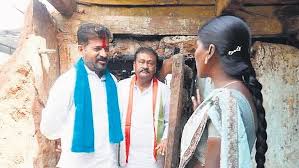
Advisor to CM on Minority Affairs, Mohammed Ali Shabbir, said that during his padayatra, Revanth had visited the houses of two Dalit families in Chinnamallareddy village of Bhiknoor mandal. A file picture shows the then TPCC chief and present Chief Minister A Revanth Reddy interacting with Bhikkanoor Laxmi in her dilapidated house in Chinnamallareddy village. A file picture shows the then TPCC chief and present Chief Minister A Revanth Reddy interacting with Bhikkanoor Laxmi in her dilapidated house in Chinnamallareddy village.FILE | EPS KAMAREDDY: Fulfilling a promise he made during the 2023 Assembly elections, Chief Minister A Revanth Reddy has sanctioned Indiramma houses to two Dalit families. Senior Congress leader and Advisor to Chief Minister on Minority Affairs, Mohammed Ali Shabbir, on Thursday said that during his padayatra, Revanth had visited the houses of two Dalit families in Chinnamallareddy village of Bhiknoor mandal. “He was moved by the dilapidated condition of their residences and assured them that he would sanction houses to them after the Congress forms the government in the state,” Shabbir said. “Now, the government has sanctioned houses to Bhikkanoor Laxmi and Chityala Rajamani. Sanction letters have been handed over to them,” Shabbir continued, adding that if the Congress makes any promises, it surely fulfils them. Courtesy : TNIE Note: This news is originally published on https://thenewindianexpress.com/ and is for use by the non-military/non-commercial community, especially those in the human rights sector.
To consolidate SC votes, BJP to reach out to 6,000 influential Dalits
Lucknow: In a bid to consolidate support among Scheduled Castes, BJP has decided to launch another outreach campaign aimed at engaging 1,000 influential Dalit personalities in each of the six organisational regions of Uttar Pradesh. The campaign will be spearheaded by party’s SC Morcha in coordination with senior state functionaries. A campaign plan was recently drawn up by the BJP central leadership, which asked the state unit to reach out to the various sub-castes within the Dalits, including Jatavs, Pasis, Koris and Dhobis. “We will gather broader feedback from the influential sections amongst the Dalit and take corrective measures wherever needed,” UP BJP SC Morcha president Ram Chandra Kannaujia told TOI on Friday. The campaign is seen as part of a broader electoral strategy to counter opposition narratives while reinforcing the BJP’s footprints in the SC-dominated constituencies. BJP has demarcated UP into six organisational regions: Kashi, Gorakhpur, Awadh, Kanpur, Braj and western UP. Sources said that a dedicated team of party functionaries has been tasked to identify prominent Dalit people, including retired bureaucrats, teachers, social workers, religious figures, community leaders and professionals, whose influence could potentially impact a collective opinion within the SC community. The outreach comes at a time when the BJP faces stiff competition from the Opposition, primarily the Samajwadi Party and its ally Congress, besides the BSP, which have historically enjoyed significant support among Dalit voters. Kannaujia said that the campaign will aim to intensify its messaging around social justice, economic empowerment, and welfare measures targeted at SC communities. Experts said that personal interaction with influential Dalit figures can help dispel perceptions of exclusion and infuse a sense of political inclusion amongst the Dalit community. The campaign also aims to highlight the role of Dalit leaders within the BJP itself. Plans are also afoot to organise felicitation programmes and community service events in Dalit-dominated areas. These events will serve as platforms for dialogue on govt policies and community welfare. The development comes days after BJP initiated a ‘dialogue’ programme in various districts. The programme was spearheaded by state general secretary (organisation) Dharam Pal Singh. These meetings aimed to boost the morale of Dalit functionaries and prepare them for future campaigns, sources said. Though assembly elections are still two years away, BJP’s early start signals its intent to consolidate its support base and blunt any early moves by its political rivals. Party analysts believe that the Dalit vote, which constitutes over 21% of UP’s population, could be a deciding factor in several tightly contested seats. “The idea is not just to win elections, but to win trust,” said a BJP SC Morcha leader. “Our party believes in Sabka Saath, Sabka Vikas, and we are proving that through direct engagement and representation,” he said. Courtesy : TOI Note: This news is originally published on https://timesofindia.com/ and is for use by the non-military/non-commercial community, especially those in the human rights sector.
Bihar Assembly Elections 2025: Chirag Paswan’s LJP To Aggressively Court Dalit Votes With ‘Bahujan-Bheem Sankalp Samagam’; Plans To Contest Independently Within NDA
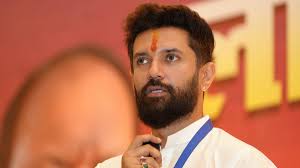
Union Minister and Lok Janshakti Party (Ram Vilas) chief Chirag Paswan is gearing up to reach out to all Dalit communities to bolster his party`s prospects in Bihar assembly election, due in October-November. Patna: Union Minister and Lok Janshakti Party (Ram Vilas) chief Chirag Paswan is gearing up to reach out to all Dalit communities to bolster his party`s prospects in Bihar assembly election, due in October-November. Dalits constitute 16.04 percent of the population of the state and play a dominant role in deciding the outcome of any poll in the state. On the other hand, Paswan is the second largest caste in Bihar after Yadav, as they constitute 5.311 percent of the state`s population. LJP (RV)`s state executive held a meeting in Patna on Friday and unanimously passed a resolution for Chirag playing a role of a prominent leader of Bahujan-Bheem Samaj. The party has also planned to organise ‘Bahujan-Bheem Sankalp Samagam’ to reach out to Dalits more aggressively. In another important issue, Chirag`s party through the resolution made it clear that it would contest the assembly election by keeping its independent identity intact. It is seen as LJP`s ploy to extract maximum number of seats from BJP in the assembly election. Chirag has asserted on several occasions that he would contest an election as an NDA ally. Former professor of Tata Institute of Social Sciences (TISS) Pushpendra Kumar Singh said, “Chirag understands very well that his party’s growth in NDA will be limited if he depends only on Paswan votes and so he will definitely like to reach out to other Dalit castes.” Although Chirag apparently commands a significant support of his caste members (Paswans), the dynamics would change if his uncle and former union minister Pashupati Kumar Paras joins the I.N.D.I.A bloc and makes inroads into Paswan votes with the help of its allies like RJD, Congress and left parties, he noted. LJP leader is also facing challenge from Congress as the latter after appointing a Dalit (Mallikarjun Kharge) as its national president has now made a Dalit (Rajesh Kumar) its state president, he asserted. Another challenge is that after BSP supremo Mayawati losing much of her clout in Bihar, her party`s votes in the election are more likely to go to INDIA bloc, he claimed. “Chirag will prefer to field his party candidates on seats in the state polls, mainly falling under the Lok Sabha constituencies of his five MPs,” he remarked. Courtesy : Dheeraj Kumar, TFPJ Note: This news is originally published on https://thefreepressjournal.com/ and is for use by the non-military/non-commercial community, especially those in the human rights sector.
‘Rok sako to rok lo’: Rahul Gandhi’s message to PM Modi, Nitish Kumar in Bihar
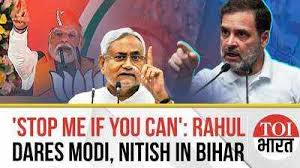
‘Rok sako to rok lo’: Rahul Gandhi’s message to PM Modi, Nitish Kumar in Bihar’Rok sako to rok lo’: Rahul Gandhi’s message to PM Modi, Nitish Kumar in Bihar NEW DELHI: “Nitish ji, Modi ji, rok sako to rok lo,” said Congress leader and Leader of Opposition in Lok Sabha, Rahul Gandhi, after he was stopped by police on his way to Ambedkar hostel in Bihar’s Darbhanga. However, the Congress leader managed to enter the premises amid political drama and questioned the chief minister, “what is he afraid of?” The incident occurred when Gandhi reached outside Ambedkar hostel. His convoy was stopped from entering the premises where he was scheduled to interact with students at the party’s ‘Shiksha Nyay Samvad’ event. ‘Rok sako to rok lo’ Taking to X, he wrote in Hindi, “Nitish ji and Modi ji, stop me if you can – the storm of caste-based census will bring a revolution in social justice, education, and employment.” — RahulGandhi (@RahulGandhi) ‘Double engine dhokebaaz sarkaar’ While addressing a gathering in Darbhanga, he called the NDA government in Bihar “double engine dhokebaaz sarkaar.” “The Bihar Police tried to stop me. But they could not stop me because your power (minority community) is watching over me. We told PM Narendra Modi that you have to conduct census. Under your pressure, PM Narendra Modi announced caste census in the country. Scared of your pressure, he placed the Constitution on his forehead. But their government is against democracy, the Constitution, and the minorities. This is the government of Adani-Ambani and not yours,” Gandhi said. “I guarantee that the moment our government forms in India and in Bihar, and implements everything that you deserve,” he added. ‘Nitish ji, what are you afraid of?’ In a post on social media platform X, Gandhi questioned Bihar CM Nitish and said, “NDA’s “double engine dhokebaaz sarkaar” in Bihar is preventing me from interacting with dalit and backward students in Ambedkar Hostel. Since when has dialogue become a crime? Nitish ji, what are you afraid of? Do you want to hide the state of education and social justice in Bihar?” — RahulGandhi (@RahulGandhi) According to Congress, Gandhi’s car was stopped by police before reaching the hostel, prompting him to proceed on foot to meet the students. “India is a democracy, it is run by the Constitution, not by dictatorship! No one can stop us from raising our voice for social justice and education,” he posted on X. — RahulGandhi (@RahulGandhi) ‘Pre-planned conspiracy’ Meanwhile, the Bihar Congress accused the district administration of attempting to sabotage the programme. Darbhanga deputy mayor Nazia Hasan called the last-minute cancellation of permission a “pre-planned conspiracy.” “If the administration did not want to grant us permission, they could have denied it the day we asked. But cancelling the permission at the last minute was a part of a pre-planned conspiracy. The preparations here had been going on for the last 4-5 days. The reason is that the government fears losing its seat in Darbhanga. They are scared that if Rahul Gandhi comes here, he will unite and motivate the youth. Rahul Gandhi does not require a mic or a stage for his voice to be heard. A street and a crossroad are sufficient for him,” Hassan told ANI. National Students’ Union of India (NSUI) president Varun Choudhary echoed the criticism, calling the JDU-BJP government “anti-Dalit and anti-students.” He claimed the event was sabotaged after the administration learned that a large number of students planned to attend. “This shows that the JDU-BJP government is anti-Dalit and anti-students… The students have declared they will only get up from here once they meet Rahul Gandhi. What is the JDU-BJP government scared of? The truth is that the students will reveal their poor condition under the JDU-BJP government to Rahul Gandhi. The preparations for today’s programme had been going on for some time. But permission for the programme was deliberately cancelled last night when the administration found out that the students are planning to attend the event in large numbers,” Choudhary told ANI. Courtesy : TOI Note: This news is originally published on https://timesofindia.com/ and is for use by the non-military/non-commercial community, especially those in the human rights sector.