
Bihar Dalit Youth’s Online Complaint Spurs NCSK to Take Suo-Moto Action on Patna Manual Scavenging Case, Directs DM for Inquiry
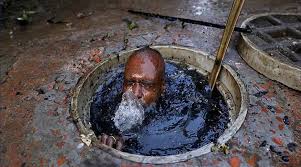
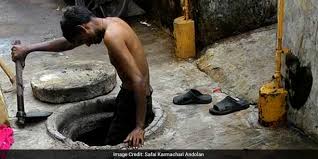
The complainant alleges that individuals, likely from the Scheduled Caste community, were coerced into manually cleaning sewage and manholes without safety gear or mechanized support. New Delhi- The National Commission for Safai Karamcharis (NCSK) has taken suo-moto cognizance of a serious complaint regarding an incident of forced manual scavenging in Patna, Bihar, highlighting ongoing violations of the Prohibition of Employment as Manual Scavengers and Their Rehabilitation Act, 2013, and the Scheduled Castes and Scheduled Tribes (Prevention of Atrocities) Act, 1989. The complaint, lodged by Shubham Kumar on May 10, via the NCSK online portal (Complaint No. 102574), pertains to an incident that occurred on April 28, at Chandmari Road, Kankarbagh, Mithapur. The complainant alleges that individuals, likely from the Scheduled Caste community, were coerced into manually cleaning sewage and manholes without safety gear or mechanized support. This act is in direct violation of the 2013 Act, which prohibits manual scavenging and mandates mechanized cleaning of sewers and septic tanks, as well as Articles 17 (abolition of untouchability) and 21 (protection of life and personal liberty) of the Constitution of India. Most municipalities in India lack modern equipment for cleaning sewage systems, forcing workers to enter underground sewer lines through manholes. (Representational Image) The complainant has demanded several reliefs, including: Immediate inquiry into the violation of the 2013 Act and caste-based discrimination under Article 17. Lodging of First Information Reports (FIRs) under the 2013 Act, the SC/ST Atrocities Act, and relevant sections of the Indian Penal Code (IPC) for endangering human life. Identification of the victims’ names, social categories, and employment status. Compensation of ₹10,00,000 to each victim, as mandated by a 2014 Supreme Court judgment in Safai Karamchari Andolan v. Union of India. Prosecution of responsible officers from the Patna Municipal Corporation (PMC) and supervisory authorities for failing to prevent the incident. A justifiable written reason if FIRs are not lodged. The complaint is supported by four timestamped, geo-tagged photographs showing individuals handling human waste and opening manholes without protective equipment. The complaint is supported by four timestamped, geo-tagged photographs showing individuals handling human waste and opening manholes without protective equipment. The complaint is supported by four timestamped, geo-tagged photographs showing individuals handling human waste and opening manholes without protective equipment, underscoring the hazardous and dehumanizing nature of the work. The complainant has warned that failure to act will lead to legal action, including filing a contempt petition against the NCSK, the State of Bihar, and the PMC, as well as approaching the Patna High Court under Articles 226 and 215 of the Constitution. The NCSK has initiated an investigation into the matter, invoking its mandate under the Rules of Procedure of the National Commission for Safai Karamcharis, 2019, and Section 31 of the 2013 Act, which empowers the Commission to monitor the Act’s implementation and inquire into complaints of non-compliance. In a letter dated 19 May 2025 (DO No. 11059/50/7/13/20-RAD), addressed to Dr. Chandrashekhar Singh, District Magistrate of Patna, the NCSK has directed an immediate inquiry into the incident. The Commission has requested a detailed Action Taken Report (ATR) within 15 days, to be submitted in a prescribed format, including details of compensation provided to the victims as per the Manual Scavengers Rehabilitation Rules, 2013, and the SC/ST (Prevention of Atrocities) Rules, 2016. A copy of the letter has also been sent to the Chief Secretary of Bihar for further action. Courtesy : Geetha Sunil Pillai, The Mooknayak Note: This news is originally published on https://themooknayak.com/ and is for use by the non-military/non-commercial community, especially those in the human rights sector.
Gobarha: When Dalit Wages Were Literally Scooped from Cattle Dung!
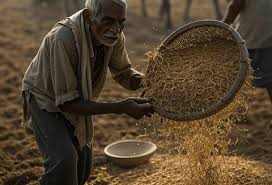
Gobarha—a practice that symbolizes the dehumanization of the “untouchables” and the cruelty of the Hindu social order, as documented by Dr. B.R. Ambedkar in his writings. It is a harsh truth that shakes the conscience and exposes the depths of oppression endured by Dalits for centuries. New Delhi – Imagine a poor laborer who has toiled all day under the scorching sun—breaking his back in the fields, harvesting crops, driving oxen to separate grain from chaff. His spine aches, his palms are blistered, yet a faint hope lingers in his eyes that perhaps today, he will receive fair compensation for his hard work. Exhausted, he approaches his employer to claim his wages, dreaming that his children might finally eat a full meal. But what does the landlord give him? Not money, not clean grain—but a sack of Gobarha: grain that has been sifted from cattle dung, the very same grain that passed through the stomachs of oxen, now dumped into the laborer’s sack so he can grind it into flour and bake bread for his family. This is the story of gobarha—a practice that symbolizes the dehumanization of the “untouchables” and the cruelty of the Hindu social order, as documented by Dr. B.R. Ambedkar in his writings. It is a harsh truth that shakes the conscience and exposes the depths of oppression endured by Dalits for centuries. In Dr. Bhimrao Ramji Ambedkar: Writings and Speeches, Vol. 5, Chapter 4, the brutal realities faced by the “untouchables” in India’s caste-ridden society are poignantly described, with gobarha emerging as a stark symbol of their subjugation. The gobarha practice highlights the systematic oppression of Dalits under Hindu social hierarchy. It exemplifies how caste humiliation was institutionalized, keeping them economically, socially, and culturally marginalized—perpetually treated as outsiders in the so-called “village republic.” The Divided Village Ambedkar described Indian villages as deeply segregated societies, split into two distinct groups: Touchables (Savarnas): Upper-caste Hindus who lived inside the village, wielding economic and social power. Untouchables (Dalits): A marginalized minority forced to live in segregated settlements outside the village, treated as “hereditary bonded laborers.” The Touchables enforced a rigid code that controlled every aspect of Dalit life, criminalizing basic dignities such as: Owning property (land or livestock). Building houses with tiled roofs. Wearing clean clothes, shoes, or gold jewelry. Giving their children respectable names or speaking refined language. Violating these rules invited punishments ranging from social ostracization to violence, ensuring Dalits remained oppressed. Gobarha: The Ultimate Humiliation In parts of Uttar Pradesh, Dalit laborers were paid in gobarha—literally, “dung grain.” During harvest season (March-April), oxen trampled crops to separate grain from chaff, inevitably consuming some of it. The next day, the partially digested grain would be extracted from their dung, sieved, and given to Dalit workers as wages. These laborers had no choice but to grind this filthy grain into flour and consume it. Ambedkarite scholars argue that gobarha was not merely a form of payment but a deliberate act of degradation. It denied Dalits the dignity of fair wages and clean food, forcing them to survive on cattle waste. Ambedkar’s documentation of this practice underscores the brutality of caste, where Dalit labor was so undervalued that even their sustenance was an insult. In an agrarian society, land ownership was key to economic stability—yet Dalits were systematically denied it: Financial Barriers: Most lacked the means to buy land. Social Resistance: Upper castes violently opposed any attempt by Dalits to acquire land, viewing it as a threat to their dominance. Legal Obstacles: In regions like Punjab, laws such as the Land Alienation Act explicitly barred Dalits from purchasing land. As a result, Dalits were trapped as landless laborers, dependent on Savarna landowners. With no bargaining power, they were forced to accept meager wages—often in humiliating forms like gobarha—or face starvation and violence. The Right to Beg: A Parallel System of Survival When agricultural work was unavailable (outside harvest season), Dalits relied on precarious livelihoods: Selling grass and firewood (gathered from forests, often requiring bribes to guards). Institutionalized Begging: Many villages enforced a system where Dalit families were “assigned” to specific upper-caste households, from whom they were expected to beg for food. This was not charity but a structured practice akin to medieval serfdom. Like gobarha, begging reinforced dependence and dehumanization, binding Dalits to a cycle of survival at the mercy of the upper castes. The Village Republic: An Empire of Exploitation Ambedkar called Indian villages a “den of caste oppression”—far from the romanticized “village republics” of nationalist imagination. They were “republics of the Touchables, by the Touchables, and for the Touchables,” where Dalits were stripped of rights and reduced to servitude. The caste system’s “iron law of karma” permanently branded Dalits as inferior, regardless of merit. A poor, uneducated Savarna would always rank above even the most accomplished Dalit. Gobarha embodied this unchangeable hierarchy—where even survival came with a reminder of their “untouchable” status. Courtesy : Geetha Sunil Pillai, The Mooknayak Note: This news is originally published on https://themooknayak.com/ and is for use by the non-military/non-commercial community, especially those in the human rights sector.
CPI’s D Raja condemns ‘cold-blooded killing’ of Maoist leader and Adivasis in Chhattisgarh
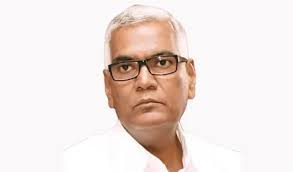
The Communist Party of India said “a democratic society cannot allow the State to become the judge, jury, and executioner.” Synopsis: The Communist Party of India has condemned the killing of senior Maoist leader Nambala Keshava Rao and over two dozen others by Indian security forces in Chhattisgarh’s Abujhmad region, calling it a “cold-blooded” and extrajudicial act. CPI General Secretary D Raja accused the State of bypassing constitutional safeguards and demanded an independent judicial inquiry into the operation. The Communist Party of India (CPI) has strongly criticised the “cold-blooded killing” of senior Maoist leader Nambala Keshava Rao and over two dozen others in Chhattisgarh’s Abujhmad region on 21 May by Indian armed forces. In a strongly worded statement released on Wednesday, CPI General Secretary D Raja accused the state of bypassing constitutional safeguards and engaging in extrajudicial actions that disproportionately affect Adivasi communities. “CPI strongly condemns the cold-blooded killing of a senior Maoist leader along with several Adivasis in Chhattisgarh. It is yet another instance of extrajudicial action carried out under the guise of counterinsurgency operations. The repeated use of lethal force instead of lawful arrest raises serious concerns about the State’s commitment to democratic norms and the rule of law,” the statement read. “If the authorities had credible intelligence about the whereabouts of the leader, why was a legal arrest not pursued? Why was due process – guaranteed by the Constitution – so blatantly ignored?” He further said Adivasi communities have often found themselves caught in military operations without access to justice or protection. “These killings not only point to a dangerous pattern of State violence but also expose the ongoing marginalisation of Adivasi communities in the region. Time and again, these communities are caught in the crossfire of a conflict they did not initiate, and are treated as collateral in operations marked by impunity.” The CPI demanded an independent judicial investigation into the killings. “CPI demands an independent judicial inquiry into this episode and the entire Operation Kagar. The people of Chhattisgarh – and India at large – deserve to know the truth. A democratic society cannot allow the State to become the judge, jury, and executioner. Justice must be served, and the dignity and rights of Adivasi lives must be upheld.” “CPI calls upon all democratic and progressive forces to raise their voices against this injustice and stand in solidarity with the people of Chhattisgarh.” Operation Kagar and the ‘neutralisation’ of over 50 Maoists The CPI’s statement followed soon after Union Home Minister Amit Shah announced the killing of at least 27 Maoist cadres, including senior leader Nambala Keshava Rao, also known as Basavaraj, in an alleged encounter in the Abujhmad forests of Narayanpur district, Chhattisgarh. Basavaraj, 71, was the General Secretary of the Communist Party of India (Maoist), the banned left-wing insurgent group that has operated across large parts of central India for over four decades. The encounter reportedly took place between the Maoists’ Company-7 unit and the District Reserve Guard (DRG), a specialised force raised by the Chhattisgarh police. The gun battle occurred in the dense forests near Maad, a known Maoist stronghold straddling the Narayanpur and Bijapur districts. Union Home Minister Amit Shah called the operation a “landmark achievement,” as part of the Centre’s commitment to eliminating “Naxalism” by 31 March 2026. Since early April, as part of Operation Kagar, a prolonged and expansive counterinsurgency campaign, the Centre has “neutralised” over 50 Maoists, including a previously reported 31 Maoists, among them 16 women, in the Karreguttalu Hills along the Chhattisgarh-Telangana border. That operation involved joint action by the Central Reserve Police Force (CRPF), Special Task Force (STF), DRG, and state police units, and was presented as a decisive shift in the National Democratic Alliance (NDA) government’s battle against left-wing extremism. Yet, activists and political parties like the CPI and the Bharat Rashtra Samithi (BRS) have consistently raised concerns about civilian deaths, lack of transparency, and the targeting of tribal populations. (Edited by Dese Gowda) Courtesy : TSF Note: This news is originally published on https://thesouthfirst.com/ and is for use by the non-military/non-commercial community, especially those in the human rights sector.
‘Forced to drink own urine’: Kidnapped Dalit student in Andhra alleges torture; Police deny caste angle
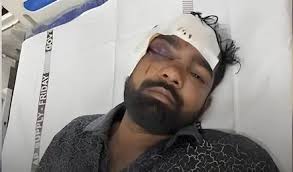
Tirupati police have confirmed that the kidnapping took place but have disputed several aspects of the survivor’s account. Synopsis: A Dalit engineering student in Tirupati, Andhra Pradesh, has alleged that he was abducted, tortured, and subjected to caste-based abuse by a group led by a former college mate. In a video with visible injuries, the student claimed he was confined, beaten with iron rods, humiliated for his caste, and forced to drink his own urine. While police have confirmed the assault, they dispute the caste angle, attributing the incident to past college group rivalries. A Dalit engineering student in Andhra Pradesh’s Tirupati has alleged that he was kidnapped, beaten, and subjected to caste-based abuse by a group led by a former college mate. He further claimed that the assailants forced him to drink his own urine during the ordeal. James, a fourth-year B.Tech student at Sri Vidyanikethan College, released a video in which he appeared with visible injuries. In it, he alleged that a group of history-sheeters tortured him for over a day and a half, led by his former college mate named Yashwanth. “I went to meet my cousin when Yashwanth, Jagga, KT Road Chotta Blade, and other rowdy-sheeters picked me up,” he said. He alleged that the group confined him in a hotel room, where he was tied up, beaten with hockey sticks, iron rods, and subjected to casteist abuse. “They kept me there for a day and a half. They tied me and used a sharp object to make cuts on my head,” he said in the video. “They humiliated me for being a Dalit and for speaking up.” James further alleged that he was stripped and forced to drink his own urine. “They threatened to kill me if I told anyone,” he added. He also accused the local police of initially refusing to file a complaint. “After I went to the police, they refused to register a case against them, asking me to leave out two names,” he alleged. “They even offered me money to drop the case.” Former Chief Minister and YSRCP chief YS Jagan Mohan Reddy condemned the incident, calling it a reflection of deteriorating law and order in the State. “The incidents show the growing attacks on Dalits and the failing law and order situation in the State, which is not protecting weaker sections and those who raise their voice against injustice,” he wrote in a post on X. Police refute James’ version of events Tirupati police have confirmed that the kidnapping took place but have disputed several aspects of the survivor’s account. “The incident occurred during the early hours of 15 May. James was kidnapped by the assailants and taken to a nearby hotel for about two hours,” Sub-Divisional Police Officer Bethapudi Prasad, who is leading the investigation, told South First. “It is true that James was kidnapped and assaulted. However, the incident did not occur because of caste. It was a case of college groupism.” Yashwanth, the main accused, is a second-year college dropout who had previous run-ins with James, according to Prasad. “They had spats during their time in college, which dragged on until now, culminating in the assault,” he said. Responding to James’ allegations, he further said: “After the investigation, James admitted to us that he made the claims because he wanted to garner attention to his assault,” Prasad said. “Furthermore, all of James’ injuries are from blunt weapons, not blades. However, it must be noted that James was tied up and held in the washroom.” A case has been registered under relevant sections, and seven persons have been named as accused. Police said no arrests have been made yet and that investigation is underway. Saicharan Sana (Edited by Dese Gowda) Courtesy : TSF Note: This news is originally published on https://thesouthfirst.com/ and is for use by the non-military/non-commercial community, especially those in the human rights sector.
Dalit woman’s complaint: Peroorkada ASI suspended

Case pertains to illegal detention of domestic worker on a trumped-up charge of stealing gold necklace from her employer’s house The State Police suspended another officer attached to the Peroorkada police station in connection with the illegal detention of Nedumangad native Bindu R., a Dalit woman and domestic worker, on a trumped-up charge of stealing a gold necklace from her employer’s house. District Police Chief (Thiruvananthapuram City) Thomson Jose issued orders suspending grade assistant sub-inspector Prasannakumar for mistreating the woman at the police station. An inquiry conducted by the Assistant Commissioner of Police, Cantonment, found Prasannakumar guilty of dereliction of duty while being in charge of the General Diary entry on the particular day (April 23). The complainant had also accused him of harassing her and hurling abuses. She also alleged that the officer had asked her to drink water from the washroom when she asked for water. The disciplinary action comes two days after Peroorkada sub-inspector Prasad S.G. had been suspended, pending inquiry, in connection with the incident. Official sources indicated that the ongoing inquiry will continue, with possible action being adopted against more officials who were present at the station when the incident had occurred. Courtesy : The Hindu Bureau, The Hindu Note: This news is originally published on https://thehindu.com/ and is for use by the non-military/non-commercial community, especially those in the human rights sector.
Third Dalit worker dies in manual scavenging tragedy in Tamil Nadu’s dyeing factory
Add Your Heading Text HereThree Dalit men have died after inhaling toxic gas while cleaning a sewage tank at a Tiruppur dyeing factory, exposing the deadly persistence of manual scavenging despite a legal ban. The death toll in a manual scavenging tragedy in Tamil Nadu’s Tiruppur, has risen to three, after another person, identified as Hari Krishnan, succumbed to his injuries on Tuesday. He was one of the four Dalit men who were hospitalised following exposure to toxic gas in a sewage tank. The other two, who died of asphyxiation on Monday, were identified as Saravanan and Venugopal. A fourth man, Chinnaswamy, is currently undergoing treatment at a private hospital. According to police in Tiruppur, five men were engaged to clean a seven-foot-deep sewage tank at a private dyeing factory in Karaipudur without any protective gear. The cleaning operation turned fatal when the workers inhaled toxic methane gas released from the tank. The tragedy unfolded within seconds, with the men losing consciousness almost immediately after entering the confined space. Despite swift medical attention, Saravanan and Venugopal were declared dead upon arrival at the hospital on Monday. With Hari Krishnan’s passing, the incident has now claimed three lives. An initial FIR has been registered against the factory owner Naveen, manager Dhanabal, supervisor Balasubramaniam and vehicle owner Chinnasamy. The accused have been booked under sections 125A (endangering life) and 106(1) (causing death by negligence) of the Bharatiya Nyaya Sanhita, section 3(2)(v) (serious offences) of the Scheduled Castes and Scheduled Tribes (Prevention of Atrocities) Act, and section 9 of the Prohibition of Employment as Manual Scavengers and their Rehabilitation Act, 2013, which prohibits the engagement of anyone for the cleaning of sewers and septic tanks. Courtesy : India Today Note: This news is originally published on https://indiatoday.com/ and is for use by the non-military/non-commercial community, especially those in the human rights sector.
Attack on Dalit newlyweds exposed BJP govt’s claims: Akhilesh
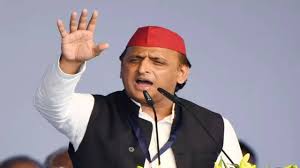
Lucknow: Samajwadi Party president Akhilesh Yadav on Wednesday cited the alleged attack on newlyweds in Mahoba by local upper caste people for wearing slippers as another incident that has exposed the reality behind BJP govt’s claims of ‘Sabka Saath, Sabka Vikas’ in the state. He also questioned the govt’s claims of ‘zero tolerance’ towards crime and criminals and went on to cite incidents of crime, particularly against women, to maintain that the crime graph was rising in UP. “People belonging to the same caste as those in govt, forced a Dalit newlywed and their family who were on their way to the temple, to take off their slippers while walking past them. When the groom resisted, they attacked him and his family members. The incident has exposed the govt which talks of ‘Sabka Saath, Sabka Vikas’,” Akhilesh said in a post on X in Hindi. Quoting an undated newsclip containing details of the incident narrated by the victims themselves, Akhilesh raised questions over delay in police action. The family claimed that they visited the local police station, but their complaint was not taken up. “If the govt fails to initiate any action against the accused, the PDA community will not forgive the govt,” he added. “The PDA community will not remain silent on such injustice. If the Chief Minister tries to hush up the incident to save the accused, the incident will go down in history as an example of the present govt’s weakness. The PDA community will not forget the humiliation that the Dalit bride had to face. This has exposed the BJP govt’s ‘Nari Vandan’ symbolism,” Akhilesh said. In a statement on Wednesday evening, Akhilesh referred to the gang rape of a girl in Moradabad, rape of a nurse in Meerut, murder of an old woman who was fast asleep in her house in Farrukhabad as examples of “lawlessness” in the state. He claimed that UP tops the list of deaths in police custody in the country because of which people are losing faith in police. ‘Give ex gratia to kin of electrocution victims’ Lucknow: Samajwadi Party chief Akhilesh Yadav on Wednesday expressed grief over the death of four people in Ghazipur due to electrocution after they came in contact with a high-tension wire. Akhilesh demanded ex gratia to the kin of those killed and proper medical care for those injured in the incident. He also demanded a thorough probe into the accident and stringent action against those responsible for the loss of human life. He held the power department responsible for such incidents and demanded that errant officials must be sacked. Courtesy : TOI Note: This news is originally published on https://timesofindia.com/ and is for use by the non-military/non-commercial community, especially those in the human rights sector.
Dragged by Hair, Clothes Torn: Dalit Woman Brutalized in Bhagalpur Police Raid – No Female Officers Present
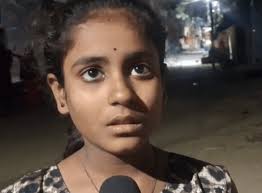
Dalit residents allege caste-based abuse, assault on women and minors, and illegal detention by male police officers during a late-night liquor raid in Nathnagar. Bhagalpur, Bihar— A police raid conducted by Lalmatiya police station in the Nathnagar Pasi Tola area of Bhagalpur district has triggered massive outrage among the local residents. Villagers allege that during the raid, which took place around 8 PM on Sunday night, police officers assaulted women, children, and men without any justification. Rajni Bharti, a resident of the locality who now lives in Delhi, told The Mooknayak, “My mother has a fractured leg, and my sister Jyoti Bharti (52) had gone to look after her. That night, the police raided our neighborhood and began beating up women and children. When my sister stepped outside and protested, the police dragged her away and assaulted her.” “All the officers—from the inspector to the sub-inspector—are from the Bhumihar caste. They hurled vulgar abuses at the women. When my sister asked them to stop, they became furious and said, ‘How dare people from a lower caste question us?’ About an hour later, they returned, grabbed her by the hair, dragged her to the police station, and kept her in custody all night. Her clothes were torn, and she was left almost naked,” Rajni further alleged. Rajni also mentioned that her house is in the same area where the police carried out the raid, although she currently resides in Delhi. “My brother informed me about the incident. The police have now filed an attempt-to-murder case against my sister. Is this how you treat an elderly woman—by humiliating her and dragging her to the police station simply because she questioned them for beating women and children? She is still in police custody. Around 15–20 people were arrested, all of them from the Dalit community,” she added. Gunjan Kumari, a minor who was present during the raid, tearfully recounted to a journalist that she saw a police officer kick her mother multiple times. Her emotional breakdown while narrating the incident reflects the trauma inflicted on the community. Notably, no female police officers were present during the raid. All actions were carried out by male officers, which has fueled further anger, particularly due to the allegations of manhandling and verbal abuse of women. Prema Devi, who was injured during the police action, stated, “They forcibly broke into our home and beat everyone. I was hit with batons two or three times. My brother-in-law was beaten so severely that his leg is broken.” Even bystanders weren’t spared. Ashok Chaudhary, who was standing at his grocery shop, said he suffered injuries to his hand due to police beating, despite having no connection to the incident. Bhagalpur City DSP-2, Rakesh Kumar, addressed the media and stated, “The raid was conducted at the residence of Ravi Chaudhary in Pasi Tola following a tip-off about liquor storage. When the police arrived, the family members allegedly pelted stones at the officers, resulting in minor injuries to three of our personnel.” When journalists asked the DSP whether public anger erupted after a girl was slapped by the police during the raid, he avoided a direct response and said, “I do not have information about that.” Courtesy : Rajan Chaudhary, The Mooknayak Note: This news is originally published on https://themooknayak.com/ and is for use by the non-military/non-commercial community, especially those in the human rights sector.
Not ‘protocol’, it is a matter of honour— Justice Gavai, who arrived on his first visit to Maharashtra as CJI, expressed displeasure over the absence of top officers, then…
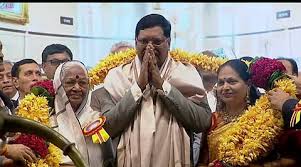
After these comments of the CJI, Maharashtra Chief Secretary Sujata Savnik, DGP Rashmi Shukla and Mumbai Police Commissioner Deven Bharti were seen with him at Dr. BR Ambedkar’s Samadhi Sthal Chaityabhoomi. Mumbai. Chief Justice of India (CJI) Justice BR Gavai on Sunday expressed displeasure over the absence of Maharashtra Chief Secretary, Director General of Police (DGP) and Mumbai Police Commissioner. CJI Gavai has recently become the 52nd Chief Justice of the country and this was his first official visit to Maharashtra. His felicitation ceremony was organized by the Bar Council of Maharashtra and Goa. He said in Marathi, “I am not talking about protocol, but all three pillars of democracy (executive, legislature and judiciary) should respect each other. When the head of a major part of the Constitution (CJI) comes to his own state for the first time and does not get this respect, then it is a matter of their thinking.” However, after these comments of the CJI, Maharashtra Chief Secretary Sujata Savnik, DGP Rashmi Shukla and Mumbai Police Commissioner Deven Bharti were seen with him at Dr. BR Ambedkar’s Samadhi Sthal Chaityabhoomi. Earlier, at the felicitation ceremony organized by the Bar Council of Maharashtra and Goa, CJI Gavai said, “I do not want to get into small things, but this is a matter of respect. People should know.” Speaking about his post-retirement plans, CJI Gavai said: “I am glad that this event is being held in the presence of Justice Abhay Oka. Both I and my brother Justice Oka have already announced that we will not take up any post-retirement assignment. So Justice Oka will be fully available to you (legal fraternity) after May 24 and I will be six months after that.” The CJI also said that he has decided that he will not accept felicitations anywhere else except Mumbai, Nagpur, Aurangabad and Goa as his association with the association has been either working together or as a member in all the four above mentioned places. The event was attended by several dignitaries including Bombay High Court Chief Justice Alok Aradhe, Supreme Court Justices Surya Kant, Justice Abhay S Oka, Justice Dipankar Dutta and Justice Prasanna B Varale. Courtesy : Geetha Sunil Pillai, Hindi News
Dalit student held hostage for 4 days, made to drink urine, brutally beaten – horrifying incident from Tirupati!
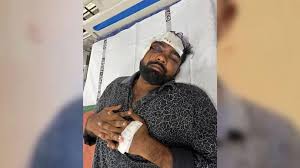
A case of kidnapping and inhuman torture of a Dalit engineering student in Tirupati, caste-related abuses, forced to drink urine and death threats has come to light. Tirupati, Andhra Pradesh – The alleged kidnapping and physical and mental harassment of a Dalit engineering student for several days in Tirupati district has sparked outrage across the state. Tiruchanur police have registered a case under serious sections like kidnapping, causing grievous hurt, caste-related attack, illegal confinement for more than three days and death threats under the Indian Justice Code. Victim student alleges caste harassment The case was registered on May 16, in which the victim has been identified as A. James (22 years). He is a final year B.Tech student of Sri Vidya Niketan College and a resident of Reddypalem village in Nellore district. James and his friend Guru Sai Reddy were abducted from outside the hostel. The accused were led by prime accused Yashwant. The other named accused include Kiran, Jagga, Lalit, Sai Gowda, Vanshi, Roopessh and some unidentified persons. “I was going to meet my cousin when a group of people like KT Road Katti, Nani, Jagga stopped me and locked me in a room. They brutally beat me for three-four days,” James said in a video statement. The victim alleged that he was abused with casteist slurs and forced to drink urine. “They said – ‘How can you, being from SC caste, dare to do this?’ I was beaten badly. I want justice,” he said. Held hostage in hotel room, threatened with death According to the police, the accused locked James and his friend in room number 209 of Elite Park Hotel, Srinivasapuram, threatening to kill them on a bike. The victims were beaten with hands, kicks, belts and iron rods. James suffered serious injuries near his eye, while his friend also sustained injuries at multiple places. The two somehow managed to escape while returning to Tirupati. Police said investigations are on and strict action will be taken against the culprits. Efforts are being made to identify the other accused. YS Jagan Mohan Reddy condemns the incident Former chief minister and YSR Congress Party president YS Jagan Mohan Reddy strongly condemned the incident, calling it an example of increasing atrocities on Dalits and deteriorating law and order in the state. He wrote on social media platform X (formerly Twitter), “There is no security left for Dalits in the state. This incident shows how law and order is failing to provide security to the weaker sections.” He also alleged that the police did not take appropriate action in time due to political interference in the case. “Now it has become a common thing that when a victim goes to the police station, a case is registered against him. This incident in Tirupati is a proof of the inaction of the police and the pressure of the ruling party.” YS Jagan Mohan Reddy, former Chief Minister He demanded that a case be registered immediately against the culprits and the Dalit student should get justice. Courtesy : Rajan Chaudhary, Hindi News