
The story of appointment, dismissal and return of Rajasthan tribal judge Pinky Meena: Supreme Court said—Participation of women in judiciary will break gender stereotypes

The court said, “Pinky Meena has proved her merit in the Rajasthan Judicial Service Examination while fighting social stigma and completing her education under difficult circumstances. Her dismissal is akin to a ‘death sentence’ given for a minor irregularity (omission to hide information).” New Delhi- The Supreme Court, while giving a historic verdict in an important case of Rajasthan High Court, has provided great relief to Pinky Meena, belonging to the tribal community, against her dismissal from the services of a civil judge. In its judgment given on 22 May 2025, the Supreme Court quashed the order of 24 August 2023 passed by the Rajasthan High Court, in which Pinky Meena’s writ petition was dismissed. Along with this, the Supreme Court also quashed the show cause notice issued on 17 February 2020 and the dismissal order of 29 May 2020. In this decision, Pinky Meena has been directed to be reinstated in service with immediate effect and to provide all consequential benefits such as seniority fixation and pay fixation (excluding the previous salary). Background of the case Pinky Meena had got selected for the post of Civil Judge and Judicial Magistrate in Rajasthan Judicial Service (RJS) on the basis of her educational qualification and hard work. She has a degree of Bachelor of Arts (BA), Bachelor of Education (B.Ed), Bachelor of Laws (LLB) and Master of Laws (LLM). She started serving as a second class teacher in the Education Department of Rajasthan Government from 30 December 2014. On 18 November 2017, an advertisement was issued by the Rajasthan High Court for the post of Civil Judge, in which Pinky applied and cleared the preliminary examination, main examination and interview. On 11 February 2019, she was issued an appointment letter as Civil Judge, and she started training from 6 March 2019, which she completed with excellent performance on 7 March 2020. However, after her appointment, complaints were filed against her by persons named Abhishek Verma and Ram Niwas Meena, based on which the Rajasthan High Court issued a show cause notice against her and later terminated her services. High Court’s decision and appeal in the Supreme Court The Rajasthan High Court on 24 August 2023 dismissed the writ petition of Pinky Meena, upholding the show cause notice and dismissal order. The High Court in its judgment held that Pinky had concealed information regarding her previous government job and educational qualifications as a teacher, which amounted to irregularity under Rule 14 of the Rajasthan Judicial Service Rules, 2010. Against this, Pinky filed a Special Leave Petition (SLP) in the Supreme Court, which was heard by a bench of Justice Satish Chandra Sharma and Justice B.V. Nagarathna. Allegations against Pinky Meena and her reply The Rajasthan High Court had levelled five main allegations against Pinky: Pursuing LLB and B.Ed simultaneously: The High Court alleged that Pinky obtained LLB and B.Ed degrees in the same year, which is not permissible under Rajasthan University Ordinance 168-A. Pinky responded by saying that the LLB first year examination is not considered the main examination of the degree. Fraud in attendance during LLM: The High Court claimed that Pinky obtained the LLM degree as a regular student while serving as a teacher, which is improper. Pinky clarified that regular classes for LLM are not usually held. Concealing information about previous job: The High Court said that Pinky concealed information about her government job at the time of interview. Pinky replied that at the time of interview (November 2, 2018) she had already resigned, and there was no column in the checklist to provide such information. Absence of NOC: The High Court alleged that Pinky did not obtain a No Objection Certificate (NOC) from the Education Department for the RJS exam. Pinky said that there is no such condition in the RJS rules. Concealment of appointment information: The High Court claimed that Pinky concealed information about her RJS appointment from both the Education Department and the High Court. Pinky responded that she was not in government service at the time of appointment, so there was no need to provide any information. The Supreme Court examined these allegations and found that all these allegations relate to the time when Pinky was not in judicial service but was working in the Education Department. The Court held that no action was taken by the Education Department in these matters, and it is not appropriate to make them the basis for her dismissal in judicial service. What the Supreme Court said The Supreme Court, in its 21-page judgment, not only ordered the reinstatement of Pinky Meena in service, but also made it clear that her dismissal violates the principles of natural justice and Articles 14 and 16 of the Constitution. The court made several important observations in its judgment, which underline the gravity and social context of the case. The court said, “Pinky Meena has proved her worth in the Rajasthan Judicial Service Examination while fighting social stigma and completing her education under difficult circumstances. Her dismissal is akin to a ‘death sentence’ for a minor irregularity (omission to conceal information).” The court also held that Pinky did not disclose information about her previous government job, but it is not a serious misconduct, as she had resigned from her job on 25 October 2018, and at the time of the interview (2 November 2018) she was not in government service. The court stressed on the violation of the principles of natural justice and said, “Pinky was not given an opportunity of a fair hearing during the investigation. The inquiry officer conducted the investigation behind her back, and the investigation report was not provided to her. This is a clear violation of the principles of natural justice.” Citing the case of Shamsher Singh vs State of Punjab (1974), the Court clarified that if the termination of service of a probationer is done on the ground of misconduct, it is mandatory to give him an opportunity for proper inquiry and hearing, otherwise it would
Punishment for raising questions on Rafale deal! Case registered against Dalit student leader — Know the whole matter
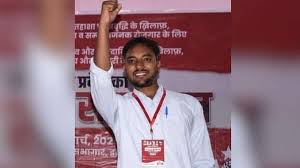
Police registered case against Dalit PhD student leader who demanded answers from the Central Government on Rafale deal, student organizations protest across the country Prayagraj (Allahabad), Uttar Pradesh — Uttar Pradesh Police has registered a case against Manish Kumar, a Dalit PhD scholar and student leader of Allahabad University, for raising questions on the Central Government on the Rafale fighter aircraft deal on social media. Manish Kumar, who is the Uttar Pradesh state president of the All India Students Association (AISA), posted on Facebook and raised questions about the Rafale deal and the alleged losses in the India-Pakistan conflict after the Pahalgam terror attack. 26 people were killed in this terrorist attack. In his post, Manish wrote, “Why has the Modi government not yet denied the reports claiming that India lost several Rafale jets during the conflict? Why has no transparency or clarity been given on this till now?” On May 14, the police filed an FIR against Manish under Section 353(2) of the Indian Penal Code (BNS) and Section 67 of the Information Technology (IT) Act, which deal with statements and online content that are deemed inflammatory, offensive or misleading. The police have not clearly stated the reason for filing the case under these sections, but activists and student organisations say such action threatens the right to debate and dissent in academic institutions. At present, Manish has not been arrested, but the legal process is ongoing. According to a report by Clarion India, several Hindutva groups are preparing to challenge the FIR in court, saying it violates the freedom of expression guaranteed by the Constitution. The AISA issued a statement condemning the FIR, saying, “The FIR against Comrade Manish is no exception. It is part of the ongoing crackdown on dissent across the country after the Pahalgam attack and Operation Sindoor. There have been over 3,000 arrests in Jammu and Kashmir alone.” The statement further said that 42 people were jailed for ‘pro-Pakistan’ posts in Assam, while 30 arrests and 40 FIRs have been registered in Uttar Pradesh so far. AISA said in its statement, “Students, artists and citizens are being targeted across the country. This is not democracy, but the rule of fear.” Courtesy : Rajan Chaudhary, Hindi Newsw
Caste-related abuses, dragged by hair, attempt to tear clothes — tragedy for Dalit couple in Bhadohi! Police register case against 6
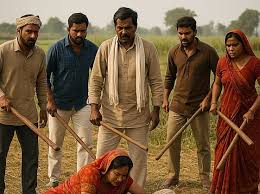
Brave attack on Dalit farmer and his wife in Anaich village of Bhadohi in dispute over cattle grazing, caste-related abuses and assault, police register case against 6 accused. Bhadohi (Uttar Pradesh): A Dalit farmer and his wife were brutally assaulted and caste-related abuses were hurled at them on Friday morning in Anaich village under Unjh police station area of Bhadohi district. Police gave this information on Sunday. The incident took place after a dispute over cattle entering the field and grazing the crop. Police have registered a case against six people in this matter. According to the police, the complainant Deepak Kumar Pasi is a landless Dalit farmer who cultivates urad (black lentil) on sharecropping basis on the land of a village landlord. Superintendent of Police (SP) Abhimanyu Mangalik said, “When Deepak complained about Rajaram Yadav’s cows and buffaloes entering his crop, Rajaram got angry. He abused Deepak using caste-related language and along with his associates beat him with sticks and iron rods.” According to the complaint, the attackers dragged Deepak’s wife Sumitra by her hair around the field, beat her and tried to tear her clothes. Deepak, Sumitra and other members of their family were injured in the attack. Deepak and Sumitra were admitted to the hospital due to serious injuries, while the other four members of the family were discharged after first aid. Based on Deepak’s complaint, the police have registered a case against Rajaram Yadav, Diljeet Yadav, Arvind Yadav, Rajendra Yadav, Parvati Devi and Tara Devi. The police is investigating the matter. Courtesy: Rajan Chaudhary, Hindi News
Dalit family thrashed, woman disrobed over cattle row in UP village; six booked

SP Abhimanyu Manglik said Rajaram Yadav got enraged when Deepak objected to his cattle grazing and, with others, hurled caste slurs and assaulted him with rods. BHADOHI: A Dalit farmer and his wife were beaten with sticks and iron rods and subjected to caste-based abuse in a village in UP, police on Sunday said. The incident took place Friday morning in Anaich village, under the Oonjh Police Station area, over grazing of cattle. Six people have been booked in the matter. According to police, the complainant was Deepak Kumar Pasi, a landless Dalit farmer, who cultivates urad (black gram) on a sharecropping basis in a local villager’s field. Deepak, police said, objected to another villager’s cattle grazing in his field when he, his wife, Sumitra, his elder brother, and his mother were assaulted. Superintendent of Police (SP) Abhimanyu Manglik said, “When Deepak complained about Rajaram Yadav’s cattle grazing in his field, Rajaram became enraged. He hurled at Deepak casteist slurs and with the help of others beat him with sticks and iron rods.” According to the complaint, the attackers dragged Sumitra by her hair across the field, beat her, and disrobed her. Deepak and Sumitra were admitted to a hospital due to the serious injuries, while the four other of his family members were discharged with little treatment. Based on Deepak’s complaint, police have booked Rajaram Yadav, Dilajeet Yadav, Arvind Yadav, Rajendra Yadav, Parvati Devi, and Tara Devi. Courtesy : TNIE Note: This news is originally published on https:/thenewindianexpress.com/ and is for use by the non-military/non-commercial community, especially those in the human rights sector.
2 held after Dalit student shot dead in Saharanpur

Meerut: Two people were arrested on Sunday after a 19-year-old Dalit student was shot dead outside a college in Saharanpur the previous day, police said. The incident took place around 1 pm on the Gagalheri-Deoband highway in the Nagal police station area. Ashutosh Singh, a first-year B Pharma student, had just appeared for an examination when 5–6 masked men attacked him and his friend Aryan Malik with sticks. As other students tried to intervene, one of the assailants opened fire, shooting Ashutosh in the face. He collapsed and was declared dead at the hospital, while Aryan is undergoing treatment. The incident triggered protests by Bhim Army and other minority groups, demanding immediate action. SSP Saharanpur Rohit Singh Sajwan said, “It appears the attack was driven by personal enmity. Ashutosh was killed while trying to save his friend. We are investigating all angles.” He added that after a brief exchange of gunfire, two suspects — Udit Rod and Ayush Kumar, both residents of Saharanpur — were arrested. The car and weapon used in the crime were recovered, and efforts are on to trace the others involved. Police said an FIR under BNS sections 191(2), 191(3) (rioting), 103 (murder), 109 (attempt to murder), 3(2)(5) of the SC/ST Act, and other relevant sections has been registered against 6–7 men. “Efforts are being made to identify and arrest the others involved in the attack,” the SSP said. Courtesy : TOI Note: This news is originally published on https://timesofindia.com/ and is for use by the non-military/non-commercial community, especially those in the human rights sector.
Bengaluru: Dalit, Lingayat leaders oppose Lingayats registering as Beda Jangamas
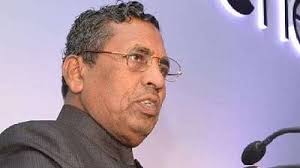
The Beda/Buduga Jangamas (SC), who constituted a population of 5,141 in the 1961 census, saw a massive rise to 4,10,804 as per data from the social and educational survey report (caste census) With the statewide survey of Scheduled Castes (SCs) having entered its last week, both Dalit and Lingayat leaders have strongly asserted that Lingayat Jangamas shouldn’t be included with SC Jangamas. The Beda/Buduga Jangamas (SC), who constituted a population of 5,141 in the 1961 census, saw a massive rise to 4,10,804 as per data from the social and educational survey report (caste census). Alarmed at the spike in numbers, AICC president Mallikarjun Kharge, an SC (right) leader, strictly urged the state government at the party rally in Hosapete recently to ensure that Lingayat Jangamas were not included in the SC list, adding that those providing fake certificates must be arrested. In a letter to Chief Minister Siddaramaiah, Food and Civil Supplies Minister K H Muniyappa – a senior SC (Left) leader in the Congress – had opposed including Lingayat Jangamas with Beda Jangamas. Attributing the massive increase to several Lingayat Jangamas registering as SCs, Lingayat leaders have urged their fellow community members to not register under the SC category. “Most of them are Veerashaivas and not Beda Jangamas. Those without Beda/Buduga Jangama certificates shouldn’t be considered as SCs in the survey,” said H M Renuka Prasanna, general secretary of All India Veerashaiva Mahasabha. Social welfare department commissioner Rakesh Kumar told DH that they had received complaints, adding that the commission on internal reservation headed by retired High Court judge Justice H N Nagamohan Das would take a suitable decision before submitting its final report. Justice Das told DH that merely being included in the survey would not mean that all individuals would get caste certificates. “They must apply through proper channels, produce relevant documents and follow proper procedure to get certificates”. Issuing caste certificates was not in the domain of the commission. If people complain of fake caste certificates, those aware of it should bring it to the notice of caste verification committees at the district level, he said. Courtesy : Deccan Herald Note: This news is originally published on https://deccanherald.com/ and is for use by the non-military/non-commercial community, especially those in the human rights sector.
Kadiam Srihari Says Only Congress Uplifted Dalits Politically And Socially
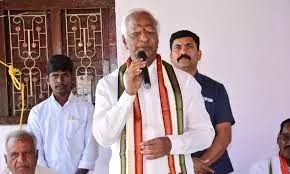
Kadiyam Srihari credits Congress for Dalit empowerment; alleges corruption in Dalit Bandhu scheme under BRS. Warangal: Former Telangana deputy chief minister and Station Ghanpur MLA Kadiyam Srihari declared that it is only the Congress that uplifted Dalits politically, economically and socially. Participating in the Madigala Atmeeya Sammelan at Lingala Ghanpur mandal in Jangaon district on Sunday, Srihari pointed out that since India got independence, Dalits have remained with the Congress party. “Because of the Constitution, Dalits have been able to stand on their own in the society. It is scary to imagine what would have happened without Dr. B.R. Ambedkar and the Constitution,” the former deputy CM said. He pointed out that landlords used to dominate the politics in Warangal. “But without bowing my head or making even the slightest mistake, I have continued in politics for 30 years,” he pointed out. Srihari said during the previous BRS government, then MLA Thatikonda Rajaiah sold posts, jobs and even welfare schemes. “He even cheated Dalit people by taking money from them before they could benefit from the Dalit Bandhu Scheme,” the Station Ghanpur MLA pointed out. The former deputy CM maintained that those who work hard for the party and support people will be given first priority in Congress Courtesy : Deccan Chronicle Note: This news is originally published on https://deccanchronicle.com/ and is for use by the non-military/non-commercial community, especially those in the human rights sector.
Gujarat Dalit Youth’s Murder Recalls 1936 Horror: When a Dalit Patwari’s Chair Ignited a Mob’s Fury in Borsad
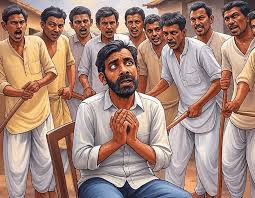
On March 6, 1938, at a meeting of the Bhangi community in Kasarwadi (behind Woollen Mills), Dadar, Bombay, chaired by Indulal Yadnik, Parmar Kalidas Shivram shared his harrowing experience. Gujarat – The brutal murder of 20-year-old Dalit youth Nilesh Rathore in Jarikhiya village, Lathi taluka, Amreli district, on May 22, 2025, has brought back memories of a horrifying incident from 1936 in Borsad, Kheda district, Gujarat. Documented by Dr. B.R. Ambedkar in Writings and Speeches, Chapter 5: Unfit for Association, the 1936 incident reveals the deep-rooted caste discrimination faced by Dalits, a reality that tragically persists today, as seen in Nilesh’s death. On March 6, 1938, at a meeting of the Bhangi community in Kasarwadi (behind Woollen Mills), Dadar, Bombay, chaired by Indulal Yadnik, Parmar Kalidas Shivram shared his harrowing experience. Kalidas, who had passed the Vernacular Final Examination in 1933 and studied English up to the 4th standard, initially applied for a teaching position with the Bombay Municipality but was rejected due to a lack of vacancies. He then applied for the role of a Talati (village patwari) through the Backward Classes Officer in Ahmedabad and succeeded. On February 19, 1936, he was appointed as a Talati in the Mamlatdar’s office in Borsad taluka, Kheda district. Though his family hailed from Gujarat, this was Kalidas’s first visit to the region. Unaware that untouchability extended even to government offices, he mentioned his Harijan (Dalit) identity in his application, expecting his colleagues to be aware of his background. However, upon arriving at the Mamlatdar’s office, the clerk scornfully asked, “Who are you?” When Kalidas replied, “Sir, I am a Harijan,” the clerk retorted, “Go away, stand at a distance. How dare you stand so near me? If this weren’t an office, I would have given you six kicks—what audacity to come here for service!” The clerk then ordered Kalidas to drop his appointment letter and certificates on the ground before picking them up himself, refusing to take them directly. Struggles with Basic Needs Kalidas faced immense challenges in Borsad. At the Mamlatdar’s office, drinking water was kept in cans in the verandah, managed by a waterman who served other clerks. However, Kalidas was barred from touching the cans, as his touch was deemed polluting. He was given a small, rusty pot for his use, which no one else would touch or clean. The waterman, reluctant to serve him, often slipped away when Kalidas approached, leaving him without water for days at a time. Finding a place to live was equally difficult. No caste Hindu in Borsad would rent him a house, and even the local Untouchables refused to offer lodging, fearing backlash from Hindus who disapproved of Kalidas’s attempt to work as a clerk—a position they believed was above his station. Food was another struggle; with no one willing to provide meals, Kalidas bought bhajias morning and evening, eating them in isolation outside the village. At night, he slept on the pavement of the Mamlatdar’s office verandah. After four unbearable days, he moved to his ancestral village, Jentral, six miles from Borsad, requiring him to walk eleven miles daily for a month and a half. The Mamlatdar later sent Kalidas to train under another Talati responsible for Jentral, Khapur, and Saijpur villages, with Jentral as the headquarters. For two months in Jentral, Kalidas learned nothing and was barred from entering the village office. The headman of Jentral was particularly hostile, once threatening him: “You fellow, your father, your brother are sweepers who sweep the village office, and you want to sit in the office as our equal? Take care, better give up this job.” The situation reached a breaking point when Kalidas was sent to Saijpur to prepare the village’s population table. Arriving at the village office, he found the headman and Talati working inside. Standing at the door, Kalidas greeted them with a “good morning,” but they ignored him. After standing outside for about 15 minutes, exhausted and humiliated, Kalidas sat on a chair nearby. Seeing this, the headman and Talati quietly left without a word. A Chair Sparks Mob Fury Within moments, a large crowd gathered around Kalidas, led by the village library’s librarian—an educated man whose involvement shocked Kalidas. It later emerged that the chair belonged to the librarian. Enraged, the librarian shouted at the Ravania (village servant), “Who allowed this dirty dog of a Bhangi to sit on the chair?” The Ravania forcibly removed Kalidas from the chair and took it away. Kalidas sat on the ground as the crowd stormed into the office, surrounding him. The mob, furious, hurled abuses and threatened to cut him to pieces with a dharya (a sharp, sword-like weapon). Kalidas pleaded for mercy, but the crowd remained unmoved. Desperate to save himself, Kalidas had a sudden idea: he asked the Ravania for a piece of paper and, using his fountain pen, wrote a note to the Mamlatdar in bold letters: “To The Mamlatdar, Taluk Borsad. Sir, Be pleased to accept the humble salutations of Parmar Kalidas Shivram. This is to humbly inform you that the hand of death is falling upon me today. It would not have been so if I had listened to the words of my parents. Be so good as to inform my parents of my death.” The librarian read the note and immediately ordered Kalidas to tear it up, which he did. The crowd continued to insult him, saying, “You want us to address you as our Talati? You are a Bhangi and want to sit on the chair?” Kalidas begged for forgiveness, promising not to repeat the act and to resign from his job. The mob held him there until 7 PM before dispersing, with neither the Talati nor the headman returning during that time. Deeply traumatized, Kalidas took 15 days’ leave and returned to his parents in Bombay. His story, shared at the 1938 Kasarwadi meeting, exposes the brutal reality of untouchability and caste violence in 1930s India. Kalidas’s quick thinking—writing the note to
Gujarat: How Dalit women are fighting hard to retain a 36-acre plot in Dholka
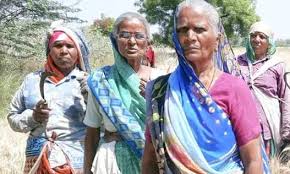
For over three decades, Baluben Makwana and others are battling gender disparity, caste hierarchy and an apathetic administration to retain land they transformed On May 16, a group of young men from the Darbar community, a backward caste, barged into the home of 76-year-old Dalit woman Baluben Makwana, in Vautha village of Ahmedabad’s Dholka taluka and threatened her. Makwana’s crime? Not only is she a Dalit and a woman but she also runs a farmers’ cooperative comprised entirely of Dalit women. For over three decades, they have been fighting against all odds to retain their ownership of a 36-acre plot of agricultural land in Dholka. The Darbars may be categorised as backward castes but in the ‘social order’ they rank several notches higher than Dalits. To the men who threatened Makwana that’s all that matters. Positioned higher in the social order, they see nothing inappropriate, let alone criminal, about demanding that the septuagenarian and her Jai Bheem Mahila Kheti Mandal (JBMKM) vacate the plot they transformed from a wasteland into a fertile agricultural land through 36 years of relentless hard work. Chasing a ‘mad dream’ This caste ‘privilege’ dates back ages. The Darbars have long been the dominant caste group in Vautha because of their large numbers in this village of 2,500-odd families. For generations, Vautha’s 70 Dalit families had lived at one end of the village and earned a livelihood by skinning dead animals and manual scavenging. It was this decades-old ‘system’ that Makwana shook up in 1989 when she mobilised 50 other Dalit women of Vautha to form the JBMKM. Priti Vaghela, a former member of Navsarjan Trust, Gujarat’s oldest Dalit rights organisation, which helped to form the JBMKM told The Federal, “Dalits of Vautha belong to the Valmiki sub-group, which is considered lowest in the social hierarchy even among the Dalits. In Vautha, Dalits are particularly vulnerable as the men are not earning much and are forcing the women into manual scavenging.” Vaghela recalled that prior to 1989, Dalit women of Vautha would be forced to clean open latrines used by upper caste women because the Dalit men didn’t earn enough to run a household. “At first, we thought we should form a collective of Dalit men to cultivate the land but most Dalit men backed off after being attacked by Darbar men. That’s when we encouraged their wives to get into farming. Over the years, sun or rain, they toiled for hours and stood tall against all atrocities by the Darbars,” explained Vaghela. Together, the 51 Dalit women that came together to form the JBMKM took a 36-acre plot, then a notified wasteland, from the local municipal body. Over the next decade, while locals, including their own family members, and the administration scoffed at their mad dream to become self-reliant farmers, Makwana and her comrades quietly toiled away nurturing the ‘wasteland’ they could call their own. By 2000, the JBMKM had achieved what many believed was impossible. The wasteland was now not only cultivable but was producing two crops a year. The yield was not just enough to meet their daily needs but there was also sufficient surplus to sell in the market and earn a modest income for the collective. In many ways, the JBMKM gave Vautha a new identity. The village known to Gujaratis largely for the Vautha Mela, an annual animal fair the village hosts along the Saptsangam, the confluence of the Vatrak and Sabarmati rivers, had become synonymous with this Dalit women’s farming collective. Troubles begin Then the troubles began – threats from castes higher in the social hierarchy, land grab attempts and even pressures from the administration to return the plot the women had ‘acquired’ without any official documentation to establish their ownership. Since then, fending off caste bullies and even government officials who storm in at their whim and fancy demanding that she and the other Dalit women farmers give up the land, has become part of Makwana’s daily chores. “This is not the first time the Darbars have threatened us to vacate the land we have cultivated for years with our blood and sweat. Thankfully, no one was hurt this time. They just swung around some furniture and punctured the tyre of the tractor we own. This happens every time during harvest season. They also try to destroy the crops but we have always managed to ward them off,” Makwana told The Federal. Last month, things had taken a nasty, although not unfamiliar, turn. The Darbars arrived with a posse of policemen from the local thana, shared Makwana. “The police tried to intimidate us and said we will be arrested under the Gujarat Land Grabbing (Prohibition) Act, 2020,” she said. The Act criminalizes land grabbing and involves 10 to 14 years of imprisonment along with a fine in case of a conviction. “We told them that we will give our lives but we won’t give up this land,” added the JBMKM founder. Fruits of hard labour Makwana claimed that it was purely the hard work and determination of the women in her collective that transformed the 36-acre wasteland plot into a sprawling agricultural field that today yields groundnut, castor and cotton crops. The sale of crops helps the JBMKM to register annual earnings of around Rs 8 lakh annually. “I still remember the first time I hit the wasteland with my spade. It was completely infested with gando baval (prosopis julifora, a thorny invasive wild shrub that is difficult to clear out as it regenerates if even a tiny root is left inside the earth; its pods are also toxic for livestock). For the initial few years, we did not have support of our families either. It took us 10 years to make this land cultivable. In the year 2000, we sold our first yield and by 2004 we bought a tractor as the land had started yielding two crops a year. That is when the Darbars began making trouble; now everyone wants a piece of it,” Makwana
Stalemate over cabinet expansion, new TPCC team continues

Hyderabad: Chief minister A Revanth Reddy, along with Telangana Congress president B Mahesh Kumar Goud, met AICC general secretary (Organisation) KC Venugopal at his residence in New Delhi on Sunday. They discussed candidates to be finalised for five of the six vacant cabinet berths, the new TPCC team — which includes four working presidents and a large team of vice-presidents and general secretaries, among other crucial issues. However, the discussions remained inconclusive regarding the finalisation of candidates for the cabinet and the new TPCC team. There is a possibility that Revanth Reddy may extend his stay in the national capital by another day to meet KC Venugopal again. If he does stay back, he is also expected to meet AICC president Mallikarjun Kharge and Rahul Gandhi, depending on their availability, either on Monday or Tuesday. Mahesh Goud will remain in Delhi. He is also expected to attend the Telangana Congress BC leaders’ meeting with Rahul Gandhi on Monday, focusing on the caste census and the 42 per cent BC reservation Bill passed by the state assembly. However, there is no confirmation on whether the chief minister will also attend this session with Rahul Gandhi. The AICC has invited state ministers, Congress MPs, MLCs, MLAs, and corporation chairpersons from the Backward Classes communities for a meeting in Delhi on May 26 to discuss the caste census conducted by the Telangana govt. Sources in the AICC mentioned that it was an hour-long meeting where Revanth also discussed the strategy to be adopted on political platforms in connection with the Enforcement Directorate (ED) reportedly naming him in the National Herald-Young India money laundering case, in which Sonia Gandhi and Rahul Gandhi have been named as A-1 and A-2. “The discussions mainly focused on the new TPCC team and social and district equations to be followed. Though there was a discussion on cabinet expansion too, it mainly centred around whether to take up the crucial exercise — pending for over one-and-a-half years — before the panchayat elections or after that. The Congress govt in Telangana wants to go for the rural local body polls when the monsoon is in full swing and after releasing Rythu Bharosa financial assistance to all the eligible farmers, and this could be in June or July,” said an AICC leader. The AICC leadership has also been delaying the finalisation of names for TPCC’s new team, pending for eight months since B Mahesh Kumar Goud took over the reins of the state unit of the party from chief minister Revanth Reddy in Sept 2024. Courtesy : TOI Note: This news is originally published on https://timesofindia.com/ and is for use by the non-military/non-commercial community, especially those in the human rights sector.