
Rahul to inaugurate campaign in Bhopal today to rejuvenate Cong & counter BJP’s ‘propaganda’
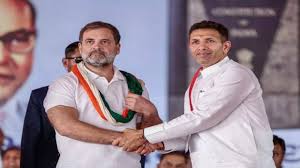
Bhopal: The leader of the opposition in the Lok Sabha and Congress leader Rahul Gandhi will arrive here on Tuesday for a day’s visit to the state capital. During his stay in Bhopal, Rahul Gandhi will inaugurate the ‘Nav Srijan’ campaign of the Congress party in the state, which aims to rejuvenate the party organisation in Madhya Pradesh. According to senior party leader J P Dhanopia, Rahul Gandhi will arrive at Raja Bhoj airport at 10.20 am and proceed to the Pradesh Congress Committee (PCC) headquarters. There, he will participate in the meetings of the political affairs committee of the PCC, followed by a meeting of party MPs and MLAs, and later a meeting of observers appointed by the All India Congress Committee (AICC) for the ‘Nav Srijan’ campaign. Following a lunch break, he will go to Ravindra Bhawan, where he will formally inaugurate the campaign before leaving for Delhi late in the afternoon. Addressing a joint press conference on Rahul Gandhi’s Bhopal visit on Monday, Congress media wing President Mukesh Nayak, former PCC chief Arun Yadav, and former minister Sajjan Singh Verma said that the ‘Nav Srijan’ campaign was a historic initiative of the party leadership to rejuvenate the party organisation. Arun Yadav said that the campaign is a decisive step towards forming a deep connection with the masses. “The Congress party is working to strengthen the party at the grassroots under the leadership of Rahul Gandhi, and the ‘Nav Srijan’ campaign is not only to strengthen the party organisation but also to make the Congress party a ‘public movement’ again. It’s to reawaken the soul of the Congress party,” he said. Sajjan Verma, while expressing gratitude towards Rahul Gandhi for his unwavering insistence on a caste census, said that the BJP and the Prime Minister initially castigated him for the demand, but ultimately they came around to accepting it. “The caste census is a victory for the deprived sections of society, who are still waiting for social, economic, and political justice,” he said. Mukesh Nayak said that this campaign will create ‘catalytic groups’ who, at the grassroots, will work to counter the ‘deceptive and misleading’ propaganda of the BJP. Courtesy : TOI Note: This news is originally published on https://timesofindia.com/ and is for use by the non-military/non-commercial community, especially those in the human rights sector.
Rahul moves HC to challenge order for personal appearance before Chaibasa court

Ranchi: The leader of the opposition in the Lok Sabha, Rahul Gandhi, moved the Jharkhand high court on Monday to challenge an order passed by the special MP/MLA court in Chaibasa which asked his personal appearance in a defamation case. Gandhi was ordered to appear in person before the court on June 26 in connection with the case filed by petitioner Pratap Kumar. Kumar said Gandhi’s statement against BJP leaders, particularly Union home minister Amit Shah, at a political rally in Chaibasa in 2018 was derogatory. Challenging the lower court’s order, Gandhi said he has already moved a petition seeking exemption from appearance before the Chaibasa court at this stage of the case. The petition is also pending before the high court for adjudication, Gandhi’s petition said. The lower court at Chaibasa was informed about the pending petition before the high court, stating that it not been decided on merits. Despite this fact, the lower court refused to grant reprieve to Gandhi and ordered him to appear in person. In his political speech during the last election campaign, Gandhi reportedly referred to Shah as a “murderer”. Gandhi’s statements were defamatory and made purposely to malign the image of Shah, Pratap Kumar said in his petition before the Chaibasa court. Courtesy : TOI Note: This news is originally published on https://timesofindia.com/ and is for use by the non-military/non-commercial community, especially those in the human rights sector.
Traffic diversions for Rahul visit
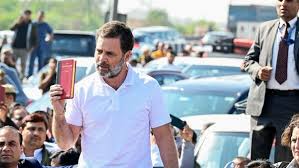
Bhopal: Congress MP and Leader of Opposition in Lok Sabha, Rahul Gandhi, is scheduled to arrive in Bhopal at 10:20 AM on Tuesday via a special aircraft. In view of his visit, the Bhopal Traffic Police has issued an advisory regarding temporary traffic diversions and restrictions across several key routes in the city. Proposed Route: Rahul Gandhi will travel from the airport to the PCC Office via the following route: State Hangar Trisection, Lalghati, VIP Road, Retghat, Polytechnic Square, Banganga Square, Roshanpura, Apex Bank Trisection, Link Road-1, 1250 Square, PCC Office. Diversions: Traffic coming from Gandhi Nagar/Airport towards the city will be diverted via Narsinghgarh Trisection, Karond Bypass when the VIP aircraft lands. Vehicles heading from Polytechnic Square to VIP Road will be redirected through Moti Masjid, Sadar Manzil, Collectorate, and Lalghati Overbridge. Traffic from Roshanpura towards Polytechnic Square will be rerouted via Gandhi Park, Old Police Control Room Trisection, Talaiya Thana Trisection, Bharat Talkies Square, Hamidia Road. Traffic heading towards Link Road-1 should use Link Road-2 as an alternative route. Vehicle Restrictions: All heavy vehicles will be strictly prohibited on these routes during the movement. However, emergency services like ambulance and fire brigade will not be restricted and may move freely. Specific Event Restrictions: Movement will be restricted from Vyapam Square side, 1250 Square, and Sidhu Bhavan towards the PCC Office. During the Ravindra Bhavan event, the route from Polytechnic Square to KN Pradhan Square will remain diverted. Parking for participants attending the Ravindra Bhavan programme has been arranged at MVM Ground. Courtesy : TOI Note: This news is originally published on https://timesofindia.com/ and is for use by the non-military/non-commercial community, especially those in the human rights sector.
Chirag Paswan’s electoral entry in Bihar is a threat to the grand alliance! Rahul Gandhi’s ‘dream’ may be dashed
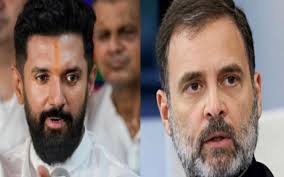
Chirag Paswan News: If Chirag Paswan enters Bihar politics, the polarization of Dalit votes may be in his favor. The way LJP-R leaders and supporters are seeing the image of CM in Chirag, if he really enters the fray, Dalit votes can be mobilized in his favor. Patna: The national president of LJP-R and the Union Minister has created a stir in Bihar politics for some time now. Chirag Paswan has said many times that his wish is to do politics by staying in Bihar. If the party wants, he will contest the assembly elections. Now all the cells of his party have given him the green signal to contest the elections. Chirag himself has also said that he will contest the elections only by staying in the NDA. He will not claim the post of Chief Minister. Nitish Kumar will remain the Chief Minister. The party is conducting a survey to see how much the party and the NDA will benefit from his contesting the elections. However, if Chirag contests the elections, it will definitely benefit the NDA. Of course, the difficulties of the Grand Alliance may increase. Congress leader Rahul Gandhi, who is part of the Grand Alliance, is eyeing the Dalit voters. Congress’s eyes on Dalit-EBC votes Rahul Gandhi’s attraction towards Bihar has increased. He is coming to Bihar again on the 6th of this month. This will be his fourth visit in the first six months of the year 2025. This time Rahul Gandhi will participate in the conference of Extremely Backward Castes (EBC) in Nitish Kumar’s home district Nalanda. Rahul will try to instill enthusiasm to unite Dalit, Muslim and EBC voters in the Constitution Protection Conference to be held in Rajgir, Nalanda. He has already been eyeing the Dalit section on the pretext of saving the Constitution. The population of Dalit castes in Bihar is about 17 percent. Rahul does not need to work hard for Muslim votes. Due to opposition to BJP and Narendra Modi, Muslims prefer Congress or ‘India’ block parties. Muslim population in Bihar is also around 18 percent. EBC population in Bihar is 36 percent. Now trying to bring back lost vote base Congress has dominated the country’s politics since independence. Among the upper castes, Brahmins remained close to Congress because they considered Pandit Jawaharlal Nehru a leader of their own caste. Congress also did not hesitate in promoting Brahmin leaders then. Among Dalits also, Congress had prepared its strong base by promoting its leaders. But, with time, Dalits left Congress. Regional parties formed on caste basis tore apart the social fabric of Congress. Kanshiram in UP and Ram Vilas Paswan in Bihar separated Dalit voters from Congress by forming their own parties. The remaining gap was filled by BJP’s Hindutva campaign. In the name of protecting the Constitution, Rahul Gandhi has made Constitution maker Ambedkar his ideal. Wherever he goes, he carries the Constitution book with him. Now he is trying to woo the large population of EBC Rahul Gandhi also knows that without wooing the large population of EBC, it is difficult to transform the Congress. The EBC population in Bihar is about 36 percent. EBC votes are now divided among many parties as per convenience. Congress has also started trying to take advantage of them. Rahul has been coming to Bihar so far to show Congress’s love for Dalits. This will be the first time when he will come to Bihar to participate in the EBC conference. However, Congress is not as anxious for OBCs as it is for Dalits and EBCs. Chirag Paswan surprised everyone with his decision If Chirag Paswan enters Bihar politics, then polarization of Dalit votes can be in his favor. The way LJP-R leaders and supporters are seeing the image of CM in Chirag, if he really enters the fray, Dalit votes can be mobilized in his favor one-sidedly. Posters of Chirag Paswan’s coronation were also put up recently. Chirag’s brother-in-law and LJP-R MP Arun Bharti also sees Chirag’s potential to become CM. The kind of results Chirag showed in the Lok Sabha elections, his hold on the public can be gauged from. Despite the division of LJP and being the only MP of his party, Chirag has presented a better example of his ability. About the author Sudhendra Pratap Singh Senior Digital Content Producer at Navbharat Times Digital. Started the journey in journalism with local newspaper Agrabharat. From here the caravan grew and reached NBT.com via Kalpataru Express, Hindustan News Paper, News18. Edited by: Sudhendra Pratap Singh•Written by: Omprakash Ashk| Courtesy : Hindi News
Denied entry into govt schools, Dalits in 1910 Kerala threatened to cut off grain supply
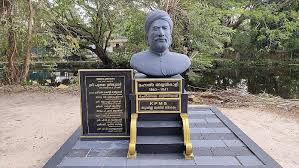
‘Identity, Conflict, and Counter-Narratives’, edited by Yagati Chinna Rao and Raj Sekhar Basu, explores the diverse facets of Dalit history and cultural experiences. At the beginning of the twentieth century, 927 out of every 1,000 Ezhavas in Travancore were illiterate; despite the removal of legal hindrances, Ezhava students were excluded from schools. Even if they were educated, employment opportunities were hard to come by, as they were not recruited into government service.A powerful political awakening had been spurred in Travancore by the 1891 G. P. Pillai-led agitation against the autocratic administration of the state and the denial to native communities of their due share in government jobs. The agitation, which adopted ‘Travancore for Travancoreans’ as its slogan, finally led to the drawing up of the Travancore Memorial (Malayali Memorial), a petition to the Maharaja signed by Nairs, Ezhavas, and Christians. However, the primary interest underlying the petition was that of the Nair community, and its major grievance was that the native upper castes were not being given adequate representation in the bureaucracy; the discrimination suffered by Ezhavas was only superficially touched on. The reply from the sirkar pointed out that ‘Ezhavas were a [contented] lot and if the government was to adopt a deliberate policy to give them a share in education and administration it would be unproductive and would create tension and strain communal harmony. Realising that the Malayali Memorial was a failure from their point of view, the Ezhava community, under the leadership of Dr Palpu, submitted in 1895 a lengthy petition, composed in English, to Sankara Subaiyer, the Dewan of Travancore, enlisting the disabilities suffered by them. Another memorandum was submitted to the Maharaja in 1896. Both of these, known as the Ezhava Memorials, demanded entry into government schools and government employment. In response, the Dewan assured the Ezhavas that they would be granted special schools, but this assurance proved insubstantial; only two primary schools were opened for them. Dr Palpu’s disappointment with the Dewan’s response gave birth to the Ezhava Mahajana Sabha in 1896, but the organisation was unable to gather any significant momentum. It was only with the formation of SNDP in 1903 under the spiritual leadership of Sri Narayana Guru that the Ezhava struggles and demands received a meaningful boost. The first objective of SNDP was to remove the obstacles in the way of Ezhava admission to government and government-aided schools. Later, the Yogam shifted its focus to establishing its own schools and colleges. Narayan Guru’s motto was ‘Strengthen through organisation, liberate by education,’ and this inspired the Ezhava community; under his guidance, SNDP attracted Ezhavas not only in Travancore but also in Cochin and Malabar. This does not mean that other communities were not seeking similar possibilities. They, too, organised themselves and began attempting to climb the social ladder, but their role was marginal in this game of power. English education, control over land, and access to government offices were the three variables that affected the status and power of every community at the time. By the 1930s, education had become a majorly contested political issue; while the lower castes that demanded education were often seeking escape from various forms of elite oppression, upper-caste interest in modern schooling was clearly linked to new opportunities for employment in the rapidly modernising states, the expanding bureaucracy and welfare network, and the economic opportunities emerging in the wake of Kerala’s economic integration with the world-system. The access enjoyed by different communities across the social spectrum to education, land, and employment was neither even nor characterised by the same calculations of advantage, but education was perceived by everyone as the door to economic upward mobility and the emerging political field. Inevitably, the powerful communities—those with economic clout and/or caste clout—triumphed. Apart from Protestant missionaries, Syrian Christians also invested a lot in education. By the end of the nineteenth century, we see the Syrian Orthodox Church registering a society to manage and coordinate its educational activities. From the 1880s, Indian Catholics started establishing schools, and they quickly made outstanding progress in this field: between 1882 and 1887, the number of schools under Catholic management increased from around 10 to over 1,000. A famous Syrian Christian leader of this time period, Father Immanuel Nidhiry, is reported to have said in a speech that an English school would be ‘a more prized asset than the golden crosses of churches’, which could be stolen. Clearly, the church accorded great importance to the matter of investing in education. It is important to note in this regard that Syrian Christians also received assistance in their efforts from the government in the form of liberal grants-in-aid. The experience of the less powerful communities, however, appears to have been different. The coastal Arayas also initiated efforts at modernisation between the late nineteenth and early twentieth centuries but did not succeed significantly. Despite its early efforts, the Araya reform movement failed to establish an adequate and sustainable network of secular community institutions to promote education and other skills needed for modern political and economic life. A large number of institutions sprang up, but they were short-lived, mainly due to financial constraints. Meanwhile, Southern Travancore was seized by a different kind of politics. Under the leadership of Ayyankali (1863–1941), Dalits started laying claim to public spaces, including schools. In 1898, Ayyankali, who later became the first Dalit nominated member in Sri Mulam Praja Sabha, broke caste rules by riding his villuvandi (ox cart) from Venganoor to Aralamudu market in Balaramapuram, heralding in a sense a more forceful era of Dalit assertion. In 1907, Ayyankali established the Sadhujana Paripalana Sangham, a movement that targeted the retrograde practice of keeping the Pulaya away from public roads and marketplaces. Several other Dalit organisations sprang up around the same time: Prathyaksha Raksha Sabha (under Poykayil Yohannan, later known as Kumara Guru Devan), Thiruvathamkoor Paraya Maha Sabha, Sidhanar Service Society, Sambavar Mahasabha, Cheramar Sangathana, and Sathya Vilasini Sangham. In 1904, the Pulayas under the leadership of Ayyankali set up a school
Ambedkarnagar: Minor Dalit girl kidnapped and then raped, case filed against 2 youths
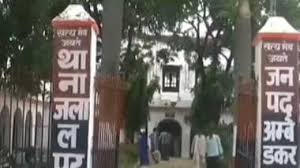
A case of kidnapping and rape of a 15-year-old Dalit girl has come to light in Ambedkarnagar. On the complaint of the victim’s uncle, a case has been filed against Vikas Rajbhar and Dhoni under serious sections. Anurag Chaudhary, Ambedkarnagar: A case of kidnapping and rape of a minor Dalit girl has come to light in Ambedkarnagar, Uttar Pradesh. On the complaint of the victim’s uncle, the police have filed a case against two youths under several serious sections. A minor Dalit girl of Jalalpur police station area, whose age is said to be 15 years, had gone to her aunt’s house for a wedding. The victim’s aunt lives in Katka police station area. Two youths of the same village, Vikas Rajbhar and Dhoni, reached there after making a plan. On the midnight of May 30, when she went out for the bathroom, these two kidnapped her. After kidnapping the girl, both of them took her to a village. It is alleged that Vikas Rajbhar raped her there in the presence of Dhoni. Vikas also threatened the minor Dalit girl. Investigation underway The victim’s uncle has filed a case against accused Vikas and Dhoni under serious sections in the police station. In this regard, CO Jalalpur is investigating the entire matter. Jalalpur police station in-charge Santosh Kumar Singh said that a case has been registered on the complaint of the victim’s uncle. The matter is being investigated. About the author Vishal Chaubey I have studied journalism from Lucknow Public College of Professional Studies, Lucknow. I am working in Navbharat Times Digital. I am working on political and many other news related to UP and Uttarakhand. Earlier, I got a chance to report in Madhya Pradesh Assembly Election and UP Municipal Corporation Election. Courtesy: Hindi News
‘How can Dalits hold wedding here?’: UP family attacked with rods
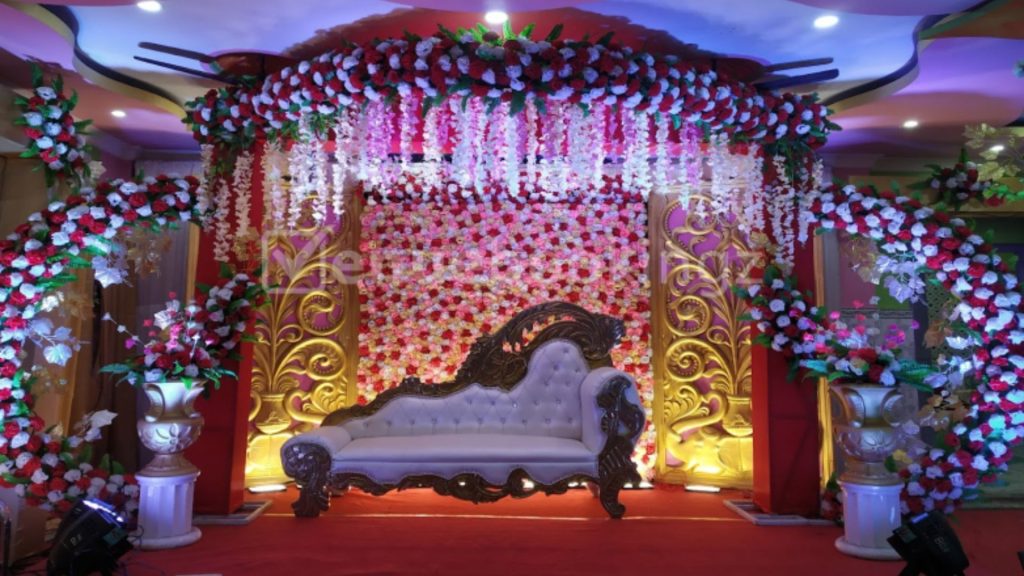
No arrests have been made so far. Ballia: A group of men allegedly attacked a Dalit family with sticks and rods for holding a wedding ceremony in a hall in Rasra, Uttar Pradesh, police said on Sunday, June 1. Two persons were seriously injured in the incident that occurred on Friday. “Being from a Dalit community, how can you hold a wedding in a hall?” the attackers allegedly said, as per the FIR lodged in the matter. An FIR was lodged based on a complaint by one of the victim’s brother, Raghvendra Gautam. He stated that a group of around 20 armed with sticks and rods stormed the Swayamvar Marriage Hall around 10:30 pm and attacked those who were holding a wedding there. The group was led by Aman Sahni, Deepak Sahni, Rahul, and Akhilesh, he said. There were 15-20 other unidentified people from the Mallah Toli locality, the complainant said. According to the FIR, the accused allegedly hurled caste-based slurs and objected to the wedding being held at a marriage hall before launching an “assault”. Lakdikapul Gated CommunitySt JosephsGermanten Hospital Gautam’s relatives, Ajay Kumar and Manan Kant, sustained serious injuries in the attack. Based on the complaint, a case has been registered under relevant sections of the BNS along with provisions of the Scheduled Castes and Scheduled Tribes (Prevention of Atrocities) Act. Rasra Police Station in-charge Vipin Singh said an investigation is underway. No arrests have been made so far. Posted by Veena Nair Courtesy : TSD Note: This news is originally published on https://thesiasatdaily.com/ and is for use by the non-military/non-commercial community, especially those in the human rights sector.
“How can you hold wedding in hall?”: Dalit family attacked by caste-Hindu men in UP for hosting wedding in marriage hall
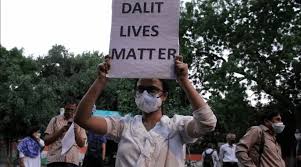
A Dalit family was attacked by a group of caste-Hindu men wielding sticks and rods for holding a wedding ceremony on Friday in a marriage hall in Rasra, Uttar Pradesh. Though two Dalits were seriously injured, no arrests have been made so far in connection with the incident. According to the First Information Report (FIR), the assailants reportedly shouted, “Being from a Dalit community, how can you hold a wedding in a hall?” before launching the attack. A group of around 20 individuals armed with sticks and rods stormed the Swayamvar Marriage Hall at approximately 10:30 pm and attacked those attending the wedding, said the complainant Raghvendra Gautam, the brother of one of the victims. Gautam’s relatives, Ajay Kumar and Manan Kant, sustained serious injuries and are undergoing treatment. The assailant group was reportedly led by Aman Sahni, Deepak Sahni, Rahul, and Akhilesh, along with 15–20 other unidentified individuals from the Mallah Toli locality, according to PTI news agency. A case has been registered under relevant sections of the Bharatiya Nyaya Sanhita (BNS), along with provisions of the Scheduled Castes and Scheduled Tribes (Prevention of Atrocities) Act. Courtesy : Maktoob Media Note: This news is originally published on https://maktoobmedia.com/ and is for use by the non-military/non-commercial community, especially those in the human rights sector.
Who is Priya Saroj MP? Rinku Singh’s fiancée wanted to become a judge to protect Dalits before Akhilesh Yadav fielded her in Machhlishahr!
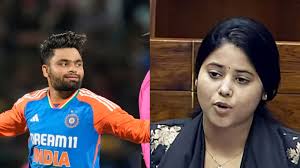
Daughter of Samajwadi Party strongman Toofani Saroj, Priya was a Supreme Court lawyer before she was handpicked by Akhilesh Yadav to contest against BJP’s sitting Lok Sabha MP Bholanath Saroj India and Kolkata Knight Riders middle-order batter Rinku Singh will get engaged to Samajwadi Party MP Priya Saroj on June 8 in Lucknow, the politician’s father Toofani Saroj confirmed on Sunday. The wedding is slated for November 18 this year and will be a traditional affair at Hotel Taj in Varanasi. Rinku Singh, 27, has played 2 ODIs and 33 T20Is for India in the last couple of years and is an important member of IPL franchise Kolkata Knight Riders. The 26-year-old Priya is a first-time MP from Jaunpur’s Machhlishahr constituency. Rinku Singh is getting engaged Toofani, a seasoned Samajwadi Party politician, informed that the “engagement ceremony will be an intimate affair, attended by close family members, friends, and relatives.” Invitations for the wedding are expected to be extended to prominent personalities from the worlds of cricket, Bollywood, business, and politics. The marriage was fixed with mutual consent after both families met in Aligarh. Rinku and Priya have known each other for some time. They met through Priya’s friend’s father, who is a cricketer himself. With the blessings of both families, they decided to get married, the would-be bride’s father told mediapersons. Who is Priya Saroj, MP? Priya Saroj became the Machhlishahr Lok Sabha MP in 2024, beating Bholanath Saroj of the BJP by a margin of 35,850 votes. Machhlishahr is a reserved constituency that includes five legislative assembly areas: Mariyahu, Kerakat, Machhlishahr, Zafrabad, and Pindra. After completing her BA from the University of Delhi, she went on to earn her LLB from Noida’s Amity University. Her father Toofani Saroj entered Parliament from Saidpur, Ghazipur, and Machhlishahr between 1999 and 2009. When the SP chief asked her to contest against Bholanath, she was only 25 years old and was preparing for the Judicial Services Examination. However, she did manage to practice law at the apex court for a brief period. According to a Jansatta report, she believed that becoming a judge was her way forward to deliver justice to the oppressed Dalit communities. But when Akhilesh Yadav personally suggested that the educated young woman should represent the party at her father’s bastion, there was no turning back. After her father’s defeat in Machhlishahr in the 2014 Lok Sabha elections, the family moved to an apartment in Delhi’s Dwarka. She started her journey in Socialist politics when she campaigned for her father in Kerakat during the 2022 assembly elections. A staunch critic of the BJP, Priya was vocal about the need to protect the country from the saffron party’s anti-democratic tendencies. “Hindus don’t need to prove if they are real or fake. Why do we need to prove if we are Hindu? We have had Hindu PMs since Nehru’s time, but how come ‘Hindu khatre mein’ is brought up after you (Modi) come to power?” Priya Saroj had famously said during a media interview ahead of the General Elections. Courtesy : The Week Note: This news is originally published on https://theweek.com/ and is for use by the non-military/non-commercial community, especially those in the human rights sector.
Bihar Dalit rape victim dies after being made to wait for hours in ambulance

The victim’s family alleged that the minor girl had to wait in an ambulance for several hours before getting a bed. PATNA: A nine-year-old Dalit girl from Bihar’s Muzaffarpur, who was raped and brutally attacked on May 26, died at Patna Medical College and Hospital (PMCH) on Sunday morning, amid allegations that she was left waiting in an ambulance for several hours before getting a bed. She was brought to PMCH from Muzaffarpur-based SKMCH in a critical condition on Saturday. Former Congress MP Ranjeet Ranjan said the party would ensure justice for the victim’s family. She also lashed out at state health minister Mangal Pandey over the deteriorating condition of premier hospitals like PMCH. “I demand Mangal Pandey’s resignation. He has no moral right to remain in office when the poor are being denied healthcare despite the state government’s tall claims of improving infrastructure in government-run hospitals,” she said. Rajesh Rathod, media in-charge of Congress, said that the rape victim had to wait in ambulance for several hours in the premises of the PMCH. “Her family members reached the PMCH at 11 am on Saturday. It took the hospital administration more than four hours to arrange a bed for her,” he added. Bihar Congress president Rajesh Ram slammed the state government for its insensitivity towards women, citing the rising incidents of sexual assault. “The law-and-order machinery has completely collapsed in the state,” he said. Sushil Kumar, senior superintendent of police (SSP) of Muzaffarpur district, said that the accused, identified as Rohit Sahni has already been arrested. Muzaffarpur residents alleged that the accused Rohit Sahani had earlier committed the same offence with another 12-year-old girl at the village and attempted to kill her. However, she had survived in the incident. Meanwhile, the Muzaffarpur unit of the Congress staged a protest at Saraiyaganj Tower Chowk, condemning the incident and threatening to intensify their agitation. Party members alleged that three cases of rape have been reported in the district in recent days. Courtesy : Ramashankar, TNIE Note: This news is originally published on https://thenewindianexpress.com/ and is for use by the non-military/non-commercial community, especially those in the human rights sector.