
LoP Gandhi Slams CM Nitish; Calls Bihar Crime Capital of India
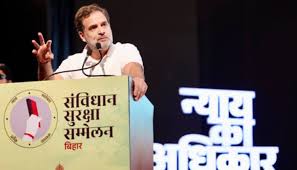
PATNA — In a fiery address at the Constitution Security Conference held at the International Convention Centre in Rajgir, Congress leader Rahul Gandhi launched a sharp attack on both the Central and Bihar governments, accusing them of allowing lawlessness to prevail and undermining the Constitution. Speaking from Chief Minister Nitish Kumar’s home turf of Nalanda, Leader of the Opposition (LoP) in the Lok Sabha, Rahul Gandhi said on Friday, “Bihar, the land of truth, justice and non-violence, is today becoming the ‘Crime Capital’ of India.” The Congress MP lamented the breakdown in law and order, alleging that the public in Bihar now feels unsafe and stated that “Chief Minister Nitish Kumar and Prime Minister Narendra Modi are responsible for this situation.” “The law and order here is in shambles. Basic facilities like education, employment, and healthcare remain out of reach of the common people,” Rahul Gandhi said. Targeting PM Modi, LoP Gandhi said, “Attempts are being made to spread hatred and fear in the country. But the Congress will not let this conspiracy succeed. We began ‘Bharat Jodo Yatra’ for this reason, and we are not backing down.” He also ridiculed CM Nitish Kumar’s frequent political flip-flops. “The Chief Minister keeps changing sides — sometimes here, sometimes there. The people of Bihar have now understood that real issues are being sidelined,” he said. Positioning himself as a defender of constitutional values, LoP Gandhi warned against attacks on social justice and democracy. “We will not let the Constitution be destroyed. This country will run on the Constitution drafted by Baba Saheb Ambedkar, not on the instructions of two or three capitalists,” Rahul Gandhi said. He urged the youth of Bihar to unite in defence of democracy and constitutional values, calling the present struggle a fight against hatred and violence. “Together we will move the country forward on the path of justice and brotherhood,” he said. This was LoP Gandhi’s first public event in Nalanda, making it politically symbolic given CM Nitish Kumar’s stronghold in the region. The event saw significant participation from Congress workers and local residents. –IANS Courtesy : Clarion Note: This news is originally published on https://clarion.com/ and is for use by the non-military/non-commercial community, especially those in the human rights sector.
‘Match-fixing will come to Bihar next’: Rahul Gandhi attacks BJP over Maharashtra polls; alleges ‘rigging’
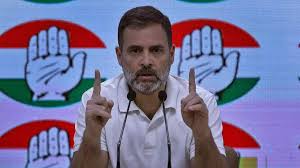
NEW DELHI: Leader of opposition in Lok Sabha Rahul Gandhi on Saturday again accused the Bharatiya Janata Party of engaging in “poll rigging”. Citing last year’s Maharashtra polls, he cautioned against similar “match-fixing” activities by the saffron party in the upcoming Bihar polls. “How to steal an election? Maharashtra assembly elections in 2024 were a blueprint for rigging democracy,” he said as he went on to list out the alleged sequence. He noted that the alleged tampering begins by “rigging the panel for appointing the Election Commission”. Step 1: Rig the panel for appointing the Election Commission Step 2: Add fake voters to the roll Step 3: Inflate voter turnout Step 4: Target the bogus voting exactly where BJP needs to win Step 5: Hide the evidence “It’s not hard to see why the BJP was so desperate in Maharashtra. But rigging is like match-fixing – the side that cheats might win the game, but damages institutions and destroy public faith in the result. All concerned Indians must see the evidence. Judge for themselves. Demand answers. Because the match-fixing of Maharashtra will come to Bihar next, and then anywhere the BJP is losing. Match-fixed elections are a poison for any democracy,” he added. The opposition parties have consistently raised the allegations of poll rigging in Maharashtra polls, with leader of opposition in Rajya Sabha Mallikarjun Kharge even calling for a going back to ballot paper system terming electronic voting machines (EVMs) as “fraud” and something that put the opposition at “disadvantage”. — kharge (@kharge) The Election Commission, has however, rejected Rahul’s charge of unexpected voter’s spike in the Maharashtra polls calling it “nothing unusual”. “During the assembly elections in Maharashtra 6,40,87,588 electors, who reached the polling station from 7 am to 6 pm, voted. About 58 lakh votes were polled per hour, on an average. Going by these average trends, nearly 116 lakh voters could have voted in the last two hours. Therefore, casting of 65 lakh votes by electors in two hours is much below the average hourly voting trends,” a senior EC functionary had said earlier this year. They also pointed out that Congress’s own polling agents were present at every booth during the elections and did not raise any credible complaints about irregular voting — neither during the scrutiny by returning officers nor before election observers the following day. Courtesy : TOI Note: This news is originally published on https://timesofindia.com/ and is for use by the non-military/non-commercial community, especially those in the human rights sector.
BJP sought caste census during UPA rule: OBC Morcha chief

Bhopal: The BJP on Friday mounted its attack on the Congress for taking credit for the Centre’s decision to carry out a caste census, saying the main opposition party intends to “mislead people for vote politics”. “The decision taken for the caste census is a historic step. The Congress is today spreading the propaganda that the Modi govt took the decision of caste census under the pressure of Rahul Gandhi,” BJP OBC Morcha national president K Laxman said here on Friday. “I want to ask Rahul Gandhi and Congress leaders that for decades they were in power in the country and three members of the Nehru-Gandhi family were prime ministers. Why did Rahul Gandhi not demand a caste census at that time? Today, when he is in the opposition, he is talking about caste census to mislead people for vote bank politics,” he said at a massive workshop of the party’s OBC Morcha. Laxman said during the Manmohan Singh govt, BJP demanded a caste census. The workshop was also addressed by BJP state president VD Sharma, state BJP organisational general secretary Hitanand Sharma, state BJP backward classes front chief Narayan Singh Kushwaha, and cabinet minister Krishna Gaur. Laxman said caste census has been taking place in the country since the British era, but after the independence of the country, the first Prime Minister Jawaharlal Nehru stopped the practice of caste census through the Central Census Act. “Pt Nehru shelved the report of the Kaka Kalelkar Committee. OBC Commission was not formed. Later, the govt of Morarji Desai constituted the Mandal Commission. The govt of Indira Gandhi also maintained silence on it, and the govt of VP Singh implemented it,” Laxman recalled. He said in 1961, Pt Nehru wrote a letter to the chief ministers of the states and said that reservation should be done on an economic basis. Laxman claimed that the BJP never backed down from the matter of caste census. “When the Modi govt was formed in 2014, the then Union home minister Rajnath Singh said that we will do the census by adding castes, but due to the Covid crisis, it could not be possible,” he said. Courtesy : TOI Note: This news is originally published on https://timesofindia.com/ and is for use by the non-military/non-commercial community, especially those in the human rights sector.
Transgender person beaten to death over family dispute in UP

Muzaffarnagar (UP), (PTI) A 25-year-old transgender person was allegedly beaten to death and two others were seriously injured in a clash between family members over a house dispute on Thursday in a village here, police said. The deceased was identified as Muskan, police said. Circle Officer (CO) Gajendra Pal Singh said that a dispute broke out when Muskan and her sister-in-law confronted each other over the distribution of a house in Manwada village. However, it soon escalated and turned violent. Muska was allegedly beaten to death in the clash while two other suffered injuries, Singh said. A case has been registered and further investigation is underway, Singh added. PTI COR CDN HIG HIG This report is auto-generated from PTI news service. ThePrint holds no responsibility for its content. Courtesy : The Print Note: This news is originally published on https://theprint.com/ and is for use by the non-military/non-commercial community, especially those in the human rights sector.
4 workers die of septic tank fumes in Jaipur, 2 critical

Jaipur, May 27 (PTI) Four men who were allegedly forced to enter a septic tank in Sitapura Industrial Area here to retrieve gold and silver particles died of toxic fumes, police on Tuesday said. The incident occurred late Monday night in a jewellery factory in G-Block of the Jewellery Zone. The deceased were identified as Sanjeev Pal, Himanshu Singh, Rohit Pal, and Arpit Yadav, police said. Two more, Ajay Chauhan and Rajpal, were rushed in a critical condition to Mahatma Gandhi Hospital, while two others, Amit Pal and Suraj Pal, were discharged after primary medical care. The workers had gone down a 10-foot-deep tank and lost consciousness. Police said initial investigation suggested that the workers had initially refused to enter the tank due to the intense heat and presence of toxic gases. However, the company management persuaded them with promise of extra money. According to police, Amit and Rohit were the first to descend into the tank. Soon, they began gasping and calling for help. The remaining six went down the tank one after another to help the first two out, but also fell unconscious. A police source said the septic tank contained a chemical sludge, believed to be carrying hold particles of gold and silver, residue from the jewellery manufacturing and cleaning processes. The sludge is periodically cleaned to extract valuable metals, a practice not uncommon in jewellery units. PTI SDA VN VN This report is auto-generated from PTI news service. ThePrint holds no responsibility for its content. Courtesy : The Print Note: This news is originally published on https://theprint.com/ and is for use by the non-military/non-commercial community, especially those in the human rights sector.
Train bullies target nun in Odisha: 18-hour cop ordeal after false charges by Bajrang Dal hecklers
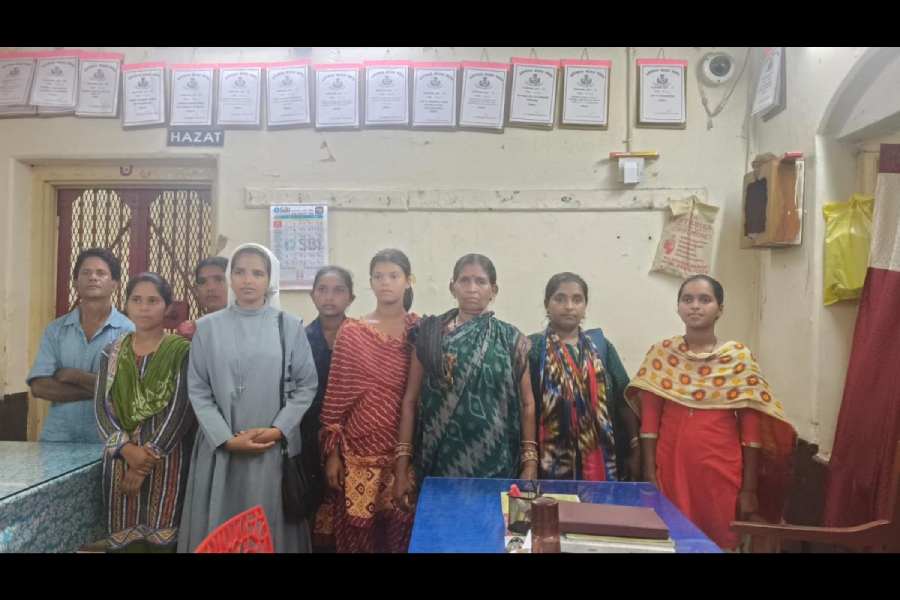
Nun Rachana Nayak was released after she proved that her six young companions — two men and four women — were all Christians by birth and were travelling for enrolment in training courses A 29-year-old nun was forced off a train by suspected Bajrang Dal activists and detained for 18 hours at a police station in Odisha on charges of trafficking in women and illegal conversions that an investigation later proved false. Nun Rachana Nayak was released after she proved that her six young companions — two men and four women — were all Christians by birth and were travelling for enrolment in training courses. In an indication of the insecurity among minorities, Catholic Church authorities advised members travelling with girls from the community to carry written consent from their parents and village pradhans, as well as baptism certificates proving they are Christian. The incident comes a year after the BJP assumed power in Odisha, and weeks after it released one of the killers of missionary Graham Staines and his two young sons, who were burnt alive in 1999 by a mob led by a Bajrang Dal activist. Nayak, a nun with the Holy Family Convent in Bhopal, and her companions were surrounded, threatened and forced off the train by a group of 30 at Khurda Junction, about 20km from Bhubaneswar. They were detained by the Government Railway Police (GRP) and allowed to leave only on Sunday evening following the intervention of three women human rights lawyers. “They had boarded the Rajya Rani Express from Berhampur on Saturday evening. One of the young men happened to be the nun’s younger brother,” Sujata Jena, one of the women lawyers, told The Telegraph. “They were headed for Jharsuguda, from where they planned to travel to Chhattisgarh where the girls would have received training in various skills and in spoken English.” Jena said the four young women had been selected through a rigorous process of career counselling, and all of them were Catholics. “Some people began heckling them on the train and accused the nun of involvement in religious conversions,” she said. Religious conversions, unless conducted through inducement, fraud or force, are not illegal. “As soon as the train reached Khurda Junction around 11pm on Saturday, around 30 people gathered and began abusing the nun and the four girls. They forced the entire group off the train,” Jena said. “Apart from religious conversions, they accused the nun of trafficking in women. The Railway Protection Force intervened and took all of them to the police station.” Jena added: “They pleaded they were all Christians and that the nun had nothing to do with religious conversions, but no one listened to them.” She said the women lawyers got to know about the matter on Sunday morning and rushed to Khurda. “During the investigation, it came out that all those detained were aged above 18 except for one girl, who was 17. All of them are literate,” she said. “All of them have now been released with full security and without any charges. The police treated them with dignity.” Jena said the women’s parents arrived at the police station and took them back to their villages, unwilling after the ordeal to let them go on to Chhattisgarh. The two young men too left for home. A GRP team escorted Nayak up to Bhubaneswar. Shankar Rao, inspector-in-charge, GRP Khurda, said: “The nun and the four girls know each other. All of them are Christians. The nun hails from Berhampur. She was involved neither in religious conversions nor trafficking. No FIR has been registered by the nun (against the hecklers).” Sources said the nun belongs to the Holy Family order, a local congregation founded in Kerala. Catholic Church sources in Delhi said that apart from written parental consent and baptism certificates, members travelling with girls had been advised to carry “a letter of admission to a senior secondary school to prove they are travelling for higher education”. Courtesy : Subhashish Mohanty, The Telegraph Note: This news is originally published on https://thetelegraph.com/ and is for use by the non-military/non-commercial community, especially those in the human rights sector.
How the road to conversion to Buddhism for 80 Dalit families in Surat was made difficult
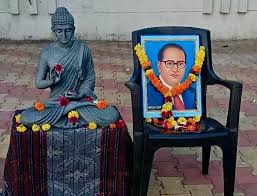
On May 14, Jahnvi Solanki, got ready for the most special day of her life. For 29-year-old Solanki, it was the day when her dream was coming true after a twoyear-long wait. Jahnvi along with her family of four converted to Buddhism along with 79 other families in Surat on the day. On the day, the 80 Dalit families from various areas of Surat gathered at Anand Buddha Vihar, a Buddhist temple in Amroli area of Surat to renounce Hinduism and embrace Buddhism. “It was an emotional ceremony for all of us. I was in tears as I chanted the Buddha Vandana and repeated the 22 vows of Baba Saheb (Baba Saheb Bhimrao Ambedkar). I felt liberated denouncing Hinduism, a religion that gave us nothing but humiliation. Now, I don’t belong to any caste or social hierarchy. We are all equals here,” says Jahnvi, who works as a teacher in a primary school in Surat. In the ceremony to convert from Hinduism to Buddhism, people are required to chant Bhudha Vandana and then denounce bais barbaadi (22 evils) and take vows devised by Baba Saheb Ambedkar when he converted to Buddhism – Possess the ability to engage in diverse social endeavours, Have the capacity to thwart all forms of antisocial inclinations, Be empowered to disseminate the compassionate and wise teachings of Buddha Be capable of affirming the principles of education, organisation and activism, Foster a cultured ethos within society Eliminate superstition from societal norms Steer society towards a humanistic ethos Safeguard any individuals self-respect Reject anti-Bahujan leadership Ensure the protection rights and interests of all Realise that where there is unity, there is power Promote a sense of brotherhood transcending caste distinctions Foster a sense of a unified and extended family, Understand that only truthful and humane communication will remove derogatory labels from Bahujans Strengthen morale through unity and foster a sense of societal resilience Achieve and implement genuine democracy Finance the construction of educational, medical and residential facilities Establish an orderly and disciplined societal framework Provide a platform for social thinkers to serve as guides Uproot injustice, inequality and oppression Eradicate Manuwad from indigenous communities Understand and practice that all humans are equal “My family and I have faced discrimination all our lives. My father moved to Surat in search of a job and has worked in the diamond industry for over 20 years. I was a child when I moved to Surat with my mother and my brother was born here. Back in our village, our home was at one end of the village in an area referred to as Valmikivaas (home for Valmiki). We were constantly subjected to discrimination and untouchability. When we moved to Surat, we thought things would change as it is a city and people are more educated. But we have faced discrimination in this city too,” she says. “I remember, when I was in class nine, the teacher gave me average grades in all subjects without checking my papers of half yearly examination. She said she can’t touch something that has been touched by a Dalit. I had to live with that as nothing much was done by school authorities despite complaints,” she adds. Fifty-seven-year-old Maheshbhai Maheriya’s family of four also embraced Buddhism on the day. “I had mentally turned a Buddhist and renounced Hinduism two years back but the formal conversion happened now,” says Maheriya who converted to Buddhism with his wife, son and daughter-in-law. “There is peace in Buddhism because everyone is alike. Buddhism teaches only peace and compassion. But most importantly it gave us a sense of joy. We are no longer looked down upon by those who think they are superior to us just because they were born to a certain caste considered higher in social hierarchy in Hinduism,” says Maheriya, who works in the Surat Municipal Corporation (SMC). Red tapism Noticeably, the journey to embrace a religion of their choice was not easy for the families. The journey began in the year 2023 when the families submitted applications to the district collector to formally adopt Buddhism as per the Gujarat Freedom of Religion Act, 2003. “Under Gujarat’s Freedom of Religion Act, conversion applications require an applicant to fill three forms – A, B and C. Form A, that has the details of the applicant with the his/her current religion and the religion he/she wants to adopt with reason. The Form A is required to be verified and approved by the district collector within one month. Then the applicant file Form B which is a testimony of certain witnesses who vouch that the conversion is not forced on the applicant. Form B is to be verified and approved within two months unless any irregularity is found. Then the applicant can finally file the Form C, the last form in the process that contains when and where he/she is going to convert and name of the person(s) or organisation who is going to oversee the ceremony. The last form is to be approved within a week to ten days,” said Dinesh Baudh, a member of Swayam Sainik Dal (SSD), a Ambedkerite organisation that helped the families with the process. “However, the process took more than two years with applications caught between red tapism and bureaucratic delays. For the first six months, we were running between offices to ensure that Form A is accepted by the office of the district collector. After almost a year, they approved the first form. Then we spent another six months running between offices to ensure that the testimony of the witnesses are not rejected. Then, after about three weeks of verifying Form B of each applicant, the issuance of approval letters was stalled as the district collector was transferred. It took another three months for the next official to resume the process,” said Baudh, who embraced Buddhism in 2019 in Nagpur. Noticeably, around 40,000 applications filed by the SSD and other Dalit rights organisations are pending in various districts. “The delay did not deter
Bihar News: Chirag Paswan Slams CM Nitish Kumar Over Law & Order In Muzaffarpur Dalit Girl Gangrape-Murder Case
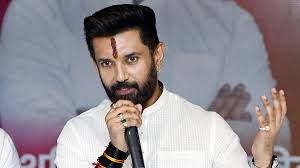
The relationship between Nitish and Chirag had soured after LJP leader, son of late Ram Vilas Paswan, fielded candidates on a number of seats against JD (U) candidates in the last assembly election, hitting latter`s chances in 36-40 seats. Patna: Union Minister Chirag Paswan has written to Bihar chief minister Nitish Kumar, raising questions on the state`s law and order situation and public health infrastructure even as LJP (RV) chief attacked the state government at a time when assembly polls are only months away. Chirag has lashed out at the Nitish government against the backdrop of a 9-year old Dalit girl losing her life following a brutal rape. The Dalit girl who was raped and brutally assaulted by the accused in Bihar`s Muzaffarpur district had succumbed to her injuries at the state-run Patna Medical College and Hospital (PMCH) on Sunday. She was allegedly being made to wait in an ambulance for hours before she was finally admitted to the state`s premier public hospital on Saturday. The hospital administration has rejected these allegations. The relationship between Nitish and Chirag had soured after LJP leader, son of late Ram Vilas Paswan, fielded candidates on a number of seats against JD (U) candidates in the last assembly election, hitting latter`s chances in 36-40 seats. However, both leaders buried the hatchet as their recent ‘bonhomie’ in public suggested. Earlier, senior leaders of RJD and Congress had lashed out at Chirag and Hindustani Awam Morcha (HAM) chief and former chief minister Jitan Ram Manjhi (both Dalit leaders) for keeping mum on the rape-murder incident. Both parties also demanded resignation of state health minister and senior BJP leader Mangal Pandey. While the accused has been arrested, a probe has been ordered into what happened at PMCH. The heart-rending incident of Dalit girl`s rape and murder exposes the failure of Bihar’s law and order, social awareness and public health, Chirag remarked, who is likely to make a formal announcement about contesting assembly election at a public rally, to be held in Ara on Sunday. He is also expected to contest assembly election from the state`s Shahabad region. Chirag in his letter pointed out that the victim had to wait for six hours before she was admitted to the hospital. He said that doctors, and administrative staff of the hospital were as guilty as the accused in the heinous crime. “They did not provide prompt treatment and lost precious time. This is not just negligence, but a crime against humanity,” he wrote. Chirag said his party’s leaders have met the victim’s family and assured them justice. “But justice will be incomplete and unacceptable unless strict and transparent action is taken against the accused at the administrative level.” He said that an inquiry should be conducted into the alleged negligence of the medical staff. “It is not simply a matter of death as it has become a symbol of the failure of our social system and a failure of our constitutional responsibility. If the administration stays silent, this silence will become the biggest crime,” he asserted Courtesy : Dheeraj Kumar, TFPJ Note: This news is originally published on https://thefreepressjournal.com/ and is for use by the non-military/non-commercial community, especially those in the human rights sector.
3 injured in attack on Dalit wedding procession in U.P.’s Amroha; caste abuse alleged
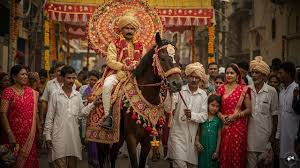
Police said they had to resort to mild force to disperse the crowd and restore order; in view of the heightened tensions, a police force has been deployed to maintain law and order At least three people were injured on Tuesday (June 3, 2025) after a wedding procession by members of a Dalit community was pelted with stones and hit with rods and sticks in Rahdra village in Amroha, Uttar Pradesh. Two daughters of Rampal, a local belonging to the Jatav (Dalit) community, were getting married. Of the two wedding processions on Monday, the first was from Hasanpur, and the other, from Moradabad, arrived later. The baraat (wedding procession) of Sonam Kumari, the older daughter, arrived from Moradabad. The incident took place during the second procession. “On June 2, a wedding procession was being carried out around 5.30 p.m. Around 15-20 people from the same village, belonging to the Yadav community, forcefully entered the wedding procession and stopped us from dancing. When we opposed it, all the above people used casteist words and attacked us with sticks, rods, knives, and sharp-edged weapons to kill us. I, too, received an open injury on my head and many other small injuries,” Kanhaiya, the complainant, and a resident of Rahdra, said. He said many in the procession received knife injuries. “The Yadavs said, ‘how can people from our [Dalit] community take out wedding processions’?” Mr. Kanhaiya, who belongs to the Jatav community, alleged. Charges have been filed under Sections 191(2) (rioting), 115(2) (voluntarily causing hurt), 109 (attempt to murder), 351(2) (criminal intimidation) of the Bharatiya Nyaya Sanhita (BNS). Police have also invoked the Scheduled Castes and Scheduled Tribes (Prevention of Atrocities) Act, 1989 (Amendment 2015). The case was registered at the Gajrala police station. A video purported to be of the chaotic scene has surfaced on social media. Police said they had to resort to mild force to disperse the crowd and restore order. In view of the heightened tensions, a police force has been deployed to maintain law and order. A senior police officer said that the incident had occurred because the road was narrow, loud music was playing in the background, and the people in the wedding procession could not provide space for the Yadav vehicles to pass. “This led to an argument, which later turned into an altercation,” the officer said. Courtesy : Samridhi Tewari, The Hindu Note: This news is originally published on https://thehindu.com/ and is for use by the non-military/non-commercial community, especially those in the human rights sector.
Dalit youth thrashed in Rajasthan for drinking water from pot, three held
The victim’s family claimed that police initially tried to ignore the case and remained tight-lipped even as the incident began gaining traction on social media. JAIPUR: In a shocking case of caste-based discrimination, a Dalit youth was allegedly abused and beaten in Rajasthan’s Nagaur district for drinking water from a pot kept outside a grocery shop. The incident took place on Sunday evening in Kantia village under Khinvsar subdivision. The victim, Omprakash Meghwal, a resident of Aau village, had stopped near the shop with a friend while on his way to a relative’s function. He used a metal tumbler (lota) to drink water from a pot placed outside the store. Soon after, the shop owner Kaluram Jat and two others — Narsiram and another man also named Omprakash had asked him his name and caste. When they found out that he belonged to a Scheduled Caste, they allegedly shouted casteist abuses, beat him up, and threatened to kill him. Omprakash said he tried to clean the pot with sand to calm them down, but the men continued to assault and humiliate him. Scared, he ran and took shelter at a relative’s house. Later that night, around 11:30 p.m., the accused allegedly returned in a camper vehicle, circled the locality several times, and dragged the vehicle’s tyres in an apparent attempt to intimidate the residents. The act reportedly caused panic among the largely poor Dalit families in the area. Omprakash filed a police complaint the next day. A team led by Deputy Superintendent of Police Rampratap Vishnoi visited the village, but the accused had already fled. After searches, police detained all three. Nagaur SP Narayan Togas said they have been booked under the SC/ST (Prevention of Atrocities) Act and other charges. A detailed probe is on. The victim’s family claimed that police initially tried to ignore the case. Police officials remained tight-lipped even as the incident began gaining traction on social media. Even on Tuesday, local police avoided giving clear answers when asked by reporters. Action was taken only after mounting public pressure and the video went viral. The incident has triggered widespread outrage. Azad Samaj Party chief and Nagina MP Chandrashekhar Azad strongly condemned the attack, calling it a grim reminder of entrenched caste discrimination in India. “In Kantia village, Dalit youths were abused, humiliated, and forced to clean utensils just for drinking water. This isn’t a mere dispute—it’s a reflection of systemic, centuries-old hatred,” he said. “Does a Dalit still not have the right to drink water?” This incident is similar to a 2022 case in Jalore, where a Dalit student was beaten to death by a schoolteacher for drinking water from a pot meant for upper castes. Courtesy : Rajesh Asnani, TNIE Note: This news is originally published on https://thenewindianexpress.com/ and is for use by the non-military/non-commercial community, especially those in the human rights sector.