
Revanth meets Rahul, Kharge in Delhi as AICC weighs portfolio reshuffle, cabinet strategy
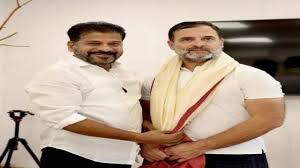
Hyderabad: Chief minister A Revanth Reddy met with AICC president Mallikarjun Kharge and senior leader Rahul Gandhi to discuss the allocation of portfolios to the three newly-inducted ministers and the possibility of a wider cabinet reshuffle. The Congress high command is said to have firmly advised Revanth to ensure social justice remains the guiding principle in the reallocation of portfolios—a directive with both symbolic and political resonance. Significantly, soon after the meeting, the AICC summoned senior minister and party heavyweight N Uttam Kumar Reddy to the national capital, fuelling speculation about a deeper shake-up within the cabinet. While there has been no official word on whether the leadership is contemplating dropping any ministers, the move has revived buzz in party circles about possible exits or marginalisation of underperforming incumbents. Uttam was accompanied by his wife and Kodad MLA N Padmavathi Reddy, whose name is reportedly under consideration either for inclusion in a future cabinet expansion or as one of the four working presidents of the Telangana Pradesh Congress Committee (TPCC). This development is being seen as part of a larger balancing act within the party, aimed at accommodating key social and regional stakeholders ahead of local body elections. Bhatti also set to be called Though deputy chief minister Bhatti Vikramarka was not present in Delhi, sources confirmed that a senior AICC leader held telephonic discussions with him following Revanth’s meeting with the top leadership. There are strong indications that Bhatti too may be called to Delhi for further consultations, although his office did not confirm any such move as of late Tuesday night. “The high command has wrapped up discussions with the Karnataka leadership, where a decision was taken to conduct another caste census. The focus now shifts to Telangana,” a senior AICC functionary said. “The leadership is set to deliberate not only on the portfolios for the new ministers but also the political ramifications of a larger reshuffle. Consultations with Revanth, Uttam, and most likely Bhatti will continue into the night or take place on Wednesday. The announcement of new portfolios is expected on Wednesday or Thursday,” the source added. 4 working presidents Revanth’s meeting with Rahul Gandhi and Kharge lasted over two hours and went beyond cabinet matters. The discussion also covered the pending appointments of four TPCC working presidents, district and block-level Congress presidents, the campaign committee, and the AICC programme implementation committee chairperson. The strategy for upcoming local body elections and plans to target the BJP-led Centre’s ‘11 years of failure’ were also prominently discussed. Sources said that AICC general secretary (organisation) KC Venugopal had submitted a detailed chart of portfolios currently held by Revanth, Bhatti, Uttam, and other ministers to Rahul Gandhi and Kharge. Also tabled was a performance report prepared by AICC Telangana in-charge Meenakshi Natarajan, which included candid feedback from party MLAs and senior leaders—reportedly touching on both strengths and lapses in the current cabinet. Revanth also extended formal invitations to Rahul Gandhi and Kharge to address public meetings in Telangana highlighting the successful completion of the state’s caste survey, the passage of the 42% BC quota legislation, and the party’s commitment to SC categorisation. Dates are being finalised in coordination with the central leadership, around which the TPCC will organise major rallies. Vivek meets Kharge, CM Meanwhile, newly-inducted minister G Vivek Venkatswamy also met Kharge on Monday and Revanth on Tuesday. While Vivek maintained publicly that he would work diligently with whichever portfolio he is given, sources indicate he is lobbying for the energy or education portfolio. He was reportedly advised by the leadership to concentrate on strengthening the party in the run-up to the local polls and to aggressively campaign against the BJP’s record at the Centre. Courtesy : TOI Note: This news is originally published on https:/timesofindia.com/ and is for use by the non-military/non-commercial community, especially those in the human rights sector.
40-year-old Dalit manual scavenger falls into manhole in Tamil Nadu; dies
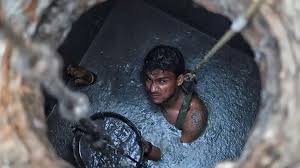
In January this year, the Supreme Court banned manual scavenging in all major cities, including Hyderabad, and warned criminal action against officers or contractors still engaging in it. A 40-year-old Dalit manual scavenger died on Sunday, June 8, after he accidentally slipped into a manhole while trying to clean a sewage in Tamil Nadu’s Thoothukudi district. The incident occurred behind the Tiruchendur Government Hospital. The deceased has been identified as Sudalaimani, who hailed from Tirunelveli district. Sudalaimani worked as a contract worker. On Sunday, he along with other sanitation workers, was deployed by the Tiruchendur municipality to clear a blockade in an underground drainage system located behind the hospital. While trying to enter the manhole, Sudalaimani slipped and fell inside. Although he was pulled up by the fire and rescue team and rushed to the government hospital, doctors pronounced him dead on arrival. A case under section 194 (accidental death) was registered. However, there is mention of death due to manual scavenging, The News Minute reported. Manual scavenging in India The Manmohan Singh-led UPA government introduced the Prohibition of Employment as Manual Scavengers and Their Rehabilitation Act, 2013, banning all forms of manual scavenging, including the handling of human excreta, in India. It is a cognizable and non-bailable offence. Lakdikapul Gated CommunitySt JosephsGermanten Hospital However, under Section 2(g) of the Act, a manual scavenger is defined as a person who manually cleans, carries, disposes of, or handles human excreta from insanitary latrines, open drains, or pits connected to such latrines, as well as from railway tracks or similar locations. Importantly, this definition does not cover those working in sewers or septic tanks and further states that workers who use protective equipment are not considered manual scavengers. In 2014, the Supreme Court ordered compensation of Rs 10 lakh to families of those who died while cleaning sewers and septic tanks. In January this year, the top court banned manual scavenging in all major cities – Chennai, Hyderabad, Delhi, Bengaluru, Kolkata and Mumbai – and warned criminal action against officers or contractors still engaging in it. Courtesy : TSD Note: This news is originally published on https:/thesiasatdaily.com/ and is for use by the non-military/non-commercial community, especially those in the human rights sector.
Dalit youth shot dead after dispute over ration distribution in Chhatarpur

Bhopal: A dalit youth was shot dead while his brother got injured after a routine ration distribution turned violent in Chhatarpur district of Madhya Pradesh. The incident took place at Bilhari village under Naugaon police station area on Sunday. Pankaj Prajapati, 19, was killed, and his brother Ashish was injured after gunfire erupted during a scuffle at the local ration shop. The incident triggered outrage in the region. The violence broke out around 10 am at the Gram Panchayat’s ration shop, which is being run from the house of local resident and advocate Praveen Pateria. Video footage of that incident surfaced on Monday. Eyewitnesses told police that Pankaj and Ashish Prajapati from Kumhartoli village got into an argument with Pateria over the non-distribution of ration for the past three months. The altercation intensified when the two brothers returned to the shop with their family members. It is alleged that Praveen Pateria, along with Naveen Pateria and Ramsevak Arajaria, began hurling abuses. The situation went out of control when Praveen climbed onto the roof and opened fire. One bullet struck Pankaj in the thigh, and although he was referred to Gwalior for treatment, he succumbed to his injuries en route. Ashish sustained an injury and was released after receiving primary care. Two videos of the incident went viral on Monday — one capturing the altercation, and the other showing Praveen firing a gun from the rooftop. The victim’s family gathered at the Naugaon hospital and refused to allow a postmortem, citing inaction by the police. They later blocked the road outside the tehsil office in protest. During the demonstration, a man attempted self-immolation by dousing himself in petrol, but was stopped in time by the police. Initially, police filed a case against only one accused, which intensified the villagers’ anger. After nearly five hours of protest, the police registered a case against all three — Praveen, Naveen, and Ramsevak — under charges including murder and relevant sections of the SC/ST (Prevention of Atrocities) Act, Arms Act, and the Bharatiya Nyaya Sanhita (BNS). The FIR includes charges under Sections 115(2), 109(1), 296 of the BNS, and Sections 3(1)(d), 3(1)(dh), 3(2)(v), 3(2)(va) of the SC/ST Act, along with Sections 25-27 of the Arms Act. Courtesy : TOI Note: This news is originally published on https:/timesofindia.com/ and is for use by the non-military/non-commercial community, especially those in the human rights sector.
Rahul seeks immediate action against culprits
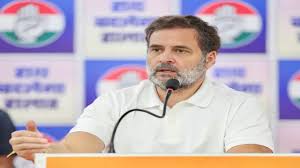
Bhopal: Lok Sabha LOP Rahul Gandhi on Monday said that the 11 years of Narendra Modi govt was full of humiliation, violence, and discrimination against Dalits. Rahul Gandhi was reacting to the death of 19-year-old Dalit youth Pankaj Prajapati in Bilahari, Chhattarpur district on Sunday. Taking to X, Rahul Gandhi said, “In Madhya Pradesh, 19-year-old Pankaj Prajapati was shot dead in public only because he, being a Dalit, demanded his share of rights. FIR was not registered, postmortem was postponed – because the guilty leader is sitting in the lap of power and the power belongs to Manuwadi and anti-Bahujan BJP.” He added, “The 11 years of Modi govt was full of humiliation, violence, and discrimination against Dalits, adivasis, backward classes, and minorities. The conspiracy to institutionally make them second-class citizens and keep them away from the mainstream is continuing. The culprits should be arrested immediately and given the harshest punishment. I stand with the Prajapati family and every Bahujan of the country. This is a fight for respect, justice, and equality, and we will win this fight at all costs.” State Congress president Jitu Patwari said that the Bilahari firing incident exposes the failure of law and order in MP. “This heinous crime has once again exposed the deteriorating law and order situation in Madhya Pradesh under the BJP govt,” he said. TNN Courtesy : TOI Note: This news is originally published on https:/timesofindia.com/ and is for use by the non-military/non-commercial community, especially those in the human rights sector.
Dalit youth shot dead at MP ration centre: Rahul Gandhi slams BJP govt, demands justice
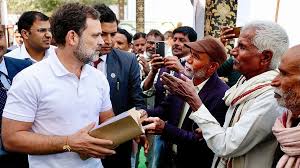
Chhatarpur, Jun 10: In a deeply disturbing incident that has sparked outrage, a 19-year-old Dalit youth, Pankaj Prajapati, was allegedly shot dead during a scuffle at a government-run ration distribution centre in Bilhari village, Chhatarpur district of Madhya Pradesh on Sunday. The youth, who had reportedly gone to collect his entitled ration, was caught in a heated argument with the local ration distributor, Ramsevak Arjaria. The verbal spat soon escalated as others joined in, and amid the chaos, Pankaj sustained a gunshot wound and collapsed on the spot. Though he was immediately rushed to a nearby hospital, doctors declared him brought dead. As the investigation unfolds, police have booked three individuals in connection with the incident — including local BJP worker Praveen Pateria, his brother Naveen Pateria, and the ration distributor, Ramsevak Arjaria. They have been charged under Sections 115(2), 109(1), and 296(5) of the Bharatiya Nyaya Sanhita (BNS). The exact identity of the shooter, however, remains unclear as the probe is still underway. Reacting sharply to the incident, Congress leader and newly appointed Lok Sabha Leader of the Opposition Rahul Gandhi took to social media platform X (formerly Twitter), holding the BJP-led Madhya Pradesh government responsible and accusing them of enabling caste-based violence. “Pankaj Prajapati was shot dead in broad daylight simply because he was a Dalit and had the courage to demand his rightful share,” said Gandhi in a scathing post. He used the occasion to highlight what he described as “11 years of humiliation, violence, and systemic discrimination” under the leadership of Prime Minister Narendra Modi. Demanding immediate arrest and strict punishment of the culprits, Rahul Gandhi extended his solidarity to the bereaved family, stating, “I stand with the Prajapati family and every Bahujan in this country. This is not just about one life — it is a fight for dignity, equality, and justice. And we will win this fight at any cost.” The tragic death of the young Dalit man has reignited conversations around caste-based discrimination and violence, particularly in rural parts of Madhya Pradesh. Authorities continue to investigate the matter even as pressure mounts from civil society and political circles for swift and impartial justice. Courtesy : Daijiworld Note: This news is originally published on https:/daijiworld.com/ and is for use by the non-military/non-commercial community, especially those in the human rights sector.
Beyond Binaries: The Kerala High Court Judgement On Transgender Parenthood
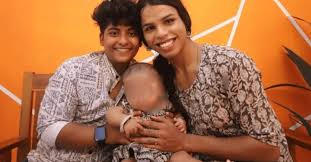
The Kerala High Court recently ruled in favour of a writ petition filed by a transgender couple seeking the issuance of a birth certificate for their child which mentioned them as “parent” rather than “mother” and “father”. n a recent historic and landmark judgement, one that could ripple beyond Kerala and can have a resounding impact on the institutional visibility of the queer community, the Kerala High Court recently ruled in favour of a writ petition filed by a transgender couple seeking the issuance of a birth certificate for their child which mentioned them as “parent” rather than “mother” and “father”. Stating the concerns raised as valid, the single Judge Bench of Ziyad Rahman A.A., J., held that the issuance of a certificate in the format as prescribed under the provisions contained in the Registration of Births and Deaths Act, 1969 (RBD Act) and Kerala Registration of Births and Deaths Rules, 1999, can cause severe difficulties to the child in life ahead. The Court also asserted that the laws that are not in line with societal changes need to evolve, and the Court must intervene to address the concerns of the concerned parties. Birth certificates being foundational documents determine access to a host of rights. Thus allowing the use of gender-neutral terminology, this ruling holds significant importance as it challenges one of the many structural ways the state invisiblises the queer community. The case in detail: challenging the binary institutional framework The couple, Ziya Paval (transgender woman) and Zahad (transgender man), had made waves back in 2023 when they became the first known transgender couple in India to have a biological child. Upon birth the Kozhikode Corporation issued a birth certificate that listed Zahad as the “mother (transgender)” and Ziya as the “father (transgender)”, ignoring and contradicting their self-identified genders. The couple felt distressed, stating that such a discrepancy could create serious problems in the life of the child—with regards to identification documents and school admission— since the biological mother of the child identified herself as a male under the Transgender Persons (Protection of Rights) Act, 2019, and was living as a male member of the society. Source: YourStory They approached the Kozhikode Corporation to issue a new birth certificate describing them simply as “parent” rather than mother and father or mentioning their gender. The Corporation dismissed their request, stating that the certificate was prescribed in accordance with the format contained in the RBD Act 1969 and the Kerala Registration of Births and Deaths Rules, 1999, which only accommodates the traditional binary nomenclature. The couple’s request was not entertained, as the corporation held that there were no other statutory provisions under which they could issue an alternative gender-neutral birth certificate. This decision led the couple to file the writ petition seeking a legal route to reinstate their fundamental rights of equality and the right to self-perceived gender identity as stated under the Transgender Persons (Protection of Rights) Act, 2019. This decision led the couple to file the writ petition seeking a legal route to reinstate their fundamental rights of equality and the right to self-perceived gender identity as stated under the Transgender Persons (Protection of Rights) Act, 2019. ‘Since scientifically there’s some contradiction in the fact that males give birth to a child, the petitioners requested the authorities to avoid the names of the father and mother but simply write ‘Parent’ to avoid further embarrassment which the third petitioner (child) would have to face during her lifetime, viz., school admission, Adhar Card, PAN Card, Passport and various other documents including job and connected matters,’ the transgender couple had explained in their petition. The apprehension of discrimination based on lived realities of transgender individuals The Kerala Court evoked the National Legal Services Authority v. Union of India (2014) judgement where the Supreme Court legally recognised the “third gender”/transgender persons and ruled that they are entitled to the fundamental rights and protection under the Constitution. Represented by Padma Lakshmi, Kerala’s first transgender lawyer argued that the rejection of their request violated their fundamental right to equality under Article 14 of the constitution. The Court maintained that the grievance raised by the couple can not be sidelined since the parental status of the couple was totally in contradiction to the life pursued by them presently. Thus, the confusions and prejudices, as perceived by the couple, in prospect were genuine and very likely to occur. Source: Rediff The Court also adjudicated that even though the child—the recipient of the birth certificate— was not a transgender person, his identity was linked and inseparable from that of the parents, who are a transgender couple, thus providing him equal protection under the Transgender Persons Act 2019. Legal precedent and the evolving nature of society Further, the court stated that the law cannot remain static, and the laws need to evolve in accordance with the changes in the society and lifestyle of people. This was consolidated by referencing the Supreme Court verdict in the Badshah v. Urmila Badshah Godse (2014) judgement, where the Supreme Court had addressed the importance of adopting different approaches in “social justice adjudication” and “social context adjudication” when interpreting laws. This meant that courts need to interpret the legal meaning reflecting the lived realities rather than being congested by the rigid and outdated categories. This statement signified the importance of purposive interpretation of existing laws to accommodate arrangements that usually expunge the queer community, thus allowing one to look beyond cis-heteronormativity. The Court also pointed out that the RBD Act was framed considering the binary concept of gender, and there was no concept of legal recognition of the third gender. The Court also pointed out that the RBD Act was framed considering the binary concept of gender, and there was no concept of legal recognition of the third gender. It held that necessary modifications could be made in appropriate cases where the interests of the transgender persons were involved. It also held that when statutory language does not account for the societal transformation,
Ambedkar Nagar News: BJP Mandal Vice President along with his friend beat up a Dalit girl, case filed
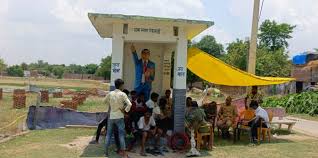
Baskhari (Ambedkar Nagar). The officials of BJP organization, who talk about women’s rights, are busy tarnishing the image of the party. The latest case is from a village in Hanswar. Here, a Dalit girl returning from the field with her younger brother was beaten up by BJP’s Hanswar Mandal Vice President along with his friend. The girl got injured due to the beating. Advertisement: 0:13 This is being told to be the third case of Dalit harassment against the Mandal Vice President. Sandhya, who lives behind Hanswar market, had gone to the field with her younger brother on the evening of June 6. She was returning from the field in the evening. It is alleged that Anoop Yadav, resident of Takiya and BJP Mandal Vice President Sumit Tiwari, resident of Babhanhiya, started quarreling with the girl. They abused her, and when she protested, they beat her up. Due to this, the girl got injured. She was also threatened with death if she complained to anyone. Inspector in-charge Virendra Bahadur Singh said that both the accused were taken into custody and challaned for disturbing peace. The injured girl is being medically examined. Courtesy : Hindi News
Mob Ties Three Minor Dalit Boys to Flagpole in Karnataka’s Gadag and Beat Mercilessly
The victims were accused of sending ‘obscene messages’ to a girl from an upper-caste community, which the attackers used as a pretext for the public assault BENGALURU – A horrific incident of caste-based violence has come to light in Harogeri village, Karnataka’s Gadag district, where three minor Dalit boys were brutally assaulted by a mob of around 50-60 upper-caste Hindus. The boys were accused of sending “obscene messages” to a girl from an upper-caste community, which the attackers used as a pretext for the public assault. The incident occurred on May 28, but videos emerged on Sunday (June 7), showing the boys being tied to a gram panchayat flagpole and beaten black and blue with sticks, slippers, and ropes. Eight people have been arrested so far, with police efforts ongoing to trace the remaining accused. A case has been registered under the SC/ST (Prevention of Atrocities) Act and the Bharatiya Nyaya Sanhita (BNS). In addition, a separate case under the Protection of Children from Sexual Offences (POCSO) Act has been registered against 30 individuals in connection with the incident, Naragund police inspector B. Manjunath said. One of the boys attempted suicide by consuming poison, allegedly due to shame and trauma, and is currently in critical condition at KIMS Hospital in Hubballi. Local sources allege that initial attempts were made to suppress the case, with pressure from community leaders to reach a compromise. The police registered the case and began arrests only after the disturbing videos went viral. Activists are demanding immediate arrest of all accused, strict enforcement of SC/ST atrocity laws, and comprehensive rehabilitation for the victims and their families. The incident has sparked widespread outrage on social media and raised serious concerns about caste-based violence, law enforcement delays, and the persistence of untouchability in rural Karnataka. A parent of one of the boys poignantly said, “Untouchability is still very much alive in our village; this incident is just another example of the discrimination we face every day.” Courtesy : Clarion Note: This news is originally published on https:/clarion.com/ and is for use by the non-military/non-commercial community, especially those in the human rights sector.
Footpath, trees near Dalit Prerna Sthal won’t be harmed for e-way widening: Noida
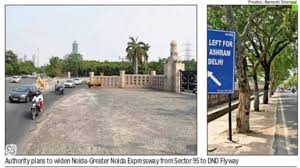
Noida: Noida Authority clarified on Sunday that the footpath and trees along a 600-metre long and 5.5-metre wide stretch near Dalit Prerna Sthal will not be damaged during an upcoming project. This comes a day after TOI reported that Authority plans to widen Noida Expressway from Sector 95 to DND Flyway loop by adding the 600-metre long and 5.5m wide stretch. Noida Authority is yet to issue a tender to hire a contractor for this project. In a press note issued on Saturday, the Authority initially said that a consultant hired to explore options for widening the expressway recommended removing a one-metre-wide roadside track, a 1.4-metre-wide footpath and a 3.1-metre-wide paved tiled surface to expand the carriageway by 5.5 metres. Noida’s clarification came after concerns were raised on social media platform X, with users questioning the widening of the road and expressing fears about possible damage to greenery and pedestrian pathways. Noida Authority deputy general manager (Civil) Vijay Rawal said that while some trees stand on the left side of the expressway and a footpath runs between the expressway and the Sthal, both will remain intact. “The trees and footpath will not be harmed. On the left side of the footpath, there are tiles which will be removed to make way for the project,” Rawal explained. There are nearly 40-50 fully grown trees along the way. The footpath is also used by a number of visitors to Dalit Prerna Sthal who come to see the memorial and also to observe the birthday celebrations of Dr BR Ambedkar, Kanshi Ram, Mayawati and other Dalit stalwarts. Nearly 1,000 people visit Dalit Prerna Sthal on a normal day, while the numbers increase to 10,000 on the birthday celebrations of stalwarts. “What is the need for this widening and how many trees will be cut? If the pavement is damaged, how will commuters and visitors to the Sthal navigate?” asked Brajesh Sharma, a resident of Sector 78, in an X post. Another commuter said that the traffic pressure has immensely increased, leading to a choke point near the DND Flyway loop during peak hours. “The road widening is important, but that should not be conducted by harming the trees,” he said. Nearly five lakh vehicles use the Noida Expressway daily, with around two lakh entering the city via the DND Flyway and another one lakh each from Kalindi Kunj, Chilla Border and Noida’s internal sectors. Courtesy : TOI Note: This news is originally published on https:/timesofindia.com/ and is for use by the non-military/non-commercial community, especially those in the human rights sector.
‘Where Is Humanity?’: Khan Sir Reacts To Muzaffarpur Rape Case Of Minor Dalit Girl
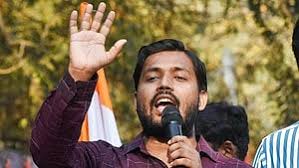
His remarks came after the tragic death of an 11-year-old Dalit girl, who was reportedly sexually assaulted and then denied timely medical care, ultimately succumbing to her injuries. Patna: Responding stronly to Muzaffarpur rape case, popular educator and YouTuber Khan Sir on Saturday questioned the very fabric of humanity in today’s society. His remarks came after the tragic death of an 11-year-old Dalit girl, who was reportedly sexually assaulted and then denied timely medical care, ultimately succumbing to her injuries. Speaking to IANS, Khan Sir said, “This is not just a case of crime, this is a question of our collective humanity.” Describing the inhumanity of the incident, he said, “Arif Mohammad Khan (Bihar Governor), who came to meet me, was very shaken. He told us, ‘How can a human being be so devoid of empathy that a child – a 11-year-old girl – comes out limping after being raped, and even then, the system fails to respond?’ She was taken away in an ambulance, and even then, she was shuttled between hospitals without proper treatment.” “Where are we going as a society? The pain of another should feel like our own – this is the essence of humanity. If we lose this, then what is the difference between humans and animals?” he told IANS. “Why do some lawyers take up the cases of such criminals—rapists, acid attackers, and murderers? I know many responsible lawyers who refuse to fight for someone they know is guilty. It’s time more people follow this principle. The unity and conscience of the legal community can make a real difference.” He also wished the nation on Bakra Eid, expressing his deep respect for Bihar Governor Arif Mohammad Khan, who visited his classroom on the occasion. “It’s our good fortune that someone as intellectual and compassionate as Arif Mohammad Khan is serving as our Governor,” he said. Sharing an anecdote from the visit, Khan Sir recalled how the Governor insisted on visiting the classroom and was moved by the inclusive atmosphere. “We have reserved front-row benches for a person with disability. They study free of cost, and we make sure they get the best experience. When the Governor saw this, he was impressed and even expressed interest in taking a class here someday.” Calling it a proud moment, Khan Sir added, “He said, ‘Tell me a topic and I will come to teach your students.’ It’s a great honour, and we are looking forward to that day.” When asked about his personal life, as he was recently married, he said, “Everything is normal, just like any other couple.” Khan Sir further responded to the Bihar government’s action of suspending the Medical Superintendent of Sri Krishna Medical College and Hospital in Muzaffarpur, where the girl was allegedly denied timely treatment. “The suspension is a start, but it’s not enough. There should be a clear protocol for critical cases. If someone is shot or raped, you don’t delay treatment for paperwork. She died in the ambulance, waiting for admission. This is not just negligence – it’s criminal apathy.” He proposed systemic reforms in hospital operations. “In big hospitals, there is always a separate corridor for emergencies. Why don’t we have one in Bihar’s biggest government hospital? There should be a direct route for super-critical cases. A building alone doesn’t make a hospital – it’s the system and intent inside that matter.” “In smaller towns or villages, you can understand some lack of infrastructure. But in Muzaffarpur? This is unacceptable. It brings shame to the entire district, the entire state.” Khan Sir concluded with a plea: “We need to look within. These brutal crimes are becoming frequent. The time for silence is over. We have to stand up – as citizens, as educators, as humans. Because if we don’t, we fail not just the victim, but the idea of humanity itself.” (Except for the headline, this article has not been edited by FPJ’s editorial team and is auto-generated from an agency feed.) Courtesy : TFPJ Note: This news is originally published on https://thefreepressjournal.com/ and is for use by the non-military/non-commercial community, especially those in the human rights sector.