
Intra-Dalit Fighting in Bihar Takes Toll on NDA’s Politics
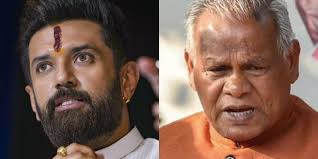
The supremos of the LJP and the HAM are baying for each other’s blood when Rahul Gandhi has visited the state to woo Dalits and EBCs. The strategy of the Bharatiya Janata Party (BJP) and its alliance partner, the Janata Dal (United) JD(U), to pitch one Dalit caste against the other for sheer political ends has started making an ugly impact in several states, especially Bihar, where it has acquired a violent form too. Strangely in this poll-bound state, two Union ministers belonging to this section of society, one leading the Lok Janshakti Party (LJP) (Chirag Paswan) and the other patronising the Hindustani Awam Morcha (HAM) (Jitan Ram Manjhi), are locked in a grim battle to finish each other off. In neighbouring Uttar Pradesh, the BJP’s bid to woo non-Jatav votes has caused a deep rift within the Scheduled Caste community that makes up 21.3% of the state’s population. As the Jatavs, the largest Scheduled Caste group, are still inclined towards Mayawati’s Bahujan Samaj Party (BSP), the BJP has left no stone unturned in attracting other, smaller Dalit castes. Chirag’s ambition In Bihar, the latest round of bitter squabbling within two Dalit parties started on June 8, when Paswan held a rally in Arrah, a town about 70 kilometres west of Patna. His party, for all practical purposes, projected him as the future chief minister of Bihar. This was bound to alarm Nitish Kumar’s JD(U), as after the 2020 assembly election, the party accused Chirag of damaging its poll prospects in many seats. The LJP contested that election independently and many of its candidates were BJP rebels who could not get a ticket from that party. They included senior Rashtriya Swayamsevak Sangh functionary Rajendra Singh and former legislators Rameshwar Chaurasia and Usha Vidyarthi. As Paswan himself is interested in contesting the assembly election from the Shahabad region of western Bihar – in which Arrah is located – it is quite natural for the JD(U) to feel uneasy. It was Bikramganj in this very region where Prime Minister Narendra Modi addressed a public rally on May 30. As the JD(U) has struggled to come up with a new leader as Nitish ails, Paswan is gradually projecting himself as a likely successor within the National Democratic Alliance (NDA) in Bihar. The BJP has no mass leader of its own. Herein lies the crux of the matter. Former chief minister Manjhi was quick to respond to Paswan’s muscle-flexing. He said that he too had organised several big public meetings in the state and that it is those (read Paswan) who have a narrow support base who feel the need to speak loudly. Not only that, the HAM supremo charged Paswan with manipulating his rallies to make it look like they had bigger turnouts than they actually did. He also said that this is a pressure tactic adopted by the LJP ahead of seat-sharing talks within the NDA. Independent political observers are of the view that Manjhi was in fact speaking on behalf of a JD(U) that is facing an existential crisis. It needs to be mentioned that after the death of Chirag’s father and Union food minister Ram Vilas Paswan on October 8, 2020 – that is, just three weeks before the assembly election that year – Manjhi had written a letter to Prime Minister Modi seeking a judicial probe into his death. An infuriated Chirag had then hit back by stating that Manjhi should be ashamed of himself. If he was so concerned about his father, he should have come to the hospital to inquire about health, which he did not, said Chirag. Genesis of the tussle But what is of great concern is that the battle between the two Dalit outfits is not only confined to seat-sharing arrangements within the NDA. Now, it has acquired a serious violent turn. For example, on September 18 last year, 34 Dalit houses were torched in the outskirts of Nawada town in Bihar. Incidentally, the alleged perpetrators of the crime were Paswans led by one local strongman named Nandu Paswan. The victims were mostly Musahars (Manjhi’s castemen) and some Ravidas. So, the attackers and those who had suffered were all Dalits. Land grab was said to be the main motive behind this unusual type of clash. Thus, in some parts of the rural hinterland, it can no more be said that only upper castes and backward castes are responsible for atrocities on Dalits; relatively well off Dalits have also targeted poor Dalits. The genesis of this intra-Dalit quarrel can be traced back to the early years of Nitish’s government. A few months after coming to power in November 2005, the new chief minister constituted the Mahadalit Commission. In those early days when the media was busy praising him sky-high, no journalist questioned this decision. However, the LJP and the Rashtriya Janata Dal (RJD), who were both constituents of the ruling United Progressive Alliance at the Union government level, strongly disapproved of this move of dividing Dalits and weakening their common cause. Initially, 18 of the 22 SCs of Bihar were categorised as Mahadalits – that is, the poorest among SCs. Only the Dussadhs (Paswans), Ravidas (known as Jatavs in north India), Dhobis (washermen) and Pasis (toddy sellers) were kept out of the list of Mahadalit castes, who were selected for special preferential treatment. This caused widespread resentment within SCs. After much hue and cry the Nitish government included three other castes – the Pasis, Dhobis and Ravidas – in the Mahadalit list. The Dussadhs remained the only exception. As if that was not enough, Nitish picked up Manjhi, a relatively little-known figure then, to become chief minister after the JD(U)’s debacle in the May 2014 Lok Sabha election. The chief minister took moral responsibility for this poor showing in which his party could win only two out of 40 seats. The JD(U) had then contested the election in alliance with the Communist Party of India and not the BJP, as Nitish was dead against
Minor Dalit girl blackmailed, raped in Akola

Akola: Some minority youths allegedly raped a minor Dalit girl by threatening to make her obscene photos viral. On the basis of a complaint, a case has been registered at Khadan police station. The accused have been booked on charges of kidnapping and rape etc. According to police, some minors may be involved in this incident. According to social worker Sunny Janjal, mother of the victim complained to him about some minority youths blackmailing her minor daughter and exploiting her sexually. Janjal took the woman to the police station and a complaint was registered. Courtesy : TOI Note: This news is originally published on https:/timesofindia.com/ and is for use by the non-military/non-commercial community, especially those in the human rights sector.
Bihar Commission Suggests Age Relaxation And Welfare Measures For Upper Caste Poor In Govt Jobs | Details
The newly formed commission for the development of upper castes in Bihar held its first meeting, advocating for age relaxation in government jobs for economically weaker sections among the upper castes. The commission also discussed the need for hostels and coaching facilities at the district level for students from economically weaker sections. Sub-committees have been formed to explore these issues further and examine the caste-based census report to determine how age relaxation can be implemented. In its first official meeting, the Bihar State Commission for the Development of Upper Castes recommended that economically weaker candidates from upper castes should be granted age relaxation in government job recruitment, similar to the provisions available for other backward classes. The meeting was chaired by commission member Dr Mahachandra Prasad Singh and attended by Vice President Rajiv Ranjan Prasad and other members. A three-member sub-committee led by member Rajkumar Singh has been formed to review the caste-based census data and suggest possible measures for extending age relaxation to the upper caste poor. Additionally, two other sub-committees have been set up: one under the chairmanship of Jai Krishna Jha to assess the feasibility of constructing hostels at the district level for economically backward students, and another under Dayanand Rai to explore the need for government-supported coaching facilities for job aspirants from the same category. The commission acknowledged that economically weaker individuals from upper castes often face limited opportunities and emphasised the need to extend facilities currently provided under economic reservation to this segment as well. Courtesy : Kamakshi Bishnoi, The Daily Jagran Note: This news is originally published on https:/thedailyjagran.com/ and is for use by the non military/non-commercial community, especially those in the human rights sector.
Naidu govt approves 10-hr workdays, night shifts for women in bid to attract more industry, investment
The amendment bills are expected to be introduced in the next assembly session. Hyderabad: The Chandrababu Naidu government, under the slogan ‘Speed of Doing Business’, has decided to extend minimum working hours for private employees, while also allowing women to work in night shifts, in a major labour reform move. The extended work hour rules will also apply to shops and establishments in Andhra Pradesh, meaning the IT sector too. In a bid “to reduce procedural compliance burden on industrial establishments” and thereby attract new industries, investments into the state, the Naidu cabinet has approved amendments to labour laws to extend daily working hours to 10 from present 9. According to Section 54 of the Factories Act, 1948, no adult worker “is required or allowed to work in a factory for more than nine hours in any day”. The Naidu government has also proposed to increase the interval for rest to 6 hours from the current 5. Going for further amendments in the same law, the Naidu government has decided to let women work night shifts. Section 66 (1) (b) of the Factories Act states that “no woman shall be required or allowed to work in any factory except between the hours of 6 pm and 7 pm.” “But now, women may work during night time with safeguards like consent, transport, security etc., facilities and under CCTV surveillance in well-lit areas,” Information and Public Relations Minister Kolusu Parthasarathy told reporters after the cabinet meeting last Wednesday at Amaravati. “The facilitation would allow women’s higher work participation in the organised sector, major industries, and corporate areas. It empowers women economically and promotes gender inclusion in industrial growth,” he added. The total number of overtime work hours in a quarter—currently restricted to 75—can now go up to 144. “Through these amendments, we are adopting global best practices. If the labour laws, regulations are convenient for workers and investors, businesses will come here naturally,” said Kolusu, adding that the relaxations are being brought under the government’s push for ease of doing business in AP. The cabinet thus approved proposals from the Labour, Factory Boilers & Insurance Medical Services Department to amend certain provisions of sections 54, 55, 56, 59, 64, 65, 66 of the Factories Act through the Andhra Pradesh Factories Act Amendment Bill, 2025, and certain provisions of sections 9, 10, 16, 17, 73 of the AP Shops and Establishments Act, 1988, through the AP Shops and Establishments Amendment Bill, 2025. The amendment bills are expected to be introduced in the next assembly session. However, industrialists are divided on the proposed changes. “In manufacturing sectors, you cannot expect an employee to operate for long hours as the hard work tires them by 6-7 hours, bringing down efficiency thereafter. A worker losing focus is not good, posing dangers of industrial mishap or productivity losses,” Lakshmi Prasad Mekala, MD, Sujay Biotech, told ThePrint. “Of course, the easing will be beneficial to other sectors like marketing, sales, small businesses, and those under the Shops and Establishments Act,” Mekala, past chairman of the Confederation of Indian Industry Andhra Pradesh, added. Courtesy : Prasad Nichenametla, The Print Note: This news is originally published on https:/theprint.com/ and is for use by the non military/non-commercial community, especially those in the human rights sector.
Election Commission’s big step regarding Bihar elections, will Rahul Gandhi’s confusion be cleared now?
Bihar Chunav News: After Rahul Gandhi’s allegation of lack of transparency in voting, the Election Commission has taken a big step regarding Bihar elections. Bihar elections will be the first election in the country in which there will be 100 percent webcasting. Patna: The Election Commission has made webcasting mandatory at all polling stations ahead of Bihar elections. This decision has been taken to bring transparency in the election process and increase monitoring. Now there will be webcasting at 100% polling stations instead of 50%. The Election Commission (ECI) has directed the Chief Electoral Officers (CEOs) of all states and union territories to do webcasting at all polling stations. Webcasting includes live video recording and monitoring. The Election Commission said in an announcement on Monday, ‘The Commission has issued instructions to use several citizen measures to monitor various stages of the election process. This also includes webcasting on the day of polling. It is an internal management tool to prevent the election process from getting spoiled.’ Bihar elections first state where 100% webcasting Bihar will be the first state where 100% webcasting will be implemented. Assembly elections in Bihar are expected to be held in October or November this year. The Election Commission has said that webcasting will be done in areas where there is internet connectivity. The poll panel said in a message to all state chief electoral officers, ‘It has been decided that webcasting will be done at all polling stations, i.e. 100% polling stations with internet connectivity. However, in shadow areas, proper arrangements for videography photography etc. may be made.’ Till now webcasting was mostly done at important polling stations. Earlier, webcasting was done at 50% polling stations and important polling stations. The aim was to ensure that the voting process was not spoiled. Webcasting monitoring control rooms to be created In December last year, the government had changed an election rule. Under this change, certain electronic documents such as CCTV camera and webcasting footage, as well as video recordings of candidates, were barred from public inspection. This was done so that these are not misused. Based on the recommendation of the EC, the Union Law Ministry amended Rule 93 of the Conduct of Election Rules, 1961. The purpose of this amendment was to restrict the type of papers or documents open for public inspection. How will webcasting be done at polling stations? There will be a webcasting monitoring control room at the state level, district level and AC level. It will be monitored by a nodal officer appointed at each level. The nodal officer will be responsible for ensuring the following for the smooth functioning and monitoring of webcasting on the polling day. EC’s decision after questions raised by Rahul Gandhi This decision comes at a time when Leader of Opposition in Lok Sabha Rahul Gandhi has demanded that the EC release CCTV footage of polling day in Maharashtra. Earlier this month, he had alleged that there was ‘match-fixing’ in the 2024 Maharashtra elections and demanded that the EC release video footage of voting after 5 pm. The Mahayuti alliance, which comprises the BJP, Eknath Shinde-led Shiv Sena and Ajit Pawar-led Nationalist Congress Party (NCP), secured 235 of the 288 assembly seats. Of these, the BJP alone won 132 seats, its best performance in the state’s history. However, Congress leader Rahul Gandhi claimed that the BJP-led National Democratic Alliance (NDA) used the five-stage model to undermine the democratic process in the state. After Rahul Gandhi’s allegations, the pressure on the Election Commission to maintain transparency had increased. The decision of 100% webcasting is believed to be a result of this pressure. Now it remains to be seen how much this decision improves the election process. The Election Commission has also said that webcasting data will be used only for internal purposes. This means that this data will not be publicly available. However, the Election Commission can use this data for investigation if needed. About the author Abhishek Kumar I work in NavbharatTimes.com. Journalism is both my hobby and profession. I have had the good fortune of doing journalism while working in prestigious institutions like DLA, Aaj Samaj, Dainik Bhaskar, Amar Ujala, Hindustan, Network18, NDTV, ZEE Media. It is my nature to write fearlessly on contemporary events and learn new technology…. Courtesy : Hindi News
Odisha Dalit family ostracised for resisting child marriage; police denies claims
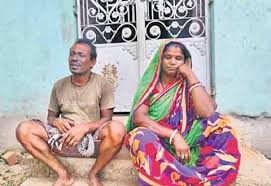
According to reports, Prasant Bar and his wife have been denied all basic amenities such as food, water, entry into temples, market places etc for the past three years. A Dalit family in Balia Pati village, located in the Balasore district of Odisha, is allegedly facing a social boycott by the villagers for the past three years for refusing to marry off their minor daughter; however, police have denied all claims, saying the matter stems from an internal dispute. According to reports, Prasant Bar and his wife have been denied all basic amenities such as food, water, entry into temples, marketplaces, etc, for the past three years. The couple has been subject to this treatment since their daughter was allegedly kidnapped by a man from another village, but was later rescued safely. However, reports claim that after their daughter returned, the village forced the couple to marry her off to the man who had abducted her. Prasant, however, remained adamant, saying that his daughter was still a minor and wanted to pursue higher education. This caused the village to turn hostile to them. A complaint was eventually registered with the Singla police station on June 14 this year by the daughter, who is now in college, regarding the ‘mental torture’ her parents were subjected to by the villagers. However, when Siasat.com reached out to the police, they denied all claims, saying the complaint was motivated by a recent dispute between Prasant and the head of the village. The police informed that Prasant used to take water from Pradeep’s water cellar for agricultural purposes, but refused to pay him money for it. The police also alleged that Prasant’s daughter, then 14, had eloped with the man willingly was not kidnapped. They also informed that the man is now married and has a son. Lakdikapul Gated CommunitySt JosephsGermanten Hospital The police say the boycott is only a few days old, unlike the three years as claimed by a few media reports. Police also alleged that Prasant had bribed the media in his favour. “We have not registered an FIR on the matter since the complainant themselves wish not to take it further, and they have said that they will talk with the villagers in a day or two and try to resolve the issue; the police will also be present to mediate,” said Inspector-in-Charge Kamalini Tandi told Siasat.com. Courtesy : Saleha Fatima, TSD Note: This news is originally published on https:/thesiasatdaily.com/ and is for use by the non-military/non-commercial community, especially those in the human rights sector. Lorem ipsum dolor sit amet, consectetur adipiscing elit. Ut elit tellus, luctus nec ullamcorper mattis, pulvinar dapibus leo.
800 Dalit families without basic infra since ’75 in U’khand village; HC calls for action

Dehradun: Uttarakhand high court has asked the state govt to explain why no action has been taken to relocate around 800 Dalit families living without electricity, piped water, healthcare, or education in Sundarkhal village in Nainital district, which was given the status of forest village (van gram) in 1975. An HC bench of Chief Justice G Narendar and Justice Alok Mahra noted that despite a 2014 committee resolution recommending relocation, no steps were taken to implement it — not even identifying an alternative site. HC fixed June 27 as the date for the final hearing and instructed all parties to be prepared. The bench had earlier directed the forest secretary to submit a progress report in response to a public interest litigation filed by the Independent Media Society. Sundarkhal, in Ramnagar block, is a Scheduled Caste-dominated village that has long remained in administrative limbo. Most of its families rely on agriculture or daily-wage labour. Though residents have lived there for decades, the forest department classified the area as encroached land in 2003, after which the state stopped extending public services — citing legal constraints tied to forest conservation laws. Since then, residents have repeatedly petitioned the state for either relocation or essential services. In 2014, following protests and RTI campaigns, a committee was formed to look into the matter. While the panel submitted a resolution recommending relocation, the proposal stalled — no land was allotted and no budget allocated. The PIL, filed by the Dehradun-based advocacy group, cited human rights violations and chronic government inaction. It argued that the state’s failure to act amounted to systemic neglect of a marginalised community. “The residents have been forced to live without basic facilities for decades,” the petition said, urging the court to either order immediate relocation or instruct the state to provide basic infrastructure at the site. The court noted that no meaningful action had been taken despite the recommendation being over a decade old. It said the matter could not be delayed further and asked the state to clarify its stand in the next hearing. Courtesy : TOI Note: This news is originally published on https:/timesofindia.com/ and is for use by the non-military/non-commercial community, especially those in the human rights sector.
Are Dalit tribal students being cheated?
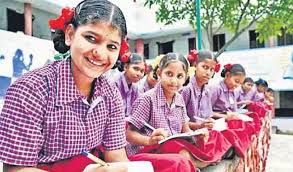
Hyderabad: In the one and a half year rule of Congress, the Best Available Scheme (BAS) scheme has also come under question. The government owes Rs 210 crore to private schools. The school management has made it clear that the scheme cannot be implemented without paying the amount. Due to this, the future of 25 thousand students has come under question and the parents and teachers of the students are angry due to no response from the government. Congress government.. Ignoring education Governments have been implementing the Best Available School Scheme for 17 years to provide free private and corporate education to SC and ST students. Through this scheme, SC and ST welfare departments issue notifications and select students and send them to private schools in the same district. The government admits SC students in class 1 and 5 and ST students in class 1, 5 and 8. After admission, it pays their fees till class 10. A primary school student is given Rs 1500. Rs 28,000 per year is paid to a student of a higher secondary school and Rs 42,000 per year including accommodation to a high school student. Text books, notebooks and school uniforms are given free of cost. Already 17,000 SC and 8,000 ST students are studying in various classes under this scheme. No payment for one and a half years The Congress government has not paid Rs 210 crore to private schools under the Best Available Scheme for one and a half years. The owners of private schools have met government officials several times and asked them to pay the fees. But they are expressing anger over the fact that the government and officials are not paying attention. It has been decided to send students who took admission earlier from schools and hostels. If the funds are not released, admissions will not be taken. The government has outstanding funds for the Best Available Scheme. We are not able to run the school due to financial constraints. No matter how many times we appealed to the government officials, there was no result. Even if we appeal to the officials, they do not pay attention. If the government does not release the funds immediately then there is no point in taking admission under this scheme from this academic year. Courtesy : Hindi News
Man beaten to death on beach; transgender, partner arrested
Chennai: A transgender woman and an autorickshaw driver have been arrested on charges of for beating a 50-year-old man to death on Marina beach on Sunday. The victim, identified as Venkatesan, was found unconscious with severe head injuries near the Nethaji statue on the beach; he later died. According to police, Venkatesan was a regular visitor to the beach. On Sunday, beachgoers found him unconscious on the sand and called police. He was rushed to a nearby hospital but was declared dead shortly after arrival. His body was sent to Royapettah Govt Hospital for postmortem examination. Marina police registered a case of suspicious death. CCTV footage from the area showed that Venkatesan was assaulted with stones by two people. Investigators identified the suspects as Rakesh, 25, an auto driver from Royapettah, and Arundhati, 19, a transgender from Mattanguppam, Triplicane. Police detained them. Investigators said Rakesh and Arundhati, who were in a relationship, were chatting on the beach. While Rakesh moved away for sometime, Venkatesan approached Arundhati and sexually harassed her. “Arundhati struck Venkatesan with a pin and stone. Rakesh, upon returning and learning of the incident, joined in the assault. The combined attack left Venkatesan fatally injured,” a police officer said. Following their confession, the two were arrested on Monday and produced before a magistrate. They were remanded in judicial custody and lodged in Puzhal Central Prison. tnn Courtesy : TOI Note: This news is originally published on https:/timesofindia.com/ and is for use by the non-military/non-commercial community, especially those in the human rights sector.
Lalu Yadav And The Ambedkar Photo Controversy: How BJP Turned The ‘Dalit’ Table In Bihar In 12 Months
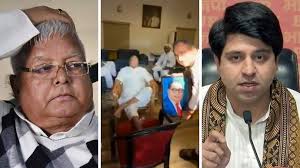
Lalu Yadav Ambedkar Photo Controversy: A viral photo of RJD chief Lalu Prasad Yadav, appearing to disrespect a portrait of BR Ambedkar, has sparked outrage among Bihar In politics, a week is a long time, and a year feels like a lifetime. It is no wonder that after last May’s Lok Sabha election results, when the BJP lost 28 seats in Uttar Pradesh and nine in Bihar, the party was uneasy. A year ago, it was grappling with how the slogan ‘400 paar’ had been used against it by Congress leader Rahul Gandhi, RJD, Samajwadi Party, and other opposition parties. They projected fears of reservation vanishing, which dearly cost the BJP. The SP called it a triumph of ‘PDA’ (pichda-dalit-adivasi) and the RJD claimed it as Dalits rejecting the National Democratic Alliance (NDA). But things have changed in Bihar, where an assembly election is scheduled later this year. A viral photo op has significantly shifted the political landscape. On RJD supremo Lalu Prasad Yadav’s birthday, a follower gifted him with a portrait of BR Ambedkar, which he seemingly did not acknowledge. The video shows the former chief minister of Bihar stretching his legs while the portrait is placed on the chair, appearing disrespectful. Ambedkar is revered by many backward communities in Bihar, where Scheduled Castes (SC) make up 19.65 per cent and Scheduled Tribes (ST) constitute 1.68 per cent of the population, as per a 2022 caste-based survey. This incident has angered over 20 per cent of Bihar’s population, presenting an opportunity for the BJP just ahead of the elections. The BJP deployed its top leaders to capitalise on the incident, including former chief minister Shivraj Singh Chouhan, who carefully criticised Lalu Prasad without hurting Bihari pride. He stressed on the disrespect shown to Ambedkar, stating: “I have one lament. What has happened to you, Lalu Yadav ji? All these talks of backwards were just for pretense? The man who gave us the Constitution, who gave us reservation, you are disrespecting that person — Dr BR Ambedkar! My mind is troubled. I am hurt. The disrespect shown to his photo exposes the real intent of Lalu Yadav and the RJD. The elephant has one set of teeth for eating and another just to show. Neither Bihar nor India will forgive Lalu ji or RJD ever.” The Bihar BJP has been vigorously promoting this photo through social media, using hashtags like ‘Dalit Virodhi RJD’. On Monday, it tweeted that five days had gone by without an apology from Lalu Yadav, attributing this to his “pride”. Union Law Minister Arjun Ram Meghwal, who is from the Dalit community, also criticised Lalu Prasad, saying: “One came with a photo of Bhimrao Ambedkar and he wanted to gift him (Lalu Prasad). The body language of Lalu ji indicates a pride, which was reflected even in the way he was sitting. Now that this matter has become so big and you have disrespected Babasaheb, but his pride stops him from apologising.” Meghwal said disrespecting Ambedkar while claiming to support the unprivileged cannot go hand in hand. “People of Bihar, in the coming days will teach Lalu ji a lesson,” he added. Union environment minister Bhupendra Yadav, who was in charge of the BJP’s 2020 Bihar polls, demanded an apology. “Bihar’s citizen hasn’t forgotten the tenure of Lalu ji. During Lalu ji’s reign, the most amount of injustices were perpetrated against extremely backwards and Dalits…He is so submerged in his pride…that scene itself depicts his pride. That is why India’s poor, extremely backwards, those who believe in social justice, know the way Lalu ji kept the photo near his leg…it hurt me too. I personally think he should apologise,” he said. Five days later, RJD leader Tejashwi Yadav dismissed the issue saying: “This is not even an issue. No one has insulted anyone…” The Bihar SC commission, however, thinks otherwise. It has issued a notice to Lalu Yadav for allegedly insulting Ambedkar on his birth anniversary, giving him 15 days to respond. As the BJP goes all out in Bihar, it is remarkable to see how much can change in a year in Indian politics. An election slogan or a photo op can indeed be decisive. Reported By : Anindya Banerjee Edited By:Oindrila Mukherjee About the Author Anindya Banerjee, Associate Editor brings over fifteen years of journalistic courage to the forefront. With a keen focus on politics and policy, Anindya has garnered a wealth of experience, with deep throat Courtesy : News18 Note: This news is originally published on https:/news18.com/ and is for use by the non-military/non-commercial community, especially those in the human rights sector.