
‘Formulate climate policy for marginalised’
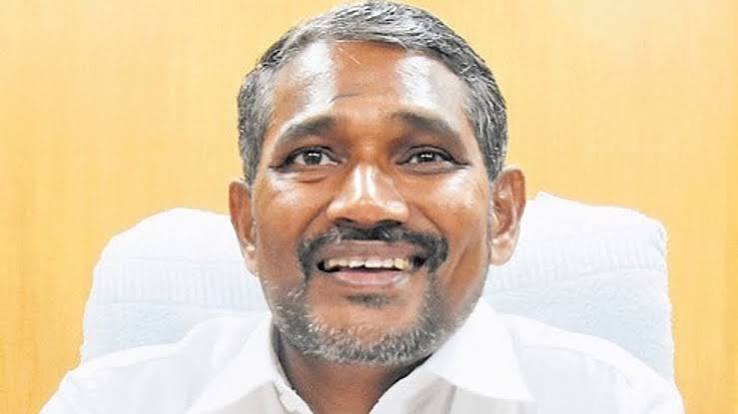
They also highlighted the role of sanitation workers, many of whom belong to Dalit communities, in restoring public spaces after disasters, while lacking adequate occupational safety. CHENNAI: Citing that Dalit and Adivasi settlements in several coastal districts of Tamil Nadu are facing disproportionate risks from floods, cyclones and extreme heat due to poor infrastructure and their location in low-lying areas, activists have sought a dedicated climate-justice policy for the marginalised communities. Following a consultation with activists from across the state, NGOs working in related fields recently submitted a charter of 16 demands to Social Justice Minister Vanni Arasu in this regard. In the charter, Comprehensive Society for Community Development Organisation (COSCO), in collaboration with National Dalit Watch of the National Campaign on Dalit Human Rights, said caste-based spatial segregation had pushed several SC and ST habitations into environmentally fragile areas. The organisations identified vulnerable settlements across Chennai, Cuddalore, Nagapattinam, Pudukkottai, Kancheepuram, Tirunelveli and Kanniyakumari, where they said inadequate drainage, drinking water, sanitation and healthcare infrastructure increased the impact of disasters and worsened inequalities. They also highlighted the role of sanitation workers, many of whom belong to Dalit communities, in restoring public spaces after disasters, while lacking adequate occupational safety. Among their short- and long-term demands is a state-supported programme to train youth in vulnerable coastal settlements in swimming, flood rescue and evacuation. Courtesy : TNIE Note: This news is originally published on https:/thenewindianexpress.com/bha and is used purely for non-profit/non-commercial purposes, especially human rights
‘Bones will mend but shattered dreams?’ Rahul Gandhi meets Bihar student protesters shot at with AK-47
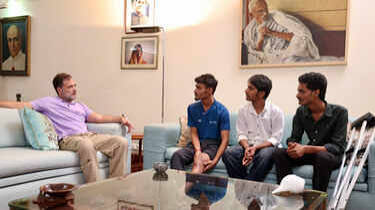
NEW DELHI: Congress leader Rahul Gandhi on Sunday shared a video of his interaction with three students who were injured during police action amid recent student protests in Bihar. The three were part of a group of students from Bihar who met the Lok Sabha leader of opposition at his Delhi residence on September 3. In a social media post, Gandhi said the three students had been “shot at”, referring to a protest in Siwan, Bihar, on July 25. “Think about it: what crime had these children committed that they were shot? They had asked the government for just three things — education, employment, and accountability,” the Raebareli MP wrote on X. The leg bone of one of the students, he added, was shattered after he was hit by a bullet fired from an AK-47. “Along with it, his dream of joining the Army and serving the country was shattered too. Bullets tore through the shoulders of two other students,” Rahul Gandhi wrote. “They were not criminals. They were children from poor families who had gone out to study carrying the dreams of their families — some wanted a good job, while others wanted to change the circumstances of their homes,” he added. The Congress leader further remarked that while their physical wounds would heal, there is no answer to how the psychological trauma they had suffered could be treated. “Mr prime minister, Mr chief minister — their broken bones will heal. Can you give them back their broken dreams?” Rahul Gandhi said, questioning Prime Minister Narendra Modi and Bihar chief minister Samrat Choudhary. Several parts of Bihar witnessed student protests, some of which turned violent, on July 25 as part of a broader agitation by the Cockroach Janta Party (CJP) in Delhi. The CJP was leading protests demanding the resignation of then-Union education minister Dharmendra Pradhan over the NEET paper leak issue, along with reforms in the education system. The CJP, which had been protesting at Delhi’s Jantar Mantar since June 21, called off its agitation on July 25, shortly after Pradhan resigned. Union minister Pralhad Joshi has since been given additional charge of the Education ministry. The Bihar government has told the Supreme Court that a police constable fired four rounds from an AK-47 into the air after being trapped in a crowd, while maintaining that no protester was injured in the firing. The constable has since been suspended. Courtesy : TOI Note: This news is originally published on https:/timesofindia.com/bha and is used purely for non-profit/non-commercial purposes, especially human rights
Punjab shunts DSP, lines 3 cops over ‘torture’ of youth who waved black flag at CM; Rahul dials victim
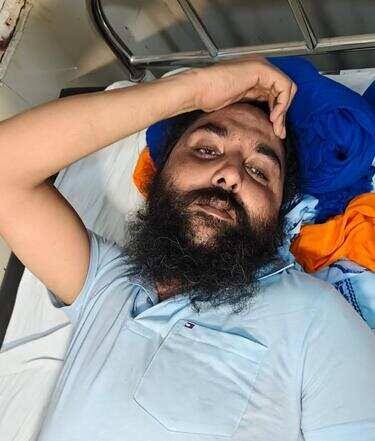
Patiala: Punjab govt and state police headquarters on Saturday transferred Sunam DSP Harwinder Singh and sent three other officers to Police Lines after a youth who waved a black flag at chief minister Bhagwant Mann alleged custodial torture. Lok Sabha Leader of Opposition Rahul Gandhi telephoned the youth amid mounting political pressure. Sangrur Rural DSP Dalbir Singh said Harwinder Singh had been posted to Police Training Academy in Bahadurgarh, Patiala. Inspector and SHO Prateek Jindal, sub-inspector and SHO Baljit Singh, and ASI Harpreet Singh were directed to report immediately to Sangrur Police Lines pending a departmental inquiry. Mohanjit Singh of Sheron village in Sangrur district’s Sunam subdivision climbed onto a rooftop and waved a black flag during an official gathering addressed by Mann on Sept 2, protesting against the state’s drug problem. Police detained him under Sections 126 and 170 of Bharatiya Nagarik Suraksha Sanhita. After securing bail, he was admitted to Sangrur Civil Hospital. Mohanjit alleged that police gave him electric shocks, pulled his beard, tore his religious symbol of faith, rubbed salt into his wounds and forcibly administered substances to fabricate a positive dope test. Punjab Pradesh Congress Committee president Amarinder Singh Raja Warring visited Mohanjit in hospital on Saturday and arranged the call with Gandhi, who praised his courage and pledged support. Warring demanded the officers’ dismissal and criminal prosecution. He and Punjab Leader of Opposition Partap Singh Bajwa petitioned National Human Rights Commission for an independent investigation. Congress also announced a statewide agitation to wave black flags wherever Mann travels. Sangrur police defended the preventive detention, describing Mohanjit as a history-sheeter named in eight FIRs, including cases involving attempt to murder, dacoity and Arms Act offences. Police said a mandatory medical examination before his production before the sub-divisional magistrate found no fresh visible injuries. Finance minister Harpal Singh Cheema condemned the incident and said the inquiry was examining the allegations. Sunam MLA and cabinet minister Aman Arora also condemned the episode, saying police officers he questioned had strongly denied the assault allegations. Courtesy : TOI Note: This news is originally published on https:/timesofindia.com/bha and is used purely for non-profit/non-commercial purposes, especially human rights
‘Trust shattered’: Rahul backs students protesting against MPSC paper leak in Maharashtra

NEW DELHI: Lok Sabha leader of opposition Rahul Gandhi on Sunday backed students protesting against alleged irregularities in Maharashtra Public Service Commission (MPSC) examinations, saying that “every student is tormented by the BJP regime”. In a post on X, Rahul said thousands of students were protesting in Maharashtra because their trust in the system had been “shattered”. “In Maharashtra, thousands of students are on the streets, protesting peacefully – the reason isn’t just one exam or recruitment, but a trust that’s been shattered by the entire system,” Rahul said. “Whether it’s the central or state government, every student is tormented by the BJP regime. Paper leaks, stalled recruitments, the unbearable cost of education, inhumane conditions in hostels, food like poison, fraud in DBT and now, they’ve seized control of a constitutional body like MPSC and destroyed its credibility,” he added. The Congress leader urged the government to listen to the students and act immediately, warning that their protests would grow louder until justice was served. “Every demand from students for their successful future is justified. The government must listen to their voice and act immediately – otherwise, this echo of the students will only grow louder until justice is served,” Rahul said. Rahul’s remarks came amid an ongoing Mumbai Police probe into the alleged leak of the question paper for the MPSC Food and Drug Administration (FDA) Inspector examination. MPSC conducted the offline examination for Drug Inspector posts on March 22. Candidates had subsequently raised concerns over a possible paper leak, but alleged that their complaints were not acted upon. The recruitment process was later completed, with a merit list of 488 candidates published. MPSC has since cancelled the recruitment process for Drug Inspector Group-B posts under the Food and Drug Administration Department following a preliminary inquiry into alleged malpractice in the screening examination. A police inquiry prima facie indicated that one candidate had received the question paper before the examination and benefited from it, the commission said. It added that it considered the seriousness of the findings before deciding to cancel the recruitment process. Police have also arrested six people, including three MPSC officials, in connection with the alleged question paper leak in the 2026 Drug Inspector Group-B screening examination, which has now been cancelled. Courtesy : TOI Note: This news is originally published on https:/timesofindia.com/bha and is used purely for non-profit/non-commercial purposes, especially human rights
Jalgaon: Collector Rohan Ghuge Calls For Sensitive Approach To Empower Transgender Community
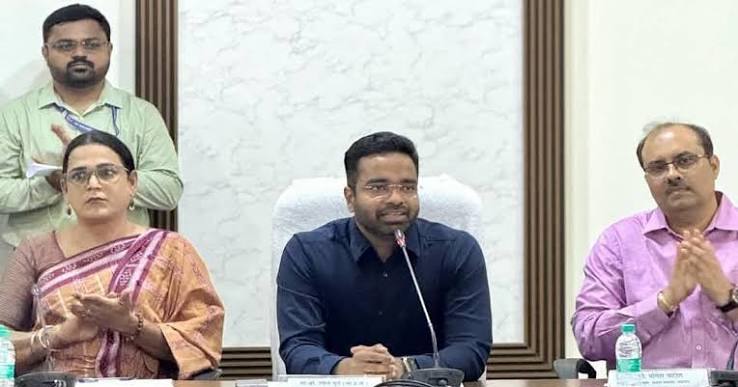
Speaking on the occasion, Ghuge emphasised that transgender individuals should not be viewed merely as beneficiaries. Instead, it is necessary to understand their needs, difficulties and aspirations as human beings. He assured that the administration would provide the necessary cooperation to empower them economically and enable them to live with dignity Jalgaon: To bring the transgender community into the social mainstream and make them economically self-reliant, it is essential to combine government schemes with empathy and a sensitive approach that understands their challenges. It is the administration’s responsibility to make transgender individuals aware of their rights and provide them with equal development opportunities, said District Collector Rohan Ghuge. A one-day district-level guidance camp for the transgender community was organised on Thursday by the Office of the Assistant Commissioner, Social Welfare, Jalgaon. The camp guided various government schemes, self-employment opportunities and ways to avail government services. Speaking on the occasion, Ghuge emphasised that transgender individuals should not be viewed merely as beneficiaries. Instead, it is necessary to understand their needs, difficulties and aspirations as human beings. He assured that the administration would provide the necessary cooperation to empower them economically and enable them to live with dignity. During the camp, officials from various departments provided information about different government schemes and services under one roof. Guidance was offered regarding voter ID cards, ration cards and benefits under the Sanjay Gandhi Niradhar Yojana. Information was also provided on government schemes for starting self-employment through the District Industries Centre, as well as the Udyog Aadhaar/Udyam registration process. Representatives from banks and financial corporations provided guidance on loan facilities, seed capital schemes, grants and various subsidy programmes. Additionally, details of transgender individuals present were collected to facilitate the issuance of Ayushman Bharat cards. Speaking on the occasion, Shamibha Patil, Co-chairperson of the Divisional Committee, drew the administration’s attention to the various problems faced by citizens and the social harassment they endure in their daily lives. Patil highlighted the challenges faced by the transgender community regarding education, employment, healthcare, housing, access to government schemes and societal treatment. They urged the administration to move beyond merely acknowledging these issues on paper and called for a sensitive understanding of the problems and concrete action to resolve them, enabling the transgender community to live with dignity and self-respect. Officials from various departments attended the camp, including Ranjit Kumawat (Tehsildar, Election Branch), Prajakta Kedar (Tehsildar, Sanjay Gandhi Niradhar Yojana), Dr Ramesh Thapte (Assistant Health Officer), Bharat Jadhav (Senior Manager, Central Bank) and Dipali Rajput (Supply Inspector). Notable attendees from the transgender community included Seema Jaan Guru (Pachora), Naina Bhagwan Patil (Dharangaon), Fija Guru (Chalisgaon) and Anjali Guru/Sanjana Jaan (Jalgaon). A large number of transgender individuals participated in the camp, along with Vishwanath Patil of the Godavari organisation and Alkesh Waghre of Plan India. Courtesy : TFPJ Note: This news is originally published on https:/thefreepressjournal.com/bha and is used purely for non-profit/non-commercial purposes, especially human rights
Minister promises govt. job, support for Dalit family in Hokrani village
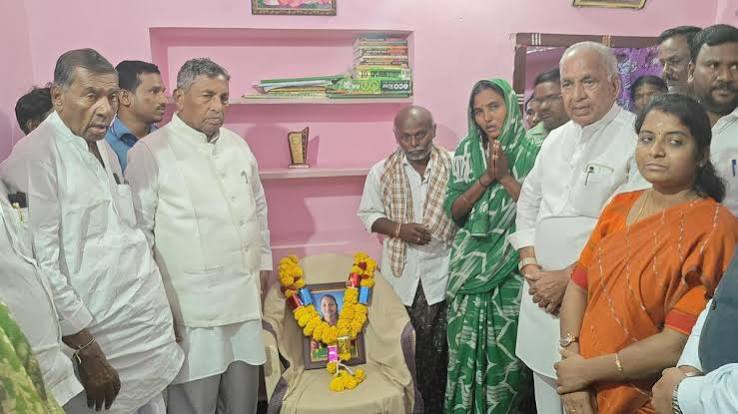
Social Welfare Minister K.H. Muniyappa has promised a government job to the brother of a 22-year-old Dalit woman, who was allegedly gang-raped and brutally murdered at Hokrani village in Raichur district’s Sirwar taluk. Visiting the woman’s grieving family on Friday, Mr. Muniyappa offered his condolences and condemned the heinous crime. In addition to securing employment for the victim’s brother, Mr. Muniyappa pledged all State support for the family and directed officials to take steps to provide irrigation facilities for their dry farmland. The woman’s body was discovered in an open well the day after the incident. Speaking during his visit, Mr. Muniyappa, who also serves as the Bengaluru Rural district in-charge Minister, issued strict instructions to local authorities against tolerating any illegal or unlawful activities in rural areas. ”A spirit of brotherhood must flourish among all communities. Officers must foster such an environment in villages and ensure that every government benefit reaches the doorsteps of the people,” he said. Calling the Hokrani incident deeply “inhuman,” Mr. Muniyappa strongly condemned the perpetrators and emphasised the importance of communal harmony. “Villages can only progress when people live in peace and mutual coordination. I urge everyone to extend their cooperation toward the holistic development of the village,” he added. Deputy Commissioner Poovitha S. directed the CEO of the zilla panchayat, the Superintendent of Police, and other administrative officials to conduct regular village visits to raise awareness regarding various government schemes. During his tour, the Minister also visited the family of another murder victim in nearby Haddinal village to offer his condolences. The Hindu Bureau Courtesy : The Hindu Note: This news is originally published on https:/thehindu.com/bha and is used purely for non-profit/non-commercial purposes, especially human rights
The university he saw from outside his school in his childhood, earned him a gold medal; a Dalit youth’s story of education, struggle, and dreams.
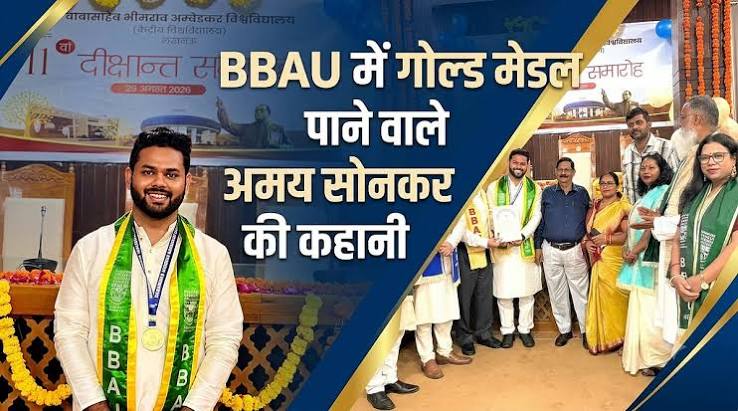
After coming to Baba Saheb Bhimrao Ambedkar University, Amay also understood BBAU’s unique role in social justice. He learned that it is a central university established under a special act and has 50 percent reservation for SC and ST students. Lucknow – The university that a student saw from his school window and path in his childhood, after a few years, was no longer just a place of study for him. He became a student there, studied law, participated in academic and co-curricular activities, raised student issues through student politics, engaged in legal awareness work, and finally received a gold medal at the same university’s convocation. This is the story of Amay Sonkar, who was awarded the gold medal in the Scheduled Caste category at the 11th convocation of Baba Saheb Bhimrao Ambedkar University (BBAU), Lucknow, on August 29th. He completed his BBA LLB (Hons) from BBAU in the 2021-2026 session, securing 82.5 percent marks. But for Amay, this medal isn’t just an academic achievement. According to him, it’s a long journey of family financial challenges, Ambedkarite ideals inherited from his father, personal experiences with caste discrimination, a desire to understand the law, student politics, legal awareness, and a view of education as a social responsibility. Amay was born in 2001 in Rasra, Ballia district, Uttar Pradesh, into an economically struggling Scheduled Caste family. His mother managed the household while his father worked to support the family. Amay explains that despite limited resources, education and social equality were given special importance in his home. His father is a postgraduate in human rights and has been involved in the Ambedkarite movement. He also served as the convener of BAMCEF. According to Amay, his father organized several meetings of Manvendra Kanshi Ram Saheb in Ballia district between 1986 and 2001 and worked to raise awareness among Bahujans about their social and political rights. Amay says that his father was his first teacher. From childhood, he heard his father speak about the struggles, thoughts, and philosophy of Babasaheb Dr. B.R. Ambedkar. His understanding of respect, equality, and social justice developed in this family environment. BBAU was opposite his school, and he dreamed of studying there. Amay completed his primary education at St. Mary’s School in Rasra. After his father’s transfer to Azamgarh, he continued his studies at St. Xavier’s School. Later, the family moved to Lucknow, and he enrolled at The Millennium School, Lucknow. He scored over 75 percent in both grades 10 and 12. Downtown was located right next to his school, Babasaheb Bhimrao Ambedkar University. Amay says that he would gaze at the university every day while going to school. For Amay, who grew up hearing about Babasaheb from his father, seeing a university named after him was not an ordinary experience. Gradually, he began to dream that one day he too would be a student at BBAU. At that time, he couldn’t fully express this connection in words, but the desire to study at this university was clear within him. Law is not just a career choice. According to Amay, during his school days, he experienced some experiences of caste discrimination that changed his way of thinking. He was around 16-17 years old at the time. He says that before this, caste discrimination was primarily a problem he had heard about or learned about. But when he experienced it firsthand, he realized its reality and pain. The question of why a teacher might treat a student differently based on their caste also became important to him. These experiences sparked a desire in him to understand the law. According to Amay, he wanted to understand why this happened to him, how he could question such injustice, and how to effectively stand up for the rights of the Bahujan community. For him, law wasn’t just a career choice. In his words, studying law was the result of a desire, born of his personal experiences, to understand injustice and gain the tools to challenge it. In 2021, Amay took the BBAU entrance exam and secured admission to the BBA LLB program. This was an emotional moment for him, as the university he saw every day from outside his school was now going to be his academic campus for the next five years. After joining the university, he also understood BBAU’s unique role in social justice. According to Amay, he learned that it is a central university established under a special act and has 50 percent reservation for SC and ST students. He also notes that the university’s student community also has a significant number of students from SC and ST backgrounds. This is why Amay saw the university not only as a place to earn a degree. It also became an opportunity for him to work for students and communities who have historically been deprived of equal opportunities. Student Politics, Full Focus on Studies While studying at BBAU, Amay remained active in student politics and other activities, but he believes this did not impact his studies. During his BBA LLB, he participated and achieved success in numerous academic and co-curricular competitions. He served on various legal committees within the university and served as co-convenor and later convenor of the BBA University Moot Court Committee. During this period, he organized the first and second Babasaheb Bhimrao Ambedkar National Moot Court Competitions. He also participated in various national and state-level seminars and academic programs in various capacities. For him, legal education was not limited to classrooms, exams, and competitions. He saw it as deeply rooted in Babasaheb’s legacy and questions of social justice. Amay developed an interest in legal research while still an undergraduate. He wrote and published research papers on topics such as food security and caste discrimination in prisons. Some of his other research papers are currently under review. He also completed internships at several government and legal institutions. These included opportunities to work with High Court judges, internships with state and government authorities, and work with private lawyers practicing in the
Political strife erupts between the BJP and Congress over Dalit Christian reservations in Kerala. Why is the BJP angered by CM Satheesan’s statement?
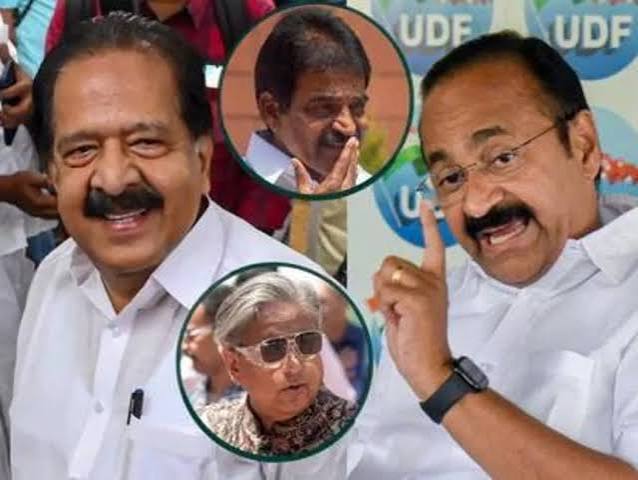
The political conflict between the BJP and Congress over the demand for reservation for Dalit Christians in Kerala has intensified. A statement by Chief Minister V.D. Satheesan has reignited the issue, raising questions about the BJP’s carefully crafted Christian vote bank strategy. Thiruvananthapuram – At an event commemorating the 163rd birth anniversary of social reformer Ayyankali, Chief Minister V.D. Satheesan stated that the Dalit Christian community is not receiving the facilities available to Christians or the benefits afforded to Scheduled Castes (SCs). He assured that his government would study the issue and find ways to address the community’s backwardness. The Chief Minister’s statement drew a sharp reaction from the BJP’s Scheduled Caste (SC) Morcha. State president Shajumon Vattekkad demanded Satheesan retract his statement, alleging that the Chief Minister was engaging in appeasement politics. He warned that extending the reservation for the Scheduled Caste community to Dalit Christians would be like playing with fire. Vattekkad stressed that the quota granted to the Scheduled Caste community by the Constitution is not a charity but their right, and that the BJP’s SC Morcha will mobilize the community and launch a movement against the government. BJP State Vice President K.S. Radhakrishnan also questioned the validity of the demand. In a Facebook post on Tuesday, he argued that if conversion eliminates caste identity and caste-based oppression, then the demand for SC status has no basis. He said that if caste discrimination still persists within the Christian community, they should first acknowledge it and address it. What is the demand of Dalit Christians and how long has it been ongoing? The demand for SC status for Dalit Christians is not new. This demand has long been raised, especially by a section of the Christian community in Kerala and the Catholic Church. Dalit Christians are primarily descendants of Hindu communities who were historically marginalized and later converted to Christianity. Under the Constitution (Scheduled Castes) Order, 1950, SC status is limited to members of the Hindu, Sikh, and Buddhist communities. Various governments have considered proposals to extend this status to Dalits who converted to Christianity or Islam from time to time. Kerala has a large Dalit Christian population, whose ancestors converted generations ago. The community argues that despite conversion, they continue to face social and economic discrimination based on caste and should be granted the same constitutional protections as Dalits of other religions. Dalit Christians affiliated with the Syro-Malabar Catholic Church are primarily concentrated in Kottayam, while non-Catholic communities such as Pentecostals reside in large numbers in Pathanamthitta and Idukki districts. Why is this issue a political dilemma for the BJP? This issue poses a major political dilemma for the BJP. The party has been striving to expand its reach beyond its traditional Hindu base to Kerala’s Christian community over the past few years. The issue of conversion has been a major obstacle to this outreach, although a section of the BJP’s state leadership has tried to downplay it, arguing that the Christian population in Kerala is declining, so conversion should not become a barrier between the party and the Christian community. The party has also tried to portray Hindus and Christians as communities with shared interests, especially on what BJP leaders call “Muslim appeasement.” Despite this, the issue of conversion remains a thorn within the BJP and the broader Sangh Parivar. Last year, the arrest of two Kerala Catholic nuns in Chhattisgarh on charges of forced conversion and human trafficking brought this tension to the fore. Several leaders, including Kerala BJP President Rajeev, rejected allegations of forced conversion and expressed solidarity with the nuns. This stance was criticized by some sections of the Sangh Parivar in Kerala, who cited it as an example of the conversion of members of marginalized Hindu communities. This debate again came to the fore this year regarding the Foreign Contribution (Regulation) Amendment Bill, 2026. The bill, introduced by the central government, was later referred to a joint parliamentary committee. While BJP leaders attempted to allay Christian organizations’ concerns about the proposed changes, some sections of Hindutva organizations in Kerala alleged that this funding could encourage religious conversions and demanded strict scrutiny of foreign donations to churches. R.V. Babu, state president of the Hindu Aikya Vedi, also opposed any move to extend Scheduled Caste reservations to converted Christians, alleging that the government was “promoting religious conversions.” The Vedi is an umbrella organization of several Sangh Parivar-affiliated organizations in Kerala. The BJP inducted Christian leaders into the party to woo the Christian vote and fielded Christian candidates in areas with large Christian populations. However, the party failed to achieve significant success among Christian voters in the 2026 assembly elections. The BJP won three assembly seats—Nemom, Kazhakootam, and Chathannoor—but its victories in these seats were attributed to its traditional Hindu base rather than any major shift in Christian voter sentiment. These limited electoral results have further fueled debate within the BJP about the direction and political benefits of its Christian-centric strategy. In such a situation, Satheesan’s statement is being seen as part of the Congress’s strategy to dent the BJP’s Christian outreach, while some sections within the BJP have become more vocal than ever on the issue of conversion. The issue is also under consideration at the central level. The question of granting SC status to Dalits who convert to Christianity or Islam is also under consideration at the national level. In 2022, the central government constituted a commission headed by former Chief Justice of India K.G. Balakrishnan to investigate this issue. The commission’s work included investigating the demand for SC status for Dalit converts and the discrimination they face. The case for granting SC status to Dalit Muslims and Christians has been pending in the Supreme Court for 20 years. The commission’s tenure was extended several times. After several extensions, the commission finalized its report by the scheduled deadline of June 10. A community grappling with caste discrimination The situation of Dalit Christians in Kerala is socially and economically challenging, where they continue
Meerut: Dalit lawyer on hunger strike lifted overnight, demanding action against former SSP
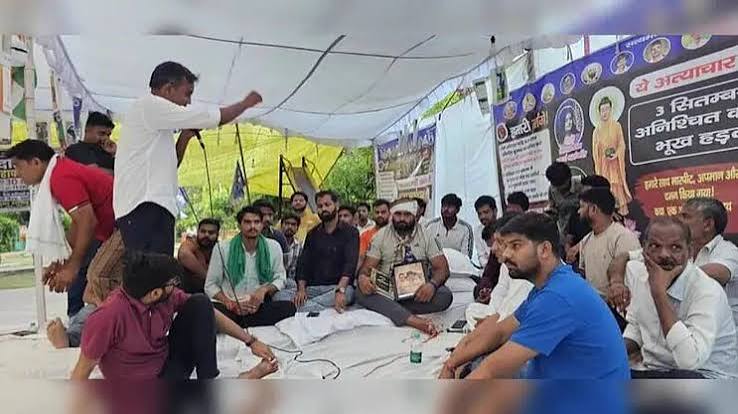
In Meerut, Dalit lawyer Ravi Gautam, who was on hunger strike demanding action against the former SSP, was removed from the protest site overnight by police. Police cited ill health, while the lawyer denied it. Uttar Pradesh: Dalit lawyer Ravi Gautam, who was on hunger strike at Commissioner’s Park in Meerut, was removed from the protest site early Friday morning by police. Ravi had begun his hunger strike on Thursday and was demanding the dismissal of former SSP Avinash Pandey and the registration of an FIR against him in connection with the violence that occurred on July 8th. Police cited the lawyer’s deteriorating health as the reason for this action. Ravi Gautam had been on strike in the same park since August 20th. He alleges that former SSP Pandey severely assaulted him inside a police van. However, a video of Gautam has surfaced after he was removed from the protest site by police. In the video, he is seen claiming that he was in perfect health. His statement directly questions the police’s claim of poor health. Regarding the entire incident, Civil Lines Superintendent of Police (CO) Vishwa Jyoti Rai stated that Ravi Gautam was thoroughly medically examined. The report revealed a significant deterioration in his health. Following the established protocols (SOPs), he was transferred to a higher-level medical center in Ghaziabad for better care. Meanwhile, by Friday morning, the police administration had completely removed the tents at the protest site. Earlier, on Thursday afternoon, when Gautam announced his hunger strike, several Bharatiya Kisan Union (Ambedkar faction) activists had reached Commissioner’s Park in solidarity. During his fast, Gautam made serious allegations against the government and administration of ignoring his legitimate demands. He also appealed to Dalit leaders associated with the BJP to speak out openly on these important issues affecting the community. This entire controversy stems from the death of a student in May. The protesters alleged that the police conducted a highly flawed investigation into the student’s death. On July 8th, a protest by the Dalit community erupted, which later turned violent. Several videos went viral on social media, allegedly showing SSP Pandey beating Gautam inside a police van. Following this incident, an SP official and his Dalit associate also leveled serious allegations of police brutality. As the matter escalated, the then-SSP, Avinash Pandey, was attached to Lucknow headquarters. Rajan Chaudhary Courtesy: Hindi News
‘If this can happen to Cong president, imagine what must be happening to Dalits’: Ashok Gehlot on Haldwani row
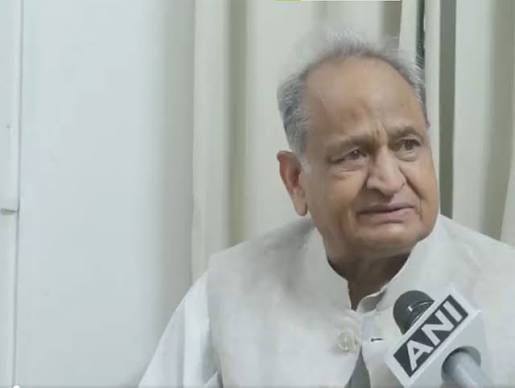
Gehlot said continued injustice and oppression, including the Kharge episode, had hurt Dalits, backward classes, tribals and the poor. Senior Congress leader and former Rajasthan Chief Minister Ashok Gehlot on Saturday described the alleged ‘purification’ ritual conducted after Congress president Mallikarjun Kharge’s rally in Haldwani as a serious incident, saying it had caused pain to the Dalit community. “This is a serious incident. If this can happen to the Congress president, just imagine what must be happening to the Dalit community across the entire nation. Under their rule, this negligence has only increased,” Gehlot told ANI. He said incidents of injustice, oppression and persecution had continued, adding that the episode involving Kharge had hurt Dalits, backward classes, tribals and the poor. “Such incidents of injustice, oppression and persecution have been ongoing, but the incident that happened with Mallikarjun Kharge has caused immense pain to the entire Dalit community of the country, the backward classes, tribals, or any poor person—anyone who has sympathy for Dalits,” he said. Gehlot also referred to Leader of the House JP Nadda’s assurance in the Rajya Sabha on the matter, saying people had expected action following his statement. Nadda had said in the Rajya Sabha that the matter was being taken seriously and that action would be taken. Gehlot said the assurance from the Leader of the House had raised expectations, but no action had followed. “This pain is felt by all of us, by all citizens of the country; there is intense outrage among all people, which the BJP government or the NDA government is failing to understand, but when the time comes, the people will make them understand,” he said. Meanwhile, the Uttarakhand Pradesh Congress Committee will hold a demonstration and march from Dehradun’s Parade Ground to the Chief Minister’s residence on September 7 over the Haldwani ‘purification’ row. The controversy began after a Congress rally at Ramlila Ground in Haldwani on August 8, ahead of the 2027 Uttarakhand Assembly elections. Members of a right-wing group later conducted a shuddhikaran ritual at the venue, drawing criticism from Congress leaders. Gehlot also commented on the controversy surrounding a book on Sonia Gandhi, alleging that publisher Penguin was “hesitating” to publish it due to pressure. “The publisher Penguin is hesitating, making excuses. We had already said that there might be pressure from the government on them because Penguin’s parent company is ready to publish the book,” he said. Gehlot said several major publishers had since approached the authors to publish the book and expressed confidence that it would be launched on November 10. The memoir chronicles Sonia Gandhi’s journey from her childhood in post-war Italy and her relationship with Rajiv Gandhi to the personal losses that shaped her life and relationship with India. In the memoir, the 79-year-old Congress veteran, who was the party’s longest-serving president, revisits her childhood in Italy, her relationship with former Prime Minister Rajiv Gandhi during their time at Cambridge, and the assassinations of her mother-in-law, Indira Gandhi, and her husband, Rajiv Gandhi. Courtesy : TNIE Note: This news is originally published on https:/thenewindianexpress.com/bha and is used purely for non-profit/non-commercial purposes, especially human rights