
Dalit woman brutally beaten in Hisar police station? Police accused of third degree torture!
Commotion due to allegations of serious atrocities on woman in Siwan police station area, family alleges- Police is trying to suppress the matter Kaithal (Haryana). A case of alleged brutal assault and third degree torture of a Dalit woman in police custody has come to light in the Siwan police station area of the district. The woman was admitted to the government hospital in Kaithal by her family in critical condition. She has deep injury marks on her body and bleeding from her internal organs. The family alleges that the woman was detained by the police on Saturday for questioning in the case of a missing girl. She was later released, but during this time she was brutally treated. The victim’s side said in a complaint to the Superintendent of Police (SP) that during the interrogation, a female policeman and four male policemen brutally beat her in a closed room. The family says that the woman is innocent and was treated inhumanly. Seeing her condition, there is great anger among the family and local people. As soon as the information of the incident was received, the citizens of Siwan and the family of the woman reached the DC and SP office and demanded strict action against the guilty policemen. The woman’s husband Rohtash and nephew Sachin alleged that the police are pressurizing the family to suppress the matter and withdraw the complaint. Municipal Council President Representative Sandeep Saini, BJP leader Shaili Munjal and former District Councilor Master Ratiram have also demanded a fair investigation and legal action against the culprits. Haryana Scheduled Caste Commission has also taken cognizance of the matter. Commission member Ravi Taranwali said that the matter of atrocities against the Dalit woman has come to his notice. He has asked the Kaithal SP to submit a report in two days. The commission will take action after receiving the report. On the other hand, Deputy Commissioner Preeti has also sought a report from the police and has given instructions to provide free legal aid to the woman. A delegation of residents of Siwan village alleged in a complaint to the DC that the woman was beaten up in the police station premises, due to which she suffered serious injuries. The DC has assured appropriate action. Statements of police officials According to Amar Ujala’s report, DSP, Sushil Kumar said on the incident, “The woman is an accused in a case. If she has been mistreated, it will be investigated.” While station in-charge Om Prakash said in his statement, “The allegations are baseless and false. The woman was called for questioning on Saturday, but she was not beaten up.” Courtesy : Rajan Chaudhary, Hindi News
Case of illegal occupation of Dalit’s land: Despite the court order in Barabanki, the bullies are doing construction, the victim complained on the CM portal
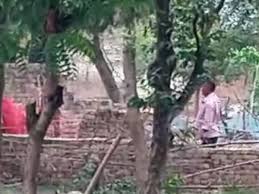
A case of illegal occupation of a Dalit’s land has come to light in Niyamatpur village of Barabanki. The dispute of the land of the victim Ram Raj is pending in the Barabanki Civil Court. The neighbor of the same village and his wife are forcibly occupying this land and doing construction work. On Sunday morning, when the neighbor was doing the construction work, he threatened to beat up the victim when he protested. The Tehsildar had ordered the Patranga Kotwali police to maintain the status quo. There were instructions not to do any construction till the decision of the court. Despite this, the neighbors are doing construction work by disregarding all the rules. The live video of the incident is going viral on social media. The victim has lodged a complaint with the Chief Minister Helpline and Patranga Kotwali Police for justice. Courtesy: Dilip Kumar, Hindi News
Pro-Schedule Castes organisations and activists allege foul play in death of man in Tiruppur district
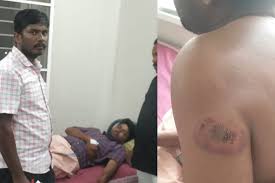
He was found hanging from a tree with his hands tied near Dharapuram. The police suspect it to be a case of suicide, and the victim’s family also did not raise any suspicion over the death Pro-Scheduled Caste forums and activists have alleged foul play in the death of a 42-year-old man, whose body was found hanging from a tree with his hands tied, near Dharapuram in Tiruppur district on June 26. While the police stated that it was a case of suicide, the organisations alleged that the deceased, K. Murugan of Sennakkalpalayam, who belonged to the Scheduled Caste and was doing farm work, was a victim of caste atrocity. Murugan’s body was found around 11 a.m. on June 26. The Alangiyam police shifted the body to the Dharapuram GH, where the post-mortem examination was carried out on June 27. The body was cremated the same day. Tiruppur District Superintendent of Police (SP) Yadav Girish Ashok said the post-mortem findings did not indicate any signs of external force. Murugan’s family also did not raise any suspicion in his death. The police registered a case under Section 194 (police to enquire and report on suicide, etc.) of the Bharatiya Nagarik Suraksha Sanhita. “A detailed investigation is on,” the SP said. Another senior police officer claimed that the hands were not tied fully when the body was found. The rope was found only coiled around the wrists without a knot. This indicated that Murugan could have done it himself before ending his life, the officer said. The police said Murugan’s moped and footwear were found near the scene. He had visited his relatives before coming to the spot, they said. However, activists and members of the VCK, the Tamil Puligal Katchi, and other pro-Dalit organisations alleged foul play. They also accused the police of not conducting a proper investigation and forcing the family to cremate the body in haste. Govindaraj of Vizhuthugal, an organisation working for the welfare of people belonging to the SCs and Scheduled Tribes, said he would petition the Collector for an inquiry into Murugan’s death. (Assistance for overcoming suicidal thoughts is available on the State’s health helpline 104 and Sneha’s suicide prevention helpline 044-24640050.) Courtesy : The Hindu Note: This news is originally published on https:/thehindu.com/ and is for use by the non-military/non-commercial community, especially those in the human rights sector.
Probe sought into dalit man’s death in Coimbatore

Coimbatore: Three days after a dalit man was found hanging from a tree with both hands tied with a rope at Sennakkalpalayam near Dharapuram, dalit organisations on Sunday condemned police for dismissing it as a suicide case and urged the district superintendent of police to conduct a fair probe into his death. K Murugan, 42, a daily wage labourer from Sennakkalpalayam, was found hanging from a tree in the locality on Thursday (June 26). When alerted, the Alangiyam police sent the body to the govt hospital at Dharapuram for postmortem. The body was handed over to his family members the next day, when it was cremated. Senior police officers said the postmortem findings did not indicate any sign of external force in Murugan’s death. His family members also did not raise any suspicion over the death. Police subsequently registered a case under Section 194 of the Bharatiya Nagarik Suraksha Sanhita. Dalit activists, Viduthalai Chiruthaigal Katchi, Tamil Puligal Katchi and other dalit organisations on Sunday alleged foul play behind Murugan’s death. They accused police of not conducting a proper investigation and forcing the family to cremate the body in haste. V Govindaraj of Vizhuthugal, an organisation working for the welfare of people belonging to Scheduled Caste and Scheduled Tribe, said there was foul play behind Murugan’s death. “We are planning to petition the district collector, seeking a proper inquiry into Murugan’s death.” Courtesy : TOI Note: This news is originally published on https:/timesofindia.com/ and is for use by the non-military/non-commercial community, especially those in the human rights sector.
Trouble in Karnataka Congress: As Siddaramaiah government nears 2.5-year mark, Dalit CM talk resurfaces
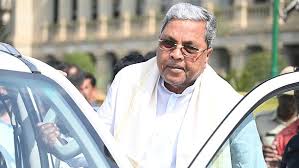
Siddaramaiah may back Parameshwara as his successor to retain influence if he can’t continue as CM, a senior Congress leader told TNIE. BENGALURU: Amid talks of a change in guard in Karnataka, even as Chief Minister Siddaramaiah inches towards completing two-and-a-half years of his present term, the issue of a dalit CM is likely to come to the fore. Home Minister Dr G Parameshwara’s recent meetings with Siddaramaiah and Deputy CM DK Shivakumar in quick succession have fuelled speculation. “Siddaramaiah will try his best to continue as CM, but if such a situation does arise, he may name Parameshwara as his successor so that he can still hold the reins in government,” a senior Congress leader who visited New delhi recently told TNIE. According to sources, Siddaramaiah, who held talks with the Congress high command in the national capital, might have shared certain details with Parameshwara, who also met industries Minister MB Patil, giving rise to speculation that Siddaramaiah’s coterie is preparing for the eventuality. Replying to Leader of the opposition in the assembly R Ashoka’s statement that there will be a new CM by october, Patil said, “Let Ashoka safeguard his post. There are no developments in the Congress, since the High Command and CWC take a call. The statements of individual leaders [including those from the Congress] are insignificant.” Meanwhile, Food and Civil Supplies Minister KH Muniyappa downplayed the Dalit CM issue, calling it stale. He said it was being talked about since AICC president Mallikarjun Kharge was in the race. Muniyappa had reportedly proposed Kharge’s name when the party came to power in 2023. “But now the chances of Kharge returning to state politics are remote. It is to be seen if a change in guard is inevitable, and whether he proposes a Dalit leader’s name or not,” remarked a Congress leader. Separately, Shivakumar loyalist and Ramanagara MLA Iqbal Hussain on Sunday predicted that the former will become CM in three months, while Social Welfare Minister Dr HC Mahadevappa asserted that Siddaramaiah will continue as CM. Parameshwara, while meeting Shivakumar might have discussed several other issues, including the nomination of four MLCs, for which the high command’s approval is awaited, a source said. He has been trying to push the candidature of his loyalist and former MLC MC Venugopal, a backward caste leader, for a Council seat. Devaraj B Hirehalli Courtesy : TNIE Note: This news is originally published on https:/thenewindianexpress.com/ and is for use by the non-military/non-commercial community, especially those in the human rights sector.
Witness to the Unheard: Remembering K.M. Salimkumar
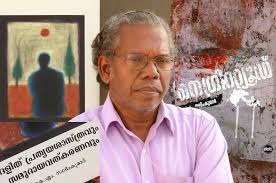
Salimkumar was part of a generation of leaders who re-evaluated their ideological roots, transitioning from strict Marxist lines to a framework informed by Ambedkarite thought. It feels as though it happened just yesterday – the long, winding bus ride to Thodupuzha, a serene town in Kerala’s Idukki district. It was 2008. We were en route to release ഭൂമിയുടെ ജാതിയും രാഷ്ട്രീയവും (Caste and the Politics of the Land), a powerful book by K.M. Salimkumar. Sitting beside me was the man himself – a relentless voice for Dalit and Adivasi rights, an activist, thinker, and writer who had spent decades challenging the status quo. He passed away on June 29, after a lifetime of confronting dominant narratives with a clarity that few dared to match. During that trip, Salimkumar spoke with thoughtful determination about his political path – from early activism with the Communist Party of India (Marxist–Leninist) Liberation to his eventual estrangement from a Left movement that, in his view, skirted around the issue of caste. His words weren’t bitter or sentimental, they were sharp. He argued that caste, as a deeply entrenched system of oppression in Indian society, often vanished beneath class-based rhetoric. For him, the revolutionary struggle had failed to acknowledge the lived experiences of those most marginalised. That journey wasn’t just about a book, it offered a glimpse into the principled world he inhabited. Born in 1949, in a tribal family in Velliammattom panchayat in Idukki, Salimkumar rose to become a formidable voice for social justice in Kerala. His early years were shaped by Marxist liberation politics, and he was incarcerated for 17 months during the Emergency. But unlike others who moderated their stance afterward, Salimkumar intensified his critique, especially of the movements he once served. He questioned why caste was so often left out of revolutionary discourse and why land struggles didn’t prioritise those without land, Dalits and Adivasis. His involvement in building political and grassroots networks was extensive. As a founder of the Dalit Unity Committee in 1999 and editor of publications like Raktapataka and Dalit Aikyashabdam, he gave platform to marginalised voices. His activism focused not on charity, but on dignity, autonomy, and rightful assertion. Salimkumar was part of a generation of leaders who re-evaluated their ideological roots, transitioning from strict Marxist lines to a framework informed by Ambedkarite thought. While many Left parties in Kerala treated caste as a secondary issue to class, Salimkumar argued it was a primary axis of oppression. He frequently reminded people that caste is not a relic of the past but a system that defines everything – from land rights to social boundaries. He openly criticised symbolic gestures like renaming Dalit colonies with sanitised, Sanskrit-inspired names. For him, such acts were attempts to cover up deeper inequalities. “Changing names doesn’t change realities,” he wrote. “The trauma, the exclusion, the inherited shame – they all remain.” ‘Negritude’, K.M. Salimkumar. His collection of columns under the title Negritude reflected this radical clarity. In them, he explored themes such as Ambedkar’s democratic philosophy, the erasure of tribal identity, and the contradictions in Kerala’s progressive self-image. By drawing connections between caste-based and racial oppression, he built a body of work that was more than literature – it was a political statement. Salimkumar also centred B.R. Ambedkar in his vision of India’s democratic future. He didn’t see Ambedkar merely as a constitutional architect, but as a radical critic of social inequality and a prophet of structural reform. He cited Ambedkar’s assertion that while Hindu privilege maintained Brahminical rule, true democracy meant Dalits must have full participation. He was especially vocal about the contradictions in Kerala’s development model. Though the state is praised for its human development indicators, he pointed out how Dalits and Adivasis continued to face displacement and marginalisation in the name of progress. During protests like the Muthanga agitation, albeit his reservations about the struggle itself, he challenged the hypocrisy of governments that claimed to be for the people while undermining the very communities they displaced. His published works – including Dalit Ideology and Communalisation (2008), Dalit Democratic Thought (2018), Reservation in a Dalit Perspective (2018), and The Subtleties of Casteism (2021) – offer critical insights into how casteism adapts to survive even in secular and progressive settings. His critique extended beyond the obvious culprits. He held the liberal elite and even self-proclaimed progressives accountable for sustaining caste structures. In his later years, Salimkumar emphasised the importance of cultural memory and literature in political struggle. He believed that writing was an act of reclaiming identity, that memory could resist erasure, and that telling one’s story was itself revolutionary. He didn’t aspire to lead in the conventional sense. He wanted to bear witness—to name what others avoided, to stay rooted in difficult truths, and to never allow silence to replace justice. In an age when even dissent is being curated and softened, KM Salimkumar’s legacy stands as a reminder that the fight for equality requires more than slogans—it demands unflinching truth. K.M. Seethi is Director, Inter University Centre for Social Science Research and Extension (IUCSSRE), Mahatma Gandhi University (MGU), Kerala, India. Seethi also served as Senior Professor of International Relations, Dean of Social Sciences at MGU and ICSSR Senior Fellow. K.M. Seethian Courtesy : The Wire Note: This news is originally published on https:/thewire.com/ and is for use by the non-military/non-commercial community, especially those in the human rights sector.
Shopkeeper did obscene act with Dalit girl: absconding for three days in Unnao, anger in Dalit organization, 24 hours ultimatum given
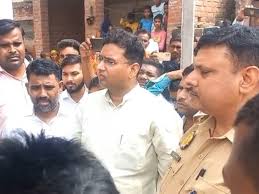
A shopkeeper in Safipur Kotwali area of Unnao did obscene act with an 8-year-old Dalit girl. The girl had gone to the shop to buy toffees. Shopkeeper Naushad Ali called her inside and did obscene act. When the girl vomited, the accused abused her using casteist language and drove her away. The victim went home and told the family about the incident. The family immediately reached Safipur Kotwali and lodged a complaint. Kotwali in-charge Subrat Narayan Tiwari has registered a case under POCSO Act and SC/ST Act. Even after three days, the accused is absconding. Dalit organizations from Kanpur, Rae Bareli, Gonda and Unnao have submitted a memorandum to Safipur Area Officer Madhunath Mishra. They have demanded the arrest of the accused within 24 hours and bulldozer action. Local people say that the delay in providing justice to the Dalit victim shows discrimination. There is anger in the society that if the victim belonged to another class, the action would have been faster. The organizations have demanded the administration to take the matter seriously. On the other hand, Safipur Kotwali police claims that raids are being conducted at possible places in the surrounding districts to catch the accused and he will be arrested soon. The accused should be arrested immediately and sent to jail. Kotwali police says that the accused is being searched and will be arrested soon. Police teams are raiding possible hideouts. Courtesy : Hindi News
Dalit Minor Girl Abducted From UP; Forced To Convert, Join Terror Activities In Kerala
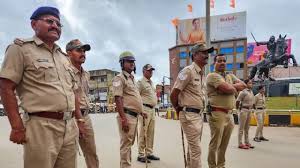
A minor girl in UP’s Prayagraj was allegedly subjected to religious coercion and abuse after she was abducted and taken to Kerala. Two people have been detained in the case. Two people were detained on charges of abducting a minor girl and forcing her to convert to Islam. The incident was reported from Prayagraj in Uttar Pradesh. According to the details, the girl, belonging to the Dalit community, was abducted and taken to Kerala, where she was being trained for terror activities. One of the members of the gang, belonging to the Muslim community, was also accused of molesting the girl. The police were interrogating more people in connection with the case, and further investigations were ongoing. On May 17, a minor girl was allegedly gangraped in broad daylight in UP’s Sultanpur by three men, including a minor. The incident happened when the Dali girl was on her way to school. The police arrested two accused and detained the third. The arrested accused were sent to judicial custody for 14 days, and the minor was sent to a juvenile home. Later, the National Commission for Women (NCW) took suo motu cognisance of the case, seeking a fair and time-bound investigation of the crime. In January this year, the Kerala Police arrested two people in connection with the sexual assault of an 18-year-old Dalit girl in Pathanamthitta district. It was alleged that when the teen was 13 years old, one of the accused had sent obscene messages and pictures to her through his mobile phone. He was also accused of procuring obscene pictures and videos of the teen. Furthermore, allegedly when the girl was 16 years old, the accused took her on a bike to Achankottumali near her house and raped her in a rubber farm in an uninhabited area. Later, during the investigation, it was revealed that the accused showed it to the other accused, who were his friends. Curated By : Vani Mehrotra About the Author Vani Mehrotra is the Deputy News Editor at News18.com. She has nearly 10 years of experience in both national and international news and has previously worked on multiple desks. Courtesy : News18 Note: This news is originally published on https:/news18.com/ and is for use by the non-military/non-commercial community, especially those in the human rights sector.
Mitr Clinic gets new avatar: India’s first transgender clinic in Hyderabad gets new lease of life
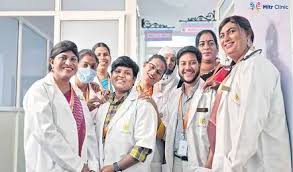
HYDERABAD: Mitr Clinic, India’s first exclusive clinic for transgenders set up in 2021 in Narayanguda, had a new lease of life after one of India’s top MNCs came to their rescue to fund the clinic after USAID stepped back. Having reopened on May 2, 2025, the Mitr Clinic has donned a new name – Sabrang. Managed by the YR Gaitonde Centre for AIDS Research and Education (YRGCARE), an NGO focusing on HIV/AIDS treatment, the clinic will be open from Monday to Saturday, 10am to 6pm. It was in Jan 2025 when the clinic was forced to close after its funding from the United States Agency for International Development (USAID) was halted. All USAID funding was frozen following an order from US President Donald Trump. As a result, many members of the transgender community who were dependent on the clinic found it difficult to access the healthcare they needed. “Many prefer to come to this clinic since it provides privacy to the transgender community. Until Jan, the clinic used to serve 350 members of the LGBTQIA+ community,” said a member of the community. For 24-year-old Radhakrishnan, who works as a traffic assistant with the state police, Sabrang is where he hopes to continue his transition to a trans man. “For a few months, when the clinic was closed, I struggled. I was used to visiting Mitr regularly for hormone therapy. I had nowhere else to go when it was shut,” he said. Similarly, Ayesha Meera, a transgender woman who used to work as a counsellor for Mitr and now works as an advocacy officer for the Trans Equality Society, said: “I used to live in Tenali and travel 7-8 hours every day for hormone therapy at Mitr. Now that the clinic is open again, I can continue doing it.” Meanwhile, June being Pride Month, the clinic manager organised a pot-luck on Saturday, attended by their regular patients. “Here, I am not made to feel ashamed, and I feel comfortable. At other clinics, I was taunted and looked down upon,” a transgender person told TOI. “The HIV treatment programme is extensive. They provide PREP (Pre-Exposure Prophylaxis, a medication to prevent HIV, anti-retroviral therapy, and PEP (Post-Exposure Prophylaxis, a medication to cure HIV). It’s also a place for the community to socialise and bond – it’s more like a second home,” said Rohit Mohite, a sexual health manager. Courtesy : TOI Note: This news is originally published on https:/timesofindia.com/ and is for use by the non-military/non-commercial community, especially those in the human rights sector.
Bengaluru’s Rainbow Habba 2025 showcases transgender achievers
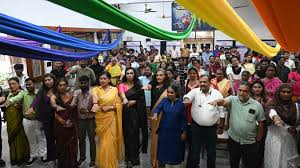
The occasion featured India’s first transgender ventriloquist, Jaanu, and a trans woman gym trainer, Ani Mangalore.They shared their experiences and challenges. Rainbow Habba 2025, which celebrates gender and sexual diversity, was held on a grand scale in the city on Saturday. The occasion featured India’s first transgender ventriloquist, Jaanu, and a trans woman gym trainer, Ani Mangalore. They shared their experiences and challenges. Siddappa Hukkeri from Belagavi was felicitated for securing a peon’s post in the the Hassan District Court through the 1% reservation for transgender individuals. During his felicitation, Hukkeri highlighted the role of Manohar Elevarthi, Rajesh Srinivas, and Nisha Gulur from Sangama Foundation, an LGBT rights group based in Bengaluru, which had submitted a Public Interest Litigation in 2022 seeking 1% reservation in state government jobs for transgender minorities to help trans people earn a respectable livelihood rather than resort to begging. Courtesy : DH Note: This news is originally published on https:/deccanherald.com/ and is for use by the non-military/non-commercial community, especially those in the human rights sector.