
‘Was in Delhi to …’: Siddaramaiah denies Rahul snub claim; accuses BJP of denying funds
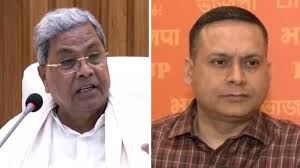
NEW DELHI: Karnataka chief minister Siddaramaiah on Saturday dismissed BJP IT cell head Amit Malviya’s allegation that he was “humiliated” by Congress leader Rahul Gandhi during his recent visit to Delhi.Siddaramiah in a post on X clarified that the “primary work in Delhi was to meet defence minister Rajnath Singh to discuss the Air Show during Dasara in Mysuru.” — siddaramaiah (@siddaramaiah) Responding to claims that Rahul Gandhi had avoided meeting him, Siddaramaiah defended his party and the Congress MP, saying “Rahul Gandhi has immense affection for the people of Karnataka.” “The Gandhi Family, including Shri Rahul Gandhi, remain deeply indebted to the love showered by the people of Karnataka, and our AICC President Shri Mallikarjun Kharge is a proud Kannadiga,” he added. Amit Malviya, in a post on X, claimed that Siddaramaiah was “humiliated in Delhi” after being denied a meeting with Rahul Gandhi. “This isn’t the first time a Gandhi has insulted a senior leader from Karnataka. History remembers how Rajiv Gandhi unceremoniously sacked an ailing Veerendra Patil, triggering the Congress’s downfall in the state.” he said. — amitmalviya (@amitmalviya) Malviya further alleged that the Congress has consistently treated Kannadigas with “disdain.” Responding to the remarks, Siddaramaiah accused the BJP of neglecting Karnataka’s needs by withholding crucial funds. “For Modi, Karnataka exists only during elections.” He also took a swipe at the Prime Minister and BJP MPs from the state, saying, “Even when Karnataka suffered devastating floods, the Prime Minister @narendramodi did not utter a word. @BJP4Karnataka MPs do not have the spine to stand up to Narendra Modi for the rights of Kannadigas.” On Friday, Siddaramaiah on Friday dismissed speculation about a leadership change, stating that the matter was never discussed with the Congress high command during his Delhi visit. “How many times do I have to tell you? It (speculation around the Karnataka CM post) was not discussed at all. This issue was not brought up with the high command,” he said. Courtesy : TOI Note: This news is originally published on https:/timesofindia.com/ and is for use by the non-military/non-commercial community, especially those in the human rights sector.
Bihra polls: LJP chief Chirag Paswan recalls failed efforts to meet Rahul Gandhi; shifted to NDA after cold shoulder from Congress
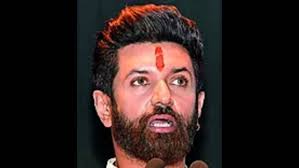
NEW DELHI: Ahead of the Bihar assembly election, LJP (Ram Vilas) chief and Union minister Chirag Paswan said that he only convinced his father to join NDA before 2014 Lok Sabha polls, who was reluctant and even said that “I will poison myself than go with BJP”. Chirag has also spoken about how he and Ram Vilas Paswan could not meet Rahul Gandhi for three months despite trying between Nov 2013 and mid-Feb 2014 while they met Sonia Gandhi. In an interview to a YouTube channel last week, Chirag said that convincing his father to align with NDA was the toughest task and after getting a snub to his first proposal, he did not raise this again for months, but circumstances and political development changed after that. “We met respected Sonia Gandhi ji several times during this time, but they (Sonia/Congress) kept saying a meeting will be fixed with Rahul ji (the then Congress president) but that never happened,” he said. Chirag said eventually LJP became an ally of the NDA before the 2014 polls. The remark was in context of the buzz about his wavering commitment to NDA. Courtesy : TTOI Note: This news is originally published on https:/thetimesofindia.com/ and is for use by the non-military/non-commercial community, especially those in the human rights sector.
Witness protection granted to Dalit complainant in Dharmasthala mass burial case
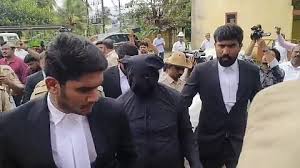
Additionally, the complainant recorded his statements before the Principal Civil Judge and JMFC, Belthangady Taluk. However, the advocates expressed concern over being barred from being present during the statement recording, citing the complainant’s difficulty with the legal process. Synopsis: A Dalit man who alleged a decades-long cover-up of murders and sexual assaults at the Dharmasthala temple in Karnataka has been granted protection under the Witness Protection Scheme, 2018. His advocates described the authorities’ response as “positive”, though raised concern that he was made to record his statement before the court without their presence, despite his explicit request. A week after a Dalit man, formerly employed as a sanitation worker at the Dharmasthala Manjunatha temple in Karnataka’s Dakshina Kannada district, alleged a 20-year cover-up of murders and sexual assaults, his request for protection under the Witness Protection Scheme, 2018, has been granted. In a statement issued on Friday, July 11, advocates representing the complainant, Ojaswi Gowda and Sachin Deshpande, described the response from the relevant authorities as “positive.” “A communication to this effect was sent to us on the evening of 10-Jul-2025 by the authorities concerned,” the statement reads. “The Complainant conveys his gratitude to the District judiciary, Dakshina Kannada, the Police authorities in Dakshina Kannada and the Government of Karnataka for acting expeditiously on the request for Witness Protection for the Complainant.” Additionally, the complainant recorded his statements before the Principal Civil Judge and JMFC, Belthangady Taluk, on Friday under Section 183 of the Bharatiya Nagarik Suraksha Sanhita (BNSS), which corresponds to Section 164 of the Code of Criminal Procedure. However, the advocates expressed concern over being barred from being present during the statement recording, citing the complainant’s difficulty with the legal process. “We, the advocates, were firmly and clearly instructed by the complainant beforehand that one of us should be present in court while he made his statements to the court. He is illiterate, has never been to court before, and had expressed serious difficulty with the process. We clearly informed the Court of this concern,” the statement reads. “However, the Court did not agree to the presence of the advocates and commenced the recording of the complainant’s statement in our absence. This is for your information and record.” Shocking allegations of criminal conspiracy spanning decades In a detailed complaint addressed to the Dakshina Kannada Police Commissioner on July 3, the survivor, who has requested anonymity, alleged that between 1995 and 2014, he was forced under death threats to dispose of hundreds of bodies, many showing signs of sexual violence and brutal murders. Dakshina Kannada police have registered an FIR (Crime Number 39/2025) under Section 211(a) of the BNS, after obtaining court permission. In a statement, they said the complaint will be investigated in accordance with the law. The complainant said he was coming forward after all these years because he could no longer remain silent, and described three specific incidents, including being forced to bury a teenage sexual assault victim in 2010. Other incidents included the burning of the body of a woman whose face had been disfigured with acid, and several instances in which the destitute were allegedly suffocated to death in a systematic manner. The complainant said he fled Dharmasthala in 2014 after a member of his own family was sexually harassed, and returned recently to exhume one of the “hundreds” of bodies he said he had buried, to present as evidence. Attaching photographs of the exhumed body with his complaint, he urged an immediate investigation. He said he was unable to reveal the identities of the accused until he and his family were accorded witness protection. He also requested that the buried bodies be exhumed and given proper last rites. On Thursday, a week after the initial complaint, advocates Ojaswi Gowda and Sachin Deshpande urged all 788 Members of Parliament to take note of the case ahead of the Monsoon session. (Edited by Dese Gowda) Courtesy : The South First Note: This news is originally published on https:/thesouthfirst.com/ and is for use by the non-military/non-commercial community, especially those in the human rights sector.
Lucknow police files chargesheet within 24 hours in rape case of Dalit minor

Seven-year-old survivor’s statement recorded, forensic and medico-legal procedures completed swiftly; officials seek fast-track trial In a rare instance of expedited legal action, the Lucknow Police on Friday (July 11, 2025) filed a chargesheet within 24 hours in a case involving the rape of a seven-year-old Dalit girl. The incident took place in the Gauri Gali area of Swanapur village, under the jurisdiction of Malihabad police station, on Wednesday (July 9, 2025) evening. Minor dalit girl raped in UP’s Rampur The accused, identified as 20-year-old Suchit Yadav, was arrested within 10 hours of the alleged assault. “All evidences were collected, accused arrested, forensic and medical formalities were completed. Judicial magistrate recorded statement of victim. The court-related legal duty was performed and Lucknow Police Commissionerate completed the investigation and chargesheeted the above case within 24 hours, first time in U.P. The government will be requested for considering the above case in fast-track court,” Assistant Commissioner of Police (ACP), Malihabad, Vineet Singh told The Hindu. According to the police, the minor had gone to bathe at a nearby tubewell when the accused lured her to an isolated room near a drain in Madhavpur village, where the alleged assault occurred. District Magistrate, Lucknow, was closely involved in the investigation, directing the Chief Medical Officer and Director of Health Services to ensure that medico-legal formalities were completed during the night. “Modern technology, mobile locations, CCTV footage and intelligence systems were used to promptly nab the accused within 10 hours of the crime to expedite the legal process,” ACP Singh added. Mayank Kumar Courtesy : The Hindu Note: This news is originally published on https:/thehindu.com/ and is for use by the non-military/non-commercial community, especially those in the human rights sector.
NHRC seeks report on ‘social boycott’ of 10 Dalit families in Ganjam

Berhampur: National Human Rights Commission (NHRC) has sought an action taken report from the Odisha govt regarding the alleged social boycott of 10 Dalit families in a village in Ganjam district. The boycott stemmed from a dispute over the construction of a kalyan mandap (community hall). NHRC scheduled a hearing on the matter during its camp sitting in Bhubaneswar on July 21. The commission has requested detailed reports to be submitted within a week after issuing the order on Thursday. The development follows a petition filed by a Berhampur-based rights NGO. In response, NHRC has issued letters to the chief secretary, director general of police (DGP) and the Ganjam collector, urging them to address the issue. The commission also instructed that the relevant authorities, victims and complainants or their representatives be present at the hearing. The special secretary (home), who also serves as nodal officer for the camp, has been tasked with coordinating the attendance of the complainants and victims, ensuring they receive necessary assistance to reach the venue. The NGO’s petition alleges that the Dalit families faced ostracism from other villagers due to their efforts to construct the kalyan mandap, that was reportedly obstructed. The petition claims the act violates Articles 14, 19, and 21 of the Constitution. The organisation has urged the NHRC to take cognisance and direct the state govt to conduct a high-level investigation to eradicate such social injustices. Courtesy : TOI Note: This news is originally published on https:/timesofindia.com/ and is for use by the non-military/non-commercial community, especially those in the human rights sector.
In-charge Collector adopts Dalit family
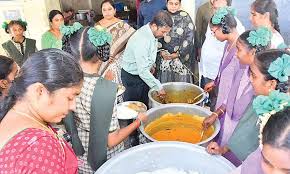
Naresh NandamOngole: Prakasam district in-charge Collector Ronanki Gopala Krishna conducted a surprise inspection of Social Welfare Department Boys’ Hostel and Residential Girls School in Ammanabrolu on Friday. He reviewed attendance and stock registers, finding discrepancies between recorded inventory and actual stock in the storeroom. Expressing dissatisfaction with the maintenance standards, the Collector issued immediate directives to install mosquito mesh on windows by Monday, repair toilets and improve general maintenance, set up complaint boxes and menu charts, arrange first aid kits, and establish a kitchen garden in available space. At Residential Girls School, he interacted with students, assessed their academic progress, and personally served them lunch to check food quality. He emphasised strict adherence to the state government’s prescribed menu and ensured students receive education kits, uniforms, and shoes as mandated. As part of P-4 scheme designed to connect the bottom 20 percent of society with the top 10 percent of wealthy citizens, Collector Gopala Krishna personally adopted the family of Gollapati Mariyamma, a Dalit widow from Mallavam village in Maddipaddu mandal. He met with the family and interacted with them. Mariyamma, who lost her husband and struggles with daily wage work while caring for her daughter and son, was promised comprehensive support by the Collector. The Collector assured immediate house construction approval on her ancestral land, additional financial support for construction, help establishing a grocery or tiffin shop for livelihood, skill training in tailoring and craft work for her daughter, educational support to complete her daughter’s Intermediate studies, and provided monthly grocery supplies and vegetables as immediate help. During his visit to Mallavam village, locals highlighted lack of cremation grounds and drainage systems. The Collector directed Tahsildar Adilakshmi to resolve the cremation ground issue and ordered MPDO Jyoti to implement phased construction of drainage canals. Naresh Nandam Courtesy : The Hans India Note: This news is originally published on https:/thehansindia.com/ and is for use by the non-military/non-commercial community, especially those in the human rights sector.
Tamil Nadu: SC/ST panel probe daily wager’s death
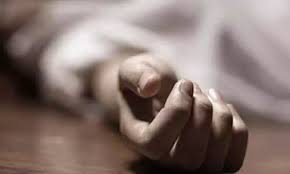
The body of Murugan (42), a Dalit from Dharapuram, was found hanging COIMBATORE: Members of the SC/ST Commission on Friday conducted an inquiry into the suspicious death by suicide of a daily wager in Tirupur. The body of Murugan (42), a Dalit from Dharapuram, was found hanging from a tree on June 26. After an inquiry, the police concluded his death as a case of suicide and handed over the body to family members after a post-mortem. However, various Dalit outfits alleged foul play in his death and sought a detailed inquiry. Following this, the members of SC/ST commission S Selvakumar and M Pon Dhous, visited the spot where Murugan was found hanging in a tree. Accompanied by officials of the revenue department, the members also inquired with his wife and family members by visiting the house of the deceased. Further, the members inquired the cops at the Alangiyam police station and villagers. Courtesy : DTNext Note: This news is originally published on https:/dtnext.com/ and is for use by the non-military/non-commercial community, especially those in the human rights sector.
How Dalit lawyer Satyesha Leuva defied odds to become Gujarat sarpanch
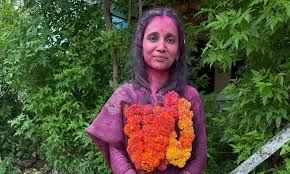
Leuva, an SFI activist, won sarpanch elections at Vadvasa despite CPI(M)’s limited presence, signaling grassroots support for Left ideology in BJP-ruled Gujarat At the age of 25, Satyesha Leuva, a lawyer by profession, was elected sarpanch of her native village, Vadvasa, in Gujarat’s Sabarkantha district at the end of June. The win has turned heads not because of her age, but because the Dalit woman belongs to the Students’ Federation of India (SFI), the student wing of the Communist Party of India (Marxist) – a party with almost no presence in Gujarat. No family history What makes her win even more remarkable is that Satyesha has no family history of Left politics. Her father is an advocate, her mother studied law but never practised, her brother works at the India Post, and her sister is a nurse. Traditionally, she comes from a family of Congress sympathisers, and yet, in a state politically dominated by the Bharatiya Janata Party (BJP), Satyesha chose to join the SFI and the CPI(M). In the recently concluded SFI All India Conference, Satyesha was elected the All India vice-president. She’s also a permanent invitee to the CPI(M) Gujarat State Committee. She did her schooling from a grant-in-aid school in Sabarkantha, before moving on to do her BSc, LLB and LLM from Gujarat University. Activism was not in her plans, but it happened. Beginning of activism Before 2019, SFI had not held a state conference in Gujarat since 1989, pointed out Satyesha in an interview with The Federal. It had all but disappeared from campuses and public memory. That was until Nitish Mohan, an engineering graduate from Kerala who had done his schooling in Gujarat, was sent to the state to revive the organisation. “He really built the organisation and established our presence. Initially, it was my elder brother Aagman who joined SFI when he was in college. At that time, my parents and even I used to tell him not to go to all these political events. But he was adamant. One day, there was a mass fund collection for Bhagat Singh’s anniversary. I also went along. We stood with boxes in the Darwaza market in Ahmedabad and asked for funds. I met so many like-minded and progressive people there. I knew this was the place for me,” she recounted. Her role in activism grew during the pandemic and after the Hathras incident where a Dalit girl was raped and murdered. “During the Covid pandemic, we went back to Vadvasa because there was no lockdown there as such. Some of my SFI comrades and I began organising small evening meetings in nearby villages on the Hathras issue and gender and caste violence. We mobilised people in 11-12 nearby villages on the issue,” she recalled. It led to a historic rally in Himmatnagar attended by people from 35 villages, which drew media attention. “I realised something then. If people were detained, other comrades would march on. It was not just for show,” she said. Overcoming hurdles Her family opposed her in journey with SFI. At the time she joined the SFI in Gujarat, she was the only active woman member, she says. “Everyone welcomed me, but my family was worried. They would ask me why I have to spend so much time with the boys. They were concerned because some of our campaigns required me to stay outdoors for 3-4 days at a stretch. I met with a lot of reluctance,” she says. But as she continued to work on people’s issues, she was met with more acceptance. “During the lockdown, many students couldn’t pay school fees. Transfer certificates were withheld. Schools refused to promote students unless full payment was made. We took up these cases, campaigned hard, and got fee waivers for many. There were also scholarship issues, especially for SC/ST and OBC students. Slowly, my family began to see the value in what I was doing,” she explained. In sync with Left ideology It wasn’t until much later, though, that she realised the SFI was affiliated with the CPI(M). “Initially, I didn’t even know SFI was an all-India organisation. When I found out it was linked to the CPI(M), I began studying more about the party’s history, ideology, and why it mattered. I like that the Left ideology speaks of equality. It is what the world needs,” she says. Satyesha brushes aside criticism that women and Dalits don’t find space in the CPI(M). “SFI gave me something no other organisation did: respect and equality. As a Dalit girl, I never felt seen in society. But here, I found a platform. I could speak. I could lead. And they let me. If I didn’t feel equal here, I wouldn’t have reached this far. In SFI, if you work, you rise,” she shared. Although, Satyesha contested from Vadvasa – her native village, it is not a place she has had ties to for several years. Eight years ago, her family shifted to Ahmedabad. So, when panchayat elections were announced, she wasn’t on anyone’s radar, not even her own “I wasn’t planning to contest. But the youth of the village, whom we had worked with during the pandemic, started encouraging me. They told me: we need someone who can speak, who can fight. Someone who will actually work on the issues we face, not just token candidates,” she says. Election campaign Once the decision was taken, Satyesha concentrated on both offline and online modes of campaign. “We went door-to-door, not just to ask for votes but to listen. I had pamphlets with specific issues written on them — bad roads, lack of drainage, no health centre, no playgrounds, no library,” she shared. Social media was also a powerful tool. Every day, she would circulate short videos on WhatsApp, talking about one issue at a time. “I didn’t use Instagram or Facebook. Just village WhatsApp groups. That’s where people are,” she said. But her journey wasn’t without pushback. On the last day for withdrawal of nominations, pressure mounted
Bangalore University denies anti-Dalit bias, cites high SC/ST faculty representation
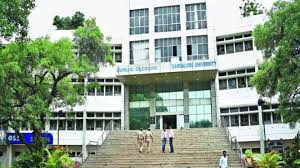
Bengaluru: Bangalore University has issued a clarification through an official letter to the SC/ST Teachers Association, stating that the allegation of following an anti-Dalit policy is not true. The university highlighted that it has always given due representation and priority to teachers from Scheduled Castes and Scheduled Tribes, in an official statement. The response was made with reference to a letter from the Association that raised concerns about discrimination in statutory appointments, violation of reservation norms, and delay in filling backlog posts. Says key appointments made by state government, not university The university clarified that appointments of statutory posts such as Vice-Chancellor, Registrar, Finance Officer, and Registrar (Evaluation) are made directly by the Government. Therefore, the university has no role in these appointments. It is unfortunate that these appointments are being viewed as discriminatory. At the university level, wherever appointments are within its control, SC/ST faculty members have been given preference. Out of 30 administrative positions like Directors, Coordinators, Special Officers, and Nodal Officers, 22 posts are held by SC/ST teachers. Further, four faculty members were transferred to Bangalore University from other universities by the State Government with the Governor’s approval, considering the shortage of permanent teaching staff. 63.5% of teaching staff belong to SC/ST communities Currently, out of 126 teaching staff at the university, 80 belong to SC/ST communities, which is 63.5% of the total faculty. The university also pointed out that no other public university in Karnataka has filled backlog vacancies to the extent that Bangalore University has. Out of the 55 backlog posts identified by the Social Welfare Department, 35 have already been filled, and the process to fill the remaining is underway. In the academic year 2024-25, 44 faculty members were promoted as Associate Professors, out of which 29 belong to SC/ST categories. The university reaffirmed its commitment to social justice and equal representation in all appointments. Asianet Newsable English Asianet Newsable ENglish is the official profile used for publishing syndicated news agency stories on the platform. This profile ensures accurate, credible, and timely reporting of national and international news across various categories, including politics, sports, entertainment, lifestyle, and more. Editors curate and adapts wire service content to suit the platform’s diverse, multilingual audience, maintaining journalistic integrity and delivering fact-based news. Courtesy : Asianet News Note: This news is originally published on https:/asianetnews.com/ and is for use by the non-military/non-commercial community, especially those in the human rights sector.
Dalit man says he was prevented from praying at Barabanki temple; priest accuses him of molestation
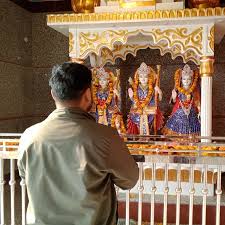
A Dalit youth on Friday (July 11, 2025) alleged that he was stopped from offering prayers by the priest at the Lodheshwar Mahadev temple, under Ramnagar police station limits in Barabanki district, alleging he was beaten up and hurled casteist abuses. However, the priest alleged that his daughter-in-law was molested. 27-year-old Shailendra, is undergoing treatment at the local medical facility. A counter complaint is submitted by the priest Aditya Tiwari, alleging that his daughter-in-law was molested by the man who turned violent upon being stopped. While Shailendra claimed that the priest and his accompanies stopped him from offering prayers and later hit him with vessel and bell inside the temple. “Both sides have filed a police complaint. We are investigating the matter, action will be taken after examining the CCTV footage and other evidences,” said Anil Kumar Pandey, Station House Officer (SHO), Ramnagar. Lodheshwar Mahadev Temple of Lord Shiva, located in village Mahadeva, Ram Nagar area in Barabanki district is considered one of the rarest of the 52 Shivlings found on the Shakti Pithas across India. This shakti peeth is considered to be one of the most sacred peeth with lakhs of people come to visit during Sawan. Mayank Kumar Courtesy : The Hindu Note: This news is originally published on https:/thehindu.com/ and is for use by the non-military/non-commercial community, especially those in the human rights sector.