
Caste Violence and the ‘Valmiki Caste’ in Haryana: Atrocities, Trauma, and Resistance
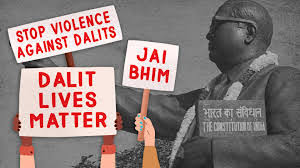
Casteist minds still resist the idea that a Valmiki can rise beyond socially imposed boundaries, that they too can become teachers, doctors, artists, or leaders. Atrocities against Dalits have been a big challenge for Dalits as well as governments. Because, as Dalits have been waking up about their rights, they have become objectives for casteist minds, and they have tried to break their confidence and even dismantle their leadership. The Indian caste system always endorses structures of social exclusion and discrimination. It would hardly be an exception to find a Dalit who has not experienced discrimination of some kind. The Valmiki community, a Dalit sub-caste traditionally associated with sanitation and manual scavenging, has particularly suffered under the weight of this oppressive system. The caste “Valmiki” does not refer to a single caste but rather a group of communities that were historically forced into occupations considered impure or degrading, especially manual scavenging and cleaning. Unfortunately, still today, Valmikis, who are associated with their hereditary professions, are accepted by Savarnas and Dalits also. However, if someone tries to establish him/herself, s/he would face dual exclusion from Dalits and non-Dalits. Even though India gained independence more than seventy-seven years ago and enacted a constitution that guarantees equality and dignity for all, many caste-bound occupations continue to function as inherited fates. Casteist minds still resist the idea that a Valmiki can rise beyond socially imposed boundaries, that they too can become teachers, doctors, artists, or leaders. This systemic prejudice is evident in many everyday situations and becomes glaringly violent in others. A striking recent example is the case of Jansu Chauhan, a Class 8 student at Christ Raja Convent School in Jind, Haryana. His father is a schoolteacher and his mother a homemaker. It was very unbelievable that an ignorable quarrel between Jansu and a classmate, Jivansh, during a telephonic conversation, turned into a horrifying episode of casteist abuse and threats because of Jansu’s caste identity. Following the argument, Jivansh’s father, Vikas Sharma, and his uncle, Deepak Sharma, called Jansu and unleashed a torrent of caste-based slurs—terms like “Chude,” “Chamaar,” and “Bhangi”—words that have been used for generations to shame and degrade Dalit individuals. The abuse went beyond words; they threatened to strip Jansu’s parents and kill him and his father, aiming to reduce the family to a state of terror. many difficulties, on May 17, 2025, Jansu’s mother lodged a complaint at Patiala Chowki in Jind. She described how her son had been harassed continuously for three years. She named not just the relatives of Jivansh but also a teacher, Hariom, who allegedly supported the harassment. She described that Vikas and Deepak Sharma often stood outside the school, harassed her son, and made videos to mock and intimidate him. However, the police delayed registering an FIR for eight days. When they finally did, on May 25, 2025, the FIR—registered as Case No. 179—only mentioned Deepak Sharma’s name. The other two accused, including the teacher named explicitly in the complaint, were excluded. The FIR invoked Sections 296 and 351(2) of the Bharatiya Nyaya Sanhita (BNS) along with Sections 3(1)(r) and 3(1)(s) of the SC/ST (Prevention of Atrocities) Act, 1989. But the selective naming of the accused and the delay in filing the FIR point to a larger issue: the collusion of caste and prejudices of state institutions. Even in a formal educational setting, and even when supported by a written complaint, a Valmiki child’s trauma was not taken seriously. Jansu has now stopped attending school. The trauma inflicted on him has not only interrupted his education but also left a deep emotional scar. After a few weeks, another shocking incident occurred—this time in the 12 Quarter Road area of Hisar district—on July 7, 2025, Ganesh, a minor young boy from the Valmiki community, was celebrating his birthday with his family. Loudspeakers were used during the celebration, reportedly beyond the legal time limits, which disturbed a nearby police outpost. What followed was a brutal overreaction by the police. Without a warrant and in the absence of a female officer—both in violation of standard legal procedures—the police forcibly entered the home. They beat members of the family, including women; Ganesh died during this trauma. Later, the video of the police attack circulated widely on social media, sparking anger and mourning. Members of the Valmiki community gathered at the Civil Hospital of Hisar, where Ganesh’s body had been taken for postmortem. They refused to cremate the body and demanded justice. Their demands were registration of an FIR against the officers involved, a CBI inquiry, termination of the involved personnel, financial compensation, and a government job for a family member. For ten days, from July 8 to July 17, they held a peaceful protest. The government initially ignored their demands and even issued a coercive notice under the Haryana Honourable Disposal of Dead Body Act, 2025, mandating cremation within 12 hours—a move widely seen as an attempt to suppress resistance. Finally, on July 17, after public pressure and ongoing protest, the government agreed to all five demands. Ganesh was cremated on July 18, 2025. The incident served as a painful reminder of other brutal caste crimes in Haryana—particularly Gohana (2005) and Mirchpur (2010). In 2020, a young man from the Valmiki community—Raman Valmiki—died under mysterious circumstances in judicial custody. His death also sparked protests by Dalit organizations, particularly by Balmikis. However, later investigation revealed that Raman’s death occurred due to health issues. Yet, it was still an institutional murder because it is the duty of the jail authorities to provide immediate medical facilities. One thing that must be discussed here is why all these atrocities have occurred specifically against the Balmikis. I investigated and found some answers to this question: Balmikis are not aware of the value of icons. Due to this ignorance, they are misled by misinformation and end up following icons who are not well established. Due to a lack of education, Balmiki representatives are fewer in the system than their proportion in the population.
Revanth Reddy government betrayed Dalits and Adivasis, failed to implement SC/ST Declaration, says KTR
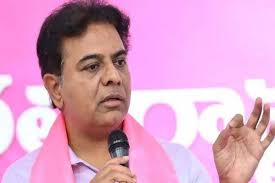
BRS leader KT Rama Rao accused the Congress government of betraying SC and ST communities by not implementing its poll promises. He said only K Chandrashekhar Rao could restore Telangana’s progress and urged voters to reject the Revanth Reddy regime. Kamareddy: Terming the Revanth Reddy government anti-Dalit and anti-tribal, BRS working president KT Rama Rao on Friday said the government was betraying SC and ST communities by failing to implement the Chevella SC/ST Declaration, which was released by AICC chief Mallikarjun Kharge ahead of the 2023 Assembly polls. Addressing the Dalit “Atmagourava Garjana” meeting held at Kamareddy on Friday, Rama Rao dubbed the Congress manifesto the biggest lie of the century, which deceived all sections of Telangana. He asserted that only K Chandrashekhar Rao could restore the State’s progress. “KCR fought for 14 years to realise Telangana and honoured Ambedkar like no other Chief Minister, by naming the State Secretariat after him and installing a 125-foot statue in Hyderabad,” he said. The BRS working president said that while Chandrashekhar Rao implemented the Dalit Bandhu scheme to empower SCs, the Congress promised to enhance the benefit to Rs 12 lakh and came to power. He ridiculed the Congress leaders for delivering nothing after promising Rs 6 lakh for Dalit and tribal housing, 26 per cent quota in government contracts under the SC/ST Declaration. Charging the Revanth Reddy government with mismanagement, Rama Rao said farmers were denied timely Rythu Bandhu aid and loan waivers were slashed from Rs 50,000 crore to Rs 12,000 crore. He remarked that promises of Aasara pensions, one tola gold for brides, and two lakh jobs for youth had all proven to be empty slogans. “Gurukul schools became an abode for scores of talented students from weaker sections under the BRS regime. But today, they have become unsafe, with hundreds of students dying due to food poisoning, while Revanth Reddy spent Rs 1.35 lakh on a plate of food during a visit to Vemulawada,” he said. He rubbished Congress leaders for spreading lies about debt, and stated that only those who could generate revenue could govern effectively. While the people of Telangana benefited during the K Chandrashekhar Rao government, money was now flowing only into Rahul Gandhi’s account under the Revanth Reddy regime, he stated, urging the people to use their vote as a weapon to oust the oppressive Congress regime and ensure a BRS victory in the upcoming local body elections. Warning that only a strong mandate could bring Revanth Reddy and his officials to their senses, he promised that the BRS would continue its fight for Dalits and tribals to ensure justice. Courtesy : Telangana Today Note: This news is originally published on https://telanganatoday.com/bha and is used purely for non-profit/non-commercial purposes, especially human rights.
Two held for beating 3 Dalit youths in UP village
Aligarh (UP), Two people were arrested for allegedly beating three Dalit youths in a village here, police said on Friday. According to police, the incident occurred on Tuesday evening in Musepur Jalal village during a house-warming celebration in one of the victims’ houses. An argument broke out between the accused and the victims, which soon turned violent. The accused, identified as Ravi Kumar and Govind, thrashed the Dalit youths, police said. Following the incident, some local leaders staged a protest against the violence at the police station and blocked traffic on the Aligarh-Agra Highway on Thursday. They demanded justice and the arrest of the accused. Circle Officer (Iglas) Mahesh Kumar said that the situation was soon brought under control in the area. A case was registered under sections 191(2) (rioting), 115 (2) (voluntarily causing hurt ), 352 (intentional insult with intent to provoke breach of peace) and 351 (criminal intimidation) of the Bharatiya Nyaya Sanhita and sections of the Scheduled Castes and Scheduled Tribes (Prevention of Atrocities) Act. The accused were arrested on Friday. Further investigation is underway, he added. (This story has not been edited by THE WEEK and is auto-generated from PTI) Courtesy : The Week Note: This news is originally published on https://theweek.com/bha and is used purely for non-profit/non-commercial purposes, especially human rights.
Samajwadi Party Chief Akhilesh Yadav Accuses BJP Of Targeting Poor, Dalits & Minorities By Shutting Schools
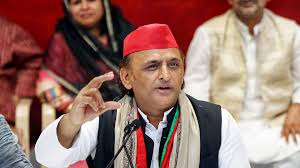
Yadav alleged that the BJP’s education policy is not only regressive but also discriminatory in nature. “Their aim is clear—they want to create an unequal society where the marginalized remain uneducated and voiceless,” he said. Lucknow: Samajwadi Party president Akhilesh Yadav has sharply criticized the Uttar Pradesh BJP government, asserting that it is “ruining basic and primary education.” He accused the ruling party of deliberately targeting the poor and PDA (Pichhde, Dalit, and Minority) communities by closing government-run schools, thereby robbing their children of a fundamental right guaranteed by the Constitution. Yadav alleged that the BJP’s education policy is not only regressive but also discriminatory in nature. “Their aim is clear—they want to create an unequal society where the marginalized remain uneducated and voiceless,” he said. By systematically shutting down schools in rural and underprivileged areas, the government is paving the way for private institutions that are financially inaccessible to common citizens, he added. He further stated that instead of improving infrastructure, filling vacant teaching posts, or modernizing classrooms, the government is dismantling the very foundation of public education. “The education of future generations cannot be compromised for political or economic motives,” he remarked. Akhilesh also expressed concern that such actions are in direct violation of the Right to Education (RTE) Act and run counter to the vision of inclusive growth. “If local schools disappear, where will the children of laborers, farmers, and daily wage earners study? What future are we offering them?” he asked. He urged citizens, especially educators and civil society, to raise their voices against this “dangerous trend” and vowed that his party would restore dignity, access, and equality in education if voted back to power Rahul M Courtesy : TFPJ Note: This news is originally published on https://thefreepressjournal.com/bha and is used purely for non-profit/non-commercial purposes, especially human rights.
Cong accuses BJP of misleading Dalits over internal quota

Mysuru: Congress MLC D Thimmaiah on Friday accused BJP functionaries like former Union minister A Narayanaswamy and former DCM Govind Karjol of misleading the Dalit community over the internal reservation issue. Speaking to reporters after holding a meeting with community leaders at Jaladarshini guest house, he said that the Congress govt has constituted Justice HN Nagamohan Das Commission to provide internal reservation to Scheduled Castes. The commission also completed the census of the population of all the Scheduled Castes to collect accurate data and information about its population. Even though the state govt is waiting for this report, a few BJP-supported Madiga community leaders and BJP functionaries have called for a statewide protest on Aug 1 against the state govt, accusing it of delay in providing internal reservation. He said that the state govt will implement the findings and recommendations of the Nagamohan Das Commission after it submits the report. Instead of waiting for the report, the BJP functionaries and their supporters are misleading the community by organising the protest, he said. During their tenure, BJP functionaries of the Madiga community, including Govind Karjol and Narayanaswamy, did not make any sincere attempts to ensure internal reservation, he charged. Govt denying quota for Madigas: Arun Kumar BJP functionary R Arun Kumar, who is head of Madiga Meesalathi Horata Samithi, on Friday described the state govt as an enemy of the Madigas community and accused it of denying internal reservation. Speaking to reporters, he accused the social welfare minister HC Mahadevappa of opposing internal reservation. Though the Supreme Court asked to provide internal reservation, the state govt delayed it, he charged. Courtesy : TOI Note: This news is originally published on https://timesofindia.com/bha and is used purely for non-profit/non-commercial purposes, especially human rights.
Rahul Gandhi deliberately spread hatred in Savarkar case, UP government responded in Supreme Court
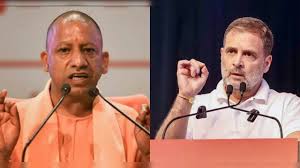
Rahul Gandhi Savarkar Case: The UP government has accused Rahul Gandhi of deliberately spreading hatred in the Savarkar case. The government has clearly opposed any kind of relief against the Congress MP. Lucknow: The Uttar Pradesh government has opposed any kind of relief against Rahul Gandhi on the Savarkar issue. In fact, a petition has been filed in the Supreme Court on behalf of Rahul Gandhi regarding the cancellation of the summons issued by the Lucknow court on the comments made against Veer Savarkar. The court had issued a notice to the UP government on the petition. In response to the notice, in an affidavit filed on July 23, the state government argued against any relief to Rahul Gandhi. The UP government has filed an affidavit in the Supreme Court. In this, Congress MP Rahul Gandhi has been accused of deliberately spreading hatred by making comments against Hindutva ideologue Vinayak Damodar Savarkar during the 2022 Bharat Jodo Yatra. The affidavit was filed in response to the notice on Rahul Gandhi’s petition to quash the summons issued by the Lucknow court on the comments. The case was to be heard on Friday i.e. today. Earlier, the state government has argued against any relief. Demand made in the petition The petition filed in the Supreme Court on behalf of Rahul Gandhi has pleaded to dismiss the summons issued by the Lucknow court and the case. The government’s affidavit states that the charges of promoting enmity and public nuisance under sections 153A and 505 of the Indian Penal Code apply to Rahul Gandhi. The court cited the investigation of the case. It said that this indicates deliberate spreading of hatred through pre-planned actions. The decision came in April In April, the court had strongly criticized Rahul Gandhi for calling Savarkar a ‘slave’ of the British. Also, the proceedings against him were stayed. The court said that this statement was given in Maharashtra, where Savarkar is worshiped like a god. The court said that he should not make any statement on freedom fighters without knowing history or geography. The court reminded Rahul Gandhi that his grandmother Indira Gandhi had written a letter praising Veer Savarkar while being the Prime Minister. It mentioned Mahatma Gandhi, who had described himself as a loyal ‘slave’ while communicating with the British Viceroy. Rahul Gandhi had argued Rahul Gandhi had called Savarkar a slave of the British, referring to the pension he received from the British. The court said in this case that no one becomes a slave just like that. The court said that one day you will say that Gandhiji was also a slave of the British. Freedom fighters are not treated like this. Senior advocate Abhishek Manu Singhvi, appearing for Rahul Gandhi, assured the court that no further statement would be made. The court warned that if any further statement is made, it will take suo motu cognizance and consider it. We will not allow anyone to make any statement against freedom fighters. Challenge to High Court’s decision Rahul Gandhi moved the apex court against the April 4 order of the Allahabad High Court. The Supreme Court had rejected the petition to quash the complaint against him. Lawyer Nripendra Pandey filed a complaint against Rahul Gandhi, saying that his remarks against Veer Savarkar hurt Hindu sentiments. He argued that Rahul Gandhi insulted a leader who fought for India’s independence. The lower court said in its summons that Rahul Gandhi spread hatred and ill will in the society through his speech against Savarkar. The complaint against him was dismissed in June 2023. After this the revision petition was filed. Rahul Gandhi argued in the High Court that the allegations against him are not equal to the crimes he has been accused of. Curated by: Rahul Parashar About the author Senior Digital Content Creator at Navbharat Times Digital. Started in journalism with Prabhat Khabar. Journey from Rashtriya Sahara, Hindustan, Dainik Jagran, Dainik Bhaskar to Times Internet. Courtesy : Hindi News
Rahul pushes for OBC quota in English medium schools
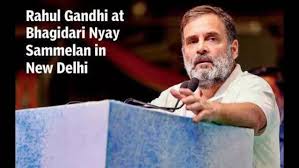
Hyderabad: Leader of the opposition in Lok Sabha, Rahul Gandhi, on Friday said the caste survey conducted by the Telangana govt—and the subsequent analysis by an independent expert group—made it clear that education, especially in English medium, is the most critical driver of socio-economic mobility for OBCs. Building on these findings, he announced that the Indian National Congress will push for reservations for OBCs and other marginalised groups in English medium private educational institutions—marking what he called the party’s third major step towards OBC empowerment. Speaking at the Bhagidari Nyay Sammelan at Talkatora Stadium in New Delhi, Rahul said: “The Telangana caste survey revealed that those with an English medium education advanced further than even uneducated landlords and wealthy individuals. This does not mean Hindi or regional languages like Bengali, Tamil, or Kannada aren’t important—they are—but English is crucial for progress.” He criticised the BJP’s stance on phasing out English, questioning the hypocrisy of its leaders, whose own children are enrolled in English medium schools. Rahul Gandhi outlined the Congress party’s three-pronged agenda for OBC upliftment: Conducting caste surveys in all states where the party is in power, breaking the 50% cap on total reservations, and holding a national caste census if voted to power at Centre. He pointed out that OBCs, despite making up nearly 50% of India’s population, own no major corporate or media houses and have little to no representation in the judiciary and top institutions. Admitting past shortcomings, he said: “I did not fully understand the extent of injustice faced by OBCs earlier. And the OBCs themselves were not aware of their strength. This is because the RSS and BJP have systematically erased OBC history from textbooks. Unlike SC and ST history, OBC struggles are invisible in the school curriculum. That is deliberate.” Calling the RSS the ‘biggest enemy’ of OBCs, Rahul blamed ‘Manuvaadi ideology’ for institutional discrimination and vowed to correct past neglect. He praised chief minister Revanth Reddy, saying the state’s caste survey was a bold step. “Revanth Reddy told me he had no choice. He saw firsthand the injustice being done to OBCs and felt compelled to act,” Rahul Gandhi said.Courtesy : Courtesy : TOI Note: This news is originally published on https://timesofindia.com/bha and is used purely for non-profit/non-commercial purposes, especially human rights.
Will Samajwadi Party become the new destination for Dalits? SP’s big bet in Lucknow
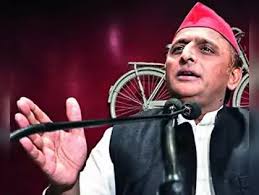
As part of its strategy to break into the Dalit vote bank, the Samajwadi Party is trying to create a new social equation through Ambedkar Vahini. Lucknow – Moving beyond its traditional backward class (OBC) based politics, the Samajwadi Party (SP) has now become active in presenting itself as a broad social alliance. In this episode, the party is going to organize the first national convention of its Dalit wing Baba Saheb Ambedkar Vahini in Lucknow on July 27. Launched on the occasion of Ambedkar Jayanti in 2021, through this Vahini, the SP is trying to reach the Dalit community at an institutional level, especially when the Bahujan Samaj Party (BSP) is struggling to handle its traditional vote bank and new Dalit leadership is emerging in many areas. This convention will try to connect 400 to 500 representatives from across the country, which will be a big and important milestone for the Ambedkar Vahini. Formed nearly three decades after the inception of the SP, this frontal organisation aims to build cadres and spread political awareness among the Dalit community. Rambabu Sudarshan, general secretary of Baba Saheb Ambedkar Vahini, said, “Our first national convention will be held in Lucknow, in which Vahini national president Mithailal Bharti will be the key speaker. The agenda of the convention will include issues like atrocities on Dalits under BJP rule, abolition of reservation through outsourcing and the recent alleged attack on Dalit MP Ramji Lal Suman.” BSP’s weakening support base and new search for Dalit voters This convention is taking place in a political scenario where the Mayawati-led BSP, which was once considered the only choice of Dalits, is now facing continuous electoral defeats. Since 2017, the BSP’s support base has declined and its core vote bank — especially the Jatav community — is looking for new options. If we talk about electoral figures, the BSP won 25.95% votes and 80 seats in the 2012 UP assembly elections. In 2017, it fell to 22.23% votes and 19 seats, while in 2022, the party won only one seat with just 12.88% votes. The decline is also evident in Lok Sabha elections — 19 seats (24.67%) in 2004, 20 seats (27.42%) in 2009, zero seats (19.77% vote share) in 2014, and 10 seats (19.42%) in alliance with the SP in 2019. Not just Dalits, SP is also in search… Prashant Trivedi, associate professor at the Giri Institute of Development Studies, says, “SP’s efforts to reach out to Dalits are not one-sided. Dalit society, especially the Jatav community, is also now re-evaluating its political options.” He says, “When SP and BSP formed an alliance in 2019, this trend got strengthened. Even after the alliance broke, Akhilesh Yadav never made personal attacks on Mayawati, which Dalit voters liked.” He said, “In 2024, SP and Congress formed an alliance, due to which the traditional identity of Dalits started getting associated with Congress again. Congress used to be the first choice of Dalits – now the same memory is emerging again in the new political circumstances. The politics of Uttar Pradesh is now moving towards the Bihar model, where Dalits and backwards are coming together on one platform.” From symbols to organization: SP’s changed strategy The strategy of SP to reach out to Dalits has now gone beyond symbolism and reached the organizational level. During the 2019 elections, SP started celebrating the birth anniversaries of Dr. Bhimrao Ambedkar and Kanshiram, and also installed a statue of Ambedkar in the party office along with the statue of Lohia. 2021 saw the formal launch of the Ambedkar Vahini and the same year the SP called upon workers to celebrate Ambedkar Jayanti as ‘Dalit Diwali’. In 2024, the party organised a week-long Swabhimaan-Samman Samaroh (self-respect) celebrations across the state on Ambedkar Jayanti, with events organised in collaboration with the Samajwadi Scheduled Caste Front. The same year, SP chief Akhilesh Yadav unveiled a bronze statue of Ambedkar in Etawah, in a sitting posture, to be installed in BSP offices. Along with this, several prominent BSP leaders also joined the SP — including Afzal Ansari, R.K. Chaudhary, Mithailal Bharti and Ram Prasad Chaudhary — indicating the growing influence of Dalit leadership in the party. PDA formula and growing acceptance The centrepiece of the SP’s social strategy is the PDA — that is, the backward, Dalit, minority alliance. It aims to organise these three sections on a political platform. The success of this formula was seen in the 2024 Lok Sabha elections, when the SP performed its best in the last ten years by winning 37 seats alone. This convention to be held in Lucknow is not just a symbolic program but is being considered an important step towards organizational empowerment of Dalit leaders and strengthening their participation in the party. As the politics of Uttar Pradesh is moving from social polarization to new equations, SP’s effort to establish itself as an inclusive social alliance can determine the direction of the state’s politics. Rajan Chaudhary Courtesy : Hindi News
Opposed molestation… and was killed! Dalit farmer gets justice after 17 years

In 2008, Dalit farmer Saheb Singh was beaten to death in Mainpuri district of Uttar Pradesh. Now the SC/ST court has held the main accused guilty and sentenced him to life imprisonment and a fine of Rs 30,000. Mainpuri (Agra): After nearly 17 years, a special SC/ST court in Mainpuri on Wednesday convicted the main accused Anand Kumar (48) in the murder case of Dalit farmer Saheb Singh and sentenced him to life imprisonment. The court has also imposed a fine of Rs 30,000 on him. According to the police, on 22 December 2008, Saheb Singh and his son Ashok were returning from the field in Gangsi village of Mainpuri, when they were attacked by neighbor Anand Kumar, his father Munnalal Rai and uncle Hari Prakash with sticks and heavy objects. Both were seriously injured in the attack. Saheb Singh died during treatment. Additional District Government Counsel (ADGC) MP Singh said that Saheb Singh had complained against the neighbour’s son Anand Kumar for molesting his daughter-in-law. Tension had increased between the two families over this matter, which became the reason for this violent attack. According to the complaint of Saheb Singh’s wife, the accused had also used caste-related abuses and provoked others. The police had filed a charge sheet in this case under section 302 (murder) of IPC and sections of SC/ST Act. Accused Munnalal and Hari Prakash have died during the trial. The court held the main accused Anand Kumar guilty and sentenced him to life imprisonment and also imposed a fine of Rs 30,000. Rajan Chaudhary Courtesy : Hindi News
Everyone was invited to the temple, but not Dalits! Gujarat HC seeks response from state government on allegations of boycott
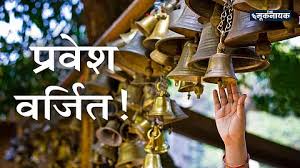
20 people from the Rabari community filed a petition to quash the FIR challenging the allegations of boycott of Dalits. Ahmedabad: The Gujarat High Court has issued a notice to the sarpanch of Paldi village panchayat in Banaskantha district and the state government. The notice has been sent on a petition filed by 20 villagers seeking quashing of an FIR registered under the Scheduled Castes/Tribes (Prevention of Atrocities) Act. The petitioners all belong to the Rabari community and are accused of boycotting the Dalit community. The case is related to the Prana-Pratishtha ceremony of Dudheshwar Mahadev temple held in Paldi village between April 28 and 30. According to the FIR, all the communities of the village and surrounding areas were invited to the ceremony, but members of the Scheduled Castes were deliberately not invited. The complainant is the 55-year-old sarpanch of the village and comes from the Scheduled Caste. The FIR alleges, “The organisers not only did not invite people from the Scheduled Castes, but our contributions were also rejected. It was a well-planned conspiracy to humiliate our caste and socially ostracise us. We were treated like untouchables.” Regarding the delay in filing the complaint, the sarpanch said that he did not complain earlier so that the religious event would not be disrupted. But later keeping in mind the sentiments of the people of his caste, he lodged a complaint at the Bhildi police station on May 9. While conducting a preliminary hearing on this petition on Tuesday, Justice Nirjar Desai passed an order, “Notice is issued to the respondents, the return date of which is August 5, 2025. The Additional Public Prosecutor on behalf of the state has accepted the notice. Respondent No. 2 is allowed direct service through the concerned police station.” Rajan Chaudhary Courtesy : Hindi News