
Dalit women survivors seek separate law for caste crimes
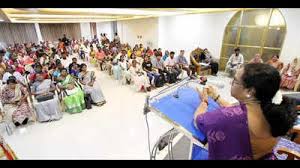
Madurai: Dalit women survivors of caste violence, especially murder of spouses, have emphasised their demand for a separate law to deal with crimes involving inter-caste love marriages or relationships. In several such cases, the SC/ST (Prevention of Atrocities) Act may not be applicable, they said. At a programme organised by the dalit rights NGO, Evidence, in Madurai on Saturday, activist and survivor Kausalya said that even now, the state and central govts do not have any data on caste (‘honour’) killings. Her husband Shankar was murdered in a gruesome instance of caste violence in 2016. “When there is no separate law to deal with these cases, some of the accused named remain free. Every time a caste killing happens, I feel depressed and saddened. Recently, I reached out to the girl who was Kavin’s lover as I knew the pain she must have been feeling,” she added. When a woman is subjected to caste crimes directly or indirectly by physical or verbal means by her own family, she is often forced to toe their line due to fear. “Only when the perpetrator is from another caste and the victim is SC, can the SC/ST Act be invoked. Convictions are also difficult to get. A separate law is the need of the hour,” said A Kathir, executive director, Evidence. Two other survivors, Arulmozhi and Rekha, also shared their experiences of facing caste violence, and stressed how important it was for dalit women to stand together. Rekha said she is working hard and studying to complete engineering. They said mustering the courage to speak out against the violence is more important than worrying about what society thinks. A S Kumari, chairperson, state commission for women, stressed the need for women from marginalised backgrounds to speak out about crimes and issues they face or witness regularly. “In cases of domestic violence as well, we see many women coming forward to complain at police stations. But the husband comes out of jail in a while and his wife is subjected to abuse again, and stripped of freedom. We need stricter laws. Only when women come together, society can change,” she said. Courtesy : TOI Note: This news is originally published on https:/timesofindia.com/bha and is used purely for non-profit/non-commercial purposes, especially human rights.
Dalit man killed over Rs 70 in 2020: 2 brothers get life imprisonment

AGRA: An SC/ST court in Aligarh sentenced two brothers, Virendra Singh and Hoshiyar Singh, both in their early 50s, to life imprisonment for murdering 26-year-old Dalit man Manoj Jatav over a Rs 70 dispute in 2020. The judgement, delivered on Friday, was made available on Saturday. Prosecution officer Chaman Prakash Sharma said that on June 5, 2020, Manoj and his cousin had gone to a shop in Sarkoriya village, where the shopkeeper demanded Rs 70 that Manoj owed, leading to an argument. Later, the brothers and four others allegedly attacked Manoj’s house, killing him and injuring his uncle, Arun. Police booked all six accused under IPC sections for murder, rioting, unlawful assembly, attempt to murder, insulting the modesty of a woman, and criminal conspiracy, along with the Arms Act and SC/ST Act. Five were granted bail months later, but Virendra remained in custody. After the trial, four co-accused were acquitted for lack of evidence, while Virendra and Hoshiyar were convicted and fined Rs 55,000 each. They were taken into custody after the verdict. “The case was being heard in the SC/ST court. After examining all evidence and witnesses, the court on Friday acquitted the four co-accused but convicted Virendra and Hoshiyar, imposing life terms and a fine of Rs 55,000 each. As the court pronounced its judgement, both convicts were taken into police custody and sent to jail,” prosecution officer Sharma said. Courtesy : TOI Note: This news is originally published on https:/timesofindia.com/bha and is used purely for non-profit/non-commercial purposes, especially human rights.
Bihar govt sets up board to protect transgender community’s rights
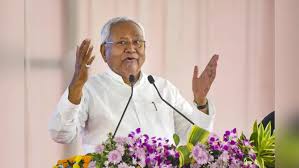
A notification for the constitution of the ‘Bihar Rajya Kinnar Kalyan Board’ was issued by the Social Welfare Department The Bihar government has constituted a welfare board to protect the rights of the transgender community and take measures for their social development and empowerment, an official said on Friday. A notification for the constitution of the ‘Bihar Rajya Kinnar Kalyan Board’ was issued by the Social Welfare Department, she said. Bihar Social Welfare Minister Madan Sahni has been made the chairman of the 28-member panel, the official said. The department has constituted the ‘Bihar Rajya Kinnar Kalyan Board’ to protect the rights of the transgender community and take measures for their social development and empowerment. The board has seven members belonging to the transgender community,” Social Welfare Department Secretary Bandana Preyashi told PTI. The measures for the social development of the transgender community will be implemented and monitored by the board, she said. The state government also wants to provide them education and vocational training to prepare them for respectable and regular employment, said Preyashi, adding, “it will also allow them to enhance their socio-economic status”. “The government is trying to provide them an atmosphere where they feel protected and live a respectful life like any other citizen in the country,” she added. (Only the headline and picture of this report may have been reworked by the Business Standard staff; the rest of the content is auto-generated from a syndicated feed.) Courtesy : BS Note: This news is originally published on https:/businessstandard.com/bha and is used purely for non-profit/non-commercial purposes, especially human rights.
Madurai NGO serves free meals to trans community
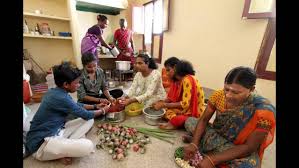
Madurai: Abinaya V, 22, a transwoman who travelled from Coimbatore to Government Rajaji Hospital (GRH) for treatment, had food at The Transgender Resource Centre (TRC), an NGO that created the first transgender library in India, at the launch of a free meal initiative for the community on Friday. She had to drop out of school at the 8th-grade due to poverty in her family consisting of her mother and sister. “If I had gotten food, perhaps I would’ve continued my studies,” says she. At the age of 14, when she experienced gender dysphoria, she attempted suicide, she said. Within a year, she ran away to Bangalore and lived in the railway station for a month. She was then supported by people of the community. She returned to Madurai at the age of 17, and now lives with her mother. Priya Babu, founder of TRC, told TOI that the meal initiative was born after seeing an increased number of trans members visiting GRH for various hormone-related treatments. Every Thursday, GRH holds medical sessions for transgender people, and of late, many come from various districts, she said. “The transgender clinic in Madurai GRH is by far the most successful in the state,” Priya said. The NGO’s desk functioning in the hospital guides community members. Over time, they also sensitised and increased awareness around gender among hospital faculty, which has made it a more favourable place, she added. “Now we see people coming from Chennai and other districts. Often they may not be able to afford meals and will have to return overnight. Through our new initiative, we will provide them food which they could pack for their travel too,” she said. Hafeez A, a transman and member at TRC, said the initiative aims at providing healthy food to not just those who come for treatment but also transgenders who may not be able to afford three meals a day. Food is available from 12am to 4pm, he said On the inaugural day, TRC served food to 40 transgenders, Priya said. “Every Thursday, we would take a head count at 9.30 at the hospital, and pack food for them accordingly,” Priya added. Courtesy : TOI Note: This news is originally published on https:/timesofindia.com/bha and is used purely for non-profit/non-commercial purposes, especially human rights.
Caution on SIR: Bihar’s voter list shrinks by lakhs, more deletions feared
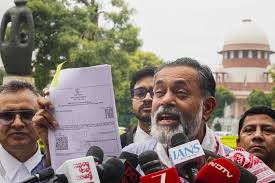
Psephologist Yogendra Yadav and the CPIML-Liberation have warned that the special intensive revision (SIR), launched on June 25, had resulted in a shrinking electorate and could lead to further deletions On the eve of the publishing of Bihar’s freshly revised draft electoral roll, Opposition leaders and election experts raised concerns about the possibility of a large-scale deletion of voters. Psephologist Yogendra Yadav and the CPIML-Liberation have warned that the special intensive revision (SIR), launched on June 25, had resulted in a shrinking electorate and could lead to further deletions. Preparation for the SIR has begun across India, and the EC is expected to extend the drive after completing Bihar. The Trinamool Congress government in Bengal has vehemently opposed it on the suspicion that it would selectively disenfranchise the working-class voters ahead of the 2026 elections. Yadav, a petitioner in the Supreme Court against the SIR, told The Wire: “I have the figures from the districts of Darbhanga and Kaimur. It shows that 10 to 12 per cent have been marked for deletion, which is to say that where BLO said ‘not recommended’. This does not mean permanent deletion. They have the right to notice, hearing, etc. Ten per cent would mean 72 lakh people, over and above the 94 lakh that we have spoken about.” On July 27, the EC confirmed that the state’s electoral roll has shrunk from 7.89 crore to 7.24 crore — smaller than the electorate of the 2020 polls — in the first phase of the drive itself. The 65 lakh names deleted include the dead, those enrolled in multiple places in Bihar, and those who are permanently shifted or not found. In his response to the Election Commission’s counter-affidavit, Yadav used population projections of the Union health ministry in 2019 to claim that the actual number of voters in Bihar should be around 8.18 crore. India’s population census has not been conducted since 2011, hence the reliance on projections. He said even if one’s name is on the draft roll, “you can still be thrown out a) because the BLO said you are suspect, b) because the documents were not found or are not there, and c) because the electoral registration officer can make a local inquiry and say that you do not belong there. So we are looking at a substantial chunk over and above the 94 lakh we are talking about”. Yadav added: “We are looking at the birth rate of 2002-2007. A 28 per cent increase has taken place in the population. After population growth, the electorate has shrunk. How astonishing!” CPIML general secretary Dipankar Bhattacharya cited a purported SIR status report from Darbhanga district. Of around 30 lakh voters in the district, 2 lakh have been deleted in the enumeration phase. “Of the remaining 2.8 million (28 lakh), some 2.5 million (25 lakh) names have been recommended by BLOs, and 3 lakh voters are not recommended by BLOs. Are these voters on the waiting list for eventual deletion? Will they be treated henceforth as D-voters with voting rights suspended? Will some end in detention centres as has been happening in Assam?” he asked. Courtesy : The Telegraph Note: This news is originally published on https:/thetelegraph.com/bha and is used purely for non-profit/non-commercial purposes, especially human rights.
Pune | Three Dalit Women Allege Illegal Arrest | Protests Erupt Outside District Collector’s Office
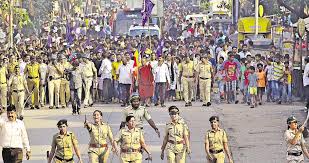
On August 1, Pune Police allegedly took three young Dalit women into illegal custody. According to the women, police raided their homes, hurled casteist slurs, made derogatory comments about their sexuality, and physically assaulted them. A week had passed since the alleged harassment and atrocities inflicted on three women in Pune; however, no FIR has been registered yet. The police claim that, based on a preliminary inquiry, there is no evidence to support the women’s allegations, and therefore, an FIR cannot be filed. The city witnessed a protest outside the District Collector’s office, demanding that action be taken against the police. Courtesy : Outlook India Note: This news is originally published on https:/outlookindia.com/bha and is used purely for non-profit/non-commercial purposes, especially human rights.
Chandigarh News: Appointed chairmen of boards and corporations two years before the elections, targeting 32 percent Dalit and 10% Brahmin-Rajput votes
-CM said, work diligently for the welfare of the society and the progress of PunjabAdvertisement: 0:14 Chandigarh/Jalandhar. Aam Aadmi Party has appointed chairmen of various boards and corporations in the state before the 2027 assembly elections. Apart from 32 percent Dalit population, the government has also targeted the Brahmin-Rajput vote bank. Punjab Chief Minister Bhagwant Singh Mann has called upon the newly appointed chairmen to work hard and diligently for the welfare of the society and the progress of Punjab. Almost all the major castes of the society have been included in these appointments. Experts believe that this step is directly related to the upcoming assembly elections. The population of Dalits in Punjab is about 32 percent, which is the highest compared to any state in the country. Apart from this, there is also a large number of backward castes and economically weaker sections here. Appeasing these castes, giving them representation and providing direct benefits has become the key to winning elections for any political party. In Punjab, the population of Rajput community is 6 percent and that of Brahmin community is 4 percent. Courtesy: Hindi News
Manuvadis built a wall of untouchability
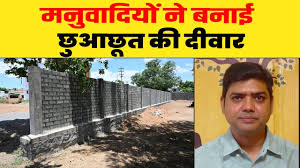
People of Arunthathiyar community, which comes under Scheduled Caste, have alleged that Manuvadis of Thottiya Nayakkar caste have built this wall. They allege that this wall has been built to stop the movement of Dalits. Dalit society has called it ‘wall of untouchability’. The question is also whether any community can build a wall on any government land? The silence of the local administration on this question has put it under question. Karur, Tamil Nadu. Manuvadis have built a 200 feet long and 10 feet high wall in a village. It is alleged that this wall has been built so that Dalits of the village can be stopped from going to the areas of Thottiya Nayakkar. People of Dalit society are calling this wall a wall of untouchability. The matter is of Karur district of Tamil Nadu. The matter has heated up due to this wall built in Muthuladampatti village of the district. People of the Arunthathiyar community, which comes under the Scheduled Caste, have alleged that Hindus of the Thottiya Nayakar caste have built this wall. They allege that this wall has been built to stop the movement of Dalits. The Dalit community has called it a ‘wall of untouchability’. The special thing is that this wall has been built on government-owned public land and it is located just one kilometer away from the Karur Collector’s office. According to the report of “The Hindu”, Dalits say that when they came to know about the construction of the wall, they complained about it to the revenue officials. The village administrative officer of Thanthoni village inspected the spot and verbally asked the Thottiya community to stop the work, but they ignored these instructions and completed the construction of the wall quickly. Seeing the matter escalating and after the protest of the Dalit community, officials of the Revenue and Police Department had to intervene. However, despite two meetings held on July 13 and July 29, no solution has been found. 57-year-old P. Marudhai, who belongs to the Dalit community, said, “This wall is a symbol of isolating us in our own village. This is outright caste discrimination and a way to humiliate us.” They allege that the Manuvadi people do not allow them to use the public ‘drama stage’ during temple festivals, even when they want to build a separate stage or toilet for themselves, they are stopped. According to the report, 50-year-old S. Duraiasamy said, “We are forced to go to the Manuvadi areas without slippers. If we go wearing slippers, they abuse and shout at us.” However, on the other hand, people of the Thottiya Nayakar community are denying this and giving some other reason for building the wall. According to the report, 62-year-old R. Kandasamy completely denied the allegations and said, “We built the wall so that drunk outsiders do not disturb us in our area. This place has been in our use for years.” On the other hand, the administration is beating around the bush in this matter. Karur Collector M. Thangavel told The Hindu, “I cannot say right now whether this is a wall of untouchability or not. I have ordered the Revenue Department officer to investigate and am waiting for his report. The situation can be clarified only after receiving the report.” But the big question here is, can any person build a wall on any government land without any permission? That too on the land where people come and go. Whatever this wall has been built for, it is clear that it is unconstitutional and illegal. Now the question is, why is the administration trying to complicate the matter instead of immediately demolishing this illegal wall? Siddharth Gautam Siddharth Gautam, who has an interest in journalism and writing, is a graduate from Delhi University. There he has been the winner of many university-level writing competitions. He has been associated with Dalit Dastak for the last two years and is working as a sub-editor. Courtesy : Hindi News
3 held for trying to dismount Dalit groom from horse
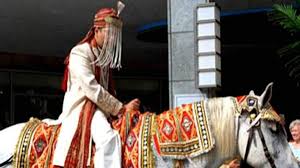
Jhunjhunu: Gudhagorji police Thursday arrested three men who had attempted to dismount a Dalit groom from his horse on July 19 at Titnawad village, Jhunjhunu district. The police then paraded all the three accused through the main market of the village. All of them were seen holding their ears, saying, “We made a mistake, we will not do this again.” Navalgadh DSP Rajveer Singh said that arrested individuals have been identified as Ramesh Kumar, Dilip Singh and Ranveer Saunthli, all residents of Titnawad. He added that the police had promptly registered a case and began an investigation which led to the arrests. Courtesy : TOI Note: This news is originally published on https:/timesofindia.com/bha and is used purely for non-profit/non-commercial purposes, especially human rights.
Lost polls in 2019 for the first time due to bogus votes, claims Kharge
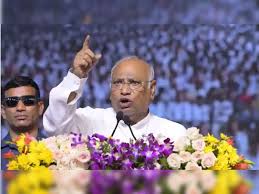
Bengaluru: Congress president Mallikarjun Kharge Friday sought to give heft to Lok Sabha opposition leader Rahul Gandhi’s allegations of vote theft by claiming that he too was a victim of electoral fraud during the 2019 Lok Sabha elections — his first-ever electoral defeat in his political career. At Congress party’s ‘Vote Adhikar Rally’ at Freedom Park in Bengaluru, Kharge said the Union govt led by Prime Minister Narendra Modi is a govt that “indulges in theft”. “PM Narendra Modi is making this country cry with bogus votes,” he said. “I never lost an election until 2019. I lost because of bogus votes, which has now come to light.” He alleged that his defeat from Gulbarga Lok Sabha constituency in Karnataka was due to manipulation of the voter list. “In five of the eight assembly segments, my opponents secured at least 20,000 bogus votes,” he said. He accused the Election Commission of operating under directions from Modi and Union home minister Amit Shah. Expanding on his allegations to the 2024 Lok Sabha elections, Kharge said, “In Maharashtra and Karnataka, he (Modi) used the same trick. Modi and company did not legitimately win the 2024 elections.” He went on to say, “The last (Lok Sabha) election was one of betrayal. Modi’s strategy is that even if people do not vote, he and Shah order the Election Commission to decide where to vote less and where to vote more. Modi has already intimidated Congress and other parties and gained a majority.” Invoking the legacy of the freedom struggle, Kharge said, “Our tall leaders carried out the Quit India Movement on Aug 9. In the same way, we are going to do or die to protect the Constitution. I thank Rahul Gandhi. He is working to spread awareness among the people. He is ready for anything. Even though he has 40-50 cases against him, he is continuing his good work.” He said the pattern of vote manipulation was being discussed within the INDI alliance. “We met on Thursday at the residence of Rahul Gandhi, where we explained the situation in detail to our allies,” he said. “We sought to ensure unity and a united front across our alliance to oust the Modi-led central govt. We will take out a procession to the Central Election Commission (CEC in Delhi) and submit a memorandum on Monday.” He said the memorandum would declare ECI officials complicit and render them ineligible to continue in their positions. Karnataka deputy chief minister DK Shivakumar said the party would set up “legal banks” across all assembly constituencies. “These banks will serve to protect votes of people and act on lines of blood banks at hospitals,” he said. Chief minister Siddaramaiah demanded PM Modi’s resignation, calling BJP a “Manuvadhi party” that had lost moral authority. Ministers R Ramalinga Reddy, Dinesh Gundu Rao and BZ Zameer Ahmed Khan also accused BJP of winning seats despite losing assembly polls in the same regions last year. Courtesy : TOI Note: This news is originally published on https:/timesofindia.com/bha and is used purely for non-profit/non-commercial purposes, especially human rights.