
Dalit Basti’s drain broken: Dirty water spread on roads in Khamaria of Saughat, people facing problems in movement
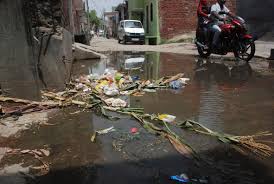
People are troubled due to broken drain in Dalit Basti of Gram Panchayat Khamaria located in Saughat of Basti district. Dirty water is spreading on roads from the drain. This is obstructing movement. Local residents Nagendra Kumar, Suchit Kumar, Mahesh Kumar, Sanyam, Sundar and Dhoop Chand said that water is not able to drain out from the broken drain. This has created a situation of waterlogging in the area. Dirty water is spreading due to this. This can cause health problems. Local people have demanded the Gram Panchayat administration to get the drain repaired. They say that their daily routine is getting affected due to this problem. A quick solution is being demanded from the administration. Arun Kumar, Gandharia Faiz Courtesy: Hindi News
VIDEO: Dalit Man Beaten For Refusing To Bonded Labour; Gurjars Set His Shanty, Cattle Shed Afire In MP’s Morena
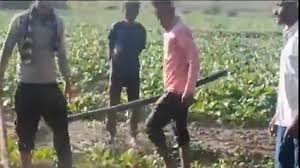
Bonded labor allegations surface; police investigation is underway Morena (Madhya Pradesh): A Dalit man was allegedly assaulted by a member of a Gurjar community after he refused to work without wages in Madhya Pradesh’s Morena. Not only the accused beat the victim, he also set his shanties afire. The incident happened in Malbasai village under Ambah police late Monday evening and is now under police investigation. Rinku Sakhbar, a Dalit resident of the village accused Ravi Gurjar, his father Punjab Gurjar and uncle Shri Krishna alias Bunty Pehalwan, of repeatedly pressuring his family into bonded labor without wages. Rinku claimed that his family had been resisting these demands for several months. On the night of the incident, Rinku’s sister and aunt were visiting for the Raksha Bandhan festival. According to Rinku, the accused was accompanied by several others, arrived with illegal firearms (katta) and threatened him. He was also beaten him when he resisted. According to the reports, the confrontation escalated near the cattle sheds, which were set on fire. Rinku’s family said the burnt huts were primarily used for sheltering their livestock, and their destruction has caused significant distress. SDOP Ambah Ravi Bhadauria confirmed a confrontation between the Sakhbar and Gurjar families. He admitted that a fire broke out in the cattle area but clarified that how it started is still under investigation. “Police have reached the spot and action will be taken based on facts,” he said. The incident has raised concerns over caste-based violence and bonded labor practices in the region. Courtesy : TFPJ Note: This news is originally published on https:/thefreepressjournal.com/bha and is used purely for non-profit/non-commercial purposes, especially human rights.
Cong’s ‘Vote Satyagraha’ to protest SIR today from Rewa

Bhopal: Following the detention of LS LOP Rahul Gandhi, Congress MP Priyanka Gandhi and leaders of the INDIA bloc, including SP chief Akhilesh Yadav during a protest march from Parliament to the office of the Election Commission of India (ECI), the state Congress here on Monday has declared launching a Vote Satyagraha from Rewa. The state Congress’ first Satyagraha protest against SIR (Special Intensive Revision) of electoral rolls will start on Tuesday. All Congress MLAs and LOP Umang Singhar will be present during the Vote Satyagraha protest. Briefing reporters on the Vote Satyagraha, state Congress president Jitu Patwari said that the biggest strength of the Constitution is the right of the people to vote. “This right is the foundation of democracy and with this the people choose their representatives and the govt. When this sacred right is tampered with, it is not just a political issue, but a direct attack on the Constitution of the country and its democratic structure,” Patwari said. “Today, instead of raising the voice of the people, the govt strangled democracy and arrested all the MPs,” Patwari alleged. “Today, the information that BJP wins elections by stealing votes has reached every household and the people will not sit silent now.” Patwari said. Meawhile, Congress workers burnt effigies of the EC across the state on Monday, including in Bhopal, to protest SIR of electoral rolls. The party alleged SIR will be the murder of democracy. Courtesy : TOI Note: This news is originally published on https:/timesofindia.com/bha and is used purely for non-profit/non-commercial purposes, especially human rights.
Rahul Gandhi will not take oath on vote theft, says Shivakumar
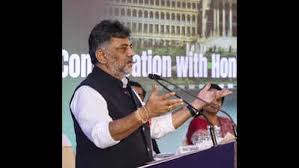
Bengaluru: Deputy chief minister and state Congress president DK Shivakumar Monday said Congress MP and Lok Sabha opposition leader Rahul Gandhi will not take an oath on vote theft claims as sought by chief electoral officers (CEOs) of three states. He also said state CEOs had no authority to issue such a notice to Rahul. “We are not schoolboys to reply to whatever Election Commission (EC) demands,” he said. “It is their (EC) responsibility to get details which my leader (Rahul) exposed. He made a presentation on how it happened. It’s now the EC’s job to pursue it and initiate action.” He also said Congress has sought more information and records from the EC. “Let them first provide those records. We officially asked for them. I personally went to the EC, so let them give us those records. At no point will Rahul Gandhi take an oath. He has answered the EC in public,” he said. He insisted that Congress had informed the EC about irregularities in elections, and it was the EC’s duty to resolve those issues. “The EC is free to file a case against us if we have said anything wrong. We have only pointed out irregularities in the election process,” he said. On the notice issued to him, Shivakumar said: “I asked the EC for more information. They sent it to me on WhatsApp, but I have not gone through it yet. We will provide whatever information they want.” JD(S) seeks legal action Meanwhile, Janata Dal (Secular) functionaries petitioned Karnataka’s CEO to take legal action against Rahul for his ‘vote theft’ allegations. In a written appeal, they urged the CEO to act under Section 31 of the Representation of the People Act, 1950, dealing with false declarations, and Section 227 of the Bharatiya Nyaya Sanhita, 2023, pertaining to providing false evidence. They called Rahul’s allegations “false” and accused him of misleading the public by speaking against an autonomous constitutional body. “It is unfortunate that they (Congress party) are making allegations against the election commission. This is out of frustration that they shall lose the upcoming polls in Bihar and other states,” the letter stated. The JD(S) delegation submitted the appeal at the election commission office, as the CEO was unavailable. MLC Javarayi Gowda, Bengaluru city working president KV Narayanaswamy, and general secretary S Ramesh were present. Courtesy : TOI Note: This news is originally published on https:/timesofindia.com/bha and is used purely for non-profit/non-commercial purposes, especially human rights.
Vote chori row: High command orders, CM executes; how 6-hour drama ended in Karnataka minister KN Rajanna’s ouster; Congress may now expel him
BENGALURU: In a high-voltage political operation on Monday, Karnataka chief minister Siddaramaiah sacked state cooperation minister KN Rajanna from the cabinet following a directive from the Congress high command — a move that unfolded over just six hours after he publicly ridiculed Rahul Gandhi’s allegations of voter list manipulation. The day began at 10.30am, when AICC general secretary KC Venugopal called up CM Siddaramaiah and deputy CM DK Shivakumar over Rajanna’s comments that questioned the party’s narrative on “vote theft.” By noon, Siddaramaiah had sought an explanation from Rajanna and reported the interaction to Venugopal.At 1pm, Venugopal pressed the CM and DCM to take decisive action. Thirty minutes later, Siddaramaiah met Rajanna in the presence of minister Parameshwara, persuading him to quit. At 2pm, Rajanna, a staunch supporter of Siddaramaiah, signaled his willingness to step down, and the CM informed the high command. But by 2.30pm, the party leadership instructed Siddaramaiah to “remove” Rajanna instead of accepting a resignation. At 3pm, the CM sent a formal recommendation to the Karnataka governor, who by 4.30pm notified Rajanna’s removal. Rajanna’s ouster — and the manner in which it was executed — has triggered speculation that the next step could be his expulsion from the Congress, in what is being seen as a warning to dissenters. The episode began with Rajanna’s remarks questioning why the Congress had not acted when voter list revisions happened under its watch, despite Rahul Gandhi alleging that the BJP and the Election Commission colluded to insert bogus votes in Mahadevapura. The row spilled into the assembly, with the BJP accusing Congress of making Rajanna, a Scheduled Tribe leader, a scapegoat. Courtesy : TOI Note: This news is originally published on https:/timesofindia.com/bha and is used purely for non-profit/non-commercial purposes, especially human rights.
Free Bus Travel For Girls, Women, Transgender In Andhra From August 15
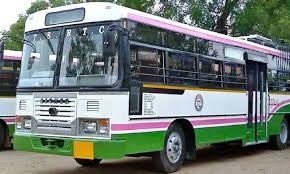
For passenger safety, the government is considering equipping staff with body-worn cameras and installing CCTV cameras in all buses. Amaravati: All girls, women, and transgender persons holding Andhra Pradesh domicile are eligible for free bus travel under the ‘Stree Shakti’ (woman power) scheme, to be launched statewide on August 15, Principal Secretary (Transport, Roads & Buildings) Kantilal Dande said on Monday. “Beneficiaries include all girls, women, and transgender persons with domicile status in Andhra Pradesh, subject to presenting valid identity proof,” Mr Dande said in a government order. The scheme will be implemented using the existing fleet of the Andhra Pradesh State Road Transport Corporation (APSRTC), with additional buses to be procured based on demand, he added. Free travel will apply only to Pallevelugu, Ultra Pallevelugu, City Ordinary, Metro Express, and Express services. It will not cover non-stop services, interstate operations, contract carriages, chartered services, or package tours. Saptagiri Express, Ultra Deluxe, Super Luxury, Star Liner, and all air-conditioned services are also excluded, he said. For passenger safety, the government is considering equipping staff with body-worn cameras and installing CCTV cameras in all buses. Bus stations will see upgraded amenities such as fans, chairs, drinking water, and toilets. Mr Dande said the procurement of electric buses and extending the scheme to them could also be considered, subject to Cabinet approval. Beneficiaries will receive zero-fare tickets, which APSRTC will submit to the government for reimbursement. Free bus travel for women was a poll promise of the TDP-led NDA government ahead of the 2024 elections. The scheme is estimated to cost Rs 1,942 crore annually-about Rs 162 crore a month-and aims to empower women by improving access to education, jobs, and mobility, Minister K Parthasarathy had earlier said. (Except for the headline, this story has not been edited by NDTV staff and is published from a syndicated feed.) Courtesy : NDTV Note: This news is originally published on https:/ndtv.com/bha and is used purely for non-profit/non-commercial purposes, especially human rights.
Tamil Nadu: ‘Untouchability wall’ built to stop Dalits from entering upper caste areas demolished after administrative intervention
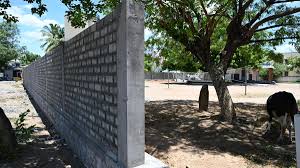
Scheduled caste Arunthathiyar community members alleged that the wall was built to stop them from entering caste Hindu areas, while Thottiya Nayakar community members denied it and said the wall was intended to prevent chaotic activities by ‘outsiders’ under influence of alcohol. Karur- A controversial wall built by Thottiya Nayakar community (an intermediate caste) in Karur, Tamil Nadu, which was allegedly being called an ‘untouchability wall’ for the Dalit community, was demolished on Saturday in the presence of security forces. The wall was about 200 feet long and 10 feet high and was built on government Poramboke land in Muthuladampatti area of Karur. While the Scheduled Caste Arunthathiyar community members alleged that the wall was built to prevent them from entering the locality of caste Hindus, the Thottiya Naicker community denied it, saying the wall was meant to prevent unruly activities by ‘outsiders’ under influence of alcohol. Earlier, members of the same intermediate caste had blocked attempts by the Arunthathiyar community to erect a stage during the Sri Muthumariamman temple festival and construct toilets on the Poramboke land. According to a report published in The Hindu, the Revenue Department had a few days ago issued a notice to Thottiya Naicker community leader ‘Kothukarar’ ordering him to remove the wall within 15 days as it was built on government land and no permission was taken for it. However, representatives of the community refused to demolish the wall and reiterated their argument. The matter had triggered caste tensions in the area, with the Revenue Department issuing another notice on Friday night ordering the Thottiya Nayakar community to remove the wall by 11 am on August 9. Hundreds of people from the community staged a sit-in outside the Collector’s office in protest, but returned after the officials took a tough stand. On Saturday morning, revenue and police officials led by Karur SP K. Josh Thangaiah reached the disputed site. The intermediate caste leaders then decided to demolish the wall themselves and it was removed by noon. The media was not allowed to take photographs. Mohammed Baisal, Revenue Divisional Officer, Karur, told The Hindu that the wall had been completely demolished and its foundation would be removed by Sunday afternoon. Members of both communities have been urged to cooperate in the task. Courtesy : Hindi News
MP: Caste discrimination against Kanwariyas in Shivpuri, case registered against 6 accused under SC-ST Act
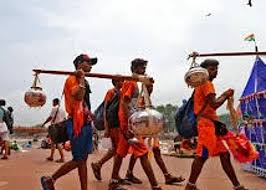
According to the victims, during the dispute, Hari Singh and Saidpal snatched the Kanwar from the hands of priest Rakesh Pandit and threw it on the ground. Meanwhile, all the accused threatened the Kanwariyas that if they complained about the incident to the police, they would be killed. Bhopal. A religious dispute has taken a serious turn in Richhai village of Khaniadhana police station area of Shivpuri district of Madhya Pradesh, when the youth of Jatav community were stopped from offering water from Kanwar in the Shiva temple of the village. In the incident, allegations of using caste-specific abuses, snatching and throwing Kanwar and threatening to kill have come to light. Police have registered a case against six people in the case under various sections including SC/ST Act. Know what is the matter? This case is of August 6. Victim Jeetu Jatav and his companions had set out on the Kanwar Yatra after taking water from the famous temple of Aurchha. They returned to the village at around 10 am and at around 1 pm reached the Shiv temple located in the courtyard of the Peepal Wale Bade Baba temple of the village. To offer water, they called priest Rakesh Pandit from Kanjwaha village and started preparations for the puja. Meanwhile, Karan Singh alias Sedar Singh Bundela, Kispal Singh Bundela, Hari Singh Bundela, Saidpal Bundela, Manju Bundela and Narayan Singh Bundela of the village reached the spot. It is alleged that these people used casteist words and said that “we will not let the Kanwad of Jatavs be offered in this temple”. After this, they abused and stopped the Kanwadis from offering water. Snatched the Kanwad and threw it away, threatened to kill According to the victims, during the dispute, Hari Singh and Saidpal snatched the Kanwad from the hands of priest Rakesh Pandit and threw it on the ground. Meanwhile, all the accused threatened the Kanwadis that if they complained about the incident to the police, they would be killed. On getting information about the incident, District Panchayat member Siyaram Lodhi reached the spot. He discussed with the villagers and informed the police. After this, Khaniyadhana police station reached the spot and registered a case. According to the Khaniyadhana police station in-charge, a case has been registered against six named accused under IPC sections 294 (abuse), 506 (criminal intimidation), 295A (hurting religious sentiments), 34 (crime committed with common intention) and Scheduled Castes and Scheduled Tribes (Prevention of Atrocities) Act. Police say that in view of the seriousness of the case, the search for the accused has been started and arrests will be made soon. Ankit Pachauri Courtesy: Hindi News
Dalits are doing the work doctors reject—‘No postmortem without a safai karmachari’
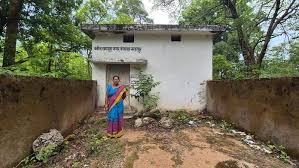
Thousands of Dalit sanitation workers across India are forced to perform autopsies in place of doctors. ‘This practice is even worse than manual scavenging.’ Delhi/Narharpur/Dharwad: Hidden in the forests of Chhattisgarh’s Narharpur is a small cement structure with black Hindi letters on the wall: Naveen Shav Griha, a house for the dead. More than 1,200 postmortems have been conducted here in the last 20 years. The person cutting open the bodies is Santoshi Durga, a sanitation worker. Her qualification is not an MBBS but her caste. There’s no running water or electricity in the dingy room. Just a worn-down cement slab and a paltry selection of knives. The town’s residents say the murda ghar is haunted, cursed. By extension, they look at 42-year-old Durga with suspicion. But to them it’s only natural that the distasteful job of dealing with the dead is relegated to a Dalit. “Townspeople say the mortuary is not auspicious, it is scary. So, they pressurised the hospital to make the mortuary outside the town,” said Durga, who works for the Narharpur Community Health Centre as a badli worker, a substitute or proxy. Sometimes, badlis sweep roads or clean drains for government safai karamcharis who don’t want to get their hands dirty. And sometimes, badlis like Durga fill in for squeamish doctors. For this, they don’t even get the pay or benefits of a permanent sanitation employee. The doctor never touches the body, he just keeps making notes. I have complete experience now. I know how to cut open the body and break open the skull. I open the body from the trachea to the navel. I show the doctor where the bones are broken, where injuries have been sustained -Santoshi Durga, contract sanitation worker Across India—whether in Narharpur or Gurugram, Dharwad or Delhi—thousands of Dalit sanitation workers are forced to perform autopsies. Called “cutters” by the medical fraternity, they get no formal training, protective gear, recognition, or additional compensation. Despite government regulations requiring an MBBS degree as the basic requirement to conduct autopsies, physicians at large do not want to go near decomposing bodies, much less handle the organs. They may supervise from a distance, but the dissection is left to sanitation workers, who are nearly always Dalit. The role is passed down generationally, turning risky medical labour into an inherited caste-based duty. The system continues to reinforce and strengthen age-old, stubborn notions of pure and impure, and lack of dignity is still ascribed to some jobs in modern India. “This practice is even worse than manual scavenging,” said Bezwada Wilson, convenor of the Safai Karmachari Andolan. Dalit sanitation workers doing postmortems Contract worker Rakesh Rajak at the postmortem room in Komal Dev District Hospital, Kanker. He has been conducting autopsies for around 15 years | Photo: Shubhangi Misra | ThePrint Not only are sanitation workers engaging in a hazardous, traumatising job without prior consent, they’re also stuck in tenuous contract work, forced to labour all seven days of the week. They depend on tips from relatives of the dead to meet their basic needs. Durga is no stranger to the murda ghar. She learnt the job of dissections from her father, who drank himself to death to cope with the pressures of the work. “My father used to conduct autopsies here earlier, but he used to get drunk and do it. I wanted to prove to him that this work can be done without alcohol. I learnt the ropes alongside him,” she said. Yet though the practice is rampant in government hospitals, the work is either invisible or it brings ignominy. Or both. “No postmortem in this country happens without a safai karmachari,” said Bhim Basfore, member of Assam’s Safai Karmachari Aayog and the son of a postmortem worker himself. “Nobody wants to do this work, and so it is handed over to the sanitation workers. Sanitation workers do three types of jobs: working on the roads, manual scavenging, and cutting dead bodies. There is a lack of awareness about the third.” Caste disguised as contingency A hammer and a couple of blades kept neatly in a black bag, along with aprons, masks, and gloves are the only tools at Durga’s disposal for her autopsy work. She doesn’t even know what bone saws, rib shears, or specialised autopsy knives are. Her kit is kept in a far corner of Narharpur Community Health Centre and is labelled with khatra (hazardous) warnings. If further testing is needed, she transports body parts back to the hospital in a basic plastic container. “Here is the box I keep organs in,” she said, pulling out a blue-lidded Pearlpet box, which she washes and reuses. Durga is the one doctors and even police call when a decaying body is found, or the victim of a murder or suicide has to be examined. She has to work with whatever she gets. The bodies might be infested with maggots, bloated, or mangled beyond recognition. The sight and stench can be unbearable. She says the state provides her hepatitis shots every quarter. Usually, bodies are brought to the mortuary in a van, with the doctor and Durga travelling together to carry out the work. “The doctor never touches the body, he just keeps making notes,” she said. “I have complete experience now. I know how to cut open the body and break open the skull. I open the body from the trachea to the navel. I show the doctor where the bones are broken, where injuries have been sustained.” The people I cut open visit me in my dreams. Earlier I was scared of them. Now I have made my peace with it, but it is still difficult to fall asleep at night – Sanitation worker in Gurugram Calling on sanitation workers for mortuary work is just the normal division of labour here. It even happens in Raipur, according to Naharpur block medical officer Bhupendra Kumar. “The autopsies always happen under the supervision of doctors. We are always present there,” he said. A
Dalit left groups to start protest from August 11 seeking immediate implementation of Nagamohan Das panel report on internal quota
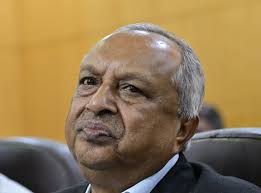
Amid pressure on the Karnataka government to hand over the H.N. Nagamohan Das Commission report on internal reservation to a Cabinet sub-committee to study it, several Dalit organisations, under the banner of Federation for Social Justice for Scheduled Castes, will start their indefinite protest from Monday morning, seeking immediate implementation of the report. Amid pressure on the Karnataka government to hand over the H.N. Nagamohan Das Commission report on internal reservation to a Cabinet sub-committee to study it, several Dalit organisations, under the banner of Federation for Social Justice for Scheduled Castes, will start their indefinite protest from Monday morning, seeking immediate implementation of the report. The government has postponed a decision on the committee report to the next Cabinet, asking Ministers to study the report before initiating the discussion. Dalit right not happy While the Dalit right (Holeyas) is understood to be unhappy with the report’s findings, and have pointed out at their reduced population and flaws in distribution of internal reservation, the Dalit left (Madigas) and other groups have welcomed the report and have sought immediate implementation. The commission has sliced the 17% reservation matrix with 6% given to the Dalit left and 5% to the Dalit right, besides 4% to touchable groups, As much as 1% each has been given to microscopic communities and those who have identified themselves as AD, AK, and AA. Sources in the Dalit left groups said that the report should not have the same fate as the A.J. Sadashiva Commission report submitted earlier but not implemented. If there are flaws, it could be rectified and implemented, sources said. “Every community will work to protect its interest and it was expected also. But government should not yield to such pressure to stall the implementation.” CM should take a stand Basavaraj Kowthal, convener of Federation for Social Justice for Scheduled Castes, said that they will not withdraw their protest unless the government issues an order to this effect. “Chief Minister Siddaramaiah has to take a stand. If he goes on seeking consent from all caste groups, there will be no end to it. The report prepared after a scientific survey and robust data collection should not be wasted. Our demand for internal reservation has been three decades old and the Supreme Court has cleared it. The survey has been done according to the Supreme Court order. Not only have the caste numbers been considered, but also the extent of backwardness. We will not abandon the protest site until the government takes the report to its logical end,” he said. H.N. Nagamohan Das. Courtesy : The Hindu Note: This news is originally published on https:/thehindu.com/bha and is used purely for non-profit/non-commercial purposes, especially human rights.