
Dalit man dies in police custody: Allahabad High Court seeks response from Yogi government, demands ₹25 lakh compensation

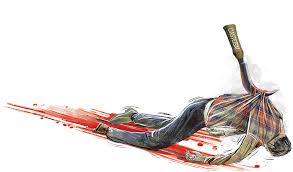
Nawabganj Police Station death case: Petitioners demand ₹25 lakh compensation for the family and a High Court-monitored investigation. Prayagraj: Hearing a public interest litigation (PIL) seeking an investigation into the death of a Dalit man in police custody at Nawabganj police station in Prayagraj, the Allahabad High Court has directed the state government to file its reply (counter affidavit) within two weeks. The petitioners have also demanded compensation of ₹25 lakh for the deceased’s family members. The family has alleged that the man died due to custodial torture within the police station premises, while the police claim he died of a heart attack. Hearing a PIL filed by the Advocates Forum and two others, a division bench of Justice Siddhartha and Justice Santosh Rai, in its order on Wednesday, directed the PIL to be listed before the appropriate court for further hearing on October 10. According to the petitioner’s lawyer, Charlie Prakash, on May 27, the police picked up Hira Lal, a laborer, from his home in connection with a theft case in which no one was named. It is alleged that no member of Hira Lal’s family was allowed to meet him, and the police later informed him that he had died. Family members were asked to go to the mortuary at Swaroop Rani Nehru Hospital. The PIL alleges that Hira Lal’s body was not handed over to his family members, and the police cremated him at Daraganj Ghat in Prayagraj. The petitioner’s lawyer, Charlie Prakash, argued, “This is a case of brutal custodial death and murder by the police within the police station premises, in violation of Article 21 (right to life and personal liberty).” He demanded the formation of a high-level, independent, and impartial committee headed by a retired High Court judge to investigate the illegal detention, custodial torture, and custodial death of Hira Lal, a resident of Narrepar village, Budauna, under the jurisdiction of the Nawabganj police station. The PIL also states, “The investigation should be conducted under the supervision of the High Court and should submit its report within a stipulated time.” Rajan Chaudhary Courtesy: Hindi News
Dalit girl raped in Mau on the pretext of marriage: Threatened to kill, case filed against accused

A case of rape of a Dalit girl under the pretext of marriage has come to light in the Doharighat police station area of Mau. The girl has alleged that when she pressured him to marry her, the accused used casteist slurs and threatened to kill her. Police have registered a case in this matter and have begun searching for the accused. The victim, a resident of a village in the Doharighat police station area, stated in her complaint to the police that a young man from her village had been raping her for the past three to four years under the pretext of marriage. When she began pressuring him to marry her, he began to evade the allegations. According to the victim, when she went to the accused’s house, he used casteist slurs and threatened to kill her. Station in-charge Rajkumar Singh stated that based on the victim’s complaint, police have registered a case against the accused under relevant sections and further action is being taken. Mithilesh Kumar Rai Courtesy: Hindi News
MU syndicate proposes PhD in Tulu, opportunities for transgender candidates
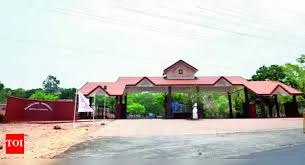
Mangaluru: The Mangalore University (MU) syndicate has proposed introducing PhD in the Tulu language and providing opportunities for transgender individuals to pursue doctoral studies. Additionally, the syndicate resolved to appoint eligible lecturers as PhD guides in several colleges under the university’s jurisdiction. These proposals were discussed during the past syndicate meetings and are currently awaiting a detailed response from the university. Raghuraj, a syndicate member who tabled the agenda on three proposals, told TOI that although MU is located in a region where Tulu is widely spoken and celebrated, there are limited academic research opportunities available at the university. He observed that the Tulu MA programme has only a limited number of students. “The proposal for a PhD is aimed at enabling those interested in research to pursue it, which will also benefit the growth of the local language. We have urged Mangalore University to introduce a PhD in Tulu, and officials have been asked to clarify whether this can be implemented under the statutes,” Raghuraj said. The second proposal calls for allowing members of the transgender community to pursue PhDs. “Education is the right of every individual, including transgender community. I have suggested that interested candidates from the community be given the opportunity to enrol in PhD programmes, based on their academic eligibility. The university statutes also provide scope to facilitate this,” he added. MU’s campus in Konaje is recognised as a postgraduate and research centre. However, with the majority of senior professors retiring, the campus lacks sufficient PhD guides. This shortage has deprived many PhD aspirants of opportunities. “With the help of the university, we are trying to reach out to experienced faculty from aided and private institutions and are also considering allowing eligible institutions to become research centres to guide PhD aspirants,” Raghuraj pointed out. Courtesy : TOI Note: This news is originally published on https:/timesofindia.com/bha and is used purely for non-profit/non-commercial purposes, especially human rights
EC rejects charges, cites action it took for Karnataka seat
NEW DELHI: EC rejected Rahul Gandhi’s allegations regarding deletion of electors in Aland in 2023, saying that it had on its own authority filed an FIR at the time against “certain unsuccessful attempts” at deletions, after which the Karnataka chief electoral officer shared all relevant information pertaining to the case with the state police. The Karnataka CEO posted on X that all information available with EC was handed over to Kalaburagi, SP on Sept 6, 2023 itself. The shared information included the objector’s name, EPIC number and mobile number used for login, Form 7 reference number, mobile number provided by the objector for processing software application medium, IP address, applicant’s place, form submission date and time, and user creation date. “Basically, the information that Rahul has asked EC to provide in a week was shared by the Karnataka CEO with the state CID two years ago,” said an EC functionary, while contrasting this with Rahul refusing to submit a signed affidavit in support of his allegations regarding roll irregularities in Mahadevapura, for which CEC Gyanesh Kumar had set him a similar deadline. As regards Rahul’s allegations regarding addition of fake voters in Maharashtra’s Rajoura constituency, the electoral registration officer of Rajoura said that between Oct 1 and 17, 2024, the constituency had received 7,592 applications for new voter enrolment. “On scrutiny by booth level officers, 6,861 applications were found invalid. These included fictitious identities, invalid photographs, documents and incorrect addresses. These applications were rejected,” the ERO said, stressing that no fake names were added to the roll. He added that taking cognisance of the irregularities, the district election officer had directed a comprehensive probe and criminal action. Courtesy : TOI Note: This news is originally published on https:/timesofindia.com/bha and is used purely for non-profit/non-commercial purposes, especially human rights
This killer stalking Kerala attacks through the nose
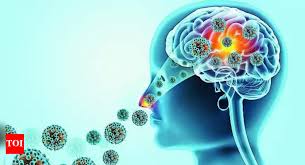
On Sept 1, two patients — a threemonth-old baby and a 52-year-old woman — died within hours of each other at Kozhikode Govt Medical College. Doctors confirmed that both were being treated for primary amoebic meningoencephalitis (PAM), an infection caused by the free-living parasite Naegleria fowleri. By mid-Sept, the toll had risen to 19, with 69 suspected or confirmed cases across Kerala. Victims ranged from infants to middle-aged adults. The scale is extraordinary: globally, researchers have identified only 488 documented infections since 1962. Rare And RuthlessPAM is one of the deadliest infections known to science. The parasite lives in warm, stagnant freshwater — ponds, lakes, unchlorinated swimming pools, poorly maintained tanks — and can infect people only when contaminated water is forced up the nose. From there, it travels along the olfactory nerve, burrows into the brain and begins dissolving tissue, unleashing catastrophic inflammation. Symptoms can begin in one to 12 days (typically 3-7 days): fever, headache, nausea and vomiting. Within days, they give way to stiff neck, confusion, seizures, hallucinations and coma. Across six decades, fewer than 20 survivors are documented globally, most with lasting neurological damage. The fatality rate is 97%. There is no vaccine or proven cure. Drugs such as Amphotericin B, Azoles, or Miltefosine are used in combination, sometimes with induced hypothermia, but success is rare. Crucially, PAM does not spread person to person and is not caused by drinking contaminated water; infection occurs via the nose Why Kerala? Worldwide, PAM tends to appear as sporadic, one-off cases, usually tied to a single contaminated reservoir or swimming pool. Kerala’s outbreak is different. Cases have surfaced across Thiruvananthapuram, Kozhikode, Thrissur and Malappuram, with no single identified source. The state’s position as a public health bellwether makes the outbreak more unsettling. Kerala has often been the first to detect emerging threats: India’s first Nipah outbreak in 2018, its early Covid-19 cases in 2020 (detected in returning medical students from Wuhan), and Zika virus in 2021. The arrival of a rare, near-uniformly fatal amoeba on this list has alarmed both doctors and the public. “Eight people died in 15 days. What is the protocol? What are people supposed to do? Even a baby was infected — was that child in a swimming pool?” Opposition leader V D Satheesan asked in the state assembly this month. Protests have broken out in several districts, with residents demanding that wells and public taps be tested. Doctors caution that Kerala’s higher numbers also reflect better detection. “The symptoms — headache, fever and vomiting — are similar to bacterial and viral brain infections. If you don’t suspect amoeba, you’ll miss it completely,” said Dr Rajeev Jayadevan, convener of the Indian Medical Association’s research cell. How Kerala Is Responding Amid mounting panic, Kerala has launched ‘Jalamanu Jeevan (Water is Life)’, a statewide chlorination drive covering wells, pools, etc. Schools have been told to disinfect storage units regularly, while panchayats and municipalities are checking public taps and wells. Hospitals, particularly in Kozhikode, Thrissur and Malappuram, are on high alert. Doctors have been instructed to treat any meningitis-like illness with a history of water exposure as potential PAM. Rapid-response teams have been sent to test community water sources, though no contaminated reservoir has been found yet. Drugs, including Miltefosine, have been stocked. But officials concede that treatment rarely saves lives. Survivors worldwide are exceptional, often treated with a cocktail of antifungals, antibiotics and cooling therapies. That is why prevention — keeping contaminated water out of the nose — remains the focus. Lessons For The World A 2025 review in the Journal of Infection and Public Health, which analysed 488 cases across 39 countries since the disease was first described, shows how there is little room for error — and what others can learn as climate change reshapes risk. The parasite is not the same everywhere: N. fowleri has multiple genetic strains; genotypes II and III predominate in Asia, North America and Europe. Clean water is the strongest defence: Free chlorine ≥ 2.0 mg/L in storage tanks/ pools can eliminate the amoeba; countries like Australia monitor disinfection as a routine public health practice. Surveillance changes the numbers: Strong labs and routine testing mean more detection (not necessarily more disease). Country tallies include India (26), Mexico (33), Czech Republic (17), New Zealand (9), Nigeria (4), Venezuela (7). Everyday habits can raise or reduce risk: In Pakistan, first cases were reported in Karachi in 2008; >140 cases have since been documented. Many were linked to nasal rinsing during ablution or showering, not swimming. A similar ablution-linked case has also been confirmed in the US. Courtesy : TOI Note: This news is originally published on https:/timesofindia.com/bha and is used purely for non-profit/non-commercial purposes, especially human rights
Dalit youth attacked with sword: Bullies slit his vein after he stopped him from drinking alcohol; Chandrashekhar Azad threatens agitation
A case of a sword attack on a Dalit youth by bullies has come to light in the Bachhrayun police station area of Amroha. The incident occurred on August 17th, when Shivam Singh, a resident of Musallepur village, stopped some people from drinking alcohol outside his house. A man named Siddhant Deora was drinking alcohol with his friends outside the victim’s house. When he objected, the accused called his other friends. The bullies beat Shivam and his father, attacking them with a sword, severing a vein in Shivam’s hand. The victim was admitted to a private hospital in Meerut in critical condition, where he remained for 15 days. According to doctors, the severed vein in his hand will no longer function. Shivam works as a scrap dealer with his father, and their home is located on the roadside outside the village. Azad Samaj Party chief Chandrashekhar Azad has raised the issue on the social media platform X. He has demanded the state government arrest the accused. Chandrashekhar has warned that if the culprits are not arrested soon, his organization will launch a mass movement. Rohit Prajapati Courtesy: Hindi News
‘Honour killing’ of Dalit man: Mom of girlfriend arrested under SC/ST Act
To investigate the case further, the deputy superintendent of police, Balaji, has been appointed the investigation officer. MAYILADUTHURAI: Following up on the murder of Dalit youth K Vairamuthu on Monday by a gang allegedly led by the brothers of a woman with whom he was in a relationship, the Mayiladuthurai police on Wednesday booked her mother K Vijaya, under the Scheduled Castes and Scheduled Tribes (Prevention of Atrocities) Act, 1989, and arrested her along with three others. With their demand for Vijaya’s arrest having been met, Vairamuthu’s family members gave up their protest and received his body, which was kept at the Mayiladuthurai government hospital, for last rites. Vairamuthu (28) of Adiyamangalam was hacked to death on Monday night by a six-member gang over his relationship with K Malini, the daughter of an inter-caste couple, sources said. According to Vairamuthu’s family members, Malini’s mother Vijaya, who is from the BC community, was against her daughter’s relationship with a Dalit. According to Vairamuthu’s family members, Malini’s mother Vijaya, who is from the BC community, was against her daughter’s relationship with a Dalit. Alleging that Malini’s mother may have instigated Vairamuthu’s murder, the family members of the deceased and members of political parties refused to receive his body until she was arrested. On Wednesday, the Mayiladuthurai town police arrested Vijaya, her son K Gugan (21), A Anbunithi (19) and S Baskar (42) in connection with Vairamuthu’s murder. Following this, Vairamuthu’s family members and others demanding Vijaya’s arrest ended their protest and received his body from the GH. To investigate the case further, the deputy superintendent of police, Balaji, has been appointed the investigation officer. Courtesy : TNIE Note: This news is originally published on https:/thenewindianexpress.com/bha and is used purely for non-profit/non-commercial purposes, especially human rights
Protest against quota for other castes in Gorakhpur’s Dalit hostel: Students and MLCs take to the streets, demanding immediate intervention from the administration.
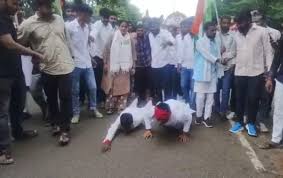
Dalit students in Gorakhpur today protested against the state government’s order. The Uttar Pradesh government has decided to reserve 30 percent of seats in the state-run Scheduled Caste hostel for students from other castes. Students say this move will affect their rights and the learning environment. The protest started from Town Hall Chowk and reached Ambedkar Chowk. A large number of students participated in the protest and protested the government’s order through sloganeering. Students say that giving a 30 percent quota to students from other castes in a hostel built solely for Dalit students’ studies and accommodation is completely unjust. The students warned that if the order is not withdrawn, the agitation will intensify. MLC Devendra Pratap Singh extends support Gorakhpur MLC Devendra Pratap Singh was also present at the protest with the students. He said that this order is not only unjust but also violates the rights of Dalit students. He assured the students of justice and his support for their struggle. Indeed, MLC Devendra Pratap Singh was injured in a road accident yesterday. Despite this, he participated in the protest with the students today. He said, “Just as Rana Sanga suffered 80 wounds in the war and still continued to fight, today I stand up for the rights of Dalit students.” Students threatened to intensify the agitation. The students insisted that the hostel was built solely for the convenience of Dalit students and that the 30 percent quota for students from other classes was wrong. They warned that if the government did not withdraw the order, the agitation could escalate. The students reiterated their demand for justice from the local administration and the state government. Abhijeet Singh Courtesy: Hindi News
Dalit man hacked to death by lover’s family in Tamil Nadu; four arrested

“After ten years of love, everything has been destroyed. He couldn’t even live peacefully in the house he built,” his inconsolable lover told reporters. Posted by Veena Nair In yet another disturbing caste killing case in Tamil Nadu, a 28-year-old Dalit man was hacked to death by the family of the woman he loved. K Vairamuthu from Adiyamangalam village of Mayiladuthurai district was brutally attacked with sickles on the night of September 15, sustaining serious injuries on his neck and wrists. He was rushed to the Mayiladuthurai Government Hospital but he succumbed to his injuries. Vairamuthu, a two-wheeler mechanic, was in a decade-long relationship with 26-year-old Malini, an MBA graduate from Chennai. However, her family, especially her mother, Vijaya, vehemently opposed it. Reports suggest that Vijaya once turned up at the Dalit’s workplace and hurled casteist slurs at him.”My life has already been ruined like this; at least my daughter’s life should not be wasted,” she reportedly told him. Vijaya belongs is a Chettiar (OBC) who married Malini’s father, from the Paraiyar community. On September 14, two days before the murder, both families were counselled by the police. At that time, Malini expressed her desire to marry Vairamuthu and reportedly moved in with him. Her family disowned her and submitted a written statement that they would not interfere in the young couple’s matter hereafter. Excited to start a new chapter in their life, Malini went to Chennai to collect documents for her registered marriage. However, her dreams were shattered as on the very same night, Vairamuthu was hacked to death by her family. On Wednesday, September 18, police arrested Vijaya, K Gugan, 21; A Anbunithi, 19 and S Baskar, 42. A case under the SC/ST (Prevention of Atrocities) Act was registered. Following the arrest, the Dalit man’s distraught family accepted his body. They staged a roadblock on the Mayiladuthurai–Kumbakonam highway, demanding the immediate arrest of his murderers. However, an inconsolable Malini cannot fathom a life without Vairamuthu. “After ten years of love, everything has been destroyed. He couldn’t even live peacefully in the house he built. Police assured us of safety, but no one protected us,” she told reporters. The killing of Vairamuthu is another caste horror coming from the southernmost state of India. In July, a 27-year-old Dalit software engineer working in Chennai was allegedly hacked to death by his girlfriend’s brother in Tamil Nadu’s Tirunelveli district. Kavin Selvaganesh was murdered by his girlfriend’s brother, Surjith Saravanan, in front ot the former’s mother at a Siddha hospital in Tirunelveli. The young Dalit’s mother, Tamilselvi, witnessed the brutal murder of her son. “While he (Surjith) was shouting, he suddenly attacked my son with a machete, injuring his arm. Kavin then started running, and Surjith chased him and hacked him to death. He told me to take the body and leave. ‘My parents will be peaceful only after this,’ he said,” her police complaint stated. Police arrested Surjith and his father Saravanan, who worked as a sub-inspector in the Tamil Nadu police force. Courtesy : TSD Note: This news is originally published on https:/thesiasatdaily.com/bha and is used purely for non-profit/non-commercial purposes, especially human rights
TN Medical Council orders sensitisation of doctors, students on transgender health
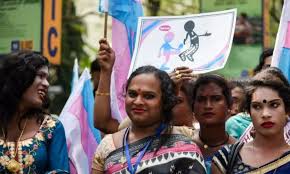
The move follows the recent release of the State Policy for Transgender Persons by Chief Minister M.K. Stalin, which seeks to improve the socioeconomic conditions of the community over the next five years Chennai: In a significant step towards inclusive healthcare, the Tamil Nadu Medical Council (TNMC) has directed all medical practitioners, educators and students in the state to undergo sensitisation programmes on transgender health, LGBTQIA+ issues, and the rights and dignity of sexual minorities. The move follows the recent release of the State Policy for Transgender Persons by Chief Minister M.K. Stalin, which seeks to improve the socio-economic conditions of the community over the next five years. According to the circular issued by TNMC, all Continuing Medical Education (CME) programmes in Tamil Nadu must incorporate mandatory sessions dedicated to transgender health and broader LGBTQIA+ concerns. The registrar stressed that such sensitisation was “imperative” to ensure that medical professionals not only provide equitable care but also uphold ethical and legal responsibilities. These sessions will also educate stakeholders about the prohibition of coercive practices, including so-called “conversion therapy”, which has been discredited worldwide. The circular outlined that the sensitisation sessions could be conducted either as standalone CMEs or integrated within existing academic schedules. Importantly, medical colleges and training centres must furnish completion reports to the Council within 30 days, while TNMC itself will monitor implementation by calling for records and verifying compliance. The training modules will also emphasise best practices in medical education and clinical care for trans persons, while ensuring that members of the transgender and LGBTQIA+ community share their lived experiences. This inclusion, officials noted, is designed to foster empathy and break down stereotypes that have long created barriers to accessing healthcare. The larger policy framework, released in July, also includes several welfare measures such as scholarships for transgender and intersex students pursuing higher education, the appointment of nodal counsellors in colleges, the establishment of short-stay homes for trans persons, and the launch of a toll-free helpline. Together, these initiatives represent the first comprehensive attempt by the Tamil Nadu government to institutionalise support systems for the trans community. By insisting on mandatory sensitisation in the medical sector, the TNMC has underlined the critical role healthcare professionals play in shaping inclusive spaces. For a community that has long battled stigma and systemic discrimination, these steps promise not just recognition but also a safer and more dignified future within Tamil Nadu’s healthcare system. Courtesy : Madhyamam Note: This news is originally published on https:/madhyamam.com/bha and is used purely for non-profit/non-commercial purposes, especially human rights