
Muted tributes to Indira Gandhi in Punjab Congress raise questions
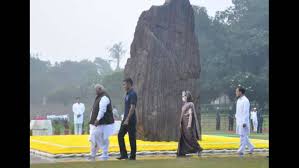
Chandigarh: While Congress units across the country paid floral tributes and organised remembrance events on the 40th death anniversary of former Prime Minister Indira Gandhi, the Punjab Congress appeared largely subdued, with only a few leaders posting brief messages on social media. The low-key observance has raised questions within party circles, with some attributing it to the ongoing Tarn Taran by-election. Barring Punjab Pradesh Congress Committee (PPCC) President Amrinder Singh Raja Warring and senior leader Bharat Bhushan Ashu, most senior figures of the state unit refrained from public tributes. Warring, while resharing Rahul Gandhi’s post on X, wrote, “Humble tributes to Smt. Indira Gandhi Ji on her death anniversary.” Ashu also posted a message that read, “Remembering the towering leader and first woman Prime Minister Indira Gandhi on her death anniversary.” Although an event was organised by the Punjab Congress at the party headquarters in Chandigarh, no senior leader was present, further underscoring the subdued nature of the observance. Expressing disappointment, Iqbal Singh Grewal, former National Secretary of the Indian Youth Congress and ex-NSUI Punjab President, posted a strongly worded message on X. “Indira Gandhi was not just a Congress leader — she was a symbol of decisive leadership and national strength. Her death anniversary should have been a day of remembrance, reflection, and inspiration for every Congress worker,” Grewal wrote. He said, “In Punjab, the silence was deafening — no major event, no visible tribute, and not even a clear ideological message from most senior leaders. When leadership seems detached from the party’s legacy, how can the cadre at the ground level stay ideologically driven?” Grewal said the Punjab Congress today suffers not from a lack of workers, but from a lack of direction from its senior leadership, arguing that the organisation’s failure to honour one of its most iconic leaders reflected a deeper disconnect between the top brass and the grassroots. Political observers believe the party’s muted response may have been influenced by the Tarn Taran Assembly by-election, and they also note that Indira Gandhi’s legacy in Punjab remains complex and often contradictory. While many regard her as a strong leader credited with shaping the modern political and economic framework of Punjab, others view her as a divisive figure, whose decisions, particularly Operation Blue Star in 1984 and its aftermath, left a lasting imprint on the state’s social and political landscape. Courtesy : TOI Note: This news is originally published on https:/timesofindia.com/bha and is used purely for non-profit/non-commercial purposes, especially human rights
Art exhibition at Lalit Kala Akademi features themes of dalit resilience, justice, equality, and nature

Chennai: The narrow lanes of Mint Street are compact, packed with houses, with broken compound walls plastered with movie posters. There are overflowing dustbins, drunk men sleeping on the platform, and women running their households. This was everyday life for dalit artist S Venkatesan, and is what has been translated in his work. “North Chennai has a strong influence on my work , especially the topics I choose matriarchal households, motherhood, marginalization by oppressors, and politics. Women are a fierce force and I can’t help but try to honour them through my work,” says Venkatesan, whose works are part of an ongoing art exhibition ‘Becoming: Weaving the Commons’ organized by Neelam Cultural Centre at Lalit Kala Akademi, Chennai. The exhibition also features dalit artist K Natarajan, who along with Venkatesan, explores themes of ecology, memory, and equality, as acts of reclamation. Venkatesan’s art captures landscapes of urban North Chennai, its workers, streets, grace, and melancholy in the ordinary. Natarajan’s work, rooted in Buddhism and dalit resilience, turns lived struggle into collective renewal. Venkatesan says, having lived in a 150sqft house with his family created a lasting impact on how he perceives things. “All my subjects are often cramped to the centre, while the rest of the canvas space is empty. When I look at my subject, I look at it multi-dimensionally,” he says. Growing up in the foothills of Jawadhu, Tiruvannamalai, Natarajan has always felt one with nature. His work has powerful themes with subtle imagery that reflect stories of forest preservation, role of women, man versus animal conflict, and the innocence of youth. “With women playing huge roles in preserving nature during the ongoing Sudan and Gaza genocides, and in Jaipur this year, where hundreds of women formed a human chain to protest plans to cut down more than 2,500 trees, I noticed how it’s women who stand in solidarity for nature,” he says. For him preserving nature is about fairness and justice. “My work is a way to reclaim what has been taken. The forest, the soil, and the women who protect them, appear in my work as signs of hope and continuity. Through them, I ask what it is to live in harmony when survival has become an act of resistance,” says Natarajan. The exhibition will be on display till Nov 2 . Courtesy : TOI Note: This news is originally published on https:/timesofindia.com/bha and is used purely for non-profit/non-commercial purposes, especially human rights
Jogi burns invite over omission of dalit MP Mini Mata’s name
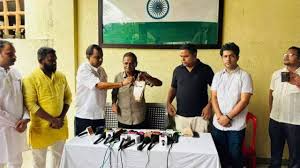
Raipur: The Janata Congress Chhattisgarh (J) has intensified its protest against the state govt, alleging the deliberate omission of Chhattisgarh’s first Dalit MP, Mini Mata’s name, from the invitation card for the new Assembly building’s inauguration. JCC(J) state President Amit Jogi, son of former CM late Ajit Jogi, burned the inauguration invitation card in protest, accusing the govt of insulting Chhattisgarhi pride, women’s empowerment, and Dalit representation by erasing Mini Mata’s legacy. He appealed to all MLAs and former MLAs to boycott the Prime Minister’s event if the name is not reinstated. “Today, as the state prepares to inaugurate a new Assembly building on its 25th foundation day, we received an invitation from Assembly Speaker Dr Raman Singh. The shocking and infuriating aspect is that the name ‘Mini Mata’ is not mentioned anywhere on this invitation card,” Jogi said. He termed the omission a “planned conspiracy or a grave error.” Courtesy : TOI Note: This news is originally published on https:/timesofindia.com/bha and is used purely for non-profit/non-commercial purposes, especially human rights
Bihar Votes On Caste, Not Change: Dalits Still Left Out Of Power

The political foundation in Bihar is caste which carries the burden of its own class Bihar’s politics continues to be shaped by deep caste hierarchies where class and caste intersect, with Dalits remaining at the bottom of both social and economic structures. Despite their sizable population and history of political assertion, Dalits remain fragmented by sub-caste divisions and largely excluded from real power, even under leaders promising social justice. Ahead of the 2025 Assembly polls, Chirag Paswan’s LJP (RV) faces the challenge of expanding beyond its Paswan-Dalit base and balancing its alliance with the NDA against its claim of representing Dalit interests. The more things change in Bihar, the more they remain the same. Not because people are averse to change, but their level of acquiescence to the so-called ‘system’ is such that they accept, at the end of the day, the status-quo as something which has been ordained to them. This could be seen in the formation and the affectivity of the caste-based associations and groups. The power-relations, embedded in the caste-ties, controls impulses, emotions and motivations so firmly that any socio-cultural transformation is met either with oppression or political violence. The caste wars in Bihar are replete with the stories of tyranny and hope. Bihar is, to put it succinctly, a history of a ‘surrealistic tale of violence’, a politics of ‘an inversion of insurgent citizenship’, a sociology of the ‘construction of docile bodies through hegemony’ and an economics of ‘a behavioural irrationalism in the dismal rules of the game’. The stakes of State-power, caste and class essentially try to sustain, what Jeffrey Witsoe once remarked about Bihar, a ‘feudal democracy’. Typically, Bihar is a case of ‘class-in-caste’ politics, wherein the political foundation is caste which carries the burden of its own class. Tanvir Aeijaz Courtesy : Outlook India Note: This news is originally published on https:/outlookindia.com/bha and is used purely for non-profit/non-commercial purposes, especially human rights
The nightmarish Haryana MDU incident exposes how institutions treat Dalit employees

ThePrint view on the most important issues. The Haryana MDU horror shows how low we’ve fallen in treating women with dignity. It also exposes how institutions treat Dalit employees. Forcing three sanitation workers to give proof of menstruation is nightmarish. But the bigger tragedy is that such incidents barely stir public conscience or the state to course-correct. Courtesy : The Print Note: This news is originally published on https:/theprint.com/bha and is used purely for non-profit/non-commercial purposes, especially human rights
Siddaramaiah’s camp to play Dalit CM card against DKS
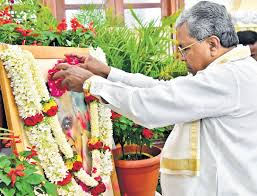
DCM has assured high command that there will be no crisis in party if CM’s post is handed over to him. BENGALURU: The Dalit chief minister issue is likely to gain momentum as the Congress government completes two-and-a-half years in office on November 20 to counter DCM DK Shivakumar, who has been meeting close associates of senior Congress leader Sonia Gandhi, like Ambika Soni, to clinch the CM post. Shivakumar seems to have stuck to his strategy of reminding the high command about the reported agreement that was arrived at when the party came to power in 2023 about sharing of power between Siddaramaiah and him. He will insist that the high command keep its word, sources said. But it is to be seen if Dalit leaders, members from the Siddaramaiah’s coterie, would counter Shivakumar effectively. These leaders, including Home Minister Dr G Parameshwara, PWD Minister Satish Jarkiholi and Social Welfare Minister Dr HC Mahadevappa, have held several rounds of talks to discuss the issue. They have also told some SC legislators to be prepared for a meeting with the high command, but it is unlikely to materialise, a source said. “Who said the high command will not consider a Dalit for CM. It might be waiting for an appropriate time. The high command is in favour of Dalits,” Mahadevappa said on Friday. The high command has, however, instructed the Dalit grouping not to create confusion, another source said. Housing Minister BZ Zameer Ahmed Khan and APMC Minister Shivanand Patil on Friday said Siddaramaiah will continue as CM for the remaining two-and-a-half years. Some days ago, seven ministers wrote to the high command demanding Siddaramaiah’s continuation, an MLA in Shivakumar’s camp said. Shivakumar’s sympathisers, however, think that raising the Dalit CM issue is the last-ditch effort of the Siddaramaiah camp. They also believe that Sonia Gandhi and Wayanad MP Priyanka Gandhi Vadra would convince Leader of Opposition in the Lok Sabha Rahul Gandhi to have the final word in favour of Shivakumar. The Bihar assembly polls results, out on November 14, having a bearing on Karnataka politics cannot be ruled out, analysts said. Shivakumar has been assuring high command leaders that there would be no rebellion or crisis if there is a change in leadership, the source said. Siddu rubbishes report on CM change Siddaramaiah on Friday rubbished a report in a vernacular daily that Shivakumar would be sworn-in as chief minister in November last week. “Who told you? How did you know? Which newspaper? I read all the newspapers, nothing as such has appeared,” he said, replying to queries from reporters at Vidhana Soudha. “How will I know a deadline has been set? Only the CM, party president and high command know,” said Mahadevappa, replying to a query on Shivakumar reportedly setting a deadline for power transfer. Courtesy : TNIE Note: This news is originally published on https:/thenewindianexpress.com/bha and is used purely for non-profit/non-commercial purposes, especially human rights
Gujarat: Dalit Man Killed by Bride’s Family for Inter-Caste Marriage in Narol, Six Booked Under SC/ST Act
In Narol, Gujarat, the family of a bride allegedly killed her 60-year-old Dalit father-in-law after being angered by an inter-caste marriage. Police have registered a case of murder and under the SC/ST (Prevention of Atrocities) Act against six people, arresting five of them so far. According to reports, the bride’s family was furious after her marriage to Sunny, a Dalit man. On Thursday afternoon, when Sunny’s elder brother dropped their parents near the Usmanpura metro station for cleaning work, the bride’s relatives including her uncles, aunts, and brother-in-law arrived at the spot and attacked the couple with sticks and rods. Witnesses said the attackers hurled caste-based abuses before brutally beating them. Some passersby intervened and managed to rescue the injured couple. However, after returning home, the victim, Bhailal Vaghela, began to have breathing problems and was rushed to LG Hospital in Maninagar, where doctors declared him dead on arrival. The Narol police said the accused, identified as Raju Parmar, Mahesh Parmar (uncle), Lili Parmar, Kalavati Parmar, Mahesh Parmar (brother-in-law), and Prem Parmar, have been charged with murder, assault, and under the SC/ST Act. Five have been arrested, while one woman, Jyoti, is still absconding. Inspector V. J. Chavda said, “The accused were angry over their daughter’s marriage to a Dalit man. To satisfy their rage, they took a life.” The victim’s family said they had been receiving threats from the bride’s relatives even before the incident. Police officials added that further investigation is underway and more details will emerge soon. Courtesy : TOP Note: This news is originally published on https:/t.com/bha and is used purely for non-profit/non-commercial purposes, especially human rights
Bihar Elections 2025: 8 Key Constituency and Candidates to Watch in the Two-Phase Poll Battle

From Raghopur to Purnia, Bihar gears up for a fierce fight as top leaders of BJP, RJD, JD(U) and Congress face off in key constituencies ahead of the November 6 and 11 polls. The 2025 Bihar Assembly Election is scheduled to be held in two phases — the first on 6th November 2025 and the second on 11th November 2025. The counting will be done on 14th November 2025. The election will be held for the Bihar Legislative Assembly to elect all 243 members. The tenure of the current assembly will end on 22nd November 2025. Bihar is facing issues related to unemployment, migration, and electoral rolls, and the election at this time has made it stand out, with the whole country’s eyes on it. It would be interesting to see how the state’s huge population of youth shapes the outcome, as a major part of them are first-time voters. Political campaigns are mainly focusing on development, welfare schemes, and governance records. It would be an interesting contest, with one side being the National Democratic Alliance (NDA) led by the Bharatiya Janata Party (BJP) and Janata Dal (United), and the other side being the Indian National Developmental Inclusive Alliance (INDIA) bloc led by the Rashtriya Janata Dal (RJD) and the Indian National Congress (INC). Raghopur Former Deputy Chief Minister Tejaswi Yadav wearing a white kurta and giving interview to the press. Several mikes can be seen infront of him. Former Deputy Chief Minister Tejashwi Yadav from RJD is contesting from Raghopur constituency for the third time.X The most talked-about constituency in the 2025 Assembly election of Bihar’s Vaishali district is Raghopur. Earlier, it was represented by Lalu Yadav and Rabri Devi, highlighting the traditional stronghold of the Yadav family. Former Deputy Chief Minister Tejashwi Yadav from RJD is contesting again, hoping for a third win. BJP’s Satish Kumar Yadav is his main rival in the constituency, whereas Chanchal Singh is contesting from the Jan Suraaj Party. The election will be a test of Tejashwi’s enduring influence on his own family’s political fort. Tarapur Deputy Chief Minister Samrat Choudhary wearing a grey Nehru coat and an orange shawl and giving speech standing before a mike. Bihar’s Deputy Chief Minister Samrat Choudhary is contesting this time from the Tarapur constituency, bringing the region into focus.X The Munger district constituency will go to polls in the first phase of the 2025 Assembly election on 6th November 2025. Earlier, it was represented by Rajeev Kumar Singh of the JD(U), who won in the 2020 election. However, there may be a shift in power as Bihar’s Deputy Chief Minister and senior BJP leader Samrat Choudhary is contesting from Tarapur, bringing the region into focus. It falls under the Jamui Lok Sabha seat, with issues ranging from employment to road connectivity. It seems like the NDA has its eye on this area, and it will be interesting to see how the election develops. Lakhisarai Image of BJP leader Vijay Kumar Sinha facing the camera wearing a green Nehru jacket and wearing a shawl. He even has vermilion on his forehead. Vijay Kumar SInha from BJP has held the seat from the Lakhisarai constituency since 2010, and has geared up for this year election as well. https://dpl.rashtrapatibhavan.gov.in/public/uploads/upload_files/125c0e943c73bb8a0840ab524fdcbd08.jpg (GODL-India), GODL-India, via Wikimedia Commons Lakhisarai is all set to witness a high-profile contest in the 2025 Assembly election. This seat has been a stronghold for the BJP, as the party’s senior leader Vijay Kumar Sinha has held it since 2010. He will be facing Amaresh Kumar from Congress and Suraj Kumar from the Jan Suraaj Party this year. Sinha retained the seat in 2020 with over 74,000 votes, defeating Congress by a margin of 10,000 votes. It will be interesting to see if Sinha’s personal rapport helps him retain his leadership in the area. Mahua RJD’s Mukesh Kumar Raushan wearing a white kurta and covering his head by a white cloth and seeing sideways. Mukesh Kumar Raushan of the RJD is contesting from the Mahua constituency of the Vaishali district, he is currently representing the area. X The Vaishali district constituency has often drawn attention owing to its political legacy and high-profile candidates. The seat is currently held by Mukesh Kumar Raushan of the RJD, who won by a margin of 13,700 votes, defeating JD(U)’s Ashma Parveen. This year, Mahua will see a fierce competition among JD(U), BJP, and Jan Suraaj’s Indrajeet Pradhan. It has always remained a closely watched constituency with its changing local aspirations. Alinagar Singer Maithili Thakur posing for a picture by joining her hand in “Namaskar” and smiling. She is wearing a saree and has a shawl, standing before a gate. The folk singer Maithili Thakur is debuting from Alinagar which comes under Darbhanga Lok Sabha constituency, adding a touch of culture to the election. X The area comes under the Darbhanga Lok Sabha constituency, having a mix of Brahmin, Yadav, and Muslim voters. It gives equal importance to local alliances as well as caste equations. Mishri Lal Yadav won the seat from this constituency in the 2020 election; he was then with VIP and later joined BJP. This time, folk singer-turned-politician Maithili Thakur is contesting in this area. Frequent flooding and poor road conditions pose major challenges here. The parties are holding campaigns focused on development and better infrastructure. Hasanpur RJD’s Tej Pratap Yadav looking backward wearing a yellow cap and a white kurta and has tilak in his forehead. He is in a ralley and several people have joined him as seen in the picture. The Hasanpur constituency in Samastipur district is currently represented by RJD’s Tej Pratap Yadav, but this time, Mala Pushpam will be contesting from the seat on a BJD ticket.X Hasanpur is again in the spotlight ahead of the 2025 Assembly election, located in the Samastipur district. The constituency is represented by Tej Pratap Yadav of the RJD, who defeated Raj Kumar Ray of the JD(U). However, RJD has fielded Mala Pushpam for the upcoming battle, generating interest
Bihar Election 2025: Jan Suraaj Fields Transgender Social Worker Preeti Kinnar from Bhore Assembly Seat in Bihar

Jan Suraaj Party nominates transgender social worker Preeti Kinnar from Bhore Assembly seat to showcase the party’s image of inclusivity. The Bhore Assembly constituency in Gopalganj district is emerging as one of the most closely watched seats in the upcoming Bihar Assembly elections. Reserved for Scheduled Castes, Bhore has long been a stronghold of traditional political faces. But this time, the contest has taken a new turn with the Jan Suraaj Party fielding Preeti Kinnar, a transgender social worker, as its candidate — a move that has drawn both attention and controversy. The Bhore Constituency Bhore, located in southern Gopalganj, has a mixed voter base of Dalits, Extremely Backward Classes (EBCs), and minorities. The constituency has seen tough contests in the past, with narrow victory margins. In the 2020 Assembly elections, JDU’s Sunil Kumar, who also serves as Bihar’s Education Minister, defeated CPI (ML)’s Jitendra Paswan by just 462 votes — one of the slimmest margins in the state. The tight race reflects how volatile and unpredictable Bhore’s political mood can be. This time, the entry of the Jan Suraaj Party, led by political strategist-turned-politician Prashant Kishor, has added a new dimension. Kishor’s party has positioned itself as an alternative to Bihar’s mainstream players — JDU, RJD, and BJP — by focusing on grassroots leaders and social workers instead of established politicians. On October 9, 2025, Prashant Kishor released Jan Suraaj’s first list of 51 candidates. Among doctors, lawyers, retired bureaucrats, and community leaders, one name stood out — Preeti Kinnar. Her nomination from Bhore symbolized Kishor’s promise of giving space to people from underrepresented and marginalized groups. Who is Preeti Kinnar? Preeti is from Khap village of Sonbarsa block in Sitamarhi district. Aged 41, she has been living in Kalyanpur village of Bhore block for the past 22 years. A matriculate by education, she earns her living through singing devotional songs and animal rearing. But what defines her most is her long-standing commitment to social service. Since 2008, Preeti has been actively working for the poor, especially women and girls. She has arranged marriages for over 27 underprivileged couples and provided food and essentials to hundreds of families during the COVID-19 lockdown. During natural calamities and accidents, she has often stepped in with relief materials, using her personal funds and community donations. Preeti’s nomination has not come without controversy. Jan Suraaj leader Vijay Aman has accused her of falsely claiming Dalit status to contest from the reserved constituency. He alleges that Preeti belongs to an upper-caste family and that her Scheduled Caste certificate was obtained fraudulently. Some of Preeti Kinnar’s caste is listed as Paswan on some documents, while official records like land registries list her father’s name as Harischandra Srivastava. This is why questions are being raised about her caste. Preeti has strongly denied these allegations. According to Jan Suraaj officials, a party team had visited her village in Sitamarhi and found no grounds to doubt her caste identity. Despite the controversy, Preeti’s candidacy has been welcomed by many locals. People believe that this could be a good strategy by Jan Suraaj to showcase its inclusive image. There are only 13 transgender voters in Bhore and 67 in the entire district, but the symbolic importance of her nomination goes beyond numbers. The representation of the third-gender community in politics is still very low. For Jan Suraaj, the move signals its commitment to a politics of inclusion. For Preeti, it’s a chance to transform years of grassroots work into legislative action. [Rh] Author: Varsha Pant Courtesy : News Gram Note: This news is originally published on https:/newsgram.com/bha and is used purely for non-profit/non-commercial purposes, especially human rights
Cong plans Pacgmarhi camp for dist leaders, Rahul invited

Bhopal: The State Congress is organising a ten-day training camp in Pachmarhi for the party’s newly appointed 72 organisational district presidents, starting from 2 November. State Congress President Jitu Patwari has sent an invitation to Lok Sabha LOP Rahul Gandhi to address the congregation on any day he is available during the training course. Initially, it was claimed that the Congress MP from Rae Bareli would address the Congress district presidents on 9 or 10 November after election campaigning comes to a halt in Bihar. However, sources in the state party office on Wednesday said that requests have been made for Rahul Gandhi to address the inaugural session in Pachmarhi on 2 November. But, the Lok Sabha LOP’s office has not confirmed his programme in Madhya Pradesh. PCC organisational general secretary Sanjay Kamle told TOI, “There is a possibility that the Lok Sabha LOP may come to the state either on 9 or 10 November. Campaigning in Bihar will come to an end on 8 November, after which he may come to address the training camp,” he said. Sanjay Kamle also added that the state Congress has requested the office of Rahul Gandhi to see if he can address the district presidents after campaigning stops for the first phase of Bihar elections on 3 November. State Congress vice-president Mahendra Joshi is the coordinator and in charge of the training camp. Speaking to TOI, he said, “The training camp will be for the district party presidents appointed during the Sangathan Srajan Abhiyan inaugurated by Rahul Gandhi in June. There are 72 organisational districts, including some city offices like Bhopal and Indore, which have one district president for rural areas and another for the city.” Joshi said that the district Congress presidents will be trained in various political aspects, social situations, organisational views, electoral rolls, the communalism factor, “false promises made by the ruling BJP and how to expose them to the people.” “After the training is completed, the district presidents will return to their work areas and utilise what they have been taught to train the grassroots workers at the district, assembly constituencies, blocks, mandal, sector, and panchayat levels,” Joshi said. “The focus of the training will be on how Congress workers can face the challenges of voter list manipulation by the rival political party, misinformation spread by them via technology, and how to make people aware of such tactics so they know the truth,” Mahendra Joshi argued. “Empowering our workers to spread information among people can come only with training,” he said. The district Congress presidents will be trained by party functionaries from Delhi and Bhopal, as well as political and academic experts. Courtesy : TOI Note: This news is originally published on https:/timesofindia.com/bha and is used purely for non-profit/non-commercial purposes, especially human rights