
India‘Called Me Low Caste, Beat Me, Threw Me Out’: Dalit Woman Names Nine In-Laws in Noida FIR
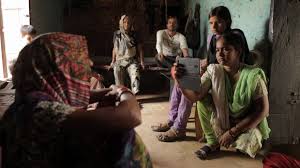
A Dalit woman in Noida has accused her in-laws of constant harassment after she married a man from an upper-caste family. The woman said her brother-in-law misbehaved with her and casteist slurs were repeatedly used against her. She also alleged that her in-laws beat her and eventually forced her out of the house. She has filed a police complaint against nine members of the family at Sector-20 police station. Sector-20 SHO D.P. Shukla said the woman reported that she married Bharat Sharma, son of Ravindra Sharma of Nithari village, on 5 February 2018 under Hindu rituals. According to her, her family spent around ₹25 lakh on the wedding, including jewellery and other items. She said it was an inter-caste love marriage, and from the very beginning her in-laws started demanding ₹50 lakh as dowry. The woman claimed she was repeatedly taunted for belonging to a “lower caste”. She said her in-laws openly insulted her by calling her caste names and would often tell her husband that he had brought home a girl from a “low caste”. She also alleged that one of her brothers-in-law refused to eat food cooked by her. According to the complaint, her husband began drinking heavily because he was disturbed by the constant harassment she faced. He later left her at her parental home, telling her to stay there until his family changed their behaviour. The woman said she gave birth to a child, but even then the harassment from her in-laws did not stop. She alleged that her elder brother-in-law molested her and she had earlier gone to the police with this complaint. When the matter reached the police station, she claims the accused family filed false allegations against her and her husband. According to the SHO, the woman has now filed an FIR against her father-in-law Ravindra Sharma, mother-in-law Rajrani Sharma, brothers-in-law Chandrakant Sharma and Sunil Sharma, a relative from her aunt-in-law’s side, her younger sister-in-law Renu, her younger brother-in-law Ram Sewak Sharma, her sister-in-law Sarika Sharma and her brother-in-law Gajendra Sharma. The charges include molestation, dowry harassment, assault, domestic violence and offences under the SC/ST Act. Police are investigating the case. Courtesy : TOP Note: This news is originally published on https:/theobserverpost.com/bha and is used purely for non-profit/non-commercial purposes, especially human rights
Constitution Month Special | A unique ‘Ambedkar Temple’ in Munger, Bihar, with a 12-foot-tall statue: A retired captain donated land to build it, where the Constitution is the supreme deity!

This year, on Baba Saheb’s birth anniversary, April 14th, a 12-foot-tall ‘Statue of Equality’, imported from Delhi, was dedicated to society. Munger – 185 kilometers from Bihar’s capital, Patna, on the National Highway in Ghorghat, a small village in Munger district, stands a structure completely different from traditional temples. There’s no Hindu deity, no mosque dome, no golden gate of a gurudwara, but only a 12-foot-tall statue of Dr. B.R. Ambedkar, which glows with the first rays of the sun and reminds people, “Educate, Agitate, Organize.” This is not a ‘temple’, but a living symbol of equality, social justice, and the Constitution. Its creator, 80-year-old retired Army Captain Yogal Kishore Paswan, says, “My religion is the Constitution. Babasaheb is like a god to us Dalits.” Tamal Saha of News The Truth (NTT) was on a 185-kilometer journey towards Patna. On the national highway near Munger, he suddenly saw a gigantic figure from a distance. Saha explains in his video that the statue was so impressive that he had to stop the car. Locals told him that it was a temple to Babasaheb, built by retired army officer Captain Yogal Kishore Paswan. 12-foot Ambedkar pillar erected in memory of his wife 80-year-old retired Army officer Captain Paswan said that he was a captain in the AUC (Armed Units Corps) and had traveled throughout India, from Ladakh to every corner. The Captain said that he had built this ‘Statue of Equality’, which is 12 feet tall. A statue this tall probably exists only in Patna, Bihar. Each one is 8-10 feet tall. Captain Paswan explained that in this building, children will study downstairs, and there will be office space upstairs. The lower portion will be an education center, where children will study without any discrimination. The upper portion will be for visitors and guests. At the top, there will be a statue of Babasaheb. When asked why people are building temples, why did you build this one, Captain Paswan replied: “It’s my hobby. I’m a soldier, not a leader who rises with the thought of earning money. I gave all my land in Babasaheb’s name. I have to die, so what will you take away?” Captain Paswan explained that just as the Emperor built the Taj Mahal, this one is also a Taj Mahal for me, which I built in memory of my wife, Maya Devi. The statue of Babasaheb was brought from Delhi. Respect for the Constitution: Babasaheb’s Contribution Captain says emotionally: “Ambedkar Saheb gave the country the Constitution. My granddaughter is a lawyer, and my younger daughter is a lawyer in the Patna High Court. They are all carrying the Constitution with them.” A soldier has no income, but he felt like doing this. He gave away 15-20 feet of land without even asking his son or daughter.” He insists, “Why not worship the Constitution? It’s a deity, equal to God. Baba Saheb is revered all over the world, and he gave us this Constitution, which runs the country. Whether the government is in Delhi or Bihar, it will have to abide by the Constitution, otherwise the people will overthrow them.” In response to a question about why Dalits were once not allowed to enter temples in Bihar, Captain says that here, visitors to the Ambedkar Temple “won’t be asked about their caste. Everyone from a beggar to a rich person can come and talk. Anyone can go inside.” On being asked about religion, Captain says, “I am a Hindu, but I consider Baba Saheb as God because there may be other gods, but he was a living person. What he gave to the country, no leader could give. The Constitution belongs to everyone—Hindus, Muslims, Christians, every caste.” Captain Paswan’s family consists of four daughters and a son who is an assistant manager at the LIC. He says, “I could have sold the land, but I donated it. I am indebted to Babasaheb from my previous life. I must have been stingy, so I gave away my share now.” Currently, construction work is underway, with the plastering of the ground floor remaining, which will be used for the children’s education once it is complete. (Courtesy: This report is based on the original video report by Tamal Saha and Ronnie Sanatra, broadcast by News The Truth (NTT) on November 9, 2025.) Geetha Sunil Pillai Courtesy: Hindi News
Dalit women’s achievements: Tina Dabi wins Barmer a 2 crore water award, Dipna Netrapal makes history at the CAG!
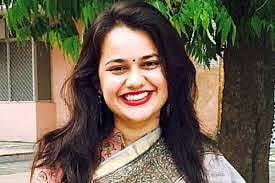
These achievements are not only personal triumphs but also send a strong message against caste- and gender-based discrimination. While one officer is greening the environment, another is strengthening accounting and financial transparency. New Delhi – The stellar performance of Dalit women officers in India’s administrative system is once again in the headlines. Rajasthan’s IAS officer Tina Dabi has made history by securing her district, Barmer, the Jal Sanchay Jan Bhagidari Puraskar (JSJB) for environmental protection, while Bengaluru’s senior IA&AS officer Dipna Netrapal has received the National CAG Award for innovation in GST audit and training reform. Dipna is the first Dalit woman officer to receive these awards. These achievements are not only personal triumphs but also send a strong message against caste- and gender-based discrimination. While one officer is greening the environment, another is strengthening accounting and financial transparency. The arid Barmer district of Rajasthan has won the first Jal Sanchay Jan Bhagidari Puraskar for its outstanding public participation in rainwater harvesting. The district will receive a prize of ₹2 crore for this achievement. District Collector Tina Dabi stated that President Draupadi Murmu will present the award at the sixth National Water Awards ceremony to be held at Vigyan Bhawan in New Delhi on November 18th. Tina Dabi has previously received numerous awards for her meritorious work. IAS Tina Dabi created history in 2015 by securing the first rank in the UPSC Civil Services Examination. At the age of 22, she became the first Dalit woman to achieve this feat in her first attempt. Tina has extensively promoted the construction of traditional ‘tanks’ (underground water tanks) in Barmer. Under the Union Ministry of Jal Shakti’s ‘Catch the Rain’ initiative, the state was divided into five zones and given the target of installing at least 10,000 artificial recharge and water storage structures. Barmer surpassed this target and topped the Northern region, reviving local water sources through thousands of tanks. This initiative by DABI is not only addressing the water crisis but also empowering rural communities, proving to be a milestone in quenching the thirst of the desert region. Meanwhile, Deepna Netrapal, Principal Director of the Regional Training Centre (RTC) and Capacity Building and Knowledge Centre (RCB&KC) in Bengaluru, has been awarded the National CAG Award. She received this award for two key initiatives: innovation and excellence in public accounting and auditing in GST audits, and the transformation of the training setup in Bengaluru. The Comptroller and Auditor General of India launched the scheme of “CAG’s Awards for Innovation and Excellence in Public Audit and Accounting” in 2021 to recognize and reward exceptional and innovative work done by officers and employees of the Indian Accounts Department in the areas of public audit, accounting, entitlements, and support functions. While the CAG Awards Scheme 2021 recognizes exceptional team excellence, which fosters a meritocratic environment, fostering overall qualitative improvement is even more important from an organizational perspective. To this end, in addition to the existing scheme that rewards team efforts toward excellence and exceptional work, a new award category has been instituted in 2022: the award for the “Most Improved Office.” This award category seeks to recognize offices working in the areas of accounting, audit, and training that have demonstrated the greatest improvement in performance during the prescribed evaluation period. Geetha Sunil Pillai Courtesy: Hindi News
Dalit professor dismissed by Tamil Nadu University for studying in reverse order after MA: Who is Professor Senarayaperumal, for whom voices of support are rising from India and the US?
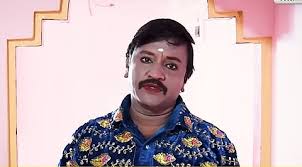
The first scholar from the Arunthathiyar community to receive a doctorate, the High Court ordered his reinstatement, but the university chose to appeal. Chennai – The wounds of hidden casteism in Indian higher education institutions have once again been exposed. The dismissal of Assistant Professor P. Senarayaperumal from Tamil Nadu’s Manonmaniam Sundaranar University (MSU) on the grounds of “academic irregularities” is resonating internationally. This is not limited to India; a petition initiated by the Anti-Caste Collective at Rutgers University in the US has set an example of global solidarity. Thousands of scholars, students, and activists have signed the petition, demanding Professor Senarayaperumal’s immediate reinstatement and strict action against institutionalized casteism. The documentary “Punishing the Professor,” produced by the People’s Archive of Rural India (PARI), has further highlighted this issue, telling the poignant story of the struggle of Dalit scholars. This case is not only the struggle of one individual, but also a reflection of the caste discrimination that persists in the name of merit in Indian public universities. Professor Senrayaperumal belongs to the Arunthathiyar community, one of the most marginalized Dalit communities in Tamil Nadu, who sought to transform their lives through education and art. He is a master of the folk art form called “Raja-Rani Attam.” Professor Senrayaperumal had been working as an assistant professor at Manonmaniam Sundaranar University since 2016 but was dismissed in March 2024. The Madras High Court ordered his reinstatement in June 2024, but the university filed an appeal, thus committing a miscarriage of justice. The case is still pending, and due to financial constraints, the professor has now returned to the stage of the folk drama “Raja-Rani Attam.” How did a Dalit artist become a professor? Senrayaperumal was born in Soolapuram village near Madurai, Tamil Nadu. The harsh caste slavery and poverty of the Arunthathiyar community forced him to drop out of school at the age of 13. Joining the family folk theater troupe, he became a part of the traditional folk drama-dance called “Raja-Rani Attam.” This art form is performed at weddings, festivals, and funerals in rural Tamil Nadu, but artists have historically been victims of caste-based exploitation. Arunthathiyar artists were viewed as sexual objects by audiences from dominant castes, and Senrayaperumal played the role of “Rani” (woman) for 18 years, challenging gender binary and embracing the drag tradition. Balancing performing at night and studying during the day, Senrayaperumal resumed his education through self-study. He completed 8th grade, then an MA and MPhil from Madurai Kamaraj University. Then, in an unusual sequence, he earned a BA, 10th, 12th through the open university system, and finally a PhD in Art History in 2013. In 2016, he was appointed Assistant Professor in the History Department of Manonmaniam Sundaranar University (MSU) under the SC quota. The current Vice Chancellor was also on the selection committee, and all degrees were verified. Over eight years, he mentored 31 research scholars and brought the art of his community to life in the classroom. An excuse for ‘irregularity’ or the cruel face of casteism? The university cited Senrayaperumal’s studies in ‘reverse order’ as the basis for the ‘irregularity’. In March 2024, just before his promotion, he was served a dismissal letter without a hearing. The university’s reasoning was the ‘reverse order’ of education. But this raises questions about the open learning system that the state government itself has created for marginalized students. Hearing the case, the Madurai Bench of the Madras High Court completely rejected the university’s argument. In June 2024, the court ordered his immediate reinstatement, payment of his salary arrears, and all benefits. The court recognized his academic qualifications and educational path as valid. However, the university, which claims to uphold the principles of social justice, refused to obey the High Court’s order and appealed to the Division Bench. This raises a serious question: Are the university administration and the Higher Education Department deliberately trying to exhaust a Dalit scholar by engaging him in a legal battle? Professor Senarayaperumal, now unemployed, is teaching the power of education by helping neighborhood children with their homework. He wants to present his case in court by singing so that the judges can understand Dalit history through folk art. Retired Chief Justice S.M. Muralidhar has promised to represent him pro bono. Raja-Rani Attam: The Living Art of Resistance This struggle is not just about employment, but also about cultural identity. Raja-Rani Attam is a folk tradition from South India that combines dance, drama, mythology, and oral history. It shares similarities with other caste arts such as Oggu Katha, Bahurupiya, and Tamasha. Despite historical exploitation, Professor Senarayaperumal created it as a living record of Dalit knowledge. As the only living scholar of this art form in the world, his dismissal is the destruction of neglected knowledge. The documentary “Punishing the Professor,” produced by the People’s Archive of Rural India (PARI), highlighted this issue, telling the poignant story of the struggle of Dalit scholars. PARI’s 28-minute documentary sparked public outrage. The documentary tells the professor’s story through folk art, exposing institutionalized casteism. Following its release, newspapers like “The Hindu” and “The News Minute” covered the issue. Why is the student community united? Students and young teachers from universities across the country are actively participating in the streets and on social media in support of Professor Senarayaperumal. They believe this issue is not just about one person’s job, but a collective fight against the deeply ingrained casteism in the Indian higher education system. Cases like Rohith Vemula’s and Payal Tadvi’s bear witness to the systematic discrimination faced by Dalit and Adivasi students and teachers in educational institutions. Students are demanding that universities stop concealing casteism under the guise of “merit” and make education inclusive for students from all backgrounds. The Anti-Caste Collective at Rutgers University in the US is garnering support for Professor Senarayaperumal from around the world through an online petition, demanding: Immediate reinstatement: Professor Senarayaperumal should be immediately reinstated, and his back pay and all benefits should be restored, in compliance with
3-Time MLA And Dalit Face Vinay Kumar Is New Himachal Congress Chief

Vinay Kumar has been elected MLA from the Renuka constituency for the third consecutive time. Shimla: Ending the uncertainty that prevailed since the previous committee was dissolved on November 6 last year, Congress on Saturday appointed three-time MLA and senior party leader Vinay Kumar as the new President of its Himachal Pradesh unit. A statement in this regard was issued by AICC General Secretary (Organisation) K.C. Venugopal. The statement issued on Saturday mentioned that the party President, Mallikarjun Kharge, has appointed Vinay Kumar as the “President of the Himachal Pradesh Congress Committee with immediate effect”. A prominent Dalit face of the party, Kumar was the Deputy Speaker of the Assembly and tendered his resignation from the post, which was accepted by Speaker Kuldeep Pathania. The resignation was seen as a step towards his formal announcement as the state Congress party president. It is noteworthy that Chief Minister Sukhwinder Singh Sukhu had already advocated for a Dalit-affiliated party president. Party National President Mallikarjun Kharge also agreed with Vinay Kumar’s name. Vinay Kumar has been elected MLA from the Renuka constituency for the third consecutive time. Vinay Kumar was elected Deputy Speaker of the Assembly after the 2022 elections. With his position now becoming vacant, the names of Bhoranj MLA Suresh Kumar, Palampur MLA Ashish Butail, and Kasauli MLA KD Sultanpuri are being considered for the post. In an effort to rejuvenate the Congress organisation in Himachal Pradesh and strengthen its grassroots presence, the party dissolved its state, district, and block executive committees on November 6 of last year. The party’s top leadership initiated this organisational restructuring to address upcoming political challenges and to create a new structure that includes dedicated and influential party workers. This move was based on a proposal by then State President Pratibha Singh, which received approval from Kharge. Following this, KC Venugopal issued a letter on November 6, 2024, officially dissolving all executive committees except for the Congress President. Pratibha was asked to continue till further orders. Courtesy : ETV Bharat Note: This news is originally published on https:/etvbharat.com/bha and is used purely for non-profit/non-commercial purposes, especially human rights
Transgender Manipur activist cycles across states to spread message of peace

Kolkata, Transgender Manipur social activist Malem Thongam, who embarked on a 3,000-km journey on a cycle from Delhi, reached West Bengal after travelling through several states, spreading the message of peace for the northeastern state in the wake of the deadly ethnic violence. Thongam began her ride on October 2, cycling through Uttar Pradesh and Bihar, and will continue onward to Assam, Nagaland and finally Manipur. “Humanity should prevail over differences of religion, caste, community and ethnicity,” she told PTI on Saturday. “I stand before you as a Manipur transgender activist, a survivor and a seeker of peace,” she said. “On October 2, 2025, I began a 3,000-km journey from Qutub Minar, cycling across India for Manipur’s peace.” Ethnic clashes between the Meitei and Kuki communities erupted in May 2023, claiming more than 260 lives and displacing thousands. “This is not a stunt,” Thongam said. “It is a cry from the soul of a wounded land – a pilgrimage for healing and unity. For months after May 3, 2023, Manipur was engulfed in a humanitarian catastrophe: ethnic violence, displacement and destruction.” The activist claimed that over 60,000 people remain internally displaced, with villages razed, women assaulted, children orphaned, elders abandoned and persons with disabilities still trapped in relief camps. Appealing to people along her route, Thongam said, “Let us uphold the values of dignity and inclusiveness for a peaceful Manipur.” Belonging to the Meitei community herself, she called on India and the world “not to look away. Let Manipur be seen. Let Manipur be healed – in strength, in truth and in hope.” Recalling the events leading up to her mission, she said she began a hunger strike in New Delhi on February 22, 2024, demanding an end to the violence. Detained briefly by police, she resumed her fast at a gurdwara near Connaught Place after her release. Her demands included direct intervention from Prime Minister Narendra Modi. In March last year, she continued her protest at Imphal’s Kangla West Gate, fasting for more than 50 days to call for peace. Thongam said the solidarity she has received across states has been deeply moving. In Uttar Pradesh’s Sitapur district, she was welcomed by a district hospital medical team and police personnel. In Patna, residents greeted her with placards advocating peace. She also offered prayers at Patna’s Jama Masjid for interfaith harmony and healing. “We want free movement across highways and inter-state roads to continue unhindered, as in the past,” she said, referring to incidents in Manipur where members of one community were barred from travelling through areas dominated by another. “We don’t want communities to fight. If there are demands, they must be addressed to the government,” the activist said. “The incidents that struck our beautiful state in those dark days keep haunting me. I only wish all communities live together in harmony,” she said, speaking in Meitei, with an interpreter translating. Asked about support from the transgender community, Thongam said, “Every citizen, including trans men and trans women, has supported me, along with members of the community from abroad who have pledged their solidarity.” (This story has not been edited by THE WEEK and is auto-generated from PTI) Courtesy : The Week Note: This news is originally published on https:/theweek.com/bha and is used purely for non-profit/non-commercial purposes, especially human rights
Nomination papers of UDF’s transgender candidate cleared
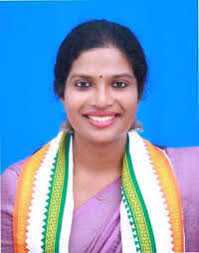
Kottayam: After officials on Saturday cleared her nomination papers, transgender woman Arunima M Kurup will be the UDF candidate from Vayalar division of the Alappuzha district panchayat. The 26-year-old is not new to politics as she is the state general secretary of KSU and the founder president of Kerala Pradesh Transgender Congress. She is also a KPCC member. Arunima, a native of Cherthala, is currently doing her LLB from an institute in Kottayam. Arunima expressed happiness as the panel approved her as a transwoman. “There was no objection from anyone,” she told TOI after her nomination was accepted. “I am contesting as a political leader. I have several ideas and projects to be implemented. A good hospital, roads, anganwadis, care for pregnant women, more workdays for MGNREGA workers and finding employment avenues for women etc., are among them,” she said. Arunima had earlier dismissed allegations made against her which claimed that she could not contest from a seat reserved for women. Arunima said that she was legally a woman in all records and was living as a woman after undergoing gender affirmation surgery six years ago. She also said that she was classified as a woman in the voter ID, Aadhaar and in the voters’ list. Courtesy : TOI Note: This news is originally published on https:/timesofindia.com/bha and is used purely for non-profit/non-commercial purposes, especially human rights
Rahul Gandhi to lay foundation for Jeans Park soon: Minister MB Patil
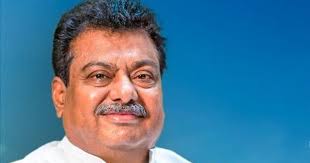
Ballari: In a dramatic turn of events, the state govt has promised to expedite the development of the proposed Jeans Park in Ballari, following the shutdown of 36 jeans washing units for pollution violations. The units, closed by the Karnataka State Pollution Control Board (KSPCB) following a suo motu case brought forth by the Upa Lokayukta Justice B Veerappa, are expected to reopen soon, with chief minister Siddaramaiah approving the restart of operations for units with their own effluent treatment plants. Minister for large and medium industries, MB Patil, announced on social media that the first phase of the Jeans Park project has acquired 158 acres of land, with plans to acquire an additional 400 acres in the next phase. The project is expected to create thousands of jobs and diversify Ballari’s economy, currently reliant on minerals. The project’s foundation stone will be laid by Congress leader Rahul Gandhi, he added The formation of the Jeans Park would include jeans manufacturing units, washing and finishing units, export zones, training and skill development centres, and entrepreneurship support systems. The govt has allocated Rs 11 crore each from KKRDB and KIADB to build a common effluent treatment plant (CETP) to treat polluted water. The CETP, proposed in 2010, faced delays due to funding issues. Officials estimate the plant will take 6-12 months to complete. Earlier, the Jeans Entrepreneurs Association prepared a DPR for a Rs 24 crore plant and submitted it to the district administration, but the project was shelved due to various reasons, including lack of funds. Ballari City MLA Nara Bharat Reddy confirmed the govt’s commitment to supporting the industry, with the CM announcing funds for the CETP. However, officials said the establishment of the CETP might take at least six months to one year to complete. This quick response from the govt reflects the altered scenario, which is perceived as a positive development. The industry is projected to recover following the formal inauguration of the Jeans Park. Courtesy : TOI Note: This news is originally published on https:/timesofindia.com/bha and is used purely for non-profit/non-commercial purposes, especially human rights
Chirag to revive Dalit Sena, embark on Bihar Yatra soon

Patna: Union minister and LJP (RV) chief Chirag Paswan on Friday said the party would embark on a Bihar Yatra to identify the state’s smaller issues. Chirag also said the Dalit Sena would be revived and reorganised under the leadership of Jamui MP Arun Bharti. He added that his party’s foundation day will be celebrated in a grand manner in Patna on Nov 28. Chirag said he wished to expand his party’s footprint beyond Bihar to states such as West Bengal, Punjab and Uttar Pradesh, and plans to contest as an NDA partner. “We won 19 out of the 29 seats contested within the NDA because of the people’s blessings and PM Narendra Modi’s support to our party. The LJP (RV) has been given two ministerial berths in Bihar. I am satisfied. How greedy can Chirag be,” he said, laughing. LJP (RV) MLA Sanjay Kumar (Paswan) has been allocated sugar cane industries, while Mahua MLA Sanjay Singh has been given the PHED ministry. Singh defeated RJD chief Lalu Prasad’s elder son and Janshakti Janata Dal chief Tej Pratap Yadav. Chirag also criticised the opposition RJD and Congress for blaming SIR and vote theft instead of undertaking self-introspection on why people have rejected them since 2005. “Even the third generation of Lalu ji will not come to power if they keep making excuses. Their mindset and thinking caused the downfall of RJD and Congress. We also suffered defeat but assessed where we went wrong. After defeat, you need to do some honest introspection,” Chirag said. The LJP (RV) chief said his party set up its organisation in all districts of Bihar and worked hard, which is reflected in the election results. “In these 5 years, the party further increased its vote share from 2020 elections. This time, we contested just 29 seats, but we touched 5% vote share. This reflects a constant growth of LJP (RV),” he said. Replying to a query on the accusation of ‘parivarvad’ in politics, the son of former Union minister late Ram Vilas Paswan said everything depends on competence. “My party was dismantled in 2021, but because of competence, I revived it,” Chirag said. He added that his estranged uncle Pashupati Kumar Paras congratulated him on the party’s success in the assembly elections. “I accept it. My uncle said so many things against me, but still he is my elder and I have his blessings,” he said. Courtesy : TOI Note: This news is originally published on https:/timesofindia.com/bha and is used purely for non-profit/non-commercial purposes, especially human rights
‘Rising from the Dust’ Dalit Stories from Bengal
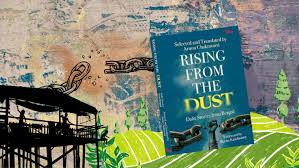
“Let me forget that I was born in the dust; there is no dust within me…” ‘Chandalika’, Rabindranath Tagore In hand is a compilation of twelve short stories from both female and male Dalit caste and non-Dalit writers. Dalits have also been categorized as a ‘Backward Caste’, ‘Untouchables’ and are subject to systematic social exclusion. The collection presents a painstaking perception in the translation from Bangla into English. We have an immensely praise-worthy undertaking by Aruna Chakravarti, a Kolkata Bangali writer and translator residing in New Delhi. As a reviewer, I quote Chakravarti in her ‘Translator’s Note’ in her book: “shakes the reader both intellectually and emotionally.” She has in ‘Rising from the Dust’ achieved both. The first short story ‘Fortress’ written by Manoranjan Byapari, shook me to the core. This is a raw and unsettling read. The ability of the translator to transfer the Bangla text into such impactful English is both evocative and haunting. How to convey desperate nuances? She has selected and translated chilling and compelling writing, painfully profound till the last paragraph. We are reading a masterful handling of the tone and meaning conveying Bangla expressions. Every day expressions in one language do not easily convey the essence and atmospheric content of the written output. Lives are ‘Rising from the Dust’ at times. However, at what cost? Life? Is this salvation? Is heart break or surrender survival? These short stories linger long after the book closes. How do short stories, a form of literature convey in such a short space the intense context of ‘Rising from the Dust’? It is an immensely impactful literature achievement by the writers. Aruna Chakravarti is the recipient of numerous prestigious literary awards; Vaitalik Award, Sahitya Akademi Award and Sarat Puraskar. Her first novel ‘The Inheritors’ was shortlisted for the Commonwealth Writers’ Prize. Her second, ‘Jorasanko’ and its sequel ‘Daughters of Jorasanko’ remain best sellers. In fact, upon a second visit to Rabindranath Tagore’s family home in Kolkata, I was told by a young guide that “the footfall of visitors to Jorasanko has increased immensely since the publication of the above two books.” (I have reviewed both.) ‘Suralakshmi Villa’ received ‘Novel of the year (India 2020) by Indian Bibliography published in The Journal of Commonwealth Literature U.K. ‘The Mendicant Prince’ (2022) is known historically in both Bangladesh and West Bengal. It is inspired by the legendary Bhawal Sannyasi case. (Also have reviewed.) Her translated works include an anthology of songs from Rabindranath Tagore’s ‘Gitabitaan’, Saratchandra Chattopadhyay’s ‘Srikanta’ and Sunil Gangopadhyay’s ‘Those Days, First Light and Primal Woman: Stories.’ The book title is ‘Rising from the Dust’ Dalit Stories from Bengal. And not ‘Risen from the Dust.’ Chakravarti’s book is reflective of the social dictates, the personal sacrifices and even the loss of lives in an environment that despite every initiative of the individual; continues to impact. The selection of stories portrays the patriarchal societies in dominance; the male oriented moral framework. Of the twelve chapters, female lives are particularly characterized. Their livelihood and lives; provide little light in the tough tunnel of existence. Deprivation and exploitation; from birth, through adolescence into adulthood and old age is common. Unheard echoes from a marginally discriminated population remain subject to communal dust. There are two selections of the writings of Mahasweta Devia. In ‘Notes on Contributors’ assembled by Aruna Chakravarti; the author sketch informs us that “Her specialization lies in her studies of Adivasis, Dalits and other marginalized people of India…Her works have been widely translated and she has been the recipient of several prestigious awards in India…One of her novels was shortlisted for the Man Booker Award and she was nominated for the Nobel Prize in 2012.” She was born in 1926 in Dhaka and passed away in Kolkata in 2016. Mahasweta Devia was not a member of the marginalized Dalit caste. I have selected ‘The True Life Story of Uli-Buli’s Mother’ as presentation of the essence and depth of her writings and acute ability of the translator to convey the entirety of the text. Four other presentations highlighting a selective text follow. “Uli-Buli were the twin girls she gave birth to. “Shame on you!” my husband used to say. ‘First one girl, then another; and now two together! I”ll find myself another wife.’ ‘Do that, I would weep and plead. But don’t drive me away. I’ll move out of the house and live in the cowshed with the bull calf…I work in five houses even now, cleaning cowsheds and making dung cakes. I’ll feed myself…I summoned up all my courage and approached the village elders. No land. No roof above my head.’ I wept. ‘Where will I live? I have four daughters.” In response, Uli-Buli’s father says: ‘Why does she give birth to girls?…I’ve heard Dada say that she went prancing to the pond anytime she felt like it. She would eat mussel chachhari on Saturdays! Won’t evil spirits enter such a woman’s body and spoil her womb?” “Twelve greybeards sat with long faces…The decision was reached that husbands would be found for the two older girls…One bridegroom needed a second wife and the other a third. Everything was sold. The house and land, the bull calf, my nose stud and ear-rings…” “I would beg during the day and sleep under the porch at night. And it was from there that my Uli and Buli were stolen…” The twins were a year old and sold to a hospital. Four years later, she comes to know of this happening and searches for her twin daughters for twenty-three years. “Her daughters would have been twenty-four years old today…wouldn’t they?…She doesn’t understand that. She searches her one-year olds. She thinks she will find them someday…She howls and beats her breasts. Swears and curses. Rushes at them. She looks the way she does but she’s really quite young…Perhaps all women with a life story like Uli-Buli’s mother look like her.” *A story to tell and tough to look away. Reviewer* Another entry is ‘Motho’s Daughter’