
Ram Temple skit row: Rahul Gandhi, Pappu Yadav, Awadhesh Prasad booked for ‘insulting Sanatan Dharma’
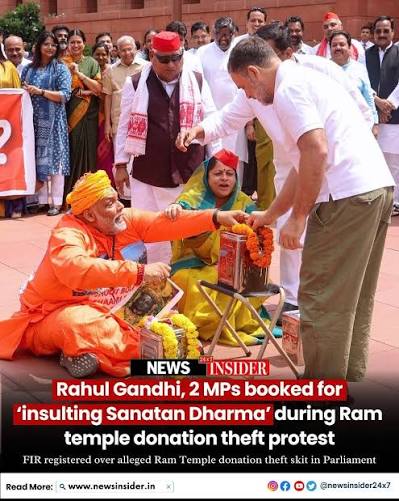
NEW DELHI: Varanasi Police on Saturday registered a case against leader of opposition in the Lok Sabha Rahul Gandhi and two other MPs for allegedly “insulting Sanatan Dharma” and “hurting religious sentiments” during an opposition protest in Parliament, an official said. Rahul Gandhi, independent MP Rajesh Ranjan alias Pappu Yadav, Samajwadi Party’s (SP) Awadhesh Prasad, and several other opposition parliamentarians had on Friday enacted a skit depicting the alleged theft of offerings from the Ram Temple in Ayodhya. Pappu Yadav and Awadhesh Prasad have also been named in the FIR. While Pappu Yadav, dressed in saffron robes, portrayed a temple priest who “stole” the offerings, Awadhesh Prasad represents the Faizabad constituency, which includes Ayodhya.According to Gaurav Banswal, Deputy Commissioner of Police, Kashi Zone, an FIR was registered based on a formal complaint submitted at Kotwali police station by some seers, who alleged that the trio had “insulted” Sanatan Dharma in Parliament. Seer Jagatguru Balak Das described Pappu Yadav’s conduct as “unforgivable”. “No follower of Sanatan Dharma can forget this act. It has hurt our religious sentiments. So we have demanded that a case be registered,” PTI quoted him as saying. On Friday, MPs of the Congress-led opposition INDIA bloc held a protest over the alleged Ram Temple donation theft and police action against student agitators during their July 20 Parliament march. The opposition leaders staged a skit to highlight the alleged temple donation theft. As part of the protest, they placed donation boxes near the stairs leading to the Makar Dwar of Parliament. MPs, including Rahul Gandhi, put money into the boxes, while Pappu Yadav, who sat nearby, was shown slipping it into his pockets. Congress MP Priyanka Gandhi Vadra, SP’s Dharmendra Yadav, and Jharkhand Mukti Morcha’s Mahua Maji were among those who participated in the protest. The SP is aggressively highlighting the issue ahead of the Uttar Pradesh assembly elections scheduled for February-March 2027. The Akhilesh Yadav-led party has been out of power since March 2017. Courtesy : TOI Note: This news is originally published on https:/timesofindia.com/bha and is used purely for non-profit/non-commercial purposes, especially human rights
Govt teacher suspended for raping Class 11 Dalit student in Churu
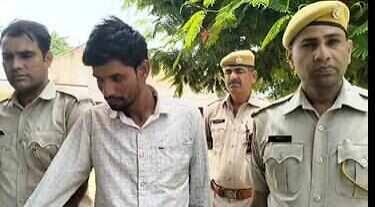
Jhunjhunu: A physical training instructor (PTI) at a govt school in Churu district was suspended Friday following allegations of raping a 16-year-old Class 11 Dalit student. Outraged family members and local villagers locked the main gate of the school under the Sandwa police station area and staged a demonstration, demanding the teacher’s immediate arrest. The protest disrupted school operations for nearly two hours before police persuaded the locals to unlock the premises and allow students inside. According to Sandwa SHO Mahendra Kumar, the survivor’s father filed a complaint stating that the incident occurred on July 30. The girl had gone to school as usual but went missing after recess. Prompted by school staff, her father began searching for her. Around 12:30pm, the survivor returned to the school premises in a visibly shaken state. She later disclosed to her family that the accused PTI had signalled her to come outside the school gate around 10:20am. The teacher allegedly coaxed and pressured her onto his motorcycle, taking her to his empty residence nearby. There, he allegedly locked her inside a room and sexually assaulted her before letting her go. Taking administrative action given the gravity of the matter, Churu District Education Officer Sajjan Singh Saini suspended the accused teacher with immediate effect and initiated a formal departmental inquiry. Police confirmed that the survivor’s medical examination has been conducted and a case has been registered under relevant sections, including POCSO and SC/ST Acts. The accused fled the village shortly after the incident and remains at large. Dy SP Darjaram Bos is leading the investigation, and special police teams have been deployed to trace and apprehend the absconding govt teacher. Courtesy : TOI Note: This news is originally published on https:/timesofindia.com/bha and is used purely for non-profit/non-commercial purposes, especially human rights
Four get 20 years’ RI for gang rape of Dalit woman
Mangaluru: The Second Additional District and Sessions (Special) Court here on Friday sentenced four to 20 years of rigorous imprisonment for the gang rape of a Dalit woman. The second additional district and sessions (special) court Friday sentenced four men to 20 years of rigorous imprisonment for the gang rape of a Dalit woman in 2018. According to the prosecution, the convicts, Prajwal, Arun Amin, Adithya Salian and Abdul Riyaz, sexually assaulted the woman on Nov18, 2018. At 12.30pm that day, the accused and three minors approached the victim, asked her name, hometown and caste details, intimidated and physically assaulted the friend who was with her. They then took the friend away and restrained him while dragging the victim into the bushes. The accused threatened her and gang-raped her in turns. They also threatened to kill the victim and her friend if they revealed the assault or filed a complaint. Mangaluru Women’s Police registered a case under IPC sections 341, 323, 354, 376(D) and 506, and sections 3(2), (v-a) and 3(1)(w)(i) of the SC/ST (Prevention of Atrocities) Act. The then police inspector, Kalavathi K, and assistant commissioner of police (ACP) Manjunath Shetty investigated the case. Later, the then ACP Srinivasa Gowda R filed the chargesheet. Special public prosecutor Jyothi Pramod Nayak conducted the prosecution. The court examined 40 of the 65 witnesses listed by the prosecution. Judge Jagadeesh VN held the accused guilty Thursday. Prajwal, Arun Amin, Adithya Salian and Abdul Riyaz were awarded 20 years of rigorous imprisonment and a fine of Rs 10,000 each under IPC section 376(D) read with 34 and sections 3(2), (v-a) of the SC/ST (Prevention of Atrocities) Act. The court also awarded one year imprisonment and a fine of Rs 5,000 each under IPC Section 354 read with 34 and sections 3(1)(w)(i), 3(2), (v-a) of the SC/ST (Prevention of Atrocities) Act. In addition, the court imposed one year’s imprisonment and a fine of Rs 2,000 each under IPC Section 506 read with 34 and sections 3(2), (v-a) of the SC/ST (Prevention of Atrocities) Act. The accused were further sentenced to six months’ imprisonment and fined Rs 1,000 each under IPC Section 323 read with 34 and sections 3(2), (v-a) of the SC/ST (Prevention of Atrocities) Act, besides a fine of Rs 500 each under IPC Section 341 read with 34. All sentences will run concurrently. Of the total penalty amount, Rs 60,000 will be paid to the victim. Courtesy : TOI Note: This news is originally published on https:/timesofindia.com/bha and is used purely for non-profit/non-commercial purposes, especially human rights
Govts weakening Dalit unity in the garb of justice: Dr Ratnakar
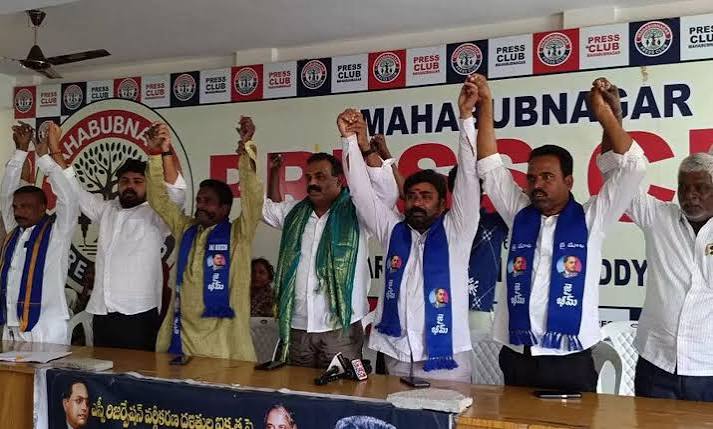
Mala Mahanadu leader Dr. RS Ratnakar announces ongoing peaceful protests against SC sub-categorisation in Telangana, urging for unity and equitable representation for all Scheduled Caste communities. Mahabubnagar: Alleging that the implementation of SC sub-categorisation threatens the existence of the Mala community in Telangana, Mala Mahanadu and RAKS National President Dr RS Ratnakar said his organisation would continue its peaceful agitation until legal changes are made in Parliament. Addressing a press conference in Mahabubnagar on Friday, Dr Ratnakar alleged that the Congress government had laid the foundation for SC sub-categorisation, which later expanded across the country. He said that since the benefits under SC reservations are already limited, both the Central and State governments must clarify how equal opportunities would be ensured for all Scheduled Caste communities across India, including all SC groups in the Telugu states. He accused governments of weakening Dalit unity in the name of social justice. He demanded that the principle of social justice should not be confined to reservations alone but should also be reflected in the distribution of national wealth and representation in Union and State CabinetsHe also called upon elected representatives from the Mala community in both Telugu states to raise their voice on the issue and unite to safeguard the interests of their community. He also called upon elected representatives from the Mala community in both Telugu states to raise their voice on the issue and unite to safeguard the interests of their community. Courtesy : THI Note: This news is originally published on https:/thehansindia.com/bha and is used purely for non-profit/non-commercial purposes, especially human rights
Teacher booked for allegedly beating up 8-year-old Dalit boy for drinking water from his bottle in Madhya Pradesh
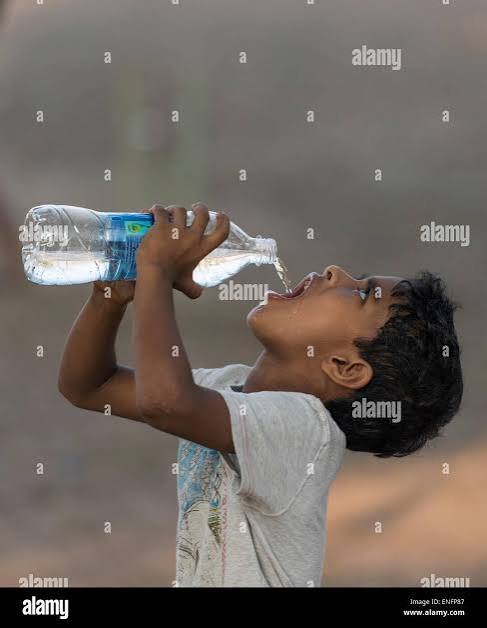
According to officials,the teacher, Lokesh Sharma, beat up the class 4 student using a cane in front of his fellow students after which the boy narrated the incident to her parents An eight-year-old Dalit boy was thrashed and targeted with racial slurs by a teacher in a government school in Madhya Pradesh’s Shivpuri district for drinking water from his bottle, officials said on Friday (July 31, 2026). According to officials, the incident took place on July 28 in a government primary school in Ukawal village under the Kolaras police station area, where the teacher, Lokesh Sharma, beat up the class 4 student using a cane in front of his fellow students after which the boy narrated the incident to her parents. The need to address caste-based atrocities Speaking to The Hindu, Shivpuri Superintendent of Police (SP) Yangchen Dolkar Bhutia said that an FIR has been registered under relevant provisions of the BNS and the SC/ST (Prevention of Atrocities) Act, based on a complaint from the student’s family. The teacher has been questioned in the matter, she said. As per the complaint, Ms. Bhutia said the teacher hit him on the hands with a cane and used racial slurs against him. “The family and the boy have alleged that the incident took place as he drank water from the teacher’s bottle. The teacher, however, is denying the allegation and is saying that he scolded the boy over the homework,” she said. Ms. Bhutia also said that the police have also taken statements from the boy’s schoolmates. “They are confirming the beating up but are unclear on the reason. We have also looked into the teacher’s record but have not found any such incident or complaint,” she said, adding that the police are probing the case from all angles. Mehul Malpani Courtesy : The Hindu Note: This news is originally published on https:/thehindu.com/bha and is used purely for non-profit/non-commercial purposes, especially human rights
Kodaikanal: 26-year-old Dalit youth allegedly hacked to death; TNUEF issues condemnation

Police have registered a case under the Scheduled Castes and Scheduled Tribes (Prevention of Atrocities) Act. According to TNUEF, one accused has been arrested so far, while the remaining suspects are yet to be taken into custody. Synopsis: TNUEF alleged that Ramar was then attacked by a group of five men armed with sickles. Ramar sustained multiple cut injuries and died, while Prasanth, who accompanied him, suffered serious injuries and is undergoing treatment at Theni Government Medical College Hospital. A 26-year-old Dalit youth was allegedly hacked to death in the Kodaikanal taluk on Wednesday night, 30 July. According to a statement issued by Tamil Nadu Untouchability Eradication Front (TNUEF), the deceased, Ramar (26), and injured Prasanth (20), both from Poombarai village in Kodaikanal taluk, were engaged in transporting vegetables from the hills using horses before loading them into vehicles. The organisation alleged that on the night of July 30, Raghu, a man belonging to a dominant caste community, came to Ramar’s house claiming that their horse had grazed on his land and took him to the spot. TNUEF alleged that Ramar was then attacked by a group of five men armed with sickles. Ramar sustained multiple cut injuries and died, while Prasanth, who accompanied him, suffered serious injuries and is undergoing treatment at Theni Government Medical College Hospital. Police have registered a case under the Scheduled Castes and Scheduled Tribes (Prevention of Atrocities) Act. According to TNUEF, one accused has been arrested so far, while the remaining suspects are yet to be taken into custody. The organisation demanded the immediate arrest of all those involved, advanced medical treatment for the injured Prasanth, statutory compensation for Ramar’s family, a government job for his wife, and government support for the education of his two children. TNUEF state secretary Se. Muthurani, Dindigul district secretary K.T. Kalaichelvan, state committee member Vanaja, and CPI(M) district executive committee member Ajay Ghosh visited Ramar’s family at Dindigul Government Hospital and assured them of support in their pursuit of justice. In the statement, TNUEF state president T. Sellakkannu and general secretary P. Sugandhi strongly condemned the alleged caste-based murder and said the organisation would continue its legal and democratic struggle until justice is secured for the victim’s family. Courtesy : TSF Note: This news is originally published on https:/thesouthfirst.com/bha and is used purely for non-profit/non-commercial purposes, especially human rights
19 yrs on, 5 get life for abducting Dalit girl to stop her testifying; girl still ‘untraceable’
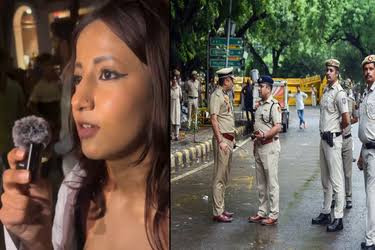
Agra: A special SC/ST court in Aligarh has sentenced five people to life imprisonment for kidnapping a 19-year-old Dalit girl in Sept 2007 to prevent her from testifying in her own rape case — a crime the UP court ruled was a “deliberate ploy to eliminate a key witness and derail the trial”. Despite almost two decades of search and investigation, she remains “untraceable”. The convicts — now aged between 40 and 50 years — were punished under IPC section 364 (kidnapping or abducting a person with the intent to murder them or put them in danger of murder) and section 3(2)(v) of SC/ST (Prevention of Atrocities) Act. Delivering the verdict, the court of special judge-II (SC/ST Act) Pratibha Saxena on Thursday observed that “the kidnapped girl has not been recovered even after 19 years” and held that “showing undue sympathy would embolden criminals and discourage victims and witnesses from coming forward”. On Sept 28, 2007, the girl’s father, filing the police complaint, claimed the accused — Amar Singh, Lekhraj, Babulal, Suresh (Hathras residents) and Usha Devi from Aligarh — armed with country-made pistols, barged into his house at a village in Aligarh district. The complaint stated: “They took away my daughter, who was a complainant in her rape case registered against some of the same accused. She was kidnapped to stop her from testifying in that case…” During trial in the kidnapping case, the prosecution examined seven witnesses and argued that the accused targeted the Dalit family to intimidate them and obstruct justice in the other case. “In the separate rape case which was being simultaneously heard before court, the accused were acquitted earlier this year. Sadly, the girl couldn’t appear and witnesses turned hostile. The kidnapping case was filed by her father six months after the rape case,” special public prosecutor Chaman Kumar Sharma said on Friday. Each convict has been awarded life sentences under IPC 364 and the SC/ST Act along with Rs 10,000 fine in each offence. Co-accused Satish Pandey was acquitted due to “lack of sufficient evidence”. Rejecting the leniency plea, the court said that “the justice system must reassure vulnerable sections of society that crimes against them, regardless of the accused’s influence, will invite stringent punishment”. Courtesy : TOI Note: This news is originally published on https:/timesofindia.com/bha and is used purely for non-profit/non-commercial purposes, especially human rights
Opposition parties up in arms against CM Vijay’s Karnataka visit plan
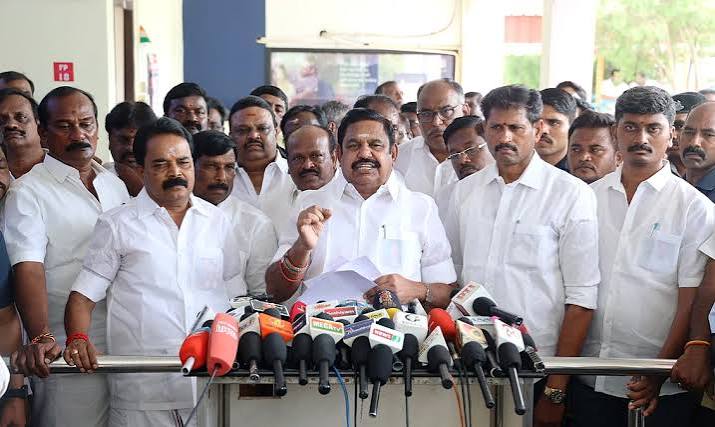
AMMK general secretary T T V Dhinakaran also opposed the reported visit, saying it would serve no purpose as Karnataka had openly rejected the CWMA’s direction. CHENNAI: The ‘proposed visit’ of Chief Minister C Joseph Vijay to Karnataka to discuss the Cauvery water dispute has come under criticism from opposition parties in Tamil Nadu. Leaders of the AIADMK, PMK, AMMK and the NTK said the visit, if it happens, would not help Tamil Nadu secure its share of Cauvery water, and urged the CM to drop the plan. AIADMK general secretary Edappadi K Palaniswami criticised the CM for not convening an all-party meeting on the Cauvery and Mekedatu issues. He also questioned the government’s silence over the union minister’s recent statement on the Mekedatu project and Karnataka Chief Minister D K Shivakumar’s refusal to release water despite the Cauvery Water Management Authority’s (CWMA) order. In a statement, he demanded that an all-party meeting be held immediately to discuss the issues affecting TN farmers. PMK president Anbumani Ramadoss said Karnataka has decided to challenge the CWMA order to release water to TN and has called an all-party meeting on August 2. He questioned how the talks, if any, between the two CMs could succeed when Karnataka had already refused to follow the CWMA order, and warned that such a meeting could weaken Tamil Nadu’s stand against the proposed Mekedatu dam. Similarly, AMMK general secretary T T V Dhinakaran also opposed the reported visit, saying it would serve no purpose as Karnataka had openly rejected the CWMA’s direction. In a statement, he urged the state to focus on legal action, consult farmers’ associations and raise the Cauvery and Mekedatu issues with Congress leader Rahul Gandhi to put political pressure on the Congress government in Karnataka. The politcal leaders had made the remarks ahead of the Karnataka CM deferring the bilateral talks with Vijay. Following Shivakumar’s announcement, NTK chief coordinator Seeman said Tamil Nadu was handling the Cauvery issue in a slow and careless manner. In a statement, he said it would be a “historic mistake” for the CM to visit Karnataka for talks. He argued that TN should instead continue its legal and political fight to protect its water rights. Courtesy : TNIE Note: This news is originally published on https:/thenewindianexpress.com/bha and is used purely for non-profit/non-commercial purposes, especially human rights
Rahul Gandhi leaves for Tamil Nadu tour, will meet the families of three students who committed suicide over the NEET controversy.
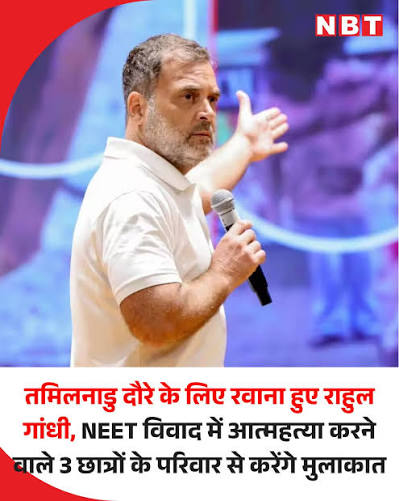
Rahul Gandhi left for Tamil Nadu on Saturday morning. He will meet the families of three students who committed suicide in Chennai over the NEET controversy. Tamil Nadu unit president B. Manickam Tagore stated that there is no plan to meet with Chief Minister Vijay. New Delhi: Leader of the Opposition in the Lok Sabha, Rahul Gandhi, left for Tamil Nadu on Saturday from his residence in New Delhi. Today in Chennai, he will meet with three families whose children allegedly committed suicide during the NEET paper leak controversy. Rahul Gandhi will also discuss with party officials under the “Sangthan Srujan Abhiyaan,” an initiative to strengthen the party at the grassroots level in Tamil Nadu. However, no meeting with Tamil Nadu Chief Minister Thalapathy Vijay is currently planned. According to reports, Rahul Gandhi will meet with three families in Chennai whose children committed suicide due to irregularities in the NEET UG exam regarding the NEET paper leak. Regarding Rahul Gandhi’s meeting with Tamil Nadu Chief Minister Vijay Thalapathy, the party stated that “there is no plan for Rahul Gandhi to meet Chief Minister C. Joseph Vijay during his visit to Tamil Nadu.” Will Address Officials Congress General Secretary and Tamil Nadu in-charge Ghulam Ahmed Mir and the party’s Tamil Nadu unit president B. Manickam Tagore told reporters in Chennai that Rahul will address officials on Saturday at the closing ceremony of the 10-day training camp for District Congress Committee presidents held from July 23 to August 1 in Mamallapuram. Initiative to Strengthen the Party at the Grassroots Level Rahul is expected to arrive in Chennai at 11 a.m. on August 1, where he will preside over a party event held there, and then depart for Delhi at 6 p.m. The training camp for the Chennai Congress Committee presidents is an initiative to strengthen the party at the grassroots level under the “Organization Creation Campaign.” When asked about the possibility of Rahul Gandhi meeting Chief Minister Vijay, Tagore said that the top leader’s Chennai program is related to party organization. Congress is part of the Tamil Nadu coalition government led by the Tamil Nadu Vetri Kazhagam (TVK). Curated by: Abhishek Pandey About the Author Abhishek Pandey is a digital journalist at Navbharat Times. He joined Navbharat Times, the digital wing of the Times of India Group, in July 2025. He currently covers news for the National and Delhi desks. Courtesy: Hindi News
Hate speech case: Suvarna appears before probe officer

Udupi: Udupi MLA Yashpal Anand Suvarna, booked for alleged derogatory remarks and hate speech against leader of opposition Rahul Gandhi, appeared before the investigating officer Friday. Responding to a police notice, the MLA answered questions posed by the investigating officer. The probe will proceed based on his responses, Udupi SP Hariram Shankar said. Udupi Town police had registered an FIR against Suvarna under sections 57, 192, 196(2), 352, 353(2) and 351(2) of BNS for allegedly making inflammatory statements against the Congress leader during a protest Tuesday. Meanwhile, the Udupi District Congress staged a protest in the town Friday against Suvarna’s alleged hate speech and threats against Rahul Gandhi, as well as his remarks on the NEET students’ movement. Former minister Vinay Kumar Sorake demanded the MLA’s immediate arrest. Congress leader Niketh Raj Maurya said the younger generation was exposing the Centre’s actions through social media and would respond democratically in the 2029 elections. In a press release, Dakshina Kannada BJP spokesperson Arun G Shet accused the Karnataka govt of using the administrative machinery to further “politics of hatred” instead of functioning in an accountable and democratic manner. Courtesy : TOI Note: This news is originally published on https:/timesofindia.com/bha and is used purely for non-profit/non-commercial purposes, especially human rights