
Teacher booked after Dalit student assaulted, abused with caste slurs in UP school

A 14-year-old Dalit student in Uttar Pradesh’s Mainpuri district was allegedly abused with caste-based slurs, physically assaulted, and threatened at a private higher secondary school in Kurawali after being accused of breaking a water pipe. The incident took place at Lallu Singh Inter College, near the Kurawali police station. According to the family, the boy was brutally beaten and is now facing difficulty walking. An FIR was registered on Sunday after a complaint was filed by the victim’s elder brother, a resident of Ghanrajpur in Kurawali. The case has been filed under provisions of the Scheduled Castes and Scheduled Tribes (Prevention of Atrocities) Act, along with Sections 115(2) (voluntarily causing hurt), 352 (intentional insult to provoke breach of peace), and 351(3) (criminal intimidation) of the Bharatiya Nyaya Sanhita (BNS), 2023. SHO Lalit Bhati of Kurawali police station confirmed the registration of the FIR. According to the complaint, the victim, a Class 8 student, was drinking water at school on January 29 when a water pipe broke. The family claims that the pipe had actually been damaged by another student, but he was falsely blamed. The complaint alleges that Suveer Singh, son of Vijay Singh, and Rajiv Verma alias Raju Lodhi, son of Mahavir Singh, abused the boy using caste-based slurs, physically assaulted him, and threatened him. “If you come to school again, we will kill you,” they allegedly told him. The complaint was submitted on January 30, and the FIR was registered the same day at 6:53 PM. The investigation has been assigned to Sub-Inspector Sachchidanand Singh. Police have stated that further investigation is underway. Courtesy : Maktoob Media Note: This news is originally published on https:/maktoobmedia.com/bha and is used purely for non-profit/non-commercial purposes, especially human rights
Transgender found murdered on NH-316

Bhubaneswar: A transgender was allegedly stabbed to death by an unidentified assailant near Uttara Chowk in Puri district on Sunday. Police said the victim was found lying in a pool of blood along NH-316 connecting Bhubaneswar and Puri. The individual’s identity and circumstances surrounding the incident are yet to be established. “Prima facie, the victim sustained serious stab injuries and was immediately rushed to Capital Hospital in Bhubaneswar, where doctors declared her dead. We are verifying the CCTV footage,” said an officer of Pipili police station. Tension gripped Capital Hospital as several members of the transgender community demanded immediate arrest of those responsible. “She called me around 8 pm and sought help. She told me that she was attacked. But she didn’t name anyone,” a friend of the deceased said. Courtesy : TOI Note: This news is originally published on https:/timesofindia.com/bha and is used purely for non-profit/non-commercial purposes, especially human rights
Dalit Family Attacked in Kakori, Attempted Arson with Petrol: Two Dozen Thugs Assault Family Over Drainage Dispute, Several Injured
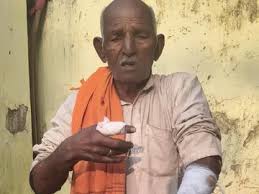
A dispute over drainage water in Gwalpur village under Kakori police station area turned violent. It is alleged that on Wednesday, thugs attacked a Dalit family, barged into their house, assaulted them, and attempted to burn a young man alive by dousing him with petrol. According to the victim family, the dispute began on Sunday morning over drainage water. On the same day, Shyamu Yadav, Deepanshu Yadav, and Bauwa Yadav allegedly assaulted Chanchal Rawat. The victim had filed a complaint at the Kakori police station, but allegedly due to the negligence of the local sub-inspector, no action was taken. Taking advantage of this, the thugs attacked again on Wednesday. In Wednesday’s attack, Deepanshu Yadav, Himanshu Yadav, Shyamlal, Bhola, Bauwa, Amarnath, Gopal, and approximately two dozen others entered the Dalit family’s house with sticks and iron rods. They vandalized the property and assaulted the family members. Several people, including Shripal (80), Shiv Devi (75), Aradhya (18), Aman Rawat (20), Kartik (24), Arun (18), Chandan (16), and Prem (12), were seriously injured in the attack. Among the injured, some suffered broken hands, while others sustained serious injuries to their heads, noses, and other parts of their bodies. Kakori Police Station In-charge Inspector Satish Chandra Rathore said that a case has been registered against four named individuals and two dozen unknown persons under relevant sections based on a complaint filed by Radha, the daughter-in-law of the victim Shripal. A separate case of arson has also been registered in connection with the attempt to set fire to the grocery shop. Rathore informed that three accused have been taken into custody for questioning, and police teams have been formed to conduct raids and arrest the other accused. Mohd. Sibtain Rizvi | Kakori (Lucknow), Lucknow Courtesy: Hindi News
Fear of a strongman in Bihar’s Dalit locality, indiscriminate firing to pressure withdrawal of case
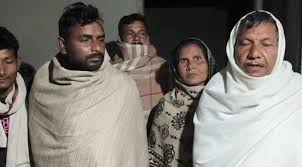
Bihar News: The viral video has raised serious questions about the police and law and order. Considering the seriousness of the matter, Bhawanipur Station House Officer Shumbh Paswan said that the video has been taken as evidence. Continuous raids are being conducted to arrest the accused. Patna: A sensational incident defying law and order has come to light in the Bhawanipur police station area of Bhagalpur, Bihar. It is alleged that a strongman in the Dalit locality of Narayanpur village spread terror in the entire area by openly firing to pressure the withdrawal of a case. A video of this entire incident is rapidly going viral on social media. In it, the accused can be seen fearlessly brandishing a weapon and firing three to four rounds continuously. Son abused, father injured in attack The victim, Rajkishore Paswan, has leveled serious allegations against Shiva Yadav of the same village. He says that the dispute started on January 27, when the accused abused his son. The matter was settled after the intervention of the villagers, but about an hour later, the accused attacked again, seriously injuring Rajkishore Paswan. Firing in Dalit locality, pressure to withdraw case A First Information Report (FIR) has already been registered at the Bhawanipur police station in this case. Now the accused is constantly threatening to kill him to force him to withdraw the case. To create this pressure, he reached the Dalit locality and fired indiscriminately. After this firing incident, the people of the Dalit locality are in deep fear. They feel unsafe. Raids to arrest the accused The viral video has raised serious questions about the police and law and order. Considering the seriousness of the matter, Bhawanipur Station House Officer Shumbh Paswan stated that the police have confirmed the incident and the viral video has been taken as evidence. Continuous raids are being conducted to apprehend the accused. The administration has assured the villagers of their safety. Local residents are demanding the immediate arrest of the accused and increased police patrolling in the village. Reported by: Alok Verma, Edited by: Shweta Gupta Courtesy: Hindi News
Dalit student assaulted, abused in schoolover water pipe; teacher, official booked

Agra: A Class VIII student of a school in UP was allegedly brutally assaulted and abused by the class teacher and a school official after the boy was blamed for a broken pipe. The 14-year-old, a Dalit, suffered injury marks on his back and limbs and “is now finding it difficult to walk”. He was also told by the accused to “stay away from the school”. The incident took place in Mainpuri’s Kurawali area on Friday. SHO Lalit Bhati of the local thana said on Sunday that an FIR under SC/ST Act has been registered against school committee member Rajeev Verma and class teacher Sukhbir Singh. In his statement, the boy said, “I was feeling thirsty, so I went to drink water and noticed that the pipe of the water tank was broken. I was blamed for breaking the pipe. I kept on pleading that I did not break the pipe, but nobody listened to me. I was beaten, abused with casteist slurs, and threatened with death if seen again on the school’s premises.” A police complaint was filed by his elder brother against the accused of the private school later that day in Kurawali. Police subsequently registered an FIR under BNS sections 115-2 (voluntarily causing hurt), 352 (intentional insult designed to provoke breach of peace) and 351-3 (criminal intimidation) along with the SC/ST Act. The boy’s family claimed that the pipe was damaged by another boy and their son was unfairly targeted. Dismissing the allegations, school committee member Rajeev Verma told TOI: “This is a false case against me. I wasn’t even there. The class teacher could be present. I’m not aware. I’ll soon meet the police officers, and I hope there’ll be a fair probe.” Courtesy : TOI Note: This news is originally published on https:/timesofindia.com/bha and is used purely for non-profit/non-commercial purposes, especially human rights
Will restore glory of Parkal: Revuri
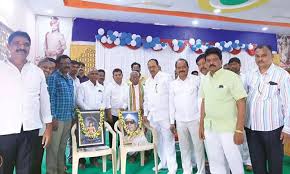
Hanumakonda: Parkal MLA Revuri Prakash Reddy stated that he would bring back the past glory of the historic town of Parkal and that Dalit settlements would be developed as model colonies. Reddy attended the Padmashali community cordial meeting in Parkal centre on Sunday, and the Madiga community cordial meeting. Prior to the programmes, he paid floral tributes to the portraits of Sri Bhakta Markandeya and Konda Laxman Bapuji. Addressing the gatherings separately, he said Dalits have always stood with the Congress and that the government gives top priority to their welfare. They played a significant role in the party’s victories in the Assembly and Parliament elections. He assured that Dalit settlements would be developed as model colonies with all basic facilities. Reddy alleged that the BRS cheated Dalits, stating that KCR had promised to make a Dalit the CM and claimed he would be a “protector of Telangana.” He emphasised that Sonia Gandhi’s contribution to State formation is unforgettable and that uplift and welfare of Dalits is the primary objective of the party. He said the Madiga and Padmashali communities played an active role in ensuring his victory. He appealed to the Madiga and Padmashali brothers who supported the party in the last elections to extend the same cooperation in the upcoming municipal polls and work for victory of Congress candidates. He called upon party workers to ensure the party wins all 22 wards in the municipal elections and to hoist the Congress flag on Parkal soil. He stated that drinking water supply, CC roads and drainage are being established under a special DPR system. Parkal would be developed as an educational centre; as part of this initiative, Young India International School, skill development centres, and TASK Centres are being set up. Courtesy : THI Note: This news is originally published on https:/thehansindia.com/bha and is used purely for non-profit/non-commercial purposes, especially human rights
Guru Ravidas for all, especially Dalits
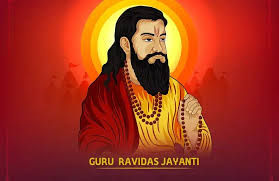
The visit of Prime Minister Narendra Modi to Dera Sach Khand Ballan un Punjab on February 1, 2026, to commemorate Ravidas Jayanti as well as the Padma Sri awarded to its patron saint Niranjan Das and all the attention has reinforced the contemporary relevance of Guru Ravidas, said Prof. Kumool Abbi. The unerring focus references the crystallisation of Dalit identity and the continuing patronage of various pilgrimage sites associated with Guru Ravidas. The most significant role in spreading the universal message of Guru Ravidas has been played by the Dera Sach Khand Ballan, in Punjab, which is a site of revitalised Dalit faith and continues to have a deep influence on Dalit lives across the globe. The building in Seer Govardhanpur in Benares has now become a very important pilgrimage site as well as a rallying point for the Dalits. Sri Guru Ravidas Janmasthan Mandir attracts visitors from across the world to commemorate his birth anniversary. A pilgrimage to the magnificent temple is consummate: it is where one goes for religious, political and social awakening. Guru Ravidas, a 15-16 Century bhakti poet, regarded as a contemporary of Kabir, is also said to have met Guru Nanak. Guru Ravidas firmly and steadfastly stood up for those on the marginalised sections of society and fought against Brahminical hegemony, dogma, ostentation, oppression, superstition and ritualism. He tried to reform the casteist and discriminatory practices dominant in that period. He was a voice of the oppressed and the subaltern. Born in a family of leather tanners, a profession he nobly practised and considered his Keerat (vocation), loftily continuing it all his life. His thoughts, poetry and life in practice, reflected his constant struggle to bring about social change by stirring the consciousness of the masses. He was consumed by the love of the divine. As he elucidates, “meri preet Gobind sio ji na ghatah, main mol mehngi lai jia satah (my love for the Lord of the universe does not decrease, I paid for it dearly in exchange for my soul)”. Forty-one shabdas of Ravidas bani have been included in the Guru Granth Sahib in the form of different ragas. Similarly, the Panchvani texts of the Dadupanthi tradition have incorporated some of Ravidas’ texts. His works contain the common thread of unflinching devotion to God who is projected in an abstract form as Nirguna (without attributes). It is believed Meera Bai, Queen Jhallan Bai of Chittorgarh and Raja Nagar Mel of Benares were his devotees. Guru Ravidas’ teachings and bani resonate across modern-day Punjab, Haryana, Rajasthan, Maharashtra, among others. He is regarded as the personification of Dalit identity and its subsequent assertion and expression. An icon of progressiveness and activism, Guru Ravidas visualised an ideal society of Begumpura, where no sorrow, discrimination, differences and oppression would exist. Courtesy : The Hindu Note: This news is originally published on https:/thehindu.com/bha and is used purely for non-profit/non-commercial purposes, especially human rights
Swami Prasad Maurya launches a major attack on Akhilesh Yadav’s PDA, says D sometimes means Dalit and sometimes Dimple
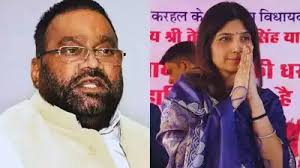
Swami Prasad Maurya on PDA: Swami Prasad Maurya has launched a major attack on Akhilesh Yadav’s PDA. In this context, he has also targeted Dimple Yadav. Lakhimpur Kheri: Swami Prasad Maurya, the chief of Apna Janata Party, who arrived in Lakhimpur Kheri, Uttar Pradesh, has targeted Samajwadi Party chief Akhilesh Yadav. Akhilesh Yadav has once again started sharpening his Backward, Dalit, Minority (PDA) politics ahead of the 2027 UP assembly elections. Meanwhile, Swami Prasad Maurya has targeted Akhilesh’s PDA politics. He also seems to be hinting at entering the electoral fray with his own separate political ideology. In the 2022 UP elections, Swami Prasad Maurya had left the BJP and joined the Samajwadi Party. However, at that time, Swami Prasad Maurya was not even able to save his own assembly seat. Swami Prasad Maurya targets Dimple Apna Janata Party chief Swami Prasad Maurya seems to be directly targeting Akhilesh Yadav’s PDA as well as his wife and Mainpuri MP Dimple Yadav. Swami Prasad Maurya is saying that for Akhilesh, the ‘D’ in PDA sometimes means Dalit and sometimes Dimple. Now, this issue is expected to heat up the political scene. What is the full statement? While talking to the media, Swami Prasad Maurya said that Akhilesh Yadav’s PDA is a hodgepodge. How can someone who doesn’t understand the meaning of PDA talk about PDA? Akhilesh Yadav explains the meaning of PDA according to his convenience. Sometimes he says the ‘P’ in PDA means Backward, and sometimes he calls it Pandit. The ‘D’ sometimes means Dalit and sometimes refers to Dimple Yadav. Swami Prasad Maurya further said that Akhilesh also gives different meanings to the ‘A’ in PDA. Currently, he says ‘A’ means Forward. He keeps changing the meaning of PDA according to the time and his convenience. Swami Prasad Maurya had recently attacked the upper caste community regarding the UCC law. Now he is seen targeting Akhilesh. Curated by: Rahul Parashar About the Author Rahul Parashar is a Senior Journalist at Navbharat Times Online. He has 20 years of experience covering politics, current affairs, development, bureaucracy, education, health, and ground reporting. In the early days of his career, he covered administration and civic issues. He also honed his skills in political journalism in Bihar, Jharkhand, and Uttar Pradesh. Courtesy: Hindi News
‘Talks with DMK to resume soon’
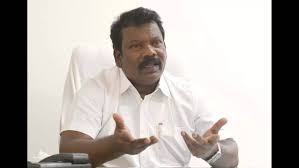
Chennai: TNCC president K Selvaperunthagai said on Sunday the talks with the DMK will resume in ‘two or three days.’ He reiterated the Congress was holding alliance talks only with DMK. “We commenced our talks with DMK two months ago. After the recent meeting of DMK MP Kanimozhi Karunanidhi with our party leader Rahul Gandhi in Delhi, DMK informed us that alliance talks will resume in another two to three days,” Selvaperunthagai told reporters in Chennai. When asked about AICC in-charge for Tamil Nadu, Girish Chodankar’s statement that even new parties are interested in allying with Congress, Selvaperunthagai said Girish just meant that Congress was strong. His remarks do not mean that Congress was holding talks with new parties, he said. Earlier, Congress’ panel for alliance talks held a meeting here. The meeting was to discuss resuming talks with DMK and to plan the TN visit of Congress leaders Rahul Gandhi, Mallikarjun Kharge and Priyanka Gandhi in Feb end. Courtesy : TOI Note: This news is originally published on https:/timesofindia.com/bha and is used purely for non-profit/non-commercial purposes, especially human rights
Report finds Adivasi, Muslim, and Dalit communities targeted through politically driven violence in Telangana
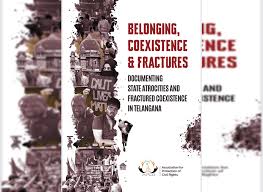
A fact-finding report released by the Association for Protection of Civil Rights (APCR) has concluded that recent incidents of communal violence and social tension across Telangana are not isolated events but part of a broader pattern of politically driven polarisation, institutional bias, and administrative failure, particularly affecting Adivasi, Muslim, Dalit, and other marginalised communities. Titled “Belonging, Coexistence & Fractures: Documenting State Atrocities and Fractured Coexistence in Telangana”, the report is based on field visits, survivor testimonies, interviews with local residents and activists, and an analysis of official records across multiple districts, including Hyderabad, Medchal–Malkajgiri, Narayanpet, Medak, Nizamabad, Nirmal, Adilabad, and Bhainsa. According to the report’s executive summary, many flashpoints in Telangana began as local disputes over land, religious practice, noise, interpersonal conflicts, or administrative decisions, but were subsequently escalated into communal confrontations through organised political mobilisation, misinformation campaigns, and provocative public actions. The report attributes a central role in this escalation to right-wing organisations and affiliated local networks, particularly during politically sensitive periods such as elections. A key outcome of the report is its finding that state institutions, especially the police and district administrations, have frequently failed to act impartially. In several cases documented by APCR, members of Muslim and other minority communities faced delayed police responses, excessive force, false criminal cases, custodial violence, or pressure to withdraw complaints. Oversight bodies such as the SC/ST Commission and the National Human Rights Commission were described as largely inaccessible or ineffective at the ground level, contributing to what the report terms a “climate of impunity.” The report also highlights how communal narratives are being used to divert attention from structural issues such as land alienation, unemployment, erosion of public services, and unequal access to welfare schemes. It notes that Adivasi, Dalit, and Muslim communities, despite sharing similar economic vulnerabilities, are increasingly positioned against one another through identity-based mobilisation, weakening possibilities for collective resistance. Importantly, APCR’s findings do not portray Telangana as uniformly divided. The report documents several instances where communities have resisted polarisation, continued everyday coexistence, and intervened to prevent violence. Civil society groups, women, and youth initiatives are identified as playing a critical role in supporting survivors and de-escalating tensions in the absence of effective state intervention. Concluding its assessment, the report states that communal violence in Telangana is neither inevitable nor driven primarily by grassroots hostility. Instead, it argues that such violence is increasingly “manufactured and sustained” through political strategies that benefit from social division. APCR said the report is intended to serve as a starting point for further public scrutiny, institutional accountability, and policy intervention aimed at safeguarding coexistence, dignity, and constitutional rights in Telangana. Speaking to Maktoob, Nadeem Khan, national secretary of APCR, said, “Our findings show that communal violence in Telangana is not spontaneous or inevitable. In most cases, local disputes are deliberately escalated through political mobilisation, misinformation, and selective state action.” He added, “What we repeatedly observed on the ground was the manufacture of communal flashpoints—small, resolvable issues being transformed into large-scale tensions through organised intervention by right-wing groups.” He further said, attributing this to the report, “Adivasi, Muslim, Dalit, and other marginalised communities are being pitted against one another, despite sharing the same vulnerabilities—land insecurity, unemployment, and weak access to welfare,” and that “instead of acting as neutral protectors, state institutions often became part of the problem. Delayed responses, biased policing, and false cases against victims were recurring patterns across districts.” “Communal violence in Telangana today is better understood as a political strategy than a social reality. Division benefits those in power, while ordinary people bear the cost,” Khan told Maktoob. The report calls for independent investigations into cases of custodial deaths and alleged fake encounters, accountability for hate speech and inflammatory mobilisation, protection of land and housing rights, and reforms to ensure equal treatment of all communities by law enforcement and administrative authorities. Ghazala Ahmad Courtesy : Maktoob Media Note: This news is originally published on https:/maktoobmedia.com/bha and is used purely for non-profit/non-commercial purposes, especially human rights