
Police cremated Dalit youth without family consent: BJP
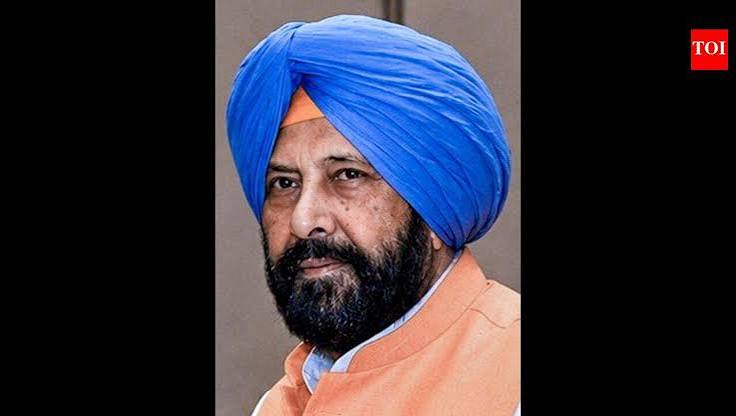
Chandigarh: Punjab BJP president Kewal Singh Dhillon alleged that Punjab Police cremated the body of Sanamdeep Singh, a 23-year-old Dalit resident of Kanoi village in Sangrur district, without the consent or presence of his family members after he died by suicide on Sept 26. “The incident reflects the deteriorating law-and-order situation in Punjab and the AAP govt’s failure to safeguard the rights of Dalit families,” Dhillon alleged. Dhillon was accompanied by Sangrur BJP district president Daman Bajwa, Sanamdeep’s brother Ravi Singh, father Paramjeet Singh, and cousin Vikramjeet Singh, who recounted the family’s version of events. “Punjab is passing through a difficult phase. We are receiving regular complaints of atrocities and discrimination against Dalits under the AAP govt. Even though Chief Minister Bhagwant Mann hails from Sangrur, such incidents continue to be reported from the district,” Dhillon alleged. Accusing the police of acting under the influence of a sitting minister, Dhillon said, “The law-and-order situation has deteriorated to such an extent that the victim’s last rites were not allowed to take place in his own village or in the presence of his family. The police cremated the body without the family’s consent and even abducted the victim’s mother.” He further alleged that the state govt had turned a blind eye to the matter and said the BJP had urged senior police officers to conduct a thorough probe. The party has also sought information regarding the whereabouts of the victim’s mother and demanded that she be reunited with her family. According to the family, Sanamdeep worked as a stone mason and had been involved in a long-standing dispute with the village sarpanch, whom they described as being associated with the AAP. The family alleged that continued pressure and harassment linked to the dispute drove him to consume a poisonous substance at his home. He later died while undergoing treatment at Sangrur Civil Hospital. Vikramjeet Singh claimed the dispute dated back to 2019 when Ravi Singh’s mobile phone allegedly fell near the sarpanch. “When Ravi approached him to retrieve the phone, the sarpanch used casteist slurs and assaulted him. Instead of acting against the sarpanch, the police later booked seven members of our family in another case to pressure us into withdrawing the complaint. Sanamdeep also spent some time in jail in connection with that case,” he alleged. The family further alleged that they had kept Sanamdeep’s body in the hospital mortuary for five days while peacefully protesting and demanding action against the sarpanch, including the registration of charges under the Scheduled Castes and Scheduled Tribes (Prevention of Atrocities) Act. “Initially, the police refused to record our statements and kept asking us to provide proof. Later, they cremated our brother without our permission and in the absence of family members,” the family alleged. Sangrur SSP Ravjot Grewal could not be reached for comment. Courtesy : TOI Note: This news is originally published on https:/timesofindia.com/bha and is used purely for non-profit/non-commercial purposes, especially human rights
NHRC team to visit Kendrapada on Oct 5 over assault on Dalit sarpanch
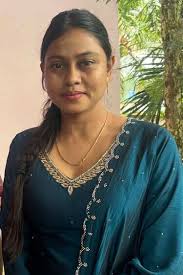
Kendrapada: A team from the National Human Rights Commission (NHRC) will visit Kendrapada on Oct 5 to conduct an inquiry into an alleged assault and mistreatment of Tikhiri gram panchayat sarpanch Chameli Ojha (33), a Dalit woman, in June. Ojha was allegedly abused and assaulted by police and the block development officer (BDO) of Mahakalapada, under which the panchayat falls, on June 11 after she raised allegations of corruption against officials, according to a complaint. The NHRC team will conduct a spot inquiry and examine officials, eyewitnesses, police personnel and others connected with the case. Kendrapada collector Raghuram R Iyer said on Friday that the commission has already intimated him and the superintendent of police (SP) about the visit. Earlier, a human rights group filed a petition before the NHRC on July 14, alleging that Ojha had been falsely implicated in a case registered on the complaint of the Mahakalapada BDO under charges, including attempt to murder, causing hurt and obstruction of a public servant. The NHRC took cognisance of the complaint and forwarded a copy to the district magistrate and SP, seeking an inquiry and expeditious report. The SP subsequently submitted a detailed report to the commission on June 27, stating that three FIRs had been registered in the matter and that they were cross-cases. Ojha had earlier written to chief minister Mohan Charan Majhi, alleging that officials were hindering developmental works in her gram panchayat by withholding payments. In her letter, she alleged that she had gone to the BDO’s office on June 11 to request clearance of pending bills, but the BDO and others abused her. She also alleged that police assaulted and misbehaved with her inside a vehicle while taking her to police station. Courtesy : TOI Note: This news is originally published on https:/timesofindia.com/bha and is used purely for non-profit/non-commercial purposes, especially human rights
Dalit youth’s ashes collected under police watch; kin released
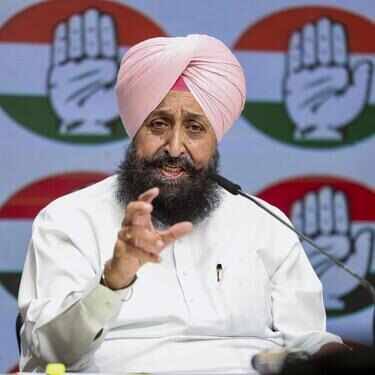
Sangrur: Tension continued in Sangrur on Friday as the family of 23-year-old Dalit youth Sanamdeep Singh collected his ashes under heavy police deployment, a day after police took possession of his body, conducted a post-mortem and carried out the cremation amid protests. Police also released 12 detainees, including eight members of the victim’s family, even as no arrests have been made so far of the village sarpanch and three others named in the FIR for allegedly abetting Sanamdeep’s suicide. Sanamdeep, a resident of Kanoi village, died on Sept 26, a day after allegedly consuming poison. His family accused the village sarpanch and three others of harassment and had refused to allow a post-mortem until the accused were arrested. On Thursday, police forcibly took possession of the body, broke through a protest by family members and supporters, conducted the autopsy and cremated the body while detaining relatives and opposition leaders. The action drew sharp criticism from civil rights groups and opposition parties. The episode has sparked a political confrontation between the Congress and the Aam Aadmi Party government in chief minister Bhagwant Mann’s home district. Leader of Opposition Partap Singh Bajwa was denied permission on Friday to meet senior Congress leader Rajinder Singh Deepa at Central Jail, Patiala. Deepa was arrested during Thursday’s clash between police and protesters outside Sangrur civil hospital and was later shifted to Patiala jail. In a letter dated Oct 2, 2026, jail superintendent Gurcharan Singh Dhaliwal said visits were restricted to family members, relatives and legal counsel under the Punjab Prisons Rules, 2022. As Deepa had authorised only his wife and son-in-law as visitors, permission for Bajwa’s meeting request was declined, he said. After visiting the bereaved family, senior Congress leader and former cabinet minister Raj Kumar Verka accused the state government of being insensitive towards Dalits and demanded that provisions of the Scheduled Castes and Scheduled Tribes (Prevention of Atrocities) Act be added to the FIR. “If justice is denied to the Dalit community, followers of Baba Saheb Ambedkar across the country will make life difficult for the chief minister. The pot of sins is full,” Verka said. Defending its decision to cremate the body, police said on Thursday that the Senior Medical Officer had issued multiple notices warning that the corpse was rapidly decomposing and that, under Section 301 of the Bharatiya Nyaya Sanhita (BNS), causing indignity to a dead body is an offence. Police claimed repeated notices were served on the family, but they refused to accept them due to political influence. Police said an FIR had already been registered on Sept 28 at Sadar Sangrur police station under Section 108 (abetment of suicide) and Section 3(5) of the BNS against the village sarpanch, his brother, a former panchayat member and a woman on the complaint of Sanamdeep’s father. However, police alleged that Congress leader Rajinder Deepa and other outsiders had prevented the family from agreeing to the post-mortem, insisting on arrests before the procedure could take place. According to the police, protesters turned violent when authorities proceeded with legal formalities, allegedly damaging property, using abusive language and attacking officials. Police said minimal force was used to disperse the crowd. Following the clash, City Sangrur police registered FIR No. 194 against Rajinder Deepa and three others under various sections of the BNS, including assault on a public servant, and secured 14 days’ judicial remand for the accused. Family members of the deceased who had been taken into preventive custody on Thursday were released on Friday. Courtesy : TOI Note: This news is originally published on https:/timesofindia.com/bha and is used purely for non-profit/non-commercial purposes, especially human rights
Uproar over Dalit woman’s roadside delivery amid untouchability allegations

Rani Vanvasi, a 20-year-old pregnant woman gave birth on the roadside outside government district hospital in Bhadohi on September 29, after she was allegedly denied admission for delivery; the victim’s family also alleged that hospital staff failed to provide timely treatment and did not admit her. Uproar escalated on Friday (October 2, 2026) after a video went viral showing a Dalit woman who was allegedly denied admission at the government hospital in Bhadohi district during labour pain and forced to deliver outside the hospital in public. While the victim’s family and Opposition parties alleged untouchability, claiming feudal elements are running the government in Uttar Pradesh, the authorities said disciplinary action has been taken against personnel found guilty of partial negligence. “The family categorically alleged that hospital staff failed to provide timely treatment and did not admit due to her caste affiliation, this is so sad and inhuman that even after 79 years of independence, untouchability and discrimination prevails in government system, forcing a Dalit woman to give birth on the roadside, outside a government hospital. The feudal elements within the administrative system are emboldened by the Bharatiya Janata Party (BJP) government. The fight of the Samajwadi Party (SP) for justice, equality is against such tendencies,” said Sunil Singh Yadav ‘Sajan’, the SP spokesperson. “The incident is a cruel, evil act, which is unacceptable in a civilised society,” said Ajay Kumar Lallu, a senior U.P. Congress leader. In the matter, Rani Vanvasi, a 20-year-old pregnant woman gave birth on the roadside outside government district hospital in Bhadohi on September 29, after she was allegedly denied admission for delivery. The victim’s family also alleged that hospital staff failed to provide timely treatment and did not admit her. Ms. Vanvasi eventually went into labour near the hospital gate while she and her family were leaving. Women accompanying her used saris or a sheet to provide privacy as she delivered the baby beside the road. “The victim had a hemoglobin level of around five grams per deciliter, indicating severe anemia. She was referred to a higher-level facility in Mirzapur but in the meantime the pain started. Upon learning of the incident, I immediately arrived at the scene and provided appropriate medical assistance. Currently, both the infant and mother are completely healthy and recovering at the district hospital. Disciplinary action has also been taken against personnel found guilty of partial negligence. The remaining statements were found to be untrue,” said the Chief Medical Officer of the Hospital. Mayank Kumar Courtesy : The Hindu Note: This news is originally published on https:/thehindu.com/bha and is used purely for non-profit/non-commercial purposes, especially human rights
‘I am Hanuman to Rahul Gandhi’: Ajay Rai after being replaced as UP Congress chief
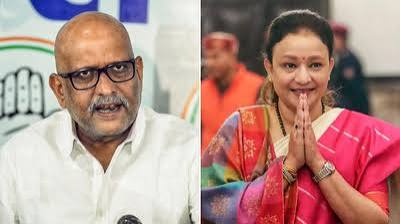
NEW DELHI: Former Uttar Pradesh Congress Committee (UPCC) president Ajay Rai on Saturday called himself a “Hanuman” to Congress leader Rahul Gandhi, saying he would continue to follow the party’s national leadership and carry out its political fight regardless of the position he holds. “Whatever decision the national leadership makes. They told me to fight Modi, and I fought openly with full strength, and I will continue to fight. So whatever the national leadership decides, I stand by it. I am certainly a ‘Hanuman’ to my leader Rahul Gandhi; wherever he says, I will be there,” he told ANI. Rai also recalled his contest against Prime Minister Narendra Modi in the 2024 Lok Sabha elections from Varanasi. Describing himself as a “simple worker”, he said he had been fielded against PM Modi with the support of the Congress leadership and Rahul Gandhi. Rai made the remarks after the Congress appointed Aradhana Mishra ‘Mona’ as the new UP Congress president, replacing him as part of an organisational reshuffle ahead of the 2027 Uttar Pradesh assembly elections. Speaking to reporters, Rai said he had always followed the decisions of the national leadership and would continue to do so. “A simple worker like me was fielded against Prime Minister Narendra Modi. With the support of the top leadership and Rahul Gandhi, we secured 4.6 lakh votes in Varanasi and defeated PM Modi in seven rounds. I thank Rahul Gandhi and the top leadership for their faith in me and extend my best wishes to Aradhana Mishra Mona. I hope she works hard, takes the party forward and strengthens the trust of workers by standing with them against oppression and injustice,” he said. Rai said political positions were temporary and pointed to his record as a five-time MLA from Pindra. He said he had worked extensively for people in his constituency and recalled arranging blood donations when required. “Positions in politics come and go. I have been an MLA from Pindra five times and have worked extensively for the people, even arranging blood donations through my family when needed. I thank the Pradesh Congress Committee employees, drivers, staff, workers and supporters who stood by me around the clock and helped me throughout my journey across Uttar Pradesh. We have always stood against oppression and injustice wherever it occurred,” he said. Meanwhile, Mishra, after taking charge as the new UP Congress president, said the party was ready for the 2027 Assembly elections and would contest them with the INDIA alliance. “Today marks the beginning of a new dawn. I express my gratitude to my leadership for entrusting me with this responsibility. This is a big challenge; time is short, and every Congress worker will have to work. Together, we must work with full strength,” she said. Mishra also highlighted the Congress’ focus on women’s empowerment, saying, “If there’s anyone who is the biggest example of ‘Beti Hun, Lad Sakti Hun’, it is me.” She recalled the party’s decision under Priyanka Gandhi Vadra’s leadership to field 40% women candidates in the 2022 Uttar Pradesh Assembly elections. “Before this, under Priyanka Gandhi’s leadership, we fielded 40% women candidates with tickets in the 2022 elections. It is evident today that the Congress Party has always worked for the empowerment of women,” she said. “We are ready for the 2027 elections, and the INDIA alliance will contest the elections with full strength. We will fight the elections with the entire alliance,” the newly appointed UP Congress chief said. Courtesy : TOI Note: This news is originally published on https:/timesofindia.com/bha and is used purely for non-profit/non-commercial purposes, especially human rights
CM Vijay launches expanded ‘Vettri Payanam’ scheme; 84 lakh women to benefit daily

A total of 12,692 government buses have been brought under the expanded scheme. CHENNAI: Chief Minister C Joseph Vijay on Friday launched the expanded Vettri Payanam scheme at the Koyambedu bus terminus, under which women and transgender persons can travel free of cost in government buses across Tamil Nadu. Vijay formally launched the scheme by distributing free tickets to women passengers waiting inside buses at the terminus. The gesture marked the commencement of the expanded free-travel facility, which is expected to benefit around 84.32 lakh women every day. A total of 12,692 government buses have been brought under the expanded scheme. This accounts for 69% of the 18,413 scheduled buses operated by the seven state transport undertakings. Of the total 1,94,649 scheduled trips (singles), 1,65,312 trips, or 85%, will be operated under the scheme. The expansion covers Express, LSS and Deluxe buses operating within cities and urban areas, Mofussil Ordinary buses and Ghat Ordinary buses operating beyond 40 km, in addition to the services already covered by the free-travel scheme. However, buses operated by State Express Transport Corporation (SETC) have been excluded from the scheme. The implementation of this scheme will entail an annual expenditure of approximately Rs 6,000 crore. Under the women’s free bus travel scheme (Vidiyal Payanam) launched by previous DMK government, women are permitted to travel only in ordinary city and town buses and ordinary buses operating in hilly areas for distances up to 40 km. Free travel was not permitted in Express, LSS, Deluxe and Mofussil buses. The Electronic Ticketing Machine (ETM) systems in the buses have been integrated to record the free journeys. The government had completed the integration work, with testing and verification and trial runs were conducted on September 27. The expansion is aimed at widening access to free public transport for women, including students travelling to colleges located far from their homes and women travelling to workplaces, hospitals and for essential services, transport minister A Vijay Tamilan Parthiban said. Courtesy : TNIE Note: This news is originally published on https:/thenewindianexpress.com/bha and is used purely for non-profit/non-commercial purposes, especially human rights
‘100% Govt Failure’: Rahul Gandhi BASHES BJP Over Deaths Of 30+ Tribal Children In Balaghat
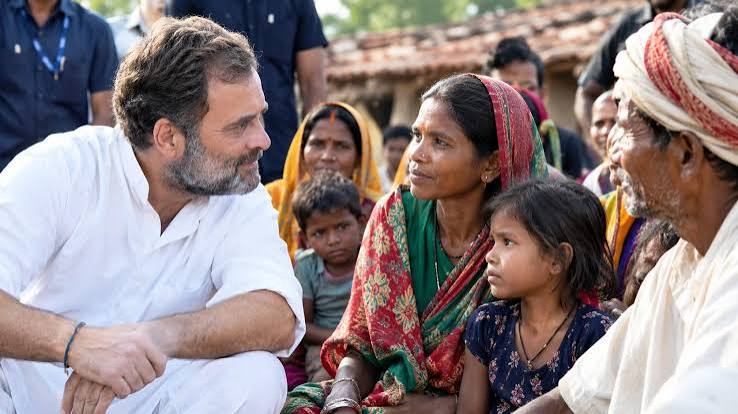
Congress leader and Lok Sabha Leader of Opposition Rahul Gandhi visited Jagla village in Madhya Pradesh’s Balaghat district to meet families of tribal children who have died in recent months amid reports of suspected infectious diseases and malnutrition. More than 30 children, primarily from the Baiga tribal community, have reportedly died in the Birsa block. Gandhi alleged that the government has failed to provide adequate healthcare, education, employment and support on issues including land rights, MGNREGA and the Forest Rights Act. He called the situation a “complete government failure” and said he would raise the issue in the Lok Sabha, including concerns affecting tribal communities across the country. Courtesy : TOI Note: This news is originally published on https:/timesofindia.com/bha and is used purely for non-profit/non-commercial purposes, especially human rights
Punjab: The family of a Dalit youth had been protesting for five days over his death; the police forcibly seized his body and performed his last rites.
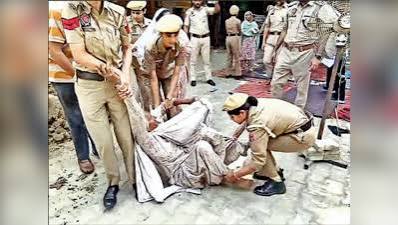
In Sangrur, Punjab, the police removed the family members who had been protesting for five days and performed the last rites of the Dalit youth without their consent. The Aam Aadmi Party Sarpanch is accused of harassment. Punjab: Serious allegations have been leveled against the police in the case of a 23-year-old Dalit youth’s suicide at Sangrur Civil Hospital on Thursday. The family alleges that the police forcibly removed them from the mortuary and conducted the post-mortem and cremation in their absence. The deceased has been identified as Sanamdeep Singh, a mason by profession and a resident of Kanoi village. Sanamdeep consumed poison on September 25th and died a day later on September 26th. The family had kept the body in the hospital mortuary for the past five days, demanding justice. They were staging an indefinite sit-in protest, refusing to conduct a post-mortem or accept the body until the village sarpanch and his associates, affiliated with the Aam Aadmi Party (AAP), were arrested. Sanamdeep’s uncle, Gora Singh, has leveled several serious allegations against the administration and the sarpanch. He stated that an FIR was filed against the sarpanch in 2019 based on Sanamdeep’s complaint. Gora Singh alleges that a false FIR was also filed against seven members of his family five months ago to pressure him into withdrawing the same case. The deceased was constantly subjected to mental harassment. Even when a sewer line was laid in the village, four of his houses were deliberately left out, and Sanamdeep was denied work under MNREGA. Tensions escalated further on Thursday afternoon when police and administration teams arrived to clear the entrance to the mortuary. The family alleges that the police brutalized them. Sanamdeep’s mother and grandmother were dragged into a police van and the funeral was forcibly performed without the family’s consent. According to Gora Singh, they were peacefully demanding justice and the implementation of the SC/ST (Prevention of Atrocities) Act. He alleges that the police broke their promises, used excessive force, manhandled women, and, in collusion with municipal corporation employees, secretly cremated the body. He also said that the entire village was turned into a cantonment as if they were dealing with terrorists. Amidst this commotion, the police arrested Congress official Rajinder Singh Deepa and three others from Sunam. They are accused of attacking policemen, damaging public property, and obstructing government work. They were produced in court and sent to judicial custody. In addition, the police detained eight members of Sandeep’s family and four others, although no FIR was filed against them. On behalf of the police, Sangrur DSP Dalbir Singh Sidhu defended the entire action. He said that the body had begun to decompose severely, forcing the administration to take this drastic step. The senior medical officer had issued several notices warning that the body was rapidly decomposing. Section 301 of the Indian Penal Code (IPC) makes it a crime to insult or leave a dead body in a deplorable state. Executive Magistrate-cum-Tehsildar Jagdeep Singh and health officials issued several notices to the family, but they refused to accept them due to political incitement. DSP Sidhu clarified that on September 28, based on a complaint from Sandeep’s father, an FIR had already been registered at the Sangrur Sadar police station under sections 108 (abetment to suicide) and 3(5) of the IPC. Despite this, Deepa and other outsiders used the family as a pawn for political gain and insisted on arbitrary arrests before the post-mortem. According to the police, when they initiated the legal process, the protesters became violent, hurling abuses, breaking bus windows, and attacking officers. Police had to use mild force to disperse the crowd. A board of three medical officers eventually conducted a post-mortem examination, and the young man’s last rites were performed at the crematorium on Ubhawal Road in the presence of municipal officials and some panchayat representatives. Rajan Chaudhary Courtesy: Hindi News
Sending obscene videos on WhatsApp also falls within the scope of ‘public view’: Bombay High Court’s decision in SC/ST Act case, no anticipatory bail for accused
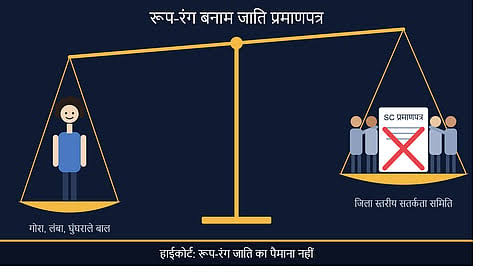
The accused contacted a woman and demanded physical relations. When she refused, he sent an obscene video made on his mobile phone to her husband and close relatives via WhatsApp. Nagpur – The Nagpur bench of the Bombay High Court has rejected the anticipatory bail plea of a government employee from Ghughus (Chandrapur district) in an SC/ST Act case. Justice Y.G. Khobragade issued the order on September 29. The case relates to the posting of obscene videos and photos of a married woman belonging to the Scheduled Caste on social media. The case pertains to Criminal Appeal No. 127/2026, in which the accused is Nikhil, son of Madhukar Thepale (28 years old). He is in government service and lives near the Sneh Prabha Mangal office in Ward No. 3 of Ghughus. Advocate Mahesh Rai appeared for the accused, while Additional Public Prosecutor G.S. appeared for the state. Umale and the victim’s lawyer, Sanket Joshi, appeared. According to the prosecution, the victim is a married woman belonging to the Scheduled Caste. The accused and the victim live in the same area and are known to each other. It is alleged that on November 4, 2025, the accused contacted the woman and demanded physical relations. When the woman refused, he sent an obscene video made on his mobile phone to the woman’s husband and close relatives via WhatsApp. According to the FIR, nude photos were also sent to the woman’s sister-in-law from an unknown mobile number. The woman’s sister also received calls and WhatsApp messages from the accused’s mobile number, stating that he wanted to speak with her. In the FIR, the woman has listed the mobile numbers of her husband, sister-in-law, mother-in-law, and the accused. On November 5, 2025, a case was registered at the Ghughus police station under sections 77 and 78 of the Indian Penal Code, 2023, sections 66(E) and 67 of the Information Technology Act, 2000, and sections 3(1)(r), 3(1)(w)(ii), and 3(2)(va) of the Scheduled Castes and Scheduled Tribes (Prevention of Atrocities) Act, 1989. The accused initially sought anticipatory bail in the lower court, which was rejected. Subsequently, he filed Criminal Appeal No. 599/2025 in the High Court. On February 9, 2026, he withdrew this appeal with the concession that he could file a new application after the charge sheet was filed. The accused then filed Anticipatory Bail Application (ABA) No. 73/2026. On February 21, 2026, the Special Judge (Atrocities Act) and Additional Sessions Judge of Chandrapur rejected this application. The accused approached the High Court for the second time against this same order. On March 12, 2026, the High Court granted interim relief and temporary anticipatory bail on certain conditions. The accused submitted a bond and sureties in the lower court. The charge sheet in the case has now been filed. The accused stated that the SC/ST Act does not apply if the victim is merely sent via WhatsApp. Advocate Rai stated that according to the FIR, the accused demanded sexual intercourse and, after being refused, sent videos and photos to her husband and relatives. According to him, merely sending the sexual favors via WhatsApp does not constitute offenses under Sections 3(1)(r), 3(1)(w)(ii), and 3(2)(va) of the SC/ST Act, and therefore, the bar on anticipatory bail under Section 18 of the Act does not apply. He argued that the lower court’s order was passed without considering the facts and law, and therefore, it should be set aside. Additional Public Prosecutor Umale, representing the state, and Advocate Joshi, representing the victim, strongly opposed the appeal. The prosecution stated: The accused has been absconding since the FIR was filed. The accused knew the victim’s caste. The incriminating videos and photos are stored on the accused’s mobile phone, but the mobile phone has not yet been seized. Custodial interrogation is necessary to seize the mobile phone and gather further information. Publicly humiliated the victim by circulating nude photos on the mobile phone after she refused his demand for sexual intercourse. After reviewing the records, Justice Khobragade stated that the accused was well aware of the victim’s caste. She also stated that the accused is not a member of a Scheduled Caste or Scheduled Tribe, while the victim is a Scheduled Caste. The accused has not denied this fact. The court prima facie held that the accused made nude videos and photos of the woman and circulated them via WhatsApp when his sexual desires were not satisfied. Regarding the absconding of the accused, the court cited Lavesh v. State (NCT of Delhi) (ALL MR (Cri.) 3300) and stated that generally, the question of granting anticipatory bail to a fugitive or proclaimed offender does not arise. The court remarked: “The accused in this case has been absconding since the date of registration of the crime; therefore, in my opinion, he is not entitled to anticipatory bail.” Regarding the argument of “public view,” the court did not accept the argument of the accused’s lawyer that the accused did not publicly insult the victim with caste-related slurs. The court said: “Making objectionable videos/photos of the victim and sending them to her husband, close relatives, and others through social media such as WhatsApp certainly falls within the scope of “public view” within the meaning of Section 3 of the Atrocities Act.” The court cited the Supreme Court’s case of Kiran v. Rajkumar Jivraj Jain (2025 AIR (SC) 4083). According to this, Section 18 of the SC/ST Act bars anticipatory bail under Section 439 of the Code of Criminal Procedure for these offenses. The court stated in its own interim order that the interim relief granted on March 12, 2026, was on the grounds that the provisions of the Act were not applicable to the FIR. However, upon reviewing the material now on record, it states: “Prima facie, the essential ingredients of the offenses under Sections 3(1)(w)(ii) and 3(2)(va) appear to be present, as objectionable videos/photos of the victim were circulated on social media from the accused’s mobile phone, which is in the public domain.
Sons gone, justice still elusive: Two Dalit families in Mumbai and Thoothukudi, holding photographs, ask one question: When will justice be delivered?
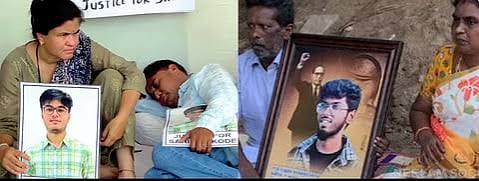
Both families believe society’s casteist mindset is responsible for their son’s death, and both believe the culprits are still eluding the law. Mumbai/Thoothukudi—Only parents who have lost a young son can truly understand the pain of losing one. Ravindra and Sonali Wakode sit hungry at Azad Maidan in Mumbai, holding a photograph of their 20-year-old son, Sahil. Sahil was a second-year B.Tech student at IIT Bombay. He committed suicide in his hostel room on September 18th. Ersaan, Chandrashekhar and Tamilselvi in Arumugamangalam, Tamil Nadu, are staging a protest, holding a photograph of their beloved 27-year-old son, Kevin. Kevin was a software engineer who was brutally murdered in Tirunelveli in July 2025, allegedly in a caste-based honor killing. The parents sitting on the protest hold their sons’ photographs and helplessness in their eyes, and they each have one question: will their sons get justice? Along with the grief of losing their sons, they now have to fight for justice. They must seek justice from the same system that Dalit and marginalized families often struggle to achieve. Therefore, whoever extends a helping hand, whether a leader, a commission, or an ordinary person, they see a glimmer of hope that justice may finally be achieved. Kevin’s mother and father tearfully declared that they had lost Kevin and that no other child should suffer the same fate. Sahil’s father said that the fast will continue until the accused are arrested. Two cities, two protests, but the parents’ pain is the same: their sons are gone, and now all that remains is the hope for justice. Parents devastated after chargesheet against son’s murder accused dismissed 27-year-old IT engineer Kevin Selvaganesh was a resident of Arumugamangalam near Eral in Thoothukudi district. He was murdered with a sword-like weapon on July 27, 2025. He belonged to the Scheduled Caste and was in love with a young woman. The young woman’s younger brother, Surjeet, was arrested for the murder. Surjeet surrendered at the police station within hours of the murder. Surjeet’s parents, Saravanan and Krishnakumari, were also accused in the case. Both were in the police force. Krishnakumari was a sub-inspector in the Tamil Nadu Special Police Force and was arrested by the CB-CID nine months after the incident. Following the CB-CID investigation, a lengthy chargesheet was filed in court. This 800-page chargesheet reportedly includes CCTV footage, forensic evidence, and statements from 83 witnesses. The case was being heard in the Special SC/ST Atrocities Prevention Act Court in Tirunelveli. The prosecution alleged that after the incident, Surjeet told his father, and his parents together asked him to destroy his clothes and mobile phone and remove the two-wheeler’s number plate. But on Tuesday, September 29, Justice R. Vijayakumar of the Madras High Court’s Madurai Bench dismissed the charge sheet against Saravanan and Krishnakumari. The court stated that there was no evidence linking them to the crime. Citing a Supreme Court ruling, the court stated that mobile tower information only indicates the range of the tower, not the exact location of the phone. With this order, both were acquitted of the murder charge. However, the court rejected Surjeet’s relative, Jaipal’s, petition seeking to dismiss the charge sheet against him. The court stated that the question of Jaipal’s role in the conspiracy would be decided in the trial. Following the verdict, Kevin’s father, Chandrashekhar, and mother, Tamilselvi, staged a sit-in protest. They sit in front of their house in Arumugamangalam with a picture of Kevin. They sit under a banyan tree in front of the house and say that the charges were dropped due to lack of evidence. Tamilselvi says, “What were we fighting for all this time? The charge sheet has been dismissed citing lack of evidence. If that’s the case, where did we get justice?” The protesting parents questioned how the arrests were made if there was insufficient evidence in the case. They demanded that the CBI continue the investigation and gather more evidence. Tamilselvi said, “Since the people involved in this case are police officers, their role should also be thoroughly investigated. The incidents that we believe led to the destruction of evidence in the case should also be investigated.” She further stated, “We have no personal enmity with anyone. We believe in justice and fairness. We have been fighting solely on the basis of justice. We respect the court’s decision. At the same time, we want accurate answers to our doubts and questions.” Tamilselvi appealed to Chief Minister C. Joseph Vijay to intervene, initiate an appeal on behalf of the government, and take steps for further investigation. She stated that her protest would continue until her questions were answered and her son received justice. The case has also drawn political backlash. VCK leader Thol. Thirumavalavan called the decision “shocking.” He said that cancelling the charge sheet before the trial began would set a bad precedent. Leaders have reached out to Kevin’s family in the past. Following the incident, Kanimozhi MP and ministers K.N. Nehru and Anitha Radhakrishnan visited the family, and then-Chief Minister M.K. Stalin consoled the parents over the phone. Social Justice Minister Vanni Arasu also visited Arumugamangalam to meet the family on the first death anniversary. Sahil’s parents continue their hunger strike at Azad Maidan for the fifth day. Sahil, the 20-year-old son of Ravindra and Sonali Wakode, residents of Yavatmal, was a second-year B.Tech student at IIT Bombay. He was found dead in his hostel room on the evening of September 18th. That same day, he was allegedly caught using ChatGPT on his mobile phone during his mid-semester exam. The parents allege that Sahil had complained about caste discrimination at the institute. Professor Suryanarayan Dulla is named in the police FIR. He has been charged with abetment to suicide. The FIR also mentions caste discrimination. Professor Dulla has been placed on leave to ensure a fair investigation. The institute’s board has formed a 10-member inquiry committee, while the Mumbai Police Crime Branch is investigating the case. The Crime Branch is investigating CCTV recordings