
Sivaganga dalit man custodial death case transferred to CB-CID
Sivaganga/Madurai: The state govt has transferred the case pertaining to the death of a 26-year-old dalit man who suffered injuries while in police custody in Sivaganga district to the CB-CID in Madurai. A senior police official told TOI that the case, which was registered by the Govt Rajaji Hospital (GRH) police station under Section 196 of the BNSS following the death of Aakash, would be transferred to and investigated by the CB-CID. Earlier, justice R Vijayakumar of the Madurai bench, while hearing a petition filed by Aakash’s father A Rajesh Kannan of Manamadurai in Sivaganga district, was informed by the state that the case had been transferred to the CB-CID. The govt submitted that it would comply with the directions issued by the court. The court then directed the GRH dean to conduct the postmortem on Monday itself in the presence of a judicial magistrate, as per guidelines. Officials of GRH said the autopsy was conducted as per the high court’s direction and the body was kept in the mortuary based on a request from the victim’s family. In his petition, Kannan sought a direction to the state to register an independent criminal case for the offence of murder arising out of the alleged custodial torture under the relevant provisions of the Bharatiya Nyaya Sanhita, 2023, along with provisions of the Scheduled Castes and the Scheduled Tribes (Prevention of Atrocities) Act, based on the complaint lodged by him. He also sought a direction to transfer the probe in the case to the CB-CID. The petitioner further sought a direction to conduct a postmortem in the case forthwith, in accordance with guidelines earlier issued by the court. The state submitted that it was not a case of custodial torture. The man was never taken to the Manamadurai police station and had jumped from a bridge while trying to escape from the police. He was initially taken to the govt hospital in Manamadurai, then to the Sivaganga Govt Medical College Hospital, and later to GRH in Madurai, where he died. The state further submitted that following the death of the man, people held a protest by blocking the national highway in Manamadurai, affecting the general public. In response, counsel for the petitioner submitted that he would request the family of the man to appeal to the protesters to disperse. The counsel also submitted that the petitioner would cooperate with the postmortem. The death of Aakash sparked allegations of police torture and custodial violence. Aakash was apprehended near the Melapasalai flyover following a machete attack on two individuals. Police claim that Aakash suffered a severe leg fracture after jumping off the flyover to evade arrest. His father, Rajesh Kannan, alleged that police intentionally crushed his son’s legs between stones, leading to fatal blood loss. Senior police officials categorised Aakash as a “C-category rowdy” with several pending cases and maintained that he died while under judicial custody and medical treatment. Courtesy : TOI Note: This news is originally published on https:/timesofindia.com/bha and is used purely for non-profit/non-commercial purposes, especially human rights
‘You didn’t vote for me… I won’t get any of your work done’: Watchman in Bhadohi set ablaze with petrol, dies in hospital; Village Head’s husband and son accused
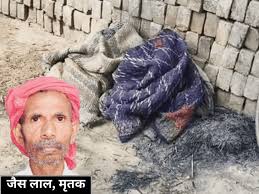
A watchman in Bhadohi, who was set on fire with petrol, passed away at 5:00 AM on Tuesday morning. The elderly man, who had sustained severe burns, was undergoing treatment at BHU (Banaras Hindu University), where he breathed his last. He had gone to the Village Head’s residence to collect a pipe needed for repairing a handpump. During this visit, an altercation broke out with the Village Head’s husband, who remarked, “You didn’t vote for me, did you? In that case, I won’t get any of your work done.” The dispute subsequently escalated into a physical altercation. Following the scuffle, the Village Head’s husband and her son doused the watchman with petrol and set him on fire. In this incident, the watchman sustained burns covering approximately 70 percent of his body. This entire incident took place in Pipergaon, located within the jurisdiction of the Gyanpur Kotwali police station. Jais Lal Saroj (55), a resident of Pipergaon, served as a watchman for the Gyanpur Kotwali police station. His wife, Phoolkumari, has been suffering from an illness (paralysis) for the past three years. Jais Lal Saroj is survived by six children—five sons and one daughter. His sons are Kadedeen (32), Raju (30), Sanjay (25), Ashuraj (23), and Santosh (20), while his daughter is named Priya Saroj (17). On Monday morning at 7:30 AM, Jais Lal rode his bicycle to the home of the village’s *Gram Pradhan* (Village Head), Chanda Devi, to collect a pipe required for handpump repairs. The distance between their respective homes is approximately one kilometer. Upon his arrival, the Village Head’s husband, Ramnayak, confronted him, saying, “You didn’t vote for me, did you? Then I won’t get any of your work done. Get out of my house… go to the Secretary instead.” In response, the victim, Jais Lal Saroj, asked, “If you are the *Pradhan*, why should I go to the Secretary? Please provide the pipe needed for the handpump repairs.” His request for the pipe enraged them. Ramnayak retorted, “Don’t talk back to me; leave immediately, or else I will start beating you.” At that very moment, his son, Kamlesh, poured petrol over the victim. When the victim attempted to flee the scene, he was set on fire using a matchstick. Upon receiving news of the incident, local villagers rushed to the spot and transported the injured elderly man to the hospital. He was initially taken in critical condition to the Maharaja Balwant Singh District Hospital in Gyanpur. From there, he was referred to the Trauma Center—and subsequently to BHU, Varanasi—for advanced medical treatment. According to his family members, he passed away early Tuesday morning while undergoing treatment. **Son Accuses the *Pradhan’s* Husband** The victim’s 17-year-old daughter, Priya, stated that she had gone to visit her brother’s in-laws’ home. She learned of the incident via a phone call around 8:00 AM, after which she immediately rushed back home. Meanwhile, the deceased’s son, Santosh Saroj, has alleged that his father was doused with petrol and burned alive. He has accused Ramnath Yadav (alias Ramnayak) and his son, Kamlesh Yadav, of being involved in the incident. **Victim’s Family Demands ₹1 Crore** The deceased’s elder brother, Babu Ram Saroj, has demanded strict action against the accused. He stated that rigorous measures must be taken against the culprits to ensure justice for the family. Additionally, he has demanded financial assistance of ₹1 crore from the government, a plot of land measuring one *bigha*, and that the government assume responsibility for the education of the deceased’s children. He further demanded that “bulldozer action” (demolition) be taken against the properties of those accused in the incident. **Police Force Deployed in the Village** Given the situation in the village, a heavy police force has been deployed. During this time, various political and social activists—including Bhim Army District President Pramod Kumar Chaudhary, District General Secretary Vinod Gautam, Azad Samaj Party State Secretary Ashok Gautam, and the Organizing Secretary—arrived to meet with the victim’s family. Bahujan Samaj Party District President Shiv Narayan Gautam, Mirzapur Division In-charge Ramashankar Saroj, Pappu, and Rajesh Gautam were also present. Furthermore, Lok Janshakti Party State President Rajiv Paswan, District President Vikas Dubey, Organizing Secretary Dhananjay Dubey, and State General Secretaries Ashutosh Gaharwar and Avneesh Tiwari also reached the scene. **Superintendent of Police Abhimanyu Manglik Stated:** “We have received information regarding the incident, and the accused have been taken into custody for interrogation. The police are conducting an investigation while taking all aspects of the case into consideration.” The police have registered a case against Kamlesh Yadav in this matter under Sections 109(1), 118(1), and 101(1), as well as under the SC/ST Act. Further legal action will be initiated only after the investigation is complete. Raj Kumar | Bhadohi Courtesy: Hindi News
Haunted Histories Of Faith And Dalit Christian Women’s Voices In Malayalam Literature
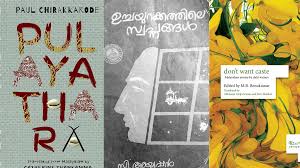
From the spectral testimony of Rosykutty to the everyday defiance of schoolgirls, these texts challenge the histories produced by upper-caste Kerala literature, which frequently marginalises or silences Dalit experiences. Dalit Christian literature emerges from a space of historical rupture, where the Dalit Christian self is continually compelled to view itself through the oppressive caste gaze. Conversion held the promise of equality, but caste ‘marks’ the body and name anyway, creating a fracture of being spiritually Christian, however socially treated as Dalit. Positioned within this hyphenated identity of being both Dalit and Christian, such writing becomes a crucial archive of resistance, recording the lived contradictions of Brahmanical Christianity and casteist society. The formation of Dalit Christian identity is inseparable from Kerala’s specific caste history, Christian institutional structure, and twentieth-century reform movements. Kerala’s caste order was structured not only around untouchability but also ‘unseeability’, with agrarian slavery binding communities such as the Pulayas and Parayas to upper-caste landlords (Mohan, 2015). By the twentieth century, Kerala witnessed powerful anti-caste and reform movements led by figures such as Ayyankali and Poykayil Appachan, that politicised questions of dignity, education, and collective mobilisation. These movements produced a new consciousness that inevitably entered literary production (Mariya, 2023). Crucially, such narratives also register the invisible burdens borne by Dalit Christian women, domestic labour, their embodied trauma, and systematic denial of speech within both caste society and ecclesiastical structures. The Quiet Work of Sustaining Family and Caste Honour When Paul Chirakkarode (1963) wrote Pulayathara, he was responding not only to caste oppression within Kerala, but also to the concrete social realities of the state, agrarian landlordism, anti-caste movements and Syrian Christian dominance within the church, alongside the persistence of Brahmanical hierarchies within both Hinduism and Christianity. Considered the first Dalit-Christian novel, Pulayathara (Pulaya Home/Land) reads as a yearning for belonging and dignity in a society that denied both. In Brahmanical Kerala, Pulayas and other ‘slave castes’ were historically landless, tied to the soil as bonded labourers but never permitted to own or inhabit it as their own. Conversion to Christianity appeared to offer a threshold into stability, access to mission land, the possibility of settlement, and a fragile claim to space, but Chirakkarode reveals how this ‘home’ was never truly theirs. The novel begins in the fields of nineteenth-century Kerala, where Thevan Pulayan bends over soil that will never belong to him. “This thara is all I have” (p. 12), he tells his son Kandankoran one evening, pointing to their fragile hut. During a particular instance following a minor mistake, Thevan is evicted without mercy, his home declared a temporary concession rather than his right. Dispossessed and humiliated, Thevan and Kandankoran seek refuge in the house of Pathrose, a Pulayan who has converted to Christianity. Kandankoran falls in love with Anna Kidathi, Pathrose’s daughter, but marriage requires what he still lacks: a home. To secure it, he converts, becoming Thomas. This new name does not grant him a new social body. He is mocked as a poocha kristiyani, a fake Christian, as his spiritual skin is still stained by untouchability. The soil, songs, and soul of his Pulaya heritage continue to call to him, reminding him and the readers of the emotional and cultural cost of leaving one world only to enter another that never truly accepts him. “He thought to himself, what a cursed creature he was!” (p. 115). Now, in this narrative, conversion and dignity are articulated through male crisis as in Thevan’s eviction, Kandankoran’s humiliation, and Thomas’s fractured identity. But the structure of that crisis depends on women. Anna is the reason for conversion, marriage, and settlement. Her body becomes the site that negotiates caste mobility, while her subjectivity remains unrecorded. This asymmetry reveals how Dalit Christian women occupy a precarious place within the intersection of caste and religion. The ‘search for home’ is therefore gendered. Men seek land and recognition; women sustain the fragile domestic space through labour and emotional endurance. After marriage, Anna Kidathi lives only a few hundred yards from her natal home, but never visits it because Kandakoran refuses to accompany her, knowing her mother disapproves of him. Anna fears that going alone would result in society labelling her an ‘incapable woman’. Her body marks the shift from daughter to wife, but she has no agency over movement between these spaces. When the narrator describes “a mist-like barrier” (p. 130) between the two houses, it signifies how caste anxiety and patriarchal norms quietly enforce her emotional and spatial exile despite physical proximity. Her longing intensifies the silencing that operates within both the household and the church. In such contexts, literature becomes the only viable space for articulation. This is powerfully echoed in C. Ayyappan’s short story Prethabhashanam (The Ghost Speaks), first published in his 1986 collection Uchayurakkathile Swapnangal (Dreams in the Afternoon Sleep), where those who were denied a voice in life return as ghosts to narrate their suffering. As John (2019) observes, “these characters were silenced and never given answers. Their ghostly afterlife becomes a paradoxical rebirth, an additional dimension of freedom that allows them to speak while still bearing the weight of their human wounds.” Haunting, Silence, and the Weight of Injustice Prethabhashanam unfolds through an unsettling monologue, the voice of Rosykutty, a Pulaya woman who returns as a ghost not to frighten but to finally speak. Sixteen days after her death, she enters the body of Kunchako’s sister, a Syrian Christian girl, to reveal the truth of her exploitation and death. In life, Rosykutty was only fifteen when Kunchako, an upper-caste man, seduced and abused her. When she became pregnant, he spat on her and beat her for daring to carry his child. As the story progresses, we find out that Rosykutty’s mother was also a victim of sexual exploitation by Kunchako’s father, revealing a haunting cycle of violence passed down through generations. This exposes Rosykutty as Kunchako’s illegitimate half-sister. Upon knowing, the spirit condemns God by asking, “How can an upper caste Christian have a Dalit girl
Dalit woman, UPSC AIR 1 at 22: How Tina Dabi topped India’s toughest exam in her first attempt

In May 2016, when the results of the Union Public Service Commission (UPSC) Civil Services Examination were announced, one name quickly travelled across the country: Tina Dabi. At just 22 years old, the Delhi-based student had secured All India Rank 1 in the 2015 UPSC exam and she had done it in her very first attempt. But the achievement carried a deeper significance. Dabi became the first Dalit woman to top the civil services examination, a moment many saw as both a personal triumph and a symbol of changing social realities in India. Her story is not just about a difficult exam cleared at a young age. It is about ambition, discipline, and the quiet power of persistence. Scroll down to read more. A childhood shaped by education Tina Dabi was born on 9 November 1993 in Bhopal, Madhya Pradesh. Her family later moved to Delhi in 2005, where she spent most of her formative years. Education was always central to her upbringing. Both her parents were engineers; her father, Jaswant Dabi, served in the Indian Telecom Service, while her mother, Himani Dabi, was an officer in the Indian Engineering Services. Growing up in a household that valued learning meant expectations were high, but it also meant support. Teachers and classmates often noticed her academic focus early on. She studied at the Convent of Jesus and Mary in Delhi, where she consistently performed well in school. Later, she joined Lady Shri Ram College for Women (LSR), Delhi University, one of India’s most prestigious colleges, graduating with a degree in political science. At LSR, she wasn’t just another student preparing for exams. She topped her college and was recognised as “Student of the Year,” reflecting both academic excellence and leadership potential. The decision to attempt UPSC For many students in India, the civil services exam is a distant dream, an exam known for its vast syllabus and extremely low success rate. Dabi decided to pursue it while still in college. Political science, her graduation subject, also became her optional subject for the UPSC examination, helping her build on what she had already studied deeply. Unlike many aspirants who spend years attempting the exam, she appeared for it only once and cleared it at the very first attempt. The scale of the achievement is difficult to overstate. Every year, hundreds of thousands of candidates apply for the UPSC exam, yet only a few hundred finally enter the prestigious Indian Administrative Service (IAS). At just 22 years old, Dabi finished ahead of everyone else in the country. A moment that sparked national conversation Her result triggered enormous media attention. News channels, newspapers and social media celebrated the young topper who had emerged from Delhi’s academic circles. But alongside admiration came another conversation, about caste and opportunity. As a Dalit woman topping India’s most competitive exam, Dabi’s success challenged deeply entrenched stereotypes about merit and social mobility. In fact, she later recalled that while congratulatory messages poured in immediately after the results, some media outlets quickly began asking about her caste rather than her preparation strategy. For many observers, the episode highlighted how achievements by individuals from historically marginalised communities often carry a larger social meaning. From topper to administrator After clearing the exam, Dabi joined the 2016 batch of the Indian Administrative Service (IAS) and was allotted the Rajasthan cadre. During her training at the Lal Bahadur Shastri National Academy of Administration in Mussoorie, she was awarded the Director’s Gold Medal, given to the best trainee officer. Her first posting came in 2017 as an assistant collector in Ajmer, Rajasthan. Over the years, she held several administrative roles in the state, working in areas ranging from governance to development initiatives. She later served as district collector in Jaisalmer and is currently posted as collector and district magistrate of Barmer in Rajasthan, one of the state’s largest districts. More than an exam result UPSC toppers often fade from public conversation after their results. Tina Dabi did not. Part of that is because of the larger story attached to her success, a young woman from a scheduled caste community rising to the very top of India’s most prestigious examination. But another reason is simpler: her journey represents the quiet possibility that education can reshape lives. At 22, when most graduates are still uncertain about their next step, Tina Dabi had already crossed one of the toughest academic barriers in the country. For thousands of UPSC aspirants studying late into the night across India, her story remains a reminder that the exam may be daunting, but sometimes, the first attempt is all it takes. Courtesy : TOI Note: This news is originally published on https:/timesofindia.com/bha and is used purely for non-profit/non-commercial purposes, especially human rights
Rahul’s citizenship plea: HC seeks papers from Centre

Lucknow: The Lucknow bench of the Allahabad high court Monday sought relevant records from the Union ministry of home affairs while hearing a petition alleging that Congress MP Rahul Gandhi is a British citizen. The single-judge bench of Justice Rajeev Singh scheduled the next hearing in the matter for March 19. The petition was filed by S Vignesh Shishir, a BJP worker in Karnataka, who has challenged the Jan 28, 2026, order of the special MP/MLA court in Lucknow, which had rejected his plea to order registration of an FIR against Gandhi. The MP/MLA court had said it was not competent to decide the citizenship issue. Hearing the matter on Monday at length, the bench also asked the union govt counsel, Raj Kumar Singh, about the action taken by the Centre on a complaint moved against Rahul’s alleged British citizenship. Courtesy : TOI Note: This news is originally published on https:/timesofindia.com/bha and is used purely for non-profit/non-commercial purposes, especially human rights
A case has been filed based on a complaint that a Dalit was run over by a tractor and his leg was broken.
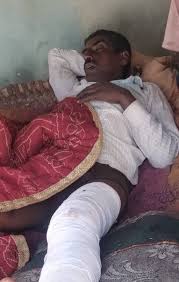
Sumerpur, Hamirpur. A complaint was filed with the police regarding a tractor that ran over a Dalit standing at a crossroads in the village of Kaithi in the local area. The victim’s wife filed a case alleging that Kallu, the village headman, climbed on the door, abused him, and threatened to kill him after he was asked to seek medical treatment. The incident occurred on March 4th. In filing the case, Jahari, a resident of Kaithi, stated that her husband, Kallu, was standing at the crossroads when Kariya, a resident of the village, drove a tractor over his husband’s leg, breaking his leg. This resulted in a broken leg. Angered by the request for medical treatment, Mohit Singh, along with his brother Rohit Singh and village resident Kamlesh Kori, came to the door, abused him, and threatened to kill him. Based on Jahari’s complaint, the police have filed a case against the three under serious sections, including Dalit harassment. Brijendra Kumar Courtesy: Hindi News
Young man attacked with hot iron rods on his legs in Sonipat: Accused of snatching cash, mobile phone, and gold jewelry; referred to PGI Rohtak

A case has come to light in Sonipat district where a young man was allegedly attacked with hot iron rods, seriously injured, and robbed near a hotel. Based on a complaint from the victim’s family, police have registered a case under various sections and the SC/ST Atrocities Act and have begun an investigation. Attack near Bismillah Hotel The victim’s elder brother, Virendra Kumar, a resident of Gurugram, stated in his complaint to the police that his younger brother, Anil, was present at the Bismillah Hotel on Matindu Road between 9 and 9:30 pm. It is alleged that some hotel employees and other youths attacked him at that time. The complaint states that the accused include Aavesh Ansari’s son and other hotel employees, whom the police can identify. Attacks on legs with hot iron rods According to the complaint, the accused brutally attacked Anil, striking him multiple times with hot iron rods. The attack caused severe injuries to both his legs and caused profuse bleeding. The family alleges that the accused intended to seriously injure him. Cash, Mobile Phone, and Gold Jewelry Taken The family alleges that during the assault, the accused also took Anil’s belongings. These included ₹430 in cash, a mobile phone, and his wife’s gold jewelry worth approximately ₹9,500. It is reported that after forcibly snatching these items, the accused fled the scene. Referred from Kharkhoda Hospital to PGI Rohtak Upon learning of the incident, the family immediately called 112 and informed the police. Anil was then taken to the Civil Hospital, Kharkhoda, where doctors provided first aid. Later, due to his condition, he was referred to the Trauma Center, PGIMS, Rohtak. Doctors from the orthopedic and surgical departments treated him. According to the complainant, police officers also arrived at the hospital, including one identified as Sandeep. They recorded the statements of the injured Anil and his brother, Virendra Kumar, on camera. Case under several sections, including the SC/ST Act The police have registered a case under sections 115, 118(1), 118(2), 303, 304, and 3(5) of the Indian Penal Code (IPC) and section 3(2)(va) of the SC/ST (Prevention of Atrocities) Act. Since section 303(1) is not available on the CCTNS system, 303 BNS has been registered for now. After preliminary investigation, the case file has been forwarded to the competent authority, ACP Rajdeep Mor, who will investigate the matter further. Courtesy: Hindi News
CPM demands action over custodial death of dalit youth
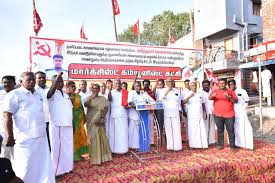
The Communist Party of India (Marxist) has condemned the alleged custodial death of a 26-year-old Scheduled Caste youth in Sivaganga district and demanded strict action against the police personnel involved. The Communist Party of India (Marxist) has condemned the alleged custodial death of a 26-year-old Scheduled Caste youth in Sivaganga district and demanded strict action against the police personnel involved. CPM state secretary P. Shanmugam said the death of Akash, a resident of Krishnarajapuram in Manamadurai, appeared to be a “brutal lock-up killing”. He alleged that the youth had been subjected to severe torture while in police custody. Shanmugam demanded that a murder case be registered against the police personnel involved and that they be immediately arrested. The party also urged the government to provide relief to Akash’s family under the Scheduled Castes and Scheduled Tribes (Prevention of Atrocities) Act, including a government job for one of the family members. According to the CPM statement, Akash and four others had a quarrel with two men, Jayakumar and Alagar, in Krishnarajapuram on March 5. Later that night, the five youths allegedly attacked the two men with sharp weapons near Zion Nagar in Manamadurai. The injured men were admitted to the Government Hospital in Manamadurai. Police arrested Akash and the four others on March 6 but allegedly did not inform the family about where they were being held. On the night of March 7, police informed Akash’s parents that he had been admitted to Government Rajaji Hospital. When the family reached the hospital, they reportedly found that Akash’s leg was fractured. According to them, Akash said the injury was caused after police dropped a large stone on his leg during custody. Police later informed the family on the morning of March 8 that Akash had died. The four others arrested in connection with the case have been lodged in Ramanathapuram prison. Courtesy : News Today Note: This news is originally published on https:/newstoday.com/bha and is used purely for non-profit/non-commercial purposes, especially human rights
‘Sickening’: Meghalaya CM condemns assault on Manipur woman, Assam transgender person in Delhi park

Meghalaya Chief Minister Conrad Sangma on March 9 strongly condemned an alleged racial assault on two people from the Northeast in New Delhi, describing the incident as “sickening” and urging authorities to take stringent action against the perpetrators. The alleged attack took place near the Saket District Court Complex in the Malviya Nagar area on Sunday evening, where a young woman from Manipur and a transgender person from Assam were reportedly assaulted by a group of men in a park, raising fresh concerns over the safety of Northeastern residents in the national capital. Reacting to the incident, Sangma said he was angered by the repeated attacks on people from the Northeast living in mainland India. “The physical attack on two of our people from Manipur and Assam near Saket Court, Delhi is sickening. Racial bullying should not be accepted as the new normal and we must act against it. Urge the authorities to take stringent action,” the chief minister wrote on social media. According to preliminary accounts, the victims were taking a walk in the park near the court complex when a group of youths allegedly began passing racially derogatory remarks at them. When the woman objected to the comments, the situation reportedly escalated into a confrontation. The victims alleged that the group then physically assaulted them, punching them and striking them with belts while hurling abusive slurs. One of the assailants allegedly used derogatory terms during the altercation. Sources also indicated that the victims had faced similar verbal harassment in the locality on earlier occasions. In a statement, the Delhi Police confirmed that a team responded to information about an alleged assault near the Saket court complex. According to the police, the woman from Manipur and her friend were walking in the park when a group of men passed remarks at them, leading to an argument. “When one of the girls objected to the comments, the situation escalated and she was reportedly assaulted by the accused,” police said. The injured woman was later taken to Safdarjung Hospital for medical examination and treatment. Authorities said that, according to preliminary reports, she is in stable condition and has suffered minor injuries. Police officials said they are in constant touch with the victims and assured that strict action would be taken against those responsible. The matter is currently under investigation. The incident comes just days after another case of racial abuse in the capital sparked widespread outrage. In that case, a Delhi resident, Harsh Singh, was booked for allegedly racially abusing three women from Arunachal Pradesh following a dispute over repair work at their rented apartment. The back-to-back incidents have renewed concerns about racial discrimination faced by people from Northeast India in metropolitan cities and prompted calls for stronger enforcement of laws against hate crimes and harassment. Courtesy : India Today NE Note: This news is originally published on https:/indiatodayne.com/bha and is used purely for non-profit/non-commercial purposes, especially human rights
Rahul silent when homes of minorities demolished, acting like BJP’s agent: Industries minister

Kochi: Opposition leader in Lok Sabha Rahul Gandhi often acts like BJP’s agent and was its pawn when AAP leader Arvind Kejriwal was imprisoned, alleged industries minister P Rajeeve on Sunday. Rajeeve was responding to Congress leader Gandhi’s attack on CPM during the concluding ceremony of Puthu Yuga Yatra in Thiruvananthapuram on Saturday. The minister criticised Gandhi for neglecting his political responsibilities to the people and country during crucial times by going abroad for celebrations. He said people wouldn’t take Gandhi’s declarations seriously. “Gandhi should act with an understanding of the current situation in India. However, govt led by his party in Telangana and Karnataka demolished homes of minorities with bulldozers, but he remained silent. The govts there are acting against minorities just as BJP does,” Rajeeve alleged. Earlier, Gandhi was upset about central agencies not imprisoning chief minister Pinarayi Vijayan, and now it is about not filing new cases, Rajeeve said. “Everything was scrutinised to file cases against the chief minister, with Congress providing the necessary support, essentially working for BJP. UDF’s announcement of five guarantees was made to counter state’s achievements, but no one will take it seriously based on their experience. The memories of the past will come to mind for those who hear it,” he said. “During LDF govt’s tenure, remarkable achievements were made such as realising the Wayanad township, which no other govt could accomplish, and inaugurating Wayanad tunnel road. As part of inclusivity, Perumbalam Bridge was realised and the first phase of Chellanam tetrapod sea wall project was completed, with the second phase on the way,” he added. Courtesy : TOI Note: This news is originally published on https:/timesofindia.com/bha and is used purely for non-profit/non-commercial purposes, especially human rights