
Tribal-dalit collective drops plan to field independent in Mananthavady
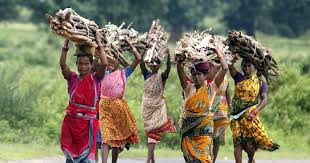
Kozhikode: Collective of adivasi and dalit organisations including Adivasi Gothra Mahasabha (AGMS) has decided to withdraw its earlier plan to field an independent candidate in Mananthavady constituency in assembly elections. AGMS and various groups including Ambedkarite Democratic Front has announced support for UDF, including in all the three constituencies of Wayanad. AGMS coordinator M Geethanandan said they have submitted a charter of demands focusing on dalit and adivasi issues to UDF leadership which has assured that it will be considered. At the same time, the organisations however said that despite the presence of eligible candidates from tribal communities such as Paniya, Adiya, Kattunayakan and Vettakuruma, both the left and right fronts have consistently sidelined them while selecting ST candidates in Wayanad. They said the decision to drop the plan for an independent candidate was influenced by the early announcement of election schedule and lack of adequate time for preparations. They said they do not want to miss the opportunity to politically challenge the 10-year-long continuity in power which had undermined dalit and adivasi rights. Organisations levelled a series of allegations against Left govt, including alleged underutilisation of Rs 7,411 crore in SC/ST development funds, disruption of e-grantz distribution for students and delays in rehabilitation for nearly 500 tribal families affected by landslides and floods. They also alleged lack of land rights, housing, employment and proper educational support for tribal communities. Courtesy : TOI Note: This news is originally published on https:/timesofindia.com/bha and is used purely for non-profit/non-commercial purposes, especially human rights
Woman who married herself in 2022 starts protest against transgender bill
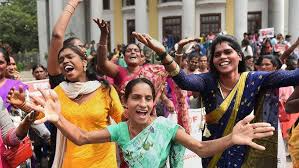
Vadodara: She shot to limelight four years ago when she redefined personal identity by becoming India’s first woman to embrace sologamy. Kshama Bindu has once again stepped into the public sphere and claimed that the proposed Transgender Persons (Protection of Rights) Amendment Bill 2026 will threaten her sologamy and discourage others from pursuing their freedom to choose their identity. Wearing her bridal saree, Kshama, who married herself in 2022, has taken to the streets in Delhi to protest against the bill, and she soon plans to organise a flash mob as well. “I chose to marry myself as I love my own identity. I am transmasculine, which means I identify myself more in a masculine way. I had even begun the process to remove my breasts and apply to change my gender from female to male on my Aadhaar card,” Kshama told TOI. “But this proposed bill has halted my plans. It forces transgender people to get govt approval for their identity. The bill erases centuries of India’s gender-diverse history. If the bill is passed, then I and many others like me won’t be able to assert their identity,” Kshama, 28, said. She recently wrote to the police department seeking permission for a hunger strike. “I have joined the protests against this bill. Why should we validate our gender identity before the govt? It is a violation of my right and dignity,” Kshama added. Kshama married herself in an elaborate ceremony in the presence of her friends in June 2022. Wearing a red bridal saree, she took pheras amid chanting of mantras and later danced to a few Bollywood numbers as well. “I am so much in love with myself and want to spend my whole life in my own company,” Kshama had said on her wedding day. Courtesy : TOI Note: This news is originally published on https:/timesofindia.com/bha and is used purely for non-profit/non-commercial purposes, especially human rights
HC Stays Eviction Of Dalit Women’s Stalls In Jangaon
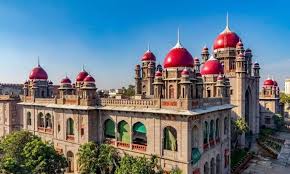
The dispute arose on March 16 when municipal officials, along with police, reached the site with machinery to remove the structures. WARANGAL: The High Court has granted interim stay on eviction of two stalls run by Dalit women near the Jangaon District Collectorate, directing authorities to halt demolition until further orders. The petition was filed by Palamakula Chinna Manjula and Potkuri Vijayalakshmi, who operate a tea stall and a Vijaya Dairy outlet set up under the ‘Indira Mahila Shakti’ scheme. The dispute arose on March 16 when municipal officials, along with police, reached the site with machinery to remove the structures. The women resisted the move, stating that the units were established with loans of ₹3 lakh each under DRDA support and inaugurated six months ago. In their petition, the vendors alleged that the eviction was initiated without prior notice and raised concerns over disconnection of electricity to their stalls. They also submitted complaints alleging harassment by officials and sought action under relevant provisions. After hearing the matter, the court directed authorities to stop eviction proceedings pending further examination. The order provides temporary relief to the petitioners, while the case remains under judicial consideration. Puli Sharath Kumar Courtesy : Deccan Chronicle Note: This news is originally published on https:/deccanchronicle.com/bha and is used purely for non-profit/non-commercial purposes, especially human rights
Thugs Illegally Occupy Ancestral Home in Lucknow: Locks Broken; Casteist Slurs and Death Threats Issued Upon Protest
A case of forceful occupation of an individual’s ancestral home has come to light in Sarosa Bharosa village, located within the jurisdiction of the Para Police Station in Lucknow. It is alleged that the named accused individuals broke the locks of the house and took possession of the property. When the victim protested against this act, he was also threatened with death. According to reports, Rinku Kumar—son of Bhairav Prasad and a resident of Purana Tikaitganj, Lucknow—owns a plot measuring approximately 1,400 square feet (Gata No. 1333) in Sarosa Bharosa village, where he had constructed a house. Due to family reasons, Rinku had locked up his home and moved to his ancestral village some time ago. The victim, Rinku Kumar, alleges that upon returning to his property, he found the house locks broken. Several individuals were found residing inside illegally. Upon inquiry, it was revealed that Sanjay Singh and Saddam Ghazi—both from the local area—along with 8 to 10 unidentified accomplices, had collectively and forcefully occupied the house. ‘Thugs Used Casteist Slurs’ According to Rinku Kumar, when he asked the accused to vacate the premises, they became aggressive. It is alleged that the thugs hurled casteist slurs and abuses at him, and openly threatened to kill him. The victim further stated that the accused boasted about having carried out similar illegal occupations in the past, claiming that no one could touch them or hold them accountable. Upon receiving information regarding the incident, the Para Police initiated immediate action. An investigation into the matter is currently underway, based on the written complaint filed by the victim. Under the directives of the Station House Officer (SHO), the process of registering a First Information Report (FIR) is in progress, and relevant evidence is being gathered. Police officials have stated that, given the gravity of the matter, strict action will be taken against the culprits. They further emphasized that any attempt to undermine law and order will not be tolerated under any circumstances. Shivanshu Kumar Gupta Courtesy: Hindi News
Dalit Family Attacked in Badlapur: Incident Stems from Land Dispute; Case Registered Against 7 Individuals
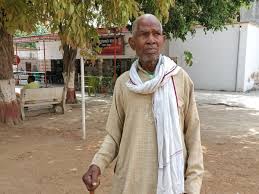
An incident involving an attack on a Dalit family and the use of caste-based slurs over a land dispute has come to light within the jurisdiction of the Badlapur Kotwali police station. Acting on a complaint filed by Jiyalal—son of Khaderu and a resident of Bhatehra village—the police have registered a case against seven named individuals and several unidentified persons. In his complaint, Jiyalal stated that a parcel of land (Plot No. 55/0.117) located in Jagatpur (Kamalpur) village is officially recorded in the land records (Khatoni) under his wife, Shyam Dulari’s, name. The partition of this specific land had already been finalized by the Sub-Divisional Magistrate’s (SDM) court under Section 176 of the relevant laws. According to the victim, several villagers—including Siddhinath Tiwari, Arvind Tiwari, Dheeraj, Ashish Tiwari, Lalsahab, Dinesh Tiwari, and Ganesh Tiwari—were attempting to forcibly install a handpump on this very land that had been subject to partition. When Jiyalal objected to their actions, the accused individuals verbally abused him using casteist slurs and chased him away while issuing death threats. Jiyalal managed to escape the scene and reach the Badlapur police station, where he reported the incident. Given the gravity of the matter, the Badlapur Kotwali police have registered a First Information Report (FIR) against the seven named individuals and the unidentified persons under various sections of the law, including the SC/ST Act. Inspector-in-Charge Shesh Kumar Shukla confirmed that a case has been registered regarding this incident and that an investigation has been initiated. He gave assurances that strict legal action would be taken against the culprits. Bipul Kumar Singh Courtesy: Hindi News
Queer, trans collective to protest Centre’s amendment bill
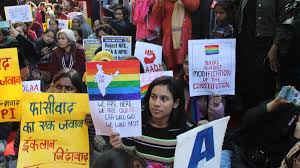
Panaji: The Goa Queer and Trans Collective will protest at Azad Maidan, Panaji, on March 22 against the Transgender Persons (Protection of Rights) Amendment Bill 2026 presented in the Lok Sabha. They called it a regressive law that bases itself on transmedicalism (the idea that gender identity must be validated through medical or biological criteria) and said it will fail to protect trans persons and exploit vulnerabilities. The collective said the legislation, if passed, will dismantle constitutional protections, criminalise realities, and subject transgender individuals to invasive control. It said the bill creates arbitrary classification within transgender persons without scientific basis, relying on vague standards such as “genuine oppressed persons” or “those in need of protection”. “It recognises only socio-cultural groups while excluding others, despite all transgender persons having the constitutional right to self-determination,” the collective said in a press note. “The bill shifts the foundation of gender recognition from self-perceived identity to state-controlled medical certification, placing transgender persons under invasive scrutiny by administrative and medical bodies,” it added. The bill narrows the definition of transgender to exclude transwomen and transmen, trans-masculine and trans-feminine persons, and erases genderqueer and non-binary identities and conflates intersex variations with gender identity, reflecting a lack of social understanding, the collective added. Courtesy : TOI Note: This news is originally published on https:/timesofindia.com/bha and is used purely for non-profit/non-commercial purposes, especially human rights
Rahul to visit Chaibasa on March 31 to address Congress dist presidents of 2 states
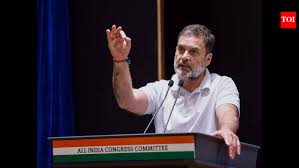
Ranchi: Congress MP and leader of opposition in the Lok Sabha, Rahul Gandhi, will make a day-long visit on March 31 to address newly appointed district party presidents of Jharkhand and Odisha, the state Congress unit announced here on Saturday. State Congress president Keshav Mahto Kamlesh said the party has decided to organise 10-day training camp from March 22 to 31 for the newly inducted district presidents in Chaibasa (West Singhbhum). “Rahul Gandhi will attend the programme to interact and guide all of us on the concluding day,” he said. Kamlesh said the Congress, which is part of the ruling alliance in Jharkhand, is conducting the programme as part of its ‘Sangathan Srijan Abhiyan’ (organisational rebuilding and strengthening) which was initiated about a year ago in the state. Kamlesh added that during the training, district presidents will be acquainted with the party’s rich history in various fields, will be trained to strengthen the party at the grassroots, establish better communication and coordination with workers, leadership capacity, among others. “This training camp will be significant for further strengthening the party in Jharkhand. During this period, district presidents will go on field visits for two days and establish communication with the people,” he said, adding that 35 district presidents from Odisha and 25 from Jharkhand will take part in the programme. On the party expelling former minister Yogendra Saw for three years for speaking against chief minister Hemant Soren and the alliance govt after the Hazaribag administration demolished his house two days ago to pave the way for NTPC’s coal mine project’s expansion, Kamlesh said, “No one is above the party and its set principles.” Courtesy : TOI Note: This news is originally published on https:/timesofindia.com/bha and is used purely for non-profit/non-commercial purposes, especially human rights
Reinventing Kanshi Ram
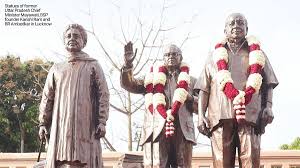
How the Dalit icon’s radical politics is being softened ON MARCH 15, India’s political class performed a familiar ritual of remembrance, except that this time it carried an unmistakable edge of competition. Across party lines, leaders queued up, on social media and at memorials, to pay tribute to Kanshi Ram, the founder of the Bahujan Samaj Party (BSP) and one of the most consequential mobilisers of Dalit political consciousness in post-Independence India. Describing him as a symbol of “empowerment and hope”, Congress leader Rahul Gandhi urged the government to confer the Bharat Ratna on him. Two days earlier at a public meeting in Lucknow, Gandhi also said that had Jawaharlal Nehru been alive, Kanshi Ram would have become a Congress chief minister. Uttar Pradesh Chief Minister Yogi Adityanath, in a message on X, described the BSP founder as a “pioneer of social justice” who “dedicated his entire life to the upliftment of the Dalits, the exploited, and the deprived”, offering his “humble tributes” to the Dalit icon. Samajwadi Party (SP) chief Akhilesh Yadav called Kanshi Ram a “hero of social change” and highlighted how he “secured a dignified place for the Bahujans within Indian society”, while also reiterating the need to carry forward the struggle for social justice envisioned by him and BR Ambedkar. BSP chief Mayawati paid homage to her mentor but also used the occasion to attack other parties for what she described as selective remembrance. She said that tributes to Kanshi Ram had become an “opportunistic fashion”, accusing parties like SP and Congress of invoking his legacy only for electoral gain. “It is due to Congress’ anti-Dalit mindset and mentality that BSP had to be created in the fit place,” she said. With crucial state elections on the horizon, not least in Uttar Pradesh, invoking Kanshi Ram has become as much a gesture of reverence as a signal of intent. His project of consolidating Dalit assertion, once seen as disruptive to established political hierarchies, is now claimed by parties that once stood in opposition to it. As a result, in this choreography of commemoration, the line between homage and appropriation keeps on blurring. The scramble carries an added urgency as every major party begins recalibrating its Dalit outreach. As the Dalit vote remained decisive in a fragmented electoral landscape, Kanshi Ram offered a potent symbol. For decades, he represented a distinct strand of political thought: organisational pragmatism, sharp anti-upper-caste rhetoric, and the creation of BSP, designed to convert the numerical strength of the “Bahujan” into power. Unlike Ambedkar, whose legacy now carries near-universal reverence, Kanshi Ram was once a more polarising and openly confrontational political figure. The “Ambedkarisation” allows parties across the spectrum to appropriate the BSP founder without inheriting the radicalism of his original project. What this produces is a subtle but consequential reframing—Kanshi Ram is no longer invoked primarily as a disruptor of caste hierarchies, but as a precursor to a more consensual, development-inflected politics of inclusion. His sharper edges, like his critique of entrenched social power, his insistence on independent Dalit political assertion, and his scepticism of upper-caste-led parties, are softened or omitted altogether. In their place emerges a curated Kanshi Ram: a social reformer rather than a political insurgent, a figure who can be seamlessly inserted into broader narratives of welfare, governance, and national progress. It is a process not unlike the earlier ‘sanitisation’ of Ambedkar, whose radicalism was gradually subsumed within a consensual national canon. This transformation also reflects the changing incentives of electoral competition. As Dalit voters become more mobile and less tethered to a single party, their symbolic capital has expanded. Political actors are therefore less interested in replicating Kanshi Ram’s autonomous model of mobilisation, which required long-term cadre-building and ideological discipline, and more in selectively borrowing from it features like the language of dignity, the invocation of representation, and the optics of outreach. The result is a shift from structural challenge to rhetorical accommodation. For example, for BJP, it means including Kanshi Ram in a calendar of Dalit icons. For SP, it entails celebrating March 15 as “Bahujan Divas” in all districts of Uttar Pradesh. With Dalit vote expected to play a decisive role in the 2027 Uttar Pradesh elections, the question is no longer who follows Kanshi Ram’s politics, but who gets to redefine it. In that contest, memory itself becomes a site of negotiation; it is a negotiation shaped not by fidelity to his methods, but by the strategic needs of the present. When Kanshi Ram began organising government employees in the 1970s, he was not seeking moral recognition but building the infrastructure of power. Born in 1934 in a Ramdasia Sikh family in Punjab, he worked briefly as a government scientist before turning to activism after encountering the writings of Ambedkar. But while Ambedkar had emphasised social reform and constitutional rights, Kanshi Ram was preoccupied with electoral arithmetic. He founded organisations with names that sounded like molotov cocktails: the All India Backward and Minority Communities Employees Federation (BAMCEF), and later, the Dalit Shoshit Samaj Sangharsh Samiti, or DS-4. Their purpose was clear: mobilise the oppressed majority—Dalits, Other Backward Classes and minorities—against what Kanshi Ram called the domination of the “15 per cent”, shorthand for upper castes. His most famous formulation captured the spirit of the project: “Jiski jitni sankhya bhaari, uski utni hissedari”, or, in other words, representation proportional to population. Democracy, he believed, was fundamentally a numbers game, in which the Bahujan, if it voted in unison, could rule. In 1984, he founded BSP, the vehicle that would convert this theory into power. The party’s early years were marked by sharp rhetoric and relentless grassroots mobilisation. Kanshi Ram travelled ceaselessly across North India, addressing small gatherings in dusty villages and industrial suburbs. His speeches were unsparing. He mocked Congress for co-opting Dalit leaders and accused upper castes of monopolising the state. For supporters, he was a revolutionary organiser, while for critics, he remained a divisive populist. More than four decades ago, when Netrapal Singh
85-Year-Old Dalit Woman Alleges Crores Worth Land Grab in UP’s Mainpuri, Claims Fraud and Coercion
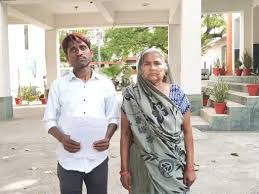
An 85-year-old Dalit woman in Mainpuri alleges her land worth crores was fraudulently transferred, claiming she was coerced into signing blank documents An 85-year-old Dalit woman has accused several individuals of fraudulently transferring her land worth crores in the Kurawali area of Mainpuri.Education news updates The victim, Resham Devi, has submitted a formal complaint to the District Magistrate, demanding strict action against the accused and cancellation of the alleged forged land documents. Allegations of Conspiracy and Coercion In her complaint, Resham Devi alleged that multiple individuals, including Ganesh Yadav, Raghunandan, Shailendra Kumar Yadav, Ajay Kumar, Vishal Diwakar, Ravi Gupta and Deepak Pal, conspired to cheat her. She claimed that the accused first contacted her and warned that her land was at risk, and told her that certain legal formalities were needed to “protect” it. “When I reached Kurawali, they took me in a car to Mainpuri and made me sit there for a long time,” she alleged. “I was not told anything clearly, but they kept asking me to put my thumb impression on papers.” Thumb Impressions Taken on Blank Papers According to the complaint, two of the accused got down from the car during the journey and later returned, after which they allegedly took Resham Devi to an office. There, she was made to put her thumb impression on multiple documents without being informed about their contents. “I was not told what those papers were. They just kept taking my thumb impressions,” she said. She further alleged that she was threatened with serious consequences if she spoke about the incident to anyone. Land Transferred Without Consent The alleged fraud came to light when the family later examined official documents. They discovered that the entire land under Gata number 299 in Mauza Sujarai Dehat had been transferred to Vishal Diwakar on March 9, 2026. Resham Devi has stated that she never agreed to sell the land and did not receive any payment for it. “I have not sold my land. I did not get any money. This has been done fraudulently,” she said. Suspicious Financial Transaction The documents also mention a cheque of Rs 5 lakh dated June 10, 2025, shown as part of an agreement. However, a bank inquiry reportedly revealed that the amount had already been withdrawn, raising further suspicion about the transaction. Family Alleges Caste Abuse and Threats The victim’s family has also alleged intimidation and caste-based abuse. According to them, when her son contacted one of the accused, he was abused using caste slurs and threatened with death. “They said they would kill the entire family if we pursued the matter,” the family alleged. Police Begin Investigation Following the complaint, local police have taken note of the matter. Lalit Bhati, Station House Officer of Kurawali police station, confirmed that an investigation is underway. “The complaint has been received. The matter is being investigated, and appropriate action will be taken based on findings,” he said. Courtesy : TOP Note: This news is originally published on https:/theobserverpost.com/bha and is used purely for non-profit/non-commercial purposes, especially human rights
Thakur, Dalit, Brahmin: Uttarakhand CM’s new Cabinet balances caste, regions
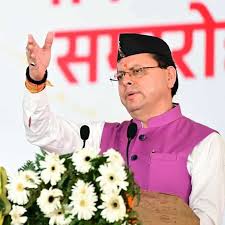
The Dhami Cabinet is now at its full strength, with 12 members. Inducting new faces into the Cabinet highlights the BJP’s strategy of balancing social and regional equations in the state ahead of the 2027 Assembly elections. Chief Minister Pushkar Singh Dhami has expanded his Cabinet, inducting five new faces. The Dhami Cabinet is now at its full strength, with 12 members. Inducting new faces into the Cabinet highlights the BJP’s strategy of balancing social and regional equations in the state ahead of the 2027 Assembly elections. While two ministers belong to the Thakur community, the newly-expanded Cabinet has one member each from the Dalit, Brahmin and Punjabi communities. The Garhwal region and the plains are represented by two ministers each, while the Kumaon region has a lone representative. Khajan Das hails from the Dalit community and has previously served as a minister. In the 2022 Assembly elections, the senior BJP leader won his seat by a margin of 11,163 votes. His political journey began in 2007 when he was elected from Dhanaulti. Bharat Singh Chaudhary, MLA, Rudraprayag Bharat Chaudhary (66) belongs to the Thakur community. Chaudhary is known for his strong command over Hindi, English, and Sanskrit. Before joining the BJP, he unsuccessfully contested the 2012 Assembly elections as an Independent. Ram Singh Kaida, MLA, Bhimtal (Nainital) Ram Singh Kaida, who began his political career with the Congress, contested the 2017 Assembly election as an Independent and won. Later, he gravitated toward the BJP and formally joined the party in 2021. Madan Kaushik, MLA, Haridwar Madan Kaushik is a five-time MLA. A former president of the BJP state unit, he has held various portfolios in previous state governments. Hailing from the Brahmin community, Kaushik commands a strong support base in the Haridwar region. Pradeep Batra, MLA, Roorkee A businessman with interests in hotels, retail and other sectors, Pradeep Batra is a third-term MLA from Roorkee. Batra, who won the 2012 Assembly election on a Congress ticket, joined the BJP prior to the 2022 polls. Ankit Sharma Courtesy : India Today Note: This news is originally published on https:/indiatoday.com/bha and is used purely for non-profit/non-commercial purposes, especially human rights