
Samajwadi Party drops I-PAC tie-up ahead of 2027 UP polls amid setback in West Bengal
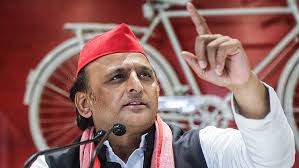
I-PAC, which has been handling the TMC’s election campaigns since 2019, had pitched its services to the SP as it prepares for the upcoming electoral battle in Uttar Pradesh. LUCKNOW: The Samajwadi Party has reportedly decided to call off its proposed pact with political consultancy firm Indian Political Action Committee (I-PAC) ahead of the 2027 Uttar Pradesh Assembly elections. The move comes in the wake of recent developments, including the Trinamool Congress’s poor performance in the West Bengal Assembly polls and the arrest of I-PAC director Vinesh Chandel by the Enforcement Directorate in connection with alleged financial irregularities in the alleged Bengal coal smuggling case. Sources said the agreement between the SP and I-PAC was close to being finalised, with the firm having already presented its campaign blueprint to the party leadership. However, no formal arrangement had been concluded. Party insiders indicated that SP chief Akhilesh Yadav was not particularly keen on engaging I-PAC and had only reviewed its presentation at the instance of the TMC leadership. With the firm now facing multiple challenges, the SP is unlikely to pursue further negotiations, sources added. I-PAC, which has been handling the TMC’s election campaigns since 2019, had pitched its services to the SP as it prepares for the upcoming electoral battle in Uttar Pradesh. On the other hand, sources also claimed that I-PAC, grappling with crises on multiple fronts, is in no position to take up fresh assignments at present. During the poll campaign in West Bengal, the Enforcement Directorate raided the I-PAC office in Kolkata, leading to a showdown between Chief Minister Mamata Banerjee and the agency. The firm, now led by Pratik Jain, was founded by Jan Suraj Party chief Prashant Kishor, who rose to prominence for designing election campaigns of political leaders including Prime Minister Narendra Modi in 2014, Bihar Chief Minister Nitish Kumar in 2015, Congress leader Rahul Gandhi in 2017, and the TMC. Prashant Kishor later left I-PAC to enter mainstream politics. His Jan Suraj Party made its electoral debut in the recently held Bihar Assembly elections but failed to open its account. Namita Bajpai Courtesy : TNIE Note: This news is originally published on https:/thenewindianexpress.com/bha and is used purely for non-profit/non-commercial purposes, especially human rights
Gulshan, a Dalit from Bijnor, was captured and thrown in front of a moving train… Who committed such brutality?
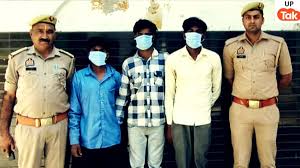
UP News: A shocking incident has come to light from Bijnor, Uttar Pradesh. A Dalit youth, Gulshan, was murdered here. The reason for the murder is shocking. Bijnor News: A shocking incident has come to light from Bijnor, Uttar Pradesh. He was murdered for the sake of honor. Gulshan, a Dalit youth from the village of Jujhela in the town of Syohara, had been in a love relationship with a young woman from the village of Rah Toli for the past three years. They even married against the wishes of their families. After the marriage, she lived with her family, but no one knew about it. But now a scandal has occurred. As soon as the girl’s family learned of the marriage, they became enraged. They then gave Gulshan a painful death. What happened to Gulshan? On the night of April 29-30, when Gulshan arrived at his girlfriend’s village to meet her, his murder was already planned. The girl’s brothers, Atar Singh, Pushpendra, and Rajneesh Saini, along with 10 to 12 of their companions, captured Gulshan and brutally assaulted him. It is alleged that the accused took him to the railway line passing near the village and pushed him in front of the oncoming Dehradun-Howrah Express train. He died after being hit by the train. Allegations from the deceased’s family The family arrived at the scene. The police took possession of the body and sent it for a postmortem. The family alleged that their son was murdered by the girl’s family. The victim’s family alleged that the police were treating the case as an accident, but it was actually murder. It should be noted that after a massive uproar, the police registered a case based on the complaint of the deceased’s father. The victim’s family then cremated Gulshan’s body. The police then interrogated the accused and revealed the entire matter. Police said this: Regarding the entire case, Amit Kishore Srivastava (SP East) stated that the police interrogated the accused, Atar Singh. He revealed that Gulshan and his sister had been in a love relationship for the past three years. They belonged to different castes. Their families were reluctant to allow the marriage. However, Gulshan took his sister to court and arranged a court marriage. To protect their social honor, they planned the murder and killed Gulshan. Police have arrested three accused in the case and sent all three to jail. Sanjeev Sharma Courtesy: Hindi News
Dalit student suicide: Kerala High Court seeks State’s response on professor Dr. M Kodanda Ram’s anticipatory bail plea

Dr M Kodanda Ram, a professor at Kannur Dental College, has challenged a sessions court’s order denying him anticipatory bail. The Kerala High Court Tuesday asked the State government to respond to an anticipatory bail plea moved by Dr. M Kodanda Ram, a dental college professor, who is accused in a case related to the suicide of a Dalit student Nithin Raj [Dr M Kodanda Ram v State of Kerala & ors]. Justice PV Balakrishnan also issued notice to the victim’s mother Latha and posted the matter for further consideration on May 15. Raj, who belonged to Dalit community, died on April 10 after he jumped from a building near the college. He had allegedly faced caste-based harassment from the faculty at Kannur Dental College. Dr. Ram, the head of department at the Kannur Dental College, is the prime accused in the case. Following a complaint by the student’s father, the police booked Dr. Ram and two other staff members for abetment of suicide and for offences under the Scheduled Castes and the Scheduled Tribes (Prevention of Atrocities) Act, 1989 (SC/ST Act). Dr. Ram and another faculty member Dr. Sangeetha Nambiar, had earlier approached a sessions court seeking anticipatory bail. While the sessions court granted relief to Dr. Nambiar on April 25, it denied anticipatory bail to Dr Ram. This prompted him to approach the High Court under Section 14A of the SC/ST Act, which provides for an appeal against orders of the special court, including denial of anticipatory bail. In his plea, Dr. Ram has denied allegations of caste-based harassment or abetment of suicide, stating that the student was under distress due to financial issues linked to a loan taken by him through a mobile application. He further said that recovery agents were harassing Raj and had even contacted a faculty member, listed as a reference contact. The college authorities had questioned the student over that, Dr. Ram’s plea said. It was shortly after this interaction that student allegedly committed suicide, he added. The plea was filed through advocates S Rajeev, V Vinay, MS Aneer, Anilkumar CR, Sarath KP, Dipa V, KS Kiran Krishnan, Akash Cherian Thomas, Azad Sunil, TP Aravind, Maheswar Padickal, Akshara S and Nivedita Rajeev. Praisy Thomas Courtesy : Bar And Bench Note: This news is originally published on https:/barandbench.com/bha and is used purely for non-profit/non-commercial purposes, especially human rights
BJP Bengal win dissolves the old Bhadralok order. It kept Dalits and their issues out
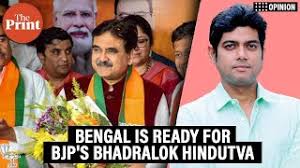
‘Bengal is caste-less’ is a hegemonic notion peddled by the Bhadralok. It swept the crucial question of Dalit struggle, first under the red carpet and then the blue. Among the results of five Assembly elections announced yesterday, Bengal’s will go down in history. May 4, 2026 shall be a red-letter day — not for the BJP, but for millions of Rajbanshi, Namo Shudra, Matua and several other Dalit communities across Bengal who had no say in the government and governance of the state since its independence, until now. It is often quoted that what Bengal thinks today, India thinks tomorrow, but not for Dalits. The paradox of intellectual and enlightened Bengal has been the constant invisibilisation of Dalits as a political constituency. “Bengalis have no understanding of caste,” said Kancha Ilaiah, in a conversation with journalist Chandrima Bhattacharya. Dalits account for 23.5 per cent of Bengal’s population — one of the highest among all states — and the state’s total Dalit population is second only to Uttar Pradesh. Yet the state has failed to produce a single Dalit leader since Independence. The reason is clear: the Bhadralok of Bengal do not reckon with caste, and decades of communist rule have further crystallised this phenomenon, which even the “Maa, Mati, Manush” clarion call failed to overcome in bringing Dalit issues to the fore. Dalits and their issues have been conspicuously absent from mainstream politics, and their concerns repurposed into a broader framework of class and left ideological pursuits, with the assumption that their struggles could be addressed without relinquishing Bhadralok (upper-caste) dominance. Dalit issues remained invisible in Bengal Politics and ideology run deep in Bengal: from local sports clubs to Durga Puja committees, the social sphere of Bengali society is organised around party politics, which further fragmented Dalit constituencies. However, this overarching party-based society did little to alleviate caste disparity. Dalits remained downtrodden; untouchability and caste-based violence were rife, and entry into temples was prohibited — the most recent example being the denial of Dalit entry into the 300-year-old Girdheshwar Temple in East Bardhaman district in 2025. Party politics invisiblised their struggle, while all efforts went into sustaining the hegemonic notion — peddled by the Bhadralok, who are primarily upper-caste and upper-class — that Bengal is “caste-less” and therefore better than other states. But this has been nothing more than sweeping the crucial question of caste, first under the red carpet and then the blue. Dalits in Bengal are dispersed across the state and comprise several sub-castes and communities. The Namo Shudra and Matua communities are spread across southern Bengal, especially in North 24 Parganas and Nadia. The Rajbanshis, another Dalit group, hold sway in north Bengal, especially in Jalpaiguri, Cooch Behar and Darjeeling. Other Scheduled Caste communities — Bagdi, Bauri, Mochi and Chamar — have a significant presence in Jangal Mahal, Midnapur and semi-urban constituencies across the state. Their aspirations are as diverse as their identities. Identity, among other things, remains one of the major struggles these communities face. The Matua and Namo Shudra communities trace their origins to undivided Bengal, and their primary concern to this day is citizenship and refugee status. The Rajbanshis of north Bengal have a long-standing demand for a separate state. Other Dalit communities are largely agrarian, with common concerns around education, employment and equality, issues that have largely gathered dust since Independence. Many reports, despite the much-proclaimed caste-less character of the state, suggest that segregation in classrooms and at drinking wells, as well as caste- and gender-based violence, are as ubiquitous as the urban legend of Bengal being a caste-less society. Dalits force their way into power in Bengal The BJP has not only given voice to these communities but also listened to their long-standing demands. Recognising the caste realities of a society as diverse as Bengal’s, and engaging with its communities’ demands, has been one of the key takeaways in this election campaign. The Namo Shudra and Matua communities have been promised fast-track citizenship through the previously enacted Citizenship Amendment Act, while the Rajbanshis have been promised a battalion named in their honour, in recognition of their historic resistance against Mughal suzerainty. But the most crucial factor was the consolidation of the diverse identities and aspirations of Dalit communities, which produced such a resounding and decisive result in this election. Urban and rural Dalits have different aspirations and are mired in contradictions of class identity. The interests of urban Dalits differ from those of rural constituencies, and with class hierarchy so deeply ingrained in Indian society, stitching these groups into a single cohesive bloc has been a difficult task, which the BJP had to overcome. This victory is not a one-off electoral manoeuvre by the BJP’s formidable machinery, but the result of ten years of continuous dialogue and outreach, which achieved what had seemed impossible a decade ago: the consolidation of the Dalit vote from a position of near-total invisibility in caste politics. It is also a testament to the Modi government’s consistent endeavour to secure dignity and parity for the community across every sphere of life, not only in admissions and recruitments. Charity began at home, with the BJP nurturing hordes of leaders from Dalit communities within its own cadre, successfully giving not just a platform but also a voice to the voiceless. The GYAN pillars upon which the foundation of a developed Bharat is to be built come at a great cost to the establishment that has worked tirelessly since Independence to fragment the very voices the Constitution and its makers resolved to protect. The BJP’s victory in West Bengal is symptomatic of the dissolution of the old order. This election stands in line with previous ones in substantiating the Modi government’s resolve to empower the most marginalised communities — politically, economically and socially. Aditi Narayani, (Edited by Prashant Dixit) Aditi Narayani is an associate professor at the Dr Ambedkar International Centre. She tweets @AditiNarayani. Views are personal. Courtesy : The Print
MP News: Dalit Family Allegedly Beaten Over Forced ‘Wheat Donation’ For Temple; 4 Arrested
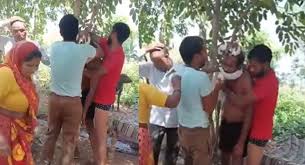
A Dalit family in Madhya Pradesh’s Chhatarpur district was allegedly assaulted by local strongmen for failing to provide the full quantity of wheat demanded as a temple donation. Five family members were injured, and police have arrested four individuals under the SC/ST Act following the incident. In a tragic incident, a Dalit family in Maharajganj village of Madhya Pradesh’s Chhatarpur district was allegedly assaulted after they failed to provide the full quantity of wheat demanded as a “donation” for a village temple. According to reports, local strongmen arrived at the family’s home and asked for wheat in the name of temple contribution. When the family said they were unable to meet the demand and had already given what they could afford, the situation escalated into violence. The accused allegedly abused the family, dragged members outside, and attacked them with sticks, rods, bricks, and stones. Women and children were also reportedly caught in the assault, leaving several family members injured and bleeding. The victims said the demand exceeded their financial capacity. “If I give away my wheat as a donation, what will I feed my children for the rest of the year?” the victim reportedly told those who came to collect the contribution. Five members of the family sustained injuries and were later taken to a local hospital after visiting the police station. A video of the incident has also surfaced, showing the alleged assault and triggering widespread concern over caste-based intimidation in the region. The victims have named several individuals, including Shyam Patel, Hardayal Patel, Kripal Patel, Raja Bhaiya Patel, Ramswaroop Patel, and Bhagwatdayal Patel, alleging their involvement in the attack. They also claimed that their remaining wheat was forcibly taken away. Police have said the incident began over a dispute related to temple donation collection that later turned violent. “The incident stemmed from a request for wheat donations for a temple, which subsequently escalated into a physical altercation. The accused individuals have been arrested, and appropriate action will be taken in accordance with the law,” NDTV quoted Civil Lines Inspector Ashutosh Shroti. Authorities confirmed that they have filed charges under the SC/ST Act against five people; four have been arrested, and one remains at large. However, the victims have stated that they are unhappy with the progress on their complaints and are convinced that what happened was not an impulsive disturbance but a premeditated effort to exert authority over them for the purpose of obtaining a religious donation. Courtesy : TDJ Note: This news is originally published on https:/thedailyjagran.com/bha and is used purely for non-profit/non-commercial purposes, especially human rights
Casteist assault, Rs 5K fine: ASA calls out UoH’s ‘tokenism’ with hunger strike
The incident involves the physical assault and casteist abuse of Anuj, a student pursuing MA in Sociology, by a fellow student on December 11, 2025. ASA demands affirmative action against a HCU student for assaulting and hurling casteist slurs at Dallit student on campus on December 11, 2025. Representational image Hyderabad: Accusing the University of Hyderabad (UoH) administration of apathy over a caste discrimination incident against a Dalit postgraduate student on campus, the Ambedkar Students Association (ASA) has announced a relay hunger strike that began at 3 pm on Tuesday, May 5, at the Administrative Building. The incident involves the physical assault and casteist abuse of Anuj, a student pursuing MA in Sociology, by a fellow student on December 11, 2025. In a statement, ASA said that despite Anuj lodging a complaint with university authorities the very next day, it took months for them to even acknowledge the matter. This delay is a violation of the University Grants Commission’s (UGC) mandate requiring grievances to be redressed within three months, the association said. When action finally came, ASA said it amounted to little more than tokenism. The Anti-Discrimination Office imposed a fine of Rs 5,000 on the perpetrator and asked for a private apology. This, ASA pointed out, stands in stark contrast to the university’s track record of fining Dalit students up to Rs 10,000 for minor hostel infractions such as washing a bike on the premises. Adding to the grievance, the perpetrator reportedly released a video calling on students to socially boycott Anuj from all university spaces, even after the complaint was filed. “I was humiliated, beaten and hurled caste slurs. And even after I reported it, he put out a video asking everyone to boycott me. Do I not deserve this space?” Anuj said. ASA has also accused the administration of suppressing the fact-finding committee’s report on the incident, and demanded its immediate release along with that of the SC/ST liaison officer’s findings. Courtesy : TSD Note: This news is originally published on https:/thesiasatdaily.com/bha and is used purely for non-profit/non-commercial purposes, especially human rights
TN election results 2026 | Vijay alters caste matrix; Brahmins in, more room for Dalits
TVK wins 24 reserved segments, while DMK alliance (13) and AIADMK front (9) lag behind; two brahmin legislators break jinx in Dravidian heartland CHENNAI: In a verdict that departs from Tamil Nadu’s entrenched caste calculus, the Tamilaga Vettri Kazhagam (TVK) has delivered a socially broad mandate while also reviving Brahmin representation in the Assembly, an area largely sidestepped by Dravidian majors, signalling a shift in the State’s electoral grammar. Led by C Joseph Vijay, a practising Christian, the party moved away from conventional caste alignments, prioritising candidate selection and local credibility. The outcome reflects that approach: more than 20 MLAs from Scheduled Castes and Scheduled Tribes, representation from the Muslim community, and notably, two Brahmin legislators elected from Mylapore and Srirangam. The victories of P Venkataramanan in Mylapore and Ramesh in Srirangam are being seen as politically significant. At a time when Dravidian majors have largely avoided fielding Brahmin candidates, fearing that their relatively small numbers could be outweighed by dominant caste blocs, TVK chose to field them, and they went on to win, marking a clear departure from prevailing electoral practice. Of the 234 Assembly constituencies, 46 are reserved. TVK candidates secured 24 of these seats, forming a crucial pillar of its overall tally. The remaining 22 reserved constituencies were won by the DMK-led alliance (13) and the AIADMK (9), indicating that while traditional formations retained ground in parts, TVK made decisive inroads. The party’s gains extended beyond reserved constituencies. In Virudhunagar, P Selvam, a Scheduled Caste candidate fielded in a general seat, defeated V Vijay Prabaharan, reinforcing the view that caste identity did not singularly dictate voter choice in this election. Party leaders maintain that the mandate reflects a shift in voter behaviour. “Brahminism refers to domination and discrimination, not a community itself. Those are issues of the past. Today’s youth are more aware. We chose candidates based on their work and public connect. There was no discrimination in giving tickets, including to women and minorities,” TVK treasurer and Mylapore MLA-elect P Venkataramanan said. Across both reserved and general constituencies, candidates from marginalised communities secured victories under the TVK banner, pointing to a consolidation that cut across caste and religious lines. The party’s strategy of fielding candidates from diverse backgrounds, including communities underrepresented in recent electoral cycles, appears to have resonated with voters. Ramakrishna N Courtesy : DT Next Note: This news is originally published on https:/dtnext.com/bha and is used purely for non-profit/non-commercial purposes, especially human rights
ECI, BJP played ‘nasty games’: Mamata says TMC was not defeated in Bengal, refuses to resign from CM post

Targeting the Chief Election Commissioner (CEC) Gyanesh Kumar, Mamata described him as the “villain of this election” and accused him of “looting” the democratic rights of the people. TMC supremo Mamata Banerjee on Tuesday slammed the Election Commission of India (ECI) and accused it of “looting” the democratic rights of the people, a day after the BJP registered a landslide victory in the West Bengal Assembly elections. Addressing a press conference, the outgoing CM claimed that her party had won the election morally and stated that she would not resign from her position. “I will not resign, I did not lose, I will not go to Raj Bhavan…The question doesn’t arise. No. Now, I also want to say that we didn’t lose the election. Officially, through the Election Commission, they can defeat us, but morally, we won the election,” the TMC leader said. Targeting the Chief Election Commissioner (CEC) Gyanesh Kumar, Mamata described him as the “villain of this election” and accused him of “looting” the EVMs and the democratic rights of the people. She also reiterated the allegation that the ECI worked for the BJP, facilitating their win in the crucial elections. “Two days before the election, they started arresting our people. They started raiding everywhere. They changed all IPS and IAS officers. They selected people from their party and BJP played the game directly with the Election Commission. It is a betting between the BJP and the Election Commission,” Mamata alleged. Speaking on the ECI’s Special Intensive Revision (SIR) of electoral rolls that reduced Bengal’s electorate by nearly 91 lakhs, Mamata said, “We fought against all machinery. PM and HM are also involved, direct interference… They played dirty, nasty and mischievous games. I have never seen this type of election in my life.” Mamata also repeated the allegation that she was attacked when she visited the counting centre where votes for the Bhabanipur Assembly constituency –which the TMC leader lost to BJP’s Suvendu Adhikari– were being counted on Monday. “I went inside for a few minutes. They kicked me in my belly, backside and manhandled and assaulted me. That time CCTV was off…” she said. She also alleged manipulation and foul play in the counting process. “After first round of counting, they started saying that BJP is getting 195-200. You didn’t wait for the final result. You didn’t even wait for 5-6 rounds. After that campaign with the press media, BJP went inside the polling station and they started beating the people, counting agents,” Mamata alleged. “When I came to know that all counting agents are withdrawn, I was leading by about 30,000 and about 5 rounds were left. We should have got more than 32,000,” she added. Mamata also alleged that BJP candidate Suvendu Adhikari brought around 200 goons from outside to beat up people. “Even women were not spared and they snatched away all forms. When I came to know, I went there. They stopped my car, but I took another route. When I entered, the CRPF told me that I was not allowed to go. I said that I am a candidate…Then I complained to the RO that counting should be stopped immediately until normalcy is restored. I saw the DEO. I know that he gave a message to someone 15 days ago that ‘counting mein khel hoga’…” she said. Mamata earlier said she would file formal complaints with the authorities concerned against the foul play at the Sakhawat Memorial Girls’ High School counting centre, where the votes for her constituency were counted. The race took a dramatic turn over consecutive rounds, with Mamata, who established a strong lead initially, being overturned by Adhikari, who took a lead of over 500 votes after the 16th round. Mamata also stated that several INDIA alliance leaders had reached out to her to express solidarity. “Sonia ji, Rahul Gandhi, Arvind Kejriwal, Uddhav Thackeray, Akhilesh Yadav, Tejashwi Yadav, Hemant Soren rang me up. All the allies of INDIA Alliance told me that they are totally and absolutely with me. I think our solidarity will be united and strong for the next days,” she said. She stressed that she would now work towards strengthening the opposition alliance. “My target is very clear. I will strengthen the INDIA team, just like a small person. I don’t have a chair now, so I am a commoner,” she said. Mamata also announced the formation of a 10-member fact-finding committee to visit areas “affected by post-poll violence” and assess the ground situation. The BJP registered a resounding victory in Bengal, winning 207 seats, well past the majority mark in the 294-member assembly and elbowing out the TMC government, which had been in power for three consecutive terms. Courtesy : TNIE Note: This news is originally published on https:/thenewindianexpress.com/bha and is used purely for non-profit/non-commercial purposes, especially human rights
Congress calls late-night meeting to decide on possible support for Vijay’s TVK in Tamil Nadu

The move follows Congress leaving the final decision to its state unit after directing it to consider Vijay’s request and public sentiment in TN. NEW DELHI: The Congress is considering a possible alliance with actor Vijay’s Tamilaga Vettri Kazhagam (TVK), with sources indicating that a power-sharing arrangement is under active discussion. An urgent meeting of the Tamil Nadu Congress Political Affairs Committee has been convened at 10:30 pm on Tuesday to take a final call on the matter, according to sources. The late-night meeting has been called by AICC in-charge Girish Chodankar and will be held virtually via Zoom. The move follows the central leadership’s decision to leave the final choice to the state unit, shortly after directing it to consider Vijay’s request for support in forming a government in Tamil Nadu, taking into account public sentiment in the state. All India Congress Committee (AICC) in-charge for Tamil Nadu Girish Chodankar TVK led govt’s oath taking ceremony likely on May 7 even as uncertainity looms The decision to delegate the matter was taken at a high-level meeting attended by party president Mallikarjun Kharge, senior leader Rahul Gandhi, general secretary (organisation) K. C. Venugopal, and Tamil Nadu in-charge Girish Chodankar. Speaking to reporters after the meeting, Venugopal said TVK president Vijay had sought Congress support to form a government in Tamil Nadu. He added that the party remains committed to ensuring that the BJP and its allies are kept out of power in the state. “The INC is clear that the mandate in Tamil Nadu is for a secular government committed to protecting the Constitution in letter and spirit,” Venugopal said. All India Congress Committee (AICC) in-charge for Tamil Nadu Girish Chodankar Political observers see uncertain path ahead as TVK falls short of majority in Tamil Nadu Assembly The Congress leadership has instructed the Tamil Nadu unit to take a final decision based on the political situation in the state following the electoral outcome, he added. The TVK secured 108 seats, falling short of the 118 required to form a majority. The Congress, along with allies such as the DMK, VCK, CPI, CPI(M), and IUML, currently holds a fragmented position within the broader alliance structure. According to sources, there is growing support within the party for exploring an arrangement with TVK. However, the central leadership has placed responsibility on the state unit to avoid any impression that the decision is being imposed from above. Party insiders said this approach is also aimed at preventing strain in its long-standing relationship with the DMK. Sources also indicated that Rahul Gandhi is understood to be open to examining a potential understanding with Vijay’s party. Preetha Nair Courtesy : TNIE Note: This news is originally published on https:/thenewindianexpress.com/bha and is used purely for non-profit/non-commercial purposes, especially human rights
Casteism in Rajasthan: Initially said at a Sikar temple ceremony, “Dalits will not be seated in the yagna,” he apologized unconditionally after the video went viral!
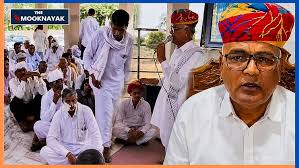
The director of a private college in Ringas made a controversial statement, and after facing intense social pressure and criticism, he publicly apologized. Sikar – During a meeting of all communities held at the Tejaji Temple in Shahpura Tikaria, Sikar district, Rajasthan, Babulal Yadav, director of Tejal Shikshan Sansthan, Ringas, made a highly controversial statement. In the video, he is heard saying that the upcoming yagna-havan is being conducted according to Vedic tradition, and therefore, members of the Scheduled Castes will not be allowed to sit in it. He also clarified that while everyone has the right to sit in the Arya Samaj tradition, this ceremony is being conducted according to Vedic tradition, therefore, no one from the Scheduled Caste community will be allowed to sit in it. He specifically stated that women will not be allowed to sit in the ceremony. He tried to justify this discrimination by citing Vedic tradition and also stated that women could participate in the Kalash Yatra if they wished, but would not be given a place in the Yagya. He then asked those present to raise their hands, and many did. As the video spread on social media, widespread outrage erupted among Dalit organizations, social activists, and ordinary citizens. People not only described it as a vile manifestation of casteism but also a direct violation of Article 17 of the Indian Constitution, which completely prohibits untouchability. It was also noteworthy that the person making the statement was directly associated with the educational world, which further deepened the controversy. After the video went viral and faced immense social pressure, Babulal Yadav publicly apologized. Such incidents have occasionally made headlines in Rajasthan, although Article 17 of the Constitution prohibits untouchability and guarantees equal rights to all citizens in religious activities. After facing immense social pressure and criticism, Babulal Yadav publicly apologized. He acknowledged his statement as incorrect, stating that he made an unintentional mistake but did not intend to hurt anyone’s sentiments. He stated that he respects the socio-religious sentiments of all communities and that he apologizes unconditionally, putting an end to the controversy. Many argue that an apology alone should not be the end of the matter, and that legal action should be taken against him under the SC/ST (Prevention of Atrocities) Act. This incident once again raises the question of how deeply rooted caste discrimination is on the ground, despite laws and constitutional provisions. At present, no official police action has been confirmed in the case, but social pressure and discussion continue. Geetha Sunil Pillai Courtesy: Hindi News