
Transgender lost life to save Rs 10 from snatchers
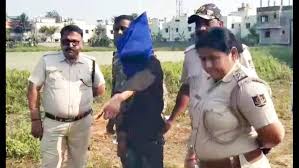
Bhubaneswar: Shocking details have emerged in the recent murder of a transgender person near Pipili in Puri district, with police revealing that the crime stemmed from an attempted snatching of a mere Rs 10 note. During interrogation, prime accused Krushna Kandi (25), who was arrested after being shot and injured in police firing on Wednesday evening, confessed that the motive was robbery. The victim, also 25, was stabbed to death after resisting three assailants, including Krushna. Police arrested Kandi’s associate Sanil Kandi (21) on Thursday, while efforts are underway to trace the third accused. Investigations revealed that the trio, hailing from Konark area, were returning from Uttara towards Pipili when they spotted the victim alone along the Bhubaneswar-Puri NH-316 in the evening on Feb 1. “On the pretext of interaction, the accused lured the victim to an isolated spot and attempted to snatch her purse. When she resisted bravely and tried to overpower them, one of them stabbed her,” said SP (Puri) Prateek Singh. Krushna reportedly admitted that the purse contained only a Rs 10 note, which they ultimately did not steal, police sources said. The case posed a major challenge for investigators as there were no eyewitnesses or CCTV footage nearby. “It was a blind case. IIC, Pipili police station, Soumyendu Tripathy and his team examined distant cameras, interrogated jailed criminals, analyzed intelligence inputs, and questioned the victim’s acquaintances before narrowing down on Krushna through our sources,” Singh said. On Wednesday evening, Krushna attempted to flee on a motorcycle. He allegedly opened fire at police during the chase, prompting controlled retaliatory firing in which he was injured. Police authorities confirmed his serious criminal background, with at least 13 cases of snatching, theft, and robbery registered against him across multiple police stations in Puri district, including Kumbharapada, Konark, Nimapara, Kakatpur, and Chandrabhaga, as well as Bhubaneswar’s Dhauli, Kharavel Nagar, Lingaraj, and Badagada areas. Courtesy : TOI Note: This news is originally published on https:/timesofindia.com/bha and is used purely for non-profit/non-commercial purposes, especially human rights
Villagers skip meeting to resolve anganwadi boycott over dalit cook
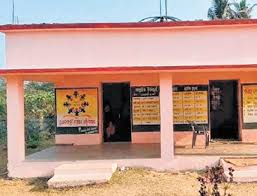
Nuagaon residents refuse to attend meet; only 2 villagers, sarpanch, ward member turn up. KENDRAPARA: The Kendrapara administration’s efforts to convince villagers of Nuagaon under Rajnagar block to end the boycott of the local anganwadi over appointment of a dalit cook failed to yield any result on Wednesday. Acting on the directions of collector Raghuram R Iyer, sub-collector Arun Nayak, Rajnagar tehsildar Jisukrishna Das, district welfare officer (DWO) Arabinda Ray and other officials visited Nuagaon under Ghadiamala panchayat to resolve the issue. However, villagers reportedly refused to attend the meeting. “Only the ward member, sarpanch and two villagers were present, making the chances of a breakthrough slim,” said child development project officer of Rajnagar Dipali Mishra. “Villagers did not attend the meeting as they do not consume food cooked by dalits. No one wants to break this age-old custom. If the administration forces our children and women to eat such food, it may lead to unrest. The administration should appoint a cook from the upper caste to resolve the issue,” said a villager on condition of anonymity. Sources said most villagers preferred to remain silent on the issue. Several educated residents and members of the dalit community are also reluctant to speak. Villagers maintained that nothing unusual has occurred, despite children and women staying away from the anganwadi centre for nearly three months. The riverside village of Nuagaon has around 45 families, including seven dalit households. Ghadimala sarpanch Sailendra Mishra said, “We urged the village leaders to send children to the anganwadi centre, but they ignored our appeals.” He added that pregnant women have also stopped visiting the centre, depriving themselves of services such as supplementary nutrition, health check-ups, iron-folic acid supplements, immunisation and health education. Contacted, collector Iyer said, “The sub-collector has been directed to submit a report after visiting the village. Necessary action will be taken once the report is received.” President of the district unit of Dalit Samaj Nagen Jena alleged that the actions of the villagers violate fundamental rights guaranteed under Articles 14, 19 and 21. “Dalits often face discrimination in temples, but here children and women are being kept away from welfare services. We expect the police and administration to take firm steps,” he said. The anganwadi centre at Nuagaon has reportedly not been functioning since 23-year-old Sarmista Sethi was appointed as a helper-cum-cook at the facility on November 24 last year. Soon after her appointment, the village committee allegedly decided to boycott the centre in protest and stopped sending their kids to the facility as Sethi belongs to the dalit community. Even pregnant and lactating women have refused to visit the centre since then. Ashis Senapati Courtesy : TNIE Note: This news is originally published on https:/thenewindianexpress.com/bha and is used purely for non-profit/non-commercial purposes, especially human rights
Odisha: Anganwadi in Nuagaon Shuts After Villagers Refuse to Let Dalit Woman Cook for Children
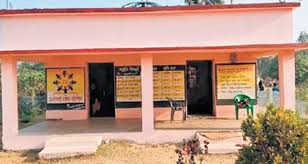
Odisha Anganwadi Shuts as Villagers Bar Dalit Woman In rural Odisha, deep-rooted caste prejudice has forced the closure of an anganwadi centre in Nuagaon village, Rajnagar block, Kendrapara district, for nearly three months. Parents have reportedly stopped sending their children to the centre after a 23-year-old Dalit woman, Sarmista Sethi, was appointed as a helper-cum-cook on November 24, 2025. According to Sarmista, villagers from upper-caste families openly resisted her appointment, saying their children would not eat food prepared by a Dalit woman. The village committee, which also included instructions for Dalit households, reportedly told families not to send their children to the centre. “After my appointment, some upper-caste villagers warned me not to cook for the children. When I refused, they stopped sending their kids. Even women stopped coming to the centre,” Sarmista said. Around 45 families, including seven Dalit households, live in the riverside village. The social boycott has affected nearly 60 children who are now deprived of anganwadi services. Pregnant and lactating women have also stopped visiting the centre, missing out on crucial health benefits, according to Ghadiamala sarpanch Sailendra Mishra. “We have repeatedly urged villagers to send their children, but they have not listened,” he said. Anganwadi worker Lizarani Pandav informed the chief development project officer (CDPO) of Rajnagar block about the situation. CDPO Dipali Mishra said, “We have been trying to convince parents to send their children. The tehsildar and I held discussions with villagers, but the issue remains unresolved.” A team of Dalit leaders visited Nuagaon village on Tuesday, demanding legal action against those preventing children and women from attending the centre. Nagen Jena, district president of Dalit Samaj, cited the 2004 Supreme Court interim order in PUCL vs Government of India, which prioritises SC/ST candidates as cooks in midday meal schemes. Kendrapara district collector Raghuram R Iyer said he has directed the district social welfare officer to submit a detailed report. “After receiving the report, appropriate action will be taken against those who are illegally preventing children and women from attending the anganwadi centre. We are also trying to resolve the matter amicably through discussions with villagers,” he added. Courtesy : TOP Note: This news is originally published on https:/theobserverpost.com/bha and is used purely for non-profit/non-commercial purposes, especially human rights
Transgender found murdered on NH-316

Bhubaneswar: A transgender was allegedly stabbed to death by an unidentified assailant near Uttara Chowk in Puri district on Sunday. Police said the victim was found lying in a pool of blood along NH-316 connecting Bhubaneswar and Puri. The individual’s identity and circumstances surrounding the incident are yet to be established. “Prima facie, the victim sustained serious stab injuries and was immediately rushed to Capital Hospital in Bhubaneswar, where doctors declared her dead. We are verifying the CCTV footage,” said an officer of Pipili police station. Tension gripped Capital Hospital as several members of the transgender community demanded immediate arrest of those responsible. “She called me around 8 pm and sought help. She told me that she was attacked. But she didn’t name anyone,” a friend of the deceased said. Courtesy : TOI Note: This news is originally published on https:/timesofindia.com/bha and is used purely for non-profit/non-commercial purposes, especially human rights
OHRC recommends state govt to ensure 1% transgender reservation in recruitment exams
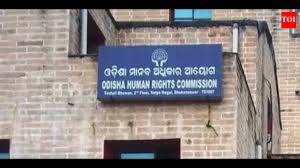
Bhubaneswar: Odisha Human Rights Commission (OHRC) has recommended the state govt to ensure 1% reservation for transgender candidates in different recruitment exams. The commission passed the order on Jan 22 after hearing a petition filed by a transgender from Cuttack. The petitioner alleged discrimination and violation of fundamental rights due to non-inclusion of the third gender/transgender category in the application form for the upcoming Odisha Civil Services (OCS) Exam conducted by the Odisha Public Service Commission (OPSC). The petitioner contended that omission of the ‘third gender/transgender’ in the online form prevented applicants like the complainant, from applying and participating in the exam on an equal footing, thereby constituting discriminatory treatment and infringing upon their rights to equality and non-discrimination. The commission, without calling for any report from govt authorities, was prima facie satisfied of the violation of human rights and disposed of the case at the stage of admission. Human rights activist Biswapriya Kanungo, quoting the OHRC order, said the Constitution guarantees equality and non-discrimination under Article 14, ensuring equal protection of laws, while Article 15 prohibits discrimination on grounds of sex, which was interpreted to include gender identity. Article 16 mandates equality of opportunity in public employment, and any exclusion based on gender identity is arbitrary and violative thereof. The commission recommended the general administration and social security departments to consider inclusion of ‘third gender/transgender’ as an option in the applications forms of govt recruitment exams and to make at least 1% reservation for them, and to direct all recruiting boards and authorities, including OPSC, to do the same. As the present complaint relates to the OCS exam, for which applications are already invited, OHRC urged the state govt consider the same at the earliest by making a request to OPSC to allow a ‘third gender/transgender’ option and extend the application deadline for at least 15 days for such candidates. The order stated that govt should ensure the recommendation is carried out by all departments and its corporations. OHRC asked govt to submit a compliance report within 60 days. Courtesy : TOI Note: This news is originally published on https:/timesofindia.com/bha and is used purely for non-profit/non-commercial purposes, especially human rights
Book Review | The True Desperation of Odisha’s Dalit Lives

All in all, it’s a disturbing, provocative read, but the translation lets the story down occasionally This is a retelling of a true story. In 2012, an argument over a missing vest ignited a storm that ended in the destruction of forty Dalit houses in the village of Lathore in Odisha. Upper caste anger over the unproven theft of this vest by a Dalit youth led to hours of fire and violence. The author says in his preface that he contacted senior administrators and police officials asking them to persuade the District Collector to help the victims, but nothing ever happened: at the time the book’s translation was complete, the victims were still waiting. As the story begins, Makaru Suna, a young Odiya tribal, is on the train to Lathore from Raipur, Chhattisgarh. In his third-class compartment, he witnesses fellow passengers dumping garbage — peanut shells, for instance — or encouraging small children to urinate on the floor. The mess is wiped up later by a skinny lad who prefers cleaning up other people’s messes to begging, but the sight evokes an inexplicable rage in him. Makaru has boarded the train on hearing of the destruction by fire of the Dalit basti where his relatives live. Along the journey, he takes a walk in his mind, remembering his own departure, years ago, fromhis village, Banjipali, near Lathore. As a youngster, he had been forced to violence by an upper caste lad — a serious crime. The reparations demanded were a large sum of money to be paid by next morning, or his own life. He and his parents fled to Raipur, where he found work as a peon, his father got a rickshaw, and his mother began to work as a housemaid. They now live a life of poverty, but have hope and some dignity. His arrival in Lathore — Harishankar Road in Railways parlance — at the end of his present journey — opens up a whole new area of horror — and of the discovery of how his life in Raipur has let him drift so far away from the culture and gods of his childhood. And the focus shifts to the one thing that hasn’t changed in all these years — the troubles of Odisha’s Dalits. Makaru’s reminiscences include the troubles of his grandfather and his two brothers, who settled in three nearby villages, Lathore, Banjipali, and Larki, where they suffered at the hands of the upper castes and the British. In Lathore, he meets Chitrasen Suna, Chitra-da to Makaru, who had worked his way up from the bottom and achieved some kind of status in his society. In the destruction of the basti, Chitra-da has lost his all, and, perhaps due to age, the will to fight to get it back. The days that Makaru spends with Chitra-da in the relief camp leave him with a sense of quiet desperation, for he sees victims treated like criminals while the bullies walk free. And so, when Makaru boards the train back to Raipur, he carries this quiet hopelessness back with him. The story is enriched by insights into how the exploitation gathers momentum. For example, Marwari traders start with brass utensils for barter, then sell more wares, then lend money for interest, and, eventually, become usurers creating slavery through unpaid — and mounting — debt. They exploit the villagers hiding behind the more capable villagers, selecting them for better-paying activities than the traditional cattle-herding. All in all, it’s a disturbing, provocative read, but the translation lets the story down occasionally. From what this reviewer gathered, the Odiya version shines with simplicity and integrity. The translation dilutes both. Courtesy : DC Note: This news is originally published on https:/deccanchronicle.com/bha and is used purely for non-profit/non-commercial purposes, especially human rights
Transgender groups clash, 4 injured
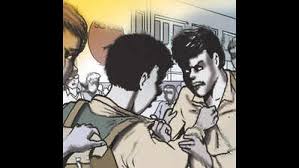
Balasore: A violent clash between two transgender groups in Bhadrak town on Tuesday left four persons injured, triggering tense scenes at the Bhadrak Town police station. The incident took place near Charampa when members of one transgender group were returning home after buying vegetables. They were allegedly attacked by members of a rival group armed with sharp weapons. The victims sustained injuries on their heads, backs, ears and other parts of the body. According to complaints lodged with the police, the attackers not only assaulted the victims but also forcibly cut their hair and looted Rs 10,000 in cash along with a mobile phone. Following the incident, a large number of transgender persons gathered at the Bhadrak Town police station demanding the immediate arrest of those involved. The situation turned tense as protesters raised slogans and staged a demonstration on the police station premises. IIC, Bhadrak Town, Prabhanshu Mishra said, “Three persons have been detained for questioning. Statements of the injured have been recorded.” Police sources said the violence appears to be linked to a long-standing rivalry between the two groups, allegedly led by Sanjana Shashmal and Jharanarani. Courtesy : TOI Note: This news is originally published on https:/timesofindia.com/bha and is used purely for non-profit/non-commercial purposes, especially human rights
Odisha launches Sweekruti scheme for transgenders welfare and empowerment
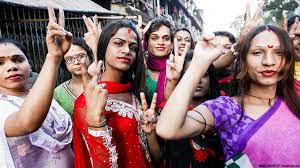
New state initiative provides financial aid, scholarships, skill training, legal support and housing to transgender persons and their families, aiming at social inclusion and dignity BHUBANESWAR: The Odisha government has launched a comprehensive welfare scheme for ensuring social inclusion, dignity and empowerment of transgender persons by addressing long-standing gaps in education, employment, healthcare, housing and legal support. Sources said the scheme Sweekruti, being implemented by the Social Security and Empowerment of Persons with Disabilities (SSEPD) department, has been designed to provide a structured, rights-based framework for the welfare of the transgender community and their families. Odisha, with a total transgender population of around 20,300 (as per the last census), is the first state to give transgender people social welfare benefits aimed at improving their overall socio-economic status. The scheme focuses on a set of key strategies that include financial assistance to parents of transgender children, pre and post-matric scholarships for transgender students, skill upgradation and entrepreneurship development training, strengthening of self-help groups, support for critical healthcare and group insurance, provision of legal aid and counselling. According to a resolution issued by the department, a key feature of the scheme is monthly financial assistance of Rs 1,500 to parents or guardians of transgender children to help them raise their children amid social stigma, discrimination and violence. This support will be provided until the child attains 18 years of age. In order to support education, eligible transgender students from families with an annual income not exceeding Rs 2.4 lakh will receive monthly scholarships ranging from `1,000 to `5,000, depending on the course pursued. Many transgenders are often denied entry into boys’ or girls’ hostels and refused rental housing, forcing them to drop out of education or employment, particularly when they migrate to cities such as Bhubaneswar, Cuttack, Rourkela, Berhampur, Balasore and Sambalpur. Secretary of the department RS Gopalan said Sweekruti will support the setting up of dedicated hostels for transgender persons by colleges, universities, urban local bodies and organisations working with the community. Transgenders will receive a stipend of Rs 3,000 per month for the duration of their studies. “The scheme will help districts set up rehabilitation centres to provide abandoned transgender persons, aged above 18 years and below 60 years, with shelter, basic amenities and capacity-building/skill development training,” he said. Hemant Kumar Rout Courtesy : TNIE Note: This news is originally published on https:/thenewindianexpress.com/bha and is used purely for non-profit/non-commercial purposes, especially human rights
Odisha Continues to Face Severity of Dalit Oppression
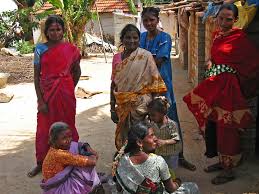
The state had the sixth highest cases of incidents of Dalit oppression over the past four years (NCRB data), including acts of bestial violence, social boycotts, and judicial discrimination. The people of Odisha must be undergoing fatigue built on almost years and years of perpetuation of atrocities on Dalits in the state, which remains the sixth highest in incidents of oppression on Dalits in India. This is contrary to the notional assumption that the people of Odisha are God-fearing and their faith rests on the premises of Lord Jagannath, who, in essence, is believed to be a tribal deity, his origin dating back to over thousands of years. The deity is said to be the Patitapavan, which in essence connotes that He is for the Patits (the most oppressed). Leaving aside the legends, numerous incidents of Dalit oppression have been reported in Odisha over the past four years, including acts of bestial violence, social boycotts, and judicial discrimination. According to the National Crime Records Bureau (NCRB) data, Odisha has the sixth highest cases of atrocities on Dalits. In 2020, there were 2,046 incidents, in 2021, the incidents reported stood at 2,327, in 2022, there were 2,902 incidents and in 2023, the reported incidents were 2,696, taking the total to 9,971 incidents in the past four years. Activists cite “poor implementation of protective laws and low conviction rate for atrocities as factors the help perpetuating the problem”, Biswapriya Kanungo, an advocate and social activist fighting for the oppressed, told this writer. What about people from the upper strata who fuel such acts of oppression? Kanungo says “this trend has exacerbated in the past one decade when the political system has shown an attitude of acquiescence to the practice of oppression of people from the lower strata or Dalits.” Reports and case studies from 2020 to 2025 document several incidents of Dalit oppression in Odisha, including brutal public humiliation, social boycotts, and denial of basic rights. “Regardless of legal protection, that are so ineffective, a deep-seated caste-based discrimination persists, particularly in rural areas, where the incidents never come to light or rather get buried in obscurity”, laments Kanungo. Most instances of Dalit oppression in Odisha are marked by physical violence and systemic discrimination. While there are laws in place to prevent such atrocities, Dalits have been facing persistent exploitation and social exclusion, especially in the rural interiors. This is compounded by an ineffective justice system that fails to protect victims. In June 2025, two Dalit men from Pana community were subjected to public humiliation coupled with physical assault by a mob in Kharigumma village in Ganjam district. They were falsely accused of cattle smuggling whereas they were transporting three cows for a wedding dowry. They were forced to drink drain water and crawl on their knees. The incident sparked widespread outrage. An incident that the National Human Rights Commission took suo motu cognisance of. In 2012, in another cruel incident in Lothra area in Bolangir district, an upper-caste mob set fire to the houses of 30 Dalit families for a reason that cannot be condoned in any society. Intolerance Toward Assertiveness After setting the houses on fire, the mob blocked the roads preventing the police and fire brigade from entering the village. This violence was reportedly a backlash against the growing economic and political assertiveness of Dalits in the region. In 2012, the NHRC issued a notice to the Odisha government regarding the social boycott of 13 Dalit families in Ganjam district. The families were denied access to shops, water sources, temples, and irrigation, and were also forced to wash clothes for a pittance. Kanungo recollects that it was in 2008, when the upper-caste majority virtually massacred Dalits and tribals in a riot that claimed over 17 lives and rendered thousands homeless, Many families were forced to take shelter in camps worse than ghettoes, while a sizable population of the tribals remained holed up in the deep woods without anything for sustenance. That incident created a global ripple and panic. The entire gamut of the social turmoil was allegedly created by the hands of Right-wing elements from the state and from Delhi who helped fuel the fire with hate-speeches and propaganda. That brought a turning point politically, when the then Chief Minister Naveen Patnaik broke his party, Biju Janata Dal’s (BJD) nine-year-long political alliance with the Bharatiya Janata Party (BJP) on the grounds of inciting communal unrest. Systemic and Institutional Discrimination In many parts of rural Odisha, Dalits are frequently denied access to public amenities, including temples, hotels, tea stalls, and public wells till date. During a 2016 incident in Nayagarh, upper-caste villagers refused water from a tanker because it had first served a Dalit hamlet. In 2025, courts in Odisha drew criticism for imposing caste-discriminatory bail conditions, such as ordering Dalit men to perform manual scavenging work. This practice, which links bail to traditionally stigmatised occupations, has been condemned by legal experts everywhere in India. Yet, this practice is still followed, as we see people getting into in filthy septic/sewer tanks digging out dirty sediments in neck deep toxic human waste. Even with advancements, untouchability continues in many subtle and overt forms in the state. In some villages, Dalits are not served by village barbers or washermen. During the 2021 Cyclone, Yaas, Dalit communities in rural areas were reportedly ostracised and denied access to rehabilitation facilities, added Kanungo. Inner Conflicts Some Dalit sub-castes in Odisha, like the Doba and Kaibarta, have been found to practice discriminatory behaviour against lower-ranked Dalits, such as the Ganda community. This promotes perpetuation of the cycles of oppression within the marginalised community itself. Isolation in Death An 80-year-old woman faced social isolation in death in Deogarh district, simply because five decades ago, she had married outside her caste. Her body was left abandoned till some local volunteers dared the oppressors and arranged her last rights with full respect. The act of compassion and courage shown by the volunteers drew appreciation from various quarters. To top
Odisha Cabinet approves 10-hour shifts; allows night shifts for women
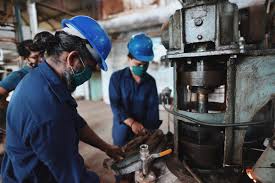
The overtime work limit has been increased from 115 hours to 144 hours every financial quarter. The Odisha government on Monday (September 29, 2025) increased the daily working hours to 10 hours, subject to a 48-hour weekly cap. It also allowed women in private establishments to work night shifts subject to their written consent. The Cabinet, chaired by Chief Minister Mohan Majhi, approved an amendment to the Factories Act, 1948, aimed at promoting industrial investment and creating more employment opportunities. “The State government has extended the total number of hours of work without an interval to six hours and increased the spread over up to 12 hours inclusive of intervals for rest,” read the official statement. “Where a worker works for more than the prescribed hours, they would be entitled to wages at the rate of twice their ordinary rate of wages for overtime work,” it added. Moreover, the overtime work limit has been increased from 115 hours to 144 hours every financial quarter. “Women can be employed in all factories for all types of work. They may also be employed before 6 a.m. and beyond 7 p.m. with their written consent,” the government said. These reforms are expected to attract new investments, enable factories to meet peak demand and increase productivity, the government said. Development of model schools In another significant decision, the Cabinet approved the development of model schools under the Godabarisha Adarsha Vidyalaya (GAV) scheme at the gram panchayat level, with a focus on inclusive and quality education. Aligning with the objectives of the Right to Education (RTE) Act, 2009, the GAV scheme aims to ensure equal access to education and holistic development of the student community. “This initiative is in line with the vision of the National Education Policy (NEP), 2020 and the NIPUN Odisha scheme, and places a special focus on enhancing foundational literacy and numeracy skills to empower children socially and educationally,” the statement added. In the first phase, spanning three years (2025-26 to 2027-28), a total of 2,200 model schools will be constructed with an estimated outlay of ₹12,000 crore. Satyasundar Barik Courtesy : The Hindu Note: This news is originally published on https:/thehindu.com/bha and is used purely for non-profit/non-commercial purposes, especially human rights