
AIISCA Condemns Alleged Police Brutality Against Dalit Students At IIT Bombay, Demands Action Against Officials
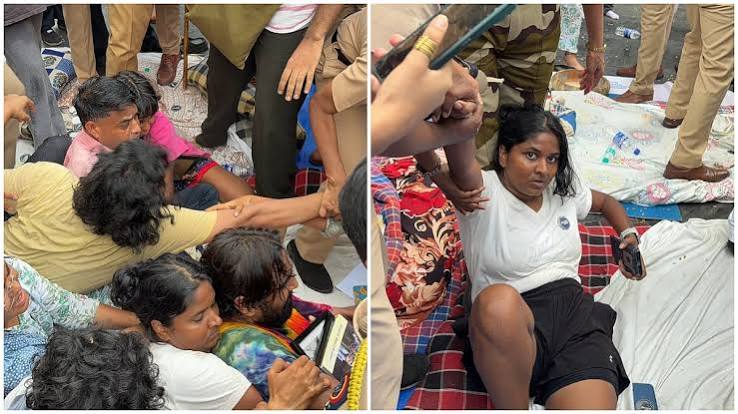
The All India Independent Scheduled Castes Association has demanded an independent inquiry into alleged police brutality and detentions during an October 18 protest at IIT Bombay seeking justice for Sahil Wakode. President Rahul Sonpimple urged Scheduled Castes commissions to intervene and sought accountability from police and institute authorities. Mumbai: The All India Independent Scheduled Castes Association (AIISCA) has condemned the alleged police brutality, assault and forcible detention of Dalit students and Ambedkarite activists during a protest at IIT Bombay on October 18, demanding an independent inquiry into the police action and accountability from the institute’s administration. “We strongly condemn the alleged police brutality, forcible detentions and assault of Ambedkarite activists and students during the peaceful protest at IIT Bombay demanding justice for Sahil Wakode,” said Rahul Sonpimple, national president of AIISCA. AIISCA demands independent police inquiry Sonpimple demanded the intervention of the Maharashtra State Commission for Scheduled Castes and the National Commission for Scheduled Castes, calling for an impartial inquiry into the conduct of the Mumbai Police and the role of the institute’s administration. “We demand that the commissions take immediate cognisance of the use of force against Dalit students and activists. The alleged desecration of Dr BR Ambedkar’s poster must also be investigated, and those responsible must be held accountable,” he said. AIISCA has sought accountability from the Deputy Commissioners of Police overseeing the Powai and Saki Naka jurisdictions, demanding an investigation into the circumstances surrounding the detentions, the alleged use of force and the orders under which the police acted. Action sought against IIT Bombay officials Sonpimple also demanded the resignation and arrest of IIT Bombay invigilator Suryanarayana Doolla, alleging that his conduct contributed to the circumstances surrounding Wakode’s death. He called for an impartial investigation and said criminal proceedings under the Scheduled Castes and the Scheduled Tribes (Prevention of Atrocities) Act and other applicable laws, including provisions relating to abetment of suicide, should be initiated if supported by evidence. The association has also sought the removal of IIT Bombay Director Sireesh Kedare, alleging that the institute’s administration failed to protect protesting students and permitted police entry onto the campus to detain demonstrators. Protest rights and accountability emphasised “Peaceful protest is a democratic right, not a crime. Students and activists demanding justice must not be subjected to violence, intimidation or arbitrary detention,” Sonpimple said. He urged the Maharashtra government, the statutory commissions, the Mumbai Police leadership and IIT Bombay’s administration to act on the demands and ensure that the allegations of police brutality are independently investigated. Sonpimple also called for the investigation into Wakode’s death to proceed transparently and without further delay, saying Dalit students must be able to seek justice and accountability without fear of repression. Shreya Jachak Courtesy : TFPJ Note: This news is originally published on https:/thefreepressjournal.com/bha and is used purely for non-profit/non-commercial purposes, especially human rights
“Until the guilty are behind bars, the struggle will intensify”: AIISCA warns ahead of IIT Bombay’s internal report
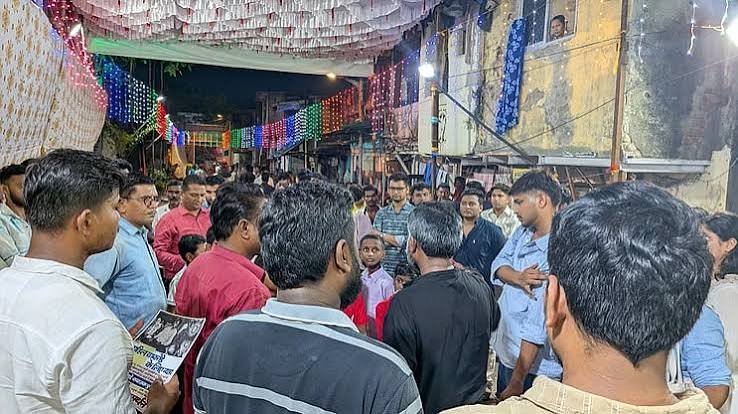
IIT Bombay has updated its anti-discrimination guidelines, stating that asking classmates about their caste, admission category, or entrance exam rank is inappropriate. Mumbai—Following the death of Sahil Wakode, protests are intensifying from the IIT Bombay campus to Azad Maidan. Deepali Salve, Maharashtra General Secretary of the All India Independent Scheduled Castes Association (AIISCA) and Director of the SRC, issued a stern warning ahead of the release of the institute’s internal report. She stated that if Professor Suryanarayan Dulla is not permanently expelled from the institute, they will protest on campus and that Director Professor Shirish Kedare will be held responsible for whatever happens next. Meanwhile, Sahil’s parents have been on a hunger strike at Azad Maidan for several days, and AIISCA has called for a protest there on October 16. Salve said that it is better to choose the path of rebellion than to succumb to injustice. According to him, this fight for justice for Sahil Wakode is no longer just a case, but a declaration of standing against oppression. He said, “This struggle will intensify until the perpetrators are put behind bars.” Regarding IIT Bombay’s internal report, Salve said it was forthcoming and that he believed it would be in favor of Professor Dulla. Addressing the institute directly, he said that if Professor Dulla was not permanently expelled, they would storm the campus and hold Director Kedare responsible for “whatever happens.” Sahil’s parents have been on a hunger strike at Azad Maidan in Mumbai for several days. A six-member delegation was allowed to meet with Kedare regarding the death of student Sahil Wakode and the allegations against Dulla. However, activists said the director did not provide any clarity regarding the ongoing investigation nor did he assure immediate action against the professor. Protest organizers alleged that more than 30 protesters were detained, assaulted, and taken to the Powai police station before being released. They warned that they would return to campus if Dula was not suspended. The protesters alleged that students were dragged onto the road and excessive force was used. AIISCA has appealed to all civil society organizations, Ambedkarites, community members, political parties, activists, and justice-minded citizens to show solidarity with them. The protest will take place at Azad Maidan on October 16th, starting at 10:30 am. Its slogan is “Justice for Sahil.” The Ambedkar Periyar Phule Study Circle (APPSC) protested the incident that occurred on October 14th. The group also alleged that the administration opened the gate for the police and kept it closed for others. According to it, the administration has taken no action toward the students who have been on strike for 27 days, and has done nothing to conduct a fair investigation into the Sahil case, instead spreading “fake news” and promoting a “media trial.” The APPSC condemned the “coalition” between the administration and the Powai police and demanded that all voices be heard and that there be dialogue with the protesting students. New Guidelines: What the Institute Said According to a Hindustan Times report, IIT Bombay has updated its anti-discrimination guidelines, stating that asking classmates about their caste, admission category, or entrance exam rank is inappropriate. An email sent by the Dean of Student Affairs’ office stated that asking about caste, admission category, or entrance exam rank, even out of curiosity, can create prejudice and negatively impact students. The institute urged students, faculty, and staff to avoid conversations that reveal someone’s caste or background and to build friendships based on shared interests. According to the email, while the question may seem innocent to the person asking it and may be motivated by mere curiosity, such a question can often have an adverse impact on another student. Sharing abusive, hateful, casteist, or gender-biased messages, as well as content that depicts prejudice based on religion or sexual orientation, is also prohibited. The institute reiterated its commitment to implementing the reservation policy “in letter and spirit” and warned of strict punishment for violations. Statements Recorded So Far in the Police Investigation According to the Hindustan Times, the Crime Branch has so far recorded statements from approximately 70 people, including Director Kedare, Professor Dulla, several students, and the deceased’s girlfriend and classmate. Police have gained access to the deceased’s phone, tablet, and laptop, but the iPhone has not yet been unlocked and is in the forensic laboratory in Kalina. Police have also sought documents from the institute, such as mark sheets, written complaints, and, if any, apologies. Prof. Dulla is named in a police FIR alleging abetment to suicide on the grounds of caste discrimination, and has been sent on leave to allow a fair investigation. Geetha Sunil Pillai Courtesy: Hindi News
Maha to build separate toilets for transgenders across all ST bus stands
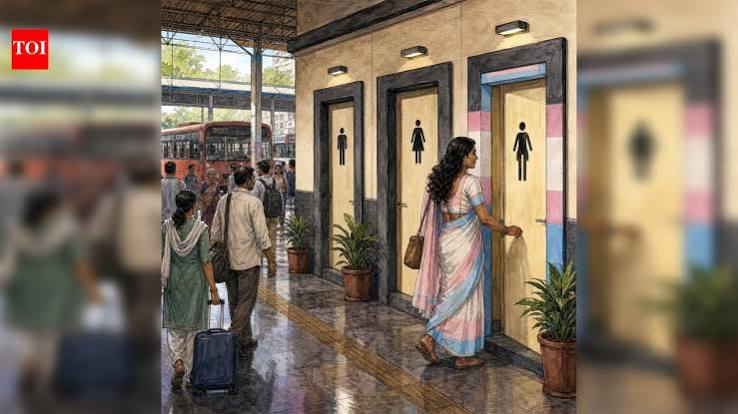
Nagpur: For a transgender person a toilet at a state transport bus stand, there was no toilet meant for them. The state govt has now sanctioned Rs 9.77 crore to build separate toilets for transgender persons at ST bus stands across Maharashtra. In a govt resolution (GR) issued on Wednesday, the transport department gave administrative approval for a combined estimate of Rs 9,76,63,195 covering 31 ST divisions. The GR says the absence of a separate toilet at bus stands forces transgender persons to face social and physical difficulties and causes them considerable distress. Vidarbha’s nine ST divisions together get about Rs 2.71 crore. Amravati has the largest share in the region at Rs 50.74 lakh, followed by Nagpur at Rs 48.40 lakh, Yavatmal at Rs 36 lakh, Buldhana at Rs 33.83 lakh and Bhandara at Rs 31.46 lakh. Chandrapur gets Rs 20.43 lakh, Akola Rs 19.48 lakh, Wardha Rs 16.94 lakh and Gadchiroli Rs 13.75 lakh. Across the state, Kolhapur division gets the highest allocation at Rs 55.20 lakh and Latur the lowest at Rs 9.60 lakh. The proposal came from the ST corporation’s vice-chairperson and managing director, after the minister of state for urban development, transport and social justice, among other portfolios, directed that the transport department give approval without delay. The cost will be met from the social justice department’s funds for setting up a welfare board for transgender persons and protecting their rights. The sanction comes with conditions. Layout and detailed plans must be approved by architects before work begins, a detailed estimate must be prepared, and the executive engineer concerned must give technical sanction. The GR does not say how many toilets will be built or at which bus stands, as the annexure lists only division-wise lump sums. Courtesy : TOI Note: This news is originally published on https:/timesofindia.com/bha and is used purely for non-profit/non-commercial purposes, especially human rights
Protesters detained outside IIT Bombay demanding justice for Dalit student Sahil Wakode
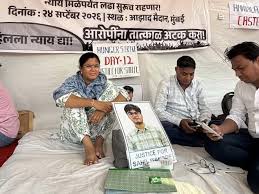
Mumbai Police detained Ambedkarite leaders and civil society members outside IIT Bombay as they demanded a fair investigation into Dalit student Sahil Wakode’s death and allegations of caste discrimination. Mumbai Police on Wednesday detained Ambedkarite leaders and civil society members who gathered outside IIT Bombay in response to the ‘Chalo IIT Bombay’ call, demanding accountability over the death of second-year BTech student Sahil Wakode. The civil society members also demanded an impartial investigation into allegations of caste discrimination. Among those detained were members of the All India Independent Scheduled Castes Association (AIISCA)—Rahul Sonpimple, Deepali Salve and Sambhaji Bhagat. The protest was organised in solidarity with Wakode’s parents, who have been on a hunger strike for nearly two weeks, demanding a fair investigation into their son’s death. According to reports, police detained protesters demonstrating outside IIT Bombay following a call by Sahil’s father, Ravindra Wakode. Reports suggest that Ravindra Wakode was also detained; however, Mumbai Police have denied the allegation. The police, meanwhile, responded with heavy deployment across the campus, restrictions on entry and the detention of people seeking to present their demands to the administration. The protest was also not allowed to proceed. Meanwhile, the Mumbai Crime Branch, which is investigating Wakode’s death, has recorded statements from more than 40 people. The 22-year-old second-year BTech student was found dead in his hostel room on the evening of September 18. According to the police official, Wakode submitted a written statement to the institute after allegedly being caught cheating in an examination. In the statement, he said he had not prepared well for the paper, acknowledged his mistake and sought a second chance. A first information report (FIR) was registered by Powai police against Professor Doolla following a complaint lodged by Wakode’s father. The professor, who has been named as an accused in the abetment-to-suicide case, has, in his statement to the police, denied the allegations of harassment levelled against him by the student’s parents. Wakode’s parents, Ravindra and Sonali Wakode, began their hunger strike at Azad Maidan in south Mumbai on September 24, alleging caste discrimination at the institute and seeking justice for their son. Courtesy : Maktoob Media Note: This news is originally published on https:/maktoobmedia.com/bha and is used purely for non-profit/non-commercial purposes, especially human rights
Nine transsexuals booked for robbing transgender person of ₹6.7L

Pune: A 30-year-old transsexual person filed a complaint on Friday with Kothrud police, stating that nine transgender people assaulted and threatened the person with religious conversion. The accused also robbed the complainant of Rs 6.7 lakh on Friday. Kothrud police have registered a case under the Maharashtra Freedom of Religion Act, the Transgender Persons (Protection of Rights) Act, 2019, and robbery against nine transgender people. According to the FIR, the complainant lives near a temple in Kothrud. At around 7pm on Sept 22, the nine suspects allegedly entered the complainant’s house and made derogatory remarks against the religion of the complainant. They threatened and asked the complainant to abandon their religion and convert to another religion. Kothrud police said the suspects assaulted the complainant with a belt and bamboo sticks. They also threatened to kill the complainant did not give them 50% of the money earned through begging. The suspects then allegedly robbed the complainant of Rs 6.7 lakh cash. Courtesy : TOI Note: This news is originally published on https:/timesofindia.com/bha and is used purely for non-profit/non-commercial purposes, especially human rights
IIT Bombay Investigation: APPSC Fears Sahil Wakode’s Case Will Follow the Same Fate as Ambhore and Solanki, “Conclusion Already Decided”
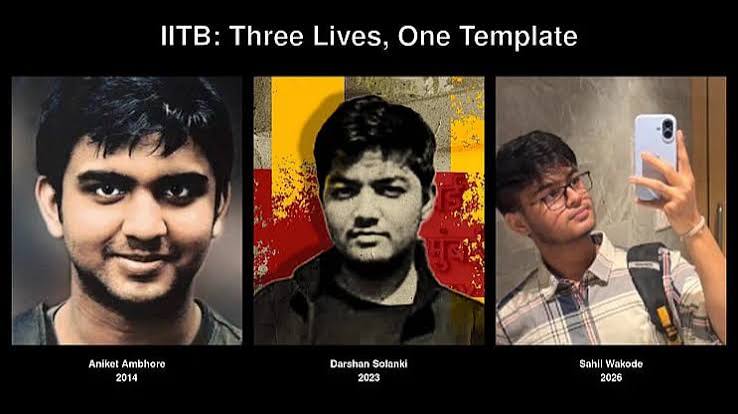
Student Group Alleges Inquiry Committees Follow a “Template,” Always Clean Chit to the Institute of Caste Discrimination Mumbai – The Ambedkar Periyar Phule Study Circle (APPSC), a student group at IIT Bombay, believes that the institute’s internal investigation into Sahil Wakode’s death has already concluded. According to the group, like the cases of Aniket Ambhore and Darshan Solanki, this case will also be considered to have no caste discrimination. The group alleged that the institute investigates the deaths of Scheduled Caste (SC) and Scheduled Tribe (ST) students according to a set “template.” It called Wakode’s death an “institutional death” and reiterated its demand for an independent, external investigation. In a statement on Sunday, the group cited the reports of two previous internal committees. The student group stated that a committee headed by Professor A.K. Suresh was formed after Aniket Ambhore’s suicide. According to the group, its report (page 24) concluded that the institute and its official bodies did not discriminate, either explicitly or implicitly. The committee headed by Professor Nand Kishore, formed to investigate Darshan Solanki’s death, stated in its report (page 6) that none of the people interviewed—friends, wingmates, teachers, TAs, mentors, and Hostel 16 staff—mentioned caste-based or any other discrimination. Neither Solanki himself nor any of his friends mentioned this. The APPSC stated that these findings reflect a pattern rather than an independent investigation, “a template is set and the conclusions are predetermined.” Questioning the functioning of the inquiry committees, the group stated, “These committees are formed by the Board of Governors and work in coordination to quickly rule out caste-based discrimination.” The group alleges that they operate in isolation, within a well-designed institutional framework, and consistently draw the same limited sample and ultimately exonerate the institution of all charges. The statement describes these ad hoc committees as “placeholders for institutional inertia.” The group also commented on the committees’ social composition. According to it, their members are not separate from the country’s social fabric, and caste does not exist for them because it is not an intimate experience of their lives. The group argues that this blanket denial of discrimination reveals how caste privilege masks inequality within the institution. The Students’ Collective argues that investigations demand evidence of “clear acts of caste aggression.” This reduces a multi-layered and nuanced phenomenon to a narrow set of criteria. According to the group, this places the burden of proof on the person least capable of doing so, as dominant groups define “intent” and “overt act.” The group also raised three questions about campus preparations: Have those with authority over students fresh out of school received caste sensitivity training? Is there a system in place to identify and bridge the gap in social and material status among peers? Why should SC/ST students be burdened with creating a safe and inclusive environment, when they already bear the double burden of proving merit, grappling with the “stigma of quotas,” and constantly being wary of their caste identity? What are the Supreme Court’s directives? The statement said that the Supreme Court’s guidelines in the case of Sukadeb Saha v. State of Andhra Pradesh and others are binding on every educational institution in the country from July 25, 2025. These require: Written protocols for immediate referral to mental health services. Twice-yearly training of staff to recognize warning signs. Dedicated mentors, especially during examination periods. The group states that the IIT Bombay administration is guilty on many of these counts, but is vulnerable to acquittal at every turn due to institutional apathy and the “dominance of caste-blind forces.” The statement questions the image of IITs as destinations for the country’s brightest minds. According to the group, rankings and research output create an image of a “smooth-flowing machinery of academic production,” while the merit that is celebrated is “upper caste dominance couched in the language of modernity and castelessness.” The group alleges that the system implicitly requires students to be upper caste, while the space for disadvantaged students is “limited and restricted.” According to it, acknowledging caste discrimination would be detrimental to the notions of post-colonial modernity and merit that privileged castes celebrate. Citing RTI data, it stated that as of September this year, out of 412 professors at IIT Bombay, only 5 are from the SC and 6 from the OBC categories, while there is no professor from the ST community. According to the group, this demonstrates that knowledge production is limited to a specific segment of society. Citing the institute’s motto, “Gyanam Param Dhyeyam,” the student collective also stated that the institute’s knowledge production process is an “echo chamber of upper-caste-disseminated knowledge,” making it devoid of diversity. The Students Collective states that IITs are designated as “Institutes of National Importance” under the Institutes of Technology Act, 1961. Citing scholar Jayaram (2011), it states that these institutions operate autonomously and have largely been free from government or political interference. According to the group, it is time to subject IITs to close scrutiny and open dialogue among stakeholders and civil society. It described the institute’s “caste amnesia” as “ridiculous and violent.” The statement also said that IITs have long been free from student politics, which should be condemned in a democratic framework. The group claims that the aim of these institutes is to produce an “obedient, caste-blind, and efficient workforce.” Referring to the Wakode case, the APPSC said that the same institutional indifference persists here, and the “falsity” of IIT excellence and reputation remains unchallenged. The group reiterated its demands, demanding an external and independent investigation without institutional interference or “unconditional support” for the accused. They demanded that the committee be chaired by a person from the SC/ST community and include at least one external expert member to ensure a fair investigation. The committee should have at least 50% SC/ST representation and at least 50% women members from various disciplines. Geetha Sunil Pillai Courtesy: Hindi News
Rahul Gandhi to raise MPSC aspirants’ demands before state govt
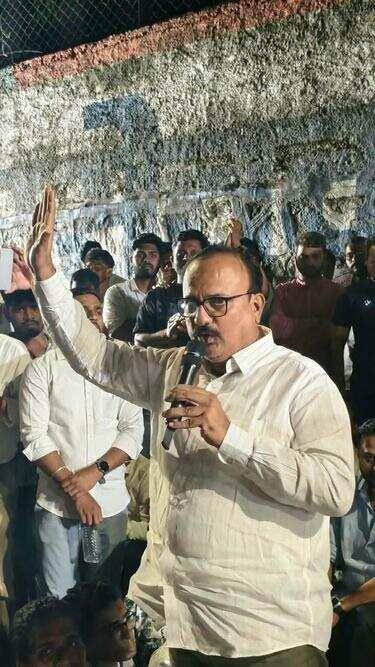
Pune: Leader of opposition in the Lok Sabha Rahul Gandhi on Saturday extended support to the ongoing agitation of MPSC aspirants in the city and said he would raise the protesters’ demands before Maharashtra govt. As several MPSC aspirants continued with their protest on the third day in Pune despite police denying them permission, Rahul took to his “X” handle to support their demands, including the removal of the MPSC chairperson and filling up over 70,000 vacant posts. “During the recent ‘Chhatron ki Goonj’ programme in Pune, I had demanded the Maharashtra chief minister to listen to the students, and ensure reforms in MPSC and transparency in examinations. However, nothing has happened and the aspirants are again staging a protest in Pune,” Rahul wrote. The protesters recently held a meeting with chief minister Devendra Fadnavis in Mumbai, where he assured them of a judicial inquiry against the current and former chairpersons of MPSC as well as other members, the continuation of offline examinations and reforms in the recruitment process. Following the meeting, the protesters announced calling off the agitation. But several aspirants gathered near Pune’s Abasaheb Garware College on Thursday and started an agitation despite police denying them permission. Rahul on his “X” handle mentioned that Youth Congress and NSUI would continue to stand by the protesters. “The demands of the protesters are not unjust. They need action and not just assurances. I will raise the issue again before the Maharashtra govt and demand a permanent solution. The institution that determines students’ future has been hijacked; we will not let it continue,” he wrote. Congress members, including state chief Harshwardhan Sapkal, former state minister Balasaheb Thorat and MLA Vishwajeet Kadam, joined the protest on Saturday. “We will continue to stand by the protesters in their fight till the system that plays with the students’ future is held accountable,” Sapkal said. Courtesy : TOI Note: This news is originally published on https:/timesofindia.com/bha and is used purely for non-profit/non-commercial purposes, especially human rights
Bags, mosaics and more: Transgender artisans bring their craft to Pune fair
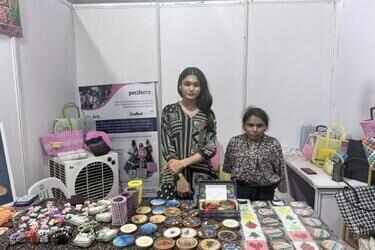
Pune: Eighteen transgender artisans are turning their craft into livelihood and offering a different outlook on life at the 19th Yellow Ribbon NGO fair in Pune. At their stall, palm-leaf baskets have been reimagined in wire, strips, and woven forms, while shards of coloured glass are cut, shaped, and pieced together into mosaics. Family rejection, discrimination, and difficulty finding housing and the barriers to finding formal employment have shaped their lives, but haven’t defined them. The artisans are part of PeriFerry Foundation all over India and at this fair organised between Oct 1 and 5 at Creaticity, Yerawada, they are displaying bags, baskets, coasters, keychains, mosaic artworks and decorative frames made by them. At PeriFerry’s Pune workshop, in-house teams of experienced artisans and workers teach and help newer members learn the techniques. Among them are two transgender women who have taken on leadership roles, with one overseeing the artisan team and another who is an artisan and in charge of quality control. “One of the craft traditions is kudai, a form of basketry associated with Tamil Nadu. Traditionally, women made these baskets by weaving and shaping palm leaves into containers used for everyday purposes. As materials and consumer preferences changed, the craft evolved, with contemporary makers experimenting with wire and other materials while retaining the basic woven structure and forms,” said Neelam Jain, founder of the NGO. Artisans use the traditional idea as a starting point for bags and baskets that have a more contemporary finish. “The other major craft is mosaic. Small pieces of glass are cut and shaped before being assembled into patterns, images and decorative works. The practice draws on traditions found across Europe and the Middle East, where mosaic has been used for centuries in architecture and art. At the workshop, the painstaking process can take a day or more for more intricate pieces,” said Jain. Artisans are paid a monthly salary rather than being dependent on individual sales. “We don’t think livelihood should depend on whether something sells that month,” Jain said. Accommodation and basic food are also provided, an important consideration for workers who can struggle to find housing. “The people who join us are those who genuinely need a job, whether because they are not accepted by their families or because of the other challenges transgender people face. We identify where they need support and train them in-house,” said Jain. For the 18 transgender artisans this is not just a skill or steady income but perhaps most importantly, a measure of independence. Courtesy : TOI Note: This news is originally published on https:/timesofindia.com/bha and is used purely for non-profit/non-commercial purposes, especially human rights
Sending obscene videos on WhatsApp also falls within the scope of ‘public view’: Bombay High Court’s decision in SC/ST Act case, no anticipatory bail for accused
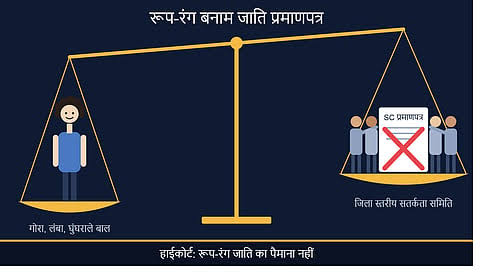
The accused contacted a woman and demanded physical relations. When she refused, he sent an obscene video made on his mobile phone to her husband and close relatives via WhatsApp. Nagpur – The Nagpur bench of the Bombay High Court has rejected the anticipatory bail plea of a government employee from Ghughus (Chandrapur district) in an SC/ST Act case. Justice Y.G. Khobragade issued the order on September 29. The case relates to the posting of obscene videos and photos of a married woman belonging to the Scheduled Caste on social media. The case pertains to Criminal Appeal No. 127/2026, in which the accused is Nikhil, son of Madhukar Thepale (28 years old). He is in government service and lives near the Sneh Prabha Mangal office in Ward No. 3 of Ghughus. Advocate Mahesh Rai appeared for the accused, while Additional Public Prosecutor G.S. appeared for the state. Umale and the victim’s lawyer, Sanket Joshi, appeared. According to the prosecution, the victim is a married woman belonging to the Scheduled Caste. The accused and the victim live in the same area and are known to each other. It is alleged that on November 4, 2025, the accused contacted the woman and demanded physical relations. When the woman refused, he sent an obscene video made on his mobile phone to the woman’s husband and close relatives via WhatsApp. According to the FIR, nude photos were also sent to the woman’s sister-in-law from an unknown mobile number. The woman’s sister also received calls and WhatsApp messages from the accused’s mobile number, stating that he wanted to speak with her. In the FIR, the woman has listed the mobile numbers of her husband, sister-in-law, mother-in-law, and the accused. On November 5, 2025, a case was registered at the Ghughus police station under sections 77 and 78 of the Indian Penal Code, 2023, sections 66(E) and 67 of the Information Technology Act, 2000, and sections 3(1)(r), 3(1)(w)(ii), and 3(2)(va) of the Scheduled Castes and Scheduled Tribes (Prevention of Atrocities) Act, 1989. The accused initially sought anticipatory bail in the lower court, which was rejected. Subsequently, he filed Criminal Appeal No. 599/2025 in the High Court. On February 9, 2026, he withdrew this appeal with the concession that he could file a new application after the charge sheet was filed. The accused then filed Anticipatory Bail Application (ABA) No. 73/2026. On February 21, 2026, the Special Judge (Atrocities Act) and Additional Sessions Judge of Chandrapur rejected this application. The accused approached the High Court for the second time against this same order. On March 12, 2026, the High Court granted interim relief and temporary anticipatory bail on certain conditions. The accused submitted a bond and sureties in the lower court. The charge sheet in the case has now been filed. The accused stated that the SC/ST Act does not apply if the victim is merely sent via WhatsApp. Advocate Rai stated that according to the FIR, the accused demanded sexual intercourse and, after being refused, sent videos and photos to her husband and relatives. According to him, merely sending the sexual favors via WhatsApp does not constitute offenses under Sections 3(1)(r), 3(1)(w)(ii), and 3(2)(va) of the SC/ST Act, and therefore, the bar on anticipatory bail under Section 18 of the Act does not apply. He argued that the lower court’s order was passed without considering the facts and law, and therefore, it should be set aside. Additional Public Prosecutor Umale, representing the state, and Advocate Joshi, representing the victim, strongly opposed the appeal. The prosecution stated: The accused has been absconding since the FIR was filed. The accused knew the victim’s caste. The incriminating videos and photos are stored on the accused’s mobile phone, but the mobile phone has not yet been seized. Custodial interrogation is necessary to seize the mobile phone and gather further information. Publicly humiliated the victim by circulating nude photos on the mobile phone after she refused his demand for sexual intercourse. After reviewing the records, Justice Khobragade stated that the accused was well aware of the victim’s caste. She also stated that the accused is not a member of a Scheduled Caste or Scheduled Tribe, while the victim is a Scheduled Caste. The accused has not denied this fact. The court prima facie held that the accused made nude videos and photos of the woman and circulated them via WhatsApp when his sexual desires were not satisfied. Regarding the absconding of the accused, the court cited Lavesh v. State (NCT of Delhi) (ALL MR (Cri.) 3300) and stated that generally, the question of granting anticipatory bail to a fugitive or proclaimed offender does not arise. The court remarked: “The accused in this case has been absconding since the date of registration of the crime; therefore, in my opinion, he is not entitled to anticipatory bail.” Regarding the argument of “public view,” the court did not accept the argument of the accused’s lawyer that the accused did not publicly insult the victim with caste-related slurs. The court said: “Making objectionable videos/photos of the victim and sending them to her husband, close relatives, and others through social media such as WhatsApp certainly falls within the scope of “public view” within the meaning of Section 3 of the Atrocities Act.” The court cited the Supreme Court’s case of Kiran v. Rajkumar Jivraj Jain (2025 AIR (SC) 4083). According to this, Section 18 of the SC/ST Act bars anticipatory bail under Section 439 of the Code of Criminal Procedure for these offenses. The court stated in its own interim order that the interim relief granted on March 12, 2026, was on the grounds that the provisions of the Act were not applicable to the FIR. However, upon reviewing the material now on record, it states: “Prima facie, the essential ingredients of the offenses under Sections 3(1)(w)(ii) and 3(2)(va) appear to be present, as objectionable videos/photos of the victim were circulated on social media from the accused’s mobile phone, which is in the public domain.
Sons gone, justice still elusive: Two Dalit families in Mumbai and Thoothukudi, holding photographs, ask one question: When will justice be delivered?
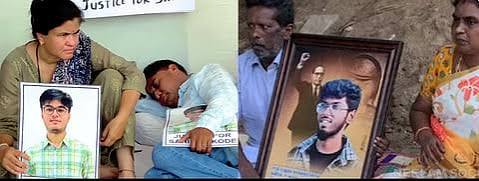
Both families believe society’s casteist mindset is responsible for their son’s death, and both believe the culprits are still eluding the law. Mumbai/Thoothukudi—Only parents who have lost a young son can truly understand the pain of losing one. Ravindra and Sonali Wakode sit hungry at Azad Maidan in Mumbai, holding a photograph of their 20-year-old son, Sahil. Sahil was a second-year B.Tech student at IIT Bombay. He committed suicide in his hostel room on September 18th. Ersaan, Chandrashekhar and Tamilselvi in Arumugamangalam, Tamil Nadu, are staging a protest, holding a photograph of their beloved 27-year-old son, Kevin. Kevin was a software engineer who was brutally murdered in Tirunelveli in July 2025, allegedly in a caste-based honor killing. The parents sitting on the protest hold their sons’ photographs and helplessness in their eyes, and they each have one question: will their sons get justice? Along with the grief of losing their sons, they now have to fight for justice. They must seek justice from the same system that Dalit and marginalized families often struggle to achieve. Therefore, whoever extends a helping hand, whether a leader, a commission, or an ordinary person, they see a glimmer of hope that justice may finally be achieved. Kevin’s mother and father tearfully declared that they had lost Kevin and that no other child should suffer the same fate. Sahil’s father said that the fast will continue until the accused are arrested. Two cities, two protests, but the parents’ pain is the same: their sons are gone, and now all that remains is the hope for justice. Parents devastated after chargesheet against son’s murder accused dismissed 27-year-old IT engineer Kevin Selvaganesh was a resident of Arumugamangalam near Eral in Thoothukudi district. He was murdered with a sword-like weapon on July 27, 2025. He belonged to the Scheduled Caste and was in love with a young woman. The young woman’s younger brother, Surjeet, was arrested for the murder. Surjeet surrendered at the police station within hours of the murder. Surjeet’s parents, Saravanan and Krishnakumari, were also accused in the case. Both were in the police force. Krishnakumari was a sub-inspector in the Tamil Nadu Special Police Force and was arrested by the CB-CID nine months after the incident. Following the CB-CID investigation, a lengthy chargesheet was filed in court. This 800-page chargesheet reportedly includes CCTV footage, forensic evidence, and statements from 83 witnesses. The case was being heard in the Special SC/ST Atrocities Prevention Act Court in Tirunelveli. The prosecution alleged that after the incident, Surjeet told his father, and his parents together asked him to destroy his clothes and mobile phone and remove the two-wheeler’s number plate. But on Tuesday, September 29, Justice R. Vijayakumar of the Madras High Court’s Madurai Bench dismissed the charge sheet against Saravanan and Krishnakumari. The court stated that there was no evidence linking them to the crime. Citing a Supreme Court ruling, the court stated that mobile tower information only indicates the range of the tower, not the exact location of the phone. With this order, both were acquitted of the murder charge. However, the court rejected Surjeet’s relative, Jaipal’s, petition seeking to dismiss the charge sheet against him. The court stated that the question of Jaipal’s role in the conspiracy would be decided in the trial. Following the verdict, Kevin’s father, Chandrashekhar, and mother, Tamilselvi, staged a sit-in protest. They sit in front of their house in Arumugamangalam with a picture of Kevin. They sit under a banyan tree in front of the house and say that the charges were dropped due to lack of evidence. Tamilselvi says, “What were we fighting for all this time? The charge sheet has been dismissed citing lack of evidence. If that’s the case, where did we get justice?” The protesting parents questioned how the arrests were made if there was insufficient evidence in the case. They demanded that the CBI continue the investigation and gather more evidence. Tamilselvi said, “Since the people involved in this case are police officers, their role should also be thoroughly investigated. The incidents that we believe led to the destruction of evidence in the case should also be investigated.” She further stated, “We have no personal enmity with anyone. We believe in justice and fairness. We have been fighting solely on the basis of justice. We respect the court’s decision. At the same time, we want accurate answers to our doubts and questions.” Tamilselvi appealed to Chief Minister C. Joseph Vijay to intervene, initiate an appeal on behalf of the government, and take steps for further investigation. She stated that her protest would continue until her questions were answered and her son received justice. The case has also drawn political backlash. VCK leader Thol. Thirumavalavan called the decision “shocking.” He said that cancelling the charge sheet before the trial began would set a bad precedent. Leaders have reached out to Kevin’s family in the past. Following the incident, Kanimozhi MP and ministers K.N. Nehru and Anitha Radhakrishnan visited the family, and then-Chief Minister M.K. Stalin consoled the parents over the phone. Social Justice Minister Vanni Arasu also visited Arumugamangalam to meet the family on the first death anniversary. Sahil’s parents continue their hunger strike at Azad Maidan for the fifth day. Sahil, the 20-year-old son of Ravindra and Sonali Wakode, residents of Yavatmal, was a second-year B.Tech student at IIT Bombay. He was found dead in his hostel room on the evening of September 18th. That same day, he was allegedly caught using ChatGPT on his mobile phone during his mid-semester exam. The parents allege that Sahil had complained about caste discrimination at the institute. Professor Suryanarayan Dulla is named in the police FIR. He has been charged with abetment to suicide. The FIR also mentions caste discrimination. Professor Dulla has been placed on leave to ensure a fair investigation. The institute’s board has formed a 10-member inquiry committee, while the Mumbai Police Crime Branch is investigating the case. The Crime Branch is investigating CCTV recordings