
Dalit student suicide: Kerala High Court seeks State’s response on professor Dr. M Kodanda Ram’s anticipatory bail plea

Dr M Kodanda Ram, a professor at Kannur Dental College, has challenged a sessions court’s order denying him anticipatory bail. The Kerala High Court Tuesday asked the State government to respond to an anticipatory bail plea moved by Dr. M Kodanda Ram, a dental college professor, who is accused in a case related to the suicide of a Dalit student Nithin Raj [Dr M Kodanda Ram v State of Kerala & ors]. Justice PV Balakrishnan also issued notice to the victim’s mother Latha and posted the matter for further consideration on May 15. Raj, who belonged to Dalit community, died on April 10 after he jumped from a building near the college. He had allegedly faced caste-based harassment from the faculty at Kannur Dental College. Dr. Ram, the head of department at the Kannur Dental College, is the prime accused in the case. Following a complaint by the student’s father, the police booked Dr. Ram and two other staff members for abetment of suicide and for offences under the Scheduled Castes and the Scheduled Tribes (Prevention of Atrocities) Act, 1989 (SC/ST Act). Dr. Ram and another faculty member Dr. Sangeetha Nambiar, had earlier approached a sessions court seeking anticipatory bail. While the sessions court granted relief to Dr. Nambiar on April 25, it denied anticipatory bail to Dr Ram. This prompted him to approach the High Court under Section 14A of the SC/ST Act, which provides for an appeal against orders of the special court, including denial of anticipatory bail. In his plea, Dr. Ram has denied allegations of caste-based harassment or abetment of suicide, stating that the student was under distress due to financial issues linked to a loan taken by him through a mobile application. He further said that recovery agents were harassing Raj and had even contacted a faculty member, listed as a reference contact. The college authorities had questioned the student over that, Dr. Ram’s plea said. It was shortly after this interaction that student allegedly committed suicide, he added. The plea was filed through advocates S Rajeev, V Vinay, MS Aneer, Anilkumar CR, Sarath KP, Dipa V, KS Kiran Krishnan, Akash Cherian Thomas, Azad Sunil, TP Aravind, Maheswar Padickal, Akshara S and Nivedita Rajeev. Praisy Thomas Courtesy : Bar And Bench Note: This news is originally published on https:/barandbench.com/bha and is used purely for non-profit/non-commercial purposes, especially human rights
VD Satheesan says Congress high command will soon decide on next CM
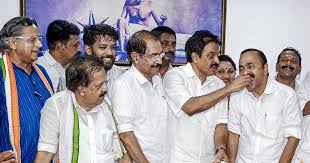
Satheesan said he was happy to have delivered on his promise given to Congress leader Sonia Gandhi while assuming the post of the Opposition Leader that he would guide the party to win. THIRUVANANTHAPURAM: Congress leader and potential chief minister candidate V D Satheesan on Monday said the party high command will soon take a decision on who will lead the state after consulting with various coalition partners of the UDF. Addressing the media after the UDF delivered a landslide victory in Kerala, elbowing out the CPI(M)-led LDF government, which ruled the state for two consecutive terms, Satheesan said it reflected the people’s strong decleration about the triumph of secular forces. Satheesan said he was happy to have delivered on his promise given to Congress leader Sonia Gandhi while assuming the post of the Opposition Leader that he would guide the party to win. The Congress leader said all communities and regions voted for the UDF, including traditional left voters and some party workers, letting the front breach several CPIM bastions. “We had told them that we are the ones upholding Nehruvian leftist view and the LDF has become the far right. The left sympathisers as well as some of their leaders accepted our perspective,” he said. Satheesan also said that the women and the youth have contributed to UDF’s win and assured to work towards fulfilling the front’s poll promises. Speaking on the UDF’s poll strategy that facilitated the historical win, Satheesan said, “In 2011, we came to power, but had won only 72 seats. Many social groups had veered off from the UDF, but we brought them back. We had planned several surprises, including in Ambalappuzha and Taliparamba. We had proudly welcomed G Sudhakaran to our fold.” G Sudhakaran, a veteran Communist leader, had resigned from the party and contested as an independent with UDF support in his traditional bastion, Ambalappuzha. He won by a margin of over 25,900 votes. Satheesan also reiterated the Congress’s allegation that the BJP and CPM leaders had entered into an electoral pact. The LDF suffered a major setback as results were declared for the crucial Assembly elections on Monday. The CPIM-led front was reduced to just 35 seats, while the UDF passed the majority mark with over 90 seats. The BJP, which has struggled to make a mark in the state politics for several years, delivered a surprising performance, winning three seats. Courtesy : TNIE Note: This news is originally published on https:/thenewindianexpress.com/bha and is used purely for non-profit/non-commercial purposes, especially human rights
Ganesh Kumar faces shock defeat in Pathanapuram after 25-year winning streak
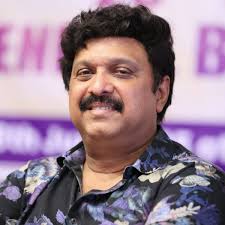
The Kerala Congress (B) chief is trailing Congress candidate Jyothikumar Chamakkala by more than 5,000 votes. Keralam’s Transport Minister and actor K B Ganesh Kumar, who has remained unbeaten in electoral politics for over two-and-a-half decades, is on the brink of defeat in the Pathanapuram constituency as vote counting in the Kerala Assembly elections enters its final stages, according to Election Commission figures. The Kerala Congress (B) chief is trailing Congress candidate Jyothikumar Chamakkala by more than 5,000 votes. In the 2021 Assembly polls, Kumar had defeated Chamakkala by nearly 15,000 votes. However, Chamakkala has continued his constituency-level work in Pathanapuram over the past five years, which appears to have translated into significant gains in the 2026 election. Kerala Congress (B), traditionally aligned with the UDF, joined the LDF ahead of the 2021 election following the death of party founder R Balakrishna Pillai, with the shift led by his son, Ganesh Kumar. During the campaign, controversy erupted after Congress leaders targeted Kumar over allegations related to his purported role in defaming former Chief Minister Oommen Chandy in a sexual assault case that was later closed by the CBI. Kumar had expressed confidence during the campaign that he would retain the seat with a record margin. The election is being closely watched as a high-stakes contest between the ruling LDF, which is seeking a rare third consecutive term, and the UDF, which is aiming to return to power after nearly a decade. The NDA, though not considered a frontrunner for power, is hoping to improve its presence and vote share in the state. Courtesy : TNIE Note: This news is originally published on https:/thenewindianexpress.com/bha and is used purely for non-profit/non-commercial purposes, especially human rights
Call to bring in law to end caste bias on campuses gets louder in Kerala

Higher Education Minister R Bindu said that a legal solution for all these issues was part of the University Laws Amendment Bill brought in by the LDF government, which had not been signed by the Governor. THIRUVANANTHAPURAM: One hartal and 19 days after the suicide of Nithin Raj, the BDS student from Anjarakandy Dental College, discussions seem to revolve around the incident alone, rather than the repeated incidents of caste-slurs and discrimination being faced by students in the higher education sector. Calling caste discrimination in higher education institutions a problem with multiple aspects involved, Kerala State Higher Education Council member secretary Rajan Varughese said that there is a critical legislative vacuum to prevent atrocities against students coming from marginalised communities inside college campuses. “The Rohith Vemula Act, which could have been a one-stop solution to all such issues, has been stayed by the Supreme Court after protests by people with supposed vested interests. Even though Kerala has a gross enrolment ratio of SC/ST students way higher than the national average, we cannot be certain that discriminatory practices do not exist in our higher education institutions — be it private or public,” he said. Pointing out that the Karnataka government passed the Rohith Vemula Prevention of Discrimination, Exclusion or Injustice) (Right to Education and Dignity) Bill, less than two weeks ago, Dalit activist K Santhosh Kumar questioned what is stopping Kerala from implementing such a legal framework in the state. “A legislative reform is the immediate solution, but it cannot be a silver bullet to eradicate the issue. But beyond that, the system needs to democratise higher education institutions by ensuring proper representation of people from all communities, which should not just be limited to students, but extended to teachers, non-teaching staff, and even those in the administration. If we are able to bring this to the aided sector as well, the representation itself can ensure justice,” he said. Santhosh also added that the number of SC/ST suicides in Kerala’s campuses may not be an alarming figure, but the number of dropouts from these communities, particularly from professional colleges, is a matter of concern. However, Higher Education Minister R Bindu said that a legal solution for all these issues was part of the University Laws Amendment Bill brought in by the LDF government, which had not been signed by the Governor. “The bill had put forward key suggestions, which also carry the spirit of addressing issues of students from marginalised communities. It suggested the mandatory formation of a Students’ Grievance Redressal Cell at both the university and institution levels, including self-financing colleges. Along with this, a Students’ Charter of Rights was also part of the bill presented in the legislative assembly,” Despite the emergence of multiple cases and allegations at different points in time, conclusive data on discriminatory incidents against students from SC/ST groups are not available. Officials from the SC/ST welfare departments said consolidated data is not available about atrocities against college students. “Even at the national level, we just monitor the number of campus suicides. No separate provision has been allocated to monitor the caste-based deaths,” a top official working in the higher education department said. However, some Dalit organisations claim that at least 12 students from backward communities were found dead in the state’s colleges in the last 10 years. Aswin Asok Kumar Courtesy : TNIE Note: This news is originally published on https:/thenewindianexpress.com/bha and is used purely for non-profit/non-commercial purposes, especially human rights
Dalit Organisations’ Hartal Over A Dental Student’s Suicide Disrupts Normal Life In Kerala
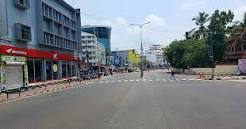
Action council demands arrest of teachers accused of caste discrimination and harassment THIRUVANANTHAPURAM: A dawn-to-dusk hartal called by Dalit/Adivasi organisations to protest the delay in arresting those accused in the death of BDS student Nithin Raj at Kannur Dental College disrupted normal life in several parts of Kerala. Organized by the Nithin Raj Action Council, comprising 56 Dalit and Adivasi groups, the protest affected public transport, businesses, and both private and government offices across many districts. Nithin, a first-year BDS student belonging to the Scheduled Caste community, died on April 10 after falling from a building, sparking outrage across the state. His family accused faculty members of caste- and colourbased discrimination. A case was filed against Dr M.K. Ram, Head of the Dental Anatomy Department, and Associate Professor Dr Sangeetha Nambiar under the SC/ST (Prevention of Atrocities) Act, but no arrests have been made so far. Nambiar has secured interim bail from the Thalassery Additional Sessions Court. Dalit organisations have called for the arrest of the accused teachers, the implementation of the Rohit Vemula Act, and financial compensation of Rs 10 crore for the victim’s family. Traffic disrupted Traffic came to a halt on national and state highways in several areas as protesters blocked roads. Passengers arriving at the Inter-State Bus Terminus in Thiruvananthapuram, as well as at railway stations and bus stations across Kerala, were stranded for hours without access to buses or taxis Students appearing for the NEET examinations were hit hardest, with many unable to reach their exam centres on time. Despite the Vyapari Vyavasayi Ekopana Samithi announcing that shops and markets would stay open, hartal supporters forced many to close. Reports from Kasaragod, Kannur, Kozhikode, Palakkad, Thrissur, Ernakulam, Alappuzha, Idukki, Kottayam, Pathanamthitta, Kollam, and Thiruvananthapuram indicated that the hartal disrupted normal life, affecting public transport, businesses, and various institutions. Although the Action Council stated that vehicles would not be forcibly stopped, supporters blocked traffic on highways. Police intervened in several areas to remove protesters and restore movement. Essential services like milk supply, newspapers, hospitals, and weddings were exempted. Kerala HC initiates contempt proceedings The Kerala High Court on Tuesday initiated Suo motu contempt proceedings over the hartal organised by Dalit and Adivasi groups, directing the DGP (Law and Order) to submit a report by evening on the reported violence and blockades, and issued notices to those who called for the hartal. Courtesy : Deccan Chronicle Note: This news is originally published on https:/deccanchronicle.com/bha and is used purely for non-profit/non-commercial purposes, especially human rights
Kannur Dental College Student Death Case: Dalit Organizations Demand ₹10 Crore Compensation and High Court-Monitored Probe

Dalit organizations outraged over the suspicious death of student Nitin Raj at Kannur Dental College; demand ₹10 crore in compensation, a High Court-monitored investigation, and a ‘Kerala Bandh’ (state-wide shutdown) on April 28. A tragic incident in Kannur, Kerala, has shaken the entire state. Demands for justice have intensified regarding the suspicious death of Nitin Raj—a first-year BDS student at the Kannur Dental College in Ancharakandy—who died after falling from the college building. On Tuesday, an Action Council comprising several Dalit organizations in Kerala demanded that the state government provide compensation of ₹10 crore to the victim’s family. During a press conference held at the venue, the Action Council refused to accept the incident as a mere suicide, instead labeling it an “institutional murder.” They have demanded an impartial investigation into the entire affair, to be conducted under the direct supervision of the Kerala High Court. It is worth noting that on April 10, Nitin Raj was found in a critically injured state after falling from the college building; he subsequently succumbed to his injuries while undergoing treatment. Protesting the student’s death and seeking justice for the perpetrators, the Action Council has also called for a state-wide strike across Kerala on April 28. The organizations have categorically stated that the strictest possible legal action must be taken against the faculty members responsible for this tragic incident. Meanwhile, on Tuesday itself, Nitin Raj’s father and other family members visited the dental college. Upon seeing the exact spot within the college premises where his son had been found lying critically injured, the father could not hold back his tears. It was a deeply emotional scene that moved everyone present to tears. Given the gravity of the case, the police have registered a case against two faculty members: Dr. M.K. Ram and Dr. Sangeetha. Charges have been filed against both individuals for abetment to suicide, as well as under the stringent provisions of the SC/ST Act. Nitin’s family members and supporters allege that he was being subjected to constant harassment regarding his caste and physical appearance. Meanwhile, to evade arrest, both accused doctors have filed anticipatory bail petitions in the District Court. The case took a new turn when it emerged that the student’s death was also linked to online loan apps. The police have registered two FIRs against various online loan apps. In one of these cases, three individuals operating an illegal loan app from Noida, Uttar Pradesh, have also been arrested. However, Nitin’s family categorically asserts that pressure related to loans alone could not have been the cause of their son’s death. They firmly believe that the mental harassment he endured within the college campus was the primary reason behind this tragedy. Rajan Chaudhary Courtesy: Hindi News
Kerala Dental Student’s Suicide: 52 Dalit Organisations Call Hartal On April 28; Demand HC-Monitored Probe

Council demanded ₹10 crore compensation for Nithin Raj’s family, cancellation of the college’s affiliation, strict action against faculty and a transparent and time-bound investigation. Thiruvananthapuram: A joint action council comprising 52 Dalit organisations in Kerala has called for a statewide hartal on April 28, alleging serious lapses in police investigation into the death of Nithin Raj R L, 22, a first-year student of Kannur Dental College in Anjarakandy, and that the probe has been inadequate and biased. The dawn-to-dusk shutdown is scheduled from 6 AM to 6 PM. The action council spearheading the protest has demanded a judicial probe under the supervision of the Kerala High Court, claiming that the police are attempting to shield those responsible. General convener Sunny M Kappikkad, addressing the media here on Tuesday, alleged that key evidence has been ignored and that there has been a deliberate attempt to attribute the death to unrelated factors such as loan app harassment. The council demanded immediate government intervention to ensure a fair and impartial investigation while citing a lack of progress in the case. The JAC has also planned to organise preparatory protest meetings scheduled across districts on April 24. The organisations have raised serious concerns over the handling of the case and demanded a probe under the supervision of the Kerala High Court. The council has demanded ₹10 crore as compensation for Nithin Raj’s family, cancellation of the college’s affiliation, strict action against those found guilty and called for a transparent and time-bound investigation. Son of a daily-wage labourer from Uzhamalakkal here, Nithin, succumbed to his injuries after a fall from the fifth floor of the college building on April 10. Nithin joined the college only in September last year when he secured a BDS seat after repeated attempts at the NEET examination. The incident took a serious turn when family members and fellow students alleged sustained caste-based harassment by faculty members. Later, the college suspended two faculty members – Dr M K Ram, Head of the Department of Oral Pathology, and Dr K T Sangeetha Nambiar, who went absconding after police turned the heat. The action council accused the police of failing to register an FIR based on the complaint filed by Nithin Raj’s parents. It also alleged possible political interference in the case, pointing to the college management’s lack of response and previous allegations against its authorities. “We’re not satisfied with the current police investigation and accused authorities of attempting to shield those responsible,” Sunny M Kappikkad said. He claimed that crucial aspects of the case were being overlooked and that efforts were being made to attribute the death to unrelated factors such as alleged loan app issues. The action council further alleged that the student had faced caste- and colour-based harassment prior to his death. It also claimed that several individuals, including members of the college administration, should be brought under the ambit of investigation. However, according to the council, no meaningful progress has been made so far. Courtesy : ETV Bharat Note: This news is originally published on https:/etvbharat.com/bha and is used purely for non-profit/non-commercial purposes, especially human rights
Stories that spill past fiction at Verchol Dalit Literature Festival 2026

Two Dalit writers reclaim myth, memory and emotion, challenging demands for realism and the privilege of stories placed above human rights The Pamba river moves as its many droplets touch the lands they pass. It doesn’t stop. As the river completes its journey, it carries some from one bank to the other, holds some in its coolness. But at times, the river tricks too. It hides large rocks, and deep holes beneath the surface. The consequence? People slip and are taken away into the gushing water. The villagers residing on the bank of Pamba had a different story of the river. A powerful man who once created nuisance for the community was drowned there by the people. As he went under, he dragged 40 others with him. The river now holds 41 ghosts, and they pull the living down. Aleena, a Dalit poet and Ambedkarite feminist from Kerala, told this story at Muthamizh Peravai on Saturday, during the Verchol Dalit Literature Festival 2026, held as part of the fifth edition of Vaanam Art Festival organised by Neelam Cultural Centre. “People found the idea of a group conspiring against someone scarier than the danger of the river itself. These magical explanations reveal what people fear, what they value, and what they consider important,” she said. The session, moderated by writer and translator Reena Shalini, brought together Aleena and writer Vinil Paul for a conversation on Dalit history and fiction. Reena opened by reading a Tamil translation of a poem from Aleena’s collection of 91 poems, Silk Route, which received recognition from the Kerala Sahitya Akademi. The poem follows a woman who cannot attend a wedding because she has no proper sari, and the ghost of her absence haunts the celebration like silk draped over grief. The conversation turned quickly to what fiction is permitted to do. Aleena observed that Dalit writers face a persistent demand for realism, even in their imaginative work. “People ask which real incident a character refers to,” she said. “That is why Dalit autobiographies are celebrated more than fiction. Reality itself is seen as powerful.” Meanwhile, she argued, dominant groups treat their own stories as history worth protecting, sometimes above human rights. She pointed to the Ram temple dispute and the founding of Israel as examples of fictional or mythological narratives used to legitimise displacement and violence. “To place stories above human rights is privilege,” she said. On the question of emotional range in Dalit writing, Aleena shared, “Life is a mix of generational trauma and inherited pleasures.” She described pressure from audiences who expect Dalit writers to write only about suffering, and pushed back against it. “There is celebration, happiness, hope, small joys and big joys. People still do not believe we experience the full range of emotions.” Vinil, whose book Adimakeralathinte Adrishyacharithram examines the history of slavery in Kerala, turned to structural power. He cited Dr BR Ambedkar’s warning that India risked becoming an oligarchy and named Kerala as its clearest example. Two communities, Nairs and Syrian Christians, dominate the state’s political parties, media, cinema, and educational institutions, he said. “For almost 35 of Kerala’s 69 years of governance, the chief ministers have come from the Nair community.” Reservation functions as a token gesture in most institutions. Even KR Narayanan, who studied at the London School of Economics and became the President of India, faced caste barriers when he returned to Kerala. On Malayalam cinema’s celebrated recent run, Aleena offered little applause. “It is not democratic in terms of capital,” she said. “People who control the industry extract stories from marginalised communities, profit from them, and do not share that capital with the communities those stories come from.” She highlighted the film Lokha: Chapter 1 featuring Adivasi characters as examples of surface representation without genuine understanding. “I have always felt a lot of hypocrisy in Malayalam filmmakers when they deal with marginalised stories,” she noted. What the afternoon made clear is that the fight is not only over who tells the stories, but over who profits from them. When Aleena had arrived at the festival, she said she felt something rare. “Usually, I feel like I am given a chair in a place where I do not belong. This is the first time I feel like I belong to the entire space.” Vaanam Art Festival was a space Dalits had built for themselves, and that, as Aleena made clear, makes all the difference. Courtesy : TNIE Note: This news is originally published on https:/thenewindianexpress.com/bha and is used purely for non-profit/non-commercial purposes, especially human rights
CCTV Inside Kerala Principal Office Shows Moments Before Dalit Student’s Death
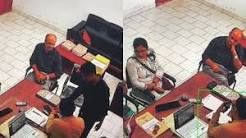
Teachers had earlier stated that Nithin Raj was called to the principal’s office after they began receiving repeated calls from the recovery agent, which they described as persistent harassment. The visuals also show Nithin Raj explaining his situation to teachers inside the principal’s room.Kannur: Days after Nithin Raj, a Dalit student, fell from the fifth floor of his college building and died, NDTV has accessed CCTV footage from inside the principal’s room at Anjarakandy Dental College in Kerala’s Kannur that captured the events that unfolded about 25 minutes before his death. According to police sources, the footage shows teachers speaking to representatives of an instant loan app that had allegedly been making repeated recovery calls linked to a loan taken under Nithin Raj’s name. The agent on the call is heard refusing to remove contact numbers of people connected to the student, including that of a professor, from the reference list until the payment is completed. The visuals also show Nithin Raj explaining his situation to teachers inside the principal’s room. In another CCTV clip, Nithin Raj is seen walking away in tears – a development that investigators are treating as significant in reconstructing the sequence of events leading up to his death. Teachers had earlier stated that Nithin Raj was called to the principal’s office after they began receiving repeated calls from the recovery agent, which they described as persistent harassment. Meanwhile, two teachers named as accused in the case, Dr Ram and Dr Sangeetha Nambiar, have approached the Thalassery Sessions Court seeking anticipatory bail, arguing that they had no role in the suicide and that threats from the loan app may have led to the student’s death. Nithin Raj, a Dalit from a daily wage labourer’s family in Thiruvananthapuram, had secured a BDS seat at Anjarakandy Dental College in Kannur. On the afternoon of April 10, he fell from the fifth floor of his college building and died. What followed was a storm: audio clips of a young man describing caste-based humiliation by his professors, a loan app whose recovery agents had been threatening his teachers, a meeting in the principal’s office, and a family that says they knew none of this was about money. The parents held the caste-based ill treatment by teachers responsible for their son’s death. But the latest police investigation has also revealed continuous harassment from a loan recovery app as a parallel thread that authorities are now probing. Chakkarakkal police initially registered a case of unnatural death. By April 12, they added charges of abetment of suicide under Section 108 of the Bharatiya Nyaya Sanhita and invoked the SC/ST Prevention of Atrocities Act. The FIR was based on a complaint filed by Nithin’s father, Rajan. Kannur City Police Commissioner P Nidhinraj confirmed the formation of a Special Investigation Team headed by Assistant Commissioner of Police Hari Prasad, with cyber cell experts included in the team. Reported by: Aswin Nandakumar Courtesy : NDTV Note: This news is originally published on https:/ndtv.com/bha and is used purely for non-profit/non-commercial purposes, especially human rights
Kerala transgender couple to legally identify as ‘parents’

Backed by their lawyer, Padma Lakshmi, they successfully lobbied for a certificate that honours their transition while documenting their daughter’s lineage. KOZHIKODE: In a significant victory that redraws the boundaries of family law in India, transgender couple Zahad and Ziya Paval have secured a gender-neutral birth certificate of their daughter Zabiya. The document, which replaces the traditional ‘Father’ and ‘Mother’ labels with the inclusive term ‘Parents’, marks the culmination of a determined three-year struggle against bureaucratic rigidity. The couple captured the nation’s attention in February 2023 when Zahad made history by becoming the first transgender man in India to conceive and give birth. However, the joy of parenthood was quickly met with a legal hurdle: the Kozhikode corporation insisted on recording Zahad as the ‘mother’ and Ziya as the ‘father’ officially. For the couple, accepting the labels meant denying their true selves. “Our fight was for our identity. We insisted from the beginning that our official documents must reflect who we truly are,” said Ziya. When the couple faced technical issues in the documentation process, they moved the High Court. There, they argued that forcing gendered roles onto their family structure infringed upon their fundamental rights. Backed by their lawyer, Padma Lakshmi, they successfully lobbied for a certificate that honours their transition while documenting their daughter’s lineage. On the court’s intervention, the couple expressed a profound sense of relief. “Replacing the gender-specific columns with ‘Parents’ is a huge recognition of our transition and our lives,” Ziya said. Beyond the courtroom, the couple has become digital pioneers, using social media to normalise their lives. From celebrating Vishu to teaching their daughter her first letters, they share their daily routine with thousands of followers to dismantle prejudice. “When we shared photos of the maternity shoot, we severe hate comments on social media. Now, the entire situation has changed and we are getting all positive comments. We express our lives through our videos… Be it celebrating festivals like Vishu and Onam or simply little moments like the baby learning letters while we sit together, every moment we create is from our real-life events,” Ziya said. The response to their videos has been increasingly supportive, with followers often commending the couple for their parenting skills and the evident warmth within their household. This transparency is credited with shifting public perspective on the capabilities and rights of transgender individuals to build traditional family structures. Lesly Joseph Courtesy : TNIE Note: This news is originally published on https:/thenewindianexpress.com/bha and is used purely for non-profit/non-commercial purposes, especially human rights