
Kerala Dalit dental student suicide case: Prime accused HOD Dr Kodanda Ram granted bail
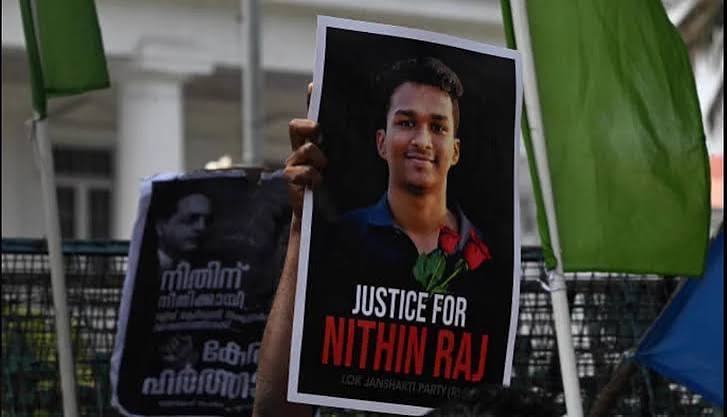
The victim’s father, Rajan V.N., filed an objection in court. He stated that his son had entered the college through merit. The HOD called him a “slumdog,” taunted him about reservations, and made comments about organ donation if his parents didn’t attend PTA meetings. Talaseri – The special court in the Kannur Dental College suicide case of Nitin Raj, a Dalit BDS student, has granted regular bail to the accused department head, Dr. M. Kodanda Ram. Judge Manoj M. of the Special SC/ST Prevention of Atrocities Act court in Talaseri granted bail in an order passed on September 9. City and Local Guide Nitin Raj belonged to the Hindu Cheraman community, which falls under the Scheduled Caste category. Nitin committed suicide by jumping from the second floor of the college campus on the afternoon of April 10. The Kannur Crime Branch’s Crime No. 1081/2026 alleges that the accused, including Dr. Ram, publicly humiliated, insulted, and threatened him. The prosecution alleges that this harassment, attributed to his caste, caused severe mental distress and led to the student’s suicide. The case has been registered under Section 108 of the Indian Penal Code and Section 3(1)(r) of the SC/ST (Prevention of Atrocities) Act. Dr. Ram is the Head of the Dental Anatomy Department at Kannur Dental College, Anjarakandy. His anticipatory bail plea was rejected by the Special Court, the Kerala High Court, and the Supreme Court. He was released on the grounds that his first arrest violated Supreme Court guidelines. He was re-arrested on July 23rd with the court’s permission. He has since been in judicial custody for over 45 days. The court clarified in its order that a detailed analysis of evidence is not conducted at the bail stage. Citing the Supreme Court’s Shajan Skaria case regarding Section 3(1)(r) of the SC/ST Act, the court stated that mere insult or threat does not apply to the offence. The victim’s caste must be the cause of the insult. The court found that at this stage, there was no evidence that the accused publicly addressed the victim by their caste, although there were allegations of public ridicule and insult. South Asians and Migrants Dr. Ram is the Head of the Dental Anatomy Department at Kannur Dental College, Anjarakandy. His anticipatory bail plea was rejected by the Special Court, the Kerala High Court, and the Supreme Court. He was released on the grounds that the first arrest was in violation of Supreme Court guidelines. Regarding the issue of abetment to suicide (Section 108 CrPC, old Section 306 IPC), the court cited several Supreme Court decisions. These include Pawan Kumar v. State of Himachal Pradesh, M. Mohan v. State, Jaideepsinh Chavda and Ramesh Kumar. The court held that mere harassment or utterances made in anger are not sufficient to constitute abetment. Clear intent, active involvement, and actions that left the victim with no option but to commit suicide must be demonstrated. These questions will be determined at trial. Crime and Justice Based on the investigating officer’s report and the case diary, the court held that further custody was not necessary for the investigation. The police had already conducted interrogations after taking custody. The court reiterated the principle that “bail is the rule, jail is the exception” and cited the Supreme Court’s decisions in Jalaluddin Khan and Manish Sisodia. The victim’s father, Rajan V.N., filed a complaint with the court. He stated that his son had entered the college on merit. The Principal called him a “slumdog,” taunted him about reservations, and made comments about organ donation if his parents did not attend PTA meetings. The father alleges that the investigation is not being conducted impartially, and the High Court has also expressed dissatisfaction with the progress of the investigation. The former investigating officer was also suspended. The accused argued that Nitin Raj was weak in studies, was under pressure from loan apps, and the incident occurred after a consultation in the principal’s cabin on April 10th. They claimed that Dr. Ram’s last contact with them was on March 13th. The court granted bail on the following conditions: A bond of Rs. 5 lakh and two sureties (one a close relative) Court and Judiciary Appearance before the investigating officer every Wednesday from 9 to 10 am (for six months or until the charge sheet is filed) Complete prohibition on entering the Kannur Dental College campus or contacting students until the trial is over Not influencing witnesses or tampering with evidence Not committing any new crime while on bail If the condition is violated, the concerned police station officer can approach the court to revoke the bail. The case is still under investigation. The court reiterated that this order is not a final verdict on the merits. Nitin Raj’s death has rekindled questions about caste-based harassment and institutional accountability on college campuses. Geetha Sunil Pillai Courtesy: Hindi News
Keralam CM gets Rahul’s assurance: No further delay in KPCC chief appointment

Thiruvananthapuram: AICC leader Rahul Gandhi on Monday assured chief minister V D Satheesan that the appointment of a full-time KPCC president would not be delayed further. Gandhi gave the assurance during their meeting at 10 Janpath, Sonia Gandhi’s official residence, in New Delhi, after Satheesan pressed for an early appointment, sources said. Satheesan’s main message to Rahul was that the KPCC needed a full-time president without further delay, as there is concern among members of its political affairs committee about the delay. He also highlighted the organisational difficulties in the absence of a full-time president during his 30-minute meeting. The state party chief, Sunny Joseph, is a minister in Satheesan cabinet. It is not clear whether the CM suggested any particular name during his meeting. Sources said Satheesan has no objection to the appointment of Joseph Vazhakkan, who is a nominee of home minister Ramesh Chennithala. Soon after returning to Kerala House following his meeting with Rahul, Satheesan was visited by Kodikunnil Suresh, who is among those aspiring to the KPCC president’s post. Suresh subsequently told the media that holding the post of an MP does not disqualify a person from becoming the party’s state president. He also said he would not contest the next Lok Sabha election, while openly expressing his interest in becoming the KPCC chief. The Congress high command, however, is reportedly giving priority to organisational issues in north Indian states where assembly elections are due in the coming months. It remains unclear whether the KPCC appointment will be announced immediately. According to sources, the PM SHRI controversy did not figure in the meeting. The AICC has maintained that the scheme is part of the Sangh Parivar agenda, while the state government has said it will implement it only if certain conditions are accepted, including no interference in the curriculum and the state retaining the authority to decide which schools will adopt the scheme. Courtesy : TOI Note: This news is originally published on https:/timesofindia.com/bha and is used purely for non-profit/non-commercial purposes, especially human rights
Political strife erupts between the BJP and Congress over Dalit Christian reservations in Kerala. Why is the BJP angered by CM Satheesan’s statement?
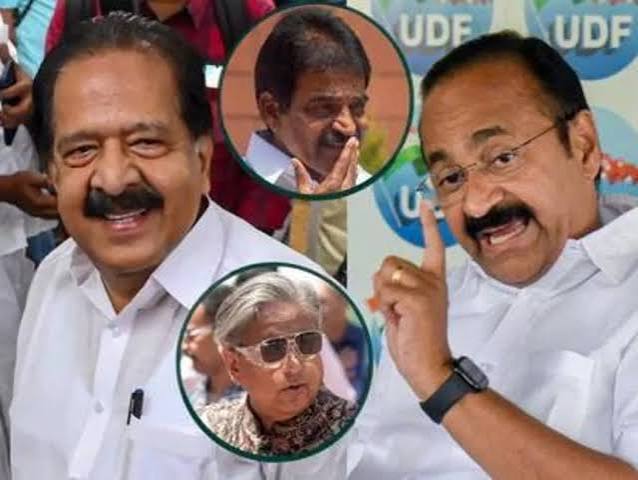
The political conflict between the BJP and Congress over the demand for reservation for Dalit Christians in Kerala has intensified. A statement by Chief Minister V.D. Satheesan has reignited the issue, raising questions about the BJP’s carefully crafted Christian vote bank strategy. Thiruvananthapuram – At an event commemorating the 163rd birth anniversary of social reformer Ayyankali, Chief Minister V.D. Satheesan stated that the Dalit Christian community is not receiving the facilities available to Christians or the benefits afforded to Scheduled Castes (SCs). He assured that his government would study the issue and find ways to address the community’s backwardness. The Chief Minister’s statement drew a sharp reaction from the BJP’s Scheduled Caste (SC) Morcha. State president Shajumon Vattekkad demanded Satheesan retract his statement, alleging that the Chief Minister was engaging in appeasement politics. He warned that extending the reservation for the Scheduled Caste community to Dalit Christians would be like playing with fire. Vattekkad stressed that the quota granted to the Scheduled Caste community by the Constitution is not a charity but their right, and that the BJP’s SC Morcha will mobilize the community and launch a movement against the government. BJP State Vice President K.S. Radhakrishnan also questioned the validity of the demand. In a Facebook post on Tuesday, he argued that if conversion eliminates caste identity and caste-based oppression, then the demand for SC status has no basis. He said that if caste discrimination still persists within the Christian community, they should first acknowledge it and address it. What is the demand of Dalit Christians and how long has it been ongoing? The demand for SC status for Dalit Christians is not new. This demand has long been raised, especially by a section of the Christian community in Kerala and the Catholic Church. Dalit Christians are primarily descendants of Hindu communities who were historically marginalized and later converted to Christianity. Under the Constitution (Scheduled Castes) Order, 1950, SC status is limited to members of the Hindu, Sikh, and Buddhist communities. Various governments have considered proposals to extend this status to Dalits who converted to Christianity or Islam from time to time. Kerala has a large Dalit Christian population, whose ancestors converted generations ago. The community argues that despite conversion, they continue to face social and economic discrimination based on caste and should be granted the same constitutional protections as Dalits of other religions. Dalit Christians affiliated with the Syro-Malabar Catholic Church are primarily concentrated in Kottayam, while non-Catholic communities such as Pentecostals reside in large numbers in Pathanamthitta and Idukki districts. Why is this issue a political dilemma for the BJP? This issue poses a major political dilemma for the BJP. The party has been striving to expand its reach beyond its traditional Hindu base to Kerala’s Christian community over the past few years. The issue of conversion has been a major obstacle to this outreach, although a section of the BJP’s state leadership has tried to downplay it, arguing that the Christian population in Kerala is declining, so conversion should not become a barrier between the party and the Christian community. The party has also tried to portray Hindus and Christians as communities with shared interests, especially on what BJP leaders call “Muslim appeasement.” Despite this, the issue of conversion remains a thorn within the BJP and the broader Sangh Parivar. Last year, the arrest of two Kerala Catholic nuns in Chhattisgarh on charges of forced conversion and human trafficking brought this tension to the fore. Several leaders, including Kerala BJP President Rajeev, rejected allegations of forced conversion and expressed solidarity with the nuns. This stance was criticized by some sections of the Sangh Parivar in Kerala, who cited it as an example of the conversion of members of marginalized Hindu communities. This debate again came to the fore this year regarding the Foreign Contribution (Regulation) Amendment Bill, 2026. The bill, introduced by the central government, was later referred to a joint parliamentary committee. While BJP leaders attempted to allay Christian organizations’ concerns about the proposed changes, some sections of Hindutva organizations in Kerala alleged that this funding could encourage religious conversions and demanded strict scrutiny of foreign donations to churches. R.V. Babu, state president of the Hindu Aikya Vedi, also opposed any move to extend Scheduled Caste reservations to converted Christians, alleging that the government was “promoting religious conversions.” The Vedi is an umbrella organization of several Sangh Parivar-affiliated organizations in Kerala. The BJP inducted Christian leaders into the party to woo the Christian vote and fielded Christian candidates in areas with large Christian populations. However, the party failed to achieve significant success among Christian voters in the 2026 assembly elections. The BJP won three assembly seats—Nemom, Kazhakootam, and Chathannoor—but its victories in these seats were attributed to its traditional Hindu base rather than any major shift in Christian voter sentiment. These limited electoral results have further fueled debate within the BJP about the direction and political benefits of its Christian-centric strategy. In such a situation, Satheesan’s statement is being seen as part of the Congress’s strategy to dent the BJP’s Christian outreach, while some sections within the BJP have become more vocal than ever on the issue of conversion. The issue is also under consideration at the central level. The question of granting SC status to Dalits who convert to Christianity or Islam is also under consideration at the national level. In 2022, the central government constituted a commission headed by former Chief Justice of India K.G. Balakrishnan to investigate this issue. The commission’s work included investigating the demand for SC status for Dalit converts and the discrimination they face. The case for granting SC status to Dalit Muslims and Christians has been pending in the Supreme Court for 20 years. The commission’s tenure was extended several times. After several extensions, the commission finalized its report by the scheduled deadline of June 10. A community grappling with caste discrimination The situation of Dalit Christians in Kerala is socially and economically challenging, where they continue
Kerala minister’s intervention sought over alleged denial of PhD to dalit researcher

Thiruvananthapuram: A group of students and research scholars from the University of Kerala’s (KU) department of Sanskrit studies has submitted a petition to higher education minister Roji M John, seeking urgent intervention in the case of dalit researcher Vipin Vijayan, who was allegedly denied a PhD despite completing all prescribed academic stages. According to the petition, Vijayan completed the research admission process, progress assessments, synopsis presentation, periodic reviews and thesis submission. His thesis was also evaluated by external examiners. However, objections that could delay the award of the degree were raised only during the final open defence. The petitioners said claims that Vijayan lacked adequate knowledge of Sanskrit were raised at a late stage, despite several earlier opportunities to assess his academic standards and language proficiency. They alleged that the failure to raise such objections during the initial stages raised questions about the neutrality and transparency of the process. They also pointed out that the same teacher who had guided Vijayan’s MPhil research and certified its successful completion had allegedly claimed that he lacked proficiency in Sanskrit. The petitioners said the contradiction warranted a detailed inquiry. The petition stated that the delay had affected Vijayan’s mental well-being and career prospects, leaving him unable to apply for other jobs. Citing Article 46 of the Constitution, the petitioners urged govt to examine whether caste-based prejudice or personal bias had influenced the proceedings. They clarified that they were not seeking any special concession, but a fair process free from discrimination. They sought an independent inquiry into the entire PhD process and urged govt to direct the university to award the degree if no procedural impediment was found. If corrections were required, these should be communicated in writing and Vijayan should be given a reasonable opportunity to address them, they said. They also called for urgent intervention in accordance with UGC norms. Courtesy : TOI Note: This news is originally published on https:/timesofindia.com/bha and is used purely for non-profit/non-commercial purposes, especially human rights
BJP SC Morcha slams Keralam CM over remarks on dalit Christians quota
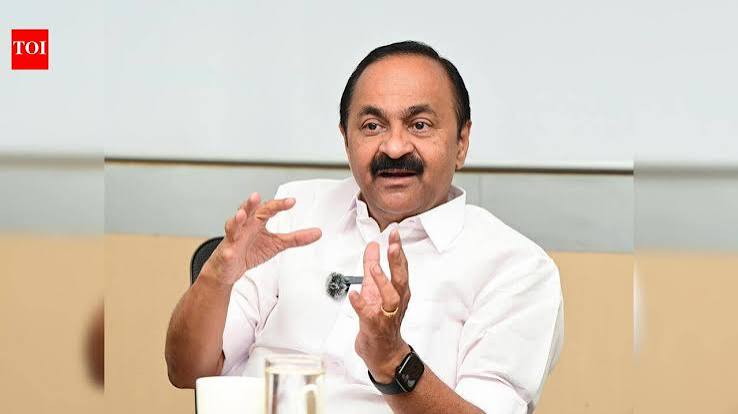
T’puram: BJP Scheduled Caste (SC) Morcha has demanded that chief minister V D Satheesan withdraw his statement regarding the state govt according top priority to providing reservation to dalit Christians. Morcha state president Shajumon Vattekkad said it was inappropriate for the CM to refer to reservation for dalit Christians in his speech while inaugurating the Mahatma Ayyankali Jayanti conference. “The CM’s policy of appeasing religious minorities has once again come to light through the statement,“ he alleged. Shajumon added that while the CM was unwilling to address the pressing issues faced by lakhs of SC community people in Keralam, he was adopting such a stand because he was “held captive by religious minority communalists”. He accused the CM of pursuing a politics of appeasement and double standards. Reservation provided to the SC community under the Constitution is not a concession granted by anyone but a right of the SCs, Shajumon said. BJP SC Morcha will mobilise the SC community in Keralam and launch a strong agitation against the govt to protect this right, he added. He also urged all SC organisations in Keralam to come out in protest against the CM’s statement. Courtesy : TOI Note: This news is originally published on https:/timesofindia.com/bha and is used purely for non-profit/non-commercial purposes, especially human rights
Who Is Anagha Sasi, The Dalit Scholar Protesting At Kerala University?

Sasi, a PhD scholar in the Department of Environmental Studies, has been sitting on an indefinite protest demanding action against faculty members and others whom she accuses of caste-based abuse, harassment and obstructing her research Dalit PhD scholar Anagha Sasi is protesting at Kerala’s Malayalam University over alleged caste discrimination and academic harassment. Sasi has accused faculty members of denying research support, assigning non-academic work and obstructing her PhD progress. Student groups, Dalit organisations and activists have extended support and demanded an independent inquiry. A protest by Dalit research scholar Anagha Sasi at Thunchath Ezhuthachan Malayalam University in Kerala has drawn support from student groups, Dalit organisations and activists, after she alleged caste discrimination, academic harassment and denial of research facilities. Sasi, a PhD scholar in the Department of Environmental Studies, has been sitting on an indefinite protest demanding action against faculty members and others whom she accuses of caste-based abuse, harassment and obstructing her research. She has also demanded registration of a case under the Scheduled Castes (SC) and the Scheduled Tribes (ST) (Prevention of Atrocities) Act, along with action on complaints related to alleged ragging and academic retaliation, The Hindu reported Who Is Anagha Sasi? Anagha Sasi, from Kolenchery in Kerala, joined Thunchath Ezhuthachan Malayalam University in 2024 as a research scholar in the Environmental Studies department. She has alleged that despite completing her PhD coursework, she has been unable to progress with her research due to delays in academic support, approval processes and access to facilities. Sasi claimed that her annual progress report was delayed and that the university did not convene her Doctoral Committee, affecting her research work and putting her fellowship from the Kerala State Council for Science, Technology and Environment at risk. ‘Harassment And Denial Of Research Support’ Sasi has alleged that she faced caste-based discrimination from the beginning of her association with the university. She claimed that she was assigned non-academic tasks, including sweeping classrooms, dusting books and files, carrying boxes, cleaning laboratory equipment and arranging materials in classrooms and the department. She also alleged that she was denied research assistance, access to laboratory facilities and support during fieldwork. At times, she claimed, she was made to stand in corridors without seating. According to Sasi, her research guide Arun Babu and faculty member Jaini Varghese were among those named in her complaints. She alleged that Babu told her she would have to follow his instructions to continue her PhD. “I did not come to your house and ask you to come here for a PhD. If you want to do a PhD, you must obey what I say; otherwise, go somewhere else, go to IGNOU,” Sasi alleged he told her. She further claimed that she was told her fellowship was granted because of her caste rather than merit and alleged that she faced threats over the continuation of the fellowship. Complaints And Demand For Independent Probe Sasi said she submitted complaints to the university’s Registrar, Vice-Chancellor, Research Director and the SC/ST Cell in August 2025. She also approached the Higher Education Minister and the Chief Minister but alleged that no effective action was taken. She has disputed the university’s claim that she failed to revise her research synopsis, saying she had submitted multiple revisions but did not receive adequate guidance from her research supervisor. Dalit rights activist Sunny Kappikkad has supported Sasi’s protest, saying the matter reflects wider concerns of caste discrimination in higher education and should not be treated merely as an academic disagreement. Kappikkad also alleged that the university should have informed police after receiving a caste discrimination complaint involving an SC student and demanded an independent inquiry. Student Groups Rally Behind Protest Several student and social organisations have expressed solidarity with Sasi, including the All India Students’ Association (AISA), Ambedkarite Democratic Front, Kerala Students’ Union, Muslim Students’ Federation, Student Islamic Organisation, Kerala Dalit Federation and Fraternity Movement. AISA national president Neha Bora visited the protest site and expressed support. “Let casteism be defeated! Enact Rohith Act!” Bora said in a post on X. P.K. Navas, MLA, also visited the protest site and called for an external inquiry, while Welfare Party of India Kerala president Razak Paleri demanded an independent investigation. However, the widening support for her protest has increased scrutiny over the university’s handling of her complaints and the broader issue of caste discrimination in higher education. Sasi has said she will continue her indefinite protest until action is taken. Courtesy : Outlook India Note: This news is originally published on https:/outlookindia.com/bha and is used purely for non-profit/non-commercial purposes, especially human rights
Dalit PhD scholar protests outside Kerala University, alleges caste bias, harassment and forced cleaning work
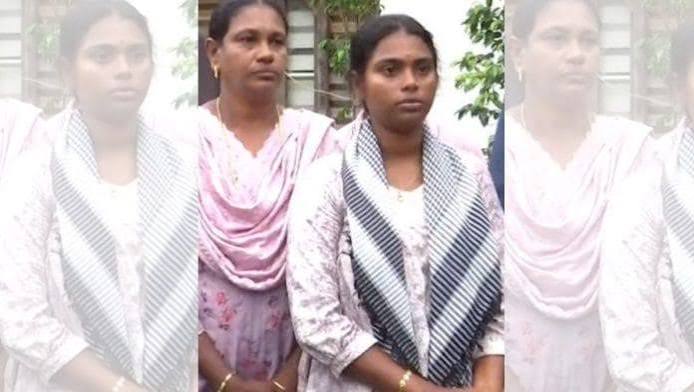
Protesting with her mother since 14 August, Shashi alleges she was made to do cleaning and clerical work and faced casteist remarks after receiving a research fellowship. New Delhi: Anagha Shashi, a Dalit PhD scholar in the Department of Environmental Science at Thunchath Ezhuthachan Malayalam University in Kerala, has alleged caste and gender discrimination. Shashi, who joined the university in March 2024, said that despite completing her PhD coursework more than a year ago, she has not been able to begin her research work. She alleged delays in the submission of her annual progress report and the university’s failure to convene her Doctoral Committee. According to Maktoob, Shashi said the delays have also put her fellowship from the Kerala State Council for Science, Technology and Environment at risk. ‘Forced into cleaning toilets’, made to do clerical work Shashi and her mother have been protesting outside the university since the night of 14 August, demanding action over what she has described as caste and gender discrimination that has become a hindrance to her prospects. During her time at the university, Shashi also alleged that she was made to perform cleaning and clerical work at the department. She claimed that she was made to stand in the corridor on several occasions. According to Shashi, her research guide, Arun Babu, once told her: “If there is no chair, stand in the corridor.” Shashi further alleged that Babu and faculty member Jaini Varghese asked her to wash and arrange laboratory equipment and organise old records. On weekends, when there was no laboratory assistant, she claimed she would dust and arrange materials in the department. She also alleged that, despite repeated complaints, her concerns were dismissed. According to Shashi, Babu told her that he was not responsible for providing her with research ideas or academic assistance. “I did not come to your house and ask you to come here for a PhD. If you want to do a PhD, you must obey what I say; otherwise, go somewhere else, go to IGNOU,” Shashi alleged Babu told her. She further claimed that he pressured her to discontinue her PhD, citing the quality of her work. Allegations of casteist remarks, threats over fellowship Shashi alleged that the situation worsened after she received the fellowship, with casteist remarks allegedly being made about her talent and credibility. “She got the grant because of caste, swallowing the whole grant herself,” Shashi was told. She further claimed that she was threatened with the cancellation of her fellowship. One of Shashi’s friends who liked one of her social media posts received a disciplinary memo, according to her account. After repeatedly raising her concerns since August 2025 and exchanging messages with the university administration on WhatsApp, Shashi formally registered a complaint about a year later, according to the report. Shashi’s mother, while talking to Maktoob, said, “We are not financially well at all. We took loans to educate her. The professor’s words gave my daughter a lot of distress because she knew that I cannot pay such a huge amount,” Ambika said. Ambika also said that the harassment had severely affected her daughter’s mental well-being to a point that Shashi attempted suicide. Manisha Mondal (Edited by Maryam Hassan) Courtesy : The Print Note: This news is originally published on https:/theprint.com/bha and is used purely for non-profit/non-commercial purposes, especially human rights
Transgender influencer Jaanmoni Das held over anti-Modi remarks linked to NEET paper leak protest

KOZHIKODE: Transgender make-up artist and social media influencer Jaanmoni Das was arrested by Kozhikode Cyber Police on Thursday over alleged derogatory remarks against Prime Minister Narendra Modi and his family in a video linked to protests over the NEET question paper leak, police said. Das and two others who had shared the video on social media were summoned by the cyber police, questioned and arrested, officials said. After evidence collection, interrogation and other procedures were completed, all three were released on bail. The case followed a complaint filed by BJP Mahila Morcha state president Navya Haridas on July 27. According to police, Das allegedly made the remarks in the context of protests over the NEET question paper leak. A video containing the alleged remarks subsequently circulated widely on social media. After the video triggered a controversy, Das posted an apology and said the remarks were made because of a lack of knowledge of the language. The case has been registered under Sections 192 (provocation for causing riot) and 356(2) (criminal defamation) of the Bharatiya Nyaya Sanhita and Section 120(o) (causing nuisance) of the Kerala Police Act. Police said all the offences invoked in the case are bailable. Das, who had shot into the limelight after appearing on a popular Malayalam reality show a few years ago, spoke to reporters after leaving the police station and said she had provided investigators with all the information they sought. She alleged that the case was an act of revenge over her participation in a Cockroach Janata Party protest in New Delhi against the NEET question paper leak. Das said the controversial video did not contain her own statement and claimed that she had only translated into another language a statement made by someone else in Hindi. “That was not my statement. I just translated what another person said. It shouldn’t have come from my mouth, and I have apologised for it. But still, people are targeting and bullying me,” Das said. She also said she was not a politician and had travelled to New Delhi to take part in the protest after several students from Kerala participated in it. Courtesy : TOI Note: This news is originally published on https:/timesofindia.com/bha and is used purely for non-profit/non-commercial purposes, especially human rights
Benny, Kuzhalnadan & Shafi frontrunners for Kerala Congress chief post
All aspirants have been making trips to New Delhi, meeting Kharge and the Leader of the Opposition in the Lok Sabha, Rahul Gandhi, to bolster their claims for the post. THIRUVANANTHAPURAM: The Congress high command has narrowed the choice for the new KPCC president to three names — former UDF convenor Benny Behanan MP, state working president Shafi Parambil MP and state vice president Mathew Kuzhalnadan MLA. With two of his close associates — Shafi and Kuzhalnadan — among the frontrunners, influential AICC general secretary K C Venugopal is reportedly maintaining a neutral stand, leaving the choice to the Congress national leadership. However, Chief Minister V D Satheesan will have a crucial say in the selection of the new state party chief. Three other senior Congress MPs — Kodikkunnil Suresh, Adoor Prakash and Anto Antony — have apparently fallen out of the race despite backing from party stalwarts and a powerful religious organisation. Kodikkunnil, who is the Congress chief whip in the Lok Sabha, had the support of Congress President Mallikarjun Kharge and Satheesan, while Anto and UDF convenor Prakash had the backing of Priyanka Gandhi and Sivagiri Mutt, respectively. Anto had lost the post to Sunny Joseph last time. All aspirants have been making trips to New Delhi, meeting Kharge and Leader of the Opposition in the Lok Sabha Rahul Gandhi to bolster their claims for the post. With the Congress seeking closer coordination between the new government and the party ahead of an organisational reshuffle, the appointment is being viewed not merely as a change at the helm of the state unit but as part of a broader organisational overhaul. The final decision on the new KPCC president will be taken by Kharge and Rahul in consultation with Satheesan, sources said. Decision likely after Parl session, says senior leader “The announcement is likely after the ongoing Parliament session,” a senior party leader said. The need for a new party chief arose after incumbent Sunny conveyed his desire to step down after being inducted into the new cabinet. Among the shortlisted leaders, Benny brings considerable organisational experience, having served as UDF convenor and handled coordination among coalition partners. He is also seen as having the confidence of leaders across factions. Some senior leaders feel that an experienced organisational hand would be better placed to coordinate with a new government, in which most ministers, including the chief minister, are serving their first term. Shafi, who enjoys considerable popularity within the party and among the public, remains a strong contender. Kuzhalnadan’s proximity to Rahul is seen as an advantage. However, their relatively young age could work both in favour of and against the two contenders. Meanwhile, the powerful Catholic Church is closely watching the developments in the Congress. Sunny was made KPCC president after the Church took a strong position on the issue. K S Sreejith Courtesy : TNIE Note: This news is originally published on https:/thenewindianexpress.com/bha and is used purely for non-profit/non-commercial purposes, especially human rights
Why are you not suspending him? Kerala HC pulls up State over inaction against cop in Dalit student suicide case
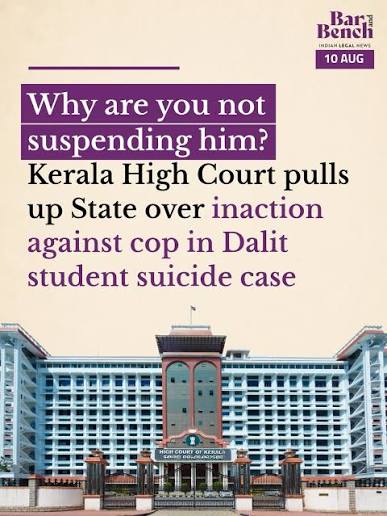
The Court asked whether higher-ranking police officials were attempting to protect their colleague from disciplinary action. The Kerala High Court on Monday questioned the State over its failure to suspend Deputy Superintendent of Police (DSP) Sudheer Kallan despite a finding of serious procedural lapses in the arrest of an accused in the case concerning the suicide of Dalit dental student Nithin Raj. Justice A Badharudeen said police’s negligent approach had initially led to the release of the prime accused Dr M Kodanda Ram, a Kannur Dental College professor. “Why are you not suspending him? The report states that there are serious procedural lapses coupled with a careless and negligent approach in the investigation by the police personnel who arrested him. The preparation of the arrest-related documents resulted in the release of the accused. Even after finding all this, he has not been suspended?” Justice Badharudeen orally asked. The Court was hearing the plea fled by victim’s parents, who have been seeking clarity on the investigation and circumstance surrounding the arrest of Dr. Ram. Nithin Raj, a dental college student in Kerala, died by suicide on April 10 after jumping from a building near the college. Before his demise, Raj is alleged to have faced caste-based harassment from the faculty at the dental college. The police registered a case for abetment of suicide and offences under the Scheduled Caste and Scheduled Tribes (Prevention of Atrocities) Act, 1989 (SC/ST Act) and arrested the prime accused, Dr. Ram. However, his initial arrest had been declared illegal by a trial court after the police failed to furnish mandatory grounds of arrest to the accused. He was subsequently re-arrested by the Crime Branch. Today, Special government pleader Rasheed C Nooranad told the Court that following a preliminary enquiry by Superintendent of Police of Wayanad, the State Police Chief has recommended disciplinary proceedings against DSP Kallan. However, he added that the disciplinary proceedings would be initiated only after the completion of a proposed enquiry by a panel of officers. Justice Badharudeen questioned the need for another enquiry when an oral enquiry has already found serious lapses in the arrest. The Court further asked whether higher-ranking police officials were attempting to protect the DSP. The judge made it clear that the government should take necessary action rather than wait for the Court to direct every step. “I don’t have an opinion that the government is not bonafide. The remedies available to the accused let him avail those, you (government) do your job. The job of police is to arrest. Court’s job is to take decision when such action is challenged,” Justice Badharudeen remarked. The Court in its order today, recorded that the officer had committed serious lapses but no immediate action was being taken by the State and instead a panel of competent enquiry officers is slated to be appointed. It directed the State Police Chief to consider the enquiry report and pass necessary orders while also directing that the proposed panel be constituted within one week. The matter will be heard next on August 17. Praisy Thomas Courtesy : Bar and Bench Note: This news is originally published on https:/barandbench.com/bha and is used purely for non-profit/non-commercial purposes, especially human rights