
Villagers block roads in Yadgir over denial of access to Dalit families

Yadgir: Villagers in Guranur village of Gurmitkal taluk have blocked all roads leading to the village in support of Dalit families, alleging that two upper-caste households have denied them access to their farmlands for the past two years. The protest follows what villagers describe as a prolonged dispute over access routes. They alleged that an alternative pathway was blocked a week ago and that the families concerned refused to reopen the roads despite repeated requests. “You can complain to whoever you want, but we will not open the road,” the families allegedly told villagers, according to those leading the protest. Muttanna Hiremani, a Dalit activist in the village, claimed that an open meeting convened at the village temple to resolve the issue also failed, with the two families refusing to agree to reopening the road. Dalit families said they had submitted representations to authorities, but no action was taken to restore access, prompting villagers to join them and launch the road blockade from Thursday. The protest has also disrupted the daily routine of schoolchildren, who are now forced to cross agricultural fields to reach their schools due to the road closures. Courtesy : TOI Note: This news is originally published on https:/timesofindia.com/bha and is used purely for non-profit/non-commercial purposes, especially human rights
How Bengaluru’s Neeli Paradé creates space for Dalit stories that go beyond trauma
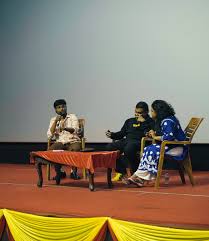
The third season of Neeli Paradé featured four short films by Dalit filmmakers. The post-screening discussion explored the films’ themes, creative processes, and social contexts. On June 14, the Dr Ambareesh Auditorium in Chamrajpet hosted season 3 of Neeli Paradé, a screening of four short films by Ambedkarite filmmakers. Presented by Neelavarana, a Bengaluru-based Ambedkarite production house and artists’ collective, the event celebrates Dalit and Bahujan lives and experiences while creating space for dialogue between filmmakers and audiences through post-screening discussions. Neeli Paradé was first organised in 2022, and has since evolved from a small show into a recurring platform for Dalit and Bahujan filmmakers and conversations around their cinema. Among the short films screened, the spotlight rested on Moda Moda by MK Abhilash and Out of Syllabus by Mahishaa, who is also the founder of Neelavarana. Moda Moda follows a couple who decide to name their would-be child Moda (clouds). Out of Syllabus centres on the blooming companionship between two girls, Sneha and Kritika, and their shared backgrounds as they walk home from school. Following the screenings, both filmmakers participated in a discussion moderated by Vijeta Kumar, an assistant professor at Bengaluru’s St Joseph’s University. The discussion explored the films’ themes, creative processes, and social contexts. The focus remained on community and shared values, while the stories told made the setting intimate and personal. “I think films are a great way to get people to think about things that they might not otherwise be comfortable talking about,” remarks Taanika Shankar, a schoolteacher who had attended Neeli Paradé for the first time. “I moved to Bengaluru a couple of years ago, and I too come from a Dalit background. I wanted to find a community where there are Dalit filmmakers and films about issues that impact Dalits. That’s when I came across the channel Neelavarna Media,” recalls Abhiraj Dethe, a director and writer whose recent works include projects with Flying Dosa Films. Abhiraj has attended earlier sessions and even remembers having previously watched one of the films screened on June 14. The post-screening discussion reflected on how the films moved beyond conventional portrayals of Dalit lives. “Since the time we started making films, I have seen that stories dealing with Dalit issues often portray us either as victims or as fighters,” commented an audience member. “Here, I see that the characters are also smiling, and the filmmaker is also smiling.” The event also featured stalls run by community-owned small businesses selling crochet products, artwork, and homemade chocolates. The initiative was aimed at supporting independent artists and entrepreneurs. Looking ahead, Mahishaa aspires to make Neeli Paradé an annual festival and to expand its reach to other cities like Mysuru and Mangalore through special invitations. Neelavarana is also open to where the future might lead, including the possibility of venturing into longer formats, which may be difficult, Mahishaa notes. “The next major step is to move towards feature films. That is a challenge. That’s something we have to figure out how to do, but we do want to eventually go into feature films and bigger screenings and events,” he told TNM. Written by:Swetha Anil Kumar, Deva Manohar Manoj (Students interning with TNM) Courtesy TNM Note: This news is originally published on https:/thenewsminute.com/bha and is used purely for non-profit/non-commercial purposes, especially human rights
‘Why should a Dalit worry about RSS’: BJP MP to Priyank Kharge; gets sharp ‘fear none’ reply
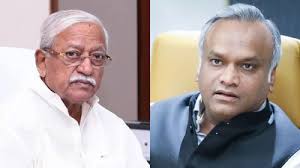
NEW DELHI: A remark by BJP MP Ramesh Jigajinagi questioning why a Dalit minister should be concerned about the RSS triggered a sharp response from Karnataka home minister Priyank Kharge on Thursday, with the Congress leader saying he “fears none” because he follows BR Ambedkar’s ideology. The controversy started from Priyank Kharge’s letter earlier this week to RSS chief Mohan Bhagwat, seeking clarity on the organisation’s legal status and asking it to disclose details of its funding, income, expenditure and assets in the interest of transparency and constitutional accountability. Addressing a press conference in Vijayapura on Wednesday, Jigajinagi criticised the move, saying Priyank Kharge was overstepping his role as Home Minister. “Is it his job to ask such questions about RSS? People will only tell him (what RSS is). Whoever came in the way of RSS did not survive. He is unnecessarily picking up an issue with the RSS. We feel bad about it,” the BJP MP said, according to news agency PTI. “My question is – why does this Dalit man need to be concerned about the RSS?” he asked.Jigajinagi also said Priyank Kharge became a minister because his father, Congress president Mallikarjun Kharge, had “toiled hard” for the party and advised him to focus on governance instead of targeting the RSS. Responding to the BJP leader, Kharge said Jigajinagi’s remarks could be interpreted in several ways. “Is it a word of caution, advising Dalits not to associate with the RSS, which believes in the fundamentals of a hierarchical social order?” he asked. He also questioned whether the BJP MP was suggesting that, as a Dalit, he had no right to question “an organisation formed to safeguard the interests of those with a sense of social superiority.” Priyank Kharge further asked whether Jigajinagi’s remark that “no one who has taken on the RSS has survived” was made out of fear or intended to intimidate him. “What are the reasons behind this threat? What does he mean by saying ‘no one has survived’? Is the RSS a terrorist organisation? Does it eliminate those who question it?” the minister asked. Asserting that he draws strength from Ambedkar’s ideals, Priyank Kharge said, “I am a follower of Babasaheb’s ideology. The courage to question and my intellectual conviction come from him. Those who believe in Babasaheb do not fear.” “I fear only a lack of morality, not threats, because Ambedkar’s blood runs in our veins,” he added. Courtesy : TOI Note: This news is originally published on https:/timesofindia.com/bha and is used purely for non-profit/non-commercial purposes, especially human rights
KVs make one Sanskrit section mandatory in Classes 6 and 9 from 2026

The Kendriya Vidyalaya Sangathan has made a key change in its language policy for the 2026-27 academic session. All KV schools will now be required to maintain at least one Sanskrit section in Classes 6 and 9 under the third-language framework. Transgender students number rises in India CBSE 3 language rule: Kendriya Vidyalayas make Sanskrit section mandatory in Classes 6, 9 The Kendriya Vidyalaya Sangathan (Kendriya Vidyalaya Sangathan) has made it compulsory for all its schools to maintain at least one Sanskrit section in Classes 6 and 9. The decision will be implemented from the 2026-27 academic session under the third-language framework (R3), as outlined in an official circular issued on May 29. HOW THE LANGUAGE RULE WORKS According to the circular, the third language for students must be either Sanskrit or a regional or state language from the list of scheduled languages. This will be in addition to R1 (Hindi) and R2 (English). A senior official explained, “Students can opt for either Sanskrit or the regional language based on their preference. The requirement is only that there should be at least one Sanskrit section in every school to facilitate the children of transferable employees.” The KVS has also directed schools to complete the process of collecting language preferences from students and parents for the R3 framework. DATA, PORTALS AND CLASSROOM STRUCTURE Schools have been asked to upload student preferences for Sanskrit and regional languages separately on the Samagam portal. This data will be used to reassess staffing and section requirements at the school level. The circular further states, “Students opting for the same R3 language must be kept in same section for the smooth conduct of classes.” Section formation will depend on enrolment: Single section schools may split Sanskrit and regional language batches if at least 15 students opt in Two-section schools may have one Sanskrit and one regional-language section Three-section schools will decide distribution based on demand Every school must still ensure at least one Sanskrit section per class ALIGNING WITH NEP 2020 The move aligns with broader reforms under the National Education Policy (National Education Policy 2020) and the National Curriculum Framework for School Education 2023. The Central Board of Secondary Education (Central Board of Secondary Education) has also introduced parallel changes, making three languages compulsory for Class 9 students from July 1, including at least two Indian languages. Foreign languages can be chosen only as an additional option, and no board exam will be conducted for the third language at Class 10 level. Till dedicated textbooks are introduced, Class 9 students will continue using Class 8 R3 textbooks for the 2026-27 session. Courtesy : India Today Note: This news is originally published on https:/indiatoday.com/bha and is used purely for non-profit/non-commercial purposes, especially human rights
Bengaluru Traffic Advisory Today: Dalit Protest In Freedom Park Till 6pm; Check Alternate Routes
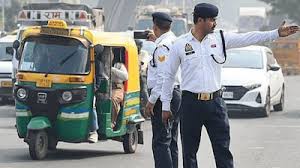
Day-long protest at Bengaluru’s Freedom Park is set to reshape traffic across the city centre. Road closures, diversions and parking curbs could test commuters throughout Thursday Bengaluru traffic police have announced a series of temporary restrictions and diversions across the Central Business District (CBD) on Thursday in view of a protest organised by the Karnataka Dalitha Sanghatana Samithi at Freedom Park. According to a Deccan Herald report, the demonstration is scheduled from 8 am to 6 pm. Motorists travelling from Mysore Bank Circle towards Freedom Park via KG Road have been advised to avoid the usual route. Instead, they should take a right turn and proceed via Maharani Underpass Road and Palace Cross Road. The stretch between Freedom Park Junction and Kanakadasa Circle will remain closed to vehicular traffic in both directions during the protest, with no movement of vehicles permitted along the route. Traffic police have also issued an advisory for vehicles moving from Khode Junction towards KR Circle. As protest participants are expected to march on foot from the City Railway Station via the flyover road to Freedom Park, motorists have been asked to use Old JD(S) Office Road to avoid congestion. In a temporary measure to ease traffic flow, the road connecting Subbanna Junction and MTR Junction, which normally operates as a one-way stretch, has been converted into a two-way route. Commuters travelling towards Gandhinagar can use this corridor as an alternative. Parking Restrictions In Force Parking of all types of vehicles has been prohibited along several key stretches in the city during the protest. The restrictions cover the route from Khode Junction to Maharani Junction, as well as V Ramachandra Road, Kalidasa Road, Palace Road and KG Road. The traffic police have urged commuters to plan their journeys in advance and use the designated diversions to minimise delays during the day-long protest. Published By : Parishmita Saikia Courtesy : News18 Note: This news is originally published on https:/news18.com/bha and is used purely for non-profit/non-commercial purposes, especially human rights
HIV cases among gays in Karnataka rise from 166 to 412

The highest number of registered individuals was in the 26-35 age group, followed by those aged 18-25 years. BENGALURU: The number of HIV-positive cases among men who have sex with men (MSM) in Karnataka has increased from 166 in 2023-24 to 412 in 2025-26, according to data from the Karnataka State AIDS Prevention Society (KSAPS). The figures show a steady rise over the three years, with cases increasing to 362 in 2024-25 before reaching 412 in 2025-26. Data from KSAPS also shows that the number of MSM individuals registered under targeted Intervention Programmes (IP) increased from 44,581 in 2023-24 to 62,664 in 2024-25 and 66,606 in 2025-26. The highest number of registered individuals was in the 26-35 age group, followed by those aged 18-25 years. An IP for MSM refers to targeted public health initiatives aimed at preventing the spread of HIV and other STIs. “Among the MSM population, lack of awareness and misinformation about HIV and sexual health continue to be major concerns. Many individuals engage in sexual activity without knowing safe sex practices and the importance of regular HIV testing. With the increasing use of dating applications, people are able to connect easily. There is a need for sustained education and outreach to ensure that individuals have access to accurate information and preventive services,” said Padma Basavanthappa, Project Director, KSAPS. She added that the state records around 12,000 to 13,000 HIV-positive cases annually across all categories, including MSM. NGOs working with key populations, including MSM, transgender people, female sex workers, migrants and truckers, play a crucial role in HIV prevention efforts. “The NGOs are given a target of increasing their numbers by 25% each year,” Basavanthappa said. “The individuals are given condoms, they are guided on how to have safe sex, their health check-ups are done, and they are linked to social security schemes,” she stressed. Manohar Elavarthi, State Committee Member of the Movement for Gender and Sexual Pluralism, said HIV awareness initiatives need to adapt to changing patterns of communication among young people. “Instead of blaming youths, the government must find effective ways to reach them on the digital platforms that they use every day,” he said. Hanumantha Rayappa, deputy director of Integrated Counselling and Testing Centres (ICTC), said many people with HIV remain unaware of their infection due to the absence of early symptoms. He encouraged the use of the Break Free App and free HIV testing at ICTCs in Karnataka, with free Antiretroviral Therapy services at government hospitals. Gayathri M Kurup Courtesy : TNIE Note: This news is originally published on https:/thenewindianexpress.com/bha and is used purely for non-profit/non-commercial purposes, especially human rights
Rahul Gandhi pays last respects to Suraj Hegde in Bengaluru

Suraj, the grandson of former Karnataka Chief Minister D Devaraj Urs, had worked closely with Rahul as the AICC secretary in charge of Puducherry and Tamil Nadu. BENGALURU: Leader of the Opposition in the Lok Sabha Rahul Gandhi arrived in Bengaluru on Tuesday morning and paid his last respects to AICC secretary Suraj Hegde, 55, who died of cardiac arrest late on Sunday night. Accompanied by Chief Minister D K Shivakumar and former Chief Minister and Congress leader Siddaramaiah, Rahul visited Suraj’s residence on BEL Road near M S Ramaiah Hospital, where the mortal remains were kept. He consoled the grieving family members, including Suraj’s wife Shilpa and their two sons. AICC general secretaries K C Venugopal and Randeep Singh Surjewala were also present. The cremation will be held on Tuesday afternoon at the Hebbal Crematorium. Suraj, the grandson of former Karnataka Chief Minister D Devaraj Urs, had worked closely with Rahul as the AICC secretary in charge of Puducherry and Tamil Nadu. He was also the vice chairman of the Karnataka State Guarantees Implementation Committee. Courtesy : TNIE Note: This news is originally published on https:/thenewindianexpress.com/bha and is used purely for non-profit/non-commercial purposes, especially human rights
Bengaluru development portfolio pared, it’s Minister Krishna Byre Gowda’s turn to sulk

Gowda’s portfolio is devoid of BDA, BMRDA, which are with CM DK Shivakumar. BENGALURU: Just as the Congress high command resolved the issue of senior leader and Water Resources Minister Ramalinga Reddy by convincing him to withdraw his resignation, Bengaluru Development Minister Krishna Byre Gowda reportedly went into a sulk as his portfolio is devoid of the prominent Bengaluru Development Authority (BDA) and Bengaluru Metropolitan Region Development Authority (BMRDA). Chief Minister DK Shivakumar has retained his hold on BDA and BMRDA. Sources said Gowda spoke to LoP in Lok Sabha Rahul Gandhi over phone, apprising him that without BDA and BMRDA, the portfolio lacks significance. There is no scope or potential to deliver the goods, and he doesn’t want to be the manager of five city corporations under Greater Bengaluru Authority (GBA), including Bengaluru North, Bengaluru South, Bengaluru East, Bengaluru West and Bengaluru Central city corporations. BWSSB and BMRCL are also part of his portfolio. This is the reason he has not taken charge of Bengaluru Development as yet and is anticipating a call from the high command, sources said. As the CM is unlikely to give up BDA and BMRDA, Gowda will seek a change in portfolio. The issue has also been brought to the notice of AICC general secretary and Karnataka in-charge Randeep Singh Surjewala, sources said. The Bengaluru Development portfolio has caused much heartburn. Ramalinga Reddy had resigned, insisting that it had been promised to him by CM Shivakumar. But after several rounds of talks, the high command humbled Reddy who eventually took charge but with the condition that during cabinet expansion, he should be allotted an additional portfolio or a separate one. Sources within the Congress government told The New Indian Express that Krishna Byre Gowda’s name was not on the first list of 13 ministers sworn in last Wednesday, as there was a lobby against him. As Revenue Minister in the Siddaramaiah regime, Gowda had executed the clearance of illegal encroachments on government lands, about 50 acres worth hundreds of crores of rupees in and around Bengaluru. It did not go down well with some legislators, including Congress leaders, sources informed. Which is why Gowda paid the price and lost the Revenue portfolio in the new regime, despite revolutionising the department, they added. The counselling system in transfer of sub-registrars and assistant commissioners left many leaders red-faced as there was no scope for influence, sources elaborated. Byre Gowda met Shivakumar at the Congress Legislature Party (CLP) office at Vidhana Soudha and held talks. Later, he refused to react to the media, saying his meeting was to do with the party and government, and the media has the liberty to interpret his meeting. But sources said his meeting revolved around the Bengaluru development portfolio and he insisted that BDA and BMRDA should be incorporated in it. Devaraj B Hirehalli Courtesy : TNIE Note: This news is originally published on https:/thenewindianexpress.com/bha and is used purely for non-profit/non-commercial purposes, especially human rights
LPG price hike adds to household burden in Karnataka

This is the second hike in the past three months. BENGALURU: The recent increase in the price of domestic LPG cylinders by Rs 29 has pushed the cost in Bengaluru to Rs 944 from Rs 915, adding to the burden on consumers already grappling with a series of price hikes in recent months. This is the second hike in the past three months. In March, LPG prices were increased by Rs 60 per cylinder following disruptions in global energy markets linked to tensions in West Asia. The price of a 5-kg LPG cylinder has also risen by around Rs 10, from Rs 340 to Rs 351. Speaking to TNIE about the impact of the hike, Ravi Richard, a retired professor, said, “The LPG price hike affects lower-middle-class and economically weaker sections in a serious way. “The Union government should ensure that low-income groups are protected from such increases through a differential pricing system. Those who can afford higher prices may be charged more, while poorer sections should be shielded from the burden.” “The repeated increase in LPG prices is putting significant pressure on household budgets, particularly those of middle-class and poor families. For families like ours, every rupee matters. The rising cost of essentials such as milk, cooking oil and now cooking gas is making daily life increasingly expensive,” said Shrikant, a resident of Horamavu. He added that the impact is being felt across the economy, with hotels and restaurants already raising prices. “Coupled with higher electricity tariffs, garbage collection charges and the implementation of the new labour code, food prices are likely to rise further,” he said. Suresh Kumar, an employee of a private company, said, “Given the trend of frequent LPG price hikes, it will not be surprising if the price crosses Rs 1,000 per cylinder. We are already bearing the burden of rising fuel costs and the increase in prices of essential commodities driven by higher diesel prices.” Courtesy : TNIE Note: This news is originally published on https:/thenewindianexpress.com/bha and is used purely for non-profit/non-commercial purposes, especially human rights
Dalits are losing land in Karnataka despite PTCL Act protections
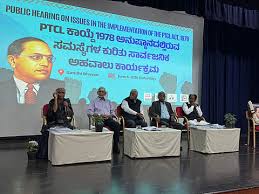
A public hearing organised by civil society groups in Bengaluru heard several testimonies of Dalits who lost their land and were unable to reclaim it due to adverse court rulings and bureaucratic hurdles. Karnataka appears to be on the cusp of another historic land struggle. Perhaps not as militant or as visible as the street marches organised by the Dalit Sangharsha Samiti in the 1970s, but no less significant in terms of its vision or potential for transformation. A small number of Dalits from seven districts in Karnataka told the jury of a public hearing in Bengaluru about how their families lost land to people from dominant castes and due to court rulings. Their stories were representative of 50 others whose testimonies will be presented to the government along with the observations of the jury. The public hearing on the implementation of the Karnataka Scheduled Castes and Scheduled Tribes (Prohibition of Transfer of Certain Lands) Act, 1978, was held on Saturday, June 6. The hearing was the result of over six months of work put in by the PTCL Kaayde Bhoomi Vanchitara Horata Samiti, the All India Lawyers Association for Justice (AILAJ), Manthan Law, Alternative Law Forum (ALF), and independent progressive researchers. Called the PTCL Act for short, the law itself was the result of a land agitation led by the Dalit Sangharasha Samiti in the 1970s. Under the law, land owned by people of the Scheduled Castes and Tribes cannot be transferred to non SC or non ST people. The public hearing was organised after compiling the testimonies of about 50 people from seven districts—Bengaluru Urban and Rural, Kolar, Tumakuru, Chitradurga, Bengaluru South, and Davanagere. The jury panel comprised retired Supreme Court judge Justice V Gopal Gowda, former IAS officers SM Jamdar and D Thangaraj, and activist Jyothi Raj, and legal expert on PTCL cases HL Venkatesh. About 15 Dalit people spoke of how they lost their land. One common obstacle that emerged was the 2017 Supreme Court ruling in the Nekkanti Rama Lakshmi case. The SC dismissed the case stating that there had been a delay of 20 years in filing the application to reclaim the land, even though the law itself did not specify that claims had to be filed within a certain period. Rangamma, of Chinakavajra village in Madhugiri taluk in Tumakuru district, told the jury about how her husband’s grandfather Rangaiah was cheated out of a portion of his land. Chinakavajra village has 300 Vokkaliga families, 20 Dalit families, and three Naika families. She said that Rangaiah was granted two acres of darkhast land in 1954. For several years the family cultivated ragi and other crops and sometimes even had enough left over to either sell or simply give away to someone in need. Once when Rangaiah needed money to treat his wife, he approached a Vokkaliga man for Rs 200. He got the money, but did not realise that a sale deed for one acre had been executed without his knowledge. In 1961, the Vokkaliga man and his goons began harassing Rangaiah’s family, claiming that the land was theirs. Finally, in 2016 they came and assaulted the family with weapons and drove them off. Rangamma later told TNM that the attackers stripped them, beat them, and rubbed chilli powder in their eyes. Her family filed an atrocity complaint and the other side responded with an allegation of assault. “We’ve been shattered by this. Now we have to buy food, and look for work as agricultural labourers. But work isn’t always available and there are a lot of people who need work,” Rangamma told TNM. “We’ve been very pained by all this, they created a lot of trouble for us,” she added. Her case is currently in the Karnataka High Court. Manjunath, founder of the PTCL Horata Samiti, told TNM that he started the Samiti after he lost his own family land in Magadi taluk in 2018 after a long legal battle. “The High Court simply dismissed mine and 45 other applications for delay, citing the Nekkanti case. That was when I learned what real law is, even though the Act itself is good.” Once he began looking for others like him, he realised the scale of the impact. In 2022, he led a seven-month agitation in Freedom Park, which eventually led to the state government amending the PTCL Act in 2023 to explicitly say that there would be no time period limitation to invoke the Act. When the constitutionality of the amendment was challenged in the Karnataka High Court, several members of the organisers of the public hearing also fought to defend the amendment. Hearings concluded 10 months ago and the verdict is now awaited. Manjunath estimates that there are hundreds of cases in each district. In Bengaluru Urban alone, he says there are about 4,000 such claims, of which 3,000 were dismissed citing Nekkanti. “Now, without bothering about whether the claim is genuine, the courts simply ask when the application was filed and what the delay was, and dismiss it. That ruling has completely destroyed the PTCL Act,” he said. Justice V Gopala Gowda said that in Nekkanti, the Supreme Court had violated its own ruling in the Manchegowda and others vs State of Karnataka case in 1984. The Manchegowda case had challenged the constitutionality of the PTCL Act. The SC upheld the Act. Justice Gowda said that economic freedom was essential to the meaningful enjoyment of the constitutional promise of the right to life. Access to land was fundamental to securing such freedom, he said according to a press release. Former IAS officer Thangaraj said that significant challenges remain in the implementation of the law. Despite favourable orders from Assistant Commissioners and Deputy Commissioners, beneficiaries often struggle to secure physical possession of their land due to a lack of cooperation from revenue and police officials, he said. Retired IAS officer SM Jamdar stated that the PTCL Act holds a mirror to the social inequalities that exist around us. There is a