
Dragged by her hair, verbally abused… Dalit engineering student assaulted at Garba event in Gujarat

Mahisagar District Superintendent of Police Safin Hasan stated that the Deputy Superintendent of Police of the SC/ST Cell is investigating the matter. Statements of the victim and the accused are being recorded. Mahisagar: A case of assault on a Dalit student at a Garba event has been reported from Mahisagar district, Gujarat. The incident occurred in Bharaudi village, Virpur taluka. Police have registered a case of assault, derogatory behavior, and casteist slurs against the Dalit girl. Police have filed a case against four women involved in the incident. The accused women include Loma Patel, Roshni Patel, Vrishti Patel, and Meena Patel. The matter came to light when 25-year-old female engineer Rinku Vankar filed an FIR. Rinku is a fourth-year student at the Government Engineering College (GEC) in Gandhinagar. What’s in the complaint? In her police complaint, Rinku stated that on Friday night, she had gone with a friend to attend a Garba event in the village. However, the women present there tried to stop them and used abusive language. Loma, Roshni, and Vrishti Patel first scolded her and then used casteist slurs. They allegedly said that these people were not equal to them and could not participate in Garba. Rinku then had the event’s sound system turned off and complained to Praveen Narsingh Thakor, who was present there. Meena Patel then arrived, and the four women attacked Rinku. Dragged by the hair The complaint states that the accused dragged Rinku out by her hair and when she tried to film the incident, she was stopped. Furthermore, she was hurled casteist slurs and threatened with dire consequences if she returned to Garba. Police have registered a case against the accused under sections 115(2) (voluntarily causing hurt), 54 (offence committed in presence of abettor), 351(1) (criminal intimidation), and 352 (intentional insult with intent to provoke breach of peace) of the Indian Penal Code (IPC). Relevant sections of the Scheduled Castes and Scheduled Tribes (Prevention of Atrocities) Act have also been invoked. Curated by: Rahul Mahajan About the Author Rahul Mahajan is the Principal Digital Content Producer at Navbharat Times Online. He has over 12 years of experience in journalism. He has worked with organizations such as ETV and News18 (Digital) during his journalistic career. Courtesy: Hindi News
‘No Safety Gear, Deadly Gases’: Two Dalit Men Die of Suffocation While Cleaning Sewer in Ahmedabad

Two Dalit youths died of suffocation inside a sewer manhole in Ahmedabad’s Bopal area on 5 September. The victims, 20-year-old Vikas Lal Bahadur Kori and 21-year-old Kanhaiyalal Khushiram Kori, had gone inside the sewer to clean it when poisonous gases knocked them unconscious. Both were later declared dead at a hospital. Initially, police had arrested only the labour contractor. But now, after expanding the investigation, Ahmedabad Rural Police have named the site contractor and site engineer as accused as well. “We have already arrested Mukeshkumar Someshwar Adalat Thakur, the labour contractor. Site contractor Saurabh Panchal and site engineer Jayanil have also been made accused and will be arrested soon,” said Tapasin Dodiya, Deputy Superintendent of Police, SC/ST Cell. The case was registered after a complaint by Lal Bahadur Kori, father of Vikas. Lal Bahadur, who hails from Amethi in Uttar Pradesh, said his son had been working as a plumber in Ahmedabad for three years. “On September 6, I got a call from my relative Anish, who told me Vikas had fainted while cleaning a sewer. He assured me Vikas was being treated and would be sent home in an ambulance. But the next day when the ambulance arrived, it was carrying my son’s dead body,” Lal Bahadur said in his complaint. According to the FIR, on the day of the incident, contractor Thakur brought a pressure machine and asked Vikas to get inside the gutter near ‘The Garden Bungalows’ to clean it. He was not given any safety equipment. Vikas fell unconscious due to toxic gas, and his friend Kanhaiyalal went inside to save him but also collapsed. Firefighters later pulled them out and rushed them to hospital, where doctors declared Kanhaiyalal dead at 3:40 pm and Vikas at 10:40 pm. “The two youths were first asked to work on a private sewer line at a construction site. Later, they were told to connect it to the municipal sewer line, which was clogged due to rain. It was during this task that the accident happened,” said DySP Dodiya. Police have booked the accused under provisions of culpable homicide not amounting to murder, endangering human life, and under the Prohibition of Employment as Manual Scavengers and their Rehabilitation Act. They are also charged under the SC/ST (Prevention of Atrocities) Act. Activists have demanded strict accountability. “The law is quite clear that those responsible for the deaths of workers, including government officials in charge, must be held accountable,” said Parshottam Vaghela of Human Dignity, an NGO that works on such cases. Courtesy : TOP Note: This news is originally published on https:/theobserverpost.com/bha and is used purely for non-profit/non-commercial purposes, especially human rights
Ahmedabad: 2 Dalit youths died in sewer, one contractor arrested, now 2 more big names surfaced, who is the real culprit?
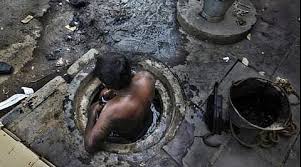
The police has started investigation in this tragic incident that took place in Bopal, Ahmedabad. After the labor contractor, now a case has been registered against the site contractor and engineer under the culpable homicide and atrocities act. Ahmedabad: Police has now registered a case against three people in the case of the tragic death of two Dalit youths due to suffocation in the sewer manhole in Bopal area of the city. This incident took place on September 5, in which 20-year-old Vikas Lal Bahadur Kori and 21-year-old Kanhaiyalal Khushiram Kori lost their lives. In this case, earlier only the labor contractor was arrested as an accused. But now Ahmedabad Rural Police has expanded the scope of investigation and has also made the site contractor and site engineer accused and is preparing to arrest them. What is the whole matter? The police have registered an FIR at the Bhopal police station on the complaint of deceased Vikas’s father Lal Bahadur Chhotelal Kori (48). Lal Bahadur, a resident of Amethi in Uttar Pradesh, said that his son Vikas was working as a plumber in Ahmedabad for the last three years. The pain he has expressed in his complaint is heart-wrenching. Lal Bahadur said that on September 6, he received a call from his relative Anish. Anish said that Vikas and his friend Kanhaiyalal were asked to get down into a sewer (gutter) near ‘The Garden Bungalows’ in Bhopal, where Vikas fainted. They were also told that Vikas would be sent home in an ambulance for treatment. But when the next day, on September 7, the ambulance reached his house in Amethi, Vikas’ lifeless body was taken out of it. Pushed to death without safety equipment When Lal Bahadur asked Anish the reason for the death, the truth came out. According to the FIR, on September 5, around 1:30 pm, contractor Mukeshkumar Someshwar Adalat Thakur brought a pressure machine and asked Vikas to get down to clean the gutter. The most serious thing was that Vikas was not given any safety equipment. As soon as Vikas got down into the gutter, he fainted due to the poisonous gas. His friend Kanhaiyalal also went inside to save him, but he also fell unconscious. Others present at the spot immediately called the fire department, who pulled both of them out and took them to a nearby private hospital. At the hospital, doctors declared Kanhaiyalal dead at 3:40 pm and Vikas at 10:40 pm. Police investigation and new revelations Tapsin Dodiya, Deputy Superintendent of Police (DySP) of SC/ST cell of Ahmedabad rural police, said on Thursday that the two youths were called to work on the private sewer line of a construction site. He said, “After finishing that work, they had to connect that line to the main sewer line of the Municipal Corporation, but the line was jammed due to rain. Our investigation has revealed that after this, both the youths were asked to clear the jammed line connecting the private sewer to the main line, and during this time this tragic accident happened.” Action was taken against whom? The police have registered a case against contractor Mukeshkumar Someshwar Adalat Thakur under sections 105 (culpable homicide not amounting to murder) and 125 (endangering human life or personal safety) of the Indian Penal Code (BNS). Apart from this, sections 7 and 9 of the ‘Prohibition of Employment as Manual Scavengers and their Rehabilitation Act’ and section 3 (2) (v) of the ‘Atrocities Act’ have also been imposed on him. DySP Dodiya further said, “We have already arrested labour contractor Thakur, who hails from Bihar. Now two more people, site contractor Saurabh Panchal and site engineer Jaynil, have also been made accused in the case. We will arrest them soon.” The police also said that when they investigated the role of the site builder, it was found that he was not aware of the work being done. Parshottam Vaghela of ‘Manav Garima’ NGO, which works on such incidents, says, “The law is very clear that those responsible for the death of workers, including government officials in charge, should be held accountable.” Rajan Chaudhary Courtesy : Hindi News
Ahmedabad upper caste full of contempt towards not just Dalits but also OBCs
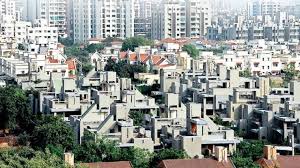
Who doesn’t know that casteism is all-pervasive in India. However, when one talks of casteism, often things boil down to the intensity of untouchability, officially abolished after India became a republic, found in not just in rural areas but also in towns and cities. I found it existing when I settled down in Ahmedabad, living in a two bedroom apartment in a supposedly posh area. The person who would come to pick up trash daily at our doorstep would be given food leftover in the evening. While we wouldn’t have any leftover, the next door neighbour would give it in such a way that she or he doesn’t come in direct contact (touch) of the person, who would belong to the Valmiki community, “lowest” in the Hindu social ladder. That was in mid-1990s. We are now living in the third decade of the 21st century. It’s a middle class society where I live in Ahmedabad. I often hear phrases like “these scheduled castes” from persons belonging to upper castes to declare how Dalits refuse to live clean when they see footwear lying in the corridors outside the doorsteps of the flats where Dalits live. Of course, they are not so much contemptuous towards Banias or Brahmins, many of whom also keep footwear outside the doorsteps, in the corridor. They are at least not identified with their caste. Be that as it may, I have found, casteism takes various forms in Ahmedabad societies where mainly upper caste people live. Thus, a person very close to me told me how the society chairman angrily protested against the move to sell the flat to an individual with Mali surname. “We were told not to sell to a Mali, who belongs to the other backward class (OBC). We were warned, if the society flat was sold to Mali, the flat wouldn’t be transferred in his name. Only Brahmins and Banias are allowed”, the person close to me told me. Yet, the person told me, the flat was sold to Mali, despite resistance. A rich person, Mali was finally accepted, as he was apparently identified as a good person, an “exception” among OBCs! Apparently, the society chairman found out that a transfer fee of Rs 30,000 wouldn’t be received if the transfer is “not allowed” — and the Mali fellow didn’t care two hoots. By Rajiv Shah Courtesy : Counterview Note: This news is originally published on https:/counterview.com/bha and is used purely for non-profit/non-commercial purposes, especially human rights.
Dalit Class 10 student assaulted, called “unworthy of education” by school owner in Gujarat’s Morbi

Morbi: A 15-year-old Dalit student was allegedly assaulted and subjected to casteist abuse by the owner of his school in Gujarat’s Morbi district on Tuesday. The student, enrolled in Class 10 at Gyan Ganga School in Wankaner, was reportedly attacked by school owner Yogendrasinh Zala. According to the police, the incident occurred near a girls’ school while the boy was eating snacks. Zala allegedly approached him, hurled caste-based slurs, and told him he was “not worthy of education” before physically assaulting him, including a kick to the groin. The boy’s father, a 40-year-old sanitation worker, was informed of the incident around 1 p.m. by a local resident, Siddharth Vaghela. The student later recounted the ordeal at home, after which he was taken to Wankaner Government Hospital. He had collapsed briefly after the assault and underwent sonography and treatment. A case has been registered at Wankaner City Police Station under Section 115(2) of the Bharatiya Nyaya Sanhita, the Scheduled Castes and Scheduled Tribes (Prevention of Atrocities) Act, and Section 75 of the Juvenile Justice Act. The investigation has been handed over to the Deputy Superintendent of Police of the Morbi SC-ST Cell. Authorities are currently searching for Zala, and further details regarding the motive and nature of the casteist abuse are expected to emerge following his arrest. Courtesy : Vartha Bharati Note: This news is originally published on https:/varthabharati.com/bha and is used purely for non-profit/non-commercial purposes, especially human rights.
Will EC probe how 10 unknown Gujarat parties got Rs 4,300 crore: Rahul

NEW DELHI: Congress MP Rahul Gandhi on Wednesday claimed that 10 anonymous parties in Gujarat received a massive donation of Rs 4,300 crore in five years, asking if the EC will probe where this money has come from and who is running the unknown outfits. Rahul made the remark based on a newspaper report that he quoted on social media. As per the news item, 10 anonymous parties in Gujarat fielded 43 candidates in two Lok Sabha polls and one assembly election between 2019-24, garnering around a meagre 54,000 votes. Also, they showed an expenditure of Rs 39 lakh in election reports but claimed an expenditure of Rs 3,500 crore in audit reports, while they received a donation of Rs 4,300 crore. “There are some unknown parties in Gujarat whose name nobody has heard but they received donations worth Rs 4,300 crore. They have contested elections, and spent money on them, on very few occasions. Where did these thousands of crores come from? Who is running them? And, where did the money go? Will the Election Commission investigate, or will it ask for an affidavit here too? Or will it change the law itself so that this data can also be hidden?” Rahul wrote on X. tnn Courtesy : TOI Note: This news is originally published on https:/timesofindia.com/bha and is used purely for non-profit/non-commercial purposes, especially human rights.
Dalit skinner stabbed by cow vigilantes in Adalaj

Ahmedabad: A 58-year-old Dalit skinner from Rohitvas village in Adalaj was stabbed and beaten on Sunday by four ‘cow vigilantes’ while he was skinning a dead cow. The victim, Mahendra Parmar, in an FIR filed with the Adalaj police on Sunday, stated: “I live with my family in Rohitvas and have a gram panchayat permit to dispose of dead cattle.” He said that around 2pm, he got a call from Naresh Parmar about a dead cow near Khodiyar village. “We were skinning the cow when Naresh left for some work. Around 3pm, four youths came and asked why I was killing a live cow,” the FIR states. Parmar explained, “I am from a skinner community which comes under the scheduled caste. This is our traditional work. I only handle dead cattle and I have a permit.” According to the FIR, one of the men, identified as Sachin Suthar, allegedly hurled casteist slurs at Parmar and slashed him below his right shoulder. Three others attacked him with sticks and pipes. “I fell on the ground and shouted for help,” Parmar told police. A passerby, Vishnu Solanki, intervened and rescued Parmar from them. Parmar was later shifted to Civil Hospital, Gandhinagar, where he received stitches for his injury and a medico-legal case was lodged. Adalaj police registered a complaint under the Bharatiya Nyaya Sanhita (BNS) sections for grievous hurt, criminal intimidation, and under the SC/ST (Prevention of Atrocities) Act against the four men. Courtesy : TOI Note: This news is originally published on https:/timesofindia.com/bha and is used purely for non-profit/non-commercial purposes, especially human rights.
Brutal attack on Dalit youth in Junagadh, third casteist atrocity in 21 days
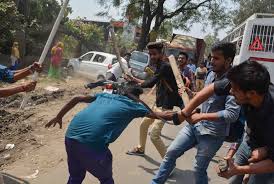
Brutal attack on Dalit youth in Junagadh, video goes viral; Third casteist violence in 21 days raises questions again. Ahmedabad: A Dalit youth was brutally beaten up, robbed and threatened with death in Junagadh, Gujarat. This incident has come to light as the third casteist atrocity against Dalits in the last 21 days. The viral video of the incident shows that even today, decades after Independence, casteism is deeply rooted in the society. What is the whole matter? The incident took place on the afternoon of August 16, when the victim had gone to meet a friend. Then a boy came to him and pleaded for help as his brother was being taken away. The victim and his friend followed the boy to the Swami Vivekanand School ground, where they understood that it was a trap. In the ground, three upper caste youths surrounded the youth and questioned him about his whereabouts. When the youth told them that he was from Kadiyawad, a youth named Hitesh and his two unidentified companions started insulting him with casteist slurs and beat him badly with belts and sticks, causing serious injuries on the youth’s body. The attackers also snatched the youth’s mobile phone and threatened to kill him if he complained to the police. The victim told people at the Junagadh Civil Hospital, “They hit me with belts and sticks, snatched my phone and threatened to kill me. Today it is my turn, tomorrow it could be someone else’s. I only want justice.” The police have registered a case under several sections of the Indian Penal Code at the Junagadh A Division police station. Separate teams have been formed to nab the accused. Deputy SP Hitesh Dhandaliya assured that “strict legal action will be taken as soon as possible.” This attack in Junagadh is not the only one. This is the third attack against Dalits in Gujarat in the last three weeks, which shows that casteism is still fuelling violence. Each incident is a crack in the promise of equality in society and a grim indication of the urgent need for justice and protection for vulnerable communities. Rajan Chaudhary Courtesy : Hindi News
The Mooknayak Impact: Dalit settlement in Amreli, Gujarat gets permanent drainage solution, report sent to Scheduled Caste Commission
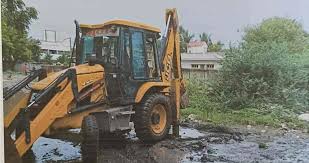
The Amreli District Panchayat Office announced the construction of an underground drainage system in the SC area as a permanent solution. The project is funded under the 15th Finance Commission (rural component) and 10% district-level Finance Commission grant. The Gram Panchayat has passed the necessary resolutions for this. Amreli- There is a relief news for the Scheduled Caste (SC) community in Jaswantgadh village in Amreli district of Gujarat. The problem of sewage diversion here has now been resolved. On June 25, The Mooknayak published a report titled “In this village of Gujarat, upper castes released dirty water in Dalit settlement, administration mute spectator!”. The report said that the upper caste residents of the village had deliberately dumped their underground drainage system into an open monsoon drain near Dr. Ambedkar Colony, which is a predominantly SC settlement. This led to the garbage and faeces from their homes accumulating near the Ambedkar colony. After the National Commission for Scheduled Castes (NCSC) intervened after the problem was highlighted, the gram panchayat has now passed proposals for an underground drainage system in the Dalit basti. The Mooknayak reported that the drain diverted to the Dalit basti, which was meant only for rainwater, became a drain that flowed into the houses with filth and faeces. Residents described it as a “permanent swamp of humiliation”. During rains, dirty water would flood their homes, increasing health risks. With an Anganwadi centre nearby, children were at risk of waterborne diseases and long-term developmental risks. Local health workers reported alarming mosquito infestations and a rise in diseases. Despite repeated complaints to the gram panchayat, taluka panchayat and the district administration, no action was taken. Local media Khabarantar highlighted the crisis, which led to The Mooknayak reporting and bringing it to national attention. Social activist Kirit Rathore, who provided photographic evidence and testimonies, said, “This is not just poor drainage; it is a well-planned form of caste oppression. Upper castes are using garbage as a weapon to humiliate Dalits.” Based on The Mooknayak report, T. Emmanuel Dhinakaran, former state co-incharge of the BJP Tamil Nadu Minority Morcha and a proponent of social justice, raised the issue before the NCSC. In his petition, Dhinakaran called the episode a “blatant violation of the constitutional rights of Dalits” and sought immediate action. His efforts garnered widespread support for the issue, cutting across political boundaries. “This is not a question of sanitation, but of dignity and equality,” he said. On 9 July 2025, just two weeks after The Mooknayak report, the NCSC began a formal investigation. The commission issued notices to the Amreli district collector, the district development officer (DDO) and the Scheduled Caste Welfare Department of Gujarat. The letter (reference number ESDW/BE/GJ/2025/300700, dated 7 July 2025) sought an action report within 15 days and warned of summons under Article 338 of the Constitution on non-compliance. In this village of Gujarat, upper castes released dirty water in Dalit settlement, administration mute spectator! In response to the NCSC’s direction, the Amreli district panchayat office submitted an action report (number PNC/8/Mis/Jashwantgadh/1012-1015/2025) on August 2. This letter, written to the NCSC Deputy Director in Ahmedabad, acknowledged that due to heavy rains, garbage had accumulated in the open drain, causing sanitation problems. The gram panchayat immediately started cleaning work with a JCB machine and the area was completely cleaned. Photographic evidence was also attached to confirm the work. Most importantly, the report announced a permanent solution: construction of an underground drainage system in the SC area. The project is funded under the 15th Finance Commission (rural component) and a 10% district-level Finance Commission grant. The gram panchayat has passed the necessary resolutions for it. “We have cleared the area and are committed to a long-term solution,” the letter said. As of August 24, local sources confirmed that the clearing had mitigated the immediate hazards and that preliminary work for the underground drainage system had begun, with completion expected in the next few months. Geetha Sunil Pillai Courtesy : Hindi News
For the first time in a village in Gujarat, a Dalit youth got his hair cut at a barber shop – a centuries-old tradition broken
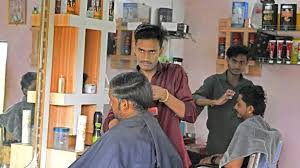
In Alwada village of Banaskantha, a Dalit youth got his hair cut at a barber shop for the first time, a historic step towards social equality. Banaskantha – A historic event took place on 7 August in Alwada village of Banaskantha district of Gujarat. Kiran (Kirti) Chauhan, a 24-year-old farm labourer of the village, got his hair cut at the village barber shop for the first time. This occasion became a symbol of freedom from the social shackles that had been going on for generations for the Dalit community, not just a haircut. Broken wall of generations About 250 Dalit families live in Alwada village with a population of about 6,500. But this discrimination was going on here for generations that the barbers of the village did not cut the hair of Dalits. Dalits were forced to go to other villages to visit barber shops and many times had to hide their caste. 58-year-old Chhogaji Chauhan says, “Our ancestors used to face this discrimination even before independence. And my children have also been facing the same for the last eight decades.” This experience was very emotional for Kirti Chauhan. He said, “For the first time in 24 years, I sat on the chair of the barber in my village. Earlier we always had to go out. That day I felt that I have been accepted in my own village and am free.” Initiative of social workers and administration In the continuous efforts of the Dalit community, they got the support of social worker Chetan Dabhi. He explained to the upper castes and barbers of the village that this practice is unconstitutional. When the matter did not work out with the explanation, the police and the district administration had to intervene. Mamlatdar Janak Mehta held a meeting with the village leaders and resolved the issue. At the same time, Gram Sarpanch Suresh Chaudhary expressed regret over the past discrimination and said that it is a matter of happiness for him to see this change happening during his tenure. Now all the five barber shops of the village welcome Dalit customers. Barbers and upper castes have also accepted the change Pintu, a 21-year-old barber who cut Kirti’s hair, said, “We used to do this due to tradition. But now that the elders have given permission, there is no restriction. Our business has also increased due to this.” People from the upper castes are also satisfied with this change. Prakash Patel from the Patidar community said, “If everyone can come to my grocery shop, then why not to the barber shop? It is good that this wrong practice has ended now.” A long journey still remains Although this change is commendable, the Dalit community believes that discrimination has not ended completely. Dalit farmer Ishwar Chauhan says, “Today we have got a place in the barber shop, but we are still made to sit separately in the community feast. Hopefully, one day this will also end.” For Alwada village, this haircut is not just an ordinary event, but a big step towards respect, acceptance and equality. As the villagers say, “This is not just a haircut, but a new beginning.” Rajan Chaudhary Courtesy: Hindi News