
Shot 5 times, remained in coma for 2 months:Continuously taunted by wife, police in hospital; couldn’t even move, let alone speak
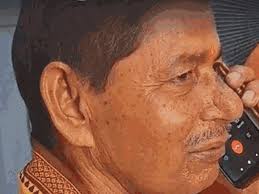
I am Arjun Paswan, from Jamuana village in Jehanabad district of Bihar. We did not own any land. Being Dalit, we survived on the mercy of landlords. We received millet to eat in exchange for working on their land. If we encountered landlords on the road, we would hold our shoes in our hands. Not only this, they kept an eye on our women. We even had separate wells. When famine struck the village, troubled by hunger, I came to Patna. When I opposed the smuggling of kerosene oil here, I was shot five times. I was in a coma for two months. My body could not move, but my mind was alert. I could hear everything—my wife’s sobs, the whispers of doctors and police officers—but could do nothing. Hearing the same kind of things repeatedly made me feel irritable inside. Actually, my story begins in the village, where I endured poverty, starvation, famine, the feudal system, and the caste system. We were a family of seven. I was the eldest among three brothers and two sisters. Therefore, I had the responsibility of running the entire family. I was married at the age of 13. Poverty was so severe that getting enough to eat was all that mattered. For that, I would go with my mother to dig soil from the canal so that water could easily reach the fields of landlords and upper castes. In return, we would get millet to eat. We had to grind the millet after bringing it home. For vegetables, we grew eggplants at home. Not just food, life itself was not easy there. If we encountered landlords while walking on the road, we would take off our shoes and hold them in our hands because wearing shoes was against their honour. Moreover, we had separate wells in the village. Bhumihar, Musahar, Kurmi, Rajput, and Dalits—all had separate wells. Additionally, if powerful landlords liked any woman from our house, they would abduct her. They would rape her. Even if we wanted to protest, we could not. Nobody would listen to us. In the name of justice, we would be given only a handful of grains. Life went on like this. Then in Bihar, there was continuous famine for three years in 1966, 1967, and 1968. The famine was so severe that people were on the verge of dying from hunger. Poor people and animals in our village began to die. To get news about the famine, we would go and listen to the radio at nearby wealthy landlords’ houses. Their rule was that they would sit on chairs in their courtyard while we sat on the ground. One day, the government announced on the radio that people from famine-affected villages should go to Punpun railway station from Jehanabad and bring fodder for their animals from there. Then four more bogies were added to the train for the 50-kilometre journey from Jehanabad to Punpun station. In the morning we would go to Punpun railway station and return by evening with grass for the animals. The entire day would be spent doing this. By then, there was nothing left to eat at home. During that time, for almost a year, our family survived by chewing sugarcane—the same sugarcane that had been brought as animal fodder during the famine. For breakfast, we would soak corn at night and eat it boiled in the morning. During the famine, a landlord falsely accused my father of theft. He was sent to jail. Then we faced new trouble. In a way, our problems were only increasing. At that time, my mother-in-law lived in Patna. She asked me to come to Patna with the family. After father went to jail, it was difficult to run the house. I felt it was better to go to Patna than to die of hunger there. We sold two cows and, with the money from that, I came to Patna with the family. After arriving in Patna, I started living with my mother-in-law in the Pirbamaria area. This is a Dalit settlement. Here, my mother-in-law got me work on the water ships running in the Ganges. These ships used to come from Kolkata to Patna. They carried oil, Dalda canisters, and sacks of sugar. Spices and makhana from Bihar’s Marufganj Mandi would go to Kolkata on these ships. I started working loading and unloading goods on them. Now, upon coming to Patna, there was just this much comfort: we did not have to sleep hungry. After a year, my father was released from jail and returned home. When he started managing the house by doing labour work, I felt that I should study; otherwise, I would have to load and unload goods all my life. I took admission in a school and started studying. I would stay in school from 10 AM to 4 PM, and after that would go to work on the water ship. There, I would work until 10 PM. This way, in 1971, I completed my education up to the 10th standard. After that, I did my intermediate from Bihar National College. During this time, I came under the influence of the leftist movement. Actually, when I was in my village, people in nearby Sikri village were also connected to leftism, whom I had seen in childhood. Here in Patna, the entire area where I lived was under leftist influence. Leftist leader Ram Avatar Shastri had been elected MP three times from here. He kept raising his voice against poverty, starvation, the feudal system, and the caste system, so I also joined them. After joining the movement, I started speaking out against the black marketing of kerosene in my area. The powerful people would loot the kerosene arriving at the depot and sell it at high prices. No one dared protest. My family members tried to stop me from opposing it, but I persisted. During this time, I began receiving threats. One day, when I left home in the morning for
“Chirag Paswan Is Transgender,” Claims Bihar State Transgender Welfare Board Member, Dr. Rajan Singh, Calls for Public Acknowledgment
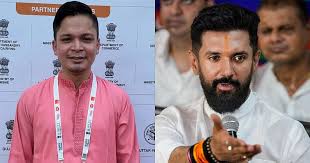
Dr. Rajan Singh, a Bihar State Transgender Welfare Board member, has sparked controversy by alleging that Union Minister Chirag Paswan belongs to the transgender community Dr. Rajan Singh claimed Chirag Paswan hides his transgender identity. He urged Paswan to acknowledge his identity publicly. Chirag Paswan is a former actor and current politician. Dr. Rajan Singh, a member of the Bihar State Transgender Welfare Board, has stirred controversy with his remarks targeting Union Minister Chirag Paswan. The video surfaced on instagram on August 27, 2025. In the video while speaking to the media, Dr. Rajan alleged that Chirag Paswan belongs to the transgender community but has been hiding his identity. He said there is no minister from the transgender community in the country and claimed that many transgender people in politics often hide their personality. He then created a stir by saying, Chirag Paswan is transgender. He has hidden his gender. The whole country and the world know that he is from the transgender community. Dr. Rajan further urged Paswan to speak openly about his identity, adding: If Chirag Paswan accepts his community publicly, we will all go to the streets and make him Chief Minister. But he does not speak. Chirag Kumar Paswan, currently serving as India’s 19th Minister of Food Processing Industries since June 2024, is a well-known politician from Bihar and has been the president of the Lok Janshakti Party (LJP) since 2021. The Bihar Assembly election is expected in later this year. Chirag is the son of the late Ram Vilas Paswan—veteran Union Minister and founder of the LJP—and Reena Sharma, a Punjabi Hindu air hostess from Amritsar. Ram Vilas Paswan, remembered for his calm nature and long-standing commitment to social justice, had a political career spanning over fifty years. He represented marginalized communities, served multiple terms in both the Lok Sabha and Rajya Sabha, and held several key ministerial portfolios. Before entering politics, Chirag Paswan briefly tried his hand at acting, appearing in the 2011 Bollywood film Miley Naa Miley Hum. He later shifted focus to politics, contesting and winning the 2014 Lok Sabha elections from Jamui constituency in Bihar. Dr. Rajan’s comments have triggered discussion, bringing the question of gender identity into the political spotlight and placing Chirag Paswan in the middle of an unexpected controversy. [Rh/VP] Courtesy : News Gram Note: This news is originally published on https:/newsgram.com/bha and is used purely for non-profit/non-commercial purposes, especially human rights
‘Stealing Karpoori Thakur’s Jan Nayak title’: PM Modi’s veiled jibe at Rahul Gandhi; blames RJD rule for Bihar’s education woes
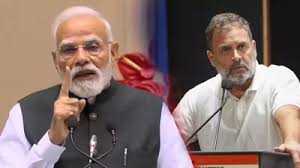
NEW DELHI: Prime Minister Narendra Modi on Saturday took a veiled swipe at Leader of Opposition Rahul Gandhi while inaugurating several education and skilling projects in Bihar, urging people to be vigilant against those attempting to claim the ‘Jan Nayak’ title associated with former Bihar chief minister Karpoori Thakur. Speaking at the inauguration of Jan Nayak Karpoori Thakur Skill University in Bihar, PM Modi said, “…Karpoori Thakur wasn’t made ‘Jan Nayak’ by social media trolls. He was made ‘Jan Nayak’ by the people of Bihar, and they did so after observing his life. I would urge the people of Bihar to be vigilant. Nowadays, people are trying to steal even this title of ‘Jan Nayak’. Therefore, I urge the people of Bihar to be vigilant so that this honour bestowed upon Karpoori Thakur by the people is not stolen… the double engine government of NDA is continuously engaged in modernising the educational institutions of Bihar.” — ANI (@ANI) PM Modi blamed the “poor state” of education during the RJD rule for triggering large-scale migration from Bihar and lauded chief minister Nitish Kumar’s government for improving the situation. He said the state government has resolved to double employment generation in the next five years compared to the last two decades, aiming to ensure that young people find work within Bihar. He targeted the previous RJD regime, recalling how “schools would not open and few recruitments were made”, forcing students to migrate to other cities. “It is rather difficult to restore a tree whose roots are rotting, and this was the state of Bihar during the RJD rule,” he said. PM Modi unveiled youth-centric initiatives worth over Rs 62,000 crore, with a special focus on Bihar. He launched PM-SETU (Pradhan Mantri Skilling and Employability Transformation through Upgraded ITIs), a centrally sponsored scheme worth Rs 60,000 crore, which aims to upgrade 1,000 government ITIs in a hub-and-spoke model. He also announced the revamped ‘Mukhyamantri Nishchay Svyam Sahayata Bhatta Yojana’, under which nearly five lakh graduates will receive a monthly allowance of Rs 1,000 for two years, along with free skill training. Additionally, the redesigned Bihar Student Credit Card Scheme will provide interest-free education loans of up to Rs 4 lakh to ease the financial burden on students. The prime minister highlighted that India’s ITIs are not only crucial for industrial education but also function as workshops for ‘aatmanirbhar Bharat’. He noted that his government has opened 5,000 ITIs in the last decade, compared to 10,000 before 2014. The inauguration of the Karpoori Thakur Skill University is part of the broader effort to create industry-ready, globally competitive youth in the state, he added. Courtesy : TOI Note: This news is originally published on https:/timesofindia.com/bha and is used purely for non-profit/non-commercial purposes, especially human rights
“RSS policy of Nitish-BJP”: Tejashwi Yadav accuses NDA of “anti-Dalit” approach in Bihar
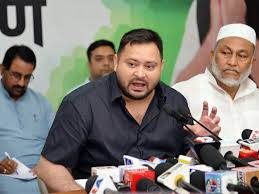
Patna (Bihar) [India], September 28 (ANI): Bihar’s Leader of Opposition and RJD leader, Tejashwii Yadav, accused the JDU-BJP government of anti-Dalit policies on Sunday, claiming that the Scheduled Caste population has a lower participation rate in the government and professional sectors. Sharing the glimpses from the ‘Pataliputra Dalit Conference’ by the National Confederation of Dalit and Adivasi Organisations (NACDAOR), Tejashwi launched a sharp attack against Chief Minister Nitish Kumar and the BJP, accusing them of an RSS-like policy. The RJD leader wrote on X, “Participated in the ‘Pataliputra Dalit Conference’ organised by the National Confederation of Dalit and Adivasi Organisations (NACDAOR). For 20 years, the RSS policy of the Nitish-BJP double-engine government has led to anti-Dalit policies, due to which, despite the population of Scheduled Castes in Bihar being more than 21.3 per cent, the participation of Dalits in government and professional sectors has been limited to just 1.13 per cent.” Further, Tejashwi Yadav claimed that there are caste inequalities in education, land rights, and employment. “Due to the continuous exploitation of Dalits, their condition is pitiable. In the current social structure, significant inequalities persist in areas such as education, land rights, and employment. Only 0.015 per cent of the total Scheduled Caste population are doctors and only 0.1 per cent are engineers,” he wrote. He accused the government of not allocating appropriate funds for the students from the Scheduled Tribes and the Scheduled Castes. He wrote, “The Bihar government is using the funds allocated under the Scheduled Tribe and Scheduled Caste sub-plan for other purposes, as a result of which these sections receive no direct benefit. When it comes to schemes for scholarships, progress, advancement, and improvement for Dalit students, this anti-Dalit government starts making excuses of a shortage of funds.” He also slammed Union Ministers Chirag Paswan and Jitan Ram Manjhi for their alleged silence over the exploitation of the Dalit community. “Chirag Paswan and Jitan Ram Manjhi, who call themselves Dalit leaders, have maintained complete silence on the exploitation of Dalits after getting a share in power,” the X post read. Tejashwi’s remarks come ahead of the Bihar Legislative Assembly elections later this year, as Mahagathbandhan, led by Congress and RJD, is gearing up to challenge the ruling NDA, which comprises BJP and JD(U). (ANI) The article has been published through a syndicated feed. Except for the headline, the content has been published verbatim. Liability lies with original publisher. Written By: TSG Syndication Courtesy : The Sunday guardian Note: This news is originally published on https:/thesundayguardian.com/bha and is used purely for non-profit/non-commercial purposes, especially human rights
Tejashwi Yadav eyes Nitish Kumar’s special ‘thing’, Rahul Gandhi is also ‘batting’ for the same.
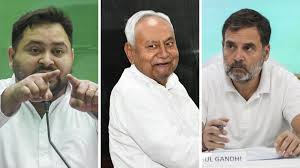
Bihar Vidhansabha Chunav 2025: Ahead of the Bihar Assembly elections, Tejashwi Yadav has expanded his scope of operations, joining forces with Rahul Gandhi. Both are now focusing on the EBC vote bank, along with MY and Dalit voters. Patna: While the NDA government in the poll-bound state of Bihar is making announcements targeting women and other sections of society, the opposition party India Block is focusing its efforts on the Extremely Backward Classes (EBCs) and Scheduled Castes (SCs) to achieve a majority in the upcoming elections. Rahul Gandhi and Tejashwi Yadav eye EBC voters EBCs constitute approximately 36% of Bihar’s electorate, and Scheduled Castes 20%—together, they constitute more than half the electorate. On September 24, the India Block released the Extremely Backward Classes Resolution Resolution, a special manifesto for EBCs, promising to expand reservations to all classes. Rahul Gandhi made a bet during the Adhikar Yatra Congress leader Rahul Gandhi also targeted this class during his recent visit to Bihar, vowing to exceed the 50% reservation limit set by the Supreme Court. RJD leader Tejashwi Yadav expanded his outreach by addressing two dialogue meetings with Scheduled Caste and Extremely Backward Class (EBC) communities. Tejashwi also made his political move On Friday, he met with social activists from both groups and highlighted the opposition’s specific agenda. Addressing the Karpoori Extremely Backward Class Dialogue in Patna on Saturday, he alleged that the Extremely Backward Class had been victims of misgovernance and neglect for two decades under Nitish Kumar’s BJP-supported government. Tejashwi Yadav said, “The Extremely Backward Class will no longer be a vote bank, but a power bank. The Extremely Backward Class will no longer just form the government—they will form their own government.” Edited by: Rishikesh Narayan Singh•Reported by: Kumar Anshuman About the Author Rishikesh Narayan Singh, in-charge of Bihar-Jharkhand for Navbharat Times Digital. A 20-year journey in journalism, from Janmat TV, IBN7, ETV Bihar-Jharkhand, News18 Bihar-Jharkhand, to Times Internet. After starting in the national capital, Delhi, he now works in Bihar. He has a keen interest in national, international, crime, and political news. He is passionate about learning every aspect of digital journalism. Courtesy: Hindi News
Priyanka promises respect & social justice for women
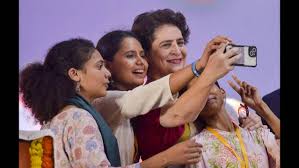
Patna/Motihari: Congress general secretary Priyanka Gandhi Vadra on Friday urged the women of Bihar not to be swayed by the incentives being offered by the NDA govt in the state. She accused the BJP-led coalition of being “interested only in your votes,” while asserting that the Congress aimed to provide women with “respect.” Addressing a ‘Mahila Samvad’ at Sadaquat Ashram, the Congress state headquarters, Priyanka encouraged women to discern the “true intentions” of Prime Minister Narendra Modi, Union home minister Amit Shah and CM Nitish Kumar, suggesting they “deserved to be taught a lesson” in the upcoming assembly elections.Referring to the transfer on Friday of Rs 7,500 crore among 75 lakh women beneficiaries under the Mukhyamantri Mahila Rojgar Yojana (MMRY), she said, “Now that elections are near, Rs 10,000 is being offered by the govt. But, take note, they are not promising that the dole will continue every month.” She added, “Women have the capacity to sense people’s true intentions (neeyat). They make use of this faculty while looking for a match for their daughters. You must, similarly, realise the true intentions of Modi, Shah, and Nitish.” Priyanka criticised the timing of the financial offers, claiming it revealed a focus solely on securing votes. “They cannot understand your need for respect. They will not address your need for safety. I think crimes against women must have risen ten-fold in the last 10 years,” she alleged. Outlining her party’s commitments, she said, “Our party wants to give women the respect that is their due. We have promised lands to the landless families. We propose that such parcels of land be registered in the name of a woman member.” She added, “My brother Rahul Gandhi has been fighting for social justice, an essential component of which is the uplift of women. In the elections, you must discern who is really interested in your welfare and who is just after your votes.” Highlighting the medical insurance scheme introduced in Rajasthan, she promised to replicate it in Bihar if the INDIA bloc came to power. “We promise to bring similar benefits in Bihar,” she said. Later, addressing a rally at Motihari, Priyanka praised Rahul Gandhi as a “real patriot” for his 4,000-km Bharat Jodo Yatra to connect with the people. She accused the NDA of focusing only on winning elections at any cost, saying they exploited caste and religious divides and resorted to “vote theft.” Courtesy : TOI Note: This news is originally published on https:/timesofindia.com/bha and is used purely for non-profit/non-commercial purposes, especially human rights
Why is Tejashwi Yadav uncomfortable with Rahul Gandhi’s EBC 10 factor? Political fire is simmering within the Grand Alliance, learn more.
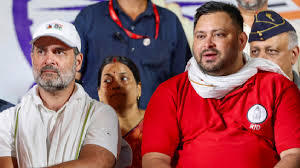
Congress Working Committee: The Bihar Pradesh Congress has begun accelerating its election planning. According to political experts, Congress state president Rajesh Ram is no longer beholden to Lalu Prasad Yadav, unlike former state president Akhilesh Prasad Singh. Akhilesh Prasad Singh used to make decisions after consulting Lalu Yadav. That is no longer the case. The Congress party is batting on its own pitch in Bihar. Patna: The biggest question is this: When Rahul Gandhi launched the Voter Rights Yatra, the Grand Alliance canceled the rally to mark its conclusion. The reason given was that Tejashwi Yadav was merely acting as a charioteer. Rahul Gandhi’s TRP is increasing. This is why, on the advice of Lalu Prasad Yadav, Tejashwi Yadav launched the Bihar Adhikar Yatra. According to experts, a political fire is simmering within the Grand Alliance. The reason for this is Rahul Gandhi’s 10 factors regarding EBCs, which he announced at the Congress Working Committee meeting. What is the resolution letter? The resolution, jointly issued by Rahul Gandhi, Leader of the Opposition in the Lok Sabha, and RJD leader Tejashwi Yadav, outlined social security measures in areas such as education and employment for the state’s EBC communities, which constitute approximately 36% of Bihar’s population. Unveiling the document, Gandhi said, “Today, we are committed to restoring justice and opportunity to the most deprived sections of society. The rights of the extremely backward classes have long been neglected. Our resolution prioritizes their aspirations in the legislature and on the ground.” It is reported that tensions within the RJD stem from the fact that their vote bank is also EBC, which the Congress is eyeing. Congress will cut into RJD’s votes, causing losses for the RJD. The Grand Alliance parties believe that the fire simmering within the Congress and RJD could flare up at any moment. Inside the Proposal The proposal promises a dedicated EBC Atrocities Prevention Act to end discrimination and violence against them through strong legal measures. It proposes increasing the reservation for EBC communities in panchayats and municipal bodies from 20% to 30%, amending the 50% quota limit, and submitting relevant legislation to the central government to withstand legal scrutiny. The resolution also promises to declare the existing “not found suitable” provision in recruitment illegal, citing its alleged misuse against EBC candidates, and to form a committee to review caste lists for inclusion and over-inclusion. A Setback for RJD According to RJD sources, Congress is working on a separate plan despite remaining in the alliance. Congress understands that Lalu Yadav’s era is over and Tejashwi Yadav’s era has arrived. Accordingly, Congress should have the upper hand. Rahul Gandhi is a senior leader, and Tejashwi Yadav is nothing compared to him. Therefore, Congress is making its own moves, targeting EBCs as part of this effort. The proposal promises residential land grants—three decimal places in urban areas and five decimal places in rural areas—to all landless members of the EBC, Scheduled Caste (SC), Scheduled Tribe (ST), and Other Backward Class (OBC) communities. Tejashwi Yadav stated that while we are fighting unemployment and vote theft, land and housing will be guaranteed for the poorest, not as a privilege, but as a right. Bihar Bandh News: Huge uproar in the name of Bihar Bandh, now Rahul Gandhi explains why he is doing this? Rahul Gandhi played a trick In private schools, the proposal proposes to reserve 50% of seats for EBC, OBC, SC, and ST students under the Right to Education (RTE), while mandating all private educational institutions in Bihar to implement reservations in accordance with Article 15(5) of the Constitution. It also provides for reserving 50% of government contracts and procurement worth up to ₹25 crore for members of the EBC, OBC, SC, and ST communities. According to the proposal, a high-powered Reservation Regulatory Authority will be established to oversee quota policies. It also proposes making state legislature approval mandatory before making changes to the list of castes eligible for reservation. Speaking on the occasion, Rahul Gandhi said, “During the Voter Rights Yatra, we have explained to the people of Bihar. This proposal is our answer. It promises legislative reform, education, employment, and respect for the most marginalized sections of society.” Ashutosh Kumar Pandey About the Author Ashutosh Kumar Pandey works for Navbharat Times Online. He has been active in digital, print, and electronic journalism for over 22 years. He specializes in digging into the past and uncovering untold stories of political history. He presents political anecdotes in a witty manner. He has a special grasp on political, cinema, and crime news. He received 12 “Best Story of the Day” awards from ETV Network between 2005 and 2009. He holds a degree in Political Science and Hindi Journalism. He began freelance writing in 2001 for Jansatta, Hindustan, and Dainik Jagran. He has had the privilege of working for ETV, Maurya TV, Focus TV, the Union Ministry of Information and Broadcasting, Prabhat Khabar.com, and Network 18. He has covered reporting and desk work for four Lok Sabha elections and several assembly elections. He is interested in music, theatre, and folk culture. He has a deep love for books. Courtesy : Hindi News
Yatra politics in Bihar: Why Tejashwi Yadav may be reluctant to join hands with Owaisi’s AIMIM
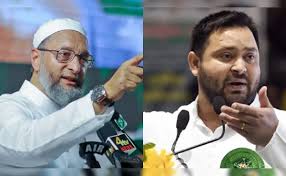
NEW DELHI: It’s yatra season in Bihar, as the state gears up for the upcoming assembly elections. After the Mahagathbabdhan’s “Voter Adhikar Yatra” which was led by Rahul Gandhi and Tejashwi Yadav’s ongoing “Bihar Adhikar Yatra”, it is now Asaduddin Owaisi, the chief of All India Majlis-e-Ittehadul Muslimeen (AIMIM), who is leading his party’s ‘Seemanchal Nyay Yatra’. While all the three yatras aim to mobilise voters against the Nitish Kumar-led NDA government in the state, there is a political subtext which points to the fight within in the opposition space. While Tejashwi’s ongoing yatra is perhaps an effort to establish his dominance within the Mahagathbandhan and counter the narrative that he played second fiddle to Rahul Gandhi during the Voter Adhikar Yatra, Owaisi’s yatra in the Seemanchal region may actually end up dividing the opposition space – like it did five years back. The Seeemanchal region, comprising four districts of Purnia, Araria, Kishnaganj and Katihar, has a high concentration of Muslims. Why Owaisi is keen to join the Mahagathbandhan In the 2020 Bihar assembly elections, AIMIM fought on 20 seats and won five of them — Amour, Kochadaman, Baisi, Jokihat, and Bahadurganj. However, four of the AIMIM MLAs eventually joined the Rashtriya Janata Dal (RJD) in 2022. The NDA had then returned to power by winning 125 seats as against the Mahagathbandhan’s 110. The AIMIM was then blamed for the Mahagathbandhan’s failure to get a majority, by cutting into Muslim votes, especially in the Seemanchal region, which has a sizeable population of the minority community. The RJD and the Congress had then blamed Owaisi for being the B team of the BJP and helping the saffron party. This time around, Owaisi seems to have changed his strategy and has made several public pronouncements about his desire to join the Mahagathbandhan. The AIMIM has not only written letters to RJD bosses- Lalu Prasad and Tejashwi seeking an alliance, but the party, perhaps in a first, also held a demonstration with drums outside the residence of former CM Rabri Devi demanding its inclusion in the opposition INDIA bloc to “prevent a split of secular votes”. The AIMIM has said that it wants to contest only on 6 seats as part of the Mahagathbandhan. “We made the move so that we do not face accusations of helping the BJP. A lack of proper response on RJD’s part will make it clear who is actually helping the BJP,” Owaisi said reacting to the lack of response from RJD to his alliance offer. “Our Bihar president Akhtarul Iman wrote three letters to Lalu Prasad and Tejashwi Yadav expressing our wish to join the INDIA bloc. We had demanded only six seats. We are not interested in any ministerial berth. We only wanted to be treated as equals and not as slaves in the joint fight against BJP and RSS. But, so far, no response has come from them,” the Hyderabad MP added. “My appeal to you is to strengthen your political leadership. We will not go to outsiders’ doors to beg… I and Akhtarul Iman, wrote letters to Lalu Prasad Yadav. After that, Tejashwi Yadav said that he had not received it. My brother, when the father is alive in a household, and a matter is presented in front of elders, the younger ones do not have the right to say: ‘You told the elder, but not me’,” Owaisi said while addressing a rally in Kishanganj. Why RJD may not be interested in Owaisi alliance The RJD, which is going all out to wrest power from Nitish Kumar this time around, should have ideally latched on to the AIMIM offer to ensure there was no division of Muslim votes in the assembly elections. However, the party is yet to respond to Owaisi’s overtures. For the RJD, Owaisi’s alliance offer presents a difficult situation. The RJD, over the years, has drawn its core support from the Yadavs and Muslims. Accepting Owaisi as an alliance partner, RJD would have to concede part of that space to Owaisi, a move that may not be politically prudent for either Lalu or Tejashwi Yadav. Traditionally, Yadavs and Muslims have formed the core voter base of Lalu Yadav’s Rashtriya Janata Dal Secondly and perhaps more importantly, if Owaisi joins the Mahagathbandhan, it will give the BJP and NDA a strong ground to press with its charge of appeasement politics. Already, the Mahagathbandhan’s campaign against vote theft and Rahul Gandhi’s yatra has been lebelled by the BJP as an effort to save the alleged infiltrators, who are mostly Muslims from Bangladesh. The charge has been led by none other than Prime Minister Narendra Modi, who, in an election rally earlier this month accused opposition parties of shielding illegal immigrants and asserted that infiltration had caused a “demographic crisis” in eastern states like Bihar, Assam and West Bengal, making people “worried for the honour of their sisters and daughters”. “This was the reason why I had announced a demography mission from the Red Fort (on Independence Day). But such is vote bank politics that Congress, RJD and their entire ecosystem are busy defending and shielding the foreign infiltrators,” PM Modi had alleged. “They have become so shameless that they are raising slogans and taking out yatras in support of infiltrators from foreign countries,” he had said, in an apparent reference to the ‘Voter Adhikar Yatra’ of the Congress. “But let me tell RJD, Congress and their ilk that the NDA is committed to driving out each and every infiltrator. I challenge leaders who are trying to protect infiltrators to try with all their might. We will continue to flush out infiltrators,” the PM had asserted. Clearly, if the Mahagathbandhan takes Owaisi’s party into its fold, this BJP campaign will become a lot more shriller in the run up to elections and may actually end up polarising the voters. Little wonder, the RJD may perhaps risk some division of votes rather than go on the defensive under the charge of helping infiltrators (read
Bihar polls: Congress will stand by its word, says Revanth
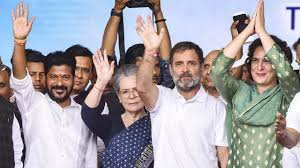
Hyderabad: The extended meeting of the Congress Working Committee (CWC) in Patna on Wednesday adopted resolutions promising ‘10 Guarantees’ to the people of Bihar, on the lines of Telangana’s ‘Six Guarantees’. According to the sources, the CWC’s ‘10 Guarantees’ to the people of Bihar are similar to the Telangana and Karnataka models, where guarantees (poll promises) were given, following which the party secured power in the two states. During his address at the CWC meeting, chief minister A Revanth Reddy explained about the caste survey conducted in Telangana as per the promise made by Rahul Gandhi. Revanth reportedly assured the people of Bihar that every promise and guarantee made by Rahul Gandhi will be implemented in Bihar too, if the Congress is voted to power. Revanth also explained about two bills passed in the Telangana assembly, one extending 42% reservations to the BCs, and another removing the 50% cap on total reservations in local bodies. He alleged that these bills are pending with the President of India, with the BJP intentionally stopping their approval. The CWC meeting praised the Congress govt’s efforts to promote social justice through the caste survey, 42% BC quota, SC categorisation and the implementation of all promises made by Rahul Gandhi. Revanth, at the CWC meeting, called upon the party leaders to lead the party to victory in Bihar under the leadership of Rahul Gandhi. TPCC president Mahesh Kumar Goud’s speech at the CWC meeting highlighted the Congress govt’s social justice initiatives. “The caste survey and BC quota Bills passed by the Congress govt have become a role model for the country, in tune with Rahul Gandhi’s fight for OBCs and other sections with the slogan ‘jitni aabadi, unti hissedari’,” he said. He credited the Congress’ success in Telangana to Rahul Gandhi’s ‘Bharat Jodo yatra’ and Sonia Gandhi’s six guarantees. In Sept 2023, the Congress had convened an extended CWC meeting in Hyderabad, followed by a massive public meeting at Tukkuguda on the city outskirts. Sonia Gandhi unveiled the party’s six guarantees at the public meeting, and the party leadership believes it was this guarantee model that led Congress to victory in Telangana. Deputy chief minister Bhatti Vikramarka, ministers N Uttam Kumar Reddy and Damodar Rajanarasimha, CWC special invitee Vamshi Chand Reddy and AICC in charge Meenakshi Natarajan also attended the meeting in Patna. Courtesy : TOI Note: This news is originally published on https:/timesofindia.com/bha and is used purely for non-profit/non-commercial purposes, especially human rights
Govt builds houses for 10 Dalit families in Temkemaiung
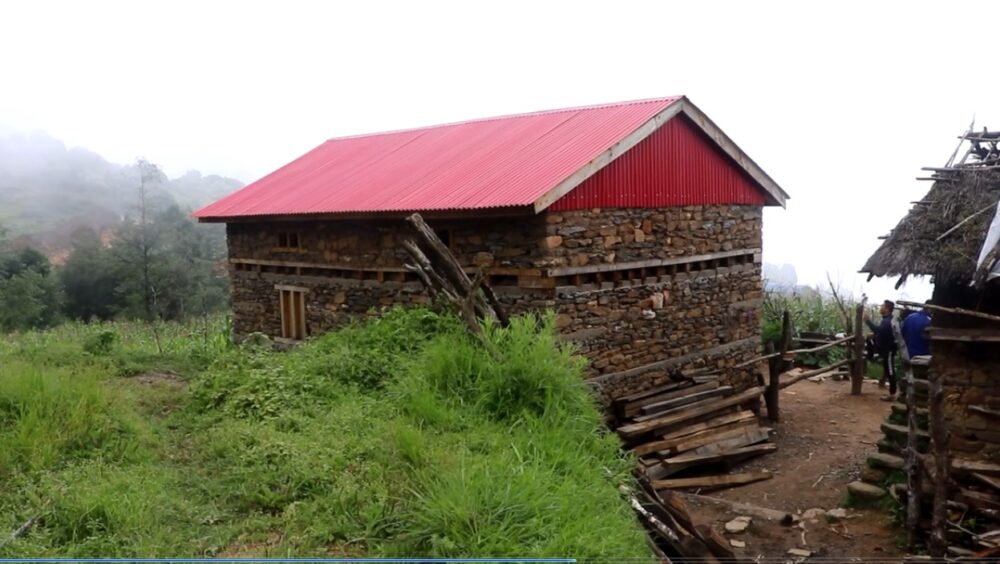
Bhojpur. A Dalit family of Temkemaiyung Rural Municipality-9 has got a new house. As many as 10 Dalit families, who were living in tents due to financial constraints, have been provided houses under the Janata Awas Programme. Devi Charan Darnal, a local, said that it has become easier after the government reconstructed the house at a time when people have been living a difficult life due to lack of money for rebuilding their houses. He said that he was very happy to get a house after spending years with a tarpaulin in the tent. “We had been living under tents for generations as we could not construct our houses due to poverty”, he said, adding, “It was difficult to survive in the rainy and cold season.” It has become easier for us after the house was built. ’ Phulmaya Bishwakarma, a local, said that it has become easier to run their daily lives as the state has constructed their houses at a time when they have been living in open sky and sheds. “With the construction of the house, our daily lives have changed,” he said, adding, “Life was very difficult due to poverty.” It was not possible to build a house. Due to lack of a good source of income, they have to work as daily wages. Life has become easier after the government built houses. I’m very happy to be home. ’ Bishwakarma said that although most of the children used to fall ill every day due to cold due to lack of home, such problem has now come to an end. The government has identified the homeless Dalit families who are economically weak. According to ward chair Nabharaj Mangpahang, the houses were constructed with the budget received from Urban Development and Building Division Office, Dhankuta. Each family invested Rs 336,000 to construct the houses, said ward chair Mangpahang. “10 Dalit families have got new houses from the state level”, ward chair Mangpahang said. We had recommended the construction of houses for those who are financially weak. ’ He said that after the completion of the construction of these houses, the budget has not been received yet for the other three poor families after completing the necessary process. Courtesy : Lagani News Note: This news is originally published on https:/laganinews.com/bha and is used purely for non-profit/non-commercial purposes, especially human rightsC