
TMC implosion, NCP split and Congress question: Why ‘ghar wapsi’ may not be the answer
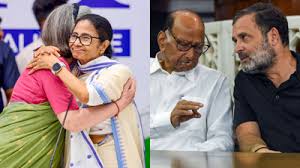
NEW DELHI: Mamata Banerjee’s Trinamool Congress is not merging with the Congress. That’s final for now. Both the parties have firmly rejected speculations about a merger, dismissing them as “baseless rumours” and “fake news”. But not before the speculations triggered a larger and far more interesting political debate: should leaders like Mamata Banerjee and Sharad Pawar, who broke away from the Congress decades ago to chart their own political course, consider returning to the grand-old-party’s fold to strengthen the opposition fight against the BJP? The merger buzz gained traction after Mamata Banerjee met Sonia Gandhi and later her nephew and political heir Abhishek Banerjee held a lengthy meeting with Rahul Gandhi. The meetings came against the backdrop of an unprecedented crisis within the Trinamool Congress following its crushing defeat in the 2026 West Bengal assembly elections. Sonia and Mamata For the first time, the once-impenetrable fortress of the TMC showed deep cracks. Mamata Banerjee, who ruled Bengal for 15 years and appeared invincible until recently, was reduced to just 80 seats in the assembly as the BJP formed its first-ever government in the state. But her setback did not end with the election results. Several newly-elected MLAs and some of the closest aides of Mamata Banerjee rebelled against the party and reached out to the BJP. Much of the anger within the TMC was directed at Abhishek Banerjee, with sections of the old guard accusing the leadership of sidelining those who spent years building the party. Such rapid was the unravelling of the Trinamool Congress that the once-invincible Mamata Banerjee, who had been dismissive about the Congress for the last 15 years, was forced to rush to the grand-old-party for help. It is this plight of Mamata Banerjee which prompted suggestions from some quarters that the Trinamool chief, who had formed the party in 1998 after breaking away from the Congress, should consider “Ghar-wapasi.” And this suggestion was not just for Mamata, but also for leaders like Sharad Pawar. Pawar, who formed the Nationalist Congress Party (NCP) in 1999, and faced a similar challenge after his party split. Pawar eventually lost control of the NCP name and its iconic clock symbol to the faction led by his nephew Late Ajit Pawar. Another leader who faces challenges similar to Mamata is Uddhav Thackeray. Udhhav, who lost control of Shiv Sena after rebellion by his party MLAs, is now battling fresh speculations of further defections amid reports of “Operation Tiger”. There are reports that 6 of his 9 MPs are in touch with Eknath Shinde, who had led the rebellion against Uddhav, and is now deputy chief minister in the BJP-led government in Maharashtra. Together these stories point to a broader reality: several regional parties that once appeared dominant in their respective states are confronting an increasingly assertive BJP that has not just defeated them but is also benefitting from their implosion. It is this backdrop that has revived an idea that would have seemed improbable just a few years ago. The ‘ghar-wapsi’ debate The homecoming debate was triggered by Shiv Sena (UBT) leader Sanjay Raut, who argued that parties born out of the Congress should reunite with the parent organisation to strengthen the opposition against the BJP. Sanjay Raut The Sena (UBT) leader went a step further, urging Sharad Pawar to take the lead in bringing together parties that emerged after splitting from the Congress. Former Rajasthan chief minister Ashok Gehlot backed the idea, saying “the time has come”, while Maharashtra Congress leader Nana Patole argued that leaders such as Mamata Banerjee and Sharad Pawar increasingly recognise the need for a stronger Congress to counter the BJP. Nana Patole At first glance, the argument appears compelling. The BJP has emerged as the dominant force in the country. When Prime Minister Narendra Modi first came to power in 2014, the BJP was in power in just seven states. With victories in West Bengal and Assam, the BJP-led NDA now governs 22 states and Union Territories. Opposition unity remains a work in progress. Several regional parties are weaker today than they were some years ago. But before asking whether Congress’s former children should return home, it is worth asking why they left in the first place. Why Congress’s children walked away Mamata Banerjee did not leave the Congress because of ideological differences. She walked out in 1998 because she believed the party had become incapable of defeating the Left Front in West Bengal. Frustrated with the Congress high command and convinced that Bengal required a more aggressive opposition, she founded the Trinamool Congress. The split tree The move paid off. In 2011, Mamata accomplished what the Congress had failed to do for decades, ending the Left Front’s 34-year rule in West Bengal. Sharad Pawar’s exit came under different circumstances. In 1999, Pawar, PA Sangma and Tariq Anwar challenged Sonia Gandhi’s foreign origin and subsequently formed the Nationalist Congress Party. While the NCP remained ideologically close to the Congress and frequently governed alongside it, Pawar succeeded in building an independent political identity rooted in Maharashtra. YS Jagan Mohan Reddy’s departure was driven by succession politics. Following the death of his father, former Andhra Pradesh chief minister YS Rajasekhara Reddy, Jagan felt sidelined by the Congress leadership and eventually floated the YSR Congress Party. Within a few years, the YSRCP had virtually replaced the Congress in Andhra Pradesh. Their exits were driven by different factors, but each believed they stood a better chance outside the Congress than inside it. In most cases, they were right. What has changed now What has changed is not the Congress. It is the exponential rise of the BJP. When Mamata Banerjee left the Congress in 1998 and Sharad Pawar followed in 1999, the BJP was nowhere near as dominant as it is today. Regional parties grew by occupying political space vacated by a declining Congress. Today many of those same parties are confronting a very different challenge. Over the last decade, the BJP has expanded beyond its traditional
CPM objects to Telangana CM renaming road after Trump
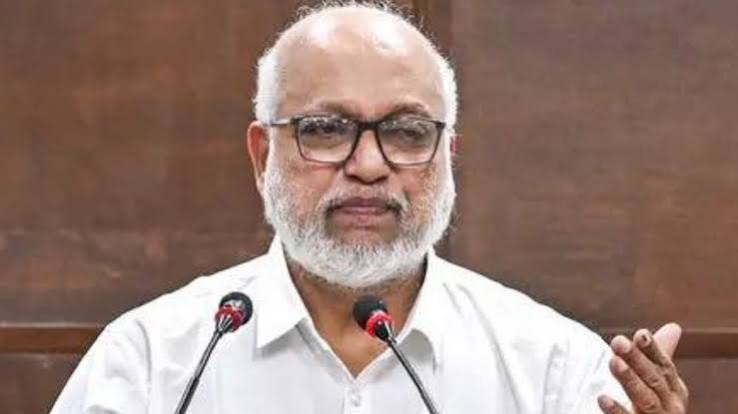
NEW DELHI: Communist Party of India (Marxist) has strongly objected to chief minister Revanth Reddy-led Telangana govt’s renaming the road adjoining the US Consulate in Hyderabad to honour President Donald Trump. “BJP has no qualms about surrendering India’s sovereignty and self-respect, and now it seems that neither does the Congress govt in Telangana,” CPM general secretary MA Baby said on Wednesday. “We expect Congress high command will take note of this outrageous move and intervene to make sure it is withdrawn. Claims of carrying on the ideals of our anti-imperialist resistance movement must not be limited to words,” he said in a post, sharing a screenshot of a news report stating Reddy will inaugurate the road on June 23. “At a time when the belligerent US is in the midst of a war against Iran, a genocide in Gaza, military intervention in Venezuela and a criminal stranglehold on Cuba, CM Reddy is renaming the road adjoining the US Consulate in Hyderabad to honour Trump…” Courtesy : TOI Note: This news is originally published on https:/timesofindia.com/bha and is used purely for non-profit/non-commercial purposes, especially human rights
Rahul Gandhi makes INDIA bloc speech public, allies ask: ‘Why not ours?’
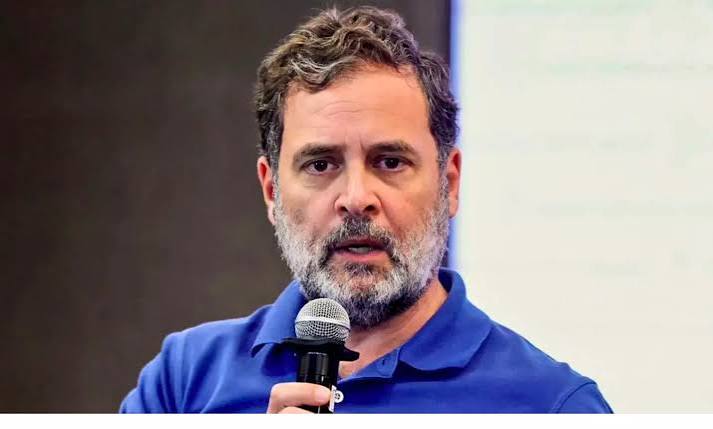
NEW DELHI: Congress functionary Rahul Gandhi’s decision to put in public domain the speech he delivered at INDIA bloc meeting on June 8 has not gone down well with some of the allies, given that it was a closed-door meeting where much was said and varied views were presented. Left parties CPM, CPI and CPI(ML) Liberation specially feel that “mutual trust” among members needs to be bolstered going forward if the bloc has to mount “resistance” against BJP, as suggested by Gandhi in his speech. Not just the release of speech, even what was said by Gandhi has evoked sharp reactions from certain allies over last few days. CPM general secretary MA Baby had on Saturday strongly objected to Gandhi’s remarks regarding former Kerala CM Pinarayi Vijayan in his speech. “While he released what he said to allies, the views of other INDIA bloc members expressed at the closed-door meeting are not in public domain,” Baby said. CPI(ML) Liberation general secretary Dipankar Bhattacharya emphasised that INDIA bloc will have to move beyond just being an electoral bloc and a grouping that comes together during Parliament sessions. “If we want to mount ‘resistance’ against BJP as suggested by Rahul Gandhi in his speech, then we have to meet and plan on raising issues affecting the public together as a group,” he said. On Rahul releasing his speech, he said, “This was an internal meeting, and if he was planning to release his speech, then ideally all political parties present in the meeting should have been consulted.” CPI general secretary D Raja said, “By that measure speeches of others should also be in public domain. Among various issues, the members had raised concern over Congress too.” While refusing to comment on Gandhi’s speech and his decision to release it, RJD MP Manoj Jha said it must be understood that as INDIA bloc is a grouping of political parties, there will be divergence of views. He sought focus on building synchronisation and highlighting issues as a group. Meanwhile, the DMK leadership is firmly holding on to its position over Congress severing its alliance with the party to support the TVK govt. DMK’s floor leader in Rajya Sabha Tiruchi Siva said, “We are very clear that we cannot share the same space with Congress anywhere in the backdrop of their betrayal in Tamil Nadu.” He said, “However, as far as other opposition allies go, we are with them in the fight against BJP.” Courtesy : TOI Note: This news is originally published on https:/timesofindia.com/bha and is used purely for non-profit/non-commercial purposes, especially human rights
Andhra Pradesh Home Minister responds to the “kilograms of makeup” remark, saying she was targeted for being a woman and a Dalit.
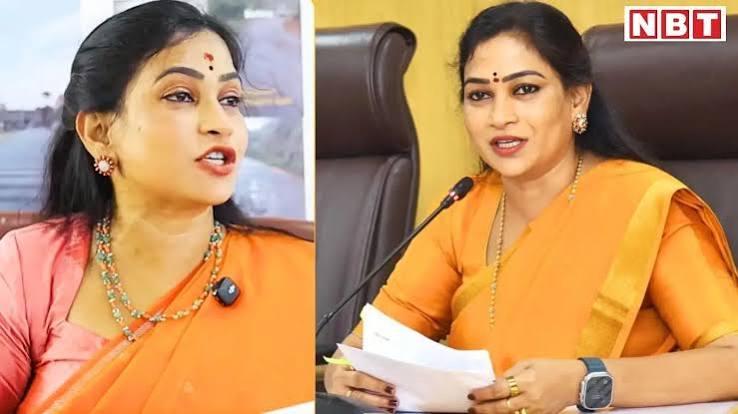
Vangalapudi Anitha Makeup Row: Andhra Pradesh Home Minister Anitha has broken her silence and issued a strong response to the comments made against her. She said that the comments were not only offensive but also a caste-based attack because she was a Dalit and a woman. Anitha is considered a confidante of Chief Minister Chandrababu Naidu. Andhra Pradesh Home Minister responds to the “kilograms of makeup” remark. Amaravati: Vangalapudi Anitha, who holds the responsibility of Home Minister in Chandrababu Naidu’s government in Andhra Pradesh, has responded to the “kilograms of makeup” remark. Andhra Home Minister Anitha said that she was targeted for being a woman and a Dalit. Gudivada Amarnath, a leader of the Jagan Mohan Reddy-led YSRCP party in Andhra Pradesh, had made the offensive remark. Amarnath had said that Home Minister Anitha wears kilograms of makeup. I was attacked in a casteist manner… A controversy has erupted in Andhra Pradesh after a Jagan Mohan Reddy party leader’s “kilograms of makeup” comment. The Deputy Chief Minister and the YSRCP have condemned the remark. Speaking at a public meeting on Wednesday, Amarnath reportedly claimed that TDP leader Anitha wears kilograms of makeup. Speaking to NDTV, Home Minister Anitha described the remark as more than just a personal insult, saying that what the YSRCP leader said about me on camera, at a public meeting, was not just an insult. It was a vile, casteist attack aimed at demeaning a woman and a Dalit woman holding a constitutional position. Home Minister Anitha demanded an apology. The remark has also drawn strong reactions from TDP leaders, who have criticized the YSRCP leader’s misogynistic and derogatory remarks. TDP leader Nara Lokesh also condemned the remark and accused the YSRCP of promoting a toxic political culture. He said that the shameful and anti-women comments against Vangalapudi Anitha Garu expose the true character of the YSRCP. Home Minister Anitha has been quoted as saying that targeting a woman and a Dalit leader is unacceptable and demanded an apology from the YSRCP. Comments on a woman’s appearance are an insult In response to this incident, TDP women leaders protested and pelted the Gudivada Amarnath flex banner with eggs and slippers, demanding an apology for the alleged remarks. Deputy Chief Minister and Janasena chief Pawan Kalyan also criticized the incident. He said that the comments made against Home Minister Anitha were objectionable. Commenting on a woman’s attire and appearance is an insult to every ordinary woman. Meanwhile, YSRCP leaders have rejected the allegations and accused the government of diverting public attention from law and order issues. Curated by: Achalendra Katiyar About the Author Achalendra Kumar Katiyar covers the events in western states for Navbharat Times Online based in Gujarat. He has over 17 years of experience in print, digital, and electronic media, as well as teaching. During this time, he has worked as a reporter and editor in states such as Uttar Pradesh, Delhi, and Haryana. Courtesy: Hindi News
TMC split row: Lok Sabha Speaker asks Abhishek Banerjee to present case on Friday
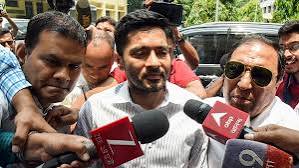
Parliamentary sources said the Speaker intends to hear both sides before making a decision, which will be based on the applicable laws and parliamentary rules. Lok Sabha Speaker Om Birla asked Trinamool Congress National General Secretary Abhishek Banerjee to appear before him on 19 June as he considers a request by a group of rebel MPs seeking recognition as a separate parliamentary faction. The move comes after 20 rebel Trinamool MPs claimed to have merged with the Nationalist Citizens Party of India and petitioned the Speaker for recognition as a distinct group in Parliament. The rebel MPs have already met Birla, while the faction led by Former West Bengal Chief Minister Mamata Banerjee had sought an appointment to present its position. Parliamentary sources said the Speaker intends to hear both sides before making a decision, which will be based on the applicable laws and parliamentary rules. In a letter to Birla, Abhishek Banerjee had argued that a valid merger under the anti-defection law would require both the merger of the political party and the backing of at least two-thirds of its legislators, contending that meeting only one of the conditions would not be sufficient. Sources had earlier told TNIE that a decision on the rebels MP’s plea is expected before Parliament’s Monsoon session, which is likely to begin in the third week of July. The Speaker’s decision will be guided by a written opinion from the Union law ministry, which is expected to seek the advice of a senior law officer before submitting its assessment, they added. Courtesy : TNIE Note: This news is originally published on https:/thenewindianexpress.com/bha and is used purely for non-profit/non-commercial purposes, especially human rights
India’s education system crushes children: Rahul Gandhi at Kota rally

KOTA: Congress leader Rahul Gandhi on Wednesday said India’s education system puts immense pressure on children and “crushes” them, while calling for collective efforts to ensure that no student feels the way many young aspirants do today. “This is not good for the country. I want all of us to work together to ensure that no student in this country ever feels what this girl felt,” Gandhi said while addressing the “Chhatron ki Goonj” Maha Rally in Kota. He said, “the event was not a political meeting but a platform to discuss the struggles faced by students.” “This is a meeting about you, about the young people who are struggling to get a future. This evening is about you, the challenges that you are dealing with every single day,” he added. Five students — three girls and two boys — were invited on stage after Gandhi’s opening remarks. The students, who are preparing for NEET, JEE and civil services examinations, spoke about their aspirations, challenges and the money spent on coaching. While interacting with students, Gandhi said the biggest weakness of India’s education system was that it failed to encourage children’s dreams and aspirations. Chhatron Ki Goonj in Kota “The biggest weakness of India’s education system: it does not nurture the dreams of our children. It does not respect the options and aspirations they truly want to pursue. After that, I began thinking more deeply about the education system. Several questions came to mind. One was why the public-sector education system had declined. Another was why private education had become so expensive,” he said. Recalling his Bharat Jodo Yatra from Kanyakumari to Kashmir, Gandhi said he met thousands of young people and noticed a pattern in their career choices. “Some time back, I walked from Kanyakumari to Kashmir, covering 4,000 kilometers. Along the way, I met lakhs of young people like you and had discussions with thousands of them. I would always ask them one simple question: ‘What do you want to become?’ Almost every time, I received the same five answers, engineer, doctor, lawyer, IAS officer, or joining the armed forces. There was never a sixth answer.” “This made me wonder why our education system, when young people are the future of the country, seems to offer them only five options. I asked this question many times and always received the same responses…The truth was that there was a big difference between their real aspirations and the five standard options they had mentioned,” Rahul added further. The Congress has projected the Kota rally as the beginning of a nationwide student convention series focused on issues including paper leaks, unemployment and education reforms. The BJP has criticised the outreach, alleging that such programmes could distract students preparing for competitive examinations. Kota, one of India’s biggest coaching hubs, has around 1.2 lakh students preparing for NEET and JEE exams across various institutes. The Congress said Gandhi’s national education campaign will focus on highlighting students’ concerns, seeking accountability and demanding the resignation of Education Minister Dharmendra Pradhan. The campaign will be carried forward by Congress units, including the National Students’ Union of India (NSUI) and Youth Congress, with conventions planned in Allahabad, Patna and Delhi, according to the party. Courtesy : TOI Note: This news is originally published on https:/timesofindia.com/bha and is used purely for non-profit/non-commercial purposes, especially human rights
From the Urdu Press: ‘Mamata, Pawar must return to Congress’; ‘Rahul’s resistance pitch compelling’
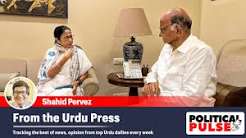
“INDIA bloc should try to induct parties such as Mayawati’s BSP, Naveen Patnaik’s BJD and Jagan Mohan Reddy’s YSRCP, which are currently neither aligned with the NDA nor any other front,” writes Munsif The unravelling of Mamata Banerjee’s Trinamool Congress (TMC) in just a few weeks after its humiliating loss to the BJP in the recent West Bengal Assembly elections has continued to dominate the front pages of the Urdu dailies. After losing control of her Legislature Party in the Bengal Assembly, Mamata is now reeling from a split in her Parliamentary Party in the Lok Sabha, with 20 rebel TMC MPs claiming their merger with an obscure outfit, Nationalist Citizens Party of India (NCPI), as part of their alignment with the ruling BJP-led NDA. The dailies kept the spotlight on these developments, which are set to have a bearing on national politics in the coming days. Flagging the BJP’s alleged bid to break parties in various states under “Operation Lotus”, the Mumbai-based Urdu Times, in its June 13 editorial, says that several Opposition parties, especially regional parties such as the Sharad Pawar-founded NCP and now the TMC, have already been split so far. “This has dealt a body blow to the Opposition groupings – the Maha Vikas Aghadi (MVA) in Maharashtra, and the INDIA bloc at the national level,” it says. The AAP has also suffered a division, the edit states, referring to the defection of its seven Rajya Sabha MPs, led by Raghav Chadha, to the BJP. “The unrelenting fragmentation of the Opposition parties has led to an atmosphere in which no party other than the BJP would be able to rule the country. This warrants a serious brainstorming by the Opposition leaders to work out joint strategies to counter the BJP.” The daily points out that in Bengal around 60 of the 80 TMC MLAs and about 20 Lok Sabha MPs have revolted and split the party. “Like the Shiv Sena in Maharashtra, the TMC has been buffeted with Mamata scrambling to save her party. Various agencies and money may have played a big role in breaking the TMC,” the edit says. “It is imperative for the struggling Opposition alliance to get its act together and save its existence and identity.” Citing the instances of breakaway factions of the Sena and the NCP, the editorial says the same may happen to the TMC. “It is time that Sharad Pawar and Mamata consider their homecoming to the Congress and merge their outfits with the grand old party. They had been associated with the Congress for a large part of their political careers. By returning to the Congress, they could strengthen the party in its battle against the BJP,” it states. The Congress also needs heavyweight leaders like Pawar and Mamata, who would have their own space in the party. Such a development would also galvanise the Opposition and disrupt the ruling dispensation’s game, the edit says. “This would be an effective payback from Pawar and Mamata to the BJP’s politics, which would also have a resonance among the people.” Referring to the INDIA bloc’s meeting in Delhi, the Hyderabad-based Munsif, in its June 12 leader, notes that it also saw participation of leaders like Mamata Banerjee who used to shy away from acknowledging the alliance’s importance before her party’s debale in the Bengal polls. “The point remains that any differences between the Opposition parties would only fuel the BJP to fulfil its designs. The INDIA allies must have a common agenda for the sake of the country to protect our democracy and Constitution. They must unitedly take on the BJP which is allegedly misusing power and agencies to script its electoral successes,” the editorial says. The Opposition parties do not have any option other than closing their ranks to face the BJP juggernaut, the daily states. “At the meeting, the INDIA allies agreed on several points. They would write to the Chief Justice of India to protest against the Election Commission’s Special Intensive Revision (SIR) and electoral irregularities. They pressed for the resignation of Union Education Minister Dharmendra Pradhan over the NEET-CBSE rows,” it says. “They also demanded that the Modi government convene an all-party meeting to discuss the precarious economic situation, unemployment, price rise, and atrocities against oppressed sections.” The edit points out that while the DMK boycotted the meeting to protest against the Congress’s move to join hands with Vijay-led TVK to form the new government in Tamil Nadu, the CPI(M) also took aim at the Congress for its campaign in the Kerala elections. “The deliberations over such concerns while displaying mutual respect could actually strengthen the INDIA bloc,” it states. Noting the INDIA parties’ decision to hold their meeting after every two months now, it says, “They should also have their alignments at the state level rather than just limiting it to the national plane. For, their state rivalries often inject bitterness into their central equations. A dominant ally in a state should take other partners on board to boost the alliance and deepen their ties.” Highlighting the speech delivered by Rahul Gandhi at the INDIA bloc meeting, the New Delhi edition of Inquilab, in its June 16 editorial, says that the nine-minute address of the Leader of the Opposition (LoP) in the Lok Sabha was “clear-eyed and compelling” in which he called upon his allies that it was easy to beat the BJP if they “stood together and resisted”. “Responding to the attacks on the Congress by its partners, Rahul told them that he was ready to accept all their criticism happily but they must understand the overwhelming reality — that it could no longer be business as usual and that the Opposition front must mount an effective resistance with unity to turn the tide and reclaim the vital institutions which have been captured,” the edit states. “Rahul exuded confidence and resolve, he sounded earnest and purposeful, and there was no tinge of disappointment in his pitch.” The daily underlines that resistance and
DMK attacks Rahul Gandhi for ‘dishonesty,’ ‘immaturity’ that harmed INDIA bloc

CHENNAI: DMK’s official organ ‘Murasoli’ on Monday launched a sharp attack on Congress leader Rahul Gandhi, charging that his “political immaturity” and “dishonesty” were the reasons for the criticism faced by Congress from its allies at the recent INDIA bloc meeting in New Delhi. In an editorial, Murasoli accused Congress of repeatedly undermining its alliance partners in states while seeking their support during parliamentary elections. “In state after state where assembly elections are held, Congress has done everything possible to prevent fellow INDIA bloc partners from coming to power. Yet, when parliamentary elections arrive, it seeks their support in the name of fighting BJP,” the editorial said. Questioning Congress leadership’s approach towards its allies, the DMK mouthpiece asked, “Isn’t Congress ashamed to first weaken alliance partners and then seek their support when the need arises?” Referring to the 2026 Tamil Nadu assembly election, Murasoli alleged that Congress had betrayed DMK despite remaining in the alliance. “The acts of betrayal committed by Congress while remaining in alliance with DMK were carried out with Rahul Gandhi’s blessings,” the editorial alleged. The editorial came days after Rahul Gandhi released the audio of his speech at the June 8 INDIA bloc meeting, in which he stressed the need for opposition unity. According to Murasoli, Rahul was now attempting to project himself as a unifying force after the party with which Congress has aligned in Tamil Nadu refused to join the INDIA bloc. The DMK organ said several leaders of INDIA bloc, including Samajwadi Party chief Akhilesh Yadav, RJD leader Tejashwi Yadav, Jammu and Kashmir chief minister Omar Abdullah and VCK leaders, had expressed dissatisfaction over Congress’s handling of its allies. “Rahul Gandhi apparently did not anticipate such criticism. At a meeting convened to discuss opposition unity against BJP, Congress itself became the principal target of criticism. The responsibility for that lies with Rahul Gandhi’s political immaturity and dishonesty,” the editorial said. While noting Rahul’s remark that Congress should accept criticism from its allies, Murasoli said it was immaterial whether he accepted criticism at this stage. Responding to Rahul’s comparison that Congress would absorb criticism just as Lord Shiva consumed poison, the editorial said Hindu mythology speaks of Shiva consuming poison to save the world, not creating it. “But who was responsible for churning the poison within the INDIA bloc?” the editorial asked. Courtesy : TOI Note: This news is originally published on https:/timesofindia.com/bha and is used purely for non-profit/non-commercial purposes, especially human rights
Congress open to ‘ghar wapsi’ of ex-members

NEW DELHI: Stoking the growing public chatter over merger of breakaway outfits with Congress, the AICC has expressed its readiness to accept its erstwhile members into the party fold. AICC general secretary (organisation) and Rahul Gandhi confidant K C Venugopal told TOI, “Everybody who believes in the Congress ideology can come back. There is no issue.” He said such mergers and homecomings will only strengthen the fight against “BJP-fascist forces”. “All the parties who want to join Congress and believe in the Congress ideology can approach us. We will welcome them,” he added. Venugopal, however, clarified that presently there are no such merger proposals under consideration of AICC. “We are hearing all these speculations from the media,” he claimed. Courtesy : TOI Note: This news is originally published on https:/timesofindia.com/bha and is used purely for non-profit/non-commercial purposes, especially human rights
Will Sharad Pawar’s party, the NCP (SP), merge with the Congress? Supriya Sule and Rohit Pawar’s responses have fueled speculation.

New turmoil has erupted in Maharashtra politics. Speculation is now swirling in the state about whether Sharad Pawar’s party, the NCP (SP), will merge with the Congress. Supriya Sule and Rohit Pawar have also issued statements addressing these speculations. Speculation of the NCP (SP) merging with the Congress. Image Source: PTI There is a growing debate in Maharashtra politics these days about whether the Sharad Pawar-led Nationalist Congress Party (Sharadchandra Pawar) could merge with the Congress. This issue has sparked political turmoil within both the Maha Vikas Aghadi and Mahayuti camps. This speculation was first fueled by Shiv Sena (UBT) leader Sanjay Raut. He said that regional parties that left the Congress to challenge the BJP should rejoin the Congress, and that Sharad Pawar should lead the process. Sanjay Raut said, “A strong Congress, a united Congress, should stand as a strong alternative within the country. Pawar Saheb should come forward (take the initiative) in this regard. Honorable Sharad Pawar ji, if he takes the lead and takes the initiative in this ideology or role that is being formed, this idea of coming together, then this idea will go a long way.” Question: Does this mean that the NCP will also join the Congress? Sanjay Raut said, “I am saying that the parties that have left the Congress ideology, for some reason, are already working on the Congress ideology. They are in the government, they are together in many streams, so if this idea comes together, then a big alternative (challenge) can be posed before the Modi government.” What did the Congress say? The Congress side did not completely dismiss this discussion either. Maharashtra Congress leader Nana Patole claimed that the idea of the NCP merging with the Congress is not new and that this proposal had been put forward before. Meanwhile, some Congress leaders have stressed the need for opposition unity. Nana Patole said that this understanding has now also developed among regional parties in various states. Whether it’s Mamata Banerjee, Sharad Pawar, or other parties representing secular politics, everyone feels they must join forces with the Congress to save the country. This process has already begun. What did the NCP (Sharad Pawar) say? On the other hand, the NCP (Sharad Pawar) has currently ruled out any formal merger proposal. Party leaders have stated that no such discussions have officially taken place, although statements by Rohit Pawar and Supriya Sule indicate that all options are open to consideration regarding opposition unity. Regarding the suggestion of the NCP merging with the Congress, Supriya Sule said, “Sanjay Raut ji is like an elder brother to me; he has made a good suggestion. I don’t know if it will happen or not.” Meanwhile, Rohit Pawar said, “It will happen when it happens. It may or may not happen. But first, it’s essential that all opposition parties come together and stand firmly against the Modi government.” What did CM Fadnavis say? Chief Minister Devendra Fadnavis sarcastically stated that regional parties will not merge with the Congress like a “sinking ship.” He claimed that even if opposition parties unite, it will not impact the BJP’s expansion; instead, it will gain political space. Speculation intensifies in Maharashtra politics Overall, no official decision or announcement has been made regarding the merger of the Congress and NCP (Sharad Pawar). However, Sanjay Raut’s suggestion, positive signals from Congress leaders, and reactions from Rohit Pawar and Supriya Sule have further fueled speculation on this issue in Maharashtra politics. Reported By: Sachin Chaudhary, Edited By: Subhash Kumar Courtesy: Hindi News