
‘Missing’ posters targeting Rahul Gandhi surface in Delhi, BJP calls him ‘Leader of Paryatan’
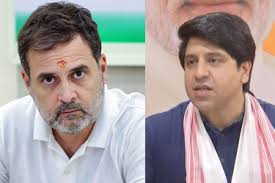
NEW DELHI: The BJP on Saturday intensified its attack on Congress leader Rahul Gandhi over his reported foreign visits, with “missing” posters surfacing across parts of Delhi and party spokesperson Shehzad Poonawalla dubbing the Leader of Opposition the “Leader of Paryatan.” The posters, put up in several parts of the national capital, described Rahul Gandhi as “missing”, prompting a fresh political attack from the BJP. Reacting to the development, BJP national spokesperson Shehzad Poonawalla took a swipe at the Congress MP in a post on X, referring to him as “Gumshuda Lapata MIA Rahul Baba” and “Leader of Paryatan.” In another post on X, Poonawalla contrasted Prime Minister Narendra Modi’s work record with Rahul Gandhi’s reported foreign visits. “Prime Minister Modi has been in work mode. He has spent almost 9,000 days as Chief Minister and Prime Minister without taking a holiday. Rahul Gandhi has vacation mode. He spends crores on holidays every year. Rahul is the Leader of Paryatan,” Poonawalla said. In a video message on Friday, Poonawalla alleged that Rahul Gandhi frequently remains away during key political and parlimentary occasions. “Rahul Gandhi should rename LoP as ‘Leader of Paryatan and Partying’ because that’s what he always does. On one hand, Prime Minister Modi has become the longest-serving elected Prime Minister of the country and, during the last 9,000 days as Chief Minister and Prime Minister, has not taken a single day off. This is work mode and seva mode,” he said. “On the other hand, Rahul Gandhi is constantly on vacation. Every time the party and the country need him, he goes on foreign tours. He does not put people first, Parliament first or even the party first; he puts tourism first,” Poonawalla alleged. He further claimed that Gandhi had undertaken several foreign trips and questioned the funding of those visits. “Rahul Gandhi has spent crores on his vacations but has not provided any account of how this money is spent on foreign tours and travels. Once again, Rahul Gandhi has gone abroad. He will be missing when Parliament, the party and the people need him,” Poonawalla alleged. Courtesy : TOI Note: This news is originally published on https:/timesofindia.com/bha and is used purely for non-profit/non-commercial purposes, especially human rights
Janseva Dal to contest 403 assembly seats: In Aligarh, the party stated, “We no longer want votes, but equal rights to power.”

The Janseva Dal in Aligarh has announced its intention to contest all 403 seats in Uttar Pradesh ahead of the upcoming assembly elections. The party held a public meeting at Jupiter Lodge on ITI Road on Sunday evening, June 28, 2026, targeting mainstream political parties. Party National President Vinesh Thakur (Karpoori) alleged that while the votes of the most backward, most Dalit, and working-class castes form governments, they do not receive equal rights to power and respect. Vinesh Thakur stated that since independence, the Nai, Sen, Savita, Pal, Baghel, Prajapati, Kashyap, Nishad, Mallah, Saini, Kushwaha, Kori, Khatik, Valmiki, Dhobi, Tailor, and other working-class communities have been considered merely vote banks. He explained that promises are made during elections, but these communities have consistently been neglected in ticket distribution, government positions, and political participation. The National President of the Jan Seva Dal announced that his party is preparing to contest all 403 assembly seats in Uttar Pradesh. He clarified that candidates will be fielded from among the marginalized communities. Vinesh Thakur emphasized that this community will no longer be dependent on the mercy of any party, but will gain a share of power based on its political strength. Speakers at the meeting also mentioned Karpoori Thakur’s model of social justice. They questioned the governments’ intentions in not implementing the backward and extremely backward classifications. A state-wide public awareness campaign was also announced on this occasion. The program was chaired by District President Ramnaresh Singh, who reiterated his commitment to strengthening the organization down to the booth level. A large number of workers and officials from various social organizations attended the public meeting. The Jan Seva Dal also raised slogans like “Hand-made artisans will form the government” and “It’s not a caste, it’s a community; all the most backward are together,” reflecting their political warning. Naresh Pratap Singh | Kol Courtesy: Hindi News
SPECIAL | Rahul Gandhi weighs bigger role for Charanjit Singh Channi as Punjab Congress eyes Dalit, Sikh and Hindu vote balance ahead of 2027
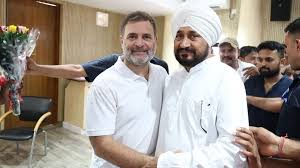
Sources familiar with the deliberations said the leadership, under Rahul Gandhi, is examining a formula that combines social representation with organisational stability. The Congress high command is learnt to be considering one of its biggest organisational exercises in Punjab since the 2022 Assembly election, with discussions indicating that former Chief Minister and Jalandhar MP Charanjit Singh Channi could be entrusted with a larger role in the state unit as part of a broader strategy to rebuild the party before the 2027 polls. According to party sources, the proposed restructuring goes far beyond a routine leadership change. The exercise is understood to be aimed at creating a carefully balanced organisational structure that gives representation to Punjab’s three most significant electoral segments, Dalits, Jat Sikhs and urban Hindu voters, while ensuring that senior leaders continue to remain politically relevant within the organisation. Sources familiar with the deliberations said the leadership, under Rahul Gandhi, is examining a formula that combines social representation with organisational stability. Alongside the appointment of a new state leadership, key election-related responsibilities, including campaign management, coordination, manifesto preparation and organisational planning, are also expected to be distributed among experienced leaders in an effort to minimise factionalism ahead of the Assembly election. Dalit vote bank at the centre of Congress calculations Political observers believe the reported move is primarily driven by Punjab’s unique social composition. Punjab has the highest proportion of the Scheduled Caste population among all Indian states, with Dalits accounting for nearly 32 per cent of the state’s population. The community plays a decisive role not only in the 34 Assembly constituencies reserved for Scheduled Castes, but also influences electoral outcomes in dozens of general seats across Doaba, Malwa and parts of Majha. Within the Congress, Channi is regarded as the party’s most recognisable Dalit Sikh leader. His tenure as Punjab’s first Dalit Chief Minister and his victory from the Jalandhar Lok Sabha constituency in the 2024 parliamentary election have strengthened perceptions within the party that he continues to enjoy considerable political acceptability among sections of Dalit voters. Party strategists are believed to feel that projecting a strong Dalit face at the organisational level could help the Congress regain a section of the traditional support base that has shifted towards rival political parties over the past several years. Balancing the Jat Sikh leadership is equally important Even as the Congress attempts to consolidate Dalit voters, the party is understood to be equally cautious about maintaining its influence among Punjab’s politically dominant Jat Sikh community. Although Jat Sikhs constitute an estimated 20 to 22 per cent of Punjab’s population, they continue to exercise significant political influence across rural constituencies, particularly in the Malwa region, which sends the largest number of MLAs to the Assembly. Party insiders believe any organisational restructuring that overlooks this influential community could create fresh internal challenges. Consequently, discussions are said to include assigning major organisational and election-management responsibilities to senior Jat Sikh leaders, allowing them to continue playing a central role in shaping the party’s campaign strategy while maintaining social equilibrium within the organisation. Urban Hindu voters also part of the strategy Another important element of the reported formula is the urban Hindu electorate. According to the 2011 Census, Hindus account for nearly 38.5 per cent of Punjab’s population. However, political strategists generally estimate that the decisive urban Hindu voting bloc constitutes around 25 to 26 per cent of the electorate and significantly influences election results in cities such as Ludhiana, Amritsar, Jalandhar, Patiala, Pathankot and several municipal centres. Congress leaders are believed to be exploring ways to ensure adequate organisational representation for leaders who enjoy influence in urban constituencies, thereby broadening the party’s appeal beyond its traditional rural support base. Lessons from the 2022 defeat The reported restructuring also reflects the Congress leadership’s assessment of the mistakes made during the 2022 Punjab Assembly election. The party had projected Channi as its chief ministerial face only a few months before polling. However, persistent factionalism, competing leadership centres, and organisational disunity overshadowed the campaign, reducing the Congress to 18 seats in the 117-member Assembly, while the Aam Aadmi Party secured a landslide victory. Many within the party now believe that social representation alone cannot deliver electoral success unless it is backed by organisational unity, clearly defined responsibilities and coordinated campaigning. 2024 Lok Sabha performance revives confidence The Congress’s improved performance in the 2024 Lok Sabha election, in which it won seven of Punjab’s 13 parliamentary seats, has reportedly prompted the central leadership to accelerate organisational restructuring well before the next Assembly polls. Party leaders are believed to view the parliamentary results as evidence that the Congress continues to retain substantial support in Punjab despite its defeat in the previous Assembly election. The leadership now appears keen to convert that momentum into a stronger organisational framework capable of sustaining a statewide campaign. Social engineering before 2027 Political analysts believe Congress is attempting to build a broader electoral coalition rather than relying on any single community. The reported strategy seeks to combine the electoral strength of Punjab’s nearly 32 per cent Dalit population, the politically influential 20-22 per cent Jat Sikh community, and the decisive urban Hindu electorate that plays a crucial role in several Assembly constituencies. If implemented successfully, such a leadership structure could allow the party to simultaneously target multiple voter segments while reducing internal friction among senior leaders. Unlike previous organisational changes that largely focused on individual appointments, the latest exercise appears to be centred on building a leadership model designed around Punjab’s electoral arithmetic and social realities. Although speculation over the proposed changes has intensified, Congress has not made any official announcement regarding the restructuring. The final shape of the Punjab unit is expected to emerge only after the party leadership completes its internal consultations. With less than a year and a half left before political activity gathers full momentum for the 2027 Assembly election, the decisions taken by the Congress in the coming weeks could play a significant role in determining whether
Congress completes first round of organisational reshuffle, eyes changes in poll-bound states
Fresh appointments in Uttar Pradesh, Tamil Nadu, Odisha and Haryana mark the start of a wider overhaul, with Punjab, Rajasthan and other election-bound states next in line. NEW DELHI: With the first round of crucial appointments in Uttar Pradesh, Tamil Nadu, Odisha and Haryana, the Congress has signalled the beginning of the party’s wider organisational rejig in the coming weeks. According to sources, priority is being given to states heading for Assembly polls early next year, including Uttar Pradesh, Uttarakhand, Punjab, Goa and Manipur. On Saturday, the party appointed Manickam Tagore as the new Tamil Nadu Congress Committee (TNCC) president, replacing K Selvaperunthagai. The appointment of Lok Sabha MP Tagore, who played a key role in facilitating the Congress-TVK alliance, is seen as a significant move to consolidate the party’s position in 2029 Lok Sabha elections. A day earlier, the party named Rajendra Pal Gautam as the new Uttar Pradesh Congress in-charge. Gautam, a prominent Dalit leader and former Delhi minister, is seen as part of the Congress’s strategy to strengthen its outreach among SC voters, who constitute around 21% of the state’s population. The move is also in line with Rahul Gandhi’s emphasis on increasing the representation of Dalits, OBCs and other marginalised communities in the party’s organisational structure. In Punjab, where the Congress high command is weighing a change in leadership, the race has narrowed to a few senior leaders. According to sources, former Chief Minister Charanjit Singh Channi and former deputy CMSukhjinder Singh Randhawa have emerged as front-runners to head the state unit. Rajasthan may also see a leadership change, with PCC chief Govind Singh Dotasra completing six years in office. Sources said former deputy CM Sachin Pilot is likely to succeed the former. The party is also expected to reshuffle AICC state in-charges, with organisational changes likely across several states. Courtesy : TNIE Note: This news is originally published on https:/thenewindianexpress.com/bha and is used purely for non-profit/non-commercial purposes, especially human rights
UP Elections 2027: Avinash Pandey removed, Congress prepares to balance Dalit-OBC equations by handing over the reins to Rajendra Pal Gautam

Ahead of the 2027 UP Assembly Elections, the Congress has made a major organizational reshuffle. Focusing on the Dalit and OBC vote bank, it is preparing to strengthen its hold within the “INDIA” alliance. Uttar Pradesh: Just before the Assembly elections, the Congress has begun laying out its strategic and organizational foundation in the state. The party’s entire focus is now on building a strong Dalit and OBC social alliance. The Congress is confident that this formula will not only regain lost ground in the state but also significantly strengthen its negotiating power within the opposition “INDIA” alliance. In a major move, the All India Congress Committee (AICC) on Friday removed Avinash Pandey from the post of General Secretary in-charge of Uttar Pradesh. In his place, Rajendra Pal Gautam, National President of the Scheduled Castes Department and a prominent Dalit leader, has been given this important responsibility. Just a day before this announcement, Gautam was in Lucknow, where he, along with Anil Jaihind, in-charge of the AICC’s OBC wing, celebrated Chhatrapati Shahuji Maharaj’s birth anniversary as ‘Reservation Day.’ According to senior Congress sources, Rajendra Pal Gautam’s appointment is not being seen as a simple organizational change. The party is aiming to send a major political message to Dalit voters ahead of the upcoming assembly elections. Congress also wants to establish that its ally, the Samajwadi Party (SP), is not the only option for Dalits in their fight for rights, but that the party is also a strong platform for them. According to reports from within the party, this organizational reshuffle in Uttar Pradesh will not be limited to the change of in-charges. Ahead of the elections, major changes have already been scripted for the state’s co-in-charges (secretaries) and state leadership. There is talk that the next president of the Uttar Pradesh Congress Committee (UPPCC) could be appointed to a prominent OBC leader, ensuring the party’s Dalit-OBC social engineering strategy is fully implemented. A senior Congress leader explained this strategy, stating that the party fought the 2024 Lok Sabha elections strongly on issues of social justice and protection of the Constitution, yielding positive results. If the Congress wants to carry this discourse into the 2027 assembly elections, it must demonstrate this social commitment within its organizational structure. Currently, the Uttar Pradesh Congress is headed by Ajay Rai, a prominent Bhumihar leader from eastern Uttar Pradesh. He was appointed state president in August 2023, replacing Dalit leader Brijlal Khabri. Rai had contested the previous two Lok Sabha elections against Prime Minister Narendra Modi from the Varanasi constituency, which was crucial for the party’s electoral strategy at the time. In the 2024 elections, he also succeeded in significantly reducing PM Modi’s victory margin. However, Congress strategists believe that the political demands of Lok Sabha and Assembly elections are completely different. The perception within the party has grown increasingly strong that the campaign to protect the Constitution and reservations in the last Lok Sabha elections led a significant portion of Dalit voters to the “India” alliance. Retaining this vote bank in the upcoming electoral battle is crucial for the party’s future. While Samajwadi Party leaders are publicly downplaying this Congress assessment, Congress leaders argue that this support from Dalits and backward classes will put them in a strong position during seat-sharing negotiations for the upcoming Assembly elections. It’s clear that Congress’s entire restructuring plan has been designed with the 2027 election battle in mind. Rajan Chaudhary Courtesy: Hindi News
LoP alleges manual scavenging in Dalit Dy CM Parameshwara’s home dist
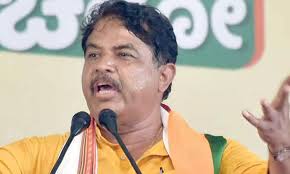
Bengaluru: Leader of the Opposition in the Karnataka Assembly R Ashoka on Saturday alleged that Dalits continued to face “grave injustices” under the Congress government, citing an example of “manual scavenging” in Deputy Chief Minister G Parameshwara’s home district of Tumakuru. The BJP leader alleged that there was diversion of welfare funds meant for Scheduled Castes and Scheduled Tribes and rising atrocities against them. Ashoka posted an undated video on his ‘X’ handle on Saturday where people in bare-minimum clothes were seen lifting and loading filth in a tractor on the Karnataka Electricity Board Engineers’ Association’s building premises. According to him, Dalits were still being forced into manual scavenging even in the home district of Parameshwara, a Dalit himself, and the government has failed to safeguard their rights. “In the very home district of Parameshwara, where slogans were once raised demanding a ‘Dalit Chief Minister’, the downtrodden communities are still being forced into the pitiable condition of manually carrying human excreta. Under the government led by Chief Minister D K Shivakumar, the rights of Dalits have absolutely no value,” he said. Alleging that four workers were made to manually clean a septic tank at the premises of the KEB Engineers’ Association, Ashoka claimed that the authorities had failed to act despite a similar incident involving a child labourer at the Koratagere bus stand. “Even after a child labourer was recently made to perform similar work at the Koratagere bus stand, neither the district administration nor the government has woken up to the issue,” he said. Ashoka further alleged that the Congress government had misused Rs 53,059.45 crore from the SCSP-TSP funds over the last three years for guarantee schemes. He also accused it of “reducing allocations” to corporations meant for Scheduled Castes and Scheduled Tribes. He also alleged a rise in atrocities against SCs and STs, with 2,277 cases recorded in 2025, and referred to the reported discovery of maggots in food served at the Jai Bhim Hostel in Chikkaballapur as another example of the government’s failure. Accusing the ruling party of “betraying the interests of marginalised communities”, Ashoka said, “The Congress, which loudly claims to stand for the welfare of Scheduled Castes and Scheduled Tribes, is in reality taking steps that undermine their interests.” He further charged that “the party has earned the ignominy of turning the state into a ‘model state’ for atrocities against Dalits,” and said Home Minister Priyank Kharge, who is also a Dalit, “has lost the moral authority to invoke the Constitution and the name of Babasaheb Ambedkar”. Courtesy : THI Note: This news is originally published on https:/thehansindia.com/bha and is used purely for non-profit/non-commercial purposes, especially human rights
‘Wishing him strength and courage’: Tharoor congratulates Rahul on 2 years as LoP, days after praising PM Modi
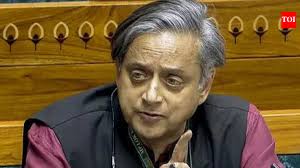
NEW DELHI: After Congress MP Rahul Gandhi completed two years as leader of the opposition (LoP) in the Lok Sabha, senior party MP Shashi Tharoor on Saturday wished him “strength and courage” in his “fight for the future of India.” “All the best to Shri @RahulGandhi ji as he completes two years as Leader of the Opposition. Wishing him continued strength and courage as he fights for the future of India,” the Thiruvananthapuram MP posted on X. Tharoor’s remarks came days after he praised Prime Minister Narendra Modi for conveying India’s concerns to US President Donald Trump over the safety of civilian sailors in the Strait of Hormuz, a comment that drew criticism from the Congress. A day later, he said Jammu and Kashmir was making “encouraging progress towards normalcy”—the Union territory lost its statehood in August 2019 after the Modi government revoked Article 370 of the Constitution. Since then, the opposition, including the Congress, has been demanding restoration of statehood for Jammu and Kashmir. Last year as well, Tharoor had drawn attention for a series of remarks praising PM Modi on various issues, sparking unease within the Congress. On Thursday, Rahul Gandhi completed two years as LoP, a post that had remained vacant since 2014 due to the BJP’s parliamentary majority with the NDA — the coalition it leads —providing additional numbers, leaving the Congress and the broader opposition short of the numbers required to stake a claim to the position. “Today marks two years since I became the Leader of the Opposition in the Lok Sabha. Every single day of these two years has been dedicated to one task—to carry the voice of every Indian to the corridors of power,” the Raebareli MP wrote in a post a day later. Under parliamentary rules, a party must secure at least one-tenth of the total strength of the House (55 out of 543) to claim the Leader of Opposition position. The Congress crossed this threshold in the 2024 Lok Sabha elections by winning 99 seats, up from 44 in 2014 and 52 in 2019. The BJP, meanwhile, fell to 240 seats, short of the 272-seat majority mark, and formed the government with the support of its allies in the NDA. Courtesy : TOI Note: This news is originally published on https:/timesofindia.com/bha and is used purely for non-profit/non-commercial purposes, especially human rights
The Importance of Being DK Shivakumar in Rahul Calculus

Shivakumar is yet to acquire national status, but definitely has national recall. He has emerged as a serious national trouble-shooter for his party. No thanks to Rahul, who detests mass leaders who will not kowtow to him It seems the Congress has a credible national face at last. A trouble shooter who has negotiated the complexities of Opposition politics, which it badly needs, especially after it couldn’t get its Rajya Sabha nominee in Jharkhand through. Last week, a masterclass in the difference between rhetoric and reality happened in Karnataka: the Congress won all five Legislative Council seats it contested—plus an additional seat by persuading cross voting by the BJP. It was the kind of outcome old Congress managers once considered routine, but which the Rahul Congress has no idea, or interest, on how to achieve. The architect of the win is DK Shivakumar; probably the reason Uddhav Thackeray—whose party rapidly imploded after six MPs crossed over to the Shinde-BJP camp—invited him to Mumbai to confabulate. Whether DKS, with all his political management skill, can pull off a miracle in Maharashtra to save an INDIA ally is questionable. It was left to him to soothe MK Stalin, whom Rahul treated churlishly in public during the Tamil Nadu elections and dumped unceremoniously. Shivakumar is yet to acquire national status, but definitely has national recall. He has emerged as a serious national trouble shooter for his party. No thanks to Rahul, who detests mass leaders who will not kowtow to him. Yet, political kinetics keeps pulling DKS’s name into the national conversation. But for today’s Congress, such interlocutors and enforcers are suspect. The party historically marginalises leaders of the DKS type. In the 1970s, Devaraj Urs built the most sophisticated social coalition the Congress had ever achieved in Karnataka by forging OBCs, Dalits, and minorities into an unprecedented electoral force. Discarded by Indira Gandhi, he died politically diminished. Sharad Pawar built Congress into a dominant force in Maharashtra, cultivating the cooperative sector and managing the competing interests of the Maratha peasantry, Mumbai’s working class, and Pune’s commercial communities. Expelled in 1999, he formed the NCP, and sank the Congress’s political future. Sachin Pilot resuscitated the Rajasthan Congress from its post-2013 coma, delivered in 2018, and was then subjected to deliberate humiliation, denied the chief ministership, and was pushed to the point of open rebellion in 2020 after he was denied the chief ministership like DKS initially was. The party has neither earned nor acknowledged such a restraint and loyalty. While Sachin has faded from the national radar, for now, DKS occupies the alternative position. In a party where giant leaders like Ahmed Patel, Ghulam Nabi Azad, Kamal Nath, and Pranab Mukherjee could forge inter-party consensuses, apart from Bhupesh Baghel and Mukul Wasnik, now, the Rahul coterie comprises Kaushal Vidyarthee, Alankar Sawai, KB Byju, Praveen Chakravarty et al. Chakravarty who? Exactly. Kharge, in spite of all the respect he commands, cannot influence a single voter in UP. Rahul’s pernicious puppeteer KC Venugopal wouldn’t know the name of a single party worker in Bihar. CWC members like geriatric AK Antony, Anand Sharma, Deepa Dasmunsi, Channi, etc. can’t get 10 voters between them in Madhya Pradesh. Himanta Sarma humiliated Gaurav Gogoi. To call Jairam Ramesh a mass leader is like calling a Tiffin box a buffet—all are has-beens or will-never-beens. The Congress’s last bastion is the South. It has three Congress CMs, and is an alliance partner in Tamil Nadu. Hence, the national choice is limited. DKS speaks Hindi without the self-consciousness that afflicts many southern politicians, and English without the affectation of someone mimicking cosmopolitanism. He is a Vokkaliga from the dominant Karnataka community, but he has consistently reached beyond community arithmetic to keep his party afloat. In UP, Bihar, Madhya Pradesh, Rajasthan, and Haryana, the BJP has built a ruthless victory machine over decades of patient work. The Opposition’s only effective response will be to build a counter-machine with equal patience and seriousness. That requires someone who understands the construction of party infrastructure at the district and booth level, financial savvy seduction, soothing of local egos, and the management of factional disputes before they become the internal wars that cost the party winnable seats. The only Congress alternative to the BJP is DK Shivakumar; and it knows this, too. With such powerful adversaries like Modi and the RSS, it won’t be smooth sailing for him. The distinction between what Rahul and Karnataka’s DK Shivakumar offers is not what is better or worse. DKS commands a rare combination which cannot be earned with genetic entitlement: charisma and calculation. He understands not just how elections are won, but also how they are fought. In politics, ideological, cadre-driven machines defeat movements. The man who can build the Congress such a machine is waiting. Will his own party, and Rahul Gandhi, allow him to do that? Ravi Shankar Courtesy : TNIE Note: This news is originally published on https:/thenewindianexpress.com/bha and is used purely for non-profit/non-commercial purposes, especially human rights
Ram temple graft: Wayanad MP Priyanka seeks probe

“Lord Ram resides in the sacred sentiments of millions. It is with this very reverence that people bow their heads and offer donations at the temple. KALPETTA: Congress MP Priyanka Gandhi Vadra on Saturday demanded a transparent investigation into the alleged embezzlement of donations at the Ayodhya Ram Temple, saying those responsible had committed the “gravest sin” by betraying the faith of millions of devotees. Addressing reporters in Wayanad, Priyanka said the reported theft and misappropriation of temple offerings had shocked the country and amounted to a serious breach of public trust. “Lord Ram resides in the sacred sentiments of millions. It is with this very reverence that people bow their heads and offer donations at the temple. Those who committed theft at the Ram Temple have committed a grave sin by violating the very essence of faith and Dharma,” she said. Priyanka said the donations were not limited to contributions from large corporations but were collected from ordinary citizens across the country through a dedicated campaign. She stressed that safeguarding those funds was the responsibility of the temple administration. Courtesy : TNIE Note: This news is originally published on https:/thenewindianexpress.com/bha and is used purely for non-profit/non-commercial purposes, especially human rights
Barabanki News: BJP prepares for Dalit damage control, eyes 25% vote
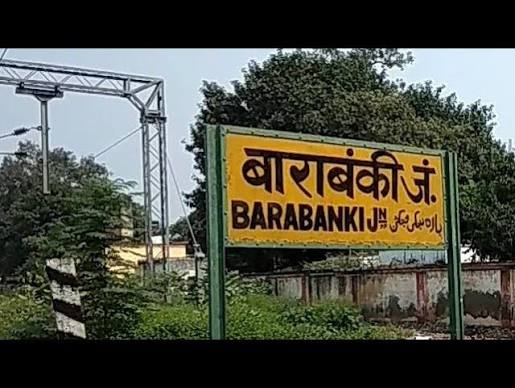
Barabanki. After losing the Barabanki seat in the 2024 Lok Sabha elections, the Bharatiya Janata Party has signaled through a new organizational reshuffle that the Dalits in Barabanki, especially the Rawat (Pasi) community, will be the focus of its strategy for the 2027 Assembly elections and the 2029 Lok Sabha elections. The appointment of former MP Upendra Singh Rawat as State General Secretary and former MP Priyanka Singh Rawat as State Vice President is being used as a basis for damage control. The BJP is not viewing its defeat as a simple electoral defeat, but rather as a weakening of its Dalit social base. These changes are being considered not just a distribution of positions, but a precursor to the 2027 Assembly elections and a precursor to the 2029 Lok Sabha elections. The Barabanki Lok Sabha seat is reserved for Scheduled Castes, and there are approximately 24 to 26 percent Dalit voters. They are in a position to determine the electoral outcome. Approximately 12 percent of these voters are Pasi (Rawat), whose party’s inclination increases the likelihood of victory. This is why Dalit leadership has always been central to electoral strategy in this constituency. The BJP won this seat twice in a row in 2014 and 2019, but circumstances changed in 2024. The party initially expressed confidence in Upendra Singh Rawat, but after an alleged controversial video surfaced during the election, the party had to change its ticket at the last minute and field District Panchayat President Rajrani Rawat. The BJP had hoped to retain the seat by relying on the popularity of the organization, the government, and the Prime Minister, but Tanuj Punia, the Congress-Samajwadi Party alliance candidate, won. Political analysts believe that the resentment of Dalit voters, especially a section of the Rawat community, and the confusion created by the ticket change harmed the BJP. Now, the BJP has attempted to send multiple messages simultaneously by giving Upendra Singh Rawat and Priyanka Singh Rawat, both former MPs, significant responsibilities in the state organization. Winning the trust of Dalit voters is a challenge. The BJP faces not only the challenge of winning back the seat, but also the challenge of regaining the trust of Dalit voters. Meanwhile, Congress MP Tanuj Punia is now working to strengthen his political hold in the region. He poses a significant challenge to the BJP. Courtesy: Hindi News