
Caste count method in Census ‘misleading’: Congress letter to PM
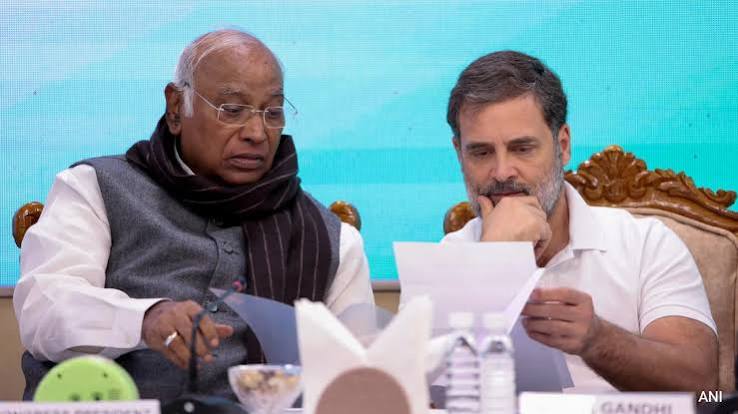
NEW DELHI: Terming the methodology for caste count adopted in Census 2027 “misleading” as it will not give a headcount of OBCs, leaders of opposition in Parliament, Mallikarjun Kharge and Rahul Gandhi, have written to PM Narendra Modi demanding the Census questionnaire on caste notified recently be abandoned and a new one be drafted. They underlined that the word “OBC” has not even been used in the Census. In the backdrop of the controversy triggered by the questionnaire, Kharge and Rahul told the PM “your govt” has adopted an “open-ended question” to collect information about caste, and enumerators will have to take for an answer whatever a person replies to the caste question. They argued that a caste is known by different names and sub-castes depending on the region, which would result in one caste being recorded by thousands of names. “This would result in lakhs of castes being registered in the country, and the entire data recorded in the caste census would become useless,” the letter said. “We don’t approve of the caste census being done through this methodology. Govt should cancel the present questionnaire and prepare a fresh one through consultations with political parties, experts, and the public so that a correct headcount of every caste and community is collected and the caste census is precise, relevant, and beneficial,” it said. It said a readymade solution to the problem is that a “drop-down menu” comprising a list of castes be added to the questionnaire. “This very methodology is used for counting SCs and STs (in Census)… This methodology was adopted in the surveys of Bihar and Telangana. We are enclosing the caste lists of the two surveys for understanding.” Further, the letter said such a list of castes for Census can easily be compiled on the basis of the existing Socially and Educationally Backward Classes list and data from the Anthropological Survey of India. Releasing the letter, AICC spokesperson Jairam Ramesh and OBC department chairperson Anil Jaihind said govt had, in an affidavit to SC in Sept 2021, submitted that a “drop-down menu” with a list of castes will have to be used if a caste census were to be done. Ramesh said census enumerators can carry the said list of OBCs and record precise answers. He accused govt of “sabotaging” the caste census. Courtesy : TOI Note: This news is originally published on https:/timesofindia.com/bha and is used purely for non-profit/non-commercial purposes, especially human rights
‘Questions don’t stop with batons’: Rahul Gandhi attacks Bihar govt over BPSC protests
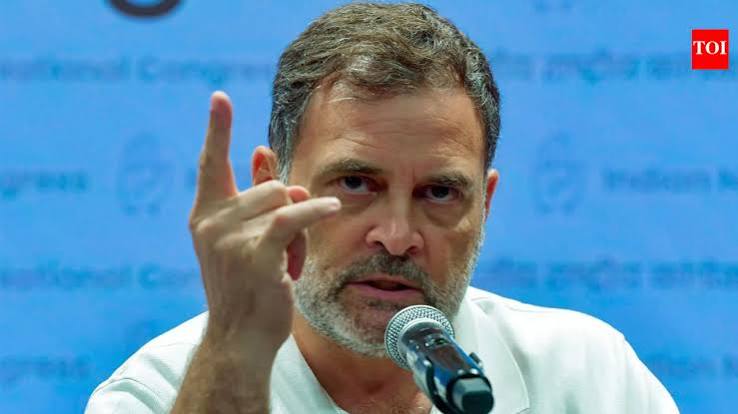
NEW DELHI: Lok Sabha leader of opposition Rahul Gandhi on Wednesday waded into Bihar’s escalating BPSC row, questioning the Samrat Choudhary-led government over allegations of exam irregularities and paper leaks. He referred to the police crackdown on protesting students, saying, “questions don’t stop with batons.” His statement came a day after a clash broke out between students and police in Bihar’s capital, with police using water cannons and barricades to stop the protesters from marching. Rahul described it as a “straightforward” question on behalf of Bihar’s students and posted on X: “Why the irregularities in recruitment exams? Why no action on allegations of paper leaks? And how long will this tampering with the future of the youth continue?” He then targeted the long-standing BJP-JD(U)-led government in Bihar, saying, “The controversy over BPSC exams is not of today. Students have been on the streets for a long time over the recruitment process, exam pattern, delays, and transparency.” — RahulGandhi (@RahulGandhi) The Lok Sabha leader of opposition also referred to the use of an AK-47 by a security personnel during an earlier student protest in Bihar, which coincided with student protests in Delhi and across the country over NEET fiasco. “But instead of answering, what is the government doing? It’s wielding batons and water cannons. It’s taking students into custody. In Siwan, there was even firing with an AK 47 on protesters,” the former Congress chief said. He added in his post: “This is not just a question of police action. This is a question of the mindset of that BJP government, which has no answers – and that’s why it’s turning the police into a weapon to evade accountability.” “The BJP government should understand this – questions don’t stop with batons. You can’t snatch away someone’s future by instilling fear,” the Rae Bareli added. Bihar students had marched towards Raj Bhavan and chief minister Samrat Choudhary’s residence to stage a “gherao”, but faced police barricading and some of them were detained in Patna. Courtesy : TOI Note: This news is originally published on https:/timesofindia.com/bha and is used purely for non-profit/non-commercial purposes, especially human rights
Allahabad High Court refuses to allow hijab in schools, says uniform rules must be followed
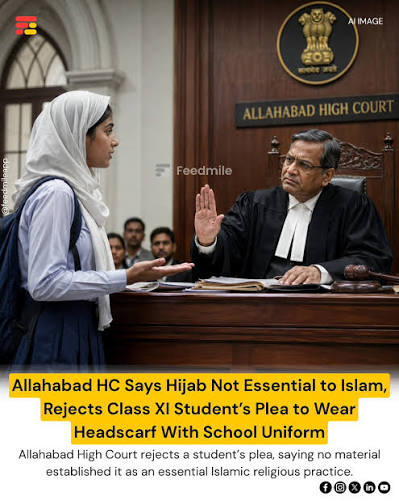
The petitioner argued that wearing a hijab was linked to her religious belief. Wearing it granted her fundamental rights such as privacy, personal liberty, and freedom of speech. LUCKNOW: The Allahabad High Court, on Monday, refused to allow students to wear hijab in schools. The court said that following the school uniform rules was mandatory as it helped promote a sense of equality among children and also gave the school its own identity. The High Court said uniforms helped maintain an environment free from religious discrimination. Therefore, no student could insist on changing the dress code prescribed by the school. “Permission to wear a hijab on an individual basis cannot be granted. This would be against the very concept of a uniform. It would shift the authority to determine school discipline from the institution to individual students,” observed the court. A division bench, comprising Justice JJ Munir and Justice Inderjeet Singh, made those remarks while dismissing the petition of a minor student, Sukaina Rizvi, who had sought permission to attend classes wearing a hijab along with the school’s prescribed dress code. Petitioner Sukaina Rizvi is an 11th-grade student at Tagore Public School in Attarsuiya, Prayagraj. She filed a petition in the High Court through her mother. The student argued that she had been attending school wearing a hijab from classes 6 to 10, and no objections were ever raised. The student also attached her old identity card and a group photo from the school with the petition. The student stated that she now wanted to attend school in the 11th grade wearing a hijab, but was not being granted permission. “We also complained to the DM, upon which the District Inspector of Schools (DIOS) sought a report. The school principal clarified that this is an educational institution where there is a uniform dress code for all students. Granting a special exemption to one student would disrupt the school’s system,” the petitioner told the court. The petitioner argued that wearing a hijab was linked to her religious belief. Wearing it granted her fundamental rights such as privacy, personal liberty, and freedom of speech. In such a situation, the school should be directed not to stop her from wearing a hijab. The court said: “Only the school administration has the complete right to decide the dress code.” The court stated that as long as the school’s dress code for all children was framed with the right intent and did not discriminate against anyone, the school administration had the absolute right to decide what the dress would be. The bench added that even if the school had previously allowed the scarf (hijab), it did not mean that it had become a permanent right of the students forever. The school administration was free to change its rules. It was not compelled to continue with old exemptions, observed the bench. The court stated: “Wearing hijab is not an essential part of the Islamic religion. Wherever this issue has been raised, the High Court’s opinion has been consistent that wearing a headscarf (hijab) for women is not an essential part of the Islamic religion.” It is not as if the religion would be in danger without it, or that a woman would be excluded from the religion if she did not wear it. No facts or evidence had been presented to prove this either, said the court. In its verdict, the Allahabad High Court referred to an old judgment of the Kerala, Bombay, and Karnataka High Courts. In the case of ‘Fatima Tasneem vs State of Kerala’, the court had stated that while on the one hand, a student had the right to wear clothes of their choice, on the other hand, a school or institution had the right to enforce its own rules and regulations. It added that when there was a conflict or dispute between these two rights, the larger interest and discipline of the institution would be given more importance than individual preference. The court stated that the school was not imposing any restrictions on the student’s faith, but was merely expecting adherence to institutional discipline and uniforms. Following this, the court dismissed the petition. Namita Bajpai Courtesy : TNIE Note: This news is originally published on https:/thenewindianexpress.com/bha and is used purely for non-profit/non-commercial purposes, especially human rights
Telangana Congress working chief Jagga Reddy questions Modi’s 2015 visit to Pakistan
Jagga Reddy urged people, students and intellectuals in Telangana to question the reasons for the Centre blocking the chief minister’s US visit. HYDERABAD: Defending Chief Minister A Revanth Reddy over his proposed US visit, Congress working president T Jayaprakash Reddy, alias Jagga Reddy, on Tuesday questioned Prime Minister Narendra Modi’s visit to Pakistan to attend former prime minister Nawaz Sharif’s birthday celebrations. Addressing a press conference at Gandhi Bhavan, Jagga Reddy alleged that the BJP-led Union government had obstructed Revanth’s US tour and questioned why he had been allowed to travel to London but prevented from visiting the US. Responding to BJP MP Eatala Rajender’s criticism that Revanth was seeking to meet people allegedly opposed to India, Jagga Reddy questioned Modi’s Pakistan visit. “Modi is the prime minister and is under a strict security protocol. Even when he travels from his bedroom to his office, security checks are conducted. How did he go to Pakistan without prior information? The prime minister should first explain why he went to an enemy country and then speak about Revanth Reddy,” he said. Add as a preferred source on Google Jagga Reddy urged people, students and intellectuals in Telangana to question the reasons for the Centre blocking the chief minister’s US visit. On reports of an “August crisis” in the Telangana Congress, Jagga Reddy said there was no crisis in either the party or the government. “There is no August crisis in the Congress. It is a TDP issue. The chief minister here is from the Congress and there is no doubt about the Congress government,” he said. He said Revanth remained committed to Rahul Gandhi’s leadership and had maintained a “neutral” and “balanced” position. Courtesy : TNIE Note: This news is originally published on https:/thenewindianexpress.com/bha and is used purely for non-profit/non-commercial purposes, especially human rights
‘They opposed Ambedkar’s Constitution, wanted Manusmriti’: Owaisi targets RSS, BJP
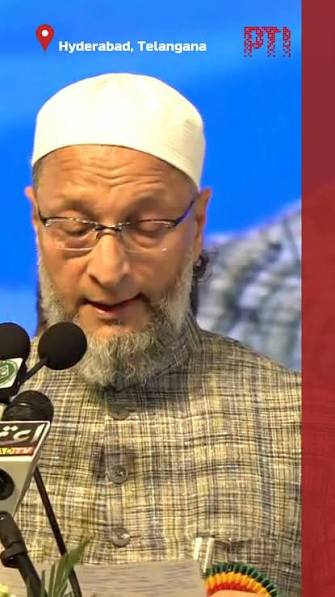
NEW DELHI: AIMIM president Asaduddin Owaisi has launched a sharp attack on the RSS and BJP over the Manusmriti, questioning their commitment to the Indian Constitution. He accused them of historically favouring the ancient text over the document adopted by the country. Owaisi made the remarks during his address at the Jalsa-e-Rahmatul-lil-Alameen at Darussalam .n Hyderabad on the occasion of the 1501st Eid Milad-un-Nabi. He targeted the RSS over its reported opposition to the Constitution drafted by Dr BR Ambedkar and contrasted the organisation’s position with that of Muslim freedom fighters during British rule. “I am asking those associated with the RSS about Manusmriti. Is it not true that on November 26, 1949, we adopted the Constitution? Yet, four days later, on November 30, a mouthpiece of the RSS published a complaint against it, stating that it wasn’t a constitution at all and that it should have been the Manusmriti. They had issues with the Constitution drafted by Babasaheb Ambedkar,” Owaisi said. The AIMIM chief also attacked Hindutva ideologue VD Savarkar, referring to his correspondence with the British during his imprisonment in the Andaman cellular jail. “Savarkar was in support of Manusmriti. While he was in Andaman jail, he was writing letters to the British, saying, ‘I am with you, please release me.’ But what were we doing? Allama Fazl-e-Haq Khairabadi was also in jail; he endured hardships but never wrote a ‘love letter’ to the British. Instead, he issued a fatwa for Jihad against them. Even today, his grave stands in the Andaman as a testament,” he asserted. Owaisi further sought to highlight the role of Muslim figures in India’s freedom struggle. He claimed that the first prisoner sent to the Andaman Islands was Maulvi Alauddin, the Imam of Hyderabad’s Mecca Masjid. “Listen, BJP and RSS people, who was the first prisoner in Andaman? It was not your father, grandfather, or ancestor. It was Hyderabad’s Maulvi Alauddin, the Imam of Mecca Masjid. He was the first prisoner,” Owaisi told the gathering. His remarks come amid an intensifying political confrontation between the BJP and Congress over the Manusmriti and its place in India’s social and constitutional discourse. The BJP has recently targeted Congress leader and Lok Sabha leader of opposition Rahul Gandhi over his criticism of the Manusmriti. It accused Rahul of making statements that undermine India’s traditions, cultural heritage and democratic institutions. Several BJP leaders, including chief ministers, have alleged that Rahul Gandhi’s remarks sought to “belittle” India’s civilisational values. At an event titled ‘Chhatron ki Goonj’ in Pune, Rahul Gandhi criticised a passage attributed to the Manusmriti concerning women’s independence. “This is a direct quote from the Manusmriti, and these words are a shame, because these words should never ever have been spoken,” Gandhi said after quoting the passage: “In childhood, a female belongs to her father. In youth, she belongs to her husband. When her lord is dead, she belongs to her sons. A woman must never be independent.” Rahul also called for an end to patriarchal structures, telling female students that the country needs to “smash the prevailing patriarchy” to achieve genuine empowerment for women. The exchange has brought the Manusmriti back into the centre of a wider political debate over constitutional values, social equality and competing interpretations of India’s cultural and political history. Courtesy : TOI Note: This news is originally published on https:/timesofindia.com/bha and is used purely for non-profit/non-commercial purposes, especially human rights
Baghel meets Rahul, Priyanka amid Punjab Congress infighting
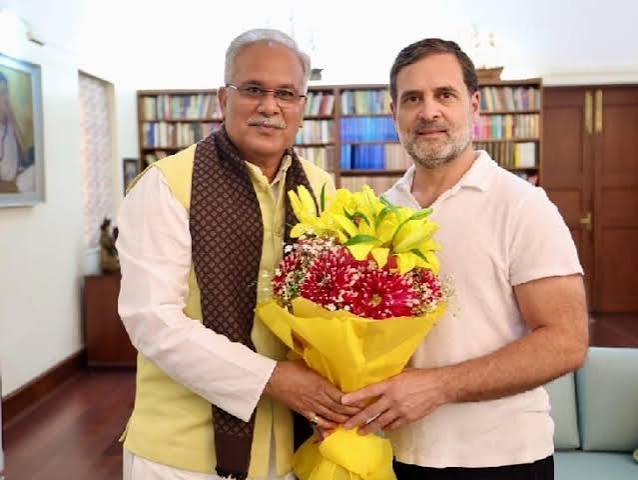
Chandigarh: Bhupesh Baghel, the AICC general secretary and in charge for Punjab, met the leader of the opposition in the Lok Sabha, Rahul Gandhi, and Congress MP Priyanka Gandhi Vadra in Delhi on Monday. During the meeting, issues relating to the continuing differences within the Punjab Congress and Rahul Gandhi’s proposed bus journey in the poll-bound state were discussed. The trio also discussed possible ways of addressing the differences within the state unit. Baghel, however, did not disclose details of the discussions on organisational issues after the meeting. The meeting comes amid continuing differences within the Punjab Congress, particularly between a group of leaders associated with the former chief minister and Congress MP, Charanjit Singh Channi, and the camp led by Punjab Pradesh Congress Committee president Amrinder Singh Raja Warring. The Channi camp has been pressing for the removal of Warring from the post of president. Last week, Baghel ruled out any change in the state unit’s existing organisational structure and said the focus would be on expanding the announced committees and bringing more functionaries into the party’s election preparations. “There will be no changes now. Only expansion will take place,” Baghel had said, indicating that the existing committees would be enlarged by adding more members, and that new committees could also be constituted as part of the party’s organisational preparations. After Monday’s meeting, Baghel said the expansion of the committees would take place shortly. However, he did not give details of the discussions on internal issues in Punjab. He said the primary focus of the meeting was Rahul Gandhi’s proposed bus journey in Punjab and related preparations. “I met both Rahul Gandhi and Priyanka Gandhi. The main topic was the bus journey planned for Punjab. I wanted to seek permission for the tour, specifically regarding the journey Rahul Gandhi is to undertake. They granted me time and asked me to submit a proposal outlining the schedule for the week, after which they will finalise the timing,” Baghel said. The former Chhattisgarh chief minister indicated that the proposed programme would not take place this week. He also hinted at a major tour covering Punjab. Baghel said a detailed programme would be prepared and shared with the party leadership before the schedule and timing were finalised. The proposed bus journey is being planned as part of the Congress’s preparations for the 2027 Punjab assembly elections. According to party sources, Rahul Gandhi is likely to begin the programme from Amritsar after paying obeisance at the Golden Temple. The tentative plan is for the first phase to cover the Amritsar-Hussainiwala stretch. Baghel also indicated that the proposed yatra would involve party functionaries from across Punjab. He said all party representatives would join the yatra, and national leaders would also participate in the programme. The proposed bus journey is likely to bring senior Punjab Congress functionaries together on a common platform as the party intensifies its preparations for the 2027 elections. AICC secretary and Punjab co-in charge Suraj Singh Thakur, who was also present at the meeting, said, “This is our family, and within a family, there has always been a good relationship between the younger and elder brothers. There are discussions over certain issues, and that is a matter within our party. We will resolve it by working together with everyone and taking everyone along, as has always been the Congress party’s approach and our principle. We will contest the Punjab elections together with everyone,” he said. Courtesy : TOI Note: This news is originally published on https:/timesofindia.com/bha and is used purely for non-profit/non-commercial purposes, especially human rights
Surprise protests, GenZ outreach: Rahul Gandhi’s new playbook after CJP’s success
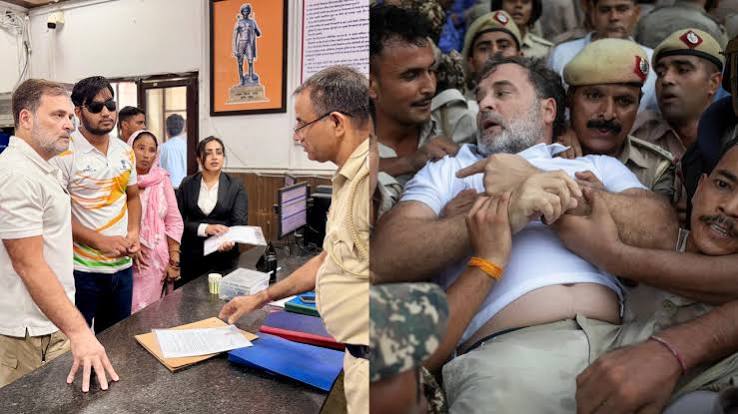
NEW DELHI: “I will not leave till you lodge an FIR. He has pellet injuries on his body, has lost his eye, and we are demanding an FIR for this… I will go outside and sit there until you lodge an FIR. I will sit for 10 days, 20 days, 30 days, 50 days, six months. Your government will have a problem.” There is a visible change in how Rahul Gandhi pushes through issues now. The leader of the opposition in Lok Sabha has a new weapon in his political arsenal: impromptu protests. For the second time in a month, the Congress leader caught the authorities and, to some extent, even his own party, off guard by taking to the streets of the national capital without prior warning. When Rahul reached the DCP office in Delhi on August 21 demanding an FIR for Sahil Lohchab, who sustained pellet injuries during the July 20 student protest, it was Act 2 of his new playbook of street protest politics. When the cops dilly-dallied, Rahul refused to budge and staged a sit-in protest outside the police station. Priyanka Gandhi Vadra joined him. Congress leaders began arriving. Rapid Action Force personnel were deployed outside. A visit to a police office turned into a high-voltage political stand-off and, after six hours of dharna, Delhi Police registered an FIR over the pellet firing. The BJP reacted sharply, calling Rahul’s sit-in the ‘politics of anarchy’. It argued that an FIR relating to the wider July 20 incident already existed, an investigation was under way and the Congress leader was turning police procedure into a political spectacle. For Lohchab, however, there was a sense of relief. His family had been trying to get his complaint registered since August 14, shuttling between police stations. The 19-year-old, who underwent surgery after pellets struck his right eye, finally had an FIR registered after Rahul’s intervention. For years, opponents have labelled Rahul Gandhi a ‘part-time politician’ who would raise an issue and then disappear. But this incident reinforced something that has changed about Rahul’s tactics over the past year. He is no longer content merely to raise an issue. He increasingly wants to enter it, stay with it and, if necessary, physically occupy the space. Rahul’s new playbook The first display of this surprise street-politics instinct had come a month earlier during the NEET student protests. On July 21, a day after police used force to stop thousands of students attempting a ‘Sansad Chalo’ march over exam irregularities, Rahul suddenly headed towards Prime Minister Narendra Modi’s residence and staged a sit-in. Police had reportedly made arrangements anticipating a Congress protest at Vijay Chowk. Rahul went to Lok Kalyan Marg instead. The move caught security officials by surprise. Rahul, Priyanka and several other opposition leaders were later detained. The visual that immediately took over the news was hard to ignore: the leader of opposition physically struggling with police officers, being dragged away and getting a nosebleed in the chaos. It came at a time when the Congress was desperately trying to make its presence felt, with Abhijeet Dipke’s Cockroach Janata Party and climate activist Sonam Wangchuk already leading a massive student protest against the NEET paper leak. Congress had initially kept its distance, preferring to run its own youth outreach campaign, ‘Chhatron Ki Goonj’. But people asked a simple question: If Congress claimed to support student issues, why was it missing from the biggest student movement in Delhi? When the July 20 Jantar Mantar protest took place and massive outrage erupted over police action against the student protesters, Rahul’s approach changed. The very next day, he moved to the front lines. He stood outside the Prime Minister’s house, Congress leaders visited injured students, and police action became a major national debate. Rahul took the issue to Parliament and continued raising the pitch over injuries suffered by students. And when the larger protest began to recede from the headlines, Rahul stayed with one part of it: the use of pellet guns. He has affirmed that his party will keep raising the issue and demand accountability. Rahul’s changing style The first major image makeover was when Rahul Gandhi embarked on the ‘Bharat Jodo Yatra’ from Kanyakumari to Kashmir in 2022. Sceptics and rivals wondered if he would complete the journey. By the time he reached Kashmir months later, after walking thousands of kilometres in his now-signature white T-shirt, one charge had become considerably harder to make: that Rahul was unwilling to put in the physical grind that it takes in politics. The yatra, on its own, did not help the Congress much. What it did was change the way Rahul himself was seen as a politician. For months, people saw him walking with the common public rather than delivering a scripted speech from a podium. He met farmers, labourers and students, stopped for conversations, entered homes and sat and ate with people. The yatra experience also laid the foundation for his growing social media popularity. His online presence today increasingly relies on short, conversational exchanges that can easily travel as reels and clips. The second shift came in 2024, when he became the leader of the opposition. Since then, we have seen a more combative Rahul Gandhi. Whether one agrees with his politics or the issues he raises, he appears considerably more comfortable with confrontation than he once did. Congress’s protests in the Parliament complex have also become more visual and experimental under Rahul. He repeatedly joined opposition MPs at Makar Dwar over the Election Commission’s SIR exercise in Bihar, with MPs carrying ‘vote chori’ placards and demanding its rollback. The protest later moved beyond the Parliament gates, with Rahul and other opposition leaders marching towards the Election Commission before being stopped and detained. Rahul provokes ministers across the aisle and stays for the response. He takes an argument from the street into Parliament and, increasingly, carries it back outside again. This is also a part of his renewed Gen Z outreach. Rahul’s GenZ
Mayawati says, ‘Demand for reservation on economic basis not right’:Dalits have faced casteism for centuries, don’t protect reservation opponents

BSP supremo Mayawati has lashed out at the demand for reservation based on economic criteria at Delhi’s Jantar Mantar. She said on Sunday that Dalits have been victims of casteism for centuries. In such a situation, the demand for reservation based on economic criteria is not right. Targeting Congress MP Rahul Gandhi, Mayawati wrote on ‘X’: Rahul, who sat on dharna outside the police station in Delhi, did not go to get the anti-reservation protest happening at Jantar Mantar right next door stopped. He did not even try to go and explain to the protesters. This clearly exposes Congress’s anti-reservation mentality. The BSP supremo appealed to the central and state governments not to give any kind of shelter or protection to anti-reservation elements. She told political parties that cheap politics should be stopped on sensitive and important issues like reservation. New demand for reservation based on economic grounds is not right at all Mayawati termed the demand for reservation based on economic grounds as anti-national and a blow to the spirit of the Constitution. She made it clear that Scheduled Castes (SC), Scheduled Tribes (ST) and Other Backward Classes (OBC) have been harassed for centuries. Constitutional measures in the form of reservation were created to protect them from this casteist oppression. In such a situation, the new demand to implement reservation based on economic grounds is not appropriate at all. Baba Saheb Dr. Bhimrao Ambedkar had said that ‘renunciation of casteism is the greatest patriotism.’ People not getting benefits is not due to reservation, but a result of corruption BSP supremo said – Every year, huge budgets are spent by governments to eradicate poverty. Not receiving its benefits is the result of government system failure and corruption, not reservation. The real benefit of economic reservation (EWS) implemented for poor families of general category is not reaching them; there is more deception in that too. Attempt to strengthen Dalit and deprived vote bank Political experts say that by opposing reservation on economic basis, Mayawati is trying to strengthen BSP’s traditional Dalit and deprived vote bank. BSP’s politics has long revolved around the issue of social justice and rights of deprived sections. At a time when protests took place at Delhi’s Jantar Mantar demanding changes in the reservation system and reservation on an economic basis, Mayawati is trying to present herself as the strongest advocate of reservation and constitutional rights. Know about the ‘Remove Reservation Movement’… It should be noted that a protest against reservation was held at Jantar Mantar in Delhi on Friday, 21 August. A large number of people gathered in the ‘Remove Reservation Movement’. They demanded the implementation of reservation based on economic criteria while opposing the caste-based reservation system. The protesters also demanded changes in some UGC rules and the reservation system. Keeping the movement in view, Delhi Police made tight security arrangements. Some protesters were also taken into custody. Courtesy : Bhaskar English Note: This news is originally published on https:/bhaskarenglish.com/bha and is used purely for non-profit/non-commercial purposes, especially human rights
‘Pellet injury shattered my Delhi Police dream’: Youth whose FIR came after Rahul’s protest

Jhajjar: The young man for whom Lok Sabha LoP Rahul Gandhi staged a protest at a Delhi police station on Friday had once dreamt of joining the Delhi Police. Jhajjar resident Sahil Lochab says that dream came crashing down on July 20, when he was allegedly hit by pellets during a protest at Jantar Mantar and lost vision in his right eye. Sahil, from Bhupania village, drove a taxi alongside his studies to support his family and was preparing for Delhi Police recruitment. He had enrolled in a graduation programme through Delhi University’s School of Open Learning to balance his studies with work. Sahil’s family moved to Najafgarh around 10 years ago. His father Deepak has been disabled since childhood and had worked occasionally as a private taxi driver. Sahil says he began driving at a young age, contributing to household expenses and helping fund his younger brother’s education. Recounting the Jantar Mantar incident, Sahil said he suddenly felt pellets strike his chest, arm and right eye. “When I turned around, I saw a person in a blue uniform carrying a large firearm, from which several pellets were fired,” he alleged. His face, hand, chest and eye began bleeding and he lost vision in the right eye, he said. He was initially taken to a nearby hospital before being referred to Safdarjung Hospital and subsequently AIIMS. Sahil alleged that paramilitary personnel used pellet guns during the protest and he had sought an impartial investigation to establish who fired the pellets and under what circumstances. During his treatment at AIIMS, Sahil said, a team associated with Rahul Gandhi contacted him and helped arrange treatment and assistance for his family. He said Rahul Gandhi met him twice, once during a press conference and later at Parliament Street police station on Friday, when the FIR was registered. Sahil alleged that he approached Connaught Place and Parliament Street police stations several times seeking action but was sent back without the response he expected. He claimed that after Rahul Gandhi reached the Parliament Street police station, an FIR against unidentified persons was registered about six hours later. For Sahil, the injury has put his career plans and his family’s finances at risk. “I used to drive a taxi alongside my studies to support my family. I had dreamed of joining the Delhi Police. After losing the sight in my eye, it feels as if everything is over,” Sahil said. Courtesy : TOI Note: This news is originally published on https:/timesofindia.com/bha and is used purely for non-profit/non-commercial purposes, especially human rights
Parliament monsoon session yet to be prorogued, BJP, Congress face off over women’s bill
NEW DELHI: BJP on Sunday sought to play back to Rahul Gandhi his pitch for women’s empowerment, by questioning his strident opposition to govt’s push for an early implementation of quota for them in Lok Sabha and assemblies. “He does not want to give rights to women. His words don’t match his actions,” Maharashtra CM Devendra Fadnavis said. BJP’s framing its attack on Rahul around the women’s quota coupled with the fact that monsoon session is yet to be prorogued gave another indication of the possibility of govt summoning the two Houses at short notice to take up its Constitution amendment bill for implementation of quota from 2029 with a nearly 50% rise in Lok Sabha seats. “What explains the abnormal delay now? Is the Union home minister still in search of his super-tainted 2/3rd majority to get the constitutional amendment bill on delimitation passed in a special session,” Congress’s Jairam Ramesh asked. Congress, too, was mindful of the possibility of a short upcoming session and claimed that BJP is still searching for “super tainted” majority in Lok Sabha, in what was a swipe at govt’s alleged attempts to split opposition parties to reach the two-thirds majority in the House needed for the bill’s passage. Ramesh said the gap between Parliament’s adjournment and its prorogation is generally two to four days. But the monsoon session, which ended on Aug 13, has not been prorogued yet. When a session is prorogued, govt has to go through the protocol for calling a new session that conventionally requires a gap of 15 to 20 days. Stepping up BJP’s attack on Rahul Gandhi, Fadnavis said he spoke about women’s empowerment from a public platform but has opposed the most revolutionary step to give women their due. BJP’s Smriti Irani said Rahul should positively respond to PM Modi’s appeal to political parties to support the implementation of women’s quota. On the Vande Mataram row, she said Congress should allow rendition of the song’s full version. While speculation has swirled over the revival of the bill to amend women’s quota law, which was defeated in April, govt has officially remained non-committal over any such move except acknowledging that it had sought Rahul’s view. The LoP in Lok Sabha reiterated his stand against it. Congress and its allies have said Lok Sabha’s strength should be frozen at its existing number and the quota should be executed within it. Courtesy : TOI Note: This news is originally published on https:/timesofindia.com/bha and is used purely for non-profit/non-commercial purposes, especially human rights