
‘Chhatron ki Goonj’ reaches Indore as Rahul eyes BJP’s vulnerabilities with “best city” as example
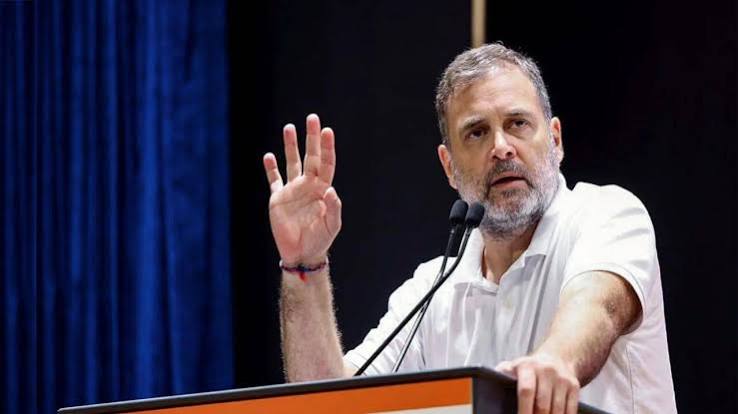
NEW DELHI: Amid continuing reverberations from Rahul Gandhi’s girl-students rally in Pune, the Congress youth outreach “Chhatron ki Goonj” is set to move to another BJP stronghold, the education hub of Madhya Pradesh. Sources said the next episode of “chhatron ki goonj” will be held in Indore on Sep 12. In what is a carefully crafted strategy to challenge the ruling party with the “angry demographic” that led the Jantar Mantar protest, Congress has picked the venue owing to the fact that there has been a history of paper leaks in the state including the infamous examination scandal “Vyapam scam”. Besides, the opposition has won two by-elections “against the might of the state”, the latest being Datia assembly last month. Sources said the party considered a few cities, including in the Congress-ruled states in the south, but then decided on Indore in a bid to continue pressuring the BJP. While the city is a students’ hub and also has a fair share of urban and middle-class population, it has been in the negative spotlight for repeated infrastructural crises – the most sensational being 24 deaths from consuming sewage contaminated water in February 2026. A smart city road, said to be constructed at the cost of Rs 40 crore, collapsed recently, hogging the headlines. Also, there have been allegations of corruption targeting the CM. The “chhatron ki goonj” started in Kota in Rajasthan (June) and then moved to Dehradun (July) and then Prayagraj (August), focusing on examination and employment issues. But in Pune last month, Rahul changed tack when he made it an exclusive event for girls, and his interactive speech around gender justice and “manusmriti” received favourable feedback besides triggering the opponent BJP. The “CKG” strategists are chuffed by the reaction and said the programme will move across the nation with the objective of becoming a “brand” that the youth will associate with. After Indore, the party may choose a city in any of the Congress-ruled states in the south to cover a key region with a strong youth population. Recently, the Congress Working Committee decided that “CKG” will be held in 800 cities and towns – which means one in every district. Sources said Rahul may personally attend around 20 of them, while the rest will become a vehicle for the party to woo the youth. Courtesy : TOI Note: This news is originally published on https:/timesofindia.com/bha and is used purely for non-profit/non-commercial purposes, especially human rights
The Dalit enigma: Why Mayawati is going solo in Punjab
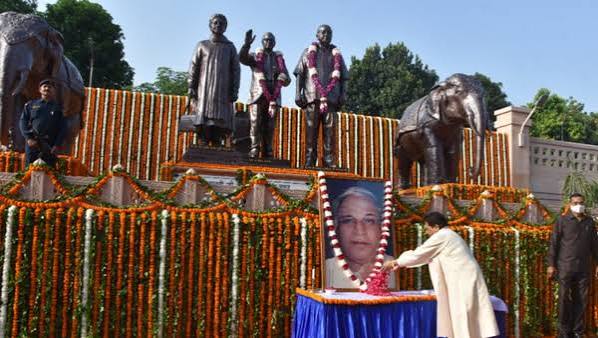
Bahujan Samaj Party (BSP) chief Mayawati has decided to go solo in the upcoming 2027 Punjab assembly election. This move has put the spotlight on a striking contradiction in the state’s politics: Punjab has India’s highest proportion of Scheduled Castes, but no political party has been able to turn that numerical strength into a durable Dalit vote bloc. On August 25, Mayawati announced that the BSP would contest the polls “alone without any alliance or compromise with anyone”, arguing that electoral tie-ups risked weakening the party’s vote share and demoralising its cadre. The decision carries particular significance in Punjab, where BSP founder Kanshi Ram began his political journey and where Scheduled Castes account for 31.94% of the population, according to the 2011 Census. Yet nearly one-third of Punjab’s population has never translated into nearly one-third of the vote for the BSP – or any other Dalit-centric political formation. Instead, the Dalit electorate has remained divided across caste, religious, regional and economic lines, allowing the Congress, AAP, SAD and BJP to each build pockets of support within it. That makes Mayawati’s 2027 gamble less about the size of Punjab’s Dalit population and more about a difficult political question: Can she turn the state’s 32% Dalit population into a coherent electoral bloc? Punjab’s number paradox The numbers explain why every major political party wants a share of the Dalit vote. Punjab had about 88.6 lakh Scheduled Castes in the 2011 Census, accounting for 31.94% of its population – the highest SC proportion among Indian states. The community is particularly concentrated in the Doaba region, which includes Jalandhar, Hoshiarpur and Nawanshahr. Eight of Doaba’s 23 assembly constituencies are reserved for SC candidates, while both Lok Sabha constituencies in the region, Jalandhar and Hoshiarpur, are reserved. Across Punjab, 34 of the 117 assembly seats are reserved for Scheduled Caste candidates. But the political influence of Dalit voters extends far beyond these constituencies. A 2021 analysis by Lokniti-CSDS professor Sanjay Kumar found that Dalits accounted for more than 30% of voters in 54 assembly constituencies and between 20% and 30% in another 45. In other words, Dalit voters can influence far more than the 34 seats formally reserved for them. But there is a crucial caveat: ‘Dalit’ is not a single political identity in Punjab. The community comprises several sub-caste and religious groups, including Ravidassias/Ad-Dharmis, Mazhabi Sikhs, Ramdasias and others. Their geographical distribution, religious affiliations, economic circumstances and political histories differ. That fragmentation has repeatedly prevented the kind of consolidated Dalit politics that emerged around the BSP in Uttar Pradesh. Punjab’s agrarian structure adds another layer. Land and economic power remain disproportionately concentrated among dominant agrarian communities, particularly Jat Sikhs. As a result, Dalit politics in the state often revolves around land rights, employment, reservation, social dignity and access to common resources, rather than caste identity alone. From Kanshi Ram’s Punjab to BSP’s high-water mark The irony is that Punjab was once among the BSP’s strongest political laboratories. Kanshi Ram, born in Punjab, built his early political movement around the mobilisation of Scheduled Castes and other marginalised communities before founding the BSP in 1984. The party’s breakthrough in Punjab came in the 1992 election. It won nine of the state’s 117 seats with 16.32% of the vote, emerging as the principal opposition party in the House. Six of those nine seats came from Doaba, underlining the region’s importance to the party’s political project. But the breakthrough proved difficult to sustain. In 1997, the BSP’s tally fell to one seat, although it still secured 7.48% of the vote. Its vote share then declined steadily — to 5.69% in 2002, 4.13% in 2007 and 4.29% in 2012. By 2017, it had fallen to 1.52%. In 2022, the BSP won just one seat with 1.77% of the vote, contesting as part of its alliance with the Shiromani Akali Dal. The steep decline in three decades captures the central problem Mayawati now faces. How 2022 exposed the paradox If the BSP’s decline showed the difficulty of sustaining Dalit-centric politics, the 2022 assembly election demonstrated how effectively mainstream parties can cut across caste identities. The AAP won 92 of Punjab’s 117 seats with 42.01% of the statewide vote, while Congress was reduced to 18 seats. The AAP’s performance was particularly striking in SC-reserved constituencies. It won 29 of the 34 reserved seats, while Congress won four and the SAD-BSP alliance one. The result also undercut the assumption that Congress’s elevation of Charanjit Singh Channi as Punjab’s first Dalit CM would automatically consolidate the Dalit vote behind the party. Channi became CM in September 2021, just months before the election. His elevation was widely viewed as an attempt to appeal to the state’s huge Dalit electorate. But in March 2022, Congress suffered a dramatic defeat. SAD and its alliance route The SAD has historically had its own Dalit support base, particularly among Sikh Dalits. Its alliance with Mayawati ahead of the 2022 election was an attempt to combine the Akali network among sections of the Sikh electorate with the BSP’s Dalit support base. The combination, however, failed to produce the revival the two parties had hoped for. The alliance won four seats – three for the SAD and one for the BSP – with a combined vote share of around 20%. BJP’s gamble: From alliance politics to going solo The BJP faces perhaps the most difficult social-coalition challenge of all. Its long-standing electoral arrangement with the SAD ended after the Akali Dal walked out of the NDA at the Centre over the farm laws. The BJP is now trying to establish itself as an independent force in a state where it historically relied heavily on the Akali alliance to provide it with a rural and Sikh social base. That means the party needs to build coalitions beyond the constituencies it traditionally relied on, while also trying to repair its relationship with farmers. Dalit voters are an obvious part of that expansion strategy. But Punjab is not Uttar Pradesh or Bihar.
Chirag Paswan Jitan Ram Manjhi: They don’t care about the entire Dalit community, Chirag and Manjhi are pursuing their own political interests.

Chirag Paswan Jitan Ram Manjhi: Bihar politics is currently witnessing a heated debate about reservation. Leaders are claiming their rights and constitutional privileges, but no one has seriously considered the welfare of the entire Dalit community. Everyone is busy pursuing their own political interests. Patna: These days, the buzzword “reservation, reservation” is echoing in Bihar’s political circles. Some are saying, “No one can abolish reservation.” Others say, “Reservation is our constitutional right.” But the sad truth is that no political party has considered the entire Dalit community’s thinking. Neither have the Dalit leaders who harp on Dalit politics and reservations suggested a formula for uplifting those at the bottom of the socio-economic ladder. One possibility was raised by Dr. Santosh Suman, National President of Hindustani Awam Morcha Secular, but he too has backed away from the campaign. When he said that the creamy layer should not be deprived of reservation, he did not mention it. What does LJP (R) National President Chirag Paswan want and what does Hindustani Awam Morcha Secular National President Dr. Santosh Suman want? Let’s expose these two leaders. What is Chhote Manjhi’s recent statement? Hindustan Awam Morcha Secular National President Dr. Santosh Suman Manjhi made it clear that he never talked about implementing a ‘creamy layer’ in SC-ST reservations or excluding anyone from reservations. I had said that his real issue was implementing a ‘quota within quota’ (sub-categorization) for the most disadvantaged and backward castes within the Scheduled Castes. He never said that the creamy layer should be deprived of reservations. Yes, I did say it, and I say it with full confidence, that there should be a sub-quota within the reservation quota. ‘Creamy layer’ and ‘sub-quota’ are two completely different concepts. Now, regarding resignations, Union Minister Jitan Ram Manjhi and I, Santosh Kumar Suman, will resign. However, we, the secular party, are a small party, while the LJP(R) is a large party. Chirag Paswan should resign his ministerial post first, and we too are ready to resign. I had said that his real issue is implementing a “quota within quota” (sub-categorization) for the most disadvantaged and backward castes within the Scheduled Castes. He has never talked about implementing a “creamy layer” within SC-ST reservations or excluding anyone from reservations. Why is Chirag Paswan in opposition? Actually, Lok Janshakti Party (Ram Vilas) National President Chirag Paswan is not concerned with Dalit politics; he is concerned with the Paswan caste. He knows that as soon as he advocates for a creamy layer or a quota within a quota, the Paswan community will become angry. And this Paswan community is the main political base of his politics. It’s a different matter that this statement exposes his Dalit politics and Dalit thinking, revealing that his overall Dalit thinking is not concerned with the development of all Dalits. Why is Chirag Paswan shying away from population share? The truth is that Paswan’s total population is just over five percent. However, he is the number one beneficiary of reservation. Regarding government jobs, the situation is such that while his population is between 5 and 6 percent, his share in government jobs, i.e., Dusadhs, is 32.7%. In such a situation, if the government adopts a quota within quota or a policy that the share depends on the population, Chirag Paswan’s political position will be in jeopardy. Accordingly, Paswan’s share in jobs will be reduced to five percent, resulting in a direct loss of 27 to 28 percent of his reputation. What is the principle of Manjhi’s politics? If we talk about central minister Jitan Ram Manjhi and his son, Dr. Santosh Suman Manjhi, a minister in the Bihar government, they play politics of approximately three percent. However, their percentage in government jobs is 0.26 percent, which is quite low. In such a situation, even if there is a quota within a quota, people of their caste will benefit. Even if we accept the existence of a creamy layer, the politics of Union Minister Jitan Ram Manjhi and Bihar Government Minister Dr. Santosh Suman will still be successful. In such a situation, the claim of 3 percent politics will increase, and so will its purpose. Written by: Ramakant Chandan • Edited by: Sunil Pandey About the Author Ramakant Chandan began his journalism career in 1988 as a freelancer with Navbharat Times and Dainik Hindustan. He formally joined Rashtriya Sahara in 1996, starting with Haatsapaksh, Noida. He became a special correspondent in 2012. In 2020, he became the local editor of Rashtriya Sahara Patna, and in 2022, he became the consulting editor of Rashtriya Sahara. Courtesy: Hindi News
Implement legal rights of Dalits, says VCK chief Thol Thirumavalavan

Responding to criticism over VCK general secretary Vanniarasu’s Assembly remarks that Dalit rights had been affected during the DMK regime, he said his remarks should not be distorted. TIRUCHY: VCK leader Thol Thirumavalavan on Saturday urged the state to implement all statutory rights of Dalits during the five-year tenure of the TVK-led government. “More statutory rights of Dalits remain to be implemented, and the government must take the necessary legal measures for their welfare,” he told reporters at Tiruchy airport. Thirumavalavan, who arrived in Tiruchy from Chennai to attend weddings in Perambalur said several welfare measures were being held up because officials feared that full implementation of the SC/ST Act could lead to law and order problems. “Even when the rulers are willing to act, officials sometimes create obstacles,” he said. Responding to criticism over VCK general secretary Vanniarasu’s Assembly remarks that Dalit rights had been affected during the DMK regime, he said his remarks should not be distorted. He said it was true that Dalit candidates had been fielded and elected from general constituencies, but questioned whether they were given tickets based on merit or out of sympathy. Courtesy : TNIE Note: This news is originally published on https:/thenewindianexpress.com/bha and is used purely for non-profit/non-commercial purposes, especially human rights
TRB to recruit 6k asst professors: Minister; Rahul will be next PM, says he
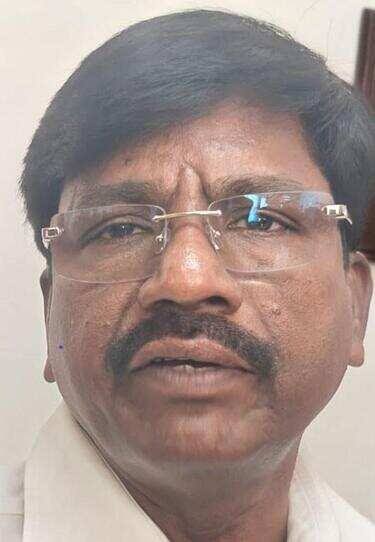
Trichy: State’s Teachers Recruitment Board (TRB) will conduct examinations to fill around 6,000 assistant professor posts in govt colleges in three phases, said higher education minister P Viswanathan on Sunday. Talking to reporters at Trichy airport, the Congress minister also said in reply to questions that Rahul Gandhi will become the country’s next Prime Minister. Viswanathan said that in each phase, 2,000 candidates will be recruited as assistant professors. Under the Career Advancement Scheme (CAS), the long-pending demands of nearly 8,000–9,000 assistant professors have been addressed. About ₹19 crore is being spent every month, translating to nearly ₹250 crore annually, on salary revisions and other service benefits, he said. Asked as to how many prime ministerial candidates were there in the TVK-led alliance, Viswanathan said, “Rahul Gandhi is the sole prime ministerial candidate of Indian National Congress.” He further said people had grown resentful of BJP over the past 15 years and Rahul Gandhi would become the country’s next Prime Minister. On the omission of the names of B R Ambedkar, K Kamaraj and Periyar from a policy note of the backward classes welfare department, Viswanathan said there was no need to blow the issue out of proportion. “TVK has already announced Ambedkar, Kamaraj and Periyar as ideological leaders.” Courtesy : TOI Note: This news is originally published on https:/timesofindia.com/bha and is used purely for non-profit/non-commercial purposes, especially human rights
Congress minister threatens to quit TVK cabinet if Rahul is not accepted as PM candidate in 2029
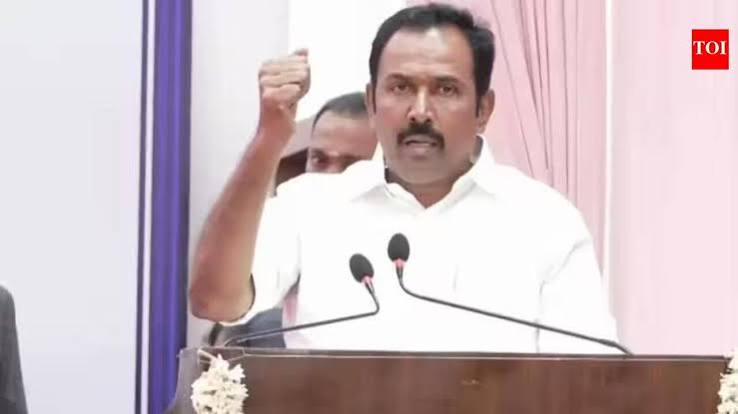
Kanyakumari: Amidst TVK propaganda projecting chief minister C Joseph Vijay as a prospective prime minister, Congress leader and Tamil Nadu tourism minister S Rajesh Kumar on Sunday said he would quit the cabinet if TVK refuses to accept Rahul Gandhi as the PM candidate in the 2029 Lok Sabha elections. “Rahul Gandhi will be the prime ministerial candidate for the 2029 parliamentary election. He will become the next PM. If at all TVK refuses to accept this, the two Congress ministers will walk out of the cabinet,” Rajesh Kumar said on Sunday at the swearing in ceremony of George Robinson as Congress party’s Kanyakumari West district unit president. “For us, party is above all other considerations. Our cadres want to see Rahul Gandhi as PM. Our goal is to achieve that,’’ he said. The remark comes against the backdrop of repeated attempts by TVK leaders to project chief minister C Joseph Vijay as a potential prime ministerial face from Tamil Nadu in 2029. The issue was first raised by PWD minister Aadhav Arjuna during a debate on delimitation exercise when he said a Prime Minister should emerge from Tamil Nadu. His remarks were followed by other TVK ministers, including D Sarathkumar, A Srinath and K Jagadeeswari, projecting Vijay as a possible prime ministerial candidate. The debate gained traction nationally after a private media house said their survey has found Vijay was the third most preferred prime ministerial choice in the country, following Prime Minister Narendra Modi and leader of the opposition Rahul Gandhi. The statements by TVK leaders sparked unease among the Congress rank and file. When asked about the issue, Tamil Nadu Congress Committee president Manickam Tagore took a swipe at TVK ministers, saying they were still functioning with a “fan club mindset.” Rajesh Kumar’s warning, however, marks an escalation of the disagreement. The support of five MLAs of Congress remains crucial for TVK to enjoy the majority mark in the state assembly. In return, TVK has given two ministerial berths to Congress leaders Rajesh Kumar and P Viswanathan, the higher education minister. Earlier in the day, when asked how many prime ministerial candidates were there in the TVK-led alliance, Viswanathan said at Trichy airport that Rahul Gandhi is the sole prime ministerial candidate of Indian National Congress, and there would be no change in the stand. Courtesy : TOI Note: This news is originally published on https:/timesofindia.com/bha and is used purely for non-profit/non-commercial purposes, especially human rights
Kharge venue row: FIR against Rahul for ‘giving caste angle’
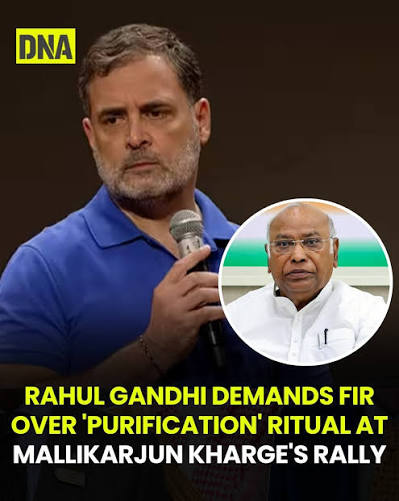
Dehradun: In a fresh development in the controversy over an alleged purification ritual at the venue of a rally addressed by Congress president Mallikarjun Kharge in Haldwani, Uttarakhand, a case was registered against Leader of Opposition Rahul Gandhi at Kotwali police station on Sunday night. The FIR — lodged under BNS sections 196 and 299, along with section 3(1)(q) of the SC/ST (Prevention of Atrocities) Act, 1989 — followed a complaint by Amit Kumar, a resident of Jawahar Nagar Colony in Haldwani and member of Shriram Sena Dharmarth Seva Samiti. Kumar, who belongs to the SC community, alleged that Gandhi gave a caste angle to routine cleaning work carried out at Ramlila Maidan on Aug 11, characterising the clean-up as an act of untouchability and a criminal offence during a news conference in Delhi. Kumar further alleged that caste sentiments were hurt by Gandhi’s statements. He asserted that Rahul Gandhi used “caste-indicative and insulting words against the Scheduled Caste” based on false and incomplete facts, thereby inciting hostility within the community. Nainital SSP T C Manjunath confirmed the development, saying, “Amit submitted all the required evidence to substantiate his allegations, following which an FIR has been registered. ASP Amit Saini will be heading the probe.” On August 8, Kharge addressed a public gathering at the Ramlila Maidan. Two days later, members of the right-wing group Shri Ram Sena Dharmarth Seva Nyas Sangathan performed a havan for the shuddhikaran (purification) of the grounds. Members of the organisation stated that they conducted the ritual to counter slogans raised by Congress members during the rally, as well as a previous statement by Kharge in which he had “compared the BJP and RSS to a poisonous snake.” Kharge subsequently raised the issue in Rajya Sabha, demanding that cases be registered under laws prohibiting untouchability against those who “purified” the stage in Haldwani, and that the individuals involved be arrested and jailed. The opposition party has since staged a series of protests across Uttarakhand over the issue. Courtesy : TOI Note: This news is originally published on https:/timesofindia.com/bha and is used purely for non-profit/non-commercial purposes, especially human rights
File FIR against those who did ‘purification’: Priyanka to PM Modi
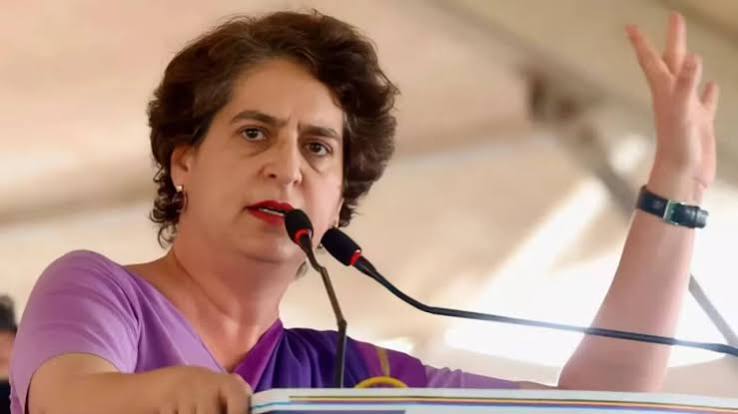
NEW DELHI: Keeping up the pressure over the issue, Congress MP Priyanka Gandhi Vadra on Sunday appealed to Prime Minister Narendra Modi to order an FIR against the persons who had committed the crime of “purification” of the rally venue in Haldwani where Congress president Mallikarjun Kharge had recently addressed a public meeting, reports Devbrat Chaudhary. The appeal to the PM came a day after Rahul Gandhi addressed a press conference alleging the “purification” was the handiwork of BJP-RSS elements, and that a case should be lodged under the SC/ST Prevention of Atrocities Act. Priyanka posted on X, “Congress president Mallikarjun Kharge addressed a rally in Haldwani, after which people from BJP-RSS ‘purified’ his stage. This ‘purification’ is not only a symbol of an extremely reprehensible and shameful mindset but also a grave violation of our Constitution and the SC/ST Act, and is a crime.” Priyanka said no action has been taken even 20 days after the “crime” and sought from the Prime Minister and Modi govt reasons for their “indifference”. “If PM Modi truly respects the Constitution of our country, then he should ensure that an FIR is filed against those who committed this crime and that action is taken,” she said. Courtesy : TOI Note: This news is originally published on https:/timesofindia.com/bha and is used purely for non-profit/non-commercial purposes, especially human rights
BJP SC Morcha slams Keralam CM over remarks on dalit Christians quota
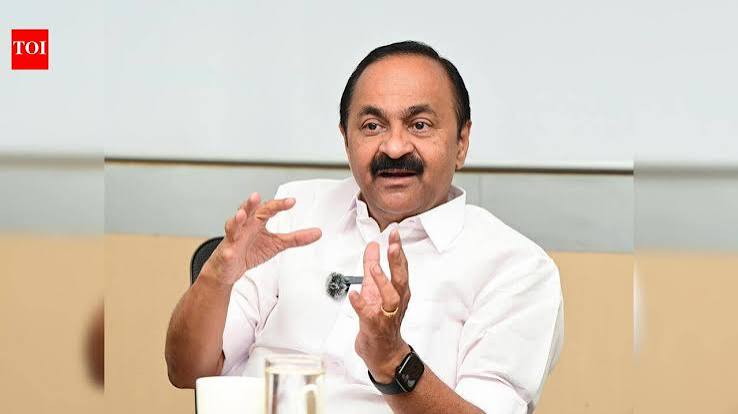
T’puram: BJP Scheduled Caste (SC) Morcha has demanded that chief minister V D Satheesan withdraw his statement regarding the state govt according top priority to providing reservation to dalit Christians. Morcha state president Shajumon Vattekkad said it was inappropriate for the CM to refer to reservation for dalit Christians in his speech while inaugurating the Mahatma Ayyankali Jayanti conference. “The CM’s policy of appeasing religious minorities has once again come to light through the statement,“ he alleged. Shajumon added that while the CM was unwilling to address the pressing issues faced by lakhs of SC community people in Keralam, he was adopting such a stand because he was “held captive by religious minority communalists”. He accused the CM of pursuing a politics of appeasement and double standards. Reservation provided to the SC community under the Constitution is not a concession granted by anyone but a right of the SCs, Shajumon said. BJP SC Morcha will mobilise the SC community in Keralam and launch a strong agitation against the govt to protect this right, he added. He also urged all SC organisations in Keralam to come out in protest against the CM’s statement. Courtesy : TOI Note: This news is originally published on https:/timesofindia.com/bha and is used purely for non-profit/non-commercial purposes, especially human rights
Chirag Paswan, Jitan Manjhi clash over Dalit quota, seek resignations
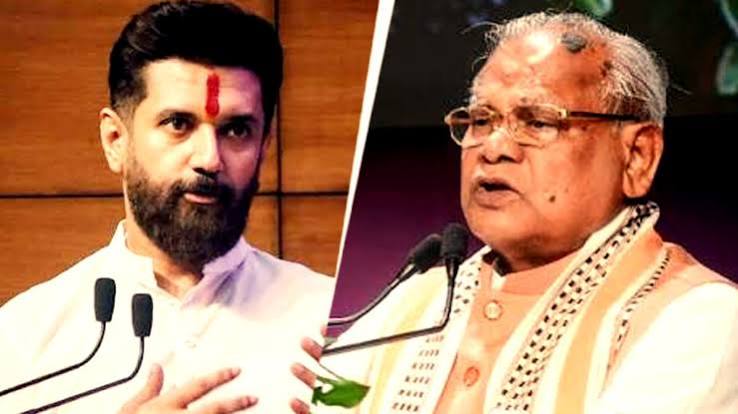
Union ministers Chirag Paswan and Jitan Ram Manjhi clash over a proposed Dalit sub-quota, with both sides demanding resignations.APN Exclusive content Union ministers Chirag Paswan and Jitan Ram Manjhi have clashed over the demand for a separate sub-category within the Scheduled Caste quota, with the disagreement escalating into calls for each other’s resignation.Online news platform The dispute began after Manjhi and his son, Bihar minister Santosh Kumar Suman, backed the idea of a sub-quota aimed at the most deprived sections among Dalits. Paswan, who heads the Lok Janshakti Party (Ram Vilas), opposed the proposal, arguing that it could create divisions within the community. Chirag Paswan opposes sub-quota Responding to questions about Manjhi and Suman’s position, Paswan said a separate sub-category would create a division within the Dalit community. He also linked the issue to the debate over the creamy layer and said those supporting the concept should give up their respective posts. Paswan’s position is also consistent with the stand taken by his late father, Ram Vilas Paswan, who had opposed the creation of a separate “Mahadalit” category in Bihar during Nitish Kumar’s tenure as chief minister. Jitan Manjhi demands Paswan’s resignation Manjhi rejected Paswan’s criticism and said it was Chirag Paswan who should resign. The former Bihar chief minister argued that some Dalit communities are more vulnerable than others and therefore require targeted welfare measures through a separate sub-category. Manjhi also questioned the relevance of the creamy-layer issue to the demand for a sub-quota. Santosh Suman backs father Santosh Kumar Suman also entered the dispute through posts on X. Without naming Paswan directly, he referred to him as his “younger brother” and said he would resign alongside Paswan if the latter took the lead. Suman maintained that his position was neither against reservations nor in favour of introducing a creamy layer. He argued that a quota within the existing quota system was different from the creamy-layer concept. He also cited communities including Musahar, Bhuia, Nat and Dom, saying they continue to face discrimination even within the Scheduled Castes. JD(U) seeks to end quota controversy The Janata Dal (United), the second-largest NDA constituent in Bihar after the BJP, sought to defuse the dispute. JD(U) legislature party leader and state minister Shrawon Kumar said reservations were introduced through the Constitution and that there should be no dispute over quotas. The disagreement between the two Union ministers comes amid a wider political debate over the distribution of reservation benefits among different Dalit communities Courtesy : APN News Note: This news is originally published on https:/apnnews.com/bha and is used purely for non-profit/non-commercial purposes, especially human rights