
Lal Topi, Blue T-Shirt: Akhilesh Yadav’s ‘PDA’ For Blue Has A Coded Message

The message is clear: the Samajwadi Party wants to talk to voters beyond its traditional Yadav-Muslim support base, particularly to Dalits. For decades, the Samajwadi Party has been instantly recognisable by two colours — red and green. Its leaders in red caps, often riding the party’s bicycle symbol, became one of the defining visual signatures of Uttar Pradesh politics. Now, ahead of the 2027 Assembly election, party president Akhilesh Yadav is adding a new colour to that political palette: blue. Akhilesh Yadav has introduced blue T-shirt and jeans as the new uniform for members of the Samajwadi Chhatra Sabha, the party’s student wing. The choice is anything but incidental. Yadav has explicitly linked blue with BR Ambedkar, the Constitution, the Bahujan movement, social justice and resistance to injustice. The message is clear: the SP wants to talk to voters beyond its traditional Yadav-Muslim support base, particularly to Dalits. The Battle For The Dalit Vote Uttar Pradesh’s Dalit electorate has historically been at the heart of BSP chief Mayawati’s political power. The BSP transformed Dalit identity into an electoral force and, for years, the party’s blue flag and Mayawati’s politics were almost inseparable. But the BSP’s electoral decline has created a political vacuum in Dalit voter space. The 2024 Lok Sabha election was a particularly significant moment. The SP won 37 seats in Uttar Pradesh, while the BSP failed to win a single seat. The result strengthened Akhilesh’s argument that his PDA — Pichhde (Backwards), Dalit, Alpsankhyak (Minorities) — coalition, where ‘P’ now also stands for Pandits, could become the alternative social coalition to the BJP’s electoral machinery. The challenge, however, is not simply to win Dalit votes. It is to persuade Dalit voters that the SP can represent their political aspirations without erasing their distinct social identity. That is where the colour blue becomes important. For a party that has historically worn red, adopting blue amounts to a symbolic attempt to enter a political space traditionally occupied by the BSP. Can PDA Give BSP And BJP The Blues? ‘PDA’ formulation has been central to Akhilesh Yadav’s post-2022 political strategy. It seeks to combine backward castes, Dalits and minorities into a broad social coalition. The idea is also an acknowledgement of a fundamental electoral reality: Yadav and Muslim votes alone cannot take the SP back to power in Uttar Pradesh. Yadavs are about 10% of the UP electorate, Muslims are a 20% strong bloc. Dalits are the next hefty bloc of 20%. Akhilesh Yadav has set his eyes there. The SP had already begun experimenting with Dalit outreach before the 2022 election, including the formation of its Baba Sahib Vahini aimed particularly at Dalits outside the Jatav community, which are Mayawati’s core base. At the time, Akhilesh also sought to bring together what he called the Samajwadi and Ambedkarwadi streams of politics. The blue uniform takes that strategy a step further. It attempts to give the ‘D’ in ‘PDA’ a visible identity. While Akhilesh Yadav is seen dressed traditionally in white kurta-pyjama with the red Samajwadi cap, for the youth wing he has presented the jeans-and-T-shirt combination as a symbol of younger generation. Apart from being caste arithmetic, it is also an attempt at political rebranding. That makes the symbolism even more interesting. Akhilesh is not abandoning the SP’s old identity; he is attempting to add one more layer to it. The red cap has a long association with socialist politics. The SP itself was founded by Mulayam Singh Yadav in 1992, but the party’s familiar red-and-green colours and the red cap evolved over time rather than appearing fully formed at the moment of its creation. Mulayam Singh suggested that the Yuvjan Sabha (SP’s youth wing) wear red caps in 1998. The red cap became increasingly prominent over the following years and, particularly after Akhilesh Yadav took control of the party, became a powerful visual marker of the SP. The party’s red has traditionally been associated with socialist politics and workers, while green has been linked to farmers. Under Akhilesh, however, the ‘lal topi’ became more than a party accessory. It became a political identity. And then Prime Minister Narendra Modi turned it into an election issue. When ‘Lal Topi’ Became A BJP Attack In December 2021, just before the last Uttar Pradesh Assembly election, PM Modi launched a sharp attack on the SP’s red caps during a rally in Gorakhpur. He called those wearing the ‘lal topi’ a “red alert” for Uttar Pradesh, linking the SP to corruption, crime, illegal occupation and what he alleged was leniency towards terrorists. The attack was meant to turn the SP’s strongest visual symbol into a warning sign. Akhilesh, however, tried to reverse the symbolism. He declared that the red cap was a “red alert” for the BJP, citing unemployment, inflation, farmers’ problems and other issues as the real warning signs for the ruling party. He also framed red as a colour of revolution and change. The SP even used the attack in its campaign music. One of its songs, “Ye Lal Rang Ki Topiya”, sought to turn PM Modi’s jibe into a socialist rallying cry, while another campaign song invoked the red cap and the bicycle as symbols of political change. So, in 2021-22, Akhilesh’s instinct was to embrace the red and fight over its meaning. Five years later, while he is keeping red, he is also adding blue to his electoral scheme. How Mayawati’s Decline Opens Up The Field The timing is significant because the decline of the BSP has altered the competitive landscape of Uttar Pradesh. For years, the SP and BSP occupied relatively distinct social and political spaces. The BSP was the principal vehicle of Dalit assertion; the SP was strongly identified with OBC, particularly Yadav, politics. A weakened BSP changes that equation. Further in the run-up to the upcoming elections, BSP is in the news for all the wrong reasons, struck by its own leadership blues thanks to Mayawati’s public chastising of her nephew, Akash Anand, once considered
‘Fee’ on UPI transactions: Modi has again surrendered to US, says Rahul

New Delhi: Assailing govt over its decision to start charging for UPI transactions, Congress leader Rahul Gandhi Tuesday said, “Just like with the US trade deal, compromised PM Modi is once again surrendering to American pressure.” Rahul said, “American payment companies have long opposed India’s zero-MDR policy. Now, Modi govt has opened the path to changing policy in exactly that direction.” Congress chief Mallikarjun Kharge said govt’s “loot” has now reached UPI. “Sky-high inflation has emptied the common person’s pocket. Wholesale inflation is near 10%, and BJP govt has planned to impose a ‘Digital Payments Tax’ on public, aiming to destroy whatever little savings they have left,” he said. Rahul said MDR can only be levied on merchant UPI transactions, which account for 5% of volume but 65% of value. Fees on shopkeepers would eventually be passed on to customers, he added. Courtesy : TOI Note: This news is originally published on https:/timesofindia.com/bha and is used purely for non-profit/non-commercial purposes, especially human rights
Why is the SP’s Dalit Mahasammelan starting in Agra? Learn about Akhilesh Yadav’s plan

Samajwadi Party President Akhilesh Yadav has begun efforts to woo Dalit voters for the UP elections. As part of this effort, he will launch a Dalit convention in Agra. In light of the turmoil within the Bahujan Samaj Party and the upcoming UP elections, the Samajwadi Party has increased its focus on Dalit voters. In this regard, the SP will organize a Dalit Mahasammelan on November 15th, starting in Agra. SP President Akhilesh Yadav will also be present at the event. A large number of SP workers from the surrounding areas will participate. Agra is a crucial district in UP’s Dalit politics. This is why the SP has decided to launch the Dalit convention here. This district also has a historical connection with Dr. Ambedkar and BSP founder Kanshi Ram. It was in Agra, on March 18, 1956, that Ambedkar delivered his last major speech in the Chakri Pat Jatav Basti. In that speech, he hinted at his conversion to Buddhism, a few months before his initiation ceremony in Nagpur. BSP founder Kanshi Ram formally established the Backward and Minority Communities Employees Federation (BAMCEF) in 1978. The organization’s first unit in Uttar Pradesh was established in Agra in 1978. Later, a unit was also established in Lucknow. Why did the Dalit Conference begin in Agra? The Samajwadi Party chose Agra because the Jatav community there was already relatively organized, educated, and economically strong. Ambedkarite consciousness was also deeply ingrained here. Kanshi Ram connected these urban, educated Dalit employees and small businessmen through BAMCEF. This base later became the foundation of DS-4 and the BSP. Kanshi Ram made Agra the initial laboratory of Bahujan politics in North India. The socio-economic conditions and Ambedkarite background of the region helped his organization take root. This is why Agra is still considered a center of Dalit politics. Agra has been a hub of Dalit politics. Agra can be called the capital of Dalit politics in Uttar Pradesh because it is where Dalit consciousness, the Ambedkarite movement, and electoral politics have developed their deepest and most organized base. This isn’t just a matter of population figures; it’s the result of history, socio-economic conditions, and political experimentation. A long-standing stronghold of the Dalit movement, Dalit organizations have been active in Agra since the 1950s and 60s. The Jatav community asserted their identity and rights by erecting statues of Ambedkar, organizing processions, and embracing Buddhism. This movement later became the foundation of Kanshi Ram’s BAMCEF and the Bahujan Samaj Party. Western Uttar Pradesh, especially Agra, served as a laboratory for both Kanshi Ram and Mayawati. The Agra division comprises four districts: Agra, Mathura, Mainpuri, and Firozabad. Etawah and Hathras also border this district. These districts have a Dalit population of over 20 percent, with the Jatavs constituting the largest number, a core voter base for the BSP. The SP is attempting to make inroads into this vote bank. The Strength of Dalit Voters in This Region According to one estimate, Agra has approximately 23% Jatav voters, while Mathura has 20%, Mainpuri 20%, Firozabad 19%, Etawah 25%, and Hathras has approximately 24%. For the past several years, Akhilesh Yadav has been eyeing the Dalit voters in UP. This is why he previously formed an alliance with Mayawati, though it didn’t benefit him in the 2019 Lok Sabha elections. However, his alliance with Mayawati has alleviated accusations of anti-Dalit sentiment. This benefited Akhilesh Yadav in the 2022 and 2024 elections. Eyeing the BSP’s Vote Bank This is why Akhilesh Yadav has now developed a liking for the color blue, and has changed everything from his party’s gamchha to his T-shirts to blue. Furthermore, he has begun to prioritize the party’s Dalit leaders. This SP convention is taking place at a time of constant turmoil within the BSP. Akash Anand and Ishaan Anand have been expelled from the party. Furthermore, the party’s younger workers are distraught and looking for new leadership. Written By: Praveen Yadav About the author Praveen Yadav has been active in journalism for 21 years. He joined Star News in 2004 and is currently an input editor at ABP News. He has held various positions, including assignment head and forward planning, and has also served as head of digital media. In 2022, he also joined digital media. Courtesy: Hindi News
Madhya Pradesh’s Malwa set for high-profile political visits from September 17
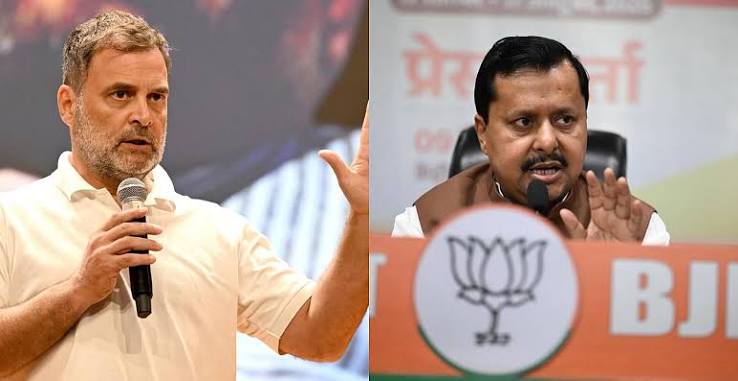
RSS chief Mohan Bhagwat and BJP national president Nitin Nabin will be in Ujjain on September 17 and 18, while Rahul Gandhi will visit Indore on September 19. BHOPAL: Madhya Pradesh’s Malwa region is set to witness a series of high-profile political visits from September 17, with RSS chief Mohan Bhagwat, BJP national president Nitin Nabin and Leader of Opposition Rahul Gandhi scheduled to visit the region over four days. Bhagwat and Nabin will be in Ujjain on September 17 and 18, while Rahul Gandhi will visit Indore on September 19 for the Chhatron ki Goonj (Echoes of Students) event. Nabin’s visit will be his first to Madhya Pradesh after becoming BJP national president. He is expected to attend the lighting of 25 lakh diyas on the banks of the Kshipra river in Ujjain on September 17, marking the launch of the month-long Seva Sankalp Abhiyan to commemorate Prime Minister Narendra Modi’s 25 years in public life. Bhagwat will attend a series of RSS meetings and events during his two-day stay in Ujjain, including the Yuva Dharma Sansad at Gita Bhawan, organised by Sevagya Sansthanam. At the Yuva Dharma Sansad, Bhagwat will address students and working professionals from across the country who have registered for the event. Sources said Nabin is also expected to meet Bhagwat during his visit to Ujjain. According to informed sources, Nabin may also travel to Mandsaur district on September 17 for the release of a female African cheetah, possibly South African cheetah Nirwa, at the Gandhi Sagar Wildlife Sanctuary. The event will mark Prime Minister Modi’s 76th birthday and four years of the cheetah reintroduction project launched at Kuno National Park. Bhagwat and Nabin are scheduled to leave Madhya Pradesh on September 18. Rahul Gandhi will address the Chhatron ki Goonj event in Indore on September 19, for which the Congress has been mobilising support across the state. In Bhopal, RSS general secretary Dattatreya Hosabale will address a gathering of more than 20,000 young RSS workers on September 20 as part of the Sangh’s centenary year celebrations. The gathering will include workers associated with RSS Mohalla Shakhas, along with thousands of swayamsevaks and prominent citizens from Bhopal and adjoining districts, taking the expected attendance to around 50,000. Courtesy : TOI Note: This news is originally published on https:/timesofindia.com/bha and is used purely for non-profit/non-commercial purposes, especially human rights
Keralam, Malaysia eye stronger ties after CM Satheesan’s meets Anwar Ibrahim
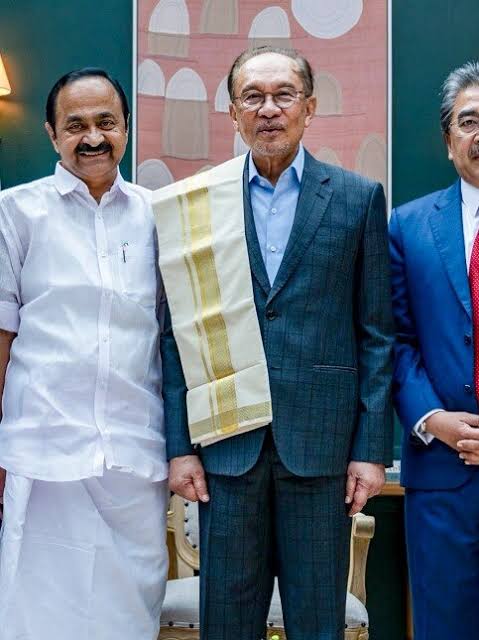
The meeting also discussed the possibility of broadening cooperation in sectors with considerable potential for mutual benefit, particularly IT, tourism, education and commerce. KOZHIKODE: Kerala and Malaysia have decided to explore stronger cooperation in key sectors including information technology, tourism, education and trade, following a meeting between Kerala Chief Minister V.D. Satheesan and Malaysian Prime Minister Anwar Ibrahim in Kozhikode on Monday. The meeting was held at the Tulah Wellness Centre in Chelembra, where Anwar Ibrahim was staying during his visit to Kerala. The discussions focused on expanding the existing ties between Kerala and Malaysia and identifying new areas for development cooperation. According to the sources, the two leaders assessed the long-standing friendship between Kerala and Malaysia and the significant role played by the Malayali diaspora in strengthening relations between the two regions. The active presence of Malayalis in Malaysia was viewed as an important foundation for further expanding bilateral and people-to-people connections. The meeting also discussed the possibility of broadening cooperation in sectors with considerable potential for mutual benefit, particularly IT, tourism, education and commerce. The decision to strengthen collaboration in these areas is expected to create new opportunities for investment, knowledge exchange, tourism promotion and business partnerships. CM arrived at the wellness centre by helicopter at around 2.30 pm to meet the Malaysian Prime Minister. Industries Minister P.K. Kunhalikutty and Indian Union Muslim League (IUML) leader Sayyid Sadiq Ali Shihab Thangal also attended the meeting. During the interaction, CM presented Anwar Ibrahim with a traditional memento featuring the cultural imagery of Kerala’s Kathakali. The Malaysian Prime Minister also exchanged gifts with the Chief Minister. The Malaysian Prime Minister has been in Kerala since Sunday evening after attending the BRICS conference in New Delhi. His visit to Kozhikode was primarily connected with his meeting with prominent Sunni scholar and Indian Grand Mufti Kanthapuram A.P. Aboobacker Musliyar. On Sunday night, Kanthapuram presented Anwar Ibrahim with the first “Excellence Award” instituted by the Sheikh Abu Bakar Foundation at a function held at Karanthur Markaz in Kunnamangalam, Kozhikode. The Malaysian Prime Minister subsequently visited the Madavoor C M Valiyyullahi Makham, a prominent pilgrimage centre in Kozhikode, accompanied by Kanthapuram. Anwar Ibrahim is scheduled to return to Malaysia via the Maldives after completing his Kerala visit. Courtesy : TNIE Note: This news is originally published on https:/thenewindianexpress.com/bha and is used purely for non-profit/non-commercial purposes, especially human rights
Cong picks Bora for Nagaon bypoll, 3-way contest takes shape
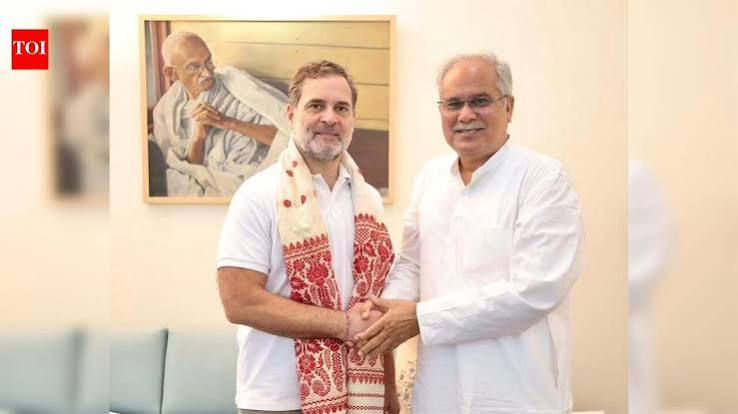
Guwahati: The Nagaon Lok Sabha bypoll is turning into a high-stakes contest where the minority vote is expected to play a decisive role as BJP’s Debasish Sharma, Congress’s Sibamoni Bora and a possible AIUDF candidate, party chief Badruddin Ajmal, gear up for a triangular battle. The AICC on Monday named Bora as its candidate, choosing her from a list of five probables. The entry of Trinamool Congress candidate Abdul Salam has added another dimension to the opposition contest. Over 11.38 lakh voters across five Assembly constituencies are eligible to vote in the bypoll, with about 55-60% minority electorate likely to play a decisive role, a political analyst said. AICC general secretary and the party’s Assam in-charge Bhupesh Baghel met Rahul Gandhi in New Delhi on Monday before finalisation of the candidature of Bora for Nagaon seat. “Congress president, Shri Mallikarjun Kharge, has approved the candidature of Smt. Sibamoni Bora, ex-MLA, as party candidate to contest the ensuing by-election to the Lok Sabha from 9 – Nagaon parliamentary constituency of Assam,” AICC general secretary KC Venugopal said in a media release. Bora, a former Batadraba MLA, had sought the Dhing seat in the last assembly election after delimitation shifted a significant portion of her constituency, including Muslim-majority areas, to Dhing. However, the seat was allotted to Akhil Gogoi’s Raijor Dal under the Congress-Raijor Dal seat-sharing pact, which Congress recently ended. BJP candidate Sharma has been campaigning in both minority-dominated and Hindu-majority areas. “I have been visiting different places — namghars, temples, mosques and gurdwaras — leaving none out. I have visited all these places, and I love and respect all of them…,” said Sharma, a former IAS officer and former Nagaon deputy commissioner. He visited Borbori, a Muslim-majority area affected by erosion, on Monday. The bypoll was necessitated after Congress MP Pradyut Bordoloi resigned from the party and subsequently switched to BJP ahead of the last assembly election. Courtesy : TOI Note: This news is originally published on https:/timesofindia.com/bha and is used purely for non-profit/non-commercial purposes, especially human rights
Police Unwilling To Register FIR Against BJP MLA Who Beat Dalit Mandal President: Kuldeep Kumar

NEW DELHI | The Aam Aadmi Party (AAP) strongly criticised the Delhi Police for failing to register an FIR against BJP MLA Gajender Drall over the assault of his party’s Dalit Mandal President, Sunil Kumar. AAP MLA Kuldeep Kumar said the Dalit family had been visiting the police station for three days seeking to register a complaint, but the police had refused to act. He questioned how ordinary Dalit workers could feel safe when even a Dalit office-bearer within the BJP was unsafe, and demanded that the Delhi Police register an FIR under the SC/ST Act and that the BJP suspend its MLA. Addressing a press conference on Sunday, AAP MLA Kuldeep Kumar said, “In the national capital Delhi, the BJP’s anti-Dalit government has created a very hostile environment for Dalits. BJP MLA Gajender Drall from Mundka Assembly constituency abducted Sunil Kumar, who belongs to the Dalit and Valmiki community, at night, took him to his house, held him hostage throughout the night and brutally beat him. Sunil Kumar is currently the Mandal President of the BJP itself, but he was beaten simply because he belongs to the Valmiki community.” Kuldeep Kumar further stated, “Even in remote villages across the country, no one treats another person with such brutality, yet this incident has taken place in the national capital under the BJP government. For the past two to three days, this family has been going from place to place seeking justice and trying to get an FIR registered, but despite the matter being highlighted, the Kanjhawala police station and the police administration are unwilling to register an FIR.” He said that he had called the DCP and posted hundreds of tweets, but the DCP did not even answer his call. He said the BJP MLA had become so arrogant because of his power that he beat a person from the Valmiki community in this manner. Kuldeep Kumar added, “We want to ask the BJP government what action it has taken against its MLA. The Delhi Police should immediately register an FIR against Mundka MLA Gajender Drall, and the BJP should immediately expel this goon MLA from the party. If this does not happen, it will be understood that this MLA carried out such an act in the national capital under the protection of the BJP itself.” The AAP MLA said that since the BJP government came to power in Delhi, Dalits and the Valmiki community had been continuously subjected to exploitation. He highlighted that very recently, a sanitation worker had been murdered, a Valmiki youth had been beaten to death, and in Trilokpuri too, a former BJP Mandal President had taken a person from the Valmiki community from his home and assaulted him. “We got a case registered under the SC/ST Act in that matter and had him arrested. The Delhi Police should immediately arrest Gajender Drall and send him to jail, and the BJP should make it clear whether it stands with Dalits or not. If it does, it should immediately have its MLA arrested and suspend him from the party,” he added. Kuldeep Kumar questioned, “When BJP’s own Dalit office-bearers are not safe within the party, how can ordinary people be safe?” The entire dispute behind this assault, he noted, is simply about how a person from the Valmiki community became a Mandal President. “The BJP gives people positions merely for the sake of appearances and appoints them, but does not remove casteism from the minds of its MLAs,” he asserted. He continued, “They have been taught this from the beginning in RSS shakhas, how to discriminate against Dalits and backward communities, and the casteism instilled in their minds will not disappear so quickly.” Victim admitted at hospital is not even receiving proper treatment: Kuldeep Kumar Kuldeep Kumar stated that he had gone to RML Hospital to meet Sunil Kumar, the victim from the Valmiki community, but the entire police and security machinery was deployed to prevent him from meeting the victim. “Has meeting a victim now also become a crime? Sunil Kumar was reportedly brutally beaten by BJP MLA Gajender Drall, abused with casteist slurs and kept locked up throughout the night,” he said. Kuldeep Kumar added, “Even after three days, the police have not registered an FIR. This is happening in the national capital, and the entire BJP government is busy protecting its MLA. The most painful part is that Sunil Kumar’s treatment has also not been properly started, and he has been kept separately in a hospital gallery.” He concluded by asserting that instead of protecting its MLA, the BJP government should give the victim justice, immediately register an FIR and take action against those responsible. Courtesy : Aam Aadmi Party ORG Note: This news is originally published on https:/aamaadmipartyorg.com/bha and is used purely for non-profit/non-commercial purposes, especially human rights
UP: A new Dalit face enters state politics, Rohini Ghavri eyes Chandrashekhar’s vote bank
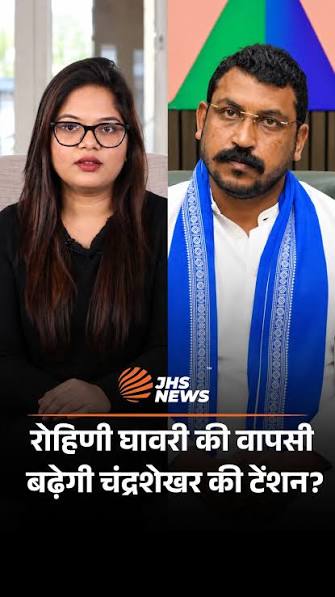
Rohini Ghavri: A new Dalit face is entering UP politics. After returning from Switzerland, Rohini Ghavri is preparing to become active in state politics. A new political front appears to be emerging in UP’s Dalit politics ahead of the 2027 assembly elections. After returning from Switzerland, Rohini Ghavri is preparing to become active in state politics. Her main focus is on uniting the Valmiki community and the 21 assembly seats in western Uttar Pradesh where Valmiki voters are considered crucial. Azad Samaj Party President and Nagina MP Chandrashekhar is also considered influential in these areas. Rohini is preparing to campaign in these areas, raising the issue of political representation for the Valmiki community. She says that for a long time, the Valmiki community has been viewed primarily as sanitation workers, while its share in political representation has been relatively low. She also aims to have a Chief Minister from the Valmiki community in a state within the next five years. She is eyeing 21 constituencies, including Agra Cantt, Etmadpur, Jasrana, Firozabad, Meerut Cantt, Meerut City, Ghaziabad, Loni, Lucknow’s Central, North, and West Assembly constituencies, as well as Sisamau, Aryanagar, Kidwai Nagar, Aligarh, and Khair. She is preparing to raise the issue of political representation of the Jatav and Valmiki communities in these constituencies. Rohini will visit several districts. Rohini will arrive in Meerut on September 13th. She will then meet with members of the Valmiki community in Lucknow on September 14th and 15th. She is also expected to meet with SP chief Akhilesh Yadav during this period. Rohini claims that Akhilesh has assured her support in her fight against Chandrashekhar. If her closeness with the SP grows and the party fields her in the election, new Dalit vote dynamics could emerge in Western Uttar Pradesh. Rohini has accused Chandrashekhar of exploiting her by promising marriage. She claims that despite providing financial support, Chandrashekhar severed ties with her after becoming an MP. She also alleged that an FIR was not filed on her complaint because she belonged to the Valmiki community. However, the parties’ views on these allegations are not included in this report. Jatav voters have consistently held significant influence in Dalit politics. Therefore, efforts to mobilize the Valmiki community as a distinct political force could create new dynamics in several seats in Western Uttar Pradesh in the 2027 elections. Rohini also speaks of moving forward with the entire community on board. Published by: Rohit Mishra Courtesy: Hindi News
Rahul’s event for youth: Cong gets IDA nod for venue
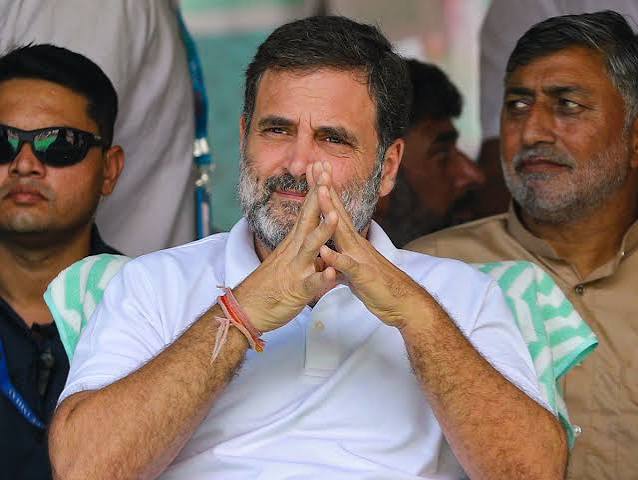
Indore: Indore Development Authority (IDA) has granted permission to Congress party to organise Leader of Opposition Rahul Gandhi’s ‘Chhatron Ki Goonj’ programme at its ground near Regional Park on Sept 19. Congress has deposited Rs 10,08,175 with IDA to secure the temporary lease of the venue, which party leaders have named “Bharat Jodo Maidan”. Addressing a news conference in Indore on Sunday, Madhya Pradesh Congress Committee president Jitu Patwari said that the link between education and employment has significantly weakened. Patwari emphasised that the party was committed to raising students’ concerns regardless of venue costs, asserting that govt accountability on exam integrity and job creation remains the central issue. Preparations for the Indore event—the fifth edition of the campaign following sessions in Kota, Dehradun, Prayagraj and Pune—were finalised following planning meetings headed by Congress central coordinator KV Baiju, MP in charge Harish Chaudhary and local leadership. Courtesy : TOI Note: This news is originally published on https:/timesofindia.com/bha and is used purely for non-profit/non-commercial purposes, especially human rights
Congress eyes 2028 polls with 10,000 Bharat Jodo youth groups
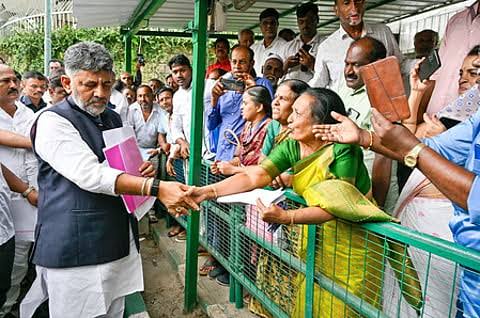
Chief Minister DK Shivakumar on Sunday highlighted the initiative’s political significance, recalling the Congress’s performance in the 2023 Assembly elections. BENGALURU: With an eye on the 2028 Assembly elections, the Congress is seeking to turn its Bharat Jodo youth network into a grassroots political and organisational force, with around 7.5 lakh youngsters already enrolled across Karnataka. Under the Youth Empowerment and Sports Department, the government will form 10,000 Bharat Jodo Yuva Sanghas across the state and plans to expand the network by enrolling around 10 lakh youths in the coming months. The initiative covers youngsters aged 16 to 35 and the party views it as a potential platform to connect with young and first-time voters. Chief Minister DK Shivakumar on Sunday highlighted the initiative’s political significance, recalling the Congress’s performance in the 2023 Assembly elections. He said the party had won seats in several areas through which Congress leader Rahul Gandhi’s Bharat Jodo Yatra passed during its Karnataka leg, from Chamarajanagar to Ballari. “The Bharat Jodo Yatra was undertaken to protect the unity and integrity of the country. The Congress won in the places through which the yatra passed. The same wave will continue in 2028, and we are confident that the Congress will return to power,” he said. Each approved Bharat Jodo Yuva Sangha will have 100-250 members and focus on sports, leadership development, cultural activities and community service. The government has announced an annual grant of Rs 10 lakh for each approved Sangha, with a total outlay of Rs 1,000 crore. The Karnataka Cabinet recently approved Rs 781 crore as an allocation under the supplementary budget to fund the Bharat Jodo Yuva Sanghas. The initiative, however, has also attracted the attention of the Opposition. BJP MLAs have reportedly begun encouraging their loyal youth supporters to join the Sanghas, sensing the potential political advantage the Congress could derive from the network. “Though the initiative may give the Congress an edge, we have tactically involved our party’s youth in it,” two BJP MLAs told TNIE. Shivakumar also said the government was seeking to expand grassroots participation by involving people in guarantee committees. Six persons from every panchayat will get an opportunity to serve on the committees, providing around 70,000 people with a role in implementing and monitoring the government’s guarantee schemes. Shivakumar said the Congress had chalked out a plan to ensure every voter in the state was covered under one or the other government scheme, including the guarantees. He said that while the party had garnered 1.36 crore votes in the 2023 Assembly elections, the five guarantee schemes had covered 4.5 crore people, including women and students. Devaraj B Hirehalli Courtesy : TNIE Note: This news is originally published on https:/thenewindianexpress.com/bha and is used purely for non-profit/non-commercial purposes, especially human rights