
SP, BSP gear up for 2027 UP polls, eye non-Yadav OBC and Dalit voters
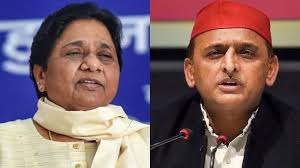
The outreach strategy of the SP, in particular, is to focus towards non-Yadav OBC communities, especially those that have distanced themselves from the BJP in 2024 or where the saffron party’s grip has loosened in recent years. ith more than a year and a half to go before the 2027 Uttar Pradesh Assembly elections, the Samajwadi Party (SP) and Bahujan Samaj Party (BSP) have begun early preparations to consolidate their voter base. Both parties are targeting non-Yadav OBCs and Dalit communities, aiming to replicate and build upon their performance in the 2024 Lok Sabha elections. The outreach strategy of the SP, in particular, is to focus towards non-Yadav OBC communities, especially those that have distanced themselves from the BJP in 2024 or where the saffron party’s grip has loosened in recent years. A senior SP leader and former MP confirmed that the party held a key meeting this week with OBC office-bearers from the Saini, Kushwaha, and Shakya communities. These representatives have been tasked with organizing PDA Chaupals (outreach meetings) to bolster support for the party. The meeting was attended by a legislator from the Saini community in western UP, a Kushwaha MP from eastern UP, and a Shakya MP from western UP. Following the success of these grassroots initiatives, SP chief Akhilesh Yadav is expected to address dedicated rallies for these communities in the coming months. According to insiders, communities such as Gujjars, Kushwahas, and Pasis have increasingly shown signs of drifting away from the BJP since the 2022 Assembly elections and the 2024 Lok Sabha polls. Notable examples include Pallavi Patel’s victory from Sirathu (Kaushambi) on an SP ticket, Babu Singh Kushwaha’s win as SP MP from Jaunpur, and Awadhesh Prasad’s election from Faizabad (Ayodhya). Beyond its traditional Yadav voter base, the SP’s electoral strategy now includes outreach programme to woo other OBC castes as well as Dalit castes like Jatavs and Pasis. Buoyed by its PDA (Pichhda, Dalit, Alpsankhyak) coalition, which helped the party win 38 Lok Sabha seats, SP leaders believe the time is ripe to expand their influence among marginalized communities, particularly amid BSP’s declining electoral fortunes. Meanwhile, in view of its recent electoral setbacks, the BSP has also started preparing for the battle ahead. The party is particularly concerned about SP’s outreach to Dalits and its growing proximity with Congress, a trend evident in the Lok Sabha polls and expected to continue in 2027. BSP supremo Mayawati is scheduled to address a major rally of block-level workers in Lucknow on October 9, commemorating the death anniversary of party founder Kanshi Ram. A BSP source told ‘ The Statesman’ that Mayawati has decided to reorganize workers with a sharp focus on consolidating Dalit votes. Interestingly, she may also consider re-inducting leaders who had left the party earlier, with attention on figures like Swami Prasad Maurya, once her close aide. To ensure the success of the October 9 rally, BSP has arranged at least one bus per four Assembly constituencies, while party workers are tasked with organizing transport to bring supporters to the venue. Courtesy : The Statesman Note: This news is originally published on https:/thestatesman.com/bha and is used purely for non-profit/non-commercial purposes, especially human rights
‘Meant to emphasise shared history’: Congress Sam Pitroda clarifies his ‘felt at home in Pak’ remark, says aim was ‘never to belittle anyone’s suffering’
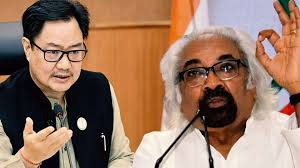
NEW DELHI: Indian Overseas Congress chief Sam Pitroda on Friday clarified his remarks about feeling “at home” in Pakistan, saying his comments were intended to highlight “shared history” and people-to-people bonds, not to play down terrorism or geopolitical tensions. In a post on X, Pitroda said, “If my words have caused confusion or hurt, I want to clarify that my aim was never to belittle anyone’s suffering or undermine legitimate concerns – but to foster honest conversation, empathy, and a more grounded and responsible approach to how India sees itself – and is seen – by others.” — sampitroda (@sampitroda) Additionally Pitroda said, “In light of recent discussions, I wish to clarify my remarks and put them in the full context of my IANS/AP7AM interview. My intention has always been to call attention to the realities we face: concerns about the electoral process, the importance of civil society and youth, and India’s role – both in its neighborhood and globally. Likewise, when I challenged the “Vishwaguru” narrative and said that it’s a myth that India is always on everyone’s mind, I was cautioning against overconfidence in image over substance. Foreign policy must be based on real influence, mutual trust, peace, and regional stability – not bravado or optics. “We need to defend democracy: ensuring free, fair elections; strengthening institutions; empowering youth; protecting minority rights; resisting polarization. These are not partisan issues – they go to the heart of what and who we are as a nation. If my words have caused confusion or hurt, I want to clarify that my aim was never to belittle anyone’s suffering or undermine legitimate concerns – but to foster honest conversation, empathy, and a more grounded and responsible approach to how India sees itself – and is seen – by others. Moving forward, I remain committed to transparency, respectful dialogue, and working towards a future where we strengthen institutions, civil society, safety, and security, so our actions truly live up to our ideals,” he added. Pitroda had sparked controversy earlier today with statements advocating a neighbourhood-first policy. He told IANS, “I’ve been to Pakistan, and I must tell you, I felt at home. I’ve been to Bangladesh, I’ve been to Nepal, and I feel at home. I don’t feel like I’m in a foreign country. They look like me, they talk like me, they like my songs, they eat my food. So, I must learn to live with them in peace and harmony. That’s my first priority.” BJP leaders reacted sharply, with national spokesperson Pradeep Bhandari calling Pitroda “Pakistan’s favourite” and questioning his proximity to a “terror nation,” especially after the Pahalgam terror attack. Bhandari said, “We all know that Pahalgam terror attack was carried out by Pakistan. Our armed forces gave terror nation Pakistan a befitting reply through Operation Sindoor. I want to ask you people that can any patriot ever say that terror nation Pakistan is like a home… But Rahul Gandhi’s close aide, a person who defines strategies of Rahul Gandhi and Congress, says that terror nation Pakistan is like home for him.” Pitroda, a longtime aide of the Gandhi family and chairman of the Overseas Indian Congress, has frequently been at the centre of controversies. Earlier this year, his comments on China forced the Congress to publicly distance itself. In June 2024, during the Lok Sabha campaign, he stepped down temporarily after remarks on inheritance tax and comparisons of Indians’ physical features with Africans, Arabs, and Chinese drew criticism. He was later reinstated after assuring no repeat of such controversies. Courtesy : TOI Note: This news is originally published on https:/timesofindia.com/bha and is used purely for non-profit/non-commercial purposes, especially human rights
‘Online voter deletion not possible’: EC refutes Rahul Gandhi’s claim; cites law and due process
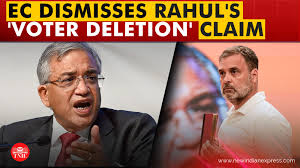
NEW DELHI: The Election Commission on Friday refuted Congress leader Rahul Gandhi’s charges, claiming that “no deletion of votes can be done online by any member of the public.” The poll body, in a point-wise statement, said that the no name is deleted from the roll without issuing a notice to the affected person. “No Deletion of any vote can be done online by any member of the public. No wrongful deletion of electors in Aland; an FIR was registered by the authority of ECI itself in 2023 against suspicious attempts of deletions,” it said.”Although the Elector of the constituency can fill Form 7 online to apply for deletion of an entry from that particular constituency, it does not mean that the entry gets automatically deleted merely by submitting the Form 7. As per Registration of Electors Rules, 1960, no name is deleted from the roll without issuing a notice to the affected person and giving him an opportunity of being heard,” it added. It further said that the poll body only accepted 24 applications of deletion and 5,994 incorrect applications were rejected ahead of the assembly election in Aland. It also said a inquiry was conducted & subsequently an FIR was registered by Electoral Registration Officer, Aland “In the case of Aland, Karnataka, 6,018 applications in Form 7 for deletion were submitted online. On verification, only 24 applications were found to be genuine, while 5,994 were found to be incorrect. Accordingly, 24 applications were accepted, and the 5,994 incorrect applications were rejected,” it said. “Suspecting the genuineness of such a large number of applications for deletion, an inquiry was conducted & subsequently an FIR (No. 26/2023, Aland Police Station, dated 21.02.2023) was registered,” it added. This comes a day after Congress leader Rahul Gandhi reiterated his “vote chori” allegations and took a swipe at the Election Commission, calling it an “election watchman” who “stayed awake, watched the theft, and protected the thieves”. Rahul Gandhi accused Chief Election Commissioner Gyanesh Kumar of shielding “vote chors” and systematically deleting Congress supporters’ names from voter rolls. He claimed a centralized software-driven method was being used to impersonate voters and erase names, mainly targeting Dalits, OBCs, Adivasis, minorities, and other opposition-leaning communities. Displaying Aland data, he asserted he had “100% proof” of vote manipulation. “In Aland, Karnataka, 6018 votes, somebody tried to delete these votes. We don’t know the total number of votes deleted in the 2023 elections, but somebody got caught. It was caught, by most crimes, by coincidence. What happened was that the Booth Level officer noticed that her uncle’s vote had been deleted. When she checked, she saw that her neighbour had deleted the vote,” Gandhi said during the press conference. Courtesy : TOI Note: This news is originally published on https:/timesofindia.com/bha and is used purely for non-profit/non-commercial purposes, especially human rights
Amid issues in Congress district unit, Rahul and Sonia Gandhi arrive in Wayanad
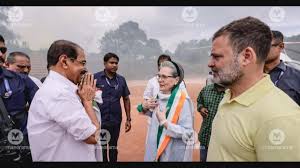
Kozhikode: Leader of opposition in Lok Sabha Rahul Gandhi and Congress parliamentary party chairperson Sonia Gandhi arrived in Wayanad for a two-day visit on Friday. While KPCC leadership described it as a private visit, AICC general secretary K C Venugopal, who accompanied the Gandhis from New Delhi, attended a district leadership meeting during the day in a bid to reportedly sort out the issues plaguing the party’s district unit. The DCC leadership meeting, convened on Venugopal’s direction, assumed significance as the Wayanad unit of Congress has been facing factionalism and controversy, particularly in connection with the deaths by suicide of former DCC treasurer N M Vijayan and his son in Dec 2024, followed by the suicide of Jose Nelledam, a grama panchayat member in Mullankolly on Sept 12 this year, and the suicide attempt by Vijayan’s daughter-in-law Padmaja Vijesh last week. The developments had even cast a shadow over Priyanka Gandhi’s week-long tour of the constituency, with CPM questioning why she did not visit Nelledam’s family. At the DCC leadership meeting, which was attended by block level leaders, Venugopal issued a stern warning to district leaders to end infighting and resolve issues immediately. He said the party would closely monitor developments in Wayanad and take strict action against those who fuel disputes. “The incidents in Wayanad were unfortunate. The party will ensure that such situations do not recur. Anyone responsible for creating problems will not be recognized, and the leadership will take the matter seriously,” Venugopal said. According to party sources, a change in the party’s district leadership would likely see N D Appachan replaced as DCC president. Meanwhile, KPCC president Sunny Joseph said that Irikkur MLA Sajeev Joseph and KPCC general secretary Jameela Alipatta have been assigned to hold discussions and resolve the issues in Mullankolly. Both have been directed to complete necessary discussions within two days and submit recommendations for a solution, after which appropriate organizational steps will be taken. He said the party would address the financial liabilities of Vijayan and the Sultan Bathery Urban Bank. Rahul and Sonia Gandhi landed at Calicut International Airport at 10am and reached Wayanad by helicopter. Wayanad MP Priyanka Gandhi, who has been in the constituency since Sept 11, received them at the Padinjarathara helipad. They later moved to a resort near Banasura Islands. Sonia and Priyanka Gandhi visited Regional Coffee Research Station, where they met coffee farmers and officials. They also visited MS Swaminathan Research Foundation’s (MSSRF) Community Agrobiodiversity Centre (CAbC) at Puthurvayal. They interacted with foundation chairperson Soumya Swaminathan over video conferencing. Meanwhile, Priyanka raked up the vote theft issue in a video message. “I urge all of you to join our vote chori (vote theft) signature campaign. Just as every vote counts, every signature counts. Every one of you standing up for democracy, standing up for the constitutional values counts,” she said. Courtesy : TOI Note: This news is originally published on https:/timesofindia.com/bha and is used purely for non-profit/non-commercial purposes, especially human rights
Priyanka Gandhi ventured into the dense forests of Wayanad at the call of tribals, revealing shocking facts.
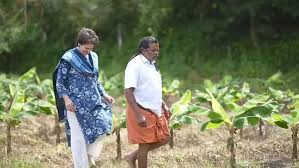
Priyanka met with the Cholanayakan community in the dense forests of Karulai, discussed their demands with officials, and also reviewed development projects such as roads and railways. Malappuram, Kerala: Congress MP Priyanka Gandhi Vadra continued her campaign to connect with people at the grassroots level in her parliamentary constituency, Wayanad. On Wednesday, she took a long walk through the dense forests of Karulai in Kerala’s Malappuram district and met with the Cholanayakan tribal community, which is on the verge of extinction. During the visit, she listened attentively to the community’s concerns and assured them of all possible support. Priyanka Gandhi has been touring her Wayanad Lok Sabha constituency since September 11. According to a party release, her forest visit came at the request of C. Vinod, a member of the tribal community. Vinod, who is pursuing a PhD in tribal economics, had informed Priyanka about the serious problems facing his community during the election campaign. During her visit to the forest, Vinod also briefed her on the conditions and challenges there. After meeting with the people in the tribal settlement, the Congress MP brought some of their representatives to the Forest Department’s inspection bungalow. There, she held a detailed meeting with Forest Department officials and community representatives regarding the community’s key demands, such as housing and a bridge. She also met with social activists working for the development of the tribal community. During her busy tour, Priyanka Gandhi visited the famous Nilambur Teak Depot after meeting the Cholanayakan community. She inspected the entire depot premises and eagerly inquired about the activities of the museum located there. Earlier in the day, Priyanka also reviewed the infrastructure development in the area. She visited the Nilambur Railway Station and reviewed the ongoing development work there. According to the release, she also held important discussions on the Vaniyambalam Railway Flyover, the renovation of Nilambur Station, and other railway-related needs in the area. Priyanka Gandhi shared a video on the social media platform ‘X’, detailing her visit to the construction site of the proposed Padinjarathara-Poozhithodu road in Kottiyambayal, Wayanad district. In her post, she wrote, “Visited the proposed Padinjarathara-Poozhithodu road site in Kottiyambayal along with the District Collector, District Forest Officer, and Executive Engineers of the Public Works Department (PWD). This new road will make a huge difference by providing an alternative route to the Thamarassery Ghat Road, improving connectivity in Wayanad district.” Rajan Chaudhary Courtesy: Hindi News
EC rejects charges, cites action it took for Karnataka seat
NEW DELHI: EC rejected Rahul Gandhi’s allegations regarding deletion of electors in Aland in 2023, saying that it had on its own authority filed an FIR at the time against “certain unsuccessful attempts” at deletions, after which the Karnataka chief electoral officer shared all relevant information pertaining to the case with the state police. The Karnataka CEO posted on X that all information available with EC was handed over to Kalaburagi, SP on Sept 6, 2023 itself. The shared information included the objector’s name, EPIC number and mobile number used for login, Form 7 reference number, mobile number provided by the objector for processing software application medium, IP address, applicant’s place, form submission date and time, and user creation date. “Basically, the information that Rahul has asked EC to provide in a week was shared by the Karnataka CEO with the state CID two years ago,” said an EC functionary, while contrasting this with Rahul refusing to submit a signed affidavit in support of his allegations regarding roll irregularities in Mahadevapura, for which CEC Gyanesh Kumar had set him a similar deadline. As regards Rahul’s allegations regarding addition of fake voters in Maharashtra’s Rajoura constituency, the electoral registration officer of Rajoura said that between Oct 1 and 17, 2024, the constituency had received 7,592 applications for new voter enrolment. “On scrutiny by booth level officers, 6,861 applications were found invalid. These included fictitious identities, invalid photographs, documents and incorrect addresses. These applications were rejected,” the ERO said, stressing that no fake names were added to the roll. He added that taking cognisance of the irregularities, the district election officer had directed a comprehensive probe and criminal action. Courtesy : TOI Note: This news is originally published on https:/timesofindia.com/bha and is used purely for non-profit/non-commercial purposes, especially human rights
Maha ‘Vote Chori’ In Chandrapur’s Rajura, Says Rahul, questions EC over deletion of 6,800 voters after Cong plea
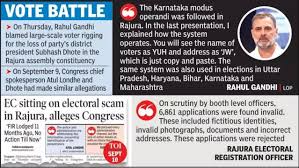
Nagpur/Chandrapur: Congress leader Rahul Gandhi on Thursday accused Election Commission of India (ECI) of ignoring large-scale voter rigging in the Rajura assembly constituency of Chandrapur district during last year’s assembly polls in Maharashtra. Gandhi took cue from the Maharashtra Pradesh Congress Committee’s accusations of manipulation in the Rajura voter list, 10 days ago. In Delhi, Gandhi alleged “over 6,800 fake voters were deleted quietly” after Congress lodged a complaint with ECI, but no accountability followed. In the fiercely fought Rajura contest, Congress district president Subhash Dhote lost to BJP’s Devrao Bhongle by a margin of 3,050 votes. Gandhi claimed the numbers raise questions, with deletions almost doubling the margin of defeat. “This is not a small irregularity, it is a deliberate attempt to tilt the balance,” he claimed. “The Karnataka modus operandi was followed in Rajura. In the last presentation, I explained how the system operates. You will see the name of voters as YUH and address as ‘JW’, which is just copy and paste. The same system was also used in elections in Uttar Pradesh, Haryana, Bihar, Karnataka and Maharashtra,” he added. Hours after Gandhi’s diatribe, the electoral registration officer (ERO) of Rajura clarified that prompt administrative action had prevented bogus voter registrations from entering rolls. Between October 1-17, 2024, the constituency received 7,592 applications for new voter enrolment. “On scrutiny by booth level officers, 6,861 applications were found invalid. These included fictitious identities, invalid photographs, documents and incorrect addresses. These applications were rejected,” the ERO said, ensuring no fake names were added to the rolls. He added that taking cognisance of irregularities, the district election officer directed a comprehensive probe and criminal action under Representation of the People Act, 1950, and Information Technology Act, 2000. On September 9, Congress chief spokesperson Atul Londhe and Dhote had made similar allegations against the ECI in Mumbai. Both claimed large-scale voter manipulation in Rajura was comparable to the Mahadevapura case in Karnataka during the 2024 Lok Sabha elections, which Gandhi had earlier highlighted. “In just five months between the Lok Sabha and Assembly polls, Rajura’s voter count jumped by 55,000,” they said. “Between October 1-15, 2024, over 11,600 bogus voters were registered online. Following our complaint, 6,861 entries were deleted, and an FIR was lodged.” According to them, despite an FIR lodged nearly 11 months ago, officials are yet to investigate the matter, prompting the party to threaten legal recourse. Both Londhe and Dhote had threatened to move court if ECI failed to take remedial steps. They also accused BJP of colluding with EC to manipulate voter registrations. “Still, authorities have not provided access to IP addresses, email IDs, or mobile numbers linked to these fake registrations,” both had said. The duo accused police and administration of withholding this information, preventing identification of the perpetrators. They also pointed out that the victorious BJP candidate was caught with materials, including Rs 61 lakh in cash and election equipment, were seized by EC’s team, and an FIR was registered at Gadchandur police station, but no further action was taken. BJP MLA Bhongale, however, refuted the charges, stating there is a natural rise in the number of voters between Lok Sabha and assembly elections due to Election Commission’s special registration drive. “In Rajura, thousands of new voters were added, which is in line with the trend in other constituencies. It was BJP that first raised concerns about the sudden spike in voter numbers here. Following our complaint, a detailed investigation was conducted, and 6,861 bogus voters were struck off the rolls. I demand a thorough probe,” he said. Courtesy : TOI Note: This news is originally published on https:/timesofindia.com/bha and is used purely for non-profit/non-commercial purposes, especially human rights
‘Will prevent vote chori’: Rahul Gandhi’s shoutout to Gen Z; BJP hits back, asks why wouldn’t they drive you out?
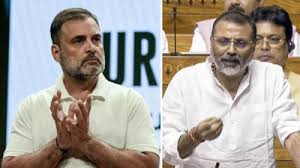
NEW DELHI: Leader of opposition in Lok Sabha Rahul Gandhi’s shoutout to Gen Z to “stop vote theft” sparked a sharp retort from the BJP, with Nishikant Dubey quipping: “They are against corruption, why wouldn’t they drive you out?” The comments came in after Nepal Gen Z protest toppled the “corrupt” government and elected its first woman chief as its interim prime minister, and that too on gaming app Discord. After his presser claiming deletion of voters from Karnataka’s Aland constituency, Rahul said in a post on X, “The youth of the nation The students of the nation The Gen Z of the nation Will protect the Constitution, defend democracy, and prevent vote theft. I will always stand with them. Hail India!” Reacting to this, BJP MP Nishikant Dubey claimed that the Gen Z wants “an Islamic state in Bangladesh and a Hindu state in Nepal, why wouldn’t they make India a Hindu state?” “Gen Z is against family rule. Why would they tolerate Rahul Ji after Nehru Ji, Indira Ji, Rajiv Ji, Sonia Ji? They are against corruption, why wouldn’t they drive you out? They want an Islamic state in Bangladesh and a Hindu state in Nepal, why wouldn’t they make India a Hindu state? Get ready to leave the country, they are coming,” he said. — nishikant_dubey (@nishikant_dubey) Rahul’s comments drew reaction from Janata Dal United leader Neeraj Kumar too, who said that India was a “democracy” unlike “Bangladesh, Nepal,” adding that “our people do not accept dictatorial ideas.” “In countries like Nepal, where politics is driven by religion, such problems have to be dealt with differently. But India is a democracy, it is neither Bangladesh nor Nepal; our people do not accept dictatorial ideas. If one is comparing India with Nepal, they should consider India’s economic strength and the resilience of our people,” he said. — PTI_News (@PTI_News) Courtesy : TOI Note: This news is originally published on https:/timesofindia.com/bha and is used purely for non-profit/non-commercial purposes, especially human rights
This killer stalking Kerala attacks through the nose

On Sept 1, two patients — a threemonth-old baby and a 52-year-old woman — died within hours of each other at Kozhikode Govt Medical College. Doctors confirmed that both were being treated for primary amoebic meningoencephalitis (PAM), an infection caused by the free-living parasite Naegleria fowleri. By mid-Sept, the toll had risen to 19, with 69 suspected or confirmed cases across Kerala. Victims ranged from infants to middle-aged adults. The scale is extraordinary: globally, researchers have identified only 488 documented infections since 1962. Rare And RuthlessPAM is one of the deadliest infections known to science. The parasite lives in warm, stagnant freshwater — ponds, lakes, unchlorinated swimming pools, poorly maintained tanks — and can infect people only when contaminated water is forced up the nose. From there, it travels along the olfactory nerve, burrows into the brain and begins dissolving tissue, unleashing catastrophic inflammation. Symptoms can begin in one to 12 days (typically 3-7 days): fever, headache, nausea and vomiting. Within days, they give way to stiff neck, confusion, seizures, hallucinations and coma. Across six decades, fewer than 20 survivors are documented globally, most with lasting neurological damage. The fatality rate is 97%. There is no vaccine or proven cure. Drugs such as Amphotericin B, Azoles, or Miltefosine are used in combination, sometimes with induced hypothermia, but success is rare. Crucially, PAM does not spread person to person and is not caused by drinking contaminated water; infection occurs via the nose Why Kerala? Worldwide, PAM tends to appear as sporadic, one-off cases, usually tied to a single contaminated reservoir or swimming pool. Kerala’s outbreak is different. Cases have surfaced across Thiruvananthapuram, Kozhikode, Thrissur and Malappuram, with no single identified source. The state’s position as a public health bellwether makes the outbreak more unsettling. Kerala has often been the first to detect emerging threats: India’s first Nipah outbreak in 2018, its early Covid-19 cases in 2020 (detected in returning medical students from Wuhan), and Zika virus in 2021. The arrival of a rare, near-uniformly fatal amoeba on this list has alarmed both doctors and the public. “Eight people died in 15 days. What is the protocol? What are people supposed to do? Even a baby was infected — was that child in a swimming pool?” Opposition leader V D Satheesan asked in the state assembly this month. Protests have broken out in several districts, with residents demanding that wells and public taps be tested. Doctors caution that Kerala’s higher numbers also reflect better detection. “The symptoms — headache, fever and vomiting — are similar to bacterial and viral brain infections. If you don’t suspect amoeba, you’ll miss it completely,” said Dr Rajeev Jayadevan, convener of the Indian Medical Association’s research cell. How Kerala Is Responding Amid mounting panic, Kerala has launched ‘Jalamanu Jeevan (Water is Life)’, a statewide chlorination drive covering wells, pools, etc. Schools have been told to disinfect storage units regularly, while panchayats and municipalities are checking public taps and wells. Hospitals, particularly in Kozhikode, Thrissur and Malappuram, are on high alert. Doctors have been instructed to treat any meningitis-like illness with a history of water exposure as potential PAM. Rapid-response teams have been sent to test community water sources, though no contaminated reservoir has been found yet. Drugs, including Miltefosine, have been stocked. But officials concede that treatment rarely saves lives. Survivors worldwide are exceptional, often treated with a cocktail of antifungals, antibiotics and cooling therapies. That is why prevention — keeping contaminated water out of the nose — remains the focus. Lessons For The World A 2025 review in the Journal of Infection and Public Health, which analysed 488 cases across 39 countries since the disease was first described, shows how there is little room for error — and what others can learn as climate change reshapes risk. The parasite is not the same everywhere: N. fowleri has multiple genetic strains; genotypes II and III predominate in Asia, North America and Europe. Clean water is the strongest defence: Free chlorine ≥ 2.0 mg/L in storage tanks/ pools can eliminate the amoeba; countries like Australia monitor disinfection as a routine public health practice. Surveillance changes the numbers: Strong labs and routine testing mean more detection (not necessarily more disease). Country tallies include India (26), Mexico (33), Czech Republic (17), New Zealand (9), Nigeria (4), Venezuela (7). Everyday habits can raise or reduce risk: In Pakistan, first cases were reported in Karachi in 2008; >140 cases have since been documented. Many were linked to nasal rinsing during ablution or showering, not swimming. A similar ablution-linked case has also been confirmed in the US. Courtesy : TOI Note: This news is originally published on https:/timesofindia.com/bha and is used purely for non-profit/non-commercial purposes, especially human rights
The Aland files: Rahul Gandhi flags ‘mass targeted deletions’ of voters; accuses EC of destroying democracy
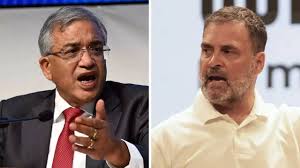
NEW DELHI: Congress leader Rahul Gandhi on Thursday presented evidence on alleged “vote chori”, accusing Chief Election Commissioner (CEC) Gyanesh Kumar of shielding those he claimed had “destroyed Indian democracy.” Speaking at a press conference at the Indira Bhawan Auditorium, the leader of opposition cited Aland constituency in Karnataka, where he alleged that a “targeted” attempt was made to delete 6,018 votes. He claimed that 6,018 applications were filed impersonating voters and this filing was done automatically using mobile numbers from outside Karnataka. Rahul Gandhi also made a claim about CEC Gyanesh Kumar. “CEC is protecting the people who have destroyed Indian democracy,” Gandhi added. “This I am saying with solid proof,” the leader of opposition said. — PTI_News (@PTI_News) The Congress MP said, “Aland is a constituency in Karnataka. Somebody tried to delete 6018 votes. We don’t know the total number of votes that were deleted in Aland in the 2023 election. They are much higher than 6,018, but somebody got caught deleting those 6018 votes, and it was caught by coincidence. What happened was that the booth-level officer there noted that her uncle’s vote was deleted, so she checked who deleted her uncle’s vote, and she found that it was a neighbour who deleted the vote. She asked her neighbour, but they said I did not delete any vote. Neither the person deleting the vote nor the person whose vote was deleted knew. Some other force hijacked the process and deleted the vote…” Rahul Gandhi claimed that in Karnataka’s Aland assembly constituency, 6,018 deletion applications were filed by impersonators to target Congress voters. This deletion of votes was done in “centralised manner” using software and not through individuals, the leader of opposition in Lok Sabha further said, adding that “targeted deletion” of votes was done in Congress stronghold through planned action. Gandhi also said that the Karnataka CID has started investigation seeking details from Election Commission on deletions done, but EC is not providing details. He urged, “Gyanesh Kumar ji, do your job, and you have taken an oath. Give the details to the Karnataka CID.” — ANI (@ANI) This press conference came 40 days after Rahul raised questions on the electoral outcome of Bangalore Central Lok Sabha seat, claiming that there was “chori” (stealing) of one lakh votes in Mahadevapura assembly seat during the 2024 polls. He had then claimed that the Election Commission was colluding with the BJP, which he called a “crime” against the Constitution. What about ‘Hydrogen bomb’? Speaking about the so-called “hydrogen bomb” of revelations, Rahul Gandhi said, “We will present the hydrogen bomb.” He added, “I told my team I would not step on stage without 100% proof.” “We will take two to three months to finish these presentations, and there will be no doubt that elections are being stolen across states in India,” he said. Earlier, addressing the concluding event of his Voter Adhikar Yatra on September 1, Gandhi had said his party will soon come out with a “hydrogen bomb” of revelations about “vote chori” and after that Prime Minister Narendra Modi will not be able to show his face to the country. Last month, Gandhi, citing data from the 2024 Lok Sabha polls, had claimed that over one lakh votes were “stolen” through manipulation in Mahadevapura assembly segment in Karnataka, and asserted that “vote chori” is an “atom bomb on our democracy”. Courtesy : TOI Note: This news is originally published on https:/timesofindia.com/bha and is used purely for non-profit/non-commercial purposes, especially human rights