
TNCC unanimously entrusts Kharge, Rahul to take decisions
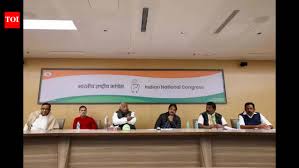
New Delhi/Chennai: A meeting of TNCC functionaries and elected representatives in New Delhi on Saturday “unanimously” entrusted AICC president Mallikarjun Kharge and leader of the opposition in the Lok Sabha Rahul Gandhi to take decisions pertaining to alliance and seat sharing with DMK for the upcoming assembly election in Tamil Nadu. “With regard to election strategy, the party high command will take an appropriate decision in due course, keeping in mind the larger interest of party and people of TN,” AICC general secretary (organisation) K C Venugopal told reporters in New Delhi. Kharge chaired the meeting that lasted more than three hours, and attended by Rahul Gandhi, Venugopal, TNCC chief K Selvaperunthagai, MPs P Chidambaram, Manickam Tagore, Karti Chidambaram, and Professionals’ Congress chief Praveen Chakravarty, among others. Later, Kharge, Rahul and Venugopal, joined by AICC in charge for TN Girish Chodankar, held one-on-one meetings with functionaries and obtained views on alliance. The Congress top brass gave clear directions to functionaries to maintain discipline and refrain from making public statements on alliance matters and advised them to speak in one voice in line with party decisions. The meeting held at the party’s Indira Bhawan headquarters came amid two different viewpoints over alliance with DMK — one pitching for power-sharing arrangement if the alliance wins to form govt and another being that the party should explore an alliance with actor Vijay’s TVK looking at the larger prospects of the Congress in states such as Kerala, which too goes to polls along with TN. Sources said some functionaries informed the leadership about “immature” actions of colleagues reportedly causing a rift in the Congress-DMK alliance, while a few raised concerns about disrespect allegedly shown by DMK partymen, besides not being taken care of in the appointments in boards and trusts. “The predominant view is to continue the alliance with DMK and get a share in power by getting more seats this election,” said a senior leader, privy to the meeting. Venugopal told reporters, the leadership had a detailed and very fruitful discussion with functionaries. “The leadership patiently listened to all opinions and leaders were given full opportunity to express their views. The discussion was constructive and focussed on strengthening the party and its future strategy in TN,” he said, reading out a statement. Asked about what the party’s stand was on the view within Congress on seeking a power-sharing arrangement with DMK, Venugopal reiterated his statement, adding that “concerns of the 40-plus leaders present at the meeting were heard individually and collectively. There are different views and we have heard them and certainly in due course whatever discussion held today will be the guideline for future decisions.” Sharing a video clip from the meeting held at the AICC headquarters on X, Kharge said, “We are confident that people of TN would choose equality, social justice, empowerment and good governance over bigotry, sectarianism, anti-federal and discriminatory politics of the RSS-BJP.” He added, “Congress party is determined to play an important role in fulfilling the aspirations of the people of the state.” Selvaperunthagai told reporters, the TNCC would follow the decision of AICC. The leadership was upset about functionaries speaking about the alliance in public, he added. Courtesy : TOI Note: This news is originally published on https:/timesofindia.com/bha and is used purely for non-profit/non-commercial purposes, especially human rights
From Short Circuit to Political Signal: Akhilesh Yadav, Mayawati and the Battle for Dalit Votes
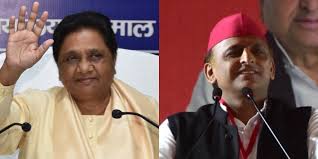
The 2024 general election results indicated that a section of the Dalit population in Uttar Pradesh has begun drifting away from the BJP reportedly due to rising incidents of atrocities and fears surrounding constitutional changes. When smoke suddenly filled the conference hall at the Bahujan Samaj Party’s (BSP’s) Uttar Pradesh headquarters during party chief Mayawati’s 70th birthday press conference due to a short circuit, panic spread among journalists and security personnel present at 12, Mall Avenue in Lucknow. No one was injured, and the incident was quickly brought under control. Within hours, Samajwadi Party (SP) president Akhilesh Yadav demanded a probe into what he described as a serious security lapse. It immediately acquired a political meaning far beyond an electrical fault. His concern, expressed publicly and amplified through social media, triggered a fresh round of political speculation in the politically significant state of Uttar Pradesh. At one level, Akhilesh’s reaction appeared routine and responsible. Mayawati is a former chief minister and a national political figure; any lapse in her security naturally invites questions. But in the deeply layered politics of Uttar Pradesh, few gestures are ever purely administrative. Akhilesh’s intervention was widely read as a calculated political signal, especially aimed at Dalits, for whom Mayawati remains the most recognisable and emotive leader. “The incident itself was minor, but the politics around it is major,” said political analyst Utkarsh Sinha. “Akhilesh Yadav did not need to comment immediately, yet he chose to do so. That choice is political.” Dalits at the centre of Uttar Pradesh’s political equation Dalits constitute nearly 22% of Uttar Pradesh’s population and have historically played a decisive role in shaping the state’s politics. The BSP, under Mayawati’s leadership, formed the government four times, culminating in her landmark 2007 victory when she secured a full majority on her own. That moment marked the peak of Dalit assertion in the state. However, since then, Mayawati’s political graph has steadily declined. She has been out of power for nearly one and a half decade, losing three assembly elections and three Lok Sabha polls since 2012. Today, the BSP has no Member of Parliament in the Lok Sabha and just one MLA in the 403-member Uttar Pradesh assembly. For a party that once ruled India’s most populous state, the fall has been steep. Yet, despite this decline, Mayawati continues to command loyalty among a core section of Dalits, particularly the Jatavs. In the 2024 general elections, the BSP still managed to secure around 9.4% of the vote share in Uttar Pradesh, a figure that underlines her residual influence. “Mayawati may have lost institutional power, but she has not lost symbolic power,” said Syed Qasim, a political commentator based in Lucknow. “For many Dalits, she remains a symbol of dignity and political assertion.” Akhilesh’s 2027 ambition and the search for a broader social coalition Akhilesh’s political ambition is clear: he wants to return to power in Uttar Pradesh in the 2027 assembly elections. The SP has been out of office since 2017, and despite leading the opposition, Akhilesh knows that defeating the Bharatiya Janata Party (BJP) requires expanding beyond the party’s traditional Muslim–Yadav (M–Y) base. In the 2024 general elections, Akhilesh made a conscious attempt to do just that. By popularising the slogan Pichhda, Dalit aur Alpsankhyak (PDA), he tried to stitch together a broader social coalition. The results were striking. The SP jumped from just five Lok Sabha seats in 2019 to 37 seats in 2024, while its INDIA bloc ally Congress won six seats in the state. Political experts widely agree that this surge would not have been possible without support from backward classes, Muslims, and a section of Dalit voters. “The 2024 results showed Akhilesh Yadav’s political maturation,” said Sinha. “He demonstrated that the SP can move beyond its core base. But to sustain this coalition till 2027, Dalits will be crucial.” Mayawati’s strategic distance and Akhilesh’s calculated silence Interestingly, while Akhilesh has been careful in his approach towards Mayawati, the BSP chief has shown little warmth in return. In October 2025, during a rally in Lucknow, Mayawati launched a sharp attack on the SP’s 2012–17 government, accusing it of disrespecting Dalit icons and symbols. Notably, she used comparatively restrained language while referring to the Adityanath-led BJP government, even praising it for maintaining Dalit heritage sites. Akhilesh chose not to respond. His silence was telling. “Akhilesh understands that responding aggressively to Mayawati only helps her consolidate her core voters,” said Sinha. “By staying quiet, he avoids alienating Dalits who still respect her.” This restraint reflects Akhilesh’s broader strategy. Over the years, he has taken several steps to signal his commitment to Dalit issues: forming the Ambedkar Vahini within the SP, installing a statue of Dr B.R. Ambedkar at the party headquarters, and giving prominence to Dalit leaders like Awadhesh Prasad, who won the Ayodhya Lok Sabha seat. “Akhilesh is consciously building an image of inclusivity,” said Sinha. “He wants Dalits to see him not as a rival to Mayawati, but as a leader who respects Dalit aspirations.” The alliance question: Closed door or strategic ambiguity? The memory of the 2019 SP–BSP alliance still looms large. Formed nearly 24 years after the infamous guest house incident, the partnership was historic but short-lived. While it helped the BSP win 10 Lok Sabha seats, it failed to stop the BJP’s dominance and collapsed soon after. Speculation about a future alliance resurfaces periodically, but most experts remain sceptical. Atul Chandra, former editor of The Times of India, offered a blunt assessment. “Alliance with Mayawati is not possible for Akhilesh, as her conditions would be so hard that he will never accept them,” said Chandra. Chandra believes Akhilesh’s current approach is not about reviving an alliance but about consolidating Dalit support independently. “I don’t think Mayawati will join hands with Akhilesh in the next assembly elections, but Akhilesh has certainly sent a strong signal to Dalits about his intent to bring them under his political umbrella,” he said. Mayawati’s cautious politics and the
Jagan says TDP behind murder of YSRCP’s Dalit activist
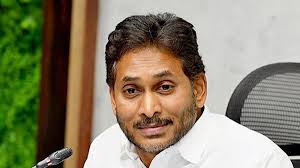
During the conversation, Salman’s brother reportedly detailed the alleged atrocities of local TDP leaders in Pinnelli village. VIJAYAWADA: Former chief minister and YSR Congress Party president YS Jagan Mohan Reddy strongly condemned the killing of party activist Manda Salman in Palnadu district. Expressing outrage, he said law and order in the State had completely deteriorated and alleged that the Dalit activist was unjustly murdered by TDP leaders. He remarked that attacks on YSRCP workers and leaders had become routine, while police, instead of offering protection, were colluding with ruling party leaders. Jagan Mohan Reddy spoke to Salman’s brother over the phone, conveyed his condolences, and assured the family that the party would stand firmly by them. He promised that once the YSRCP returns to power, strict action would be taken against those responsible. During the conversation, Salman’s brother reportedly detailed the alleged atrocities of local TDP leaders in Pinnelli village. The former chief minister urged party workers not to panic, assuring them of full support from the party. He emphasised that justice would be ensured under due process of law once YSRCP regains power. Courtesy : TNIE Note: This news is originally published on https:/thenewindianexpress.com/bha and is used purely for non-profit/non-commercial purposes, especially human rights
Indelible ink row: Rahul Gandhi accuses EC of ‘gaslighting’ voters – What does it mean?
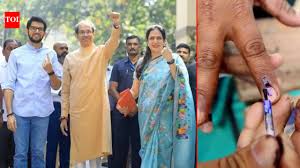
Congress leader Rahul Gandhi on Friday weighed in on the controversy surrounding the alleged fading of indelible ink used during Maharashtra’s civic body elections, using a Gen Z term to accuse the Election Commission of undermining public trust. Amid mounting complaints from voters and opposition parties that the ink applied to mark fingers during Thursday’s polls was fading unusually fast, Rahul described the situation as “gaslighting” by the Election Commission and termed “vote chori” an anti-national act. Sharing a media report on X that said “opposition, voters cry foul over fading ink markers”, Gandhi wrote, “Election commission gaslighting citizens is how trust has collapsed in our democracy. Vote Chori is an anti-national act.” The controversy erupted after multiple videos surfaced on social media showing voters claiming that the ink marks on their fingers had faded within hours of voting, raising concerns about the integrity of the electoral process and the possibility of repeat voting. What is gaslighting? Rahul’s use of the term ‘gaslighting’ — commonly associated with Gen Z and millennial discourse — drew attention online. ‘Gaslighting’ refers to a form of manipulation where people are led to doubt their own memory, perception or understanding of reality. It often involves repeatedly denying clear facts, twisting information, or blaming others’ reactions, eventually causing them to question their own judgment. Victims are gradually led to question their actions, memories, understanding and even their sanity. It typically occurs in situations where there is a power imbalance between the individuals involved. Gaslighting often begins with small, seemingly harmless lies but can escalate over time, with the manipulator convincing the victim that they remember events incorrectly, lack sound judgment, or cannot be trusted to assess situations accurately.Examples: “I never said that. You’re imagining things.” “That didn’t happen the way you remember it.” “You’re overreacting — it’s not a big deal.” “You’re too sensitive. Anyone else would be fine with this.” “You always get confused about details.” By invoking the term, Rahul appeared to suggest that voters’ concerns were being dismissed or minimised despite visible evidence, further eroding confidence in democratic institutions. The Election Commission has maintained that it will take corrective steps based on the probe’s findings, even as the opposition continues to press for accountability over the ink controversy. Courtesy : TOI Note: This news is originally published on https:/timesofindia.com/bha and is used purely for non-profit/non-commercial purposes, especially human rights
TN Congress leaders head to Delhi for meeting with Rahul, Kharge
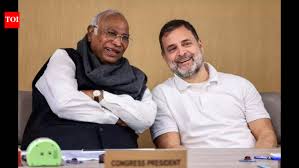
Chennai: Senior Tamil Nadu Congress leaders, including former and sitting MPs and MLAs, are set to travel to New Delhi on Saturday for a meeting convened by party leader Rahul Gandhi to discuss alliance strategy ahead of the 2026 Assembly election. AICC president Mallikarjun Kharge will also be present at the meeting planned to discuss the party’s assembly election strategy for TN. The meeting comes at a time when TN Congress functionaries are putting forth different viewpoints on the party’s electoral tie up with DMK. While one section is comfortable with the continuation of the existing alliance arrangement, another section has been pitching for a power sharing arrangement with DMK. The camp that has been batting for a power sharing arrangement has also been nudging for an alliance with actor Vijay’s Tamilaga Vettri Kazagham (TVK), hoping that the actor – politician’s fan base would help them in Kerala, which too goes to polls this year. While most leaders are expected to voice their support for continuation in the DMK alliance during the Saturday meeting, a small group critical of DMK and leaning towards TVK are likely to place their demand for a power-sharing arrangement as a precondition for DMK alliance. DMK leaders have rejected the demand. DMK remains firm it will not accept the Congress power-sharing demand. “There is no compromise at any cost. Except for Manickam Tagore, Rajesh Kumar and Praveen Chakravarty, everyone will favour us (DMK),” said a highly placed DMK source. Nevertheless, Congress leaders say the subject would be brought up during formal alliance talks DMK as the present arrangement of remaining in alliance without sharing power does not help Congress grow in TN. “When something goes wrong then we are unable to criticise DMK as we are allies. This situation does not benefit Congress,” a TN Congress leader said. Setting the tone for meeting, COngress M P Manickam Tagore on Friday said in an X post that Congress was never after `lucrative’ portfolios wherever the party had shared power with allies. Instead, we would only seek ministries that offer scope for serving people better, he said. Senior Congress leaders, however, downplayed the Saturday meeting. Congress general secretary in-charge (organisation) KC Venugopal simply said, “We are doing all state level meetings. Nothing else.” Tamil Nadu Congress Committee President K Selvaperunthagai rejected speculation about parallel talks with TVK and said, “In the meeting, we will discuss election preparedness and finalise our plans.” Congress in charge for TN, Girsh Chodankar told TOI that Saturday’s meeting will see a discussion on preparations and exchange of ideas. On the issue of powersharing, he said such matters will be discussed at the alliance committee meeting which is yet to be scheduled. Meanwhile, AICC general secretary Sachin Pilot backed the demand from a section of Congress leaders for power sharing. “Every political party wants representation. I think there is nothing wrong in the Congress cadre asking for measures so that they can help the people of Tamil Nadu,” he told reporters in Chennai when asked about the demand for coalition govt. He however appreciated the DMk govt. “Whatever happens in the future, the BJP and NDA will never find a foothold in Tamil Nadu politics. I think the (state) govt did a good job,” he said. Courtesy : TOI Note: This news is originally published on https:/timesofindia.com/bha and is used purely for non-profit/non-commercial purposes, especially human rights
A day before Rahul’s visit, Patwari meets ex-LS speaker Mahajan over Indore deaths

Bhopal: A day before Lok Sabha LOP Rahul Gandhi’s visit to Indore, state Congress president Jitu Patwari created political tremors when he met former Lok Sabha speaker Sumitra Mahajan at her residence on Friday morning. Everyone wondered why the state Congress chief went to meet the BJP’s former MP from the city. After the meeting, Sumitra Mahajan said, “Jitu Patwari works well. He comes to meet me occasionally and he came today also.” Mahajan said that Jitu Patwari asked for her guidance about the present water contamination crisis in the city. Rahul Gandhi is scheduled to reach Indore on Saturday and meet families of the deceased victims of the Bhagirathpura water contamination tragedy. The Congress had applied for permission for a public meeting which was refused by the state administration. Jitu Patwari had also asked for a meeting with all corporators’ of the Indore Municipal Corporation which has also been disallowed. Sumitra Mahajan said, “He (Patwari) said that the Congress being in the opposition will protest. But the solution must come rising above party lines. We must work together to find a solution, he told me,” Sumitra Mahajan explained. “I said yes, in a democracy, the opposition must also do its work. We were also in the opposition and protested on various issues,” she recollected. The former Speaker of the Lok Sabha said that she reminded Patwari that there are institutions like the IIT, IIM and GSITS (Shri Govindram Seksaria Institute of Technology and Sciences) where they have technical experts. “I said there are many institutions in Indore where technically qualified people can help. In fact, the govt should be doing this. I said that the Congress can sit together, make a list of recommendations and send it to the govt. I did not give any wrong advise,” Mahajan quipped. Asked if Rahul Gandhi will be coming to meet her during his visit on Saturday, Sumitra Mahajan said, “No. There was no discussion about that. But if anyone wants to come and meet me, I am here.” Patwari told reporters, “We discussed the situation of water supply in Indore. Now the NGT has also said that 70% of water in MP is contaminated and undrinkable. We must rise above party and politics to ensure that a glass of safe drinking water reaches the people of this city. There should be no politics over water. The dialogue with former Lok Sabha speaker was very positive.” Courtesy : TOI Note: This news is originally published on https:/timesofindia.com/bha and is used purely for non-profit/non-commercial purposes, especially human rights
Meira Kumar: How A Dalit Woman Reshaped Indian Politics From The Speaker’s Chair
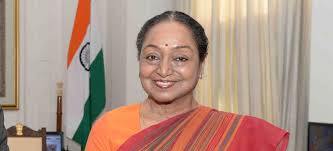
Meira Kumar is a politician and Speaker of the 15th Lok Sabha, who has left her mark on the field of Indian politics. What does it mean to shatter the ceiling when the floor that you stand on has always been irregular? Meira Kumar, India’s first woman Speaker in the Lok Sabha, has shattered political ceilings but also brought her identity of being a Dalit woman as a powerful instrument of advocacy to the heart of politics. Meira Kumar’s life is an adventurous answer to the challenge of representation in justice that can transform the moral geography of the nation. Family background and early years Meira Kumar is a politician and Speaker of the 15th Lok Sabha, who has left her mark on the field of Indian politics. Born in a politically active family with many Dalit leaders and social activists, Meira Kumar’s father Babu Jagjivan Ram was not only a well-known freedom fighter but also Deputy Prime Minister. Her mother, Indrani Devi, was a social worker. Kumar holds B.A. and M.A. in English Literature with LL.B. from the University of Delhi. It is because of Kumar’s parents, particularly her mother’s influence, that she chose to follow the path to justice for everyone. Meira Kumar has been an active social worker since her youth and was associated with various social movements for reforms and human rights. During the famine in the state of Bihar in the year 1967, she was appointed as the Chairperson of National Drought Relief Committee constituted by the Congress and she had also worked towards the establishment of the Family Adoption Scheme, through which drought-affected families would get help from voluntarily contributing households. Through all this, she had gained a good base in the provision of relief before venturing into politics. Career and entry into politics Before entering Politics, Meira Kumar served the Indian Foreign Service for more than a decade, where she was stationed in Spain and the United Kingdom. This job taught her how to negotiate, build bridges between different groups and represent India’s diverse culture to the world. However, she felt a strong pull to work directly on the social issues she cared about at home. She left diplomacy to join politics in 1985, encouraged by her father and by Rajiv Gandhi, the then prime minister of India. She ran in a by-election for a seat in the Lok Sabha from a constituency in Uttar Pradesh state defeating two other Dalit candidates. Being close to the politically powerful Gandhi family and representing the oppressed castes, Kumar’s political career progressed steadily within the Indian National Congress (INC) and she quickly made a name for herself as a strong advocate for human rights and the abolition of the caste system. Meira Kumar is a highly accomplished politician who has been a member of numerous decision-making bodies within the INC, serving twice as its General Secretary. Meira Kumar is a highly accomplished politician who has been a member of numerous decision-making bodies within the INC, serving twice as its General Secretary. She became a member of the Congress Working Committee, the organisation’s highest decision-making body in 1990 and continued it for a decade till 2000. She resigned from the Congress Party in 2000, citing differences with the party leadership but rejoined it after a gap of two years. In 2004 and 2009 she contested and won the Lok Sabha seat from Sasaram in Bihar state, the constituency once represented by her father. Advocacy for social justice During her political career, she has served on various committees, including the Public Accounts Committee and the Joint Committee on the Empowerment of Women as a Member of Parliament. Additionally, she also served as Minister of Social Justice and Empowerment (2004-2009) which deepened her activism against caste exclusion. She challenged private sector reservation opposition and said sustainable growth needs ending Dalit and tribal marginalisation. Her focus shifted from handouts to true empowerment. Appointed as the Minister of Water Resources in the 14th Lok Sabha shortly after her victory in the elections of 2009, in June of the same year, she achieved a tremendous historical feat as the first woman Lok Sabha Speaker. This moment symbolically meant a lot to women in the state of India. During her role as the Speaker, Meira Kumar achieved many milestones to bring gender equality to the politics of India. She started the gender-neutral rules in the House, replacing gendered terms with gender-neutral expressions in the rules of the House. This action brought a remarkable revolution in the setting of the Parliament to be friendly to all its members irrespective of gender. During her term as the Speaker, in 2011, Kumar reduced paper usage by 30% in the Lok Sabha with tablets and also expressed her support to the increasing nationwide protests against violence on women in the nation. She also announced the formation of a Parliamentary Friendship Group to improve relations with the nation of Bhutan. In speeches, Meira Kumar calls for ‘zero tolerance on prejudice‘ and the end of the caste system. In the 2017 presidential election, Kumar secured the United Progressive Alliance’s nomination as their joint candidate for President of India. This was a testament to her widespread respect as a symbol of social justice, secularism and constitutional values as she said, ‘Democratic values, social justice, transparency, freedom of speech, inclusiveness, destruction of caste system, end of poverty — these are part of the ideology which is close to my heart. For this very reason, on the plank of this ideology I will compete.‘ Thus, her 2017 presidential bid stressed destruction of caste barriers and inclusion. ‘Democratic values, social justice, transparency, freedom of speech, inclusiveness, destruction of caste system, end of poverty — these are part of the ideology which is close to my heart. For this very reason, on the plank of this ideology I will compete.‘ – Meira Kumar At her first press conference after being selected as joint candidate for President, with BJP’s Ram Nath Kovind, whose Dalit
UP BJP president meets Dalit veteran to bolster outreach
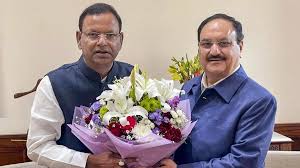
Lucknow: UP BJP chief Pankaj Chaudhary met party’s former national general secretary of Scheduled Caste wing Diwakar Seth on Makar Sankranti as part of his ongoing outreach to BJP old guards for seeking organisational support. Seth, a Jatav Dalit, was associated with many senior BJP leaders, including former President Ram Nath Kovind and former PM Atal Behari Vajpayee. Seth has stayed away from party activities for the past few years due to ill health. Sources said the idea for the meeting was mooted by BJP’s SC wing functionaries amid the party’s bid to consolidate Dalits support. “The party will always be grateful to the workers who nurtured it during difficult times by dedicating their energy, time, and resources to the organisation. BJP not only remembers its workers but also stands by them like a family in their joys and sorrows,” Chaudhary said. Analysts said that by meeting Seth—a veteran Dalit leader with deep ideological roots in BJP—Chaudhary has signalled his continuity with the party’s long-standing Dalit outreach narrative. The meeting was significant in the wake of BJP’s focus on strengthening Dalit-OBC social coalition to counter the opposition’s PDA (Picchda–Dalit–Alpsankhyak) pitch which dented the party in the 2024 Lok Sabha polls. Analysts said Seth’s Jatav identity will lend resonance to BJP’s Dalit outreach. Reason: Jatavs were traditionally seen as a core support base of the BSP. Any engagement, however symbolic, with influential Jatav leaders will allow the BJP to project inclusivity and historical association with the Dalit community, which accounts for around 21% of the total voters in UP. Soon after taking charge as UP BJP president last month, Chaudhary has been meeting party veterans. He visited Ayodhya and Mirzapur to meet former UP BJP presidents Vinay Katiyar and OP Singh, respectively. Both Katiyar and Singh come from the Kurmi community like Chaudhary. Courtesy : TOI Note: This news is originally published on https:/timesofindia.com/bha and is used purely for non-profit/non-commercial purposes, especially human rights
Maharashtra civic polls: Rahul Gandhi accuses EC of ‘gaslighting citizens’; BJP takes ‘khandani chor’ jibe
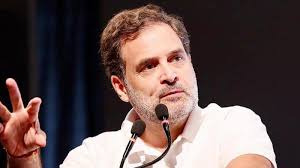
NEW DELHI: Congress leader Rahul Gandhi on Friday accused the Election Commission of “gaslighting citizens” after claims surfaced that marker pens were used to ink voters’ fingers during Maharashtra civic polls, including the Brihanmumbai Municipal Corporation (BMC) election. “Election commission gaslighting citizens is how trust has collapsed in our democracy. Vote Chori is an anti-national act,” Rahul Gandhi said in a post on X. The issue triggered a political row after opposition parties alleged the ink could be wiped off easily, raising concerns about the integrity of the polling process. State Election Commissioner Dinesh Waghmare rejected the allegations, saying marker pens have been used for local self-government elections in the state since 2011 and that the ink is indelible. The BJP slammed Rahul’s attack on poll body and asked if he ‘accepting defeat’ before the counting of votes ends. “Bahana brigade back! Accepting defeat before counting ends? Rahul Back to doing what he does best. Discredit , distort & disinform. Khandani chor now regurgitating claims of Thackerays. By the way what came out of allegations Rahul made on Bihar elections vote chori?” BJP national spokesperson Shehzad Poonawalla said in a post on X. The BMC election, held after an eight-year gap, recorded a voter turnout of 52.94%, according to figures released by the SEC on Friday. Polling concluded on Thursday. The election for India’s richest municipal corporation was marked by allegations from the Shiv Sena (UBT)-MNS alliance, which were later denied by the SEC. The previous BMC polls were held in 2017, and the term of the last elected mayor, Kishori Pednekar, ended in March 2022. The new election is expected to pave the way for Mumbai to get a mayor after nearly four years. According to the SEC, 54,76,043 voters cast their ballots out of 1,03,44,315 registered voters. The turnout included 29,23,433 men, 25,52,359 women, and 251 transgender voters across 277 wards. In absolute numbers, about 3.7 lakh more men voted than women. Maharashtra deputy chief minister Devendra Fadnavis dismissed the controversy, alleging the opposition was preparing excuses for an expected defeat. “The Election Commission has used marker pens several times in the past. I feel some people are preparing to blame something for the result tomorrow,” he said. Courtesy : TOI Note: This news is originally published on https:/timesofindia.com/bha and is used purely for non-profit/non-commercial purposes, especially human rights
‘Even if effort fails … ‘: DK Shivakumar shares cryptic post after meeting Rahul Gandhi
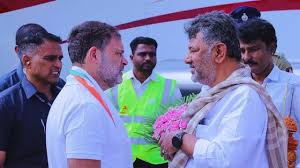
BENGALURU: Karnataka deputy chief minister DK Shivakumar shared a cryptic post on Wednesday after his meeting with Leader of the Opposition Rahul Gandhi. In the post on X, he said: “Even if the effort fails, the prayer does not fail.” The post follows a brief, exclusive interaction between Congress MP Rahul Gandhi and Shivakumar at Mysuru airport on Tuesday, which triggered fresh speculation over a possible change of guard in the state, even as chief minister Siddaramaiah insisted there was no discussion of politics. Rahul, on his way to Gudalur in Tamil Nadu, arrived at Mysuru’s Mandakalli airport around 2pm on a special flight. He was received by Siddaramaiah and Shivakumar, who had earlier flown together to Mysuru. Within minutes, Rahul left by helicopter for Gudalur, while the Chief Minister and his deputy exited the airport separately. Later, when Rahul returned to Mysuru ahead of schedule on his return to Delhi, Shivakumar reached the airport early and had a three-minute one-on-one conversation with the former AICC chief on the tarmac. Siddaramaiah joined them subsequently, after which Rahul interacted briefly with both leaders before leaving on a special flight around 5.45pm. The exclusive exchange between Rahul and Shivakumar, coming amid sustained speculation over a possible change of guard in the state, sparked renewed political buzz. Shivakumar also shared pictures of the meeting with reporters. However, neither he nor Siddaramaiah addressed the media. Earlier, Shivakumar was present when Mysuru city police presented a guard of honour to Siddaramaiah but stayed away when the Chief Minister spoke to reporters. Shivakumar later left for a star hotel in the city, where he briefly stayed while awaiting Rahul’s return. Siddaramaiah went to his residence in Ramakrishna Nagar. Asked about the meeting later, Siddaramaiah said, “It is the media which is speculating a change in CM, but there is no confusion or issues between Shivakumar and me. Some MLAs have spoken without knowledge. Only Shivakumar and I can speak on this. A decision on a change, if any, will be taken by the party high command and we both will abide by it.” To avoid a repeat of scenes witnessed during AICC general secretary KC Venugopal’s visit to Mangaluru airport last month — where supporters of the CM and Shivakumar shouted slogans backing their leaders for the CM post — Congress and police decided to bar party workers from entering Mysuru airport on Tuesday. Courtesy : TOI Note: This news is originally published on https:/timesofindia.com/bha and is used purely for non-profit/non-commercial purposes, especially human rights