
Amid TMC merger buzz, Sena (UBT) leader Sanjay Raut urges NCP (SP) to merge with Congress
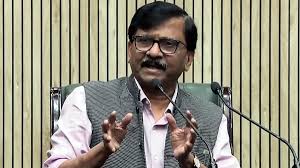
Sources said the NCP (SP) remains divided on the issue, with one section favouring a merger with the Congress and another advocating the party’s independent identity. MUMBAI: After reports of the Trinamool Congress (TMC) merging with the Congress, speculation has now emerged about the possibility of the NCP (SP) merging with the grand old party. Shiv Sena (UBT) leader Sanjay Raut said that the time has come for regional parties that originated from the Congress, such as the TMC and NCP (SP), to rejoin the Congress if they genuinely want to defeat the BJP. Raut said that the Congress is the party that can lead the fight against the BJP under the leadership of Lok Sabha Leader of Opposition Rahul Gandhi. Therefore, all parties aligned with the Congress should merge with their parent party, he said. According to Raut, such a move would make the Congress a much stronger force in India. Reacting to the suggestion, NCP (SP) Lok Sabha MP Supriya Sule said the party would consider Raut’s remarks. She said that Raut is a senior leader whose experience is valuable and, therefore, whatever he has suggested would be considered. Maharashtra Chief Minister Devendra Fadnavis, reacting to the development, said that parties considering a merger have experienced leadership and do not need anyone’s advice on whether to merge with the Congress. He said that some people in politics offer unsolicited advice even when it is not sought. In this photo from Feb. 7, 2025, Shiv Sena (UBT) MP Sanjay Raut addresses a press conference at the Constitution Club in New Delhi. ‘Seeking structural changes’: NCP (SP) MP Sule vows to bring bill to stop horse trading “I am sure that the regional parties will not merge with a sinking ship like the Congress party. Congress is no longer as strong a party as it was earlier. Therefore, the regional parties that came out of Congress will not make the mistake and merge with a dying party. “Even though they dare to make a mistake, that would not have an impact on the BJP. In fact, it will create more political space for the BJP so our expansion will continue even though the opposition consolidates,” Fadnavis said. Sources said the NCP (SP) remains divided on the issue, with one section favouring a merger with the Congress and another advocating the party’s independent identity. However, any decision will ultimately rest with Sharad Pawar. The party will first examine the merger proposal in detail, and only then will a final decision be taken, a source said, requesting anonymity. Sudhir Suryawanshi Courtesy : TNIE Note: This news is originally published on https:/thenewindianexpress.com/bha and is used purely for non-profit/non-commercial purposes, especially human rights
₹730.51 crore diverted from Scheduled Caste Welfare Fund in Maharashtra to ‘Chief Minister Majhi Ladki Behen Yojana’, activists say “This is caste-based financial violence.”
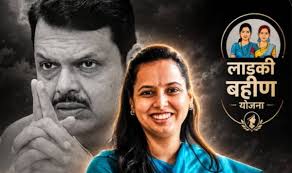
Allegations are that funds reserved for SC/STs are routinely being diverted to other projects to suit political expediency. Mumbai – The Maharashtra Government’s Social Justice and Special Assistance Department issued a government order on May 20th approving the use of funds allocated under the Scheduled Caste (SC) Component Scheme for the Chief Minister Majhi Ladki Behen Yojana. Under this decision, a provision of ₹3000 crore has been made for the financial year 2026-27, of which a total of ₹730.51 crore (₹365.2550 crore each month) is being distributed to the Women and Child Development Department for March 2026 and April 2026. The order clearly states that, in accordance with the Finance Department’s circular dated 09.04.2026, the framework for fund distribution for the financial year 2026-27 has been prepared and submitted. Accordingly, the Finance Department has obtained approval for this. Under this budget head, for the “Chief Minister Majhi Ladki Behen” Scheme (2235-D767), an amount of ₹365.2550 crore for the month of March 2026 and ₹365.2550 crore for the month of April 2026 for female beneficiaries, totaling ₹730.51 billion, has been approved by the government for distribution through the budgetary fund distribution system to the Secretary, Department of Women and Child Development, as the administrative head of the department. This move was criticized on Twitter and other social media platforms. Critics and opposition leaders termed this move as a misuse of funds meant for the welfare of a particular class. Human rights advocate Priyadarshi Telang reacted sharply to the issue, stating that funds reserved for SC/STs, from the ministry to the district collectorate level, are routinely being diverted to other projects tailored to suit political expediency. He alleged that Dalit and tribal settlements are deliberately being deprived of amenities such as roads, drainage, drinking water, schools, and basic sanitation. Telang said, “Using crores of rupees of SC/ST welfare funds to build roads for influential institutions or to fill gaps in other departments is not merely an administrative lapse but a systematic attack on constitutional justice.” He termed the siphoning of ₹730.51 crore from the SC/ST component fund for the Ladki Behen Yojana as “blatant opportunism” and described it as caste-based fiscal violence. He demanded that the Maharashtra government enact a stringent law to prevent such diversion, providing for jail terms for erring officials and politicians. Telang asked whether those who appeal to Dalit votes in the name of social justice, especially the Maharashtra Congress, will demand the restoration of rights for SC/ST communities and oppose the fund diversion? Activist Rajendra Patode called it a loot. In his post on x, he wrote, “The ₹730.51 billion allocated for the ‘Ladki Behen Yojana’ for Scheduled Castes was diverted today! Through reclassification, reserving ‘open categories’ for ‘reserved categories’ without making appointments, the Chief Minister’s pilgrimages, the division of the Scheduled Castes and Tribes Commission, caste and religion registration in the census, and voter re-verification programs, the state government has once again looted the ₹730.51 billion reserved funds for education, scholarships, fellowships, the ‘Swadhar’ scheme, employment, health, water supply, housing, and development works for Scheduled Castes and Tribes.” In February, Maharashtra Social Justice Minister Sanjay Shirsat expressed dissatisfaction with his own government’s policies, reiterating that his department’s funds were being used for schemes like “Ladki Behen,” which was unacceptable. He also stated that due to the financial burden, the government would not increase the promised amount of ₹1,500 under the “Ladki Behen” scheme to ₹2,100. Geetha Sunil Pillai Courtesy: Hindi News
Dalit History Month | ‘They Never Wanted This Job’: How ‘Warsa Hakka’ Forces Women into Safai Karamcharis in Maharashtra

A study of 115 women sanitation workers across Mumbai, Nagpur and Kalyan documents the intersection of caste, gender, occupational health risks and institutional neglect Mumbai- Every morning, while the city is still asleep, a woman ties her hair, picks up her long-handled broom, and steps out to clean the very streets that others will walk on their way to offices. She is a safai karamchari, a government employee of the municipal corporation and yet, she is almost invisible to the very world she cleans. A research study conducted across Mumbai, Nagpur, and Kalyan has brought the stories of these women into the public domain. The study, conducted recently among 115 women employed in municipal sanitation services, found that these women aged between 19 and 46 years, simultaneously face caste discrimination, gender inequality, severe health disorders, and economic uncertainty. Titled “Intersectionality of Caste, Gender and Occupation: A Study of Safai Karamchari Women in Maharashtra,” this research has been authored by Hemangi Kadlak, Pradeep S. Salve, and Payal Karwade. Lead researcher Hemangi Kadlak has shared this study with ‘The Mooknayak’ as a special report for Dalit History Month. The study notes that the problems of safai karamcharis are among the least discussed and most neglected areas in academia. Within this gap, issues specific to women safai karamcharis remain particularly unattended, receiving less coverage than those of their male counterparts even in popular media. This study was undertaken to fill that gap by highlighting the problems women safai karamcharis face, the coping mechanisms they use, and by critically examining government policies made for them. After two months of my marriage, I joined this work; before marriage I was not into it. I married at the age of 16 years. Nobody told me to do this work, I myself started this when I was pregnant with my elder daughter. I thought gharwala should not have financial problem… Muze accha nahi lagata tha, so I started the work. — 39-year-old sweeper, Kalyan Almost three-quarters of the women surveyed entered the occupation through the Preferential Treatment (PT) case locally known as Warsa Hakka, meaning hereditary right. Under this system, a safai karamchari can nominate a wife, son, daughter, sister or other dependent to take over the post after retirement, death or permanent disability. The study found that the majority of women in Mumbai and Nagpur municipal corporations were widows recruited under this system following the death of the male safai karamchari and key earning member of the family. Direct recruitment in Mumbai municipal corporation has been closed since 1989, with current recruitment mostly based on PT. Male safai karamcharis are replaced by female workers when no male relative is available or when male members are below official working age. Among those recruited directly, caste was the decisive factor, almost all women came from Scheduled Caste backgrounds, with castes such as Rukhi, Mehtar, Valmiki, Mahar and Matang most predominant. The majority of women studied were second or third generation in this occupation. The study also found that most women entered sanitation work after marriage, as their parents had discouraged them from doing so beforehand. The researchers recorded an age of marriage below 18 years among most respondents. The researchers observed cases where female karamcharis were forced by family members to enter sanitation work under unfavourable financial conditions, and some women also stated they agreed because of the job security of a government post. My father died with the paralysis and permanent disability of lower back six years after he met with a road accident during working hours. He worked for 20 years in the municipal corporation as street sweeper… my mother continued his work and being an elder in the family, I took over the charge of family… since the past 3 years, I am working in her place as third generation sweeper. — 20-year-old woman safai karamchari, Mumbai Women safai karamcharis are vulnerable to a range of serious health conditions including chronic cough, headaches, respiratory infections, skin disease, anaemia, diarrhoea, musculoskeletal disorders and mental disorders. They also suffer from reproductive health problems and gynaecological issues. The study found musculoskeletal disorders to be particularly prevalent, attributed to the dual burden of heavy physical activity at work and daily household chores. About 88 percent of respondents at Nagpur municipal corporation and 72 percent at Mumbai reported joint or musculoskeletal pain. A high percentage of women also reported mental distress due to work burden and working schedules. Women karamcharis wake between 3 and 4 am, prepare food for their families, and begin work at 6:30 am, continuing until 2 pm without any scheduled break. This schedule results in inadequate sleep and daily health issues including headache, acidity, nausea, blood pressure fluctuations, hypertension and menstrual problems. The study observed that women do not seek treatment in the primary phase of illness unless it becomes intolerable, preferring home remedies first. Despite being entitled to medical claims as government employees, the ground observations showed that women were not provided with medical insurance in Nagpur and Kalyan. In Mumbai, women reported recently receiving medical insurance of around ₹2,50,000, and were demanding its extension to family members with coverage up to ₹5,00,000. Whatever treatment expenditure occurs, women pay out of pocket through family savings, borrowing from friends or relatives, or mortgaging household assets. In Nagpur, women reported that workplaces lacked even basic amenities such as toilets, drinking water, sitting arrangements and first-aid boxes. Women in Nagpur also reported not being provided protective gear for a long time. A similar situation was observed in Kalyan. The situation in Mumbai was found to be better, with women reporting basic facilities and protective measures at reporting places. Across all cities, women had no changing room at their reporting stations I was 40 years old when my husband (age 47) died due to alcohol addiction… When I married him, he would never touch alcohol, but over the period of years he became addicted to alcohol after being engaged in this waste collection work. Many times when he
Maharashtra | Quotas within quota
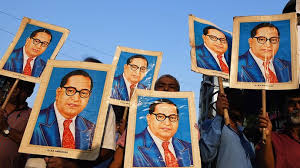
The volatile debate over SC sub-categorisation sharpens in the state. In special focus is the Buddhist Dalit cohort Before caste quotas return to the national headlines with the Census, Maharashtra is offering a sneak preview of the wars that lie ahead—with a proposed quota within a quota for Dalits. The siege is on the very birthplace of reservations in India, centred around Buddhist Dalits, the erstwhile Mahars, who exited Hinduism with Dr Babasaheb Ambedkar in 1956. So the chief question is on uneven development within Dalit communities, but a volatile subclause has been tagged: religion. The Scheduled Castes have a 13 per cent quota. In 2011, they numbered around 13.2 million out of Maharashtra’s 112.3 million population. Hindu Dalit bodies allege Buddhist Dalits, the largest sub-bloc at about 60 per cent, secure most of the benefits; the latter refute this narrative. ‘HINDU VS BUDDHIST’ This old debate will now be addressed within a formal process. In March, a one-man committee under former Patna High Court judge Anant Manohar Badar submitted its report on sub-categorisation of SC reservations. The state has appointed another committee, under chief secretary Rajesh Aggarwal, to invite suggestions and objections and conduct hearings—though the report is not public yet. A total of 59 castes are in the state’s SC list. Despite a rise in reach, the Sangh parivar has struggled to shed its Brahminical image. With disruptions in the Dalit sphere like Bhima-Koregaon behind it, Sangh affiliates have countered with inroads into Hindu Dalit groups like the Matangs and Charmakars, who form the bulk of Hindu Dalits. New ring-fencing of categories, they say, will protect their interests. This has a precedent in the state’s 30 per cent OBC quota: 11 per cent within that is set aside for Vimukta Jati (VJ) and Nomadic Tribes (NTs); the latter spectrum is further subdivided into denotified tribes or VJ (3 per cent), NT B-category (2.5 per cent), C-category (Dhangars, 3.5 per cent) and D-category (Vanjaris, 2 per cent). RESERVATIONS OVER IT Such a prospect for Dalits splits even the Mahayuti into a spectrum of opinions. Some BJP leaders, like MLC Amit Gorkhe, seek sub-quotas; others, like former BJP Rajya Sabha MP Amar Sable and ex-minister and NCP MLA Rajkumar Badole, well, have reservations. Sable demands a “fact-finding committee” to prove uneven benefits. Badole questions the haste around the Badar panel. “The new Census will yield contemporary data on the economic, educational, and political progress made by various SC casteswhy not first wait for its results,” he asks. Badole also puts his finger on the key political point: any quota within a quota would divide the sense of consolidation among Dalits, whom he calls a homogenous class insofar as having been equal victims of untouchability. “A Presidential order is needed to include a caste in the SC category. How can it be left to the discretion of states to go in for sub-categorisation?” he asks. Opposition leaders like Dr Amb-edkar’s grandson Prakash and former Congress minister Nitin Raut, too, have slammed the move. Raut questions the empirical and technical basis of the exercise, and asks how political reservations would be split. Five Lok Sabha seats and 29 assembly seats in Maharashtra are reserved for SCs. Vikram Gaikwad of the Matang Samaj Sangh, a face of the second largest Dalit group, insists quotas presently pass over “the deprived sections”. Splitting them into four sub-categories will ensure all castes will benefit, instead of a select few, goes the line. The government says the process is on, though social justice minister Sanjay Shirsat admits the Badar report needs to be made public for the public to file their objections and suggestions. Outside the policymaking sphere, the move promises to run into the main current of Dalit empowerment politics. Sociologist P.G. Jogdand, former dean, Faculty of Arts, University of Mumbai, says sub-categorisation is not in line with the constitutional scheme. “This is part of divide-and-rule politics,” he alleges. Refuting the contention that Buddhist Dalits had “cornered” quota benefits, he says the community is simply more numerous and was also the first to take to education and hence enabled to avail the opportunities. The counter is six decades old. In 1965, the B.N. Lokur committee had noted: “It has been in evidence for some time now that a lion’s share [of quota benefits] is appropriated by numerically larger and politically well-organised communities. The smaller and more backward communities have tended to get lost, though more deserving of special aid.” That was the logic behind the Supreme Court’s August 2024 permission for state-level sub-quotas. Dhaval S. Kulkarni Courtesy : India Today Note: This news is originally published on https:/indiatoday.com/bha and is used purely for non-profit/non-commercial purposes, especially human rights
Maharashtra: Bangladeshi transgender Ayan Khan arrested for kidnapping and sexual exploitation of a minor boy

Maharashtra Police arrested Bangladeshi transgender Ayan Khan in Mumbai for allegedly kidnapping a minor, forcing him into begging, and sexually abusing him. The case has also exposed illegal infiltration, property accumulation, and a suspected cross-border financial network linked to Bangladesh Vashi: On April 19, the Maharashtra Police arrested a 30-year-old Bangladeshi transgender individual, Ayan Khan, alias Guru Maa or Babu Hijra, from Vashi. Khan is accused of kidnapping a 17-year-old boy from Shivajinagar in Govandi, with the help of an accomplice identified as Safde alias Jara, and forcing him into begging while subjecting him to sexual abuse. The arrest was made by a joint team of local police and the Crime Branch following a complaint filed by the boy’s father. Khan had previously been arrested around six months ago for illegally residing in Mumbai. During the latest investigation, police found that despite being an illegal infiltrator, Khan had acquired properties in Mumbai worth several lakhs of rupees. The abducted minor was rescued and reunited with his family, who were shocked to find him dressed in women’s clothing. Initially hesitant and fearful, the boy reportedly claimed he wanted to live as a girl. However, he later disclosed the abuse and coercion he endured between 10 March and 1 April 2026. Khan has now been booked under the Protection of Children from Sexual Offences (POCSO) Act, along with relevant provisions of the Transgender Persons Act. He remains in police custody as investigations continue. Authorities are also probing a possible larger network that may have facilitated Khan’s illegal entry into India, his continued stay, and the transfer of funds to Bangladesh. According to reports, Khan, who presented as a transgender “guru,” operated under multiple aliases, including Guru Maa and Jyoti Maa, and lived in Rafiq Nagar Part 2 in Shivajinagar, Govandi. In the area, Khan reportedly had influence over more than 300 followers. Originally from Basatpur village in Bangladesh, Khan’s arrest has led to the detention of several other Bangladeshi nationals residing illegally in the city. Investigators have also uncovered a cross-border financial trail linking earnings from alleged illegal activities in India to investments in Bangladesh. Police sources indicate that Khan used money earned in India to fund real estate and commercial ventures in Bangladesh. Despite living illegally in India for over three decades, Khan reportedly owns a house and is involved in constructing a shopping mall in Bangladesh. “During the investigation, we found documents and photographs suggesting that the accused built a house in Bangladesh using money earned here. We also recovered images related to a bhoomipujan ceremony for a mall project,” a senior Mumbai Police official said. Courtesy : Organiser Note: This news is originally published on https:/organiser.com/bha and is used purely for non-profit/non-commercial purposes, especially human rights
Police rescue dalit woman trying to end life after rape

Rural police saved a 26-year-old dalit woman from Paratwada who attempted to commit suicide on Monday by jumping in Wazzar Dam after allegedly being raped on the pretext of marriage. This was her sixth or seventh suicide attempt, said rural LCB PI Kiran Wankhade, reports Anil Jadhav. According to him, the woman was in a relationship with the rape accused. But when he refused to marry her, the woman lodged a complaint with Paratwada police who registered a case of rape and arrested the accused. Later, the accused assured to marry the woman. After woman’s submission, the court granted bail to the accused. But the accused backtracked soon after coming out of jail. As a result, the woman slipped into depression. SP Vishal Anand said the case has no connection with Paratwada sexual exploitation case which the rural police are investigating. Courtesy : TOI Note: This news is originally published on https:/timesofindia.com/bha and is used purely for non-profit/non-commercial purposes, especially human rights
Write Mind | TCS Nashik Scandal: A Case For Muslim Society To Stand In Solidarity With Dalits

The case prompts fresh reflection on the often-highlighted slogan “Jai Bheem-Jai Meem,” first popularised by AIMIM leader Asaduddin Owaisi. At the Tata Consultancy Services BPO unit, eight women employees along with one male colleague have come forward with serious complaints of systematic sexual harassment, mental coercion, and alleged attempts at forced religious conversion. Nine complaints have been registered with the Nashik City police, leading to the arrest of seven individuals -mostly team leaders and an HR functionary – including people with names such as Tausif Attar, Danish Sheikh, Shahrukh Qureshi, Raza Memon, Asif Ansari, Shafi Sheikh, and Nida Khan. The incidents, reported from 2022 into early 2026, allude to a perpetual disturbing pattern rather than motley and scattered incidents: the complainants being young Hindu women and the molesters, Muslim men. Details emanating from the official complaints and the ongoing SIT investigation reveal a calculated approach. The accused, who held supervisory positions, purportedly focused on young Hindu women, largely between 18 and 25 years old and raised in financially challenged and socially backward backgrounds. These selections were not serendipitous. Police have unearthed a documented trail of evidence of internal WhatsApp groups that acted as coordination points, where “hunting lists” were reportedly maintained. They purportedly discussed the victims’ financial struggles, family issues, and emotional isolation, etc., and planned grooming strategies. Promises of career growth or adjustments linked to participating in Ramzan-related practices often served as entry points. Victims have admitted to being implored to join namaz during office hours, observe roza, consume beef, or recite the kalma, sometimes under the shadow of professional consequences or blackmail involving private photographs. One male employee claimed he was told his father’s illness was tied to his Hindu faith and could only improve through conversion. Repeated complaints to HR were allegedly ignored or downplayed, allowing the pattern to continue unchecked for years. This Machiavellian case is not to be misconstrued as a run-of-the-mill workplace issue. It raises questions about an unprecedented abuse of corporate structure for Islamist radicalisation and indoctrination. TCS has acted by suspending the accused employees, restating its long-standing zero-tolerance policy against any form of harassment or coercion, and launching an internal review led by its COO, Aarthi Subramanian. Chairman N Chandrasekaran has called the matter deeply concerning. The moot question remains on pondering if this response addresses the issue or sidelines the elephant in the room. The case also prompts fresh reflection on the often-highlighted slogan “Jai Bheem-Jai Meem,” first popularised by AIMIM leader Asaduddin Owaisi and taken up in certain political quarters. Presented as a bridge between Dalit aspirations, drawing on Dr BR Ambedkar’s legacy, and Muslim political identity, the phrase has been offered as a symbol of progressive unity and social justice. Yet the Nashik allegations bring forward some uneasy questions. The victims largely belong to the very economically and socially backward Hindu communities that the “Bheem” part of the slogan claims to uplift – young people from these sections entering corporate roles with hopes of stability and growth. This naturally leads to an honest inquiry: does the Meem-Bheem framework truly serve to empower backward classes, or does it sometimes create conditions that fragment them along new lines for electoral convenience? And importantly, what about Muslim civil society groups and everyday Indian Muslims who have have consistently distanced themselves from extremist elements? The point here is not to paint an entire community with one brush but to encourage thoughtful self-examination where it matters. Muslim organisations and leaders – bandying the flag of Dalit-Muslim unity – who have long presented themselves as guardians of constitutional principles and minority interests now have a cogent chance. By offering clear and open support to the victims – daughters from the very backward classes often invoked in Meem-Bheem talk – they can show that a common Indian identity matters more than narrow calculations. Such a step would help mend social bonds rather than weaken them. In doing so, they would move beyond any slogan towards a deeper commitment – one in which every Indian, regardless of faith, can chase their aspirations feeling secure under the national flag. That kind of shared understanding, more lasting than any rallying cry, would genuinely honour the backward classes and help weave a stronger national fabric. Additionally, the lack of public condemnation from those who champion this slogan highlights a certain selectivity when it comes to issues of marginalisation. Also, there is a cabal that has long tom-tommed itself as the shining beacon, a trailblazer and a saviour of feminism. One wonders where these usual voices championing women’s dignity and safe workplaces have been on this matter. Then there are media outlets and commentators who pretend to stand up for secular values and communal harmony but have consumed fevicol since this dastardly scandal broke out. In a country where discussions on injustice often spread quickly, the relatively subdued reaction to the plight of these young women, many from Dalit and backward backgrounds, feels noticeable. The Maharashtra government has pushed for a thorough probe, and the SIT continues its work. Yet the true measure lies in how society at large responds. At its core, any form of forced conversion or harassment strikes at the constitutional promises of religious freedom and equal dignity. Will this episode become just another internal corporate machination, or will it encourage earnest dialogue across communities? Objectivity makes it imperative that we ask whether the response would look different if the roles of faith were reversed. Genuine solidarity, after all, cannot depend on convenience or political calculation; it must stand up for the vulnerable no matter who is involved. This bone-chilling scandal that has unfolded in the bustling IT hub of Nashik sends ripples of concern across the country. It is at the forefront of a debate: Are we petrified to call a spade a spade? Is Bharat at the cusp of a nefarious Islamist machination aimed at slyly changing the demography of our democracy? Is this the time to confront the radical Jinn being unleashed upon us
Amravati: Dalit Woman Rescued After Suicide Attempt Following Alleged Rape

Police rescued a 26-year-old Dalit woman from Wazzar Dam in Amravati after an alleged suicide attempt linked to rape and promise of marriage case. A 26-year-old Dalit woman from Paratwada in Maharashtra’s Amravati district was rescued by rural police after she allegedly attempted suicide by jumping into Wazzar Dam on Monday. Police said this was reportedly her sixth or seventh suicide attempt. According to officials, the woman was in a relationship with the accused, who allegedly raped her on the promise of marriage. When he later refused to marry her, she filed a complaint at Paratwada police station, following which a rape case was registered and the accused was arrested. Accused Promised Marriage, Then Backtracked After Bail Police said that after the arrest, the accused assured the woman he would marry her. Based on her statement, he was granted bail by the court. However, once released, he allegedly withdrew from the promise again. A senior police officer, Rural LCB PI Kiran Wankhade, said, “The woman was in a relationship with the accused. After he refused to marry her, she lodged a complaint. The accused was arrested, but later assured marriage. After his bail, he backtracked, which led to her depression.” Following this, the woman reportedly slipped into severe mental distress and repeatedly attempted suicide. Police Rescue and Ongoing Investigation Rural police managed to rescue her in time before the suicide attempt at Wazzar Dam. Authorities confirmed that she is now safe and under observation. Superintendent of Police Vishal Anand clarified that the case is not connected to any other ongoing investigation in the region, including separate allegations of sexual exploitation being probed by rural police. Officials also said that counselling and further support are being provided to the woman. Courtesy : TOP Note: This news is originally published on https:/theobserverpost.com/bha and is used purely for non-profit/non-commercial purposes, especially human rights
Congress wants to remove Rahul Gandhi from leadership team: Fadnavis
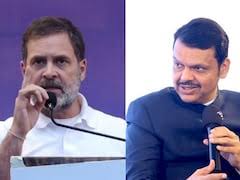
Nagpur: Chief minister Devendra Fadnavis on Sunday claimed there is a growing movement within the Congress party to remove Rahul Gandhi from the leadership team. Replying to a query from reporters about Gandhi’s recent statements that his fight is against the BJP-RSS ideology, Fadnavis said these were mere attempts to change the narrative. Fadnavis was speaking on the sidelines of a public event in Nagpur. “Rahul Gandhi’s fight is merely a superficial one. His struggle is only about how to shield himself from the continuous electoral defeats he has been facing. Within the Congress party, there is a growing sentiment that Gandhi is unable to lead them to victory, so he should be removed. Gandhi’s recent statements are being made to divert attention from that atmosphere,” Fadnavis said. Former state cabinet minister and senior Congress leader Vijay Wadettiwar refuted the allegations saying it’s a figment of Fadnavis’ imagination. Wadettiwar said, “BJP can say anything they want to, but even they know there is no truth in it. If Rahul ji started giving hate speeches, dividing people on basis of religion and caste, then Congress would have a 100% electoral strike rate. If Congress started stealing votes, deleting names through Special Intensive Review (SIR) then we would have won every election. But Rahul ji is fighting as per rules set by the Constitution and that is why BJP is afraid of him.” Regarding Gandhi’s leadership and Fadnavis’ allegation, Wadettiwar said, “From the rank and file to top echelons in the party, everybody stands behind Rahul ji. He is steering the party by staying true to the core ideology of Congress which is to take everyone along and not discriminate among one’s own citizens.” Fadnavis on Sunday denied rumours of a home department meeting discussing withdrawal of cases registered during the Maratha agitation. “No such meeting has taken place. Cases involving loss of govt property cannot be withdrawn — these are explicit directions of the Supreme Court. All other cases, we are withdrawing,” Fadnavis said. He added that he had already provided case withdrawal figures to the legislature. Courtesy : TOI Note: This news is originally published on https:/timesofindia.com/bha and is used purely for non-profit/non-commercial purposes, especially human rights
Dalit History Month | Students Complete All Formalities, Yet Mahatma Gandhi International Hindi University Denies Permission to Screen ‘Ulgulan’!
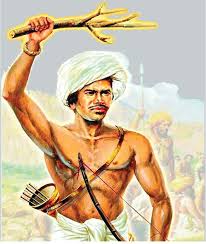
Despite the completion of all formalities, students have yet to receive permission to use the auditorium for this event, which is scheduled for April 3. The students are disheartened regarding the screening of the film on Birsa Munda. Wardha — The screening of the feature film *Ulgulan: Ek Kranti* (Ulgulan: A Revolution)—based on the life of freedom fighter Birsa Munda and organized by students from Jharkhand at the Mahatma Gandhi International Hindi University—has stalled due to administrative confusion and the bureaucratic shuffling of files from one department to another. Despite having completed all necessary formalities, the students have not yet received permission to use the auditorium for this event, which is scheduled for April 3. Rahul Kumar, a resident of Jharkhand’s Garhwa district and a student in the Department of Mass Communication, told *The Mooknayak* that on March 20, he submitted a formal application to the university administration seeking permission to screen the film at the Ghalib Auditorium, located within the Tulsi Bhawan complex. According to the regulations established by the university, it is mandatory to submit such applications at least 10 days prior to the scheduled event—a requirement the student duly fulfilled. The application was forwarded by the Head of the Department, Dr. Sandeep Kumar Verma. On the very same day, the Dean of Student Welfare, Dr. Awadhesh Kumar Shukla, also approved the application and forwarded it to the Registrar, Qader Nawaz Khan. A situation of administrative delay and uncertainty continues to prevail at the Mahatma Gandhi International Hindi University regarding the screening of the feature film *Ulgulan: Ek Kranti*—based on the life of freedom fighter Birsa Munda—which is being organized by students hailing from Jharkhand. Subsequently, on March 23, the file reached the Registrar’s office; however, from there, it was sent back to the office of the Dean of Student Welfare. The file was then forwarded to the Cultural Committee, where the review and certification of the film were completed by March 26. Despite the completion of all necessary formalities, the students have not yet been granted final permission. The administration has now deferred the matter to a meeting scheduled for April 1, a delay that has left the students feeling deeply disappointed. University Regulations Regarding Programs With a view to ensuring that the various programs organized by students are conducted in a systematic, disciplined, and orderly manner—and in alignment with the objectives of the University—the following set of regulations has been established. According to a circular issued by the Registrar, Kader Nawaz Khan, on January 19, 2026: The program must be academic in nature and consistent with the objectives of the University. Applications related to a program must be submitted to the Registrar’s Office at least 10 (ten) days prior to the scheduled date of the program. With the exception of special occasions—such as the birth or death anniversaries of eminent personalities—programs shall be organized exclusively on working days. Applications must be forwarded through the respective Head of the Department. The organization of the program must be conducted under the supervision of the concerned Head of the Department or a committee of faculty members nominated by them. Permission shall not be granted for any student-organized program on days when a program is being organized by the University itself. It is mandatory to attach the subject matter and detailed description of the program along with the application. The application form must be accompanied by a list containing the names of at least 10 students (or, in departments with fewer than 10 students, the names of all enrolled students), along with their department names, mobile numbers, and email addresses. Additionally, the name of the hostel and the respective room numbers must be specified. The resources available within the auditorium must be utilized responsibly. In the event of any damage, the cost of repairs or replacement must be borne by the program coordinator or the organizing team of research scholars/students. Pasting posters, banners, or similar materials on the walls within the University campus is strictly prohibited. The auditorium shall be allocated exclusively to the specific organizing team that applied for it; this allocation is non-transferable and cannot be altered. Posters and banners may be displayed only at the specific venue of the program and at locations designated by the University. The display of posters and banners at any location other than those designated is prohibited. The organizing team must submit an Undertaking (Declaration of Compliance) regarding adherence to the regulations governing the event, forwarded through their respective Head of the Department. 13. The duration of the program shall not exceed two hours, and permission for the program shall be valid until 9:00 PM. Apart from the auditorium and the resources currently available, the university will not provide any additional resources. The organizers themselves must make arrangements for these. Students state that for the past 10 days, they have been continuously making rounds of various offices seeking permission to use an auditorium, yet they have received no clear response. Student Rahul Kumar remarks, “We submitted our application on March 20. The regulations stipulate that permission should be granted within 10 days; however, we are facing nothing but stalling tactics. The file is simply being shuffled from one department to another.” The students have also raised the pertinent question: given that the film has already received certification from the Central Board of Film Certification and all administrative formalities have been completed, why is there such a delay in granting permission? They allege that the deliberate shuffling of the file between departments is a calculated attempt to postpone the event. It is noteworthy that this event had already been announced during the screening of another documentary. Consequently, the failure to secure permission at the eleventh hour casts a shadow of doubt over the students’ efforts and has completely sapped their enthusiasm for organizing the event. Geetha Sunil Pillai Courtesy: Hindi News