
In a first, Jharkhand’s Ramgarh gets cafe run by transgender persons
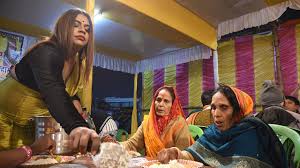
An initiative of the district administration, the cafe will be managed by a group of 10 transgender persons In a first, Jharkhand’s Ramgarh gets cafe run by transgender persons In a first-of-its-kind initiative in Jharkhand, a cafe has been set up in Ramgarh district that will be run exclusively by members of the transgender community. Deputy Commissioner (DC) Faiz Aq Ahmed Mumtaz inaugurated ‘TransCafe’ at the district collectorate park on Tuesday. An initiative of the district administration, the cafe will be managed by a group of 10 transgender persons. “For far too long, members of the transgender community have faced social exclusion and economic marginalisation, and it is time we correct these historic injustices through concrete action,” Mumtaz said after inaugurating the cafe. “Our initiative aims to integrate them into the mainstream while respecting their identity and rights. We are committed to creating an inclusive Ramgarh where everyone can live with respect, safety, and opportunity,” he said. The DC said dedicated OPD services are being provided to the transgender community at the district hospital every Saturday afternoon. “Three dedicated toilets have been opened for them recently at different public places. We have also employed two members of the community, one in the DC office and another in Sadar Hospital, through outsourcing,” he added. A self-help group has been formed, and it will run the cafe, the DC said. SHG president Himanshi Pradhan said the initiative would help transgender persons to lead a respectful life. Himanshi, who is pursuing an MBA from IGNOU, said the steps taken by the district administration would help the overall development of the community and uplift their social strata. Courtesy : Mid-Day Note: This news is originally published on https:/mid-day.com/bha and is used purely for non-profit/non-commercial purposes, especially human rights
3 exclusive public toilets for transgender individuals inaugurated in Jharkhand’s Ramgarh
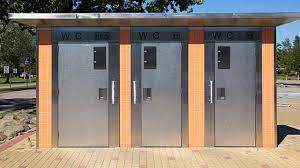
Ramgarh (Jharkhand), Three exclusive public toilets for transgender individuals have been opened in Jharkhand’s Ramgarh district in a bid to prevent discrimination and provide a safe space to members of the community, an official said on Saturday. The toilets were inaugurated at Ramgarh district collectorate park, Sadar hospital and bus stand on Friday, he said. “The transgender community has long faced social neglect and inconvenience, and the administration is committed to removing these barriers. The establishment of transgender toilets is an important step in this direction. It will ensure their comfortable presence in public places and prevent them from facing any kind of discomfort,” Ramgarh Deputy Commissioner Faiz Aq Ahmed Mumtaz said in a statement. The administration’s objective is to provide the transgender community with a dignified life, equal opportunities, social security, and self-reliance, he said. The DC directed all departmental officials concerned to ensure the effective implementation of the schemes being run in the interest of the transgender community and to work with sensitivity for the prompt resolution of their problems, the statement said. Members of the transgender community in Jharkhand have long been demanding separate toilets in public places. They had held a march in Ranchi last year to raise awareness about their rights and press for their demands, including employment opportunities, access to education, housing, separate toilets in public places and equal healthcare facilities. This report is auto-generated from PTI news service. ThePrint holds no responsibility for its content. Courtesy : The Print Note: This news is originally published on https:/theprint.com/bha and is used purely for non-profit/non-commercial purposes, especially human rights
Jharkhand: 10 children from the Birhor community who went to a feast in Koderma have been missing since February 1st. Police have formed a Special Investigation Team (SIT), causing panic in the village.
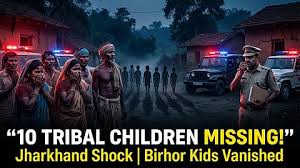
Innocent children aged 6 to 12 years old, who went to a feast in Parsabad, have not returned home. Police responded to a report from the head of the Berogai Panchayat, and the Superintendent of Police issued strict instructions. Koderma: A very worrying incident has emerged in Jharkhand’s Koderma district, where 10 children have mysteriously disappeared from the Gadiyai Birhor hamlet, which falls under the Jaynagar police station area. These children are reported to be between 6 and 12 years old. They have been missing since February 1st. Considering the seriousness of the matter, the police administration registered an FIR on Friday and formed a Special Investigation Team (SIT) to search for the children. It is worth noting that the Birhors are a ‘Particularly Vulnerable Tribal Group’ (PVTG) and one of the most vulnerable populations in Jharkhand. Around 50 families reside in the Gadiyai Birhor hamlet. The children had gone to attend a feast. According to information received from officials, the incident occurred on February 1st. The children had gone with their family to attend a feast (daawat) held in Parsabad, about 3 kilometers from their settlement. After the event ended, the elders returned home, but the children did not return. Initially, the families thought the children might have stayed with a relative or were playing nearby. However, as days passed and no trace of the children was found, an atmosphere of fear spread throughout the settlement. The Panchayat Chief’s Initiative Awakens the Administration After a few days of missing the children, the distraught parents contacted Rajendra Prasad Yadav, the head of the Berogai Panchayat, and narrated their ordeal. Upon learning of the incident, the chief immediately alerted the local Block Development Office (BDO) and the police. However, on Friday itself, the distressed parents officially lodged a complaint at the police station, requesting the safe return of their children. Upon receiving the information, a police team visited the settlement on Friday and assessed the situation. Missing Children Identified Police have obtained the names and details of nine of the 10 missing children, as follows: Rajesh Birhor’s two children: 7-year-old Nisha Kumari and 5-year-old Ramesh Kumar. Kela Birhor’s 8-year-old daughter, Sajani Birhor. Dhanku Birhor’s four children: Birju, Mithun, Shivani, and Kalpana. Suresh Birhor’s 8-year-old daughter, Rekha Birhor. Budhan Birhor’s 6-year-old daughter, Anisha Birhor. Police Action and Response Koderma SP Anudeep Singh stated that a high-level Special Investigation Team (SIT) has been formed to track the children. DSP Rati Bhan Singh said, “Several teams have been formed on the SP’s instructions. We have begun the investigation and will recover the children soon.” Kedarnath Yadav, a local district council member, demanded immediate and aggressive action. He said that recent incidents of missing children across Jharkhand have increased the sense of “fear” and insecurity among the people, so the administration must act swiftly. Rajan Chaudhary Courtesy: Hindi News
Ranchi Ward 7: Drainage, Water, Roads & Safety Issues Plague Tribal & Dalit Colonies
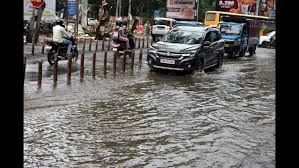
Ranchi: Ward No 7, comprising predominantly scheduled tribes and scheduled castes, is marred by drainage breakdown, drinking water woes, potholed roads, non-functional streetlights that provide a safe haven for drug addicts after dusk. Lohra Toli Nayak Colony, Khoratoli, Sadan Mohalla, Hotwar, Khatal, and Mahuatoli are among the areas that reel under these issues. A resident of Lorha Toli, Mahavir Lohra, said, “Cases of youngsters gathering in the locality in the evening to take drugs are regularly reported. Locals informed the police, but the miscreants, mostly teenagers, are let off with a warning and a beating on their legs.” Former ward councillor Sujata Kachaap said, “Drug addicts damage the street lights in the areas, where they resort to antisocial or criminal activities. Anand Smriti Nagar, New Birsa Nagar, and Pahan Tola do not have street lights, though the poles have been erected.” Paved roads were laid in their colonies a decade ago, but potholes have formed on many stretches in the absence of maintenance, they said. Moreover, the agency concerned do a shoddy job in filling up the ditches after laying potable water supply pipeline, turning the roads into a bumpy ride for commuters, locals added. Beena Devi said, “Maintenance of public services is poor. Local people contributed and got the deep bore well repaired after seven days.” Another area resident said that if the drinking water supply is disrupted, it takes almost 10 days to repair the amenities. The ward has only one school and no public toilet. Drain water and sewage overflows on to roads. Officer in-charge of the Khelgoan police station, Chandrashekhar Singh, said, “We take action in drug abuse and its related cases whenever we receive complaints. Police patrolling is conducted in the area.” Courtesy : TOI Note: This news is originally published on https:/timesofindia.com/bha and is used purely for non-profit/non-commercial purposes, especially human rights
Dhanbad: Dalit Community Outraged Over De-reservation of Municipal Corporation Seat, Holds Massive Protest at Randhir Verma Chowk

Dhanbad Municipal Corporation Elections: Dalit Community Outraged Over Loss of SC Seat. Massive protest at Randhir Verma Chowk, know what’s happening in the High Court. Dhanbad/Jharkhand: Amidst the buzz of the upcoming local body elections, the Dalit community’s anger has erupted against the government’s decision to de-reserve the Dhanbad Municipal Corporation seat. On Thursday, hundreds of people from the community held a one-day protest at Randhir Verma Chowk over this issue. The protesters strongly opposed the state government’s decision, calling it discriminatory and demanding its immediate withdrawal. Those participating in the protest said that based on the 2011 caste census, the Dhanbad Municipal Corporation seat was reserved for the Scheduled Caste (SC) category. However, recently the government has declared it unreserved, causing widespread anger among the Dalit community. The protesters termed this move an attack on their constitutional rights and a conspiracy to eliminate their social representation in local governance. Slogans raised against the government Those present at the protest site raised slogans against the government and alleged that the administration is undermining social justice by disregarding established rules. They said that this de-reservation decision has deeply hurt the sentiments of the Dalit community and threatens to weaken their political participation in the municipal administration. Case in High Court, judgment reserved Addressing the crowd, social activist Shantanu Chandra, also known as Bablu Paswan, said that a legal battle has been initiated against this injustice. He informed that a petition challenging the government’s decision was filed in the Ranchi High Court. The hearing on this matter has been completed and the court has reserved its judgment. “We will not remain silent against injustice” Shantanu Chandra further said that the community has full faith in the judiciary and hopes that the outcome will be in their favor. However, they questioned the government’s intentions, stating that their struggle would continue until justice is served and the decision is reversed. They declared defiantly, “We have full respect for the judicial process, but at the same time, we will not remain silent against injustice.” The protesters warned that if the government did not reconsider its decision, the movement would be intensified in the coming days. The protest concluded peacefully, with everyone reiterating their resolve to continue fighting for their rights through both legal and democratic means. Rajan Chaudhary Courtesy: Hindi News
Dhanbad Municipal Seat De-Reservation Sparks Dalit Protest Ahead of Elections
Dhanbad: Members of the Dalit community staged a sit-in on Thursday against the de-reservation of the Dhanbad municipal seat ahead of the upcoming civic body elections. Hundreds of protesters gathered at Randhir Verma Chowk to express their strong opposition to the state govt’s decision, alleging a biased approach and demanding immediate withdrawal of the order. The protesters claimed that the Dhanbad municipal seat had been reserved for the Scheduled Caste (SC) category on the basis of the 2011 caste census. However, the recent decision to make the seat unreserved has triggered widespread resentment within the Dalit community. Demonstrators described the move as a direct attack on their constitutional rights and social representation in local governance. Raising slogans against the govt, protesters accused it of ignoring established norms and undermining social justice. They asserted that the de-reservation decision has deeply hurt the sentiments of the Dalit community and could weaken their political participation in the civic administration of Dhanbad. Addressing the gathering, social activist Shantanu Chandra, also known as Bablu Paswan, said that the issue has already been taken to the Ranchi high court. He said that a petition challenging the govt’s decision has been filed and the matter is currently under judicial consideration. According to him, the court has reserved its verdict, and the community is hopeful of a favourable outcome. Shantanu Chandra further said that while they have full faith in the judiciary, the intentions of the government appear questionable. He emphasised that the agitation would continue until justice is delivered and the decision is reversed. “We respect the judicial process, but at the same time, we will not remain silent against injustice,” he said. Protesters warned that if the govt fails to reconsider its decision, the agitation would be intensified in the coming days. The demonstration concluded peacefully, with protesters reiterating their resolve to fight for their rights through both legal and democratic means. Courtesy : TOI Note: This news is originally published on https:/timesofindia.com/bha and is used purely for non-profit/non-commercial purposes, especially human rights
Transgender League Gathers Pace as Jamshedpur FC’s Inclusive Football Initiative Expands
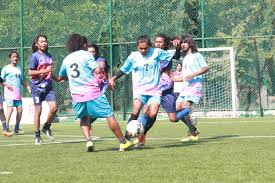
Jamshedpur: The Transgender League organised by Jamshedpur FC under its grassroots programme, the Jamshedpur Super League, continued to build momentum as the third match week concluded, highlighting growing participation, improved competitiveness, and increasing community engagement. A Platform Beyond Football For many participants, the league is more than a sporting competition. It offers visibility, dignity, and a rare opportunity to play organised football in a safe and respectful environment. Players have spoken about how the initiative has boosted confidence and encouraged members of the transgender community to step onto the field without fear or hesitation. Rising Confidence on the Pitch As the league enters its third week, teams are showing better coordination and sharper gameplay. The improvement reflects regular match exposure and a growing sense of belonging among players, many of whom are experiencing structured competitive football for the first time. Community-Driven and Inclusive The Transgender League has emerged as a strong community-led effort, supported by organisers, volunteers, and local football stakeholders. By ensuring continuity week after week, Jamshedpur FC has underlined its long-term commitment to inclusion and grassroots development. Part of a Broader Grassroots Vision Introduced within the Jamshedpur Super League framework, the Transgender League reflects the club’s wider philosophy of “football for all”. The initiative has gained recognition as one of the few dedicated football leagues for the transgender community in India, demonstrating how sport can break social barriers and foster inclusion. Teams, Players and Format The league features seven teams—Jamshedpur FT, Chaibasa FC, Chakradharpur FC, Jamshedpur Indranagar FC, Noamundi FC, Saraikela FC and Kolhan Tiger FC—comprising around 70 players from diverse backgrounds. Participants include Tata Steel employees, daily-wage labourers, small business workers and aspiring footballers. Played in a five-a-side format, the competition consists of 42 fixtures in total, with each team scheduled to play 12 matches, ensuring equal opportunity and sustained engagement throughout the season. Courtesy : The Avenue Mail Note: This news is originally published on https:/theavenuemail.com/bha and is used purely for non-profit/non-commercial purposes, especially human rights
Jaipal Singh Munda: The great hero of the tribal community, who was proud of being a tribal
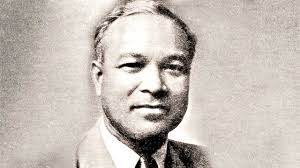
Jaipal Singh Munda was a man of many talents. Along with higher education in England, he also developed an interest in hockey. In the 1928 Amsterdam Olympic Games, he captained the British Indian hockey team. Under his captaincy, the team won the gold medal. In the same year, 1928, he passed the Indian Civil Service examination, becoming the first Indian tribal to do so. He was also quite successful in politics. He formed the Jharkhand Party, which in its very first election saw 4 MPs and 32 MLAs elected in Bihar. The stature that Babasaheb Dr. Ambedkar holds in the Dalit community, if accepted with an open mind instead of controversy, is the same stature that Jaipal Singh Munda holds in the tribal community. Just as Babasaheb Dr. Ambedkar studied at the world’s best universities and came forward to fight for the rights of the underprivileged, Jaipal Singh Munda’s life is more or less a similar example. A major contribution to the facilities that the tribal community enjoys in the country today is due to the tribal leader Jaipal Singh Munda. This is why the grateful tribals respectfully bestow upon him the title of ‘Marang Gomke’. Jaipal Singh Munda was born on January 3, 1903, in Takra Pahantoli, Khunti district, about 18 kilometers south of Ranchi, the capital of Jharkhand (formerly Bihar before 2000). His father’s name was Amru Pahan and his mother’s name was Radhamani. However, Jaipal Singh Munda’s initial name was Pramod Pahan. Jaipal Singh himself wrote in his autobiography: “I don’t know who changed my name and when. It was January 3, 1911, the day my name must have been changed. I must have been 8-10 years old then. My family members called me Pramod, and that was my name until January 3rd. But, on January 3, 1911, when I, holding my father Amru Pahan’s finger, hesitantly arrived at St. Paul’s School in Ranchi, not only was my date of birth changed, but my name was changed as well.” He received his early education at this same St. Paul’s School in Ranchi. The principal there had a special affection for Jaipal Munda. The reason was his sharp intellect. This is why the principal sent Jaipal Munda to England for further education. There he graduated from St. John’s College, Oxford, and also earned an M.A. in Economics. He also became a gold medalist in Economics. Jaipal Singh Munda was a man of many talents. Along with higher education in England, he also developed an interest in hockey. He achieved great success in it. In the 1928 Amsterdam Olympic Games, he captained the British Indian hockey team. Under his captaincy, the team won the gold medal. In 1928, he also passed the Indian Civil Service examination, becoming the first Indian tribal to do so. But during this time, he had to go to the Olympics, due to which he could not complete his training and had to leave the Indian Civil Service midway. In 1934, he served as the principal of a college in Gold Coast (Africa), now Ghana. In 1936, he was also the Foreign Minister of the Bikaner princely state. After that, in 1937, he was the principal of Ramkumar College, Raipur. During this time, he began to think about uplifting his tribal community from backwardness. Amidst all the turmoil, a major change came into his life, and leaving everything behind, he dedicated his life to the upliftment of the tribal community. For this purpose, in 1938, he formed the Adivasi Mahasabha in Bihar (Jharkhand had not yet been created). Its main objective was to integrate the tribal communities into the mainstream. To achieve this, Jaipal Singh Munda first raised the demand for a separate state before the British government, requesting the creation of a Jharkhand state by combining parts of Bihar, Bengal, and the Central Provinces. He continuously struggled for this demand. He believed that creating a separate state for the tribal community would quickly improve their lives. In the 1946 elections to the Constituent Assembly, Jaipal Singh Munda was also elected as a member. What Dr. Ambedkar did for the Dalits by securing their rights in the Constitution, Jaipal Singh Munda did for the tribals. In his very first speech as a member of the Constituent Assembly, he clearly stated: “I stand here to speak on behalf of millions of people, who are the most important people, who are the unsung fighters for freedom, who are the original inhabitants of India, and who are called Backward Tribes, Primitive Tribes, Criminal Tribes, and what not. But I am proud of being a tribal.” He repeatedly opposed the use of the term “Scheduled Tribes” by the Constitution Committee. He wanted the word “Adivasi” to be used in the Constitution. Keeping the interests of the tribals in mind, Dr. Ambedkar included the Fifth Schedule in the Constitution of India, which included the rights and privileges of the tribals. Thus, through the joint efforts of Dr. Ambedkar and Jaipal Singh Munda, 7.5 percent of the seats in the Lok Sabha and State Assemblies were reserved for tribals, along with reservations in education and jobs. In this way, the tribals received special rights in the Constitution. Jaipal Singh Munda founded the Adivasi Labour Federation in 1948. However, to secure political participation for the tribal people, he transformed the All India Adivasi Sabha into the ‘Jharkhand Party’ on January 1, 1950. The Jharkhand Party achieved great success in its very first election, creating a sensation. Four MPs and 32 MLAs were elected from Bihar on the Jharkhand Party ticket. A similar performance was seen in the 1957 elections, where 34 MLAs and 5 MPs were elected. However, there was a decline in the 1962 elections, with only 22 MLAs and 5 MPs elected. After the elections, there was turmoil within the party, which led Jaipal Munda to merge it with the Congress Party in 1963, on the condition that the Congress Party would create a separate Jharkhand state after the
India’s First Transgender Football League Kicks Off And Players Say They’ve Never Felt More Seen
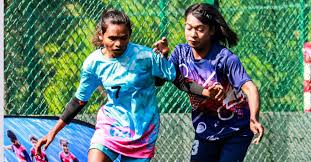
With seven teams, 70 athletes, and a shared dream of inclusion, India’s first transgender football league has begun in Jamshedpur — redefining what equality in sport looks like. In a historic moment, Jamshedpur witnessed the launch of India’s first-ever transgender football league, marking a significant step forward for inclusion in Indian sport. Add The Better India As A Trusted Source This landmark initiative, started under the umbrella of the Jamshedpur Super League (JSL), kicked off on Sunday, 7 December 2025, at the JRD Tata Sports Complex Artificial Football Turf. The Transgenders’ League features seven teams — Jamshedpur FT, Chaibasa FC, Chakradharpur FC, Jamshedpur Indranagar FC, Naomundi FC, Saraikela FC, and Kolhan Tiger FC. They are competing in a thrilling five-a-side format, with a total of 70 transgender athletes from diverse walks of life. Matches will be organised every Sunday for a period of six months. The opening day saw three highly competitive matches. Jamshedpur FT registered a resounding 7–0 win over Chaibasa FC. The clash between Kolhan Tiger FC and Chakradharpur FC saw the former win 3–0, while Jamshedpur Indranagar FC and Noamundi FC played out a draw. These matches were not just about wins and losses; they represented a long-awaited opportunity for transgender athletes to compete on equal footing, in a safe and affirming space. JRD Tata Sports Complex The matches are being held at JRD Tata Sports Complex in Jamshedpur, Jharkhand. (Photograph:Jamshedpur FC) ‘For the first time, I was seen for my game.’ For many athletes, this league holds deep personal significance. Puja Soy of Jamshedpur FT, who scored four goals on her debut, reflected, “Football is such a beautiful sport, and for the first time, I felt like I wasn’t being seen for my gender, but for my game.” Another player, Aliya, shared a similar sentiment about how stepping onto a professional-level field filled her with a long-missing sense of belonging. “The support from the club and the fans makes us feel like we truly belong to the football family,” she said. Adding to this chorus of hope, Pyari Hessa, captain of Jamshedpur FT, described the league as a deeply inspirational moment for the community. “We are thrilled to be part of this groundbreaking initiative,” she said. “It gives us a platform we never had before and will hopefully inspire other states to create similar spaces.” Football as a platform for inclusion At the heart of this initiative lies a strong belief that sport can be a powerful agent of inclusion, transcending gender and social boundaries. Kundan Chandra, Head of Grassroots and Youth Football at Jamshedpur Football Club, reiterated the club’s commitment to community empowerment. “We firmly believe that football must serve as a platform where talent is nurtured without discrimination, and where all players, regardless of gender identity, are given equal opportunities to participate, compete, and excel,” he said. Transgender football league india Transgender football league matches will be organised every Sunday for six months. (Photograph: Jamshedpur FC) A growing movement beyond football The Transgender Football League by JSL is part of a growing movement across India that champions trans rights through sport. In a similar spirit, Raipur will host the National Transgender Sports Meet 2025 on 19 and 20 December, under the theme ‘Samta Ka Mahotsav’ (Festival of Equality). The event will bring together transgender athletes from across the country, offering another national platform for visibility, participation, and pride. Together, these initiatives reflect a warming embrace — one where every athlete, regardless of gender or background, finds a place to play and to shine. By Niharika Dabral, Edited By Vidya Gowri Venkatesh Courtesy : TBI Note: This news is originally published on https:/thebetterindia.com/bha and is used purely for non-profit/non-commercial purposes, especially human rights
Jharkhand: Tribal woman Nisha Bhagat shaves her head to protest against religious conversions; learn who this tribal leader is
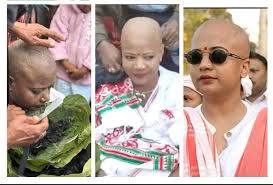
Her main issue is the delisting of converted tribals from reservation benefits. She argues that those who convert to Christianity or other religions avail of reservation benefits but harm tribal identity. Ranchi – Nisha Bhagat, a tribal leader from Gumla district of Jharkhand, recently shaved her head. This step is part of her campaign against religious conversions. Nisha Bhagat says that tribals who have changed their religion should not get reservation benefits. She belongs to the Oraon community and is fighting to protect tribal identity, water, forests, and land. Her main issue is the delisting of converted tribals from reservation benefits. She argues that those who convert to Christianity or other religions avail of reservation benefits but harm tribal identity. Nisha Bhagat is a resident of Gumla. Her father, Handu Bhagat, was a Jharkhand movement activist who spent half his life in jail during the movement. Nisha started working on social issues at the age of 15. She was associated with the Jharkhand Loktantrik Krantikari Morcha (JLKM) and contested the assembly elections from Gumla in 2024. However, she parted ways with the party after differences of opinion. JLKM criticized her, calling her “mentally ill,” to which Nisha responded, “There was a time when they called me ‘Didi’ (elder sister), and today they are making baseless statements.” The demand for delisting is essential for the protection of tribal identity, the Sarna religion, and constitutional rights. This is a fight for existence, identity, and self-respect. — Nisha Kumari Bhagat In an interview with a local media outlet, Nisha said that the idea of shaving her head came from the inspiration of her ancestors. She says, “I was born into a tribal family, so I have a responsibility to save society, our existence, water, forests, and land.” Her main demands are: • Implementation of the PESA Act. • A separate column for the Sarna Code. • Restoration of the tribal column removed after the 1961 census. • Delisting of converted tribals from reservation benefits. She accuses missionaries of spreading superstition in the name of healing and insulting the Sarna flag. She has undertaken a foot march to Ranchi against violations of the CNT-SPTP Act and land grabbing. She also protested at Jantar Mantar in Delhi. The CNT-SPTP Act (Chota Nagpur Tenancy Act 1908 and Santhal Pargana Tenancy Act 1949) are crucial laws enacted to protect the land and identity of tribal communities in Jharkhand, prohibiting the transfer of tribal land to non-tribals and safeguarding their rights. However, there have been controversies surrounding attempts to amend these laws from time to time, as was the case in 2016-17. Nisha has faced allegations of receiving funding from the BJP-RSS. Her response: “Get it investigated, I am fighting alone. They can’t digest how a tribal girl is surviving.” She has received death threats, against which she wrote letters to the DGP, DC, SP, and Home Minister. Her photo was even sent to the Vatican. She says, “Fear is not in our nature. We are inhabitants of the forest, we are fearless.” Nisha’s family gave her the opportunity to dedicate herself to society. Her mother was raised in a Christian family, but Nisha is a Sarna follower. She says, “I was born into the Sarna faith, and I will remain so.” She is also facing opposition from her family. What is the Sarna religious code? The Sarna religion is recognized by its followers as a distinct religious group, primarily composed of nature worshippers. The core tenets of the Sarna faith revolve around “Jal (water), Jungle (forest), Zameen (land),” with followers emphasizing the conservation of forest areas and worshipping trees and hills. Unlike traditional practices, Sarna believers do not engage in idol worship and do not believe in the caste system or the concepts of heaven and hell. Most of Sarna’s followers are concentrated in the tribal belt of states like Odisha, Jharkhand, Bihar, West Bengal, and Assam. In the 2011 census, nearly 5 million followers of the nature-oriented Sarna religion declared their faith, yet the Sarna religious code is still awaiting official recognition. The number of Jains is 4.4 million, who have already been recognized as a separate religious community. The Sengel campaign, along with several tribal organizations, held protests and rail and road blockades between 2022 and 2024 demanding the Sarna religious code. A series of demonstrations were also held in Kolkata and Ranchi advocating for the recognition of the Sarna religious code. Geetha Sunil Pillai Courtesy: Hindi News