
Defence objects to allowing new material at evidence stage in defamation case against Rahul Gandhi
Pune: The defence lawyer, Milind Pawar, on Tuesday filed a written objection before a special MP/MLA court in the city against the court allowing new material to be introduced at the evidence stage, without it forming part of the original record, in an ongoing defamation case against Congress leader Rahul Gandhi. Satyaki Savarkar, the grandnephew of the Hindutva ideologue Vinayak Damodar Savarkar, has filed the case regarding the Congress leader’s alleged defamatory speech against the Hindutva icon, in London in March 2023. The court has concluded the recording of Satyaki’s chief examination, and the case is at the stage of cross examination by the defence lawyer. The case has been posted for next hearing on Feb 6. Satyaki had earlier submitted a CD, containing the alleged defamatory speech, along with a 65B (verification) certificate under the Indian Evidence Act, but it could not be played in court due to some unknown technical reasons. At a subsequent hearing, Satyaki presented a couple of pen drives along with a verification certificate and the court allowed them to be played. The defence lawyer then orally objected to this but the court overruled the objection on the basis that Satyaki had made an oral request. On Tuesday, the defence submitted a written objection before commencing with the cross examination of Satyaki. It stated that overruling the objection was “illegal, procedurally irregular, and contrary to the mandatory provisions of the Indian Evidence Act, 1872, and the Code of Criminal Procedure, 1973, because electronic evidence cannot be admitted, exhibited, or played without following the due procedure prescribed by law.” The defence objection stated, among other things, that the Supreme Court has consistently held that the complainant cannot be permitted to introduce new facts, documents, or electronic material at the stage of chief examination which were neither pleaded in the complaint nor disclosed earlier, as such a course would impermissibly expand the scope of the complaint, amount to filling up lacunae in the prosecution case, and cause serious prejudice to the defence. Following the filing of the written objection, and upon the request made by advocate Pawar, the court adjourned the matter for further cross examination. Courtesy : TOI Note: This news is originally published on https:/timesofindia.com/bha and is used purely for non-profit/non-commercial purposes, especially human rights
Himachal fire tragedy: Toll rises to 10 in Arki market blaze; 9 Nepalese nationals, 8-year-old among dead

SHIMLA: The death toll in the fire at Arki market in Himachal Pradesh’s Solan district was revised to 10 on Tuesday.Rahul Jain, additional deputy commissioner, Solan, said nine Nepalese nationals and an eight-year-old child from Bihar had died in the blaze that broke out in an old wooden residential building and spread to nearby shops and buildings after multiple cylinder explosions. Three more human remains were found after a 30member National Disaster Response Force team from Slapper in Mandi and a sniffer dog squad joined search operations. Jain said, “Only human remains are being found, as this was an extremely severe fire. Only one injured child was recovered on Monday, who later died in the hospital.” Three more human remains were found after a 30-member National Disaster Response Force (NDRF) team from Slapper in Mandi district and a sniffer dog squad joined search operations at Arki market in Solan district on Tuesday. Rahul Jain, additional deputy commissioner of Solan, said a total of 10 people, including nine Nepal nationals and an eight-year-old child from Bihar, had lost their lives in the fire. “So far, we did not recover any complete body. Only human remains are being found, as this was an extremely severe fire. Only one injured child was recovered on Monday, who later died in the hospital,” he added. Jain said the rescue teams recovered two human remains on Monday and three on Tuesday, which the forensics team collected and stored for possible DNA matching later. A joint search operation involving NDRF, SDRF, the district administration, police, home guards, and fire department teams is set to resume on Wednesday morning. The Solan deputy commissioner ordered a magisterial inquiry into the complete incident on Monday. DNA samples from the deceased persons’ family members were collected, and identification of the recovered remains will be possible only after DNA results, said SDM Arki, Nishant Tomar. The police registered an FIR under Section 287 of the Bharatiya Nyaya Sanhita for negligent conduct with respect to fire or combustible matter, said SP Gaurav Singh. Also, legal action is being taken against the damaged 4-storey old wooden building owner, Rajeev Gupta, under the Essential Commodities Act, as at least 6 LPG cylinders stored in the building exploded during the blaze. The owner was using his building’s ground and first floor for commercial purposes, and the top 2 floors were rented out to migrant labourers from Nepal and Bihar. The search operation was also obstructed on Monday due to encroachments made in the carriageway at the site, as the search teams were not able to move JCB earth excavator machines smoothly. Courtesy : TOI Note: This news is originally published on https:/timesofindia.com/bha and is used purely for non-profit/non-commercial purposes, especially human rights
‘Even if effort fails … ‘: DK Shivakumar shares cryptic post after meeting Rahul Gandhi
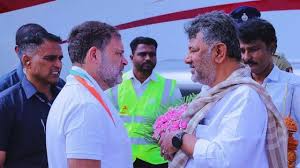
BENGALURU: Karnataka deputy chief minister DK Shivakumar shared a cryptic post on Wednesday after his meeting with Leader of the Opposition Rahul Gandhi. In the post on X, he said: “Even if the effort fails, the prayer does not fail.” The post follows a brief, exclusive interaction between Congress MP Rahul Gandhi and Shivakumar at Mysuru airport on Tuesday, which triggered fresh speculation over a possible change of guard in the state, even as chief minister Siddaramaiah insisted there was no discussion of politics. Rahul, on his way to Gudalur in Tamil Nadu, arrived at Mysuru’s Mandakalli airport around 2pm on a special flight. He was received by Siddaramaiah and Shivakumar, who had earlier flown together to Mysuru. Within minutes, Rahul left by helicopter for Gudalur, while the Chief Minister and his deputy exited the airport separately. Later, when Rahul returned to Mysuru ahead of schedule on his return to Delhi, Shivakumar reached the airport early and had a three-minute one-on-one conversation with the former AICC chief on the tarmac. Siddaramaiah joined them subsequently, after which Rahul interacted briefly with both leaders before leaving on a special flight around 5.45pm. The exclusive exchange between Rahul and Shivakumar, coming amid sustained speculation over a possible change of guard in the state, sparked renewed political buzz. Shivakumar also shared pictures of the meeting with reporters. However, neither he nor Siddaramaiah addressed the media. Earlier, Shivakumar was present when Mysuru city police presented a guard of honour to Siddaramaiah but stayed away when the Chief Minister spoke to reporters. Shivakumar later left for a star hotel in the city, where he briefly stayed while awaiting Rahul’s return. Siddaramaiah went to his residence in Ramakrishna Nagar. Asked about the meeting later, Siddaramaiah said, “It is the media which is speculating a change in CM, but there is no confusion or issues between Shivakumar and me. Some MLAs have spoken without knowledge. Only Shivakumar and I can speak on this. A decision on a change, if any, will be taken by the party high command and we both will abide by it.” To avoid a repeat of scenes witnessed during AICC general secretary KC Venugopal’s visit to Mangaluru airport last month — where supporters of the CM and Shivakumar shouted slogans backing their leaders for the CM post — Congress and police decided to bar party workers from entering Mysuru airport on Tuesday. Courtesy : TOI Note: This news is originally published on https:/timesofindia.com/bha and is used purely for non-profit/non-commercial purposes, especially human rights
Cal HC orders SFIO to investigate Rose Valley assets attached by ED
Kolkata: Calcutta High Court on Tuesday directed Centre to order the Serious Fraud Investigation Office (SFIO) to investigate Rose Valley assets worth Rs 1,171 crore attached by ED across the country, and submit a comprehensive report within a month. The division bench of justices Rajarshi Bharadwaj and Uday Kumar noted that Rose Valley-linked cases had been pending with Calcutta HC since 2016. “The attached assets constitute public money in every sense, held in trust for restitution to victims,” the bench stated. Earlier, after the bench had asked the SFIO to conduct an audit following allegations of bias against the asset disposal committee, the statutory body had raised objections before the HC stating “jurisdictional” trouble over conducting forensic audit of the committee, since it cannot be called an “office”. The division bench clarified, “No direction has been or is being issued to SFIO to conduct any audit or assessment of the receipt and payments of Asset Disposal Committee per se… Rather, the forensic audit mandate pertains squarely to the attached assets of the Rose Valley Group of Companies, which indisputably qualify as “companies” incorporated under the relevant company laws. These assets, valued between Rs 20,000 to 30,000 crore and presently under attachment by the ED, form the corpus central to the multi-crore chit fund scam that has defrauded thousands of innocent depositors.” Sebi, CBI, ED, ADC, Rose Valley representatives, and depositors, were directed to extend unconditional cooperation by furnishing all requisite documents, electronic data, physical access, and clarifications within seven days of SFIO’s requisition. Centre was directed to take a decision after perusing the report as to whether SFIO needed to proceed with forensic auditing. The order comes a day after the Supreme Court on Monday rejected the ED’s petition seeking a stay on HC’s forensic audit order. Courtesy : TOI Note: This news is originally published on https:/timesofindia.com/bha and is used purely for non-profit/non-commercial purposes, especially human rights
Swami Vivekananda’s views on the Hindu caste system and its Ambedkarite / Dalit–Bahujan Critique
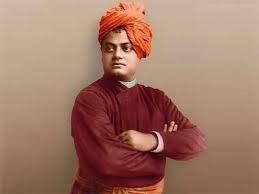
Swami Vivekananda’s views on the Hindu caste system were complex, internally contradictory, and evolved over time. He criticised caste-based discrimination and untouchability, yet defended the theoretical framework of Varna and stopped short of advocating the annihilation of caste as later demanded by Dr. B.R. Ambedkar. in Annihilate Caste By SR Darapuri Below is a clear, structured, and academically balanced account of his position. Vivekananda’s Basic Position: Varna vs. Caste Swami Vivekananda consistently distinguished between: Varna – which he described as a functional division of labour and Jāti (caste by birth) – which he admitted had become degenerate and oppressive. His Claim was that the original Varna system was based on guna (qualities) and karma (work), not on birth. He believed that Varna was socially useful in ancient times and the problem was hereditary fixation and ritual hierarchy, not Varna itself. Critique of Caste-Based Discrimination Vivekananda strongly condemned Untouchability, Social exclusion, denial of education to Shudras and Brahminical arrogance and priestly monopoly. He called untouchability a “great national sin”, he blamed upper-caste Hindus for India’s weakness and decline and He insisted Shudras must be educated and uplifted. He said: “So long as the millions live like brutes, no number of politics will save this country.” Defence of Varna Order Despite his social criticism, Vivekananda did not reject caste altogether. He argued that society naturally produces different types of people, Varṇa represented psychological and occupational diversity and complete social equality was neither possible nor desirable. He even said that all societies have caste-like divisions and modern class systems are merely new forms of caste. This defence places him closer to reformist Hinduism than to radical social democracy. His View on Shudras and “Lower Castes” The progressive aspects of Swami Vivekanand are: He declared Shudras were oppressed historically, asserted that education and power must reach them and he predicted the rise of Shudras as inevitable. His prophecy was that “The next Buddha will be born among the Shudras.” He also said that the next raj will be of Shudras. His limitations were that he did not call for destruction of the caste system, he saw uplift as moral–spiritual, not structural–legal and he never demanded political power or constitutional safeguards for Dalits. Vivekananda vs. Ambedkar (Brief Contrast) Vivekananda criticised Birth-based caste as degenerated Varna but Dr. Ambedkar Saw it as a structural system of graded inequality. Vivekananda defended the Varna system whereas Dr. Ambedkar completely rejected it. Vivekananda treated Untouchability as a moral sin whereas Dr. Ambedkar saw it as a crime requiring law. Vivekananda saw spiritual reform as its solution whereas Dr. Ambedkar stood for Annihilation of caste and law. Vivekanand said that Hindu scriptures required to be reinterpreted whereas Dr. Ambedkar rejected them as creators of the caste system. Ambedkar famously argued that reformers like Vivekananda underestimated the structural violence of caste. Why Vivekananda Did Not Reject Caste Entirely Three key reasons were: Vedantic framework as he believed Hindu philosophy could be morally purified without social rupture. His fear of social chaos as he saw caste abolition as potentially destabilising Indian society. His elite reform perspective which made his approach top-down and moral, not subaltern or political. Scholarly Assessment Most historians agree that Vivekananda was progressive for his time but not radical enough to challenge caste as an institution. His ideas helped Hindu reform, not Dalit emancipation From a Dalit–Bahujan or Ambedkarite perspective, his approach is seen as: Ethically sympathetic but structurally inadequate. Swami Vivekananda: Condemned caste oppression, opposed untouchability and supported Shudra uplift. But he: defended Varna, did not call for annihilation of caste and prioritised spiritual reform over social justice. Thus, he remains a reformist within Hinduism, not a revolutionary against caste. Swami Vivekananda’s Thought from an Ambedkarite and Dalit–Bahujan Perspective (Sympathetic yet Structurally Weak) From an Ambedkarite and Dalit–Bahujan perspective, Swami Vivekananda’s engagement with the question of caste can be described as sympathetic reformism, but one that fails to challenge the foundational structure of the caste system. According to Dr. B.R. Ambedkar, caste is not merely a moral aberration or social evil; rather, it is a system of division of labourers, rooted in the division of labour itself. It is an institutional arrangement that determines and restricts an individual’s social, economic, and intellectual possibilities from birth. Ambedkarite / Dalit–Bahujan Critique (a) The Fundamental Problem of Defending Varna From an Ambedkarite standpoint, Vivekananda’s greatest limitation lies in his theoretical defence of the Varna system. Ambedkar unequivocally argues: “There is no fundamental difference between Varna and caste; Varna is the philosophical justification of caste.” From this perspective, Vivekananda’s claim that Varna was originally based on guna (qualities) and karma (work) is regarded as historically and sociologically untenable. Dalit–Bahujan thinkers argue that any social system which determines occupation, status, and social worth across generations on the basis of birth is inherently oppressive. (b) Moral Critique versus Structural Critique Swami Vivekananda viewed untouchability as a “sin” and a form of “immorality,” whereas Dr. Ambedkar understood it as a form of crime and institutionalized social violence. This marks the fundamental divergence between the two approaches: Vivekananda sought solutions in moral purification, compassion, and spiritual awakening whereas Ambedkar located solutions in law, political power, social rights, and structural transformation. From a Dalit–Bahujan standpoint, moral exhortations without structural change amount to little more than consolation for the oppressed. (c) The Shudra Question and the Question of Power Vivekananda expressed sympathy for the Shudras and spoke of their uplift, but: He did not raise the issue of political representation, he did not demand redistribution of resources and power and he did not propose dismantling Brahmanical monopoly over knowledge For Ambedkar, the liberation of Shudras and Ati-Shudras meant education, organization, and power. Vivekananda’s thought does not reach this level of political and institutional clarity. (d) Scriptures, Religion, and Caste While Vivekananda attempted to portray caste as a “distortion” through reinterpretation of Hindu scriptures, Ambedkar arrived at a far more radical conclusion that “Caste is the soul of Hinduism; unless the religion itself is transformed, caste cannot be
‘Rahul Gandhi has no right to be the Leader of the Opposition’, why is Jagadguru Rambhadracharya so furious now? Find out
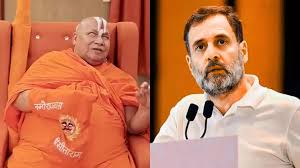
During a discourse in Jaipur, Jagadguru Rambhadracharya launched a scathing attack on Rahul Gandhi, saying that someone who insults India and Indian culture abroad has no right to be the ‘Leader of the Opposition’. This is not the first time; Rambhadracharya has previously questioned Rahul’s lineage and culture. Jagadguru Rambhadracharya targets Rahul Gandhi again Jaipur: Tulsipithadhishwar Jagadguru Swami Rambhadracharya has once again given a strong statement regarding Congress leader Rahul Gandhi. Speaking to news agency ANI, Rambhadracharya said that a person who goes abroad and insults India and Indian culture, does he have the right to become the Leader of the Opposition? His implication was that Rahul Gandhi does not have the right to be the Leader of the Opposition. Rambhadracharya is currently giving discourses in Jaipur. It was during this time, while speaking to the media, that he made the statement about Rahul Gandhi. Remove the word Jagadguru from your name – Congress leader A few days ago, Swami Rambhadracharya had also given a statement regarding Rahul Gandhi. He had said that Rahul Gandhi should be removed from the post of Leader of the Opposition. Congress leaders across the country protested against this statement. Andhra Pradesh Congress Committee President V. Gurunadham criticized Jagadguru Rambhadracharya’s statement, saying that his statement is strange. As a Jagadguru, he is interfering in political issues. In such a situation, you (Rambhadracharya) should remove words like Jagadguru from your name because there is no point in having such words before your name. Swami Rambhadracharya has also given the statement ‘Rahul Gandhi is not a Hindu’ Two years ago, Swami Rambhadracharya had given a highly controversial statement regarding Rahul Gandhi. He had said that his grandmother’s father himself used to say that he was unfortunately a Hindu. Then he married a Parsi. He is the grandson of Feroze Gandhi, therefore he himself is not a Hindu. Angered by the statement made by Rahul Gandhi in Parliament, Swami Rambhadracharya launched a scathing attack on Rahul Gandhi in Chitrakoot. He also said that Rahul Gandhi has gone insane and that he doesn’t know a single word of Indian culture. Authored by: Pulkit Saxena • Contributed by: Ramswaroop Lamrod About the Author Pulkit Saxena is a Digital Content Producer at Navbharat Times Online. Starting his journalism career in Delhi, he now covers Rajasthan politics, crime, current affairs, and offbeat news. He has been working in the media for about 7 years. He holds a first-class postgraduate degree in Journalism from Makhanlal Chaturvedi University and has been associated with NBT (Digital) for the past 3 years. Courtesy: Hindi News
Why did Priyanka Gandhi get a big responsibility in Assam? Learn about the political signals behind this decision

In Assam, the Congress party has given Priyanka Gandhi a major responsibility, appointing her as the chairperson of the party’s screening committee. This decision was not taken suddenly; rather, several political messages are hidden behind it. Priyanka Gandhi given a major responsibility in the Assam elections New Delhi: The Congress party has appointed Priyanka Gandhi Vadra as the chairperson of the screening committee for the Assam Assembly elections. This is a decision that is being seen as having far-reaching political implications both within and outside the party. This is the first time that a member of the Gandhi family has been given the responsibility of selecting candidates for a state assembly election. Fear of defections: The political context of Assam makes this decision even more significant. Chief Minister Himanta Biswa Sarma is not only counted among the influential leaders of the BJP, but he is also a vocal critic of the Gandhi family. In this situation, by giving the responsibility of Assam to Priyanka, the party wants to show that it is fielding the same political leadership in his stronghold that has a strong grip on the organization. The Congress also fears that some party leaders might switch sides before the elections. Defections are not new in Northeast politics. The Congress has already suffered the consequences of this in the past. Therefore, the top leadership wants to have control over the candidate selection process. It is hoped that Priyanka will promote only those leaders who have a clean image, ideological commitment, and loyalty to the organization so that there is no defection after the elections. The work of the screening committee may seem technical, but it is one of the decisive processes in electoral politics. The main task of the screening committee is to scrutinize the potential candidates from each assembly constituency, their political background, commitment to the organization, social acceptability, and most importantly, the possibility of defection. Although the final approval is given by the Central Election Committee (CEC), the responsibility of deciding which names reach the CEC rests with the screening committee. Assam is not new to Priyanka. Although she may not have been formally visible in the 2021 assembly elections, her role at the strategic level was crucial. The decision to appoint Chhattisgarh Chief Minister Bhupesh Baghel as the senior observer for Assam was also part of the same strategy. This time too, Bhupesh Baghel and Karnataka Deputy Chief Minister D.K. Shivakumar have been appointed as senior observers for Assam. The Congress’s position in Assam is not very weak. In the 2021 assembly elections, out of 126 seats, the NDA got 75 and the Congress alliance got 50 seats. The difference in vote percentage was only 1.6%. The NDA got 43.9% and the Congress alliance got 42.3% of the votes. This shows that if there is better coordination among the opposition, the contest could be tough this time. This is where Priyanka’s role becomes crucial. Signs of a comeback in UP: Assembly elections are to be held in Uttar Pradesh in 2027. UP is the state where Priyanka was in charge of the Congress for a long time. The party is now once again preparing to sharpen its strategy around her. On January 12, Priyanka’s birthday, the UP Congress launched a special 100-day strategy. In the 2022 assembly elections, the contest narrowed down to a fight between the BJP and the SP. This caused significant damage to the Congress. Now the party wants to break new ground by focusing on social justice and OBC politics. The responsibility of the screening committee in Assam and the preparations for 2027 in UP indicate that the Congress is gradually establishing Priyanka in a broader political role. This role is not limited to campaigning but is related to strategy, organization, and leadership. Authored by: Hemant Rajoura • Edited by: Akshay Srivastava About the Author Hemant Rajoura is a Special Correspondent at Navbharat Times. He deeply covers the politics of major opposition parties including Congress, SP, and RJD. He also keeps a close watch on important news related to health, science, and policy. Ground reporting, clarity of analysis, and strong access to reliable sources are the hallmarks of his journalism. Courtesy: Hindi News
Rahul invites TN Congress leaders to Delhi on Jan 18
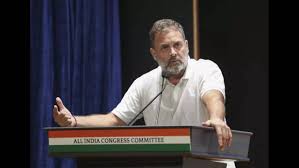
Chennai: Congress leader Rahul Gandhi has asked senior leaders of the party’s state unit, TNCC, to visit New Delhi for a two-day visit. “Rahul called us for a meeting on Jan 18 and 19,” a Congress MP from TN told ToI. Senior leaders, MPs and MLAs have been asked to make the visit. A senior Congress leader said Rahul was likely to discuss the demand from a section of Congress men for an alliance with TVK as well as the demand for power sharing if the alliance continued with DMK. “We will explain the concerns of our functionaries and put forth our suggestions. He will take a call on both the issues and give a clear road map for us to proceed,” said a Congress leader. While AICC functionary Praveen Chakravarty and some TNCC leaders, including Manickam Tagore, have batted for a share in power, Rahul and other national leaders have not expressed their views on this aspect. Chief minister M K Stalin too has been maintaining a stoic silence on the issue of power sharing, though other DMK leaders such as organisational secretary R S Bharathi said the demand cannot be accepted. “Rahul is expected to visit Tamil Nadu around Jan 25. We have planned a tentative programme schedule for him, which will be conveyed to him during our visit,” said the Congress leader. Once Rahul confirms the schedule, preparations for his visit will begin. The meeting has been organised to sort out issues before the visit, so that Congress can proceed with seat sharing talks as well as campaigning, he said. Courtesy : TOI Note: This news is originally published on https:/timesofindia.com/bha and is used purely for non-profit/non-commercial purposes, especially human rights
Congress’s ‘Hindu vs. Hindutva’: What Rahul Gandhi said before Mani Shankar Aiyar
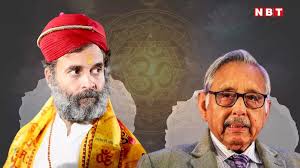
Before Mani Shankar Aiyar’s statement on Hinduism and Hindutva, Congress leader Rahul Gandhi had also made several controversial remarks on the issue. Some of their political allies have also joined the Congress leaders’ efforts to differentiate between Hinduism and Hindutva. New Delhi: Congress or its like-minded party leaders have not just recently started trying to prove that Hinduism and Hindutva are different. In the last few years, numerous controversial statements have been made on this issue by even the top leadership of the Congress party, which has also faced strong political opposition. Before Mani Shankar Aiyar, who has often landed the Congress party in political trouble due to his controversial statements, Rahul Gandhi had also said many things about Hinduism and Hindutva that have caused a political uproar. ‘I am a Hindu, not a Hindutva follower’ While serving as the national president of the Congress in August 2018, Rahul Gandhi said during a conversation with editors in Hyderabad, “I don’t believe in any kind of Hindutva, neither soft nor hard core.” In December of the same year, at a Congress rally against inflation in Jaipur, Rajasthan, he made another statement that sparked considerable controversy. He said, “I am a Hindu, but I am not a Hindutva follower.” ‘Hindutva followers are power-hungry’ Rahul Gandhi didn’t stop there. He further said, “All of you are Hindus. Mahatma Gandhi was a Hindu, but Nathuram Godse was a Hindutva follower.” He further added, “The Bhagavad Gita tells Hindus to seek the truth. On the other hand, Hindutva followers have no concern for the truth; they are power-hungry. They are filled with hatred because of their fear… Since 2014, Hindutva followers have been in power, while Hindus are out of power. These (Hindutva followers) are fake Hindus.” In 2019, the Congress contested the Lok Sabha elections under Rahul’s leadership, and the BJP broke all its previous records of victory. ‘What do Hindus need Hindutva for?’ Even after this crushing defeat, Rahul’s views on Hindus did not change. Speaking at a Congress training camp in Wardha, Maharashtra, in November 2021, he said, “When Hindus follow Hinduism, what need do they have for Hindutva?… Is Hinduism meant for beating up a Sikh or a Muslim person? No, but Hindutva is.” “Hindutva means Hinduism living in fear” In fact, during a debate organized by the Calcutta Debating Circle in Kolkata on the topic “Hinduism needs protection from Hindutva,” Congress leader Mani Shankar Aiyar said, “Hindutva means Hinduism living in fear. It tells 80 percent of Hindus to be afraid of 14 percent of Muslims.” According to him, “Hindutva is a political ploy.” Mahua Moitra on Hinduism and Love Jihad At the same event, TMC MP Mahua Moitra said, “A Hindu who follows Hinduism can imagine love between a Hindu and a Muslim, but someone who follows Hindutva will say, no, this is love jihad. A Bengali Hindu who eats meat will offer meat to Goddess Kali, but a Hindutva follower will say, this is not right…” (With agency inputs) Written by: Anjan Kumar About the Author Anjan Kumar is an Assistant Editor at Navbharat Times Online. He has over 23 years of experience in electronic and digital media. He is interested in writing on topics related to politics, current affairs, judiciary, defense, foreign affairs, and business. Courtesy: Hindi News
Congress has done nothing in past two years, says KTR
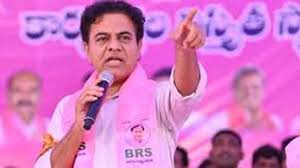
Hyderabad: BRS working president KT Rama Rao on Thursday said the Congress govt had done nothing in the past two years, except for evasion (Egavethalu), demolitions (Kulchivethalu) and destruction (Pelchivethalu). Speaking at a meeting in which several leaders from Kollapur assembly constituency joined the BRS at Telangana Bhavan, the BRS working president said the Congress came to power by making 420 promises and six guarantees, but did not fulfil any of these. Similarly, houses of the poor were bulldozed in the name of encroachments by HYDRAA, and even irrigation structures and check dams were damaged by using detonators by the sand mafia. “Chief minister Revanth Reddy has failed to protect the interests of Telangana in water issues,” he added. Countering Congress leaders who criticised his recent comments on Rahul Gandhi, KTR reminded them that it was Revanth Reddy — not him — who had repeatedly abused the Gandhi family in the past. KTR challenged the Congress to first question their own CM before pointing fingers at the opposition. Addressing reports that the Congress govt plans to hold the GHMC election soon, KTR called upon the BRS cadre to face the election together and secure victory. He highlighted that under the BRS govt, Hyderabad witnessed nearly 9,700 crore worth of development, which should be taken to every division and every voter. Taking a dig at Serilingampally MLA Arekapudi Gandhi, KTR said the MLA betrayed the BRS and joined Revanth Reddy only to protect his land interests. Despite this betrayal, KTR said every meeting held in Serilingampally has been receiving massive support due to the unwavering affection the people have for KCR and the BRS. Earlier today, senior leader Gutta Narendra Yadav, along with hundreds of his followers and supporters, joined the BRS. Says houses of the poor were bulldozed in the name of encroachments by HYDRAA, and irrigation structures and check dams were damaged by using detonators by sand mafia Courtesy : TOI Note: This news is originally published on https:/timesofindia.com/bha and is used purely for non-profit/non-commercial purposes, especially human rights