
Watch: PM Modi, Rahul Gandhi engage in candid conversation during Jyotiba Phuletribute ceremony
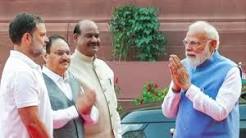
NEW DELHI: Prime Minister Narendra Modi and Leader of Opposition in Lok Sabha Rahul Gandhi on Saturday were seen engaging in a brief and candid conversation during the tribute ceremony held on the occasion of Mahatma Jyotiba Phule’s 200th birth anniversary at the Parliament premises. The interaction came at a public event attended by top constitutional leaders, including President Droupadi Murmu, Vice President CP Radhakrishnan, Lok Sabha Speaker Om Birla and other senior leaders, who gathered at Prerna Sthal to pay floral tribute to the social reformer. The brief exchange between PM Modi and Rahul Gandhi drew attention, especially given the history of sharp political confrontation between the two leaders. This comes after both leaders have frequently targeted each other in public speeches and political rallies. Congress leader Rahul Gandhi has in the past accused Prime Minister Modi of being a ‘compromised’ leader and alleged that India’s foreign policy was being influenced externally. “Our foreign policy is PM Modi’s personal foreign policy… Everyone considers this a universal joke… Donald Trump knows exactly what PM Modi can and cannot do. If the Prime Minister is compromised, our foreign policy is compromised,” Rahul Gandhi had said earlier. Prime Minister Narendra Modi has also responded strongly to opposition criticism in the past, often taking indirect jibes at Rahul Gandhi during public rallies. In one such instance, addressing a rally in Gogamukh in Assam ahead of polls, PM Modi referred to the Congress leader as a ‘self-proclaimed prince’. “Rajkumar” (self-proclaimed prince), PM Modi had said while targeting Rahul Gandhi in an earlier public address. Earlier in the day, both leaders had separately paid tribute to Mahatma Jyotiba Phule, one of India’s most prominent social reformers known for his work on women’s education, caste equality and empowerment of marginalised communities. President Droupadi Murmu, Prime Minister Narendra Modi, Lok Sabha Speaker Om Birla, and Leader of Opposition Rahul Gandhi were among those who offered floral tributes at Prerna Sthal in Parliament. In his message on X, PM Modi praised Phule’s contribution to social justice and education, calling him a pioneer who empowered the marginalised through knowledge and reform. Rahul Gandhi, in his post on X, also highlighted Phule’s lifelong struggle against discrimination and inequality, saying his ideals continue to inspire the path towards social justice. “On the birth anniversary of the great social reformer Mahatma Jyotiba Phule, I offer my humble salutations to him. He dedicated his entire life to protecting the rights and entitlements of the marginalised. His struggle against discrimination and inequality showed the nation the path to equality and justice,” Rahul Gandhi said. Mahatma Jyotiba Phule, born on April 11, 1827, in Satara, Maharashtra, is widely regarded as a pioneer of India’s social reform movement. He, along with his wife Savitribai Phule, played a key role in advancing women’s education and challenging caste-based discrimination through the Satyashodhak Samaj. Courtesy : TOI Note: This news is originally published on https:/timesofindia.com/bha and is used purely for non-profit/non-commercial purposes, especially human rights
Rare Modi-Rahul interaction breaks the internet
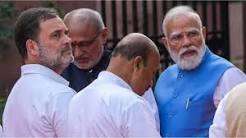
NEW DELHI: Prime Minister Narendra Modi and the leader of opposition in Lok Sabha, Rahul Gandhi, on Saturday exchanged pleasantries and talked briefly at an event, a rarity in the otherwise cold and indifferent equation between them. It is not often that Rahul joins ministers and high functionaries like Lok Sabha Speaker Om Birla to greet the PM at commemorative events often held in Parliament complex but he did so on Saturday at a programme to pay tributes to reformer Jyotirao Phule. As he acknowledged greetings from everyone, Modi appeared to ask Rahul something and both then chatted for a while as they waited for Vice-President C P Radhakrishnan and President Droupadi Murmu. The exchange went viral on social media and piqued interest in political circles. There were suggestions that Modi inquired about the health of Rahul’s mother Sonia Gandhi who was recently admitted to a hospital. However, there was no official word on what transpired between them. Rahul has often in the past skipped such events and has often been accused by BJP of not giving due regard to state events and high dignitaries. Congress, too, in turn has often alleged govt does not accord protocol that is due to the LoP. Unsurprisingly, the pleasantries exchanged between Modi and Rahul created a buzz. Govt has announced a two year-long programme in the run-up to Phule’s 200th birth anniversary next year. To oversee the nationwide commemoration starting from 11 April 2026 to 11 April 2028, govt has set up a high-level committee under the PM’s chairmanship. Courtesy : TOI Note: This news is originally published on https:/timesofindia.com/bha and is used purely for non-profit/non-commercial purposes, especially human rights
Puducherry elections 2026: Personality politics dominates as NDA and INDIA bloc battle for power
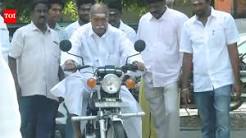
PUDUCHERRY: Though the demand for statehood featured in the campaign rhetoric of almost all parties, the battle for Puducherry unfolded less along strict party lines and more as a contest shaped by the personal clout of candidates with influence over specific constituencies. The main fight is between chief minister N Rangasamy’s All India NR Congress (AINRC)-led NDA and the Congress-led INDIA bloc. Seeking a second straight term, the AINRC-BJP alliance is banking on Rangasamy’s personal appeal. But the presence of actor-turned-politician Vijay’s Tamilaga Vettri Kazhag am (TVK) and Senthamizhan Seeman’s Naam Tamilar Katchi (NTK) has added an element of uncertainty, with both seen as potential vote-splitters. Spread across Puducherry, Karaikal, Mahe, and Yanam, the UT’s 30 elected assembly seats will shape the 33-member House, which also includes three members nominated by the Centre. Seat-sharing reflects the bipolar nature of the contest: AINRC is contesting 16 seats, BJP 10, and allies ADMK and LJK two each. In the opposition camp, Congress is in the fray in 16 seats and DMK in 14, with one of DMK’s seats allotted to Viduthalai Chiruthaigal Katchi. Prime Minister Narendra Modi, Union home minister Amit Shah, BJP national president Nitin Nabin, and Union minister J P Nadda campaigned for the NDA in the final stretch. For the INDIA bloc, MP Rahul Gandhi, Tamil Nadu chief minister M K Stalin, and minister Udhayanidhi Stalin headlined rallies. The alliance targeted the incumbent govt by alleging that the UT was being run at Delhi’s behest rather than by a govt that reflected the people’s mandate. Both camps have also had to manage internal strains. Congress faces rebellion in at least five constituencies, where dissidents are contesting against DMK nominees. On the NDA side, friction surfaced over accommodating Latchiya Jananayaga Katchi (LJK), led by Jose Charles Martin, son of lottery baron Santiago Martin. Rangasamy was reportedly reluctant to concede seats to the ally and agreed only after pressure from BJP. Political observers say Puducherry’s electoral politics have been steadily changing. “For the last two decades, Puducherry has seen a departure from strict party ideologies. The focus has shifted towards strong personalities who hold significant sway over specific constituencies,” said political analyst D Santhosh. “In this landscape, Rangasamy has emerged as the central figure. In the absence of a strong, unifying opposition leader, the electoral narrative has consistently circled back to his personal popularity and leadership style,” he added. The real test may lie in whether Rangasamy’s personal standing can once again carry the alliance through, whether BJP can deepen its footprint in the UT, or whether the opposition can overcome its own challenges. The answer will come on May 4, when the suspense over Puducherry’s next govt ends. Courtesy : TOI Note: This news is originally published on https:/timesofindia.com/bha and is used purely for non-profit/non-commercial purposes, especially human rights
‘Grave consequences’: Mallikarjun Kharge at CWC meet says government’s women quota move violates poll code
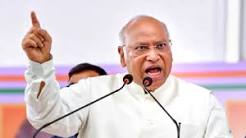
NEW DELHI: Congress president Mallikarjun Kharge on Friday claimed that the Narendra Modi-led government’s proposed move to amend the women’s reservation law and expand the number of parliamentary seats could violate the Model Code of Conduct and have “grave consequences”. He also asserted that the opposition will move unitedly on this. Addressing a meeting of the Congress Working Committee (CWC), Kharge said the issue required deeper consultation and that the opposition would respond collectively. “Therefore, following this meeting, we will formulate a collective strategy by holding discussions on these issues with our colleagues in the opposition as well. We will move forward unitedly,” Kharge was quoted as saying by news agency PTI. The Congress chief also questioned the timing of the special Parliament session scheduled from April 16 to 18, alleging it was aimed at political gain. “The Modi government is convening Parliament’s sittings with the sole intention of securing political advantage and is keen to pass the Constitutional Amendment Bill in utmost haste,” Kharge said. He noted that the proposed amendments could significantly impact India’s electoral system and therefore warranted “very deep deliberation”. “Based on the information we have received so far, the government wants to implement women’s reservation starting from the 2029 elections … it wants to increase the number of seats in the Lok Sabha from 543 to 816,” Kharge said. Raising concerns over the delimitation exercise, he added, “This delimitation proposal will have serious consequences. Therefore, there is a need for very deep deliberation on delimitation.” Kharge further alleged that the government had ignored the opposition’s request to hold an all-party meeting after the conclusion of polling in West Bengal. “This constitutes a violation of the Model Code of Conduct … we harbour no expectation that [the Election Commission] will even take cognisance of these violations,” he said. The meeting, attended by senior leaders including Rahul Gandhi and Priyanka Gandhi Vadra, discussed the government’s proposal on women’s reservation, delimitation, and the broader political context ahead of upcoming elections. In a Facebook post, Rahul Gandhi said, “The Congress remains steadfastly committed to ensuring women’s empowerment and social justice.” The government is expected to introduce bills during the special session to implement the Women’s Reservation Act before the 2029 general elections and increase Lok Sabha seats, with a significant share reserved for women. Courtesy : TOI Note: This news is originally published on https:/timesofindia.com/bha and is used purely for non-profit/non-commercial purposes, especially human rights
‘Vulgar and insulting’: Priyanka Gandhi flags Assam CM Sarma’s remarks on Kharge, seeks PM Modi’s clarification

Congress MP Priyanka Gandhi on Wednesday rebuked Assam chief minister Himanta Biswa Sarma for using “rude” and “derogatory” language against Congress president Mallikarjun Kharge, calling it “utterly shameful and unacceptable.” She also called on Prime Minister Narendra Modi to clarify whether he supports what she called an “insult to crores of Indians.” Sarma’s remarks came a day earlier, targeting senior Congress leader Kharge. He said, “Kharge is ageing and is speaking like a ‘pagal’ (madman). You insult the people first and then say you will ask the external affairs minister for verification?” The comments followed Kharge’s call for central agencies to probe allegations against the Assam chief minister. ‘Insult to crores of people’: Priyanka Gandhi Posting on X, Priyanka Gandhi described Sarma’s statements as “derogatory,” “indecent,” and “unacceptable.” She wrote, “Kharge ji is one of the seniormost leaders of the country. He is not only a representative of the Congress party but also an enlightened voice for the Dalits and marginalized sections of the nation. By insulting him, the BJP’s Chief Minister has insulted crores of people across the country.” She added, “Prime Minister Narendra Modi ji must clarify before the nation: Does he agree with this insult to crores of Indians?” Rahul Gandhi’s demand Congress leader Rahul Gandhi also spoke out on X on Tuesday. He said Sarma’s “derogatory language” against Congress president Mallikarjun Kharge was an insult to the entire SC/ST community. He added that Prime Minister Modi’s silence “is not helplessness, it is consent.” Rahul wrote, “If the Prime Minister sees an attack on the dignity of crores of Dalits in the country and does not speak up – he is not only shirking his responsibility, but is also a party to that insult.” He further accused the BJP-RSS of having an “old and premeditated mindset” against Dalits. He added, “Whenever a Dalit leader speaks the truth, they stoop to humiliating him. This is the party’s true character and face.” Courtesy : TOI Note: This news is originally published on https:/timesofindia.com/bha and is used purely for non-profit/non-commercial purposes, especially human rights
‘Sincere regret’: After BJP backlash, Mallikarjun Kharge apologises for ‘people illiterate in Gujarat’ remark
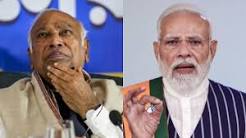
NEW DELHI: Congress President Mallikarjun Kharge on Wednesday apologised for his recent remarks targeting people of Gujarat, saying his comments were ‘deliberately misinterpreted’ and that he never intended to hurt sentiments. In a post on X, the Congress president said, “Some remarks of mine in a recent election speech in Keralam are being deliberately misinterpreted. Even so, I express my sincere regret. It was never my intention to hurt the sentiments of the people of Gujarat for whom I have always had and will continue to have the highest of respect.” The apology comes amid a political row triggered by his remarks during an election rally in Kerala’s Idukki district. Addressing a rally ahead of the assembly elections, Kharge had said that people in Kerala were ‘educated and clever’ and could not be misled, unlike those who were ‘illiterate’ in Gujarat and some other places. The statement sparked sharp reactions from the Bharatiya Janata Party (BJP), which termed the remarks insulting and unacceptable. Senior BJP leader Ravi Shankar Prasad criticised Kharge’s statement, calling it “shameless, demeaning and utterly despicable.” He also asked Congress leaders Rahul Gandhi, Sonia Gandhi and Priyanka Gandhi Vadra to clarify whether they agreed with the remarks. Prasad questioned whether Kharge deserved to remain Congress president, saying the post had historically been held by leaders such as Jawaharlal Nehru and Sardar Vallabhbhai Patel and demanded that the Congress leadership distance itself from the comment. He further highlighted Gujarat’s literacy rate and contribution to the country, arguing that such remarks insult the people of the state. The BJP also demanded an apology to the people of Gujarat, Bihar and Uttar Pradesh. Reacting to the controversy, Congress MP Shashi Tharoor said that political discourse should not deteriorate and emphasised the need to maintain standards in public debate. He highlighted that political leaders should focus on constructive arguments rather than using language that lowers the quality of discourse. Meanwhile, Gujarat deputy chief minister Harsh Sanghavi strongly criticised Kharge’s remarks, calling them an insult to the people of the state and its legacy. He said Gujarat, which has produced leaders like Mahatma Gandhi and Sardar Patel, would not accept such comments. Courtesy : TOI Note: This news is originally published on https:/timesofindia.com/bha and is used purely for non-profit/non-commercial purposes, especially human rights
Annamalai sees rift between DMK and Congress
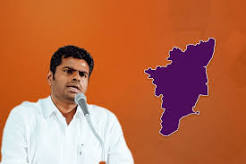
Coimbatore: Former BJP state president K Annamalai on Wednesday alleged that there was a growing rift between DMK and Congress in the Secular Progressive Alliance, which came evident during the final phase of campaigning in Puducherry. “Both Congress leader Rahul Gandhi and DMK president and chief minister M K Stalin didn’t mention each other’s name during their separate campaigning in Puducherry, though both are allies in the Union Territory,” Annamalai said while addressing media at the Coimbatore Airport. Annamalai said, “Rahul Gandhi remains an uninterested and disinterested politician when it comes to Tamil Nadu. Rahul Gandhi, who flew to Coimbatore Airport from Palakkad recently, did not even consider campaigning for his party’s candidate in one of the constituencies, which is Singanallur, just next to the airport.” Annamalai urged the Election Commission (EC) to deploy additional security force to manage the massive crowds gathering for TVK leader Vijay’s rally, questioning whether state officials are operating independently or under the DMK influence. “The ECI must act with integrity and grant necessary permissions for his campaign without bias,” he stated. Turning to his own record, Annamalai challenged sceptics to investigate his past candidacy in Aravakurichi. “I challenge anyone to find a single instance where I distributed money to voters. I will personally bear the bus fare for anyone willing to conduct an on-the-spot inquiry,” he said. Courtesy : TOI Note: This news is originally published on https:/timesofindia.com/bha and is used purely for non-profit/non-commercial purposes, especially human rights
‘Why are Bahujan entrepreneurs excluded?’ Rahul Gandhi targets Centre over contract data gap
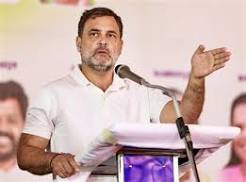
NEW DELHI: Rahul Gandhi has asked the Modi government why no data is maintained on the share of public works contracts worth over Rs 16,500 crore awarded to Dalit, Adivasi and OBC-owned businesses, accusing the Centre of fostering a “deliberately constructed system of exclusion” after Parliament told him that no such records exist. In an unstarred question in Lok Sabha, Gandhi sought details on public works and infrastructure contracts awarded by the central public works department (CPWD) and under the ministry of housing and urban affairs over the past five years, specifically asking how many were secured by SC, ST and OBC-owned enterprises. Government’s response In a written reply, minister of state for housing and urban affairs Tokhan Sahu stated that while the government could provide the total number and value of contracts awarded year-wise, “there is no existing mechanism to track contracts awarded to enterprises owned by persons belonging to scheduled castes (SC), scheduled tribes (ST) and other backward classes (OBC).” The government also clarified that all such contracts fall under construction contracts, and maintaining caste-based data is “not mandatory” for them. On the question of increasing procurement mandates for SC/ST-owned enterprises, the minister replied: “In view of the above, the question does not arise.” ‘Deliberate exclusion’: Rahul Gandhi Responding to the government’s reply on social media, the leader of the opposition said the response was “deeply concerning.” “The government does not maintain any data in this regard,” Gandhi said. “The policy mandates that 25% of public procurement must be sourced from MSMEs, of which 4% is earmarked for dalit and adivasi entrepreneurs. However, when it comes to the largest and most lucrative contracts, public works, the government asserts that this requirement is not ‘mandatory.’” He argued that this is “not merely an administrative lapse; it is a deliberately constructed system of exclusion, fostered through the policies of the Modi government, that undermines social and economic justice.” “The question is straightforward: Why are Bahujan entrepreneurs being excluded from the country’s largest public contracts?” he added. Rahul Gandhi further points in his post that the government’s Public Procurement Policy for MSMEs mandates that 25 per cent of purchases by central ministries and public sector undertakings be sourced from micro, small and medium enterprises, with four per cent specifically earmarked for SC/ST-owned enterprises. However, the government has now clarified in Parliament that this provision is not mandatory for public works contracts, which are typically among the largest and most profitable government tenders. These contracts are awarded through open tendering processes, and no centralised database is maintained on the social category of contractors. The exchange comes ahead of assembly elections in several states. Gandhi’s office said the absence of such data raises broader concerns about equitable access and transparency in government spending. “The Modi government will have to answer for this,” Gandhi said. Courtesy : TOI Note: This news is originally published on https:/timesofindia.com/bha and is used purely for non-profit/non-commercial purposes, especially human rights
Rahul Gandhi’s absence fuels alliance friction buzz
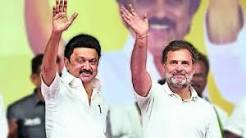
CHENNAI: In the last two months, PM Narendra Modi has visited Tamil Nadu thrice, campaigning for BJP and its allies, and is scheduled to visit the state again on April 15 and seek votes for the NDA candidates at Nagercoil. In sharp contrast, Congress’s Rahul Gandhi has not campaigned even once in the state so far. His absence has sparked a strong buzz that all is not well in the Congress-DMK alliance. Poll watchers contrast this with the previous assembly election, when he kickstarted his campaign with a three-day Tamil Nadu visit in Jan 2021. Congress functionaries in state said Rahul’s campaign schedules are yet to be firmed up, but as per the tentative plan, he will visit after the first phase of polls in Assam, Kerala and Puducherry. Rahul visited Puducherry only on Monday, the penultimate day of campaigning. And, even as he sought support for “Congress candidates and alliance candidates”, he studiously avoided mentioning alliance partner DMK and its functionary M K Stalin. Stalin, too, was in Puducherry the same day, but their campaign schedules were planned in a way that they didn’t cross paths. While Rahul campaigned in the morning, Stalin visited in the evening. “Rahul did not even mention Stalin’s name in his speech,” said a DMK functionary. Nor did Stalin mention him. Political observers said this could be a fallout of the friction between the two parties during the seat-sharing talks. A DMK functionary said there was no attempt from DMK’s side for a meeting between Rahul and Stalin. DMK organisational secretary, R S Bharathi, said the two allies had planned their public meeting well in advance and couldn’t alter it at the last minute to hold a joint meeting. However, the two would campaign together shortly, he said. A senior Congress functionary said Rahul has planned to visit TN after April 10. Courtesy : TOI Note: This news is originally published on https:/timesofindia.com/bha and is used purely for non-profit/non-commercial purposes, especially human rights
Rs 16,500 crore contracts, zero data: Rahul Gandhi questions Centre on Dalit, Adivasi share
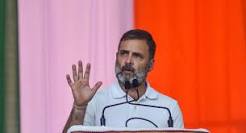
Government says public works contracts are awarded through open tendering processes and no centralised data on Dalit, Adivasi share is kept on the social category of contractors The Centre has told Parliament that it does not maintain data on the share of public works contracts, worth around Rs 16,500 crore, awarded to Dalit, Adivasi and OBC entrepreneurs in the past year, prompting Congress leader Rahul Gandhi on Tuesday to question the transparency and inclusiveness of government spending. Raising the issue on social media, Gandhi, Leader of the Opposition in the Lok Sabha, said he had sought a clear break-up of beneficiaries from marginalised communities in large public works tenders. “The answer was extremely concerning, the government does not keep any such data,” he said. The response assumes significance in light of the Centre’s public procurement policy, which mandates that 25 per cent of purchases be sourced from micro, small and medium enterprises (MSMEs), with 4 per cent earmarked for enterprises owned by Scheduled Castes and Scheduled Tribes. However, the government clarified that this provision is not mandatory for public works contracts, which are typically among the largest and most profitable government tenders. This creates a gap between policy intent and implementation, particularly in infrastructure and construction projects where contract values run high and participation is limited to fewer players. Gandhi argued that the absence of such data is not merely an administrative issue but raises broader concerns about equitable access. He questioned why Bahujan entrepreneurs remain largely invisible in the country’s biggest public contracts. In its written reply, the government said public works contracts are awarded through open tendering processes and that no centralised database is kept on the social category of contractors. Article_Author Shekhar Singh Courtesy : The Tribune Note: This news is originally published on https:/thetribune.com/bha and is used purely for non-profit/non-commercial purposes, especially human rights