
The optics deficit: Will missing Stalin-Rahul ‘brotherhood’ hurt alliance in Tamil Nadu?
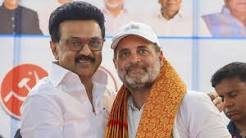
NEW DELHI: Elections in India are fought as much through images in public view as through ideas and manifesto promises. In the 2026 assembly elections, where Congress depends on its allies in states like Tamil Nadu, Rahul Gandhi’s approach to coalition politics raises questions about whether the grand old party is doing enough to project unity on the ground. At the heart of this doubt lies a simple but powerful political tool: the joint rally. In a hyper-visual electoral campaign, a shared stage is not just symbolic; it is strategic. It signals cohesion to voters, clarity to cadres and credibility to an alliance. Its absence, conversely, creates space for speculation, often used by the opposition to create doubts in the minds of voters. A visible gap in strong alliance In Tamil Nadu, where Congress is contesting as part of a long-standing alliance with the DMK led by MK Stalin, the deficit of this alliance optics is quite visible. In previous elections, Rahul Gandhi and Stalin shared stages, projected camaraderie and reinforced the alliance through visible coordination. That visual continuity was missing this time. Despite high electoral stakes, the two leaders did not appear together in a joint rally. The absence triggered both political commentary and opposition attacks. Follow complete coverage of 2026 assembly elections TOI resident editor Arun Ram points to this as a clear missed opportunity: “The DMK and Congress have failed in bringing together these two leaders … I think had they come together for at least one public rally, they would have sent out a strong message that the alliance is strong enough.” SWOT Snapshot – DMK & Congress The explanation from DMK circles, that aligning schedules would have disrupted Stalin’s campaign by dozens of stops, has done little to offset the perception cost. That cost becomes sharper when contrasted with the presence of Aam Aadmi Party chief Arvind Kejriwal, who recently shared the stage with Stalin during a roadshow in Chennai. For audience and voters, the optics were telling: a leader with limited electoral stakes in Tamil Nadu stepping in to signal unity, while Congress’s principal face remained absent from a joint platform. Tamil Nadu Assembly Elections Overview The perception risks The optics gap in Tamil Nadu is not unfolding in isolation. It comes against the backdrop of internal tensions within the alliance. A section of the state Congress leadership had earlier raised the issue of power-sharing, floating the idea of a coalition arrangement — something the DMK has firmly resisted. While the central leadership moved to contain these demands, the political signal had already been sent. In such a scenario, the ‘missing’ Rahul Gandhi takes on added implications. The joint rally, in this case, could have at least acted as a visual reassurance that differences, real or perceived, did not affect the alliance in the state. Arun Ram highlights this dynamic: ” .. given the background that we have seen a section of Congress leaders demanding a share in power … there was a bit of, at least rumours of a bit of a tension between Rahul Gandhi and MK Stalin.” The absence of a shared stage allowed those rumours to gain traction. Rival parties like the All India Anna Dravida Munnetra Kazhagam (AIADMK) and the BJP were quick to amplify these perceptions, framing the alliance as strained rather than cohesive. SWOT Snapshot – AIADMK & BJP BJP leader K Annamalai said, “Rahul Gandhi doesn’t want to campaign with MK Stalin. He wants to do a separate campaign. MK Stalin doesn’t want to campaign with Rahul Gandhi; he wants to do a separate campaign. In previous elections, the relationship between Rahul and Stalin was framed as one of deep personal camaraderie. From gifting sweets to calling each other “elder and younger brothers,” the optics were designed to trickle down a sense of unity to the grassroots cadres. This time, however, the frame was curiously empty, as both leaders operated on parallel tracks during campaigning. The ‘MIA’ Rahul Gandhi What we saw in Tamil Nadu during this assembly election is not something new. Across key states, a similar pattern of limited joint campaigning was seen from the side of Rahul Gandhi. In Bihar, Congress’s alliance with the RJD led by Tejashwi Yadav has also faced questions over coordination. Tejashwi’s high-frequency campaign, often involving multiple rallies a day, was not matched by a sustained joint presence from Rahul Gandhi. In 2025 election, reports emerged of a “postponed” joint Vote Adhikar Yatra with Tejashwi, further cementing the idea that the two leaders struggled to coordinate their presence even when the stakes were existential. The alliance with the National Conference (NC) in Jammu and Kashmir has been equally fraught with optic gaps. In the run-up to the 2024 elections and the subsequent local administration shifts in the next two years, the chemistry between Omar Abdullah and Rahul Gandhi has fluctuated wildly. The contrast within the INDIA bloc Meanwhile, Arvind Kejriwal’s decision to join the 2026 assembly campaign for Stalin and Mamata has also highlighted differences in how alliance politics is being conducted within the broader opposition. Leaders like Arvind Kejriwal have adopted a more proactive approach — campaigning across states, sharing platforms with regional allies, and reinforcing a broader anti-BJP narrative even in areas where their party has limited direct stakes. Kejriwal came to hold a road show for Stalin's campaign in Chennai. This approach has been visible not just in Tamil Nadu but also in West Bengal, where Kejriwal is expected to campaign at the invitation of Mamata Banerjee. At the ground level, alliances function through coordination between cadres of different parties. This coordination depends heavily on signals from leadership. The cost of not being seen together The Congress under Rahul Gandhi has succeeded in building alliances that are, on paper, both strategic and necessary. But elections are not fought on paper alone. They are fought on stages, in images, and through moments that signal unity to voters and confidence to cadres. A single joint rally in
Bengal’s missing voters set Phase 1 tone
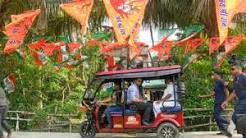
When the first vote is cast at 7 am today to decide who will be governing Bengal for the next five years, there will be an elephant in the polling booth: SIR, or the Special Intensive Revision of the voters’ roll. More than 3.6 crore voters across 152 constituencies will be exercising their franchise in the first phase of the 2026 state assembly poll; the rest of the 6.82 crore voters in the other 142 constituencies will follow them next Wednesday. But this election — more so in the seats going to vote today — will be as much about the disenfranchisement of 27 lakh voters who will not be able to vote despite having proof of voting rights. The Election Commission has found that these 27 lakh voters have some “logical discrepancy” or the other. This can mean anything, from misspelt names to surname mismatches (with parents) to monks serving in missions whose legal guardians are the heads of those missions. The 16 districts going to vote today have a voting strength that is 9.4% less than what it used to be before the SIR exercise (a significant portion, probably about half, are dead or “absent” or “shifted” voters). Nowhere is SIR’s shadow longer than in Murshidabad, which has lost 7.4 lakh voters, and Malda, which has lost 4.5 lakh. It is Murshidabad that encapsulates everything that has gone wrong with SIR, originally meant to weed out nonvoters, but which has disenfranchised people voting for years. More than 4.5 lakh of the 7.4 lakh total deletions in this district happened during the “judicial adjudication” phase (to determine “logical discrepancy”). The most drastic impact is in the Shamsherganj constituency, often described as ground zero of the crisis. Exactly 74,775 voters — representing a staggering 32% of the electorate — have been disenfranchised, sparking a legal and political battle that may rage even after the new assembly is formed. All this has taken some sheen off the electoral battles in bellwether constituencies and those involving political heavyweights. But the first phase does have these, too, in good measure: the political future of at least three such heavyweights — BJP’s Suvendu Adhikari and Dilip Ghosh and Congress’s Adhir Chowdhury — hinges on how voters vote today (though Adhikari has a second chance in the second phase, as he is contesting from Bhowanipore as well against CM Mamata Banerjee). Adhikari, who has spent the last few years shrugging off “defector” barbs, now faces a defector himself in his home seat, Nandigram. His challenger is Pabitra Kar, a former Adhikari acolyte with strong ties with Hindu organisations, who is credited with securing a 3,500-vote lead for Adhikari in the critical Boyal area in the 2021 election. CM Banerjee stationed herself there for several hours and alleged large-scale manipulation, photographs of which went viral (and still the subject of a court battle). Adhikari scraped through with a 1,956-vote margin. Kar, this time, may give his former mentor some sleepless nights till May 4, when votes will be counted. Over 280km away, Congress veteran Chowdhury is fighting his own battle for political survival in Behrampore. Chowdhury is a five-time MP but is now eyeing a path to political rehabilitation through the Bengal assembly after losing the last Lok Sabha poll. BJP won this seat in 2021, and the fight this time is likely to be intensely triangular, with Trinamool forming the third side (along with BJP and Congress). BJP veteran Ghosh faces a similar situation in his own home seat, Kharagpur Sadar, where he is returning after 10 years. It was his victory over former Congress cabinet minister Gyan Singh Sohanpal in 2016 that marked his ascendancy with the BJP’s state unit, but he was forced by his own party to forsake the region he knew so well in the 2024 Lok Sabha poll. Ghosh will be hoping that Kharagpur backs him a second time. Another political dynasty that is looking for succour is former Congress Union minister ABA Ghani Khan Choudhury’s family. The district is seeing Khan Choudhury’s niece, Mausam Benazir Noor, fighting to reclaim the family’s political legacy after switching back to Congress after a stint with Trinamool and a term in the Rajya Sabha. But this district, too, is likely to see a tripolar fight — and arithmetic can be slippery in such contests. Many of the 16 districts that go to the polls today — from Darjeeling in the Hills to East Midnapore on the Bay of Bengal’s shores — have been BJP strongholds, and the party would be betting on SIR deletions to keep it that way. Nine of these 16 districts — Cooch Behar, Alipurduar, Jalpaiguri, Darjeeling, Kalimpong, North Dinajpur, South Dinajpur, Malda and Bankura — gave BJP 38 (of a total 66), which ultimately helped it reach the 77-seat figure it had in the last assembly. But the voter anger and the consequent anti-BJP consolidation visible outside polling booths across districts may also have something to offer to Trinamool at the EVMs. How much that anger transforms into anti-BJP votes and the number of seats to which Trinamool can restrict BJP in these 16 districts can well shape the configuration of the next Bengal assembly. Hot seats Nandigram Adhikari, who has spent five years shrugging off defector barbs after switching from TMC, now faces a defector himself. Adhikari defeated CM Mamata Banerjee here in 2021 by 1,956 votes. His one-time confidant, Kar, is his TMC challenger. Identity politics continues to dominate the landscape, with demographics expected to play a critical role. The 2011 Census recorded Hindus at 65.8% and Muslims at 34% of the population here. But under SIR, 12,500 Muslim voters were removed. Sabar Institute says gross deletions in Nandigram stand at 14,462, with Muslim voters accounting for 95.5% of deletions. Key issues on the ground, say residents, is haphazard development symbolised by, among other things, a standing structure for a railway station but with no rail link to the area. Past Winners : 2011 (TMC), 2016
Poll violence in West Bengal: Crude bombs hurled in Murshidabad, several injured

MURSHIDABAD: Tension gripped Nowda in Murshidabad district during polling in the West Bengal assembly election after unidentified persons allegedly hurled a crude bomb, leaving several people injured, as reported by news agency PTI. According to initial reports, the explosion occurred amid voting activity, triggering panic among residents and voters in the area. The injured have reportedly been shifted to nearby medical facilities, though the exact number of casualties and their condition are yet to be officially confirmed. Security forces rushed to the spot soon after the incident and have begun combing operations to trace those behind the attack. Courtesy : TOI Note: This news is originally published on https:/timesofindia.com/bha and is used purely for non-profit/non-commercial purposes, especially human rights
Congress gets nod for Rahul Gandhi’s rallies in West Bengal
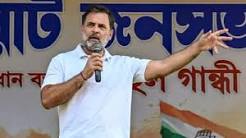
Kolkata: A day after police denied clearance for his planned April 23 appearances, Congress on Wednesday secured permission for Rahul Gandhi to hold three rallies in West Bengal on Saturday. The LoP in Lok Sabha will address rallies in Serampore, Metiaburuz and at Shaheed Minar in central Kolkata, in that order, said Congress member Amitabha Chakraborty. State Congress chief Subhankar Sarkar is contesting from Serampore. Rahul had earlier held three public meetings in Raiganj, Chanchal and Samsherganj on April 14, while his last Kolkata rally was in 2016. On Wednesday, Rahul also posted a video outlining Congress’s poll guarantees for Bengal: Rs 2,000 per month for women, health insurance up to Rs 10 lakh, free cancer treatment and dialysis at district hospitals, free education until graduation, filling of vacant govt posts within a year, and Rs 15,000 annually for farmers. Courtesy : TOI Note: This news is originally published on https:/timesofindia.com/bha and is used purely for non-profit/non-commercial purposes, especially human rights
Why Congress faces a ‘no-win’ situation in West Bengal
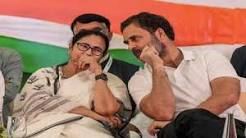
On May 2, 2021, Rahul Gandhi congratulated Mamata Banerjee and the people of West Bengal for “soundly defeating the BJP.” “I’m happy to congratulate Mamata ji and the people of West Bengal for soundly defeating the BJP,” he wrote on Twitter (now called X). — RahulGandhi (@RahulGandhi) However, the irony was hard to miss. While the BJP had indeed been kept out of power, it recorded its strongest-ever performance in the state — winning 77 seats, up from just three in 2016 — and firmly established itself as the principal challenger to the TMC. West Bengal assembly elections 2021 results Congress, by contrast, failed to open its account. Five years later, as Banerjee seeks a fourth consecutive term and the BJP eyes its maiden government in West Bengal, Congress finds itself out of the race and staring at a no-win situation: a Mamata victory could position her as a frontrunner for the joint opposition’s prime ministerial face in 2029, while a BJP triumph would add a major state to its kitty and further strengthen its momentum ahead of the general election. Which of the two outcomes would the grand old party “prefer?” Mamata Banerjee’s rise A former Congress leader, Banerjee founded the TMC in January 1998, and the party has since been part of governments at the Centre led by both the Congress and the BJP. Now an on-and-off ally of the Congress, she ended the Left Front’s 34-year rule in West Bengal in 2011 and secured two further terms, firmly establishing herself as one of India’s most formidable regional leaders. West Bengal CMs in last 50 years After a setback in the 2019 Lok Sabha polls, when the BJP won 18 of West Bengal’s 42 constituencies, Banerjee staged a strong comeback just two years later, leading the Trinamool to a third consecutive term. The optics of TMC’s victory, despite an aggressive BJP campaign led by Prime Minister Narendra Modi and Union home minister Amit Shah, combined with Banerjee’s move to challenge her former aide Suvendu Adhikari in his stronghold Nandigram — where she lost narrowly — burnished her credentials. Mamata Banerjee Quote A fourth term would all but put her firmly in contention to be the national opposition’s face in the 2029 contest. BJP’s emergence as principal challenger to TMC The BJP did not find immediate success in West Bengal after Modi became prime minister in May 2014, winning just two Lok Sabha seats that year and only three constituencies in the assembly polls two years later. That changed in 2019, when it won 303 Lok Sabha seats, including 18 from West Bengal. In 2021, though the BJP fell far short of its 200-seat target, it decisively recast the state’s politics as a two-horse race. BJP's seat surge in Bengal Nationally, too, despite no longer enjoying a majority of its own, the saffron party, with 240 Lok Sabha MPs—more than the combined opposition—remains on favourite to secure a fourth term, reinforcing the perception of sustained national dominance. Congress’ decline in West Bengal—and beyond In February, Congress unilaterally ended its alliance with the Left Front and announced it would go it alone in West Bengal. This, in a state where, despite its rich political history, the party has not had a chief minister since 1977, when its three-decade run in power came to an end. Congress' declining arc in Bengal Its dominance in the Lok Sabha from West Bengal has been far more limited. The last time Congress reached double digits in the state was in 1984, when it won 16 seats as part of its nationwide sweep of 414 seats. Since then, Congress has not secured a majority on its own at the Centre. In the previous three Lok Sabha elections, it failed to cross the 100-seat mark. It is currently in power in just three states—Karnataka, Telangana, and Himachal Pradesh. The removal of Adhir Ranjan Chowdhury, a staunch Mamata critic, by the Congress as its Bengal unit chief, was also seen by many as the party “capitulating” to the TMC supremo. Chowdhury had held the Baharampur Lok Sabha seat—where Muslims make up roughly half the electorate—since 1999. In the 2024 general elections, Banerjee nominated former cricketer Yusuf Pathan, a Gujarat native, who went on to unseat Chowdhury. Adhir Ranjan Chowdhury Congress’ Rahul dilemma: Can’t win with him, can’t do without him Congress contested the 2014, 2019, and 2024 general elections under Rahul Gandhi’s leadership, albeit without formally projecting him as its prime ministerial candidate. The 2019 defeat was chastening in both magnitude and context, coming under his direct leadership as party president and soon after he oversaw assembly victories in three Hindi heartland states in December 2018. Although he resigned as party chief in July 2019, Gandhi has continued to be the party’s most prominent face and principal decision-maker. Rahul Gandhi career Congress’ 2024 resurgence—along with that of the broader opposition—was widely credited to Gandhi’s two “Bharat Jodo” pan-India marches, which many believe contributed to a noticeable shift in public perception of him. With numners on Congress’ side, he was subsequently made leader of the opposition, the first since 2014. Rahul Gandhi career However, what followed was a series of electoral reverses in the state assembly elections. He subsequently alleged irregularities by the Election Commission, accusing it of bias towards the BJP and holding multiple press conferences on the issue, but the setbacks continued. According to political observers, what hurts Gandhi is that he has never held public office—even when his own party was in power from 2004 to 2014—along with the Congress’ poor electoral record under his leadership, his frequent foreign trips, and a tendency to raise issues that often fail to resonate with voters and persist with them despite their lack of traction on the ground—raising persistent questions about his effectiveness as a national challenger. Leadership question within INDIA bloc The INDIA bloc, formed in July 2023, brought together Congress and several regional parties opposed to the BJP under one umbrella. With the grand old
‘I never said PM is a terrorist’: Kharge clarifies remark, says ‘Modi always threatens’; BJP calls Cong chief ‘frustrated’
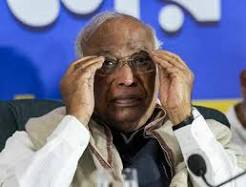
NEW DELHI: Congress president Mallikarjun Kharge on Tuesday referred to Prime Minister Narendra Modi as a “terrorist” and later issued a clarification, in remarks expected to trigger political controversy during the ongoing election season. Kharge made the statement in Chennai at a press conference on the final day of campaigning for the Tamil Nadu assembly elections, scheduled for Thursday. He was criticising the opposition AIADMK over its alliance with PM Modi’s BJP. “How can they (AIADMK) join with Modi? He is a terrorist. And he doesn’t believe in equality. His party won’t believe in equality and justice. And these people are joining with them, it means that they are weakening democracy, they are weakening the philosophy of Annadurai, Kamaraj, Periyar, Kalaignar, and Baba Saheb Ambedkar,” he said. “The Congress-DMK alliance will continue to deliver welfare, inclusive growth, quality education, and accessible healthcare,” he added. When questioned on the context of his remarks, the Congress chief said he meant that the prime minister always “threatens” and pointed to the alleged “misuse” of agencies by the BJP-led central government. “I want to clarify that Modi always threatens. The institutions like ED, I-T and CBI are in his hands. Therefore I say, in that context, I say he is terrorising people and political parties,” the veteran politician stated. Reacting to Kharge’s remarks, BJP IT cell head Amit Malviya criticised the Congress leader, calling it a “yet another crass display” in a post on X. “This isn’t the first time Kharge has dragged public discourse to such lows. But with this remark, he hasn’t just diminished himself, he has exposed what is a stated approach of the Congress: abuse and vilification of India’s most popular leader instead of meaningful debate. When politics is reduced to name-calling, it reflects not strength, but a deep frustration and lack of credible alternatives,” Malviya posted. AIADMK, an arch-rival of the ruling DMK, joined hands with the BJP in April 2025 after breaking away from the alliance ahead of the 2024 Lok Sabha elections, in which both parties failed to win any seats in Tamil Nadu. The DMK and its allies had swept the state in that election. Counting of votes for all 234 assembly constituencies in Tamil Nadu is scheduled for May 4. Courtesy : TOI Note: This news is originally published on https:/timesofindia.com/bha and is used purely for non-profit/non-commercial purposes, especially human rights
‘Submit public apology’: BJP moves EC against Mallikarjun Kharge over ‘terrorist’ remark, seeks action under poll code
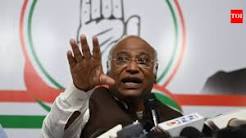
NEW DELHI: The Bharatiya Janata Party (BJP) on Tuesday wrote to the Election Commission of India (EC) seeking action against Congress president Mallikarjun Kharge over his “terrorist” remark against Prime Minister Narendra Modi. The party called Kharge’s remark a “grossly derogatory” statement and a violation of the Model Code of Conduct (MCC). In a formal complaint to the poll body, the BJP wrote: “As widely reported, Shri Kharge has while addressing a conference called Hon’ble Shri Narendra Modi ‘He is a terrorist.’ The remark has been circulated widely in print, television, and digital media, with substantial potential to vitiate the electoral atmosphere.” The party argued that such remarks amount to “extreme personal vilification” and violate the standards of campaign discourse mandated under the MCC, which is in force in poll-bound Tamil Nadu. Earlier in the day, Kharge sparked controversy after calling PM Modi a “terrorist” during a press conference, while criticising the AIADMK-BJP alliance in Tamil Nadu. However, later, the Congress chief clarified saying he meant the PM was “terrorising people and political parties” and insisted he had not literally called him a terrorist. Now the BJP has responded sharply by moving to the EC with its five-point demand. The BJP urged the EC to “take immediate cognizance of the statement being a prima facie violation of the Model Code of Conduct” and sought directions for Kharge to issue “a public apology/retraction” or face appropriate campaign restrictions. It also called for penal action under provisions of the Bharatiya Nyaya Sanhita, including Sections 175, 171/174, and 356(1). The party stated: “Calling a contesting political leader a ‘terrorist’ is not mere policy criticism; it is a grave imputation touching personal character and conduct.” Further, the BJP requested the EC to “direct immediate cessation of further dissemination of the impugned statement in campaign material and digital publicity” and to instruct media and social media platforms to take down such content. It also urged the poll body to “pass such further orders as may be necessary to preserve the dignity of the electoral process and ensure a free, fair, peaceful, and issue-based campaign.” “Such rhetoric lowers the level of campaign discourse, inflames passions, and undermines free and fair elections,” the letter stated. The party further claimed that “branding a political opponent in criminal-terror terminology before voters amounts to an attempt to distort voter choice through fear, demonisation, and false personal branding rather than lawful political persuasion.” The complaint comes hours after an intensyfied campaign in Tamil Nadu ended in on Tuesday evening. The EC has not yet issued a response to the BJP’s letter. Courtesy : TOI Note: This news is originally published on https:/timesofindia.com/bha and is used purely for non-profit/non-commercial purposes, especially human rights
Rahul rallies in Kolkata, Serampore cancelled as police denies nod
KOLKATA: Police have denied permission for Rahul Gandhi’s rallies in Kolkata and Serampore, scheduled on April 23, Bengal Congress secretary Roahan Mitra said Tuesday. Congress planned three rallies for Gandhi. For the Kolkata rallies, permission had been sought for Ramlila Park or Park Circus ground, and Metiabruz. A separate permission was sought for holding a rally at Serampore stadium. “Police have not given us permission for a single rally while others are allowed to hold rallies,” Mitra said, adding that the rallies planned for April 23 have been cancelled. Asked for a response, Bengal mantri Shashi Panja said, “Caretaker govt in the state cannot answer for the cancellation of his visit, EC can answer that.” Courtesy : TOI Note: This news is originally published on https:/timesofindia.com/bha and is used purely for non-profit/non-commercial purposes, especially human rights
‘Rahul Gandhi se chalne wala nahi hai’: Tej Pratap Yadav backs Priyanka Gandhi Vadra as INDIA bloc face

PATNA: Tej Pratap Yadav on Tuesday sparked a political debate by backing Priyanka Gandhi to lead the Congress, while expressing doubts over Rahul Gandhi’s ability to run the party. “Only Priyanka Gandhi can run it; she is like Indira Gandhi. Rahul Gandhi cannot run it, by going on a yatra, by sitting on a Bullet, it won’t make a difference” he said, dismissing Rahul Gandhi’s political outreach efforts and questioning their effectiveness. His remarks came in response to Rahul Gandhi’s criticism of Nitish Kumar, whom he had called “compromised” after the JD(U) leader’s recent political moves. Following this, BJP leader Samrat Choudhary took over as Bihar chief minister. Questions over Rahul Gandhi’s leadership have surfaced earlier as well. Former Congress leader Shakeel Ahmed had recently alleged a lack of internal democracy within the party, claiming that senior leaders were being sidelined. Ahmed said Rahul Gandhi was uncomfortable working with seasoned leaders and alleged that decision-making in the party had become highly centralised, with his word being final. He also claimed that the youth wings were being promoted to replace the old guard in the party. Courtesy : TOI Note: This news is originally published on https:/timesofindia.com/bha and is used purely for non-profit/non-commercial purposes, especially human rights
‘Nitish Kumar was compromised’: Rahul Gandhi’s big claim on NDA’s decision behind ‘Sushasan Babu’s’ Bihar exit

NEW DELHI: Lok Sabha leader of the opposition Rahul Gandhi on Monday launched a fierce attack on the NDA, making a strong claim about the recent exit of BJP ally Nitish Kumar from the chief minister’s post in Bihar, a position he held for the longest period in the state. Rahul alleged that the former Bihar CM was “compromised” during his Tamil Nadu poll campaign. Campaigning for the ruling DMK–Congress alliance in Thoothukudi, Rahul targeted JD(U) supremo Nitish Kumar, saying, “Nitish Kumar did not say a word; he silently went to the Rajya Sabha.” The Congress leader also trained his guns on the BJP, asserting, “We will never allow the BJP to have a government they can control in Tamil Nadu.” He added, “The BJP wants a government in Tamil Nadu that it can fully control, a chief minister who does exactly what they say.” Recently, veteran politician Nitish Kumar entered the Rajya Sabha as a debutant, in a move widely seen as a farewell phase to his long tenure in Bihar politics. Nitish Kumar’s exit from Bihar marks a significant turning point in the state’s political history, formally ending the Lalu–Nitish duopoly and paving the way for the BJP to form its first-ever government in the state under the leadership of Samrat Choudhary. The Bihar assembly elections held in November resulted in a landslide victory for the NDA. Despite years of incumbency, the Nitish-led alliance emerged victorious, with the BJP, for the first time, securing a higher seat tally than its longtime “big brother” in the state, JD(U). Courtesy : TOI Note: This news is originally published on https:/timesofindia.com/bha and is used purely for non-profit/non-commercial purposes, especially human rights