
Allahabad HC seeks replies from CBI, ED, SFIO on plea alleging disproportionate assets against Rahul Gandhi

Court directs central agencies to respond within eight weeks; matter filed by BJP worker to be heard next on July 20. The Lucknow bench of the Allahabad High Court sought responses from multiple central agencies including the CBI and Enforcement Directorate (ED) in connection with the allegations of disproportionate assets against Congress MP from Raebareli and Leader of Opposition in Lok Sabha Rahul Gandhi. The court directed both the Central Bureau of Investigation (CBI), Enforcement Directorate (ED), and the Serious Fraud Investigation Office (SFIO), along with other departments concerned, to file their replies verifying the allegations levelled against Gandhi within eight weeks in a complaint submitted by Karnataka BJP worker S Vignesh Shishir. The court posted the matter for next hearing on July 20. The division bench, comprising Justice Rajesh Singh Chauhan and Justice Zafeer Ahmad, passed the order on Tuesday on a criminal writ petition moved by Shishir. During the in-Chamber hearing, counsel for the CBI informed the Court that the agency had received the petitioner’s complaint and would file a response within 8 weeks. Similarly, the counsel for the ED also informed the Bench that the ED had received the complaint and may verify the allegations. Thereafter, the progress, thereof, might be apprised to the Court. In Its four-page order, the bench observed that it was expected that if the complaint of the petitioner was received, the allegations of the complaint may be verified as per the law. “It is needless to say that the CBI or ED may take appropriate steps which are permissible under the law”, said the court. After hearing the parties and perusing the material on record, the Court directed all parties (including the newly-impleaded opposite parties) to file a response within eight weeks. The petitioner, appearing in person, also filed an application for impleadment vis-à-vis the Union of India through its Secretary, Department of Personnel and Training (DoPT); the Union of India through its Secretary, Department of Revenue, Ministry of Finance; and the Secretary, Ministry of Corporate Affairs. The petitioner apprised the Court that those departments were necessary parties and showed the reasons as to why they should be impleaded. Finding it proper, the Court allowed the impleadment application. Additionally, the Central Government Counsel informed the Court that he received oral instructions from the Director, Serious Fraud Investigation Office (SFIO). He requested some time to file a counter-affidavit regarding the contents of the writ petition, which relate to it. During the hearing, when petitioner Shishir was queried about the maintainability of the prayers in the petition, he referred to certain case laws and judgments to submit that he may seek those reliefs by filing a writ petition under Article 226 of the Constitution of India. The petitioner has alleged that Rahul Gandhi and members of his family possessed assets disproportionate to their declared income. The plea has sought an impartial investigation by central agencies into the allegations. The bench said that his submission would be tested after receiving the counter-affidavits of the respective parties and the rejoinder affidavits thereof. Furthermore, the Court ordered that the paper-book and the loose documents provided by the petitioner be kept in a sealed cover in terms of the earlier order. During the upcoming hearing, the court would first examine the maintainability of the petition — determining whether the plea is legally fit for detailed consideration. Further legal proceedings will depend on the outcome of that assessment Namita Bajpai Courtesy : TNIE Note: This news is originally published on https:/thenewindianexpress.com/bha and is used purely for non-profit/non-commercial purposes, especially human rights
Congress says BJP raising Rahul Gandhi’s foreign trips to divert attention from Modi’s failures
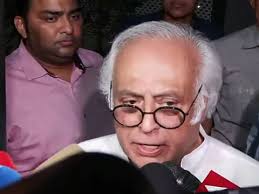
Ramesh also called Modi a “compromised PM” who is “thoroughly exposed domestically and internationally.” The Congress on Thursday accused the BJP of using allegations over Rahul Gandhi’s foreign trips to divert attention from what it described as the country’s worsening economic situation and foreign policy challenges under Prime Minister Narendra Modi. Congress general secretary, communications, Jairam Ramesh, said that BJP’s Sambit Patra raised the matter of Gandhi’s foreign trips to stake his claim on ministership. Patra should find better topics to raise, Ramesh suggested. The BJP on Thursday demanded the disclosure of sources of funding of Gandhi’s foreign trips, claiming that there was a clear mismatch between the year-on-year annual income of the Congress leader and the money spent on his travel abroad. Hitting back, Ramesh said, “These are all diversions being created by Mr Sambit Patra of the BJP. The real issue is the economic collapse that is staring the country. The real issues are the setbacks in foreign policy. Those are the real issues.” Ramesh also called Modi a “compromised PM” who is “thoroughly exposed domestically and internationally.” “His claims about being a ‘Vishwaguru’ have been completely punctured. He is capitulating to China day in and day out. So all being done to keep the attention away from here. To talk about Mr Rahul Gandhi’s foreign trips in the past, Mr Patra should find better topics on which to put his stake of being a minister,” Ramesh said when asked about the BJP’s charges. Another Congress leader, Manickam Tagore, said the country wants answers on jobs, farmers, Manipur and China. “BJP should first answer questions on unemployment, inflation, falling consumption, border failures and the weakening economy instead of running a daily smear campaign against Leader of the Opposition Rahul Gandhi ji. “If foreign travel is suddenly a crime, then will BJP also disclose the full details of PM Modi’s and all the BJP leaders’ foreign visits, delegations, aircraft expenses and event management costs over the last 10 years?” Tagore asked in a post on X. He alleged that Patra’s press conferences have become a “distraction toolkit” whenever the government faces tough questions. “Personal attacks cannot hide policy failures. The country wants answers on jobs, farmers, Manipur, China and the economy – not manufactured outrage,” he said. Addressing a press conference at the BJP headquarters here, Patra, a party national spokesperson, said Gandhi went on 54 foreign trips in the last 22 years, on which a cumulative expenditure of Rs 60 crore was incurred. However, he claimed, his year-on-year annual income, as disclosed in his poll affidavits in the last 10 years, remained about Rs 11 crore altogether. According to the asset and liability declaration made by Gandhi in poll affidavits, his total disclosed assets stood at Rs 55.38 lakh in 2004 and Rs 20.39 crore in 2024, the BJP MP claimed. “While Rs 60 crore was spent on these foreign trips, it’s not fitting anywhere when his entire asset and liability stands at Rs 21 crore,” Patra said, and demanded a disclosure. The Lok Sabha MP from Puri in Odisha also alleged that the Congress leader did not disclose many of his visits abroad and demanded answers from him on these “mystery trips.” Courtesy : TNIE Note: This news is originally published on https:/thenewindianexpress.com/bha and is used purely for non-profit/non-commercial purposes, especially human rights
Tumakuru rally likely to be transition point for Siddaramaiah govt amid leadership talk

Political analysts said that the event can be interpreted as a farewell to some ministers as Siddaramaiah is planning to visit Delhi soon to seek the approval of the party high command. BENGALURU: Karnataka Chief Minister Siddaramaiah-led Congress government’s big ticket rally on May 20, marking the completion of three years in office in Tumakuru is likely to be a transition point. The rally will be a shot in the arm for the Siddaramaiah camp, lobbying for his continuation as CM and expecting a reshuffle of the cabinet. The achievements of the government will be on full display, which is an attempt at image makeover to nullify any anti-incumbency. It has been happening after the Congress retained Davanagere South and Bagalkot assembly seats in the bypolls. With the rally organised in his home district, Home Minister Dr G Parameshwara, who is with the Siddaramaiah camp and is pitching for the the chief minister’s post under the Dalit quota, will score over Deputy Chief Minister DK Shivakumar, who has kept his hopes up on becoming CM as per a power sharing agreement arrived at soon after the party came to power in 2023. Parameshwara is ensuring that over two lakh people attend the rally in his own show of strength, though it is an official programme. Political analysts said that the event can be interpreted as a farewell to some ministers as Siddaramaiah is planning to visit Delhi soon to seek the approval of the party high command, especially Leader of Opposition in the Lok Sabha Rahul Gandhi, for a cabinet reshuffle after the Kerala chief minister issue is settled. During the rally, around 1.52 lakh beneficiaries will be presented with title deeds for their lands and houses under different schemes. When the government completed two years in office in 2025, Revenue Minister Krishna Byre Gowda had organised a similar event in Haveri. Gowda also claimed that several cases pending in the courts of tahsildars and the sub-divisional Officers have been disposed of. “For example, in May 2020, there were 10,774 expired cases pending in tahsildar courts in the state. By April 2026, these had been reduced to just Similarly, there were 73,624 expired cases pending in the courts of the sub-divisional officers. A majority of the cases have been disposed of, and only 7,721 cases are pending. This means 99.9% of pending cases in tahsildar’s courts have been disposed of,” he said. He also mentioned digitisation initiatives such as e-pauti, ‘podi’, to recognise hamlets as revenue villages. During the rally, title deeds will be issued to 2.2 lakh households. Devaraj B Hirehalli Courtesy : TNIE Note: This news is originally published on https:/thenewindianexpress.com/bha and is used purely for non-profit/non-commercial purposes, especially human rights
‘People will not forgive’: Posters in Wayanad tear into Rahul, Priyanka
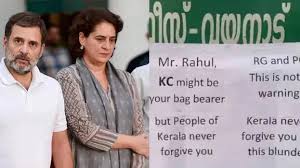
The posters stated that Wayanad had stood with Rahul Gandhi and later Priyanka Gandhi after setbacks in Amethi, but the constituency should not be viewed merely as a politically convenient seat. KALPETTA: As discussions over the chief minister’s post continue within the Congress, posters targeting Congress leaders Rahul Gandhi and Priyanka Gandhi surfaced in different parts of Wayanad Lok Sabha constituency, triggering political controversy. The posters carried sharp criticism against the Gandhi family and senior Congress leader K C Venugopal. One of the messages read: “KC may carry your bag, but the people of Kerala will not forgive you.” Another warned leaders against treating Wayanad as merely a “safe seat” for electoral victories. Posters appeared near the MP office at Karassery in Kozhikode, which falls under the Wayanad constituency, and along roads leading to the DCC office in Wayanad district. Soon after news of the posters spread, many of them were removed. The posters stated that Wayanad had stood with Rahul Gandhi and later Priyanka Gandhi after setbacks in Amethi, but the constituency should not be viewed merely as a politically convenient seat. Slogans such as “No more climbing the Wayanad pass for a safe seat” and “Forget Wayanad” were also displayed. The controversy comes amid growing resentment among Congress and Muslim League workers over the support extended by three Congress MLAs from Wayanad to K C Venugopal during the ongoing leadership discussions. The disagreement has also spilled onto social media platforms in recent days. The posters further warned that ignoring public sentiment would have “serious consequences” and claimed that “Wayanad too could become another Amethi.” It remains unclear who was behind the posters. Courtesy : The New Indian Express Note: This news is originally published on https:/thenewindianexpress.com/bha and is used purely for non-profit/non-commercial purposes, especially human rights
VD Satheesan to be Kerala’s next Chief Minister; celebrations erupt across the state
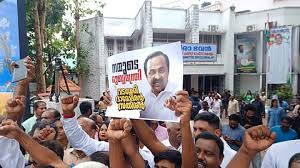
Speaking to reporters in New Delhi, KC Venugopal said he will provide all support to the CM and the UDF government in Kerala. Ending days of suspense and intense internal negotiations, the Congress on Tuesday officially named senior leader VD Satheesan as the next Chief Minister of Kerala. The announcement was made by AICC state in-charge Deepa Das Munshi in the capital, along with AICC general secretary Jairam Ramesh, observers Mukul Wasnik and Ajay Maken, among others. “The Congress Legislature Party had met in Thiruvananthapuram on May 7, 2026, and had unanimously resolved to authorise the Congress President to appoint the new leader of the CLP in the state of Kerala. Accordingly, the Congress President held extensive discussions with the Chairperson of the Congress Parliamentary Party, the Leader of the Opposition in the Lok Sabha, the AICC observers who met the newly elected MLAs on May 7, 2026, and many other leaders from the state, including MPs and former KPCC presidents. Based on all these discussions, it has been decided that VD Satheesan be appointed as the leader of the CLP,” said Das Munshi. The decision came after a nine-day deadlock involving a fierce three-way contest among senior leaders VD Satheesan, Ramesh Chennithala and AICC General Secretary (organisation) KC Venugopal. After the party High Command named Satheesan as the next Chief Minister, celebrations broke out across Kerala. Satheesan was at the Cantonment House in Thiruvananthapuram, the official residence of the Leader of the Opposition, when AICC leaders formally announced the decision in New Delhi. Minutes after the announcement, supporters erupted in celebration, bursting crackers and distributing sweets in several parts of the state. Paravur in Ernakulam district, the Assembly constituency represented by Satheesan since 2001, witnessed particularly grand celebrations, with party workers and residents taking to the streets to mark the occasion. Meanwhile, Congress general secretary (organisation) K C Venugopal said he accepts the party decision to select V D Satheesan as the chief minister of Kerala and congratulated him. Speaking to reporters in New Delhi, Venugopal said he will provide all support to the CM and the UDF government in Kerala. Citadel S2 delivers style; Daadi Ki Shaadi lacks spark _ RoughCut _ Kaveree Bamzai The announcement, originally scheduled in Thiruvananthapuram at the Congress Parliamentary Party (CPP) meeting, was moved to New Delhi at the last moment. Sources said the change came after senior party leader Rahul Gandhi held an extended meeting with AICC general secretary (organisation) K.C Venugopal, one of the top contenders for the Chief Minister’s post, in the morning. AICC general secretary Priyanka Gandhi was also present at the meeting. Party sources said the meeting was intended to reach a consensus among all factions before publicly announcing the decision. Rahul Gandhi and the party high command were keen to avoid an open confrontation between supporters of the three leaders, which could have weakened the party’s unity in the early days of the new government. The party reached the decision after multiple rounds of meetings with newly elected MLAs, former Kerala Pradesh Congress Committee (KPCC) presidents, working presidents, and senior state leaders. Satheesan, the former Opposition leader who spearheaded election campaigns and took a vocal stand against the Pinarayi Vijayan-led government, emerged as the consensus candidate. Sources said the leadership was mindful of his popularity across sections of society and his approachability, which tipped the balance in his favour. While Venugopal, considered a close confidant of Rahul Gandhi, enjoyed the support of a majority of Congress MLAs and MPs, Satheesan also had the backing of influential UDF allies, including the IUML. Although Venugopal appeared to be the frontrunner in the initial rounds, sources said the Satheesan camp gained an edge during the leadership’s final round of consultations. Senior leaders such as AK Antony, VM Sudheeran, and K Muraleedharan reportedly urged the leadership to take public sentiment into account, which favoured Satheesan. On Tuesday, Rahul Gandhi also held another round of phone calls with Congress MPs to gauge their views on the situation. It was learnt that Priyanka Gandhi, MP from Wayanad, also urged Rahul Gandhi to consider the prevailing political atmosphere before finalising the Chief Ministerial choice. Sources said the leadership was particularly concerned about the firm stand taken by the Muslim League, the UDF’s key ally, which openly supported Satheesan. The development put the leadership in a difficult position, as it anticipated setbacks in the upcoming bypolls and the 2029 general elections. At the same time, the party was keen to avoid the perception of yielding to pressure from its allies. Satheesan’s camp raised concerns that appointing Venugopal would force the UDF to face two by-elections, one to elect him to the Assembly and another for the Alappuzha Lok Sabha seat currently represented by him. According to them, such a move could be politically risky in the state at present. The Congress leadership had been facing mounting pressure to finalise a chief ministerial candidate following the May 4 Assembly election results, in which the party secured a historic mandate of 102 seats. The delay also exposed sharp internal divisions within the party and its allies. Preetha Nair Courtesy : TNIE Note: This news is originally published on https:/thenewindianexpress.com/bha and is used purely for non-profit/non-commercial purposes, especially human rights
NEET cancellation: Opposition takes on Centre, says ‘amrit kaal’ has turned into ‘vish kaal’
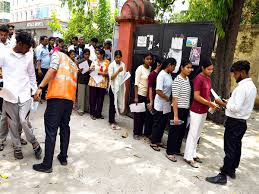
Rahul Gandhi said the hard work, sacrifices, and dreams of more than 22 lakh students have been “crushed by this corrupt BJP regime”. NEW DELHI: Several opposition leaders, including Congress leader Rahul Gandhi, on Tuesday slammed the government after the cancellation of the NEET-UG examination, alleging administrative failure and insensitivity toward students. Prime Minister Narendra Modi’s ‘amrit kaal’ has turned into a ‘vish kaal’ (poison-filled era) for the country, they added. Gandhi said the hard work, sacrifices, and dreams of more than 22 lakh students have been “crushed by this corrupt BJP regime”. In a post on X, Gandhi said, “The NEET 2026 examination has been cancelled. The hard work, sacrifices, and dreams of more than 22 lakh students have been crushed by this corrupt BJP regime. Some fathers took loans, some mothers sold their jewellery, lakhs of children stayed up all night studying, and in return, they got paper leaks, government negligence, and organised corruption in education.” “This is not just a failure—it’s a crime against the future of the youth,” the Leader of Opposition in the Lok Sabha said. CPM Rajya Sabha member John Brittas said repeated failures in national examinations were eroding public trust in the system. “NEET cancellation is yet another blow to lakhs of students who put in years of hard work. Repeated failures in national exams are destroying trust in the system. The government must fix this broken process,” he said in his X post. AAP national convener Arvind Kejriwal said affected students will have to resort to mass protests as the government only understands the language of agitation. At a press conference, he alleged “political patronage” in paper leaks, saying the NEET question paper was leaked four times in the past nine years and none of the accused were punished. RJD Rajya Sabha member Manoj Jha also attacked the NTA. “Do anything but first dismantle NTA, NEET,” he said on X. “Have you ever thought about the impact on students coming from ordinary backgrounds? The CBI probe is an eyewash,” he said. Preetha Nair Courtesy : TNIE Note: This news is originally published on https:/thenewindianexpress.com/bha and is used purely for non-profit/non-commercial purposes, especially human rights
NEET paper leak: Accused bought paper at Rs 10L, sold 10 sets for Rs 15L each
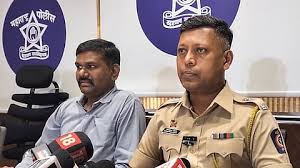
According to the Nasik police, the accused, who holds a Bachelor of Ayurvedic Medicine and Surgery degree runs a medical admission counselling centre in Nashik. MUMBAI: The Nashik Police arrested a 30-year-old youth on Tuesday in the NEET paper leak case. In the preliminary investigation, the police have discovered that the accused purchased the NEET question paper by paying rS 10 lakh and later sold it at rS 15 lakh per set to 10 people in different states. According to the Nasik police, the accused, who holds a Bachelor of Ayurvedic Medicine and Surgery degree, is a resident of the Nandgaon area in Nashik district and, along with some friends, runs a medical admission counselling centre in Nashik. The Nashik Police said, “The accused was arrested in Indira Nagar, Nandgaon, Nasik, on Tuesday noon. The accused had changed his attire and hairstyle to confuse the police. He bought the leaked paper at `10 lakh, and later, he made the 10 sets of it and sold each set for `15 lakh to students from other states through medical admission counselling centres.” It added that the paper leak network spanned Rajasthan, Maharashtra, Haryana, Andhra Pradesh, and Karnataka. The Nashik Police has decided to hand over the accused’s custody to a central probe agency. The Nashik Police said that the Rajasthan police had shared the accused’s details with them and further reference was obtained from social media. The police added that they are investigating if the accused operated in a network of agents. Sudhir Suryawanshi Courtesy : TNIE Note: This news is originally published on https:/thenewindianexpress.com/bha and is used purely for non-profit/non-commercial purposes, especially human rights
Sonia Gandhi undergoes routine check-up at Medanta Hospital
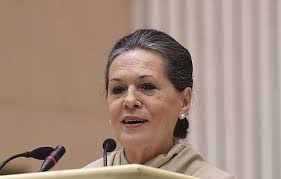
According to sources, Gandhi was admitted to the Medanta Institute of Digestive and Hepatobiliary Sciences at around 10.30 pm on Tuesday. NEW DELHI: Congress leader Sonia Gandhi visited Medanta Hospital for a routine medical check-up, party leader Jairam Ramesh said on Wednesday. “She is now back home,” said Ramesh, who serves as Congress general secretary. According to sources, Gandhi was admitted to the Medanta Institute of Digestive and Hepatobiliary Sciences at around 10.30 pm on Tuesday. The hospital did not issue any statement regarding her visit. Earlier, on 24 March, the former Congress president was admitted to Sir Ganga Ram Hospital with fever and remained hospitalised for seven days while recovering from a systemic infection. Courtesy : TNIE Note: This news is originally published on https:/thenewindianexpress.com/bha and is used purely for non-profit/non-commercial purposes, especially human rights
‘All discussions completed’: Congress to announce its CM pick for Kerala on Thursday

The comments came shortly after Congress leader Rahul Gandhi met party president Mallikarjun Kharge and held a final round of discussion at his residence. Congress will announce its chief minister pick for Kerala on Thursday as all discussions by the party high command has been completed, General Secretary in-charge Communications, Jairam Ramesh said on Wednesday. “As authorised by the members of the CLP in Kerala, the high command of the Congress has completed all discussions, and the decision on who the next chief minister of Kerala will be will be announced tomorrow,” Ramesh told reporters outside Kharge’s residence. He declined to comment on whether the announcement would be made in Delhi or Kerala. The statements came shortly after Congress leader Rahul Gandhi met party president Mallikarjun Kharge and held a final round of discussion, even as protests and suspense over the delay in chosing the CM marred the party’s humongous victory in the recently concluded Assembly elections. Rahul Gandhi drove down to Kharge’s residence for the meeting, which lasted about 40 minutes. The former Congress chief had previously met several leaders from Kerala and around eight former state unit chiefs to ascertain the ground situation. The party was expected to make the announcement on Wednesday night. However, according to sources, the decision was reportedly delayed as senior party leader Sonia Gandhi was unwell and had to be taken to Medanta Hospital in Gurugram for “routine check-ups.” The Congress leadership has been unable to decide on a chief ministerial face even after ten days since the results for the Assembly polls were announced, in which the United Democratic Front (UDF) registered a stunning perfomance, winning 102 seats, well over the majority mark. Protests at the ground level by ordinary party workers had prompted the party leadership to hold discussions with state leaders before finalising the next chief minister. The race for the state’s top post started after the powerful AICC general secretary for organisation, K C Venugopal, threw his hat in the ring. He enjoys the support of a majority of Congress MLAs. Leader of Opposition in the outgoing Kerala assembly, V D Satheesan, and senior party leader Ramesh Chennithala are also staking a claim for the post. Congress’s allies in the UDF favour Satheesan, who also enjoys huge support from the public as well as party workers on the ground. Large number of Congress workers have gathered outside the residence of Satheesan on Wednesday, expecting a decision in favour of the leader. Kerala is the fourth southern state where the Congress has come to power, after it won Karnataka and Telangana and shared power in Tamil Nadu with TVK. Courtesy : TNIE Note: This news is originally published on https:/thenewindianexpress.com/bha and is used purely for non-profit/non-commercial purposes, especially human rights
Is there a connection between caste and untouchability and malnutrition? This research by two professors will surprise you!
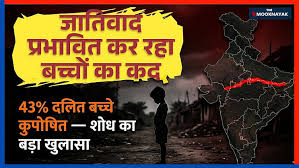
The research found that Scheduled Caste children living south of the Vindhyachal Mountains are, on average, 0.24 standard deviations taller than their counterparts living north of the Vindhyachal Mountains and have a 7 to 8 percentage point lower risk of stunting, a highly significant and statistically proven difference. Most importantly, no comparable difference was found among upper-caste Hindu children between those north and south of the Vindhyachal Mountains. New Delhi—The problem of child malnutrition in India is not limited to poverty or poor health services; it is also deeply rooted in the centuries-old caste system and social evils like untouchability. This startling finding comes from a recent study by Professor Ashwini Deshpande of Ashoka University and Professor Rajesh Ramachandran of Monash University Malaysia. This research paper was published in the prestigious international journal Journal of Economic Behavior and Organization in the year 2025. The Centre for Economic and Data Analysis at Ashoka University recently published an article on this. The researchers based their study on data from the Government of India’s National Family Health Survey (NFHS-4) 2015-16. This survey provides physical measurements and caste information for 230,898 children under the age of five. The study specifically compared 45,924 Scheduled Caste (SC) and 29,132 Upper Caste Hindu (UC-Hindu) children aged between 0 and 59 months. According to the research, stunting, i.e., extremely low height for age, is the most obvious sign of chronic malnutrition. This condition profoundly impacts a child’s brain development, educational potential, and economic opportunities in adult life. Nearly one-third of children under five in India suffer from stunting, a condition that has far-reaching and serious consequences for human capital development. Research findings clearly show that the rate of stunting among Scheduled Caste children is approximately 50 percent higher than that among upper caste Hindu children. According to the data, while the rate of stunting among SC children is 43 percent, it is only 29 percent among upper caste Hindu children. This difference is also clearly visible in the height parameter – the average height-for-age Z-score of UC-Hindu children is -1.12, while that of SC children is -1.64. This means that SC children are, on average, more than half a standard deviation shorter than their upper caste counterparts. This difference persists throughout every month of a child’s age, from 0 to 60 months. Researchers analyzed data from 585 districts across the country. Data from 467 districts for SC children and 369 districts for UC-Hindu children were studied. This analysis revealed that stunting rates among SC children were above 40 percent in 55 percent of districts, while stunting rates among UC-Hindu children were above 40 percent in only 15 percent of districts. In contrast, stunting rates among SC children were below 30 percent in only 15 percent of districts, while stunting rates among UC-Hindu children were below 30 percent in 54 percent of districts. The research found the situation to be most severe in Bihar, Chhattisgarh, Jharkhand, Madhya Pradesh, Rajasthan, and Uttar Pradesh, collectively known as the “BIMARU” region. This region accounts for 50.8 percent of the total survey sample. In 180 out of 220 districts in this region, or 82 percent of districts, stunting rates among SC children were above 40 percent. In 99 districts, or 45 percent, more than half of SC children are stunted. On the other hand, in the same region, stunting among UC-Hindu children is above 40 percent in only 20 percent of districts. The situation is relatively better in Southern India, where only 24 percent of districts have stunting among SC children above 40 percent. The Vindhyachal Mountains: A Historical and Social Divide Professor Deshpande and Professor Ramachandran made the Vindhyachal mountain range the most important and fundamental aspect of their research. According to the researchers, historically, the region north of the Vindhyachal was known as “Aryavarta,” defined in Manusmriti (2.22) as the land between the Himalayas and the Vindhyas. This region has been a cultural center of Hinduism and the caste system since the Vedic period (approximately 1500-600 BCE). The Vindhya Mountains historically served as a boundary between Aryan-influenced areas and non-Aryan areas. This is why untouchability and caste-based discrimination are more deeply rooted in the north. This historical evidence is supported by contemporary data. An analysis of the 2011-12 Indian Human Development Survey (IHDS-II) data shows that 49 percent and 40 percent of households in Central India and the North-Central Plains, respectively, admit to practicing untouchability. In contrast, only 17 percent of households in the southern states do so. A study by Shah et al. (2006) reported that Dalits were denied access to private health clinics in 74 of the 348 villages surveyed in rural India. In 30-40 percent of villages, public health workers refused to visit Dalit settlements, and in 15-20 percent of villages, Dalits were denied access to public health centers. The researchers used a well-established statistical method—Difference-in-Differences (DID)—to compare SC and UC-Hindu children living 100 kilometers north and 100 kilometers south of the Vindhyachal Mountains. This method is important because it compares within a single state, allowing the influence of economic, geographic, and administrative factors to be isolated. The results are extremely significant. SC children living within 100 kilometers of the Vindhyachal range are 21 percentage points, or approximately 70 percent, more likely to be stunted than UC-Hindu children. However, the most important finding is that SC children living south of the Vindhyachal range are approximately 8 percentage points less likely to be stunted than SC children living north of the Vindhyachal range. This difference is both statistically significant and economically significant. In terms of height, SC children living south of the Vindhyachal range are, on average, 0.24 standard deviations, or approximately 30 percent taller, than their counterparts in the north. On the other hand, for UC-Hindu children, living north or south of the Vindhyachal region makes no statistical difference. This means that the advantage of geographical location is not universal, but rather limited to SC children, suggesting that caste-based discrimination is the root cause of this difference.