
‘Stop gambling with children’s future’: Rahul Gandhi attacks govt over NEET-UG re-test centre blunder
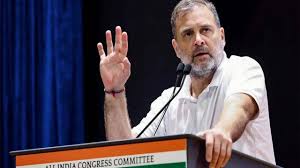
NEW DELHI: Congress leader Rahul Gandhi on Saturday criticised the Modi government after a NEET-UG aspirant from Nagpur was allotted Abu Dhabi as the examination centre for the re-test, saying the authorities should “stop gambling” with the future of children. Responding to the issue, the National Testing Agency (NTA) said the grievance is being looked into and that, after due verification, the candidate will be allotted a centre in Nagpur within the next few hours. In a Hin post on X, Gandhi wrote, “A student from Nagpur had been preparing for the NEET re-exam for a month. He downloaded his admit card just a day before the exam. His assigned centre was in Abu Dhabi. He has no passport, his family lacks the funds to send him abroad, and there is no time left. He wept all night and is refusing to take the exam – can one even imagine the level of stress involved?” “How did this even happen? No student should have to face the issue of being unable to reach their exam centre. In reality, the NTA is merely testing the patience of the country’s students and their parents,”Gandhi said. Gandhi asserted that a system which fails to allot a student an examination centre in their own city and instead assigns one abroad has no right to conduct exams, news agency PTI reported. He further stated, “Stop gambling with our children’s future. They deserve a sensitive, responsible, and accountable education and examination system – and we will ensure they get it.” Gandhi launched a signature campaign to highlight issues concerning the country’s education system on Thursday. The campaign includes paper leaks and high fees, etc. He described the campaign as a platform through which students can directly place their demands before the government. His call for participation came a day after he interacted with students at a convention in Kota, Rajasthan. During the interaction, he termed India’s education system a “rejection system” rather than a selection system. He alleged that the system imposes a heavy financial burden and causes intense stress for students and middle-class families. Addressing the gathering in Kota, a hub for coaching centres, Gandhi said the present education framework is “extremely stressful and unfair”. The NTA had earlier cancelled the NEET-UG 2026 examination scheduled on May 3 following allegations of a paper leak. The government then directed the CBI to conduct a thorough investigation into the matter. Courtesy : TOI Note: This news is originally published on https:/timesofindia.com/bha and is used purely for non-profit/non-commercial purposes, especially human rights
‘Rahul Gandhi exposed’: BJP targets Congress leader after Shashi Tharoor’s PM Modi praise over Trump meet
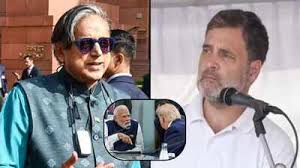
NEW DELHI: The BJP on Saturday seized on senior Congress leader Shashi Tharoor’s remarks praising Prime Minister Narendra Modi, claiming that the comments had exposed a contradiction within the Congress party’s stance towards the Prime Minister. Reacting to Tharoor’s observations, BJP national spokesperson Pradeep Bhandari took a swipe at Congress leader Rahul Gandhi. “Shashi Tharoor exposes Rahul Gandhi. Congress Leader praises PM @narendramodi Ji’s diplomacy. When it Comes to Protecting India’s National Interest PM Modi comes first; When it comes to speaking against India’s National interest Rahul Gandhi leaves everyone behind!” said BJP national spokesperson Pradeep Bhandari in a post on X. The BJP’s response came after Tharoor praised PM Modi-Trump meet. “PM Modi made his point clear both in the public and private meetings with the President. It is important to convey the message that in wartime, civilian sailors on commercial ships should not be targets of combat. They are not soldiers, and that is the message Mr. Modi conveyed,” Tharoor said. He went on acknowledged several aspects of PM Modi’s leadership, calling him “powerful orator, one of the best orators the country has seen in Hindi”. “I think we all recognise that he has a tremendous amount of dynamism and energy. He has a vision, whether you agree with that vision or not. He is a powerful orator, one of the best orators the country has seen in Hindi. He reaches out particularly to those who speak that language,” Tharoor had said. He has a very compelling presence on the national stage. Undoubtedly, he has been able to leave his stamp on many aspects of Indian life, society and politics, the economy, particularly the building of the infrastructure is one of Mr Modi’s achievements as long as the highways, ports and airports stand. Though there is still always room for improvement,” he added. BJP spokesperson Shehzad Poonawalla intensified the attack on Rahul Gandhi, claiming that senior Congress MP Shashi Tharoor had “busted” the opposition leader’s narrative by praising PM Modi and acknowledging his handling of key national issues. Poonawalla said the Congress had repeatedly accused the prime minister of “surrendering” on national issues and failing to raise concerns regarding Indian sailors. According to him, Tharoor’s comments directly contradicted those claims. “It was Rahul Gandhi’s birthday. But Dr Tharoor has given him a very good gift by busting his fake narrative. Because Rahul Gandhi’s Congress was constantly saying surrender, surrender, saying the PM has not raised the issue of sailors,” he said. “Now Dr Tharoor contradicts him, busts his fake narrative, says that the PM has raised the issue, conveyed India’s point. And not only that, he has praised Prime Minister Modi for being visionary, dynamic, having a great presence, leaving a mark on Indians and has said he is a great orator. So I think Rahul Gandhi must be burning with anger. I just hope that he does not take action against Dr Tharoor,” he added. PM Modi and US President Donald Trump held their first bilateral meeting in 16 months on the sidelines of the G7 Summit in Evian, France, on Wednesday. During the talks, PM Modi highlighted concerns over the safety of Indian seafarers operating not only near the Strait of Hormuz but across the wider Gulf region. Trump, meanwhile, praised the PM Modi, describing him as a “tough negotiator” and remarking on his strong public presence. Courtesy : TOI Note: This news is originally published on https:/timesofindia.com/bha and is used purely for non-profit/non-commercial purposes, especially human rights
Congress raises fresh concerns over Great Nicobar project, seeks public disclosure of studies
Congress leader Jairam Ramesh has shot off a letter to Environment Minister Bhupender Yadav, flagging concerns over the lack of transparency in the Great Nicobar Island project. Congress leader Jairam Ramesh has shot off a letter to Environment Minister Bhupender Yadav, flagging concerns over the lack of transparency in the Great Nicobar Island project. He asserted that the environmental impact assessments of different aspects of the venture are “demonstrably inadequate.” Ramesh’s latest letter comes against the backdrop of a series of exchanges with Yadav over the Great Nicobar Island project in the past few years. “I am sorry to say yet again that the environmental impact assessments of different aspects of the Great Nicobar Island Project are demonstrably inadequate and fall woefully short of guidelines set by the Ministry of Environment, Forests & Climate Change itself,” the former environment minister said in his letter to Yadav. Ramesh pointed out that these had been detailed in his earlier letters to which Yadav had “no worthwhile answer”. “Your position is that conditions made part of the environmental clearance mandate continuous monitoring. In this connection, may I submit the following for your consideration. Six-monthly compliance reports are to be made public. But after March 2024 no such compliance report has been made available. Minutes of the project monitoring committee meetings are being uploaded several months after they have been held,” Ramesh said. Ramesh said the environmental clearance for the project, granted on November 11, 2022, required several conservation and mitigation plans to be submitted within 15 days. However, these plans have not been made public The plans were to be prepared by institutions including the Wildlife Institute of India (WII), the Salim Ali Centre for Ornithology and Natural History (SACON), the Zoological Survey of India (ZSI), the Botanical Survey of India (BSI), the National Institute of Oceanography (NIO), the Indian Institute of Forest Management (IIFM) and the Andaman and Nicobar Forest Department (ANFD), he said. According to Ramesh, some of these institutions were later asked to revise their monitoring and mitigation proposals after incorporating suggestions from the Expert Appraisal Committee. “These plans too are not publicly available,” he said. Ramesh further argued that it was “strange, to say the least” that some of these plans may have been submitted only after being appraised by the committee concerned, raising questions about their adequacy and reliability He also pointed out that the updated Environment Management Plan, which was to be based on existing and additional studies, remains unavailable in the public domain. “There are at least, as far as I have been able to make out, 12 such studies by different institutions. Several studies are still pending, which proves that the environmental clearance was granted prematurely and hastily. Some mitigation measures, such as the large-scale relocation of coral colonies, are clearly unrealistic and almost impossible to implement,” Ramesh said. The Congress leader noted that he had earlier sought the public release of the report of the High-Powered Committee (HPC) constituted by the National Green Tribunal, along with the field survey conducted by the National Centre for Sustainable Coastal Management, on which the committee’s conclusions regarding the Coastal Regulation Zone status of the proposed transshipment port were based. “Everything I am asking to be made public in no way hampers the fulfilment of the so-called strategic objectives that are now being cited as the rationale for the Great Nicobar Island Project. Serious questions over its environmental impact assessment and legitimate concerns about its grave ecological consequences remain unanswered and unaddressed by your sadly evasive replies,” Ramesh said. “I am simply unable to understand the extraordinary level of non-transparency being adopted to conceal reports, studies and plans,” he added. The Congress on Wednesday criticised the project, describing the proposed transshipment port at Galathea Bay as a recipe for ecological disaster that would result in the large-scale destruction of coral colonies. Ramesh has also written to Defence Minister Rajnath Singh, urging him to reconsider the decision to reject the full expansion of the INS Baaz runway. In his correspondence with Yadav, he has repeatedly highlighted what he described as the “demonstrably dubious” nature of the project’s environmental impact assessment. The Centre plans to develop an international container transshipment port, a civilian-cum-naval airport, a township and a power plant under the Great Nicobar Island project. Congress leader Rahul Gandhi has alleged that the government’s claim that the project is primarily about national defence and a transshipment port is a “lie”, arguing instead that it is intended to benefit a single businessman through the development of hotels and casinos on ecologically sensitive land. Earlier this month, Rahul released a video of over 16 minutes based on his visit to the Andaman and Nicobar Islands in late April and urged people to sign a petition calling on the government to “choose green over greed”. Courtesy : TNIE Note: This news is originally published on https:/thenewindianexpress.com/bha and is used purely for non-profit/non-commercial purposes, especially human rights
Chhatron ki Goonj: Rahul Gandhi launches campaign to amplify issues related to nation’s education system
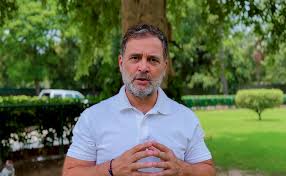
In a post on X, Gandhi posted a link to the campaign where students can share ideas and sign a petition. Congress leader Rahul Gandhi on Thursday launched a campaign for nation’s education reform, such as paper leaks, high fees, and urged students to join the same. He said that it is a platform for students to make demands directly to the government. In a post on X, Gandhi posted a link to the campaign where students can share ideas and sign a petition. “If you’ve suffered because of paper leaks, exam issues, or high fees, if this education system has shattered your dreams, if your family has invested a lifetime of savings in your education, then ‘Chhatron Ki Goonj’ is your voice,” the leader of opposition in the Lok Sabha said in the post. Gandhi said that this initiative goes beyond just a campaign; it is a platform for students to raise issues such as the need for affordable education, fair examinations, and dignified employment opportunities. “Join the movement: Click the link below. Fill in your name and share your ideas. Sign the petition — that’s it,” Gandhi said, urging the youth to sign up for this movement. “More the signatures, louder the goonj!” he added. Gandhi also released a video message and said his programme in Kota on Wednesday received a very good response. “For this, I would like to thank the students of India. Millions of youth, the future of India and the students of India watched our presentation in Kota, a critique of the education system you are facing, the walls you are facing. “What are the biggest issues? Number one, the education system is not designed around you. It is not designed around your imagination. Number two, it does not enable you to do what you want to do in life. lt buckets you into becoming an engineer, into becoming a doctor, into becoming a lawyer,” Gandhi said. “An education system should free your imagination. And the third most important and the most disheartening fact, the cost of our education system. 22 lakh families spend as much money to get their children through NEET as the government of India gives for its entire education budget,” he claimed. Gandhi said five exams cost these families the same amount of money as the Budget of five massive ministries in the Indian government, he said, adding that this is a “shame”. “This is something that all of us should change. This is not a political issue, this is a national issue. We want you to tell us about your imagination,” he said. In his post along with the video, Gandhi said, “Yesterday, together, we made history in Kota. For the first time, the country has realized that massive extortion is taking place in the name of education.” “We must turn the flame kindled in Kota into a blazing torch, and there is a definite role for you in this journey. Send in your suggestions and sign the petition,” he said. His appeal for participation in the campaign followed a day after he interacted with students at a convention in Kota, Rajasthan. During this interaction, he described India’s education system as a “rejection system” rather than a selection system, claiming it places an excessive financial burden and causes significant stress to students and middle-class families. While addressing the gathering in Kota, known for its coaching centres, Gandhi remarked that the current education structure is “extremely stressful and unfair”. “This is not good for the country. I want all of us to work together to ensure that no student in this country ever feels what this girl felt,” he had said at the ‘Chhatron ki Goonj’ rally in Kota, where he interacted with students on various issues like paper leaks and unemployment. Courtesy : TNIE Note: This news is originally published on https:/thenewindianexpress.com/bha and is used purely for non-profit/non-commercial purposes, especially human rights
Cartography of India’s future
Jorge Luis Borges wrote a famous fable on a 1:1 map that covered the entire land. In a way, our leaders are also offering us maps to cover the India of our imagination. One is about roads to a shiny future, the other about hazards to avoid In his one-paragraph fable ‘On Exactitude in Science’, Jorge Luis Borges imagines an empire whose cartographers become so obsessed with accuracy that they produce a map as large as the empire itself. It matches the territory point for point. The result is a masterpiece that nobody can use. Borges’s point is simple: every map leaves something out. When a map claims to represent everything, it stops helping us understand where we are. In India, we now live with two such maps. One is drawn by the cartographer of dreams, Narendra Modi. The other is sketched by Rahul Gandhi, who sees in the same dreams the makings of a nightmare. These maps are laid over the same territory, and yet they do not line up. The result is a peculiar double vision: we inhabit two countries at once and are at home in neither. Modi’s map is bright with ambition, infrastructure and civilisational purpose. He claims to have lifted India from an era of drift into an era of execution. Roads, bridges, expressways, factories, digital payments and welfare schemes all form part of a narrative in which “stability and development at an unprecedented speed and scale” have replaced the instability and “mis-governance” of earlier regimes. What makes Modi’s map attractive is not merely its optimism but its legibility. Roads lead somewhere. Airports appear where there were none. The citizen can point to a bridge, a welfare transfer, or a railway station and say: there, that is the future. The map offers destinations. It tells Indians not merely where they are, but where they are headed. Rahul Gandhi’s map is dominated by institutional decay and ecological loss. He sees a democracy in which “the BJP controls the institutions of the State… the legal system… the bureaucracy… the intelligence agencies” and even the Election Commission. The distance between election and selection, he argues, is shrinking. Level playing fields are history. Yet the difficulty for Rahul Gandhi is not that his map is necessarily false. It is that a map made entirely of hazards is difficult to follow. A traveller may wish to know where the swamps and cliffs are, but he also wants to know where the road leads. Gandhi identifies dangers that many independent observers would acknowledge, but he struggles to show citizens what lies beyond the warning signs. You could say the problem is also one of persuasion. Rahul Gandhi, for all his courage, may never be Prime Minister; he is like the salesman who turns up at your door and tells you the vacuum cleaner he is offering probably will not work. A moment later, Modi appears with the same machine and sells you two by showing you an image of your soon-to-be spotless house. The first model requires effort—you, the citizen, must roll up your sleeves and resist, organise and demand accountability. The second offers something closer to the ideal: buy the product and trust the company. ‘Bharat’ was recently represented at an innovation jamboree in Nice, where the leaders of India and France jointly inaugurated ‘Bharat Innovates 2026’, a showcase for Indian startups and venture capital. As a reasonable citizen of this cartographic wonderland, one might be forgiven for asking: what exactly have we innovated that is not packaging and scale? Yet, the spectacle works. Modi is an effective peddler of this dream. Rahul Gandhi’s latest map, outlined in his speech to the INDIA bloc partners on June 8, is harder to inhabit. He spoke of “unity and resistance” and compared today’s unequal playing field to the colonial period. He may be substantially right. There is mounting evidence, from Great Nicobar to the managed dismantlement of opposition parties, that the system is skewed. Yet his own allies—Mamata Banerjee, Akhilesh Yadav and others—do not fully buy the argument that every defeat is the product of rigging. To admit that would be to accept the need for something like a sustained civil disobedience movement. Nobody is ready for it. This is a country whose political culture is built on inertia. We are a civilisation more comfortable with meditation than mediation. Passive resistance—Mahatma Gandhi’s great insight—suited us because it allowed for the grace of restraint without constant confrontation. As new entrants like the Cockroach Janta Party discover, even mobilising the much-hyped Gen Z is hard. The poor, who might once have been the natural constituency for street politics, have seen their anger blunted by welfare. People remain poor, but they are not destitute in quite the same way. Welfare is both a genuine gain and an effective tranquilliser. Ironically, Rahul Gandhi has also been a strong advocate of this model, from NYAY (Nyuntam Aay Yojana or minimum income scheme) to a more generous safety net, which means his own politics co-opts the very constituency that might otherwise be tempted by insurrection. The clientele for his cartography has been neutralised by the policies he supports. In Borges’s story, the perfect map ends up in shreds, an object of pity in the desert. Our two Indian maps are nowhere near perfect, but they compete to cover every inch of the India of our imagination. Perhaps the country awaits the arrival of another cartographer, another map. C P Surendran Author whose latest volume of poetry is Window with a Train Attached (Views are personal) Courtesy : TNIE Note: This news is originally published on https:/thenewindianexpress.com/bha and is used purely for non-profit/non-commercial purposes, especially human rights
Amit Shah hell bent on making NDA ‘National Defectors Alliance,’ will not get two-thirds majority in LS: Congress

Congress general secretary Jairam Ramesh asserted that the Union Home Minister will not succeed in in his attempts to get a two-thirds majority in the Lok Sabha. Amid the ever-growing crisis within the opposition ranks, Congress leader Jairam Ramesh on Thursday slammed BJP leader and Union Home Minister Amit Shah for trying to break opposition parties, while asserting that he will not succeed in his attempts to get a two-thirds majority in the Lok Sabha. Ramesh said Shah suffered a “humiliation” in the Lok Sabha on April 17 this year when he failed in getting the Constitution amendment bill related to delimitation passed, and is now resorting to “dirtiest of tricks” in order to avenge that. He accused Shah of launching an “assault on the Constitution and democracy.” “Amit Shah is clearly hell-bent on making the NDA, the National Democratic Alliance, the NDA — National Defectors Alliance. He was humiliated on the 17th of April 2026 in the Lok Sabha. He expected the Constitution amendment bill that provides for delimitation to pass,” Ramesh told PTI. “He (Shah) had assured the Prime Minister (Narendra Modi). But because of opposition unity and solidarity, the bill didn’t pass. They got only 298 and they needed 362, if you go by 543 present and voting. So they felt hugely short of the two-thirds majority. And that was a humiliation. It was a setback for him,” Ramesh said, adding the home minister did not expect that. The Congress leader accused the home minister of orchestrating defections as a response to that “humiliation” of April 17. Shah has started on this massive programme to destabilise opposition parties, he alleged. “He’s (Shah is), you know, trying to break all opposition parties. But I can assure you that he’s not going to succeed in getting a two-thirds majority in the Lok Sabha. He’s trying similar tactics in the Rajya Sabha. But ultimately, it’s two-thirds majority in the Lok Sabha that matters,” Ramesh said. The Congress leader claimed that all sorts of incentives are being offered to opposition MPs to defect to the ruling alliance. “You know, in the mutual fund industry, you offer different products and different schemes catering to the needs of individual investors. So, he’s obviously offering a lot of incentives to individual MPs based on their needs and assessments. But, you know, this is an assault on the Constitution. It’s an assault on democracy,” Ramesh said. “It is an absolute disgrace that the man who occupies the place that was once occupied by Sardar Vallabhbhai Patel is indulging in all these dirtiest of tricks in order to avenge the humiliation that he underwent,” the Congress general secretary said. Asked about Uttar Pradesh minister Om Prakash Rajbhar’s remarks that a major split in the Samajwadi Party (SP) is on the cards, Ramesh dismissed the comments as “psychological games” that are part of Shah’s strategy. “He (Shah) is the master of sowing confusion. He is a weapon of mass distortion and disinformation –WMD, in the real sense of the term. So he is trying to create a lot of uncertainty and sow the seeds of dissensions but he is not going to succeed. He can do whatever he wants, he is trying to save his job,” Ramesh alleged. He claimed the Modi government had to suffer “humiliation” for the first time in 12 years on April 17. “So, there is a lot of bluff and bluster and the home minister is a master in this bluff and bluster. He is trying to create an impression that opposition parties are withering away, but opposition parties are united, there is solidarity, there is ideological and this ‘National Defectors Alliance’ will not get a majority whenever the Constitution amendment bill is brought into the Lok Sabha,” he asserted. Ramesh stressed that the Congress has ideological clarity and is well aware that it is fighting an ideological battle against the BJP and not merely a political struggle. “The home minister who does everything with the approval of the prime minister is hell-bent on destroying the Constitution and the foundational principles of our democracy,” the Congress general secretary in-charge communications said. “You saw what happened on April 17, he came a cropper, he was humiliated and he is now taking revenge, trying to compensate and send a message to the PM that ‘I am going to deliver a two-thirds majority for you’,” he said. Ramesh pointed out that Shah comes from the land of Gandhi who taught people that the ends are as important as the means. However, it is the “dirtiest of tricks” Shah is playing,” Ramesh said. He asserted that the Congress is not just sitting back and is talking to its allies opposition parties. “Our top leadership, the Leader of Opposition in the Lok Sabha (Rahul Gandhi) or the Leader of Opposition in the Rajya Sabha (Mallikarjun Kharge), people like me, are in touch with all the colleagues in the opposition parties. We are united and we are going to resist this nefarious, diabolical attempts of the home minister to get a two-thirds majority by hook or crook,” Ramesh said. The Congress’ attack came with Shiv Sena (UBT) facing an imminent split. Six of Shiv Sena (UBT)’s nine Lok Sabha MPs skipped its parliamentary party meeting here on Thursday, signalling that a formal crossover to the ruling Shiv Sena led by Eknath Shinde may be only a matter of time. Also, 20 rebel TMC MPs have met Lok Sabha Speaker Om Birla and announced their merger with the NCPI, a Tripura-based registered unrecognised political party. On Wednesday, Ramesh accused Shah of launching an “onslaught” on the opposition and “wrecking” Indian democracy to compensate for his “humiliation” in the Lok Sabha on April 17. Courtesy : TNIE Note: This news is originally published on https:/thenewindianexpress.com/bha and is used purely for non-profit/non-commercial purposes, especially human rights
IAF flies 200 sorties in 3-4 days to airlift NEET-UG retest papers to 18 zones

Indian Air Force (IAF) has carried out nearly 200 sorties over the past three-four days to ferry question papers for the June 21 NEET-UG retest to 18 designated zones across the country. The mission — launched on June 13 — is nearing completion ahead of the medical entrance exam. IAF’s Mi-17 helicopters and transport aircraft were pressed into service to deliver sealed question papers to their respective destinations. The aircraft have already logged around 200 sorties since the operation began, ensuring secure and timely dispatch to hubs nationwide. From these hubs, the question papers will be transported to different exam centres under tight security arrangements, sources said. “The use of IAF aircraft is aimed at guaranteeing foolproof, time-bound delivery,” an official said. The May 3 NEET-UG exam — the single-largest competitive test in the country with over 22 lakh candidates — was rocked by allegations of paper leaks and irregularities, leading to its cancellation and triggering nationwide protests and Supreme Court intervention. Officials maintain the July 21 retest will be conducted “smoothly and without any irregularities”. With lakhs of medical aspirants and their futures riding on the outcome, the govt appears determined to leave nothing to chance this time, deploying the armed forces to safeguard the sanctity of one of India’s largest exams. Courtesy : TOI Note: This news is originally published on https:/timesofindia.com/bha and is used purely for non-profit/non-commercial purposes, especially human rights
TMC implosion, NCP split and Congress question: Why ‘ghar wapsi’ may not be the answer
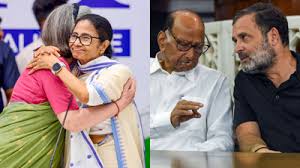
NEW DELHI: Mamata Banerjee’s Trinamool Congress is not merging with the Congress. That’s final for now. Both the parties have firmly rejected speculations about a merger, dismissing them as “baseless rumours” and “fake news”. But not before the speculations triggered a larger and far more interesting political debate: should leaders like Mamata Banerjee and Sharad Pawar, who broke away from the Congress decades ago to chart their own political course, consider returning to the grand-old-party’s fold to strengthen the opposition fight against the BJP? The merger buzz gained traction after Mamata Banerjee met Sonia Gandhi and later her nephew and political heir Abhishek Banerjee held a lengthy meeting with Rahul Gandhi. The meetings came against the backdrop of an unprecedented crisis within the Trinamool Congress following its crushing defeat in the 2026 West Bengal assembly elections. Sonia and Mamata For the first time, the once-impenetrable fortress of the TMC showed deep cracks. Mamata Banerjee, who ruled Bengal for 15 years and appeared invincible until recently, was reduced to just 80 seats in the assembly as the BJP formed its first-ever government in the state. But her setback did not end with the election results. Several newly-elected MLAs and some of the closest aides of Mamata Banerjee rebelled against the party and reached out to the BJP. Much of the anger within the TMC was directed at Abhishek Banerjee, with sections of the old guard accusing the leadership of sidelining those who spent years building the party. Such rapid was the unravelling of the Trinamool Congress that the once-invincible Mamata Banerjee, who had been dismissive about the Congress for the last 15 years, was forced to rush to the grand-old-party for help. It is this plight of Mamata Banerjee which prompted suggestions from some quarters that the Trinamool chief, who had formed the party in 1998 after breaking away from the Congress, should consider “Ghar-wapasi.” And this suggestion was not just for Mamata, but also for leaders like Sharad Pawar. Pawar, who formed the Nationalist Congress Party (NCP) in 1999, and faced a similar challenge after his party split. Pawar eventually lost control of the NCP name and its iconic clock symbol to the faction led by his nephew Late Ajit Pawar. Another leader who faces challenges similar to Mamata is Uddhav Thackeray. Udhhav, who lost control of Shiv Sena after rebellion by his party MLAs, is now battling fresh speculations of further defections amid reports of “Operation Tiger”. There are reports that 6 of his 9 MPs are in touch with Eknath Shinde, who had led the rebellion against Uddhav, and is now deputy chief minister in the BJP-led government in Maharashtra. Together these stories point to a broader reality: several regional parties that once appeared dominant in their respective states are confronting an increasingly assertive BJP that has not just defeated them but is also benefitting from their implosion. It is this backdrop that has revived an idea that would have seemed improbable just a few years ago. The ‘ghar-wapsi’ debate The homecoming debate was triggered by Shiv Sena (UBT) leader Sanjay Raut, who argued that parties born out of the Congress should reunite with the parent organisation to strengthen the opposition against the BJP. Sanjay Raut The Sena (UBT) leader went a step further, urging Sharad Pawar to take the lead in bringing together parties that emerged after splitting from the Congress. Former Rajasthan chief minister Ashok Gehlot backed the idea, saying “the time has come”, while Maharashtra Congress leader Nana Patole argued that leaders such as Mamata Banerjee and Sharad Pawar increasingly recognise the need for a stronger Congress to counter the BJP. Nana Patole At first glance, the argument appears compelling. The BJP has emerged as the dominant force in the country. When Prime Minister Narendra Modi first came to power in 2014, the BJP was in power in just seven states. With victories in West Bengal and Assam, the BJP-led NDA now governs 22 states and Union Territories. Opposition unity remains a work in progress. Several regional parties are weaker today than they were some years ago. But before asking whether Congress’s former children should return home, it is worth asking why they left in the first place. Why Congress’s children walked away Mamata Banerjee did not leave the Congress because of ideological differences. She walked out in 1998 because she believed the party had become incapable of defeating the Left Front in West Bengal. Frustrated with the Congress high command and convinced that Bengal required a more aggressive opposition, she founded the Trinamool Congress. The split tree The move paid off. In 2011, Mamata accomplished what the Congress had failed to do for decades, ending the Left Front’s 34-year rule in West Bengal. Sharad Pawar’s exit came under different circumstances. In 1999, Pawar, PA Sangma and Tariq Anwar challenged Sonia Gandhi’s foreign origin and subsequently formed the Nationalist Congress Party. While the NCP remained ideologically close to the Congress and frequently governed alongside it, Pawar succeeded in building an independent political identity rooted in Maharashtra. YS Jagan Mohan Reddy’s departure was driven by succession politics. Following the death of his father, former Andhra Pradesh chief minister YS Rajasekhara Reddy, Jagan felt sidelined by the Congress leadership and eventually floated the YSR Congress Party. Within a few years, the YSRCP had virtually replaced the Congress in Andhra Pradesh. Their exits were driven by different factors, but each believed they stood a better chance outside the Congress than inside it. In most cases, they were right. What has changed now What has changed is not the Congress. It is the exponential rise of the BJP. When Mamata Banerjee left the Congress in 1998 and Sharad Pawar followed in 1999, the BJP was nowhere near as dominant as it is today. Regional parties grew by occupying political space vacated by a declining Congress. Today many of those same parties are confronting a very different challenge. Over the last decade, the BJP has expanded beyond its traditional
CPM objects to Telangana CM renaming road after Trump
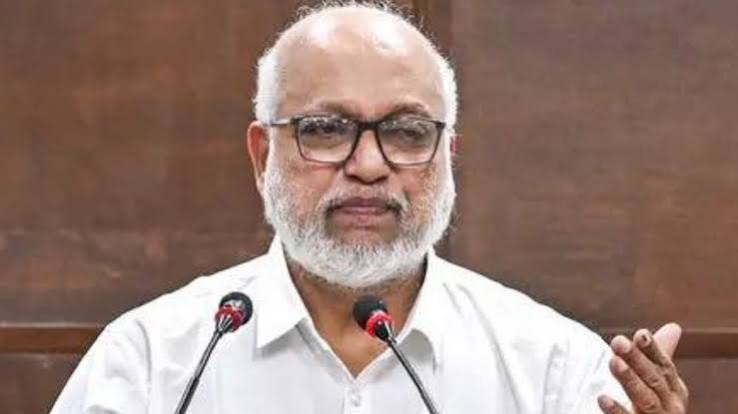
NEW DELHI: Communist Party of India (Marxist) has strongly objected to chief minister Revanth Reddy-led Telangana govt’s renaming the road adjoining the US Consulate in Hyderabad to honour President Donald Trump. “BJP has no qualms about surrendering India’s sovereignty and self-respect, and now it seems that neither does the Congress govt in Telangana,” CPM general secretary MA Baby said on Wednesday. “We expect Congress high command will take note of this outrageous move and intervene to make sure it is withdrawn. Claims of carrying on the ideals of our anti-imperialist resistance movement must not be limited to words,” he said in a post, sharing a screenshot of a news report stating Reddy will inaugurate the road on June 23. “At a time when the belligerent US is in the midst of a war against Iran, a genocide in Gaza, military intervention in Venezuela and a criminal stranglehold on Cuba, CM Reddy is renaming the road adjoining the US Consulate in Hyderabad to honour Trump…” Courtesy : TOI Note: This news is originally published on https:/timesofindia.com/bha and is used purely for non-profit/non-commercial purposes, especially human rights
Rahul Gandhi makes INDIA bloc speech public, allies ask: ‘Why not ours?’
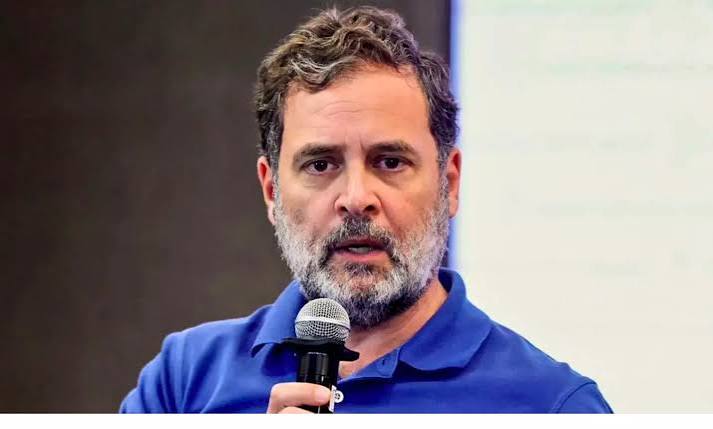
NEW DELHI: Congress functionary Rahul Gandhi’s decision to put in public domain the speech he delivered at INDIA bloc meeting on June 8 has not gone down well with some of the allies, given that it was a closed-door meeting where much was said and varied views were presented. Left parties CPM, CPI and CPI(ML) Liberation specially feel that “mutual trust” among members needs to be bolstered going forward if the bloc has to mount “resistance” against BJP, as suggested by Gandhi in his speech. Not just the release of speech, even what was said by Gandhi has evoked sharp reactions from certain allies over last few days. CPM general secretary MA Baby had on Saturday strongly objected to Gandhi’s remarks regarding former Kerala CM Pinarayi Vijayan in his speech. “While he released what he said to allies, the views of other INDIA bloc members expressed at the closed-door meeting are not in public domain,” Baby said. CPI(ML) Liberation general secretary Dipankar Bhattacharya emphasised that INDIA bloc will have to move beyond just being an electoral bloc and a grouping that comes together during Parliament sessions. “If we want to mount ‘resistance’ against BJP as suggested by Rahul Gandhi in his speech, then we have to meet and plan on raising issues affecting the public together as a group,” he said. On Rahul releasing his speech, he said, “This was an internal meeting, and if he was planning to release his speech, then ideally all political parties present in the meeting should have been consulted.” CPI general secretary D Raja said, “By that measure speeches of others should also be in public domain. Among various issues, the members had raised concern over Congress too.” While refusing to comment on Gandhi’s speech and his decision to release it, RJD MP Manoj Jha said it must be understood that as INDIA bloc is a grouping of political parties, there will be divergence of views. He sought focus on building synchronisation and highlighting issues as a group. Meanwhile, the DMK leadership is firmly holding on to its position over Congress severing its alliance with the party to support the TVK govt. DMK’s floor leader in Rajya Sabha Tiruchi Siva said, “We are very clear that we cannot share the same space with Congress anywhere in the backdrop of their betrayal in Tamil Nadu.” He said, “However, as far as other opposition allies go, we are with them in the fight against BJP.” Courtesy : TOI Note: This news is originally published on https:/timesofindia.com/bha and is used purely for non-profit/non-commercial purposes, especially human rights