
Union government yet to respond, HC dismisses Rahul Gandhi’s citizenship PIL
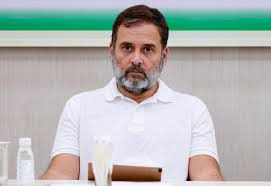
LUCKNOW: Allahabad HC’s Lucknow bench declined Monday to spend any more court minutes hearing a PIL challenging Lok Sabha leader of the opposition Rahul Gandhi’s citizenship, saying the petitioner was at liberty to seek alternative legal remedies. Justices AR Masoodi and Rajiv Singh reasoned that since the Union govt was unable to set a timeframe to resolve the petitioner’s complaint, there was no justification in keeping the PIL pending. Petitioner S Vignesh Shishir, a BJP worker from Karnataka, claimed to have acquired documents and emails from the UK govt proving that Rahul was a British citizen and, therefore, ineligible to contest elections and become an MP. India doesn’t allow dual citizenship. In the previous hearing on April 21, the court was told that the Centre had written to the UK govt seeking details about claims that Rahul held British citizenship. The bench gave the Union govt until May 5 to state its response to Shishir’s representation seeking cancellation of Rahul’s election to the Lok Sabha from Rae Bareli last year. The Centre’s counsel told the court that no time limit could be set for this since information from the UK govt was still awaited. Courtesy : TOI Note: This news is originally published on https://timesofindia.com/ and is for use by the non-military/non-commercial community, especially those in the human rights sector.
Mandal-Kamandal 2.0
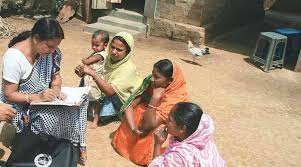
The decision taken at a meeting of the Cabinet Committee on Political Affairs (CCPA), headed by Prime Minister Narendra Modi that caste enumeration will be part of the upcoming census exercise represents a tectonic shift in the BJP’s politics. It not only suggests the saffron party is ready to hijack the main poll plank of the Congress and its allies – the RJD and the SP -, but also to make it an integral component of its Hindootva politics. This is a variation of what was once known as the Mandal-Kamandal politics which was a combination of Dalit politics unleashed by the Mandal Commission report and the Hindootva ideology of the BJP. In 1979 the Morarji Desai-government appointed a commission under the chairmanship of Bindheshwari Prasad Mandal, who was then the Member of Parliament from Madhepura constituency in Bihar. The commission was entrusted with the task of identifying socially and educationally backward classes in India. In its findings the commission identified a total of 3,743 different castes and communities as backward on certain parameters. These castes comprised nearly 52 per cent of the country’s population. The commission proposed the idea of giving 27 per cent reservation to these backward castes/classes in public employment along with SCs and STs. However, after VP Singh became Prime Minister in 1989, he decided to implement the Mandal Commission recommendations to consolidate the votes of backward castes in his favour. But, the whole exercise became embroiled in bureaucratic procedures and continuous judicial interventions. It was finally implemented in 1993 during the tenure of the PV Narasimha Rao government. To counter this politics, the BJP launched its Kamandal politics to rally and unite the Hindoo population behind it. Many fence sitters who earlier were not supportive of the BJP did change their minds and stood with the BJP. The irony this time is that the BJP itself is espousing caste census to get electoral mileage along with its core Hindootva politics. The Assembly election in Bihar is due later this year and the caste composition of the state offers the best opportunity to test the efficacy of the new policy. The strategy of the BJP shows its nervousness over the Opposition’s move to consolidate its support base among the backward castes – mainly the OBCs – through its vocal demand for a caste census. Such a conclusion is inescapable considering the fact that the PM during the 2024 Lok Sabha poll launched a scathing attack on the Congress election manifesto that promised a caste census as a reflection of its “Urban Naxal” thinking. With that electoral propaganda, the BJP then asked the people for a massive LS majority so that it could overhaul the Constitution. The OBC and the Dalit groups saw in it a threat to dismantle caste reservations. This fear translated into votes for the Opposition for which the BJP failed to get a simple majority and fell far short of its expected tally of over 400 seats. Though the BJP has recovered much ground since then winning the elections in Maharashtra and Haryana, it seems it is not sure whether its hard-core Hindootva politics will pay the dividends as it expects in the next LS polls, given the undercurrent in favour of caste census. Till recently, the PM was telling the nation that there are only four castes in the country – women, youth, farmers and the poor. This was obviously an attempt to slam the Congress’ demand for caste census and removal of 50 per cent cap on reservations for SC/ST and OBCs. The government decision in a way follows the predictable pattern of functioning which is to spring surprises and catch the Opposition unawares. There is no doubt that the Opposition is indeed flummoxed by the announcement as is clear from Congress leader Rahul Gandhi’s response: “Modiji used to say there are only four castes in the country. I don’t know what caused the change of heart in the BJP.” The country was happy that he was clueless. However, the decision appears to be well thought out and a huge gamble. The BJP can ill afford to let the ground slip further. Pahalgam has been a mortal blow on the already fragile support frame work. Another clumsy Balakot style ‘surgical strike’ will not help quieten the vociferous groups trying to push India into a vortex of war. The people in power well understand that the Indian armed forces may not be willing to get entangled into a long drawn war. The world is watching current wars in Ukraine and Gaza. The minimum time that it has taken these yet unresolved conflicts has stretched to a few years. Those countries are not able to see the end of the fighting. The Indian populace and its economy are in no position to get into a long drawn military operation in which, most likely, China could play a direct role. Announcement of caste census has been a great help and hopefully it will divert attention from war to politics and, better still, caste based petty politics. Courtesy: Orissa Post Note: This news is originally published on https://www.orissapost.com/ and is for use by the non-military/non-commercial community, especially those in the human rights sector.
Denied dignity: How the Indian State enables caste system through manual scavenging
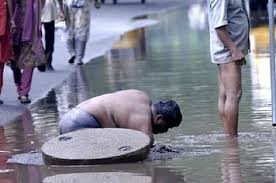
India’s persistent failure to eliminate manual scavenging, despite constitutional guarantees, progressive laws, and technological alternatives, stems not from a legal vacuum but from entrenched behavioural and sociological norms. Across the world, May 1 is set aside to honour the dignity of labour and the long struggle for workers’ rights. In India, this reverence is starkly at odds with the everyday reality faced by its poor and vulnerable working class. Despite being the world’s fifth largest economy, India continues to bury hundreds of its most marginalised citizens, mostly Dalits, in its sewers, septic tanks, and graveyards. The Indian State claims to have abolished manual scavenging, but the reality stinks of apathy, casteism, and systemic failure. The death toll of denial Since 2018, more than 400 workers have died while cleaning sewers and septic tanks in India, according to the Ministry of Social Justice and Empowerment’s admission in Parliament. This figure is widely seen as underreported. Civil society groups like the Safai Karmachari Andolan (SKA) estimate the actual number to be far higher. These deaths aren’t accidents, but caste murders. The victims are overwhelmingly Dalits, forced by social and economic discrimination to enter India’s filthiest spaces, often without safety gear. Take the case of Joy, a 42-year-old sanitation worker in Kerala’s capital, Thiruvananthapuram, who died in July last year while cleaning a clogged canal. His story is not unique. Similar deaths have occurred in Hyderabad, Delhi, Kolkata, Mumbai—cosmopolitan cities where manual scavenging is explicitly illegal, yet continues in plain sight. The contrast between legal prohibition and lived reality is stark. India outlawed manual scavenging over three decades ago, first with the Employment of Manual Scavengers and Construction of Dry Latrines (Prohibition) Act, 1993. The law was expanded in 2013 through the Prohibition of Employment as Manual Scavengers and their Rehabilitation Act, which went further to mandate rehabilitation, alternative employment, and the complete mechanisation of hazardous sanitation work. And yet, the State has largely failed to implement these provisions. The Supreme Court’s 2014 judgement reinforced the ban, ordered compensation of Rs 10 lakh to the families of deceased workers, and even applied this rule retrospectively. Yet compliance remains abysmal. Many states have failed to complete the most basic requirement — identifying the people still forced into this occupation. As a result, their deaths are often unrecorded, uncompensated, and unacknowledged. The court also directed governments to mechanise sanitation, but this remains a broken promise in most places. Machines are either unavailable, dysfunctional, or locked away behind bureaucratic red tape. In many municipalities, mechanisation exists only on official procurement sheets, not on ground. In Delhi, manual cleaning persists under the label of ‘voluntary’ labour performed by contract workers. What emerges is a story of institutional abandonment. At every level – from policy design to municipal governance – the system tolerates this caste-based exploitation. The deaths are not merely technical failures, but moral indictments. Each time a worker enters a sewer without protection, it represents a chain of failures — the failure to mechanise, rehabilitate, record, compensate, and above all, the failure to care. To end manual scavenging, India does not need more laws. It needs political will, administrative integrity, and a rupture with the caste logic that continues to justify this violence. Bone scavenging: A new horror If cleaning human excreta was not already a grotesque affront to human dignity, India now confronts an even more disturbing case in its caste ordeal — bone scavenging. A joint study report by the World Sanitation Workers’ Alliance, the South Asian Sanitation Labour Network (SASLN), and the Safai Karmachari Ekta Manch uncovers this harrowing practice in parts of West Bengal, Odisha, and Rajasthan, where marginalised Dalit communities – many already trapped in manual scavenging – are now collecting human bones from graveyards and cremation sites to earn their bread. This is not macabre curiosity or criminality; it is economic desperation forged by caste dynamics. In districts like Birbhum, Siliguri, and Cooch Behar, at least 178 individuals, mostly Dalits, are engaged in this invisible trade. The bones are sold to unregulated networks supplying calcium-processing units and cosmetic industries. The returns are shockingly low, often just Rs 200 per transaction, underlining the dual economic and social exploitation that defines their existence. This practice is more than illegal; it is profoundly inhumane. It reveals how caste and class conspire to extract value from the oppressed, not only in life but even after death. Historically relegated to ‘impure’ labour such as burial, leatherwork, and waste collection, Dalit communities are once again reduced to their perceived utility. Their suffering is attached even to death, and is monetised. To see bone scavenging as merely an outcome of poverty is to miss the point. This is the machinery of caste capitalism, where certain bodies are made economically viable through morally invisible, caste-coded labour. As anthropologist Veena Das argues, disposability becomes normalised in postcolonial governance. Here, it is institutionalised. The dead are harvested because the living are abandoned. Philosopher Achille Mbembe’s concept of necropolitics – the power to decide whose life matters and whose death is meaningful – finds terrifying resonance here. In India, Dalit death is doubly invisible — their lives are undervalued, and their deaths unacknowledged. The “economy of bones” turns the remains of the oppressed into industrial raw material, commodifying them beyond death and outside the gaze of the State and society. Even more damning is the ritual and moral collapse this exposes. Across cultures, the dead are honoured. The bodies are sacred, and their resting places inviolable. But in India, the poor, especially Dalits and Adivasis, are denied even this final dignity. The graveyard, meant to be a place of peace, becomes another site of caste-determined labour. Dignity is not just denied in sewers and toilets, but also beneath tombstones and smouldering pyres. The State’s silence is deafening. There are no relief packages, no targeted rehabilitation, no serious crackdowns on this underground economy. Welfare legislation like the Prohibition of Employment as Manual Scavengers and Their Rehabilitation Act (2013) ends at the
After US student says many Sajjan Kumars still in Congress fold, Rahul Gandhi says I take responsibility for everything party did wrong
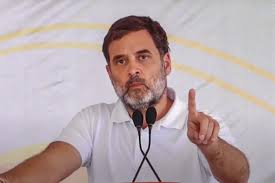
Jalandhar: Seven months after he sought to put BJP in the dock while speaking in the US on the issue of religious freedom in India and cited the example of Sikhs while doing so, Congress leader Rahul Gandhi faced a question from a student in the US about what Sikhs faced during Congress rule in India. The student mentioned that Rahul’s party still had “many more Sajjan Kumars” in its fold. Gandhi, on his part, termed the happenings of the 1980s “wrong” and said he was more than happy to take responsibility for whatever mistakes Congress made in the past. Gandhi held a question-and-answer session during at the Watson Institute for International and Public Affairs of Brown University, US, on April 21. A Sikh student was the first to pose a question, referring to Rahul’s earlier remark made at an event in Virginia on Sept 9 last year. Rahul’s conversation was uploaded on YouTube on Saturday, and it attracted a strong reaction from the BJP. Mentioning Rahul’s earlier remark that under BJP rule, the fight was about whether a Sikh would be allowed to wear his turban or a ‘karra’ (metal bangle), the Sikh student said, “You create a fear amongst the Sikhs about what the BJP would look like. But we just don’t want to wear karras, we just don’t want to wear turbans. We want freedom of expression, which under the Congress party in the past, has not been allowed,” he said. He added, “For example, the Anandpur Sahib resolution, which you are probably familiar with, which talks about dalit rights, rights of water; it talks about better working conditions, anti-monopoly. It mentions nothing about separatism, but it is labelled as a separatist document.” “This is something your party has done, and your party seems to lack the maturity to accept the mistakes it has made, such as Sajjan Kumar just now being tried. There are many more Sajjan Kumars sitting in the Congress party. KPS Gill is hailed as a hero,” he said. Then came his real question: “You tell us to fear what India will look like under the BJP, but you’ve never tried to reconcile with the Sikhs. What attempts are you making? Because if you continue like this, BJP is also going to make its way to Punjab.” Rahul replied, “First of all, I don’t think that really anything scares the Sikhs. That is the first point. The statement I made was that: look, do we want an India where people are uncomfortable to express their religion? As far as the mistakes of the Congress party are concerned, a lot of those mistakes happened when I was not there. But I am more than happy to take responsibility for everything that the Congress party has ever done wrong in its history.” When the Sikh student again asked what he had done to reconcile with the Sikhs, the Congress leader added: “I have publicly stated that what happened in the ’80s was wrong. I have been to the Golden Temple multiple times, I have an extremely good relationship with the Sikh community in India and a loving relationship with them.” Courtesy : TOI Note: This news is originally published on https://timesofindia.com/ and is for use by the non-military/non-commercial community, especially those in the human rights sector.
End of caste politics of Lalu and Gandhi family! Big disclosure by BJP leader, explained political mathematics

Bihar Politics: The NRI cell of Bharatiya Janata Party has welcomed the decision of caste census. Manish Sinha said that Prime Minister Narendra Modi is realizing the dream of social justice. This decision will formulate policies for the welfare of all sections. This decision will expose the pretentious sympathy of Congress. Patna: The convener of BJP NRI cell has welcomed the decision of the central government to conduct caste census. He said that Prime Minister Narendra Modi is fulfilling the dream of social justice. This decision will help in making policies for the development of all sections of the society. Manish Sinha also said that this will expose the false sympathy of Congress towards the backward class and end caste politics. Manish Sinha belongs to the family of the country’s first President Rajendra Prasad. Praise of PM Modi He said that with this announcement of the PM, the story of caste politics of leaders like Rahul Gandhi and Lalu Yadav will end completely. Prime Minister Modi has worked to realize the dreams of social inclusion of Dr. Ram Manohar Lohia, BP Mandal and Karpoori Thakur. He said that the Congress party has always been pretending with the people of backward classes. Now the caste census will reveal how much benefit each caste has received from reservation. It will also reveal which castes have lagged behind in the race of development. Welcoming the caste census Sinha further said that having caste census along with the general census will end the caste-based politics of Congress. This decision will help in making better policies for the development of all sections of the society. This is an important step towards social equality and development. BJP NRI Cell thanked Prime Minister Narendra Modi and the Central Government for this decision. He said that they will fully cooperate in this effort of social justice. About the author Ashutosh Kumar Pandey Active in print, digital and electronic journalism for more than 16 years. Degree in Political Science and Journalism. Started writing in Jansatta, Hindustan and Dainik Jagran in 2003. Worked in ETV, Maurya TV, Focus TV, Union Ministry of Information and Broadcasting, Prabhat Khabar.com and Network 18. Reporting work in four Lok Sabha elections and many assembly elections. Courtesy: Ashutosh Kumar Pandey, NBT, Hindi News Note: This news is originally published on https://timesofindiahindinews.com/ and is for use by the non-military/non-commercial community, especially those in the human rights sector.
Urgent need to safeguard the Constitution: Cong
Chandigarh: Chandigarh Congress on Sunday organised two Samvidhan Sabha events at Sector 32 and Indira Colony, Manimajra. These gatherings were a part of the party’s nationwide initiative to uphold constitutional values and advocate for inclusive governance. Senior Congress leader and Chandigarh MP Manish Tewari along with Chandigarh Pradesh Congress Committee president H S Lucky, addressed large gatherings at both venues. The leaders emphasized the urgent need to safeguard the Constitution from systemic erosion and reaffirmed the party’s unwavering commitment to social justice and equality. Speaking at Sector 32, Manish Tewari said, “The Constitution is the soul of our democracy. Any attempt to dilute its foundational principles is a direct attack on the very spirit of India. It is the Congress, under the leadership of Rahul Gandhi, that is relentlessly working to ensure that the rights of every citizen—particularly the marginalized—are protected and advanced.” He also highlighted the party’s recent push for a caste-based census, calling it a “historic corrective measure” that will help create data-driven policies for equitable distribution of resources. Addressing the gathering at Indira Colony, Lucky reiterated the importance of community awareness and grassroots mobilization. “The Samvidhan Sabha is a reminder to every Indian of their rights and duties. Rahul Gandhi’s stand on the caste census shows our party’s clarity of vision and commitment to transparency, representation, and justice for all sections of society.” Courtesy : TOI Note: This news is originally published on https://timesofindia.com/ and is for use by the non-military/non-commercial community, especially those in the human rights sector.
Rahul Gandhi ridiculed globally too, says BJP on student quizzing him on 1984 riot
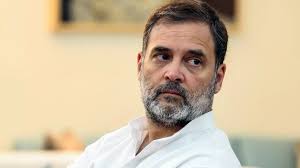
NEW DELHI: BJP on Sunday lauded the Sikh student who questioned Rahul Gandhi over the massacre of Sikhs in 1984 and said it was telling that the Congress leader was being “ridiculed not just in India, but around the world”. The student asked Rahul what attempts he was making to reconcile with the Sikh community and referred to the 1984 riots in his lengthy poser when the Congress MP was having an interaction session with students at Watson Institute for International and Public Affairs at Brown University in the US on April 21. The video of the interaction was uploaded on Saturday on the Watson Institute’s YouTube channel. BJP’s IT cell chief Amit Malviya shared a snippet of the video and said the student had directly reminded Rahul of the “unfounded fear-mongering” he had done about Sikh identity under BJP rule. Questioning Rahul’s previous remarks on religious freedom under BJP rule, the Sikh student said, “You create fear among Sikhs about what BJP would look like. We want freedom of expression, which has not been allowed under the Congress in the past.” The student also referred to the Anandpur Sahib resolution, which he claimed the Congress mis-characterized as a separatist manifesto. He criticized the party’s failure to reconcile with the Sikh community and pointed to convicted former Congress leader Sajjan Kumar as evidence of lingering impunity, and said, “Many more Sajjan Kumars are sitting in Congress party.” In response, Rahul admitted that Congress had committed many “mistakes” when he was not there, but added that he was more than happy to take responsibility for everything the party had ever done wrong. He pointed out that he had publicly stated that what happened in the 1980s was “wrong”. BJP also attacked Rahul for calling Lord Ram “a mythological figure” at the same interaction. Courtesy : TOI Note: This news is originally published on https://timesofindia.com/ and is for use by the non-military/non-commercial community, especially those in the human rights sector.
Caste census: Congress targets BJP with Supreme Court affidavit, Parliament reply
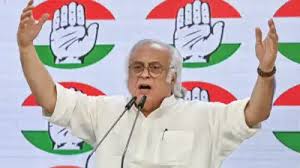
NEW DELHI: Even as Congress claims PM Narendra Modi buckled under its pressure to reverse his earlier decision on enumerating caste, the party Sunday added a twist by releasing a 2021 govt answer in Parliament in which it had stated that it will not conduct a caste census in 2021 as a policy decision, and also quoting a Centre’s affidavit beseeching Supreme Court not to order a caste census against the govt policy. The opposition party asked the PM if he will accept that he has taken a U-turn on the issue. To amplify its attacks on BJP, Congress has directed its state units to hold statewide rallies at the assembly level to showcase the role of Congress and Rahul Gandhi in making caste census a reality, with the directive that they should highlight that BJP has been against the idea. The party also asked its netas to intensify the demand for removal of 50% barrier on reservations and for implementation of quotas in private educational institutions. Home ministry told Lok Sabha on July 20, 2021, that govt had taken a policy decision not to enumerate caste in the census. Also, as per Congress, PM Modi government told SC on Sept 21, 2021: “The exclusion of information regarding any other caste [outside of SCs and STs] from the purview of census [2021] is a conscious policy decision taken by the central govt.” Congress spokesman Jairam Ramesh said, “Evidence abounds on Modi’s sudden, complete, and desperate U-turn on the caste census… Will he explain to the people and Parliament the reasons for the change in govt’s policy?” Courtesy : TOI Note: This news is originally published on https://timesofindia.com/ and is for use by the non-military/non-commercial community, especially those in the human rights sector.
‘My brother took up cause’: Priyanka Gandhi says government ‘pressured’ for caste census
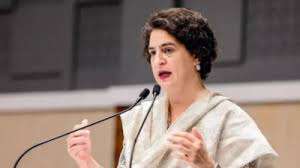
NEW DELHI: Congress MP Priyanka Gandhi Vadra on Sunday, while welcoming said that the central government agreed to include caste enumeration in the upcoming census due to pressure. While speaking to the media in Wayanad, Kerala, she said that her brother Rahul Gandhi had raised this issue in Parliament and was mocked for it. “The government has been pressured. My brother took up this cause last year. He has been saying it again and again; the entire BJP was against it. BJP ministers, the Prime Minister himself. When my brother spoke in Parliament, he was also ridiculed by them for speaking in favour of this,” Priyanka Gandhi Vadra said. — priyankagandhi (@priyankagandhi) “I feel that now they have come under pressure because everybody, the whole country, realises that this is a necessity. It is needed now, and I’m glad they have come under pressure. I am happy that they have announced something. I hope that whatever they do, they do it in a proper fashion, in the proper way, so that the correct facts come out,” she added. Earlier in the day, Congress MP Jairam Ramesh criticised Prime Minister Narendra Modi, calling the government’s change in position on the caste census a “sudden and desperate U-turn”. In a post on social media, Ramesh pointed out that the Modi government had earlier opposed a caste-based census. He cited three examples to show how the government’s position has changed. In April 2024, during a television interview, Prime Minister Modi had called those demanding a caste census “urban naxals”. — Jairam_Ramesh (@Jairam_Ramesh) The Cabinet committee on political affairs, led by Prime Minister Modi, decided last week to include caste enumeration in the upcoming census. After the cabinet meeting, information and broadcasting minister Ashwini Vaishnaw told the media that this decision shows the government’s commitment to the nation’s overall interests. At the same time, the Congress party passed a resolution asking for the immediate implementation of clause 5 of Article 15 of the Constitution to allow reservations for Other Backward Classes (OBCs), Dalits, and Adivasis in private educational institutions. The resolution also said that updated caste data should be used to strengthen reservation policies. Clause 5 of Article 15 allows the government to make special provisions for the progress of socially and educationally backward classes or for Scheduled Castes and Scheduled Tribes, including in private educational institutions. Courtesy : TOI Note: This news is originally published on https://timesofindia.com/ and is for use by the non-military/non-commercial community, especially those in the human rights sector.
Caste census is our priority, it’s RaGa’s victory: Cong
Bhopal: Presidents of Congress Scheduled Caste Cell and Scheduled Tribe Dept on Friday described the announcement of caste census a “historic step” towards social justice and inclusive development. In a joint press conference, Scheduled Caste Cell chief Pradeep Ahirwar and Scheduled Tribe Dept chief Ramu Tekam reiterated the party’s commitment to the caste census, and said without caste data, schemes will remain “incomplete and biased”. On Wednesday, the Centre announced to conduct the caste census. Ahirwar and Tekam said the caste census issue raised by Lok Sabha LOP Rahul Gandhi has received support at the national level. “Dalits, backward classes, and tribal society are now aware of their rights. The Modi govt is procrastinating on this issue, which is further increasing social inequality,” Ahirwar said. Addressing the media, Ahirwar said, “The caste census will prove to be a milestone in the direction of social justice and an egalitarian society.” Tekam said, “Caste census is Rahul Gandhi’s victory. We support it, but the central govt should give a clear timeline as to when it will be done. The Telangana govt has presented an excellent model for this. Now the time has come to break the limit of 50% reservation.” The party’s state OBC cell president Pawan Patel said: “This is the victory of Rahul Gandhi’s tireless efforts. Just as Mahatma Gandhi liberated the country, in the same way, Rahul Gandhi will liberate the country from the policies of BJP.” The state Congress’ minority cell member, Wasim Qureshi, said: “The caste census is the voice not only of OBC, SC, and ST, but of every marginalised community in the entire country. This is the foundation stone of social justice, and the Congress stands strongly for it.” Courtesy : TOI Note: This news is originally published on https://timesofindia.com/ and is for use by the non-military/non-commercial community, especially those in the human rights sector. Lorem ipsum dolor sit amet, consectetur adipiscing elit. Ut elit tellus, luctus nec ullamcorper mattis, pulvinar dapibus leo.