
Casteism from Punjab to Kerala: Four Incidents from the 1930s That Reveal — For Hindus, Inhumanity Was Acceptable, but an Untouchable’s Touch Was Not
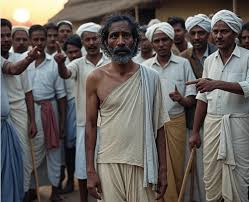
The caste system, rooted in notions of purity and pollution, created a social order where Untouchables were deemed subhuman, their touch considered a contaminant more dangerous than death itself. New Delhi- The 1930s were a tumultuous period in India, marked by the struggle against British rule, the rise of the independence movement, and the deep-rooted caste system that shaped societal norms. The practice of untouchability, grounded in centuries-old notions of “purity” and “impurity,” relegated millions to a subhuman existence. Four chilling incidents from this era, documented in publications such as Young India, Prakash, and Bombay Samachar, expose the cruel reality of a society where caste purity was valued above compassion, ethics, and humanity. Untouchables, often referred to as Harijans or Dalits, faced exclusion from temples, wells, schools, and public spaces. They were forced to live in segregated colonies, barred from touching items used by caste Hindus, and subjected to violence for minor transgressions of caste norms. Reformers like Mahatma Gandhi advocated for the upliftment of Harijans, but their efforts often met resistance from orthodox Hindus who clung to traditional hierarchies. Dr. Ambedkar, himself an Untouchable, was a fierce critic of this system, arguing that untouchability was not just a social evil but a moral and political failure. ‘Chapter 5 in the ‘Dr. Babasaheb Ambedkar: Writings and Speeches Volume No. 5’ published by Dr Ambedkar Foundation, Ministry of Social Justice and Empowerment includes some moving incidents narrated by Baba Sahab, that shows that Hindu would prefer to be inhuman rather than touch an Untouchable. How unclean and unfit for association an Untouchable is to a Hindu be evident from these incidents. Untouchables, often referred to as Harijans or Dalits, faced exclusion from temples, wells, schools, and public spaces. They were forced to live in segregated colonies, barred from touching items used by caste Hindus, and subjected to violence for minor transgressions of caste norms. A Mother and Child Lost to Caste Prejudice (Kathiawar, Gujarat 1929) In a heart-wrenching account published in Young India (a publication by Mahatma Gandhi) on December 12, 1929, an Untouchable school teacher from a village in Kathiawar shared his tragic story. On December 5, his wife gave birth to a child, but by December 7, she fell gravely ill, suffering from diarrhea, chest inflammation, and breathing difficulties. Desperate to save her, the teacher approached a local Hindu doctor, who refused to visit the Harijan colony or examine the child, citing caste impurity. After persistent pleas and intervention from local notables like the Nagarseth and Garasia Darbar, who assured the doctor a fee of two rupees, he agreed to examine the patient—but only outside the Harijan colony. The teacher carried his ailing wife and newborn out of their home for the examination. The doctor, maintaining his distance, passed a thermometer through a Muslim intermediary to avoid direct contact. At 8 p.m., under the light of a lamp, the doctor diagnosed pneumonia and sent medicine. Despite receiving his fee, he refused further visits. The teacher, left with no options, applied linseed from the market to his wife, but she passed away at 2 p.m. that day. He wrote, “The lamp of my life has died out.” This incident reveals how an educated doctor, bound by professional ethics, prioritized caste prejudice over saving lives, leading to the preventable deaths of a mother and her child. Untouchables, often referred to as Harijans or Dalits, faced exclusion from temples, wells, schools, and public spaces. They were forced to live in segregated colonies, barred from touching items used by caste Hindus, and subjected to violence for minor transgressions of caste norms. Punished for Saving a Calf (Jagwal, Punjab 1932) An incident reported in Prakash on August 23, 1932, from Jagwal village in Jafarwal tehsil highlights the perverse priorities of a caste-ridden society. On August 6, a calf fell into a well. Rammahashaya, a Dom (an Untouchable caste in UP and Bihar), who was nearby, jumped into the well without hesitation and held the calf until others arrived to help rescue it. Instead of gratitude, the Hindus of the village accused him of defiling their well and turned on him. The villagers’ outrage over the well’s supposed pollution nearly cost Rammahashaya his life. Fortunately, a barrister arrived at the scene, rebuked the mob, and saved him from further harm. This incident raises a haunting question: was saving the calf more important than preserving the well’s “purity”? For the Hindus of Jagwal, an Untouchable’s touch, even in an act of heroism, was a greater offense than the calf’s potential death. A Child’s Rescuer Attacked (Kaladi, Kerala 1936) A similar tale of ingratitude and violence unfolded in Kaladi, a village in Calicut, as reported in Bombay Samachar on December 19, 1936. When a young woman’s child fell into a well, none of the villagers dared to intervene. A passing stranger courageously jumped into the well and rescued the child. When he revealed he was an Untouchable, the villagers’ relief turned to rage. Instead of thanking him, they abused and assaulted him for “polluting” the well. This incident, much like the one in Jagwal, underscores the deep-seated prejudice against Untouchables. A hero who saved a child’s life was punished simply because his touch was deemed unacceptable by caste Hindus. Untouchables, often referred to as Harijans or Dalits, faced exclusion from temples, wells, schools, and public spaces. They were forced to live in segregated colonies, barred from touching items used by caste Hindus, and subjected to violence for minor transgressions of caste norms. Defiling a Pyre with Rice (Lucknow, UP 1937) A shocking incident reported in Adi Hindu of Lucknow in July 1937 reveals the brutal extent of caste prejudice. During the cremation of a high-caste employee of the Madras Holmes Company, friends and relatives gathered to perform the ritual of throwing rice on the pyre. Among them was an Adi-Dravida, an Untouchable from Madras, who joined in the act out of respect. However, this simple gesture was deemed a defilement of the pyre by the high-caste
Has Shashi Tharoor’s association with Congress reached dead end?
Has Shashi Tharoor’s association with Congress reached dead end?Has Shashi Tharoor’s association with Congress reached dead end? NEW DELHI: For several times in the last few months we have heard the Congress “distance” itself from Shashi Tharoor’s remarks. But now, in an interesting turn of events, it appears that Shashi Tharoor is “distancing” himself from the Congress. The gap between Congress and Tharoor, that first appeared on the surface in February this year when the Thiruvananthapuram MP openly praised Prime Minister Narendra Modi’s US visit, seems to have widened in the last few days. The government’s move to nominate Tharoor for its global diplomatic outreach post Operation Sindoor, bypassing the Congress leadership, has perhaps brought the differences to a tipping point. Congress veteran P J Kurien’s recent remark: “If people suspect Tharoor is leaning towards the BJP, no one can blame them for thinking so” sums up the visible strain in the relationship. It has raised the obvious question: Is Tharoor on his way out of the Congress? Well, we may not have a clear answer to this question right now. But there are enough hints to suggest that Congress and Tharoor are drifting apart. Here’s what they had to say about each other after the latest round of stand-off trigerred by the government’s nomination move. Tharoor, when asked about not being nominated by the party, said, “My party leadership is entitled to its opinion of my abilities or lack thereof, and I think that is really for them to explain. I have absolutely no comment to make on that. I am honoured to have been entrusted with the responsibility, and I will fulfil that responsibility just as I have fulfilled every responsibility entrusted to me in my rather long working life, whether at the United Nations or in the Congress Party.” When asked if the party was trying to insult him by releasing the names suggested by it for the delegation, Tharoor said that he cannot be insulted so easily. “I know my worth,” he asserted. Tharoor also echoed the government line and said “To my mind, this has nothing to do with party politics. It’s all to do with what our country has been through in recent times and the need for us to present a united front. It is a good reflection of national unity at a time when unity is important.” The Congress, unhappy with Tharoor’s ready acceptance of the responsibility ignoring the party stand, said: “There is a difference between being in the Congress and being of the Congress. The Congress is like the mighty Ganga, which has many tributaries… Some of them dry up and some get polluted.” Tharoor’s many messages to the Congress That Shashi Tharoor and the Congress were not on the same page on several issues in the last few months was an open secret. There were several instances when Tharoor praised PM Modi’s policies without bothering much about the party line. On PM Modi’s US visit “PM Modi’s US visit has yielded some positive outcomes for the Indian people. I welcome the fact that there is now an agreement to have a negotiation for the next 9 months on trade and tariffs. It’s far better than Washington hastily and unilaterally imposing some tariffs on us, which could have damaged and hurt our exports. It seems to me that something good has been achieved, and I applaud that as an Indian. We can’t always speak only in terms of party interests. I am not a party spokesman. I am an MP elected by all the people of Thiruvananthapuram, and on that basis, I speak as a responsible stakeholder in Indian democracy.” On Russia-Ukraine war “India’s diplomatic approach had given the Prime Minister a unique position to hug both the president of Ukraine and the president of Moscow two weeks apart and be accepted in both places. I am still wiping the egg off my face because I was one person in the parliamentary debate who actually criticised the Indian position at the time back in February 2022.” On Covid vaccine diplomacy “India’s vaccine diplomacy during the Covid pandemic stands out from amid the horrors of that time as a powerful example of international leadership rooted in responsibility and solidarity. By delivering made-in-India vaccines to over 100 nations, India demonstrated its capacity to extend a helping hand when it mattered most. “This initiative during the dark days of the Covid pandemic reinforced India’s standing as a force for good in the world, reflecting its humanitarian spirit and adding to the allure of its soft power. It carried the values of compassion, cooperation, and global partnership to the world, building goodwill, strengthening diplomatic ties, and elevating India’s global stature.” On intelligence failure in Pahalgam terror attack “Obviously, there was no full proof intelligence. There was some failure… But we have got the example of Israel, the world’s best intelligence services according to everybody, which were taken by surprise on October 7, just two years ago. It seems to me, just as Israel is waiting till the end of the war before they demand accountability, similarly, I think we too should see the present crisis through and then demand accountability from the government. No country can ever have a foolproof 100 per cent intelligence.’ Clearly, Tharoor’s praise for PM Modi and his policies was not an one-off transgression, but a sustained campaign to perhaps send across some message to the Congress leadership. When pointed out that his remarks were at variance with the party’s stand, Tharoor strongly defended his position. “For 16 years, I have been in politics. My attitude has been that when somebody in the government, whether it’s our government or some other party’s government, does the right thing or does something well, one should acknowledge and praise it, and when they do something badly, one should criticise it,” Tharoor said in February when objections were raised to his praise for PM Modi’s US trip. ‘Sleepless night’: PM Modi’s ‘Tharoor’ swipe
Trump foisted ceasefire on Modi with trade threats: Revanth
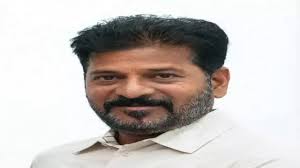
Hyderabad: Chief minister A Revanth Reddy Wednesday waded into the controversy sparked by US President Donald Trump claiming that he negotiated a ceasefire between Indian and Pakistan amid Operation Sindoor. Revanth claimed people felt the Narendra Modi govt succumbed to the pressure exerted by Trump with trade-related threats and took a back-step instead of using the opportunity to crush terrorism and defeat Pakistan post the Pahalgam terrorist attack. “Former prime minister Indira Gandhi turned down the US president’s offer to mediate and stop the war with Pakistan in 1971,” Revanth claimed after paying tributes at the statue of Rajiv Gandhi on his death anniversary, also observed as National Anti-Terrorism Day. “But post-Operation Sindoor, it is unfortunate that the present US president said he initiated a ceasefire. After the terrorist attack in Pahalgam followed by the India-Pakistan conflict, the people of the country are remembering Iron Lady Indira Gandhi for teaching Pakistan a lesson by breaking it in two — Bangladesh and Pakistan.” He added the entire country, including Congress top leaders Mallikarjun Kharge, Rahul Gandhi, Sonia Gandhi, stood in support of Modi. “But the Centre did not utilise this opportunity. If the Modi govt had gone ahead and crushed terrorism, defeated Pakistan, and given India a victory, the world would have welcomed and praised him.” In an indirect reference to the Tiranga Yatras organised by BJP following the India-Pakistan military conflict, the chief minister charged the BJP leaders with trying to “hide their inability”. “They (BJP) started criticising Rahul Gandhi only to hide their incompetence,” he added. He said the Telangana govt took out the first rally in support of the Centre and the armed forces when the India-Pakistan conflict began. “(Union minister) Kishan Reddy was sleeping at home then,” Revanth said. “He should have stood with us in support of the Modi govt and armed forces. Instead of commenting to hide their incompetence, the BJP leaders should focus on controlling terrorism.” In a jibe at the BRS, Revanth said some narrow-minded leaders were criticising the decision to install Rajiv Gandhi’s statue near the secretariat. “The statues of Rajiv Gandhi, Indira Gandhi, PV Narasimha Rao, B R Ambedkar, and a memorial of Telangana martyrs should be an inspiration,” he insisted. He added the Congress would not indulge in politics when it comes to the country’s security, integrity, and protecting the lives of citizens. The Congress achieved independence for the country, and it was the responsibility of the party to protect the country and extend support for the cause, he said. Courtesy : TOI Note: This news is originally published on https://timesofindia.com/ and is for use by the non-military/non-commercial community, especially those in the human rights sector.
AJL: ED says Sonia, Rahul Gandhi got Rs 142 crore in ‘proceeds of crime’ in National Herald case
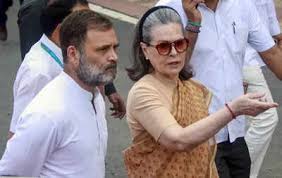
NEW DELHI: Enforcement Directorate on Wednesday told a special court here that Congress veteran Sonia Gandhi and her son Rahul received Rs 142 crore in “proceeds of crime” after acquiring Associated Journals Ltd (AJL) through Young Indian, a company in which they together held 76% stakes. The agency told the court of special judge Vishal Gogne that a ‘prima facie’ case of money laundering was established against Sonia, Rahul and others in the case involving the acquisition of AJL – publisher of Congress mouthpieces National Herald and Qaumi Awaz – by Young Indian. The court will continue hearing arguments in the case on a day-to-day basis from July 2-8. In its prosecution complaint (chargesheet), ED has made Sonia and Rahul accused No. 1 and No. 2, respectively, besides naming five others, including close associates Sam Pitroda and Suman Dubey. ED: Gandhis gained from Herald scam, Cong & its donors are victims ED’s case is based on the charge that Congress provided an interest-free loan of Rs 90 crore to AJL, which owns significant real estate in different parts of the country. When AJL failed to repay, Congress, then led by Sonia, transferred AJL to Young Indian, a newly promoted “not-for-profit” in which she was a director along with Rahul, and they together held 76% stakes. As a result, Young Indian ended up controlling assets worth Rs 752 crore, mostly in the form of buildings or land in Delhi, Mumbai, Lucknow, Indore, Chandigarh and Patna, allotted to AJL by Congress govts for bringing out National Herald and other party journals. ED has also alleged that Young Indian paid Rs 50 lakh – arranged through a Kolkata-based shell company Dotex Merchandise Pvt Ltd – to repay AJL’s Rs 90-crore loan to Congress as full and final settlement. The company is one of the seven accused named in the chargesheet, which was filed before the court on April 9. Young Indian was launched in Nov 2010, with Dubey and Pitroda as directors and a paid-up capital of Rs 5 lakh, according to the chargesheet. By early next year, they had transferred their shares to the Gandhis, clearing the way for them to acquire assets, and going by an assessment done by the Income Tax department, these were worth Rs 752 crore. The current market value of the assets is worth Rs 2,000 crore, according to the ED chargesheet. Appearing for ED, additional solicitor general S V Raju told the court that the Gandhis and other accused were enjoying proceeds of crime of Rs 142 crore until the ED attached these (AJL) properties (worth Rs 752 crore in Nov 2023). As Raju and advocate Zoheb Hossain, special counsel for ED, pressed the court to take cognisance of the chargesheet, senior advocate Abhishek Manu Singhvi, appearing for Gandhis, sought time until July on grounds that voluminous records and documents needed scrutiny. The court allowed ED to proceed with its opening arguments, despite Singhvi’s objection. The hearing took an interesting turn when Raju suggested Congress and those who made donations to it were also victims of the alleged scam. He argued that while it was Congress that loaned Rs 90 crore to AJL, assets of the company were transferred to Gandhi-controlled Young Indian and not the party – an interesting line of reasoning which in the coming days may develop into a larger argument about Sonia and Rahul allegedly benefiting at the expense of Congress members as well as its donors. Meanwhile, the court directed ED to provide a copy of its chargesheet in the matter to Subramanian Swamy, based on whose private complaint the agency had lodged the present money laundering case. During the hearing, Raju and Hossain focused on the generation of proceeds of crime, which, Hossain said, not only included those properties obtained from the scheduled offence but also other activity such as getting ‘donations’ and ‘bogus’ rentals. “Rental income worth Rs 142 crore received by the accused will be included in this,” Hossain said. He submitted that the matter pertains to criminal conspiracy allegedly involving three entities – AJL, Young Indian and Congress. On Sonia and Rahul becoming shareholders of Young Indian, the judge asked, “The underlying allegation is ownership, is implicitly transferred to the first two accused, so who owns the properties as of date, Young Indian or AJL?… In very simple words, if property of ‘A’ is usurped by ‘B’, does it become proceeds of crime in the hands of ‘B’?” The judge also asked if there is a forensic auditor with ED and said he wants to understand exactly how companies work and in what ways they are allowed to issue shares. Responding to the query, Hossain said he will get back with answers. He added, “Whenever there is a fraud, then the court will probe into who are the real beneficial owners, which PMLA enables the court to do.” Courtesy : TOI Note: This news is originally published on https://timesofindia.com/ and is for use by the non-military/non-commercial community, especially those in the human rights sector.
‘Great son of India’: PM Modi, Congress leaders pay tribute to former PM Rajiv Gandhi on 34th death anniversary
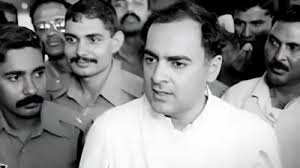
NEW DELHI: Prime Minister Narendra Modi on Wednesday paid tribute to former prime minister Rajiv Gandhi on his 34th death anniversary. In a post on X, PM Modi wrote, “On his death anniversary today, I pay my tributes to our former Prime Minister Shri Rajiv Gandhi Ji.” — narendramodi (@narendramodi) Congress leaders also paid homage at Veer Bhoomi, Rajiv Gandhi’s memorial. Among them were his son Rahul Gandhi, Congress president Mallikarjun Kharge, and party leader Sachin Pilot. Rajiv Gandhi served as country’s Prime Minister from 1984 to 1989, leading the last Congress government with a full majority. He took charge of the party after the assassination of his mother, then Prime Minister Indira Gandhi, in 1984, becoming the country’s youngest Prime Minister at 40. He was assassinated by the LTTE, a Sri Lanka-based terrorist group, on May 21, 1991, while campaigning in Sriperumbudur, Tamil Nadu. His son Rahul Gandhi now serves as the leader of the opposition in the Lok Sabha. Courtesy : TOI Note: This news is originally published on https://timesofindia.com/ and is for use by the non-military/non-commercial community, especially those in the human rights sector.
‘Insult to the valour of Indian Army’: BJP slams Kharge’s ‘small war’ remark on Operation Sindoor
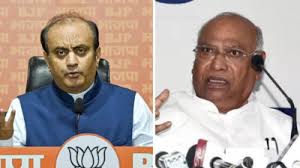
NEW DELHI: BJP MP Sudhanshu Trivedi on Wednesday launched a sharp attack on Congress president Mallikarjun Kharge over his recent remarks on Operation Sindoor, calling his description of it as a “small war” not only condemnable but “an insult to the valour of Indian Army.” Taking a dig at the opposition alliance, Trivedi said, “…INDIA gathbandhan naam rakh lene se koi dil se Indian nahi ho jata.” He added, “Calling Operation Sindoor a small incident is not only condemnable but also an insult to the valour of the Indian Army and the sentiments of 140 crore Indians. Even before this, Rahul Gandhi has said many baseless things about Indian planes and other things…” Trivedi alleged that Kharge’s and Rahul Gandhi’s remarks were part of a larger trend. “After the statements of first Rahul Gandhi and now Mallikarjun Kharge, one thing has become very clear: the statements coming from the leaders of their (INDIA) alliance for the last few days are not spontaneous statements but a series of well-thought-out, anti-India and ideologically nourished statements.” “Therefore, we definitely consider this statement condemnable. We also believe this is part of a well-planned conspiracy by the Congress party and the INDI alliance,” he said. On Tuesday, Kharge had triggered row by referring to India’s military response under Operation Sindoor as a “small war.” He also criticised the Modi government for failing to clarify US President Donald Trump’s earlier remarks suggesting American mediation between India and Pakistan. Kharge said, “It has not provided clarity to the people of the country regarding US President Trump’s statements.” He also blamed the central government for failing to ensure adequate security in Kashmir. “26 people were killed in Pahalgam because the Modi government did not provide security there. The Centre did not provide police security or forces to tourists. Modi did not say anything about this. There were people going to Kashmir on the 17th, but Modi did not go to Kashmir, because his intelligence security told him not to go, as there would be chaos in Kashmir.” “The Prime Minister was supposed to go to Kashmir on the 17th, but his intelligence agency had told him not to go and had cancelled his visit to Kashmir… If the same had been said to the tourists through the police, 26 lives would have been saved. What is happening now… This small war would not have happened,” Kharge said. Courtesy : TOI Note: This news is originally published on https://timesofindia.com/ and is for use by the non-military/non-commercial community, especially those in the human rights sector.
The country got its first Buddhist CJI: From an Ambedkarite family to the highest chair of the Supreme Court – know the struggle of BR Gavai!
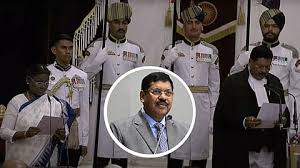
Justice BR Gavai, who comes from the Buddhist and Dalit community, became the 52nd Chief Justice of India, know the full story of his life, struggle and historical decisions. New Delhi: Justice Bhushan Ramakrishna Gavai took oath as the 52nd Chief Justice of India (CJI) at 10 am today. He replaced Justice Sanjiv Khanna, who retired on May 13. Justice Gavai is the second Dalit and the first Buddhist to become the Chief Justice of the Supreme Court of the country. Before him, Justice KG Balakrishnan became the first Dalit Chief Justice in 2007. Justice Gavai’s tenure will be of six months and he will retire in November 2025. Since the establishment of the Supreme Court in 1950, only seven judges have come from the Scheduled Caste or Scheduled Tribe community. Wanted to be an architect, became a judge Justice Gavai was born on 24 November 1960 in Amravati, Maharashtra. After taking a B.Com degree, he studied law from Amravati University. Not many know that Justice Gavai once wanted to become an architect, but chose the path of advocacy due to his father’s wish. His father Ramakrishna Suryabhan Gavai was a famous Ambedkarite leader and founder of the Republican Party of India. Ramakrishna Gavai was a Lok Sabha MP from Amravati and served as the Governor of Bihar, Sikkim and Kerala between 2006 and 2011. He passed away in 2015, four years before his son B.R. Gavai was made a Supreme Court judge. From advocacy to the Supreme Court Justice Gavai registered with the Bar Council on March 16, 1985 and practiced independently in the Bombay High Court from 1987 to 1990. Later, he started practising in the Nagpur Bench. On 12 November 2005, he was appointed as a permanent judge of the Bombay High Court. On 24 May 2019, he became a judge of the Supreme Court. He was part of nearly 700 benches in the Supreme Court and wrote nearly 300 important judgments. Key judgments: From Article 370 to electoral bonds Justice Gavai played a key role in several sensitive and landmark cases: In November 2024, he delivered a judgment that said demolition of properties without due process was against the rule of law. He was part of the Constitution Bench that upheld the removal of Article 370, which gave special status to Jammu and Kashmir. In February 2024, he was part of the bench that struck down the electoral bond scheme, terming it unconstitutional. He established procedural safeguards against arbitrary arrests under stringent laws like the UAPA and the PMLA. He established procedural safeguards against arbitrary arrests under stringent laws like the UAPA and the PMLA. • In a significant judgment, he upheld sub-categorisation in SC reservation and compared opposition to it to “historic discrimination faced by upper castes”. He was also part of the bench hearing the contempt case against senior advocate Prashant Bhushan. Apart from this, he also wrote the majority opinion validating the 2016 demonetisation. Transparency in Rahul Gandhi case While hearing the ongoing criminal defamation case against Congress leader Rahul Gandhi in July 2023, Justice Gavai showed transparency by referring to his family political connections and offered to recuse himself from the case. He said, “Though my father was not a member of the Congress, he was associated with the party for nearly 40 years. My brother is still associated with the Congress.” The government did not accept his offer to recuse and the bench stayed Rahul Gandhi’s sentence, allowing his Lok Sabha membership to be restored. The next six months: Challenges and priorities As Chief Justice, Justice Gavai will face several key challenges. Currently, two high court judges — Justice Shekhar Yadav (Allahabad High Court) and former Justice Yashwant Verma (Delhi High Court) — are facing impeachment proceedings. At the very beginning of Justice Gavai’s tenure, a crucial hearing is scheduled on May 15, challenging the amendments made in the Wakf Act. Justice Gavai’s elevation to the Chief Justice is a turning point in the history of the Indian judiciary, not only in terms of representation but also for strengthening justice, equality and constitutional values. Courtesy : Rajan Chaudhary, Hindu News
Not ‘protocol’, it is a matter of honour— Justice Gavai, who arrived on his first visit to Maharashtra as CJI, expressed displeasure over the absence of top officers, then…
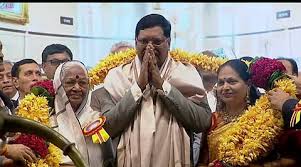
After these comments of the CJI, Maharashtra Chief Secretary Sujata Savnik, DGP Rashmi Shukla and Mumbai Police Commissioner Deven Bharti were seen with him at Dr. BR Ambedkar’s Samadhi Sthal Chaityabhoomi. Mumbai. Chief Justice of India (CJI) Justice BR Gavai on Sunday expressed displeasure over the absence of Maharashtra Chief Secretary, Director General of Police (DGP) and Mumbai Police Commissioner. CJI Gavai has recently become the 52nd Chief Justice of the country and this was his first official visit to Maharashtra. His felicitation ceremony was organized by the Bar Council of Maharashtra and Goa. He said in Marathi, “I am not talking about protocol, but all three pillars of democracy (executive, legislature and judiciary) should respect each other. When the head of a major part of the Constitution (CJI) comes to his own state for the first time and does not get this respect, then it is a matter of their thinking.” However, after these comments of the CJI, Maharashtra Chief Secretary Sujata Savnik, DGP Rashmi Shukla and Mumbai Police Commissioner Deven Bharti were seen with him at Dr. BR Ambedkar’s Samadhi Sthal Chaityabhoomi. Earlier, at the felicitation ceremony organized by the Bar Council of Maharashtra and Goa, CJI Gavai said, “I do not want to get into small things, but this is a matter of respect. People should know.” Speaking about his post-retirement plans, CJI Gavai said: “I am glad that this event is being held in the presence of Justice Abhay Oka. Both I and my brother Justice Oka have already announced that we will not take up any post-retirement assignment. So Justice Oka will be fully available to you (legal fraternity) after May 24 and I will be six months after that.” The CJI also said that he has decided that he will not accept felicitations anywhere else except Mumbai, Nagpur, Aurangabad and Goa as his association with the association has been either working together or as a member in all the four above mentioned places. The event was attended by several dignitaries including Bombay High Court Chief Justice Alok Aradhe, Supreme Court Justices Surya Kant, Justice Abhay S Oka, Justice Dipankar Dutta and Justice Prasanna B Varale. Courtesy : Geetha Sunil Pillai, Hindi News
Telangana CM Revanth Reddy slams Modi govt over US President Donald Trump’s ceasefire remark
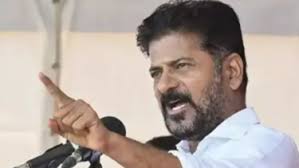
HYDERABAD: Amid a rising controversy over US President Donald Trump’s claim of having negotiated a ceasefire between India and Pakistan after Operation Sindoor, Telangana chief minister A Revanth Reddy on Wednesday claimed that the Narendra Modi government succumbed to pressure from Trump and backed down from the opportunity to crush terrorism and defeat Pakistan following the Pahalgam terrorist attack. Former Prime Minister Indira Gandhi had turned down the US President’s offer to mediate and stop the war with Pakistan in 1971. It is unfortunate, Revanth said, that the present US President claimed he initiated a ceasefire post-Pahalgam anti-terrorist operations launched by India against Pakistan. “Post-Pahalgam, the people of the country are remembering the iron lady, Indira Gandhi, for teaching Pakistan a lesson by breaking it into two parts, Bangladesh and Pakistan,” Revanth said after paying tributes to the statue of Rajiv Gandhi on the occasion of his death anniversary, also observed as National Anti-Terrorism Day. After the Pahalgam terrorist attack, the entire country, including Congress top leaders Mallikarjun Kharge, Rahul Gandhi, Sonia Gandhi and party cadres, stood in total support of PM Modi to teach Pakistan a permanent lesson. But the Centre did not utilise this opportunity, Revanth claimed, and added, “The announcement by Trump about ceasefire made people believe that India succumbed to the US President’s threat of trade implications.” “Had the Modi government gone ahead and crushed terrorism, defeated Pakistan and given India a victory, the world would have welcomed and praised him. Morally, the BJP has the responsibility to explain to the people on this issue. They (BJP) have started criticising Rahul Gandhi only to hide their inefficiency. Even the rallies being conducted by the BJP on the streets for Operation Sindoor is to hide their inefficiency. The people of the country have seen what has happened so far and they will decide. An inspiration should be taken from Indira Gandhi and Rajiv Gandhi who gave their lives for the integrity of the country,” CM Revanth said. However, the CM made it clear that the Congress will not indulge in politics when it comes to the country’s security, integrity, and protecting the lives of citizens, and has clarity that it will extend total support to the Centre on this issue. “The Congress achieved independence for the country and it is the responsibility of the party to protect the country and extend support for the cause.” Revanth also criticised Union Minister G Kishan Reddy for making allegations against Rahul Gandhi. “As the CM, I led a candle light and Tiranga rally with thousands of people in support of PM Modi and our armed forces. But Kishan Reddy was in the comforts of his house (was sleeping in his home Revanth said) instead of standing with us in support of the Modi government and our armed forces,” the CM alleged. Courtesy : TOI Note: This news is originally published on https://timesofindia.com/ and is for use by the non-military/non-commercial community, especially those in the human rights sector.
1-year jail not a prerequisite for bail to accused in laundering case: SC to ED
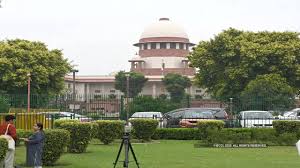
NEW DELHI: The Supreme Court on Monday said there was no “rule” that an accused in a money laundering case had to spend at least a year in jail before being granted bail, and gave relief to one of the accused in the Chhattisgarh liquor scam who had spent over nine months in custody. As the counsel appearing for the Enforcement Directorate took the stand that bail could not be granted to the accused as he was arrested in Aug last year and had not completed a year behind bars, a bench of Justices Abhay S Oka and Ujjal Bhuyan said it was not a “rule” to be in custody for a year to get bail. The ED counsel said SC had been following the one-year custody “benchmark” to grant bail in various cases, including that of former Tamil Nadu minister V Senthil Balaji, and argued that the yardstick be followed in the case of liquor scam accused Anwar Dhebar’s bail plea too. The bench then asked the ED counsel whether he wanted the accused to spend seven years in jail which is the maximum sentence. Release accused within a week, SC directs ED The court said trial in the case was not going to wind up in the near future as there were more than 450 witnesses in the predicate offence. The counsel, however, insisted that the accused was a politically connected and influential person and his bail would hamper the trial. The court did not accept his submission and granted Anwar Dhebar bail. It asked the trial court to release the accused within a week on terms and conditions fixed by the special court. SC had said on Jan 17 that in cases where an accused has spent one year in jail and the charges against them in a money laundering case have not yet been framed, they could be considered for bail. The apex court has been granting bail to various accused in money laundering cases after reading down the stringent bail provisions of PMLA by ruling that delay in trial and long incarceration could be grounds to release accused on bail. However, on Jan 17, it had for the first time said that if an accused has spent one year in custody and charges have not been framed, bail can be granted. Courtesy : TOI Note: This news is originally published on https://timesofindia.com/ and is for use by the non-military/non-commercial community, especially those in the human rights sector.