
‘No country backed India’: Congress says BJP’s ‘foreign policy failed’ post-Operation Sindoor
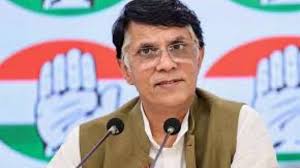
‘No country backed India’: Congress says BJP’s ‘foreign policy failed’ post-Operation Sindoor’No country backed India’: Congress says BJP’s ‘foreign policy failed’ post-Operation Sindoor NEW DELHI: The Congress on Friday launched a scathing attack on the BJP-led central government over its handling of foreign affairs in the wake of Operation Sindoor, accusing it of diplomatic failure and a compromised stance on national security. Congress leader Pawan Khera said, “The result of our failed foreign policy was seen post-Pahalgam, during Operation Sindoor. No country called Pakistan a terrorist state; this is the result of your failed foreign policy. Then you launched Operation Sindoor and no country gave a statement in your favour. Now, after Operation Sindoor, Kuwait has lifted visa restrictions on Pakistan. Iran, UAE, and Gulf countries are signing MoUs with Pakistan, and the most shocking thing is that yesterday, Russia signed an MoU with Pakistan to revive its very old steel mill, under which Pakistan will get $2.6 billion from Russia… This is the result of your failed foreign policy…” — ANI (@ANI) Meanwhile, Congress MP Shashi Tharoor, part of an all-party delegation to Colombia, expressed disappointment over the Colombian government’s condolences for those killed in Pakistan after India’s May 7 counterstrike, saying, “There can be no equivalence between those who attack and those who defend.” He said India acted in self-defence following the April 22 Pahalgam terror attack. “We were only exercising our right of self-defence,” he added. Tharoor also highlighted Pakistan’s support for terrorists and showed images of uniformed Pakistani officials attending terrorist funerals. “That is the extent of complicity…,” he said, stressing India’s resolve through Operation Sindoor targeting terror bases in Pakistan and PoK. The opposition’s criticism comes amid a series of political confrontations following Prime Minister Narendra Modi’s public address in Gujarat, where he said Operation Sindoor was documented on camera to ensure “no one at home asks for proof.” PM Modi declared, “Until now, what we used to call a proxy war, after the scenes witnessed post-May 6, we can no longer make the mistake of calling it a proxy war.” He added that the terrorists targeted in the strikes were given military honours in Pakistan, indicating direct state involvement. Responding to the Prime Minister’s remarks, Congress questioned why top terrorists like Hafiz Saeed and Masood Azhar were not neutralised. “To date, we have not received an answer to that – What happened to the terrorists of Poonch, Ganderbal, Gulmarg and Pahalgam?… How did Hafiz Saeed and Masood Azhar escape?” asked Khera, further alleging that “this government has outsourced the entire politics, political discourse, foreign policy to trolls.” Earlier, Rahul Gandhi also accused the Centre of tipping off Pakistan before the strikes. Sharing an old video of external affairs minister S Jaishankar, Gandhi wrote on May 17, “Informing Pakistan at the start of our attack was a crime. EAM has publicly admitted that GOI did it.” He followed up on May 27 with another post asking, “How many Indian aircraft did we lose because Pakistan knew?” The ministry of external affairs (MEA) denied Gandhi’s claims, calling them a “misrepresentation of facts.” The ministry clarified that Pakistan was warned “in the early phase after Operation Sindoor’s commencement,” not before the operation began. The controversy was further fuelled by US President Donald Trump’s comments, referenced by Congress, that he had mediated ceasefire talks between India and Pakistan. Khera described this as “a very dangerous comment,” and said, “sindoor ka sauda hota raha aur pradhan mantri chup rahe,” implying secret negotiations during the operation. Courtesy : TOI Note: This news is originally published on https://timesofindia.com/ and is for use by the non-military/non-commercial community, especially those in the human rights sector.
Supreme Court: UP nixing land allotment to Kamla Nehru Trust justified
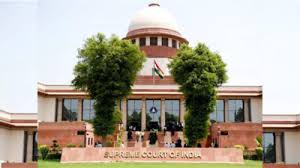
NEW DELHI: Supreme Court on Friday affirmed the Uttar Pradesh State Industrial Development Corporation’s decision to cancel allotment of 125 acres of land in Sultanpur to Kamla Nehru Memorial Trust (KNMT), named after Congress politician Rahul Gandhi’s great grandmother, saying a huge tract of industrial land was allotted without evaluating benefits to the public. Dismissing KNMT’s appeal, a bench of Justices Surya Kant and N Kotiswar Singh said that though the land was allotted in 2003, the trust failed to make timely payment of the cost of the land and kept seeking “unwarranted concessions, including waiver of interest and rescheduling of dues”. It also cancelled the subsequent allotment of the same land to Jagdishpur Paper Mills. Terming KNMT a chronic defaulter, the bench said, “UPSIDC’s action in treating KNMT as a defaulter was, therefore, both justified and necessary to preserve the integrity of the allotment process. Allowing such deliberate defaults to persist unchecked would undermine the entire framework of land allocation and set a detrimental precedent.” Writing the judgment, Justice Kant faulted UPSIDC for not following the public trust doctrine in allotment of lands. “While we have upheld the cancellation due to KNMT’s default, the circumstances reveal systemic concerns in the original allocation process. UPSIDC allotted the land to KNMT within merely two months of application (in 2003), raising questions about the thoroughness of the evaluation. Furthermore, during the pendency of this dispute, UPSIDC demonstrated remarkable alacrity in considering alternative allotments to Jagdishpur Paper Mills Ltd,” it said. Justice Kant said the public trust doctrine required that allocations must be preceded by a thorough assessment of public benefits, beneficiary credentials, and safeguards ensuring continued compliance with stated purposes. None of it was enforced while allotting the land to KNMT or the paper mill, the bench said and cancelled the allotment to the paper mill. SC said, “UPSIDC ought to have considered verifiable evidence of economic benefits, employment generation potential, environmental sustainability, and alignment with regional development objectives to demonstrate that the decision serves the collective benefit.” “The failure to adopt transparent mechanisms not only deprived the public exchequer of potential revenue, as evidenced by the substantial appreciation in the value of such a large tract of land, but also created a system where privileged access supersedes equal opportunity. This betrays the fiduciary relationship between the State and its citizens,” it said. SC directed the UP government and UPSIDC to ensure that all future land allotments must be made in a transparent, non-discriminatory and fair manner, and fetched maximum revenue while achieving the larger public interests – industrial development, environmental sustainability and regional economic objectives. Courtesy : TOI Note: This news is originally published on https://timesofindia.com/ and is for use by the non-military/non-commercial community, especially those in the human rights sector.
Telangana CM Revanth Reddy says ‘PoK would be ours if Rahul Gandhi were PM’, compares Narendra Modi to demonetised Rs 1,000 note
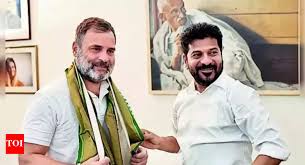
HYDERABAD: Telangana chief minister A Revanth Reddy on Thursday said India would have reclaimed Pakistan-Occupied Kashmir (PoK) had Rahul Gandhi been Prime Minister. “Modi is like a demonetised Rs 1,000 note. If Rahul Gandhi were Prime Minister, we would have reclaimed PoK by now,” Reddy said. He was speaking at the Jai Hind rally in Hyderabad, organised to honour the armed forces’ role in Operation Sindoor. He added that Rahul Gandhi’s leadership would have mirrored that of Indira Gandhi during the 1971 war. “Indira Gandhi declared war on China and issued a stern warning to the US. That’s the kind of leadership India needs today,” Revanth said. Revanth Reddy further criticised the BJP-led NDA government for announcing a ceasefire with Pakistan “within four days” of the military strike. “Why the haste? The country was left in the dark until US President Donald Trump revealed it on social media,” he said. He questioned why no all-party meeting was held before the decision and accused the Centre of lacking strategy, courage and transparency. “When Rahul Gandhi and Mallikarjun Kharge attended the all-party meeting, they extended full support to the Centre and clearly stated that India must reclaim PoK,” he said. Courtesy : TOI Note: This news is originally published on https://timesofindia.com/ and is for use by the non-military/non-commercial community, especially those in the human rights sector.
Remarks on Army: HC nixes Rahul Gandhi’s plea against court summons
Lucknow: A Lucknow bench of Allahabad high court on Thursday dismissed Congress MP Rahul Gandhi’s plea challenging the lower court summons for his alleged derogatory remarks on the Indian Army. Passing the order, the single bench of Justice Subhash Vidyarthi said the detailed order would be released on June 2. Opposing Gandhi’s plea, a team of lawyers including additional advocate general VK Shahi, govt advocate VK Singh and additional govt advocate Anurag Verma, said Gandhi’s petition was not maintainable because he had alternative remedy to challenge the summons before the session court. They also submitted that from bare perusal of the complaint and the statement of witnesses, prima facie offence was made out against him. Gandhi had challenged the summons issued by a lower court in Lucknow and the complaint filed against him on the grounds that it was motivated and lodged in a mala fide manner. Udai Shanker Srivastava has filed a complaint against Gandhi in a local court alleging that the Congress MP made several derogatory remarks on the Army during his Bharat Jodo Yatra in . On the complaint, the lower court had summoned Gandhi to face the trial. Gandhi’s advocate Pranshu Agarwal argued that the allegations were fabricated. He further argued that Gandhi is not a resident of Lucknow, so before summoning him, the lower court should have investigated the veracity of the allegations and issued summons only if the allegations were prima facie found to be fit for trial. Courtesy : TOI Note: This news is originally published on https:/timesofindia.com/ and is for use by the non-military/non-commercial community, especially those in the human rights sector.
Shirt-pants, pen and chocolate… Why did Rahul Gandhi send a gift to a high school student of Barabanki?
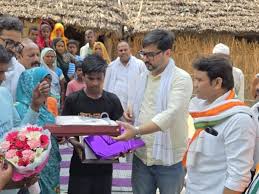
Congress MP from Rae Bareli Rahul Gandhi has also sent his signed congratulatory message. In the letter, Rahul Gandhi has written that your determination to pass the exam despite struggles is an inspiration for all students. Jitendra Kumar Maurya, Barabanki: Congress MP Rahul Gandhi has sent a gift along with a congratulatory letter to Ram Kewal, who passed the high school exam for the first time from Nizampur village of Barabanki after 78 years of independence. On Wednesday, MP Tanuj Punia reached the village with Congress leaders and felicitated the student and also promised to give full support for further studies. Ram Kewal, son of Jagdish Prasad, a resident of Nizampur village connected to Ahmedpur town of Banikodar block, has set a new benchmark by passing the high school exam. Leader of Opposition in Lok Sabha and MP from Rae Bareli Rahul Gandhi has sent congratulations to Ram Kewal and family on the successful penance of hard work. In the 78 years since the Dalit village of Nizampur in Ahmedpur village, no one has studied up to high school. Teachers believe that education has brought a ray of hope to the family living a life of poverty. Congratulatory message from Rahul Gandhi MP Tanuj Punia said that Rahul Gandhi has sent a congratulatory message to the family of Ramkewal, the student who passed the high school examination for the first time in the village after independence. In this, he has been given a shirt-pant, pen, chocolate and a congratulatory message letter signed by Rahul Gandhi. Rahul Gandhi wrote in the congratulatory message- ‘Dear Shri Ramkewal, I heartily congratulate you on your success in the 10th class examination for the first time in your entire village. This is not only a personal achievement but a historic occasion for the entire Nizampur village. Your determination to pass the examination despite struggles is an inspiration for all the students. You have proved that if the intention is strong, then no obstacle can become an obstacle in the way.’ Rahul Gandhi further writes- ‘Baba Saheb Ambedkar also stressed upon the need for education and with the hard work and dedication with which you have achieved this position, I hope that many avenues of progress will open for you in the times to come. Once again many congratulations to you and your parents for this achievement, whose blessings and hard work have always been with you. Best wishes for your future dreams too.’ Desire to study in private school, Congress took responsibility Tanuj Punia said that student Ramkewal has expressed his desire to study further in a private school in the city. Congress has taken the responsibility of fulfilling his wish. About the author Vaibhav Pandey Assistant News Editor in Navbharat Times Digital. Science student till graduation. After this did post graduation in media. Started the journey of journalism from Lucknow which reached the city of Nawabs via Agra, Delhi-NCR. Worked in Dainik Jagran print for a long time. Courtesy : Hindi News
‘Savarkar is relative of Nathuram Godse,’ Rahul Gandhi claims in affidavit filed in special Pune court
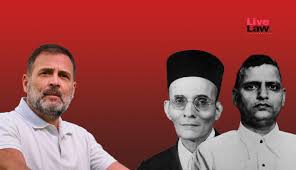
NEW DELHI: Senior Congress leader Rahul Gandhi claimed that right-wing leader Vinayak Savarkar was a relative of Nathuram Godse, who assassinated Mahatma Gandhi. In an affidavit filed in an MP/MLA Court in Pune, Rahul Gandhi accused Satyaki Savarkar, who filed a defamation lawsuit against the Congress leader, has concealing the fact that his mother, Himani, was the daughter of Gopal Godse, the real brother of Nathuram Godse, according to the Live Law. Through advocate Milind Pawar, Gandhi noted that Satyaki presented only his paternal lineage while omitting his maternal family connections. Gandhi pointed out that Satyaki is the son of Ashok Savarkar, who was the nephew of Vinayak Savarkar. Even in the application, there is actually no mention about maternal side, Live Law reported. “As per information, his (Satyaki’s) mother Himani is originally and by birth from Godse family. Inspite of this, the complainant has deliberately, systematically and very brilliantly avoided and suppressed to disclose the family tree from his maternal side. This is one of the most important issue in the instant case to decide merits finally before commencement to record the plea. The suppression or concealment of a material fact from the court is a serious issue considered as a fraud on the court and can lead to either dismissal of the case or denial of a relief,” the application states. The submission also points out that Savarkar was initially a co-accused in Mahatma Gandhi’s murder trial but was acquitted due to insufficient evidence. Gandhi’s application references historical documentation showing both Godse and Savarkar as proponents of “Hindu Nation”, who viewed Muslims and Christians as unsuitable for India. It notes Savarkar’s advocacy of the two-nation theory from 1937, which suggested Hindus and Muslims were separate nations – a stance later endorsed by Muslim League leader Mohammad Ali Jinnah. “Savarkar’s views articulated in 1937 and further solidified in 1943, emphasised the separation of the two communities and their distinct identities, a perspective that laid the groundwork for the eventual partition of India,” the plea reads. The application details Savarkar’s documented anti-Muslim positions, citing historians who noted his promotion of anti-Muslim Hindu nationalism and his view of Muslims in Indian forces as potential security risks. Referring to various historians, the application states, “Savarkar promoted anti-Muslim form of Hindu nationalism and saw Muslims in the Indian police and military to be ‘potential traitors.’ He advocated that India reduce the number of Muslims in military, police and public service and ban Muslims from owning or working in munition factories.” Further referring to his 1963 book, ‘Six Glorious Epochs of Indian History’, the application reads, “Savarkar has said that Muslims and Christians wanted to destroy Hinduism. He advocated use of rape as a political tool and accused Muslim women of actively supporting their men’s atrocities against Hindu women. He had also written that young and beautiful Muslim girls should be captured, converted and presented to Maratha warriors as a reward just like Muslim ruler Tipu Sultan distributed Hindu women among his warriors.” It references his 1963 publication, ‘Six Glorious Epochs of Indian History’, highlighting controversial positions regarding Muslims and Christians. The application challenges the complainant’s assertion that Gandhi’s London statement about Savarkar’s written account of assaulting a Muslim youth was defamatory. Special Judge Amol Shinde has directed Satyaki to respond to these submissions. Courtesy : TOI Note: This news is originally published on https://timesofindia.com/ and is for use by the non-military/non-commercial community, especially those in the human rights sector.
Revanth questions ceasefire decision, slams Centre’s handling of Op Sindoor
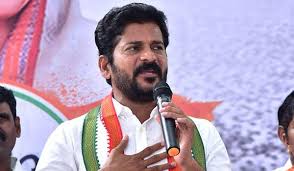
Hyderabad: Chief minister A Revanth Reddy on Thursday launched a sharp attack on the BJP-led NDA govt for failing to convene an all-party meeting before announcing a ceasefire with Pakistan in the aftermath of Operation Sindoor. He questioned the Centre’s unilateral approach and accused it of lack of strategy, courage, and transparency in managing the recent military engagement. Addressing the Jai Hind rally, organised to honour the Indian armed forces’ participation in Operation Sindoor, Revanth said: “When Rahul Gandhi and Mallikarjun Kharge attended the all-party meeting, they extended full support to the Centre and clearly stated that India must reclaim Pakistan-Occupied Kashmir (PoK). Yet, within four days of the strike, the govt abruptly announced a ceasefire. Why the haste? The country was left in the dark until US President Donald Trump revealed it on social media.” Lack of clarity Revanth questioned the lack of clarity surrounding the military operation and asked the Centre to disclose the impact of Pakistan’s response. “How many Rafale jets did we lose? What exactly happened in those four days?” he asked, criticising the Modi govt for not being forthcoming. Taking a swipe at the Prime Minister, he remarked: “Modi is like a demonetised ₹1,000 note. If Rahul Gandhi were Prime Minister, we would have reclaimed PoK by now.” He drew parallels between Rahul Gandhi and former Prime Minister Indira Gandhi, citing her bold leadership during the 1971 India-Pakistan war, when India’s military campaign led to the creation of Bangladesh. “Indira Gandhi declared war on China and issued a stern warning to the US during the 1971 conflict. That’s the kind of leadership India needs today,” he said. ‘Modi silent on China’ The chief minister also criticised the Modi govt for its inaction against China, following the death of Indian Army Colonel B Santosh Babu during a confrontation with Chinese forces in 2020. “Why didn’t the Prime Minister take any decisive action against China? Why no bold response, even after the sacrifice of our soldiers?” Revanth asked, suggesting that the current leadership lacked the resolve shown by Congress leaders in the past. ‘Don’t politicise patriotism’ Turning his attention to the BJP’s nationwide Tiranga rallies, Revanth questioned their intent. “Are these rallies really to honour the victims of the Pahalgam terror attack and our martyred soldiers—or just another political stunt? Patriotism is not your party’s private property. It belongs to the entire nation,” he said. He reiterated the Congress party’s legacy of sacrifice, pointing out that the Gandhi family has paid with their lives in service to the nation. “The Congress has always stood for the country. We will work tirelessly until Rahul Gandhi becomes Prime Minister. In these difficult times, India needs a courageous, decisive leader like him.” Courtesy : TOI Note: This news is originally published on https://timesofindia.com/ and is for use by the non-military/non-commercial community, especially those in the human rights sector.
NTERVIEW | ‘Basavaraju killing a success, but gun can’t kill ideology’
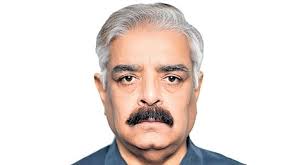
The killing of a top Maoist should not be seen as a death blow to the outfit, which has an extensive structure, says Ashok Prasad, former Special Secretary of Internal Security. The recent successes of security forces in their anti-LWE (Left-Wing Extremism) operations endorse the integrated policy of the government of the day, says Ashok Prasad, former Special Secretary of Internal Security and ex-Special Director of Intelligence Bureau. He tells Mukesh Ranjan that he exuded confidence that the state apparatus has now started dominating the military formations of the Maoists. Excerpts: How do you see one of the biggest anti-Naxal operations in recent times, in Chhattisgarh, where nearly 70 Maoists have been killed? It is a major achievement of the security forces. It is also a significant endorsement of the governments’ policy and integrated strategy. The multi-pronged strategy of successive Union governments has gained momentum and is beginning to dominate the military formations of the LWEs. The success is also due to the ‘All-India Response System’ in place. How significant an impact will the killing of Maoist leader Basavaraju have on the left-wing movement? The elimination of Basavaraju is a massive setback to Maoists and a devastating blow to the morale of the outfit’s ground-level cadre. His death will boost the morale of the security forces and inspire them to pursue the extremists more vigorously. This operation proves that nothing succeeds like success. However, the killing of a top Maoist should not be seen as a death blow to the outfit, which has an extensive structure. Do you agree that recent successes of the security forces signal the beginning of the end for Maoists? This is a complex question that does not permit a binary ‘Yes-No’ answer. Naxal movements in India are multifaceted and chronic sociopolitical phenomena that demand complex and persistent remedies. Violence is the most visible aspect, and the government’s strategy has made a significant dent in the movement, resulting in substantial containment of bloodshed below the tolerance threshold. The movement has suffered major setbacks in the past, too, but it has resurfaced. Will going aggressively against Maoist leaders and cadre eliminate Naxalism? The Centre has fixed a target to do it by March 2026. Aggressive actions can lead to higher attrition among the Maoist cadres and result in significantly lower levels of violence, as they would prefer escaping the wrath of the forces. However, aggression does nothing to undermine the political, ideological and social components of the Naxal movement and its public support, nor does it address the root causes, like perceived deprivation among people under the influence of Maoists, which gave birth to the movement in the first place. What more must the government do to choke their ideological, operational and financial bases? The government already has a constant, coordinated and focused strategy to deal with Maoist violence. Key progress has been made. Difficulties faced by security agencies and civil administration on the ground — especially those about access to terrains, communication and other resources — have been addressed. Other mitigation steps like surrender policy are major initiatives. But the main issue is the ideological and political appeal of Maoists among the masses, which you can’t kill with a gun. Do you think that alienation of the poor local population feeds and justifies the armed rebellion of Naxal leaders and cadres against the state? Poverty plays an important role in the spread of the Naxal movement, but the key lies in perceived inequality in resource availability and exploitation by those higher up in the food chain. These are exploited by vested interests in mobilising a support base, which is subsequently used to spread violence. While the moral and ethical justification for political violence is a subject of debate the world over, in the context of internal security, particularly in India, this is unequivocally illegal and undemocratic. Courtesy : TNIE Note: This news is originally published on https://thenewindianexpress.com/ and is for use by the non-military/non-commercial community, especially those in the human rights sector.
India’s Net Foreign Direct Investment Plummets by 96.5% to Reach Record Low

Net FDI stood at $353 million in fiscal year 2025, down sharply from $10 billion the previous year. New Delhi: India’s net foreign direct investment (FDI) plummeted 96.5% to a record low of $353 million in fiscal year 2025, down sharply from $10 billion the previous year. The Reserve Bank of India (RBI), in its latest monthly bulletin released on Wednesday (May 21), attributed the drop to large fund repatriations as investors exited through profitable initial public offerings (IPOs) and as Indian firms increased their investments overseas. A hot IPO market, featuring companies like Hyundai Motor and Swiggy, allowed long-term investors to realise significant gains. Simultaneously, Indian companies stepped up investments abroad to capitalise on shifts in global supply chains. The RBI stated that “Net FDI moderated…reflecting the rise in net outward FDI and repatriation FDI.” This decline in net FDI – the difference between gross FDI inflows and both outward investments by Indian companies and funds taken out by foreign entities – occurred despite a strong rise in gross FDI. Investors withdrew $49 billion from India in FY25, an increase from $41 billion the year before. High-profile exits included those by Alpha Wave Global and Partners Group from major share sales like Swiggy and Vishal Mega Mart. A report by the Indian Venture Capital and Alternate Capital Association (IVCA) and EY highlighted that private equity and venture capital exits totaled $26.7 billion, a 7% year-on-year increase. Open market exits were dominant, though IPOs backed by private equity gained momentum. For example, Hyundai’s promoters took home proceeds from its Rs 27,870 crore listing as it reduced its stake. A key Swiggy investor reportedly made over $2 billion post-IPO. Telecom firm Singtel’s sale of its Airtel stake and tobacco company BAT’s divestment from ITC in March 2024 also likely contributed to the FY25 repatriation figures. These large IPOs often coincided with India’s stock market indices hitting record highs, such as the surge in late September of last year. Despite the drop in net figures, some see these trends positively. The IVCA/EY report suggested this activity signals a “mature market,” where foreign investors can smoothly enter and exit, which “reflects positively on the Indian economy.” Furthermore, gross inward FDI showed robust growth, rising 13.7% to $81 billion in 2024-25, according to RBI data. The central bank noted this investment remains concentrated, with over 60% flowing into manufacturing, financial services, electricity and energy, and communication services. Net inflows of ‘stable’ FDI were 86% lower than the $2.67 billion in ‘volatile’ portfolio flows for the year. Courtesy : The Wire Staff, The Wire Note: This news is originally published on https://thewire.com/ and is for use by the non-military/non-commercial community, especially those in the human rights sector.
Rahul Gandhi files criminal defamation case against Satyaki Savarkar
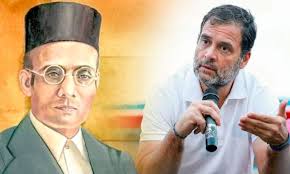
Pune: Leader of Opposition (LoP) in Lok Sabha Rahul Gandhi on Wednesday filed a criminal defamation case through his lawyer in a Pune special magistrate court against Satyaki Savarkar, grandnephew of Hindu ideologue Vinayak Damodar Savarkar. Gandhi accused Satyaki of allegedly providing false information to the court in a May 9 application to get the Congress leader’s bail bond cancelled on the grounds of breach of its condition. Gandhi, in his petition filed through lawyer Milind Pawar, said that the court — while granting bail to him on Jan 10 in a defamation case filed by Satyaki — did not impose any conditions. So, the question of breaching conditions does not arise because the case filed by Satyaki under the provisions of section 500 of the Indian Penal Code is bailable. On May 9, Satyaki had filed a plea to cancel the bail bond and take coercive action against Gandhi for breaching its condition. This, according to the Congress leader’s petition, was defamatory, false, and baseless, misleading the court. Gandhi’s petition states that Satyaki committed an offence of defamation under the provisions of IPC sections 499 and 500, perjury (false statement) under sections 191 (false evidence) and 192 (fabricating false evidence), and of contempt by misleading the court. Pawar has prayed before the court to take cognisance of his client’s petition and issue process (summons) against Satyaki. Satyaki’s lawyer, Sangram Kolhatkar, told TOI, “My client has filed a plea to reject Gandhi’s plea because the petition filed by him is frivolous and filed with an intention to disrupt the court proceedings by not recording his plea to commence the trial.” The court has deferred the hearing till June 12. Courtesy : TOI Note: This news is originally published on https://timesofindia.com/ and is for use by the non-military/non-commercial community, especially those in the human rights sector.