
Is working for Dalits, farmers ‘anti-national’ ?: Medha Patkar slams BJP MPs over meeting walkout
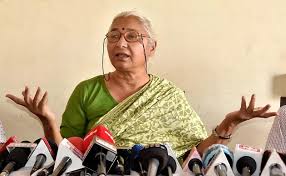
A day after BJP MPs walked out of a parliamentary panel meeting she was invited to, activist Medha Patkar on Wednesday hit back, asking if standing up for Dalits, Adivasis, farmers and labourers now counts as “anti-national”. A meeting of the Parliamentary Standing Committee on Rural Development and Panchayati Raj to discuss the implementation of the land acquisition act ended abruptly on Tuesday as BJP MPs protested against the panel’s decision to hear Patkar, who had led protests against raising the height of the Sardar Sarovar Dam in Gujarat under the banner of ‘Narmada Bachao Andolan’. The panel, headed by Congress MP Saptagiri Sankar Ulaka, had called Patkar to hear her views on the implementation and effectiveness of the land acquisition law enacted by Parliament when the Congress-led UPA government was in power in 2013. Former Union minister and BJP MP Parshottam Rupala was joined by other lawmakers from his party as they walked out of the meeting, with some dubbing Patkar as “anti-national”. A BJP MP even said he had no idea that leaders from Pakistan could also be called to such a meeting. “What is the charge of being anti-national? We are working with Dalits, Adivasis, farmers, labourers… Is that something anti-national? To protect their rights under the law and the Constitution, and the human rights, which are above the constitutional rights,” Patkar told PTI. “And even if whatever we are saying is wrong, they can oppose it. But that doesn’t mean that they can call us anti-national or ‘urban naxals’. This democratic process includes the parliamentary standing committee proceedings,” she added. Patkar said she has participated in parliamentary panel discussions earlier and has been part of consultations carried out by the government for framing the Land Acquisition Act of 2013. “Even when Sumitra Mahajan was in the Chair, we were given a good hearing,” she said, referring to the former Lok Sabha Speaker and BJP leader. Patkar said they were invited to appear before the panel, made their submissions, and all due process was followed. She said she was informed that a communication was sent by the secretary general of the Lok Sabha to the chairperson — Congress MP Ulaka — to cancel the meeting due to a lack of quorum. The activist said she was told by officials that 17 MPs had come for the meeting, and questioned how there was a lack of quorum. “The written letter that the secretary general gave to the chairman to cancel the meeting gave only one reason that there is no quorum. The fact that I was invited to appear was not mentioned as the reason,” she said. Former prime minister H D Devegowda’s Janata Dal (Secular), which is a part of the BJP-led NDA, also participated in the meeting but not in the walkout, Patkar said. “Mr. Devegowda, he did not walk out. He was just sitting quietly near the chairman,” she said. Talking about the Narmada Bachao Andolan, Patkar said they only demanded what was awarded by the Narmada Tribunal. The Narmada Water Disputes Tribunal (NWDT) was established in 1969 to resolve the water-sharing disputes among Gujarat, Madhya Pradesh, Maharashtra, and Rajasthan concerning the Narmada River. “They are mentioning the position taken by the Narmada Bachao Andolan. Our position has been that the award by the Narmada tribunal should be implemented,” she said. “Even the World Bank stopped funding this project (Sardar Sarovar Dam), saying that it was an ill-planned project. The statistics on which the decision is based the data is flawed. The World Bank took a position that they had not followed the law,” she said. The World Bank had agreed to fund the project to increase the height of the dam in 1985. However, following protests by the NBA led by Patkar, they formed the Morse Commission to look into factors like environmental cost and human displacement. As the World Bank decided to pull out of the project, the government cancelled the loan sanctioned by the World Bank on 31 March 1993. Patkar stressed that the rehabilitation of the families that were to be dislocated was important. “There were thousands of families living in this area. How could they be denied fair and full rehabilitation? That was the question. Now, about 50,000 families have received rehabilitation. Whatever is remaining, a few thousand in Madhya Pradesh, hundreds in Maharashtra, hundreds in Gujarat, the dialogue is still going on,” she said. “We want the government to take immediate action and decision, but they are not doing it on war footing,” she added Courtesy : TET Note: This news is originally published on https:/theeconomictimes.com/ and is for use by the non-military/non-commercial community, especially those in the human rights sector.
Deported 45 days ago, transperson from Bangladesh slips back into Delhi — ‘to be with live-in partner’

Sources in the police said that Khan, despite being handed over to Bangladeshi authorities, did not return home in May A team from the Delhi Police’s Foreigner Cell, which has been apprehending Bangladeshis staying in India illegally, was in for a surprise when they found that a person they had deported to Bangladesh only 45 days ago, with assistance from the Foreigners Regional Registration Office (FRRO), was back in the Capital. The transgender, Suhan Khan (30), was apprehended in a raid near Azadpur Mandi on Monday. During questioning, Khan allegedly said that he had returned to India to be with his friend, whom he claimed was his lover, and had been staying at Outer Delhi’s Nihal Vihar. Khan had been arrested by the same team from the Foreigner Cell on May 15, while he was found begging in the Azadpur Mandi area, sources in the police said. Deputy Commissioner of Police (Northwest) Bhisham Singh said that Khan’s return to India and getting apprehended again highlights both the persistent efforts by some individuals to re-enter the country illegally and the unwavering vigilance of the Delhi Police. “This incident sends a strong message that any attempt to circumvent legal immigration processes will be met with strict action,” he added. Sources in the police said that Khan, despite being handed over to Bangladeshi authorities, did not return home in May. “He stayed for a few days in temporary shelters near the Akhaura integrated check post in Agartala and somehow managed to trespass the border again. He then took a train to Delhi and reached Nihal Vihar by bus – all in the same month of his deportation,” a source said. “Khan said he was in love with his live-in partner, which is why he came back to India,” the source added. Khan, a native of Sylhet district in Bangladesh, had initially come to Delhi 10 years ago. He had illegally crossed the West Bengal border and arrived in Delhi, where he initially worked as a daily wage labourer and later became a beggar at traffic signals. On May 15, he was deported for the first time. According to a senior police officer, the FRRO will be informed about the development. “The deportation process is handled by the FRRO. Under this, deportees or individuals staying illegally are sent back to their countries in batches or groups. The India-Bangladesh border is so porous that despite the deployment of the Border Security Force, people can still cross it easily,” the officer said. Earlier, many Bangladeshi nationals had re-entered India months or weeks after their deportation, he added. Courtesy : Hindi News
‘Bihar first, Bihari first’: Chirag Paswan reveals reason behind his Bihar poll entry; says opposition all ‘jittery’
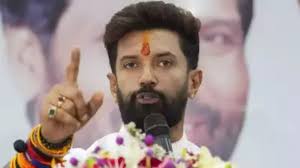
NEW DELHI: Union minister Chirag Paswan on Sunday said that he wants to contest the upcoming assembly elections “for the sake of Bihar,” and brushed aside attempts by “jittery” rivals to block his path. Addressing a rally titled Bahujan Bhim Sankalp Samagam at Rajgir in Nalanda, the home district of CM Nitish Kumar, Chirag slammed the opposition INDIA bloc, accusing them of misleading voters. He urged people to be careful against the “false narrative” of the bloc which “alleged during the Lok Sabha polls last year that the Constitution will be under threat if Prime Minister Narendra Modi got a third consecutive term.” “They are trying to play the same trick again in the run up to assembly polls. But you must remember that the worst attack on Constitution came during the Emergency when the Congress was in power and countless young men, mostly Dalits, minorities and OBCs, had been forcibly sterilised,” said the Lok Janshakti Party president. The Hajipur MP further criticised the Congress for allegedly using minority concerns as a political tool. “Today the Congress and its allies are busy trying to present themselves as the champions of minorities by attending a rally in Patna where they are opposing the Waqf Act which had been brought for the benefit of poor Muslims. They should be asked about the Turkman Gate massacre,” he said. Chirag also took aim at RJD leader Tejashwi Yadav for aligning with the Congress “just for the sake of power”. He challenged him to “seek an apology from Rahul Gandhi for excesses during the Emergency, the sufferers of which include his own father (RJD president Lalu Prasad)”. He went on to attack Rahul Gandhi for “carrying a red copy of the Constitution”, accusing the Congress of sidelining Babasaheb Ambedkar while in power. “It was the government of VP Singh, supported by the BJP, in which my idol and father late Ram Vilas Paswan a minister, that Bharat Ratna was given to Babasaheb, his picture was installed in Parliament and the report of Mandal Commission, put by the Congress in cold storage, was implemented,” he said. Talking about the issue of reservation, Chirag said that the opposition keeps on raising a “false alarm.” “The opposition keeps raising the false alarm that reservation will be scrapped. Let me give you the guarantee that this is not going to happen, as long as Chirag Paswan is alive,” he assured the people. Reflecting upon his comeback to the Bihar politics, he said that it symbolised people coming back to the state after fleeing from the lawlessness during the RJD rule. “Many people are jittery that I want to come to Bihar. They are trying to know whether I will be contesting elections here. I wish to tell them, I want to contest assembly polls for the sake of Bihar. So that my dream of Bihar First, Bihari First is realised,” he said. Chirag said that even though hurdles are being placed through his way, he won’t be discouraged, adding that previous attempts to weaken him by splitting his party and creating rifts in his family had failed. He urged his party workers to spread out across all 243 assembly constituencies and campaign for the NDA’s victory with the same determination as if he himself were contesting. “You give me NDA’s victory in assembly polls. I will give you a developed Bihar,” he added. Courtesy : TOI Note: This news is originally published on https:/timesofindia.com/ and is for use by the non-military/non-commercial community, especially those in the human rights sector.
Rahul Gandhi to visit state on July 11

Bhubaneswar: Leader of the opposition in the Lok Sabha, Rahul Gandhi, and Congress president Mallikarjun Kharge are scheduled to visit Odisha on July 11 to attend the party’s ‘Save Constitution’ event in Bhubaneswar, Congress state president Bhakta Charan Das informed on Tuesday. During the visit, the party is likely to highlight the alleged rise in crimes against women in the state. Courtesy : TOI Note: This news is originally published on https:/timesofindia.com/ and is for use by the non-military/non-commercial community, especially those in the human rights sector.
CM Yogi, Rahul, Priyanga & others wish Akhilesh on 52nd b’day
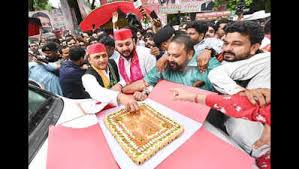
Lucknow: As Samajwadi Party national president and former UP chief minister Akhilesh Yadav celebrated his 52nd birthday on Tuesday, wishes poured in for him from all quarters. UP CM Yogi Adityanath took to social media platform ‘X’ to say: “Heartiest congratulations to UP’s former CM Akhilesh Yadav on his birthday.” The leader of Opposition in the Lok Sabha, Rahul Gandhi, hailed Yadav for being a strong voice of PDA (backward, Dalits, minorities). “Best wishes to Akhilesh Yadav bhai on his birthday. May you remain healthy and happy. We will fight for justice and equality with you, shoulder to shoulder,” he said in his message. Priyanka Gandhi, too, had a similar message for Yadav, where she hailed him as a bold voice for PDA. She wished for him a long and healthy life, assuring him of her support in his fight for social justice. Yadav’s uncle Shivpal described him as a symbol of new thinking, public service and struggle. “Your visionary leadership and commitment to socialist values will give a new direction to the future of the state. May God always keep you healthy and give you continued success on the path of public welfare,” he said. Aam Aadmi Party national convener Arvind Kejriwal also congratulated Yadav. In a message on ‘X’, he wrote: “Best wishes to the SP National President and former UP CM on his birthday. May God give you a healthy and long life.” Sanjay Singh, AAP MP and the party’s UP in-charge, described Yadav as a person who was fighting for the rights of PDA and for democracy and the Constitution, while wishing him on his birthday. In his message for Yadav on social media, Tamil Nadu CM MK Stalin said: “May you carry forward the torch of social justice in the land of VP Singh, lighting the way for progressive politics and stand ever stronger against regressive ideologies, in the proud legacy of your father Mulayam Singh Yadav.” Others who wished Yadav included UP Assembly Speaker Satish Mahana, deputy UP CM Keshav Prasad Maurya, UP panchayati raj minister OP Rajbhar, Union minister Anupriya Patel, Congress chief Mallikarjun Kharge, RJD’s Tejashwi Yadav, NCP MP Supriya Sule, and Jharkhand CM Hemant Soren. Courtesy : TOI Note: This news is originally published on https:/timesofindia.com/ and is for use by the non-military/non-commercial community, especially those in the human rights sector.
Gandhis conspired to usurp Rs 2k crore co: ED in Herald case
NEW DELHI: ED on Wednesday told a special court that former Congress presidents Sonia and Rahul Gandhi wanted to take over a Rs 2,000 crore company – Associated Journals Limited (AJL) – that once published party organ National Herald. The agency, through additional solicitor general (ASG) SV Raju, submitted before the court of Special Judge Vishal Gogne that a conspiracy was hatched to create Young Indian Pvt Ltd, a not-for-profit company, in which Sonia and Rahul held 76% shares (38% each), to siphon off assets of AJL in lieu of repaying a Rs 90 crore loan (taken by AJL) to Congress. This debt was converted into equity in favour of Young Indian (YI), ED argued. The agency argued that the whole scheme was conceived for the benefit of the Gandhis, who controlled YI as well as AJL, the latter, while being in loss, had enough assets to repay the loan. “Losses were to the tune of Rs 70 lakh. They (YI) didn’t even have the wherewithal to pay Rs 50 lakh. During this time, Rahul and Sonia were directors of the company along with Sam Pitroda and others,” said Raju, adding that AJL was not making profit but it had assets worth Rs 2,000 crore. “How come they (AJL and its functionaries) didn’t have Rs 90 crore to repay the loan (given by Congress)? Any prudent person would’ve sold their assets to repay loans. This is absurd and can never be explained,” the ASG argued. The hearing saw Raju refuting the suggestion that since AJL was started by the first PM, Jawahar Lal Nehru, it was alright for Congress to acquire it. Referring to Sonia and Rahul, ED said till 2015, only these two individuals were the actual beneficiaries with full control over AJL’s assets and functioning. The court will continue to hear arguments on Thursday too. “AJL was not making a profit but it had large assets of Rs 2,000 crore. They were finding it difficult to manage their daily affairs. Thus, a Rs 90 crore loan was taken from Congress,” ASG submitted. He said several senior Congress functionaries engaged in fake transactions that existed only on paper to divert funds to AJL, adding that fabricated rent receipts and fraudulent advance rent payments were made over several years. Courtesy : TOI Note: This news is originally published on https:/timesofindia.com/ and is for use by the non-military/non-commercial community, especially those in the human rights sector.
Witness to the Unheard: Remembering K.M. Salimkumar
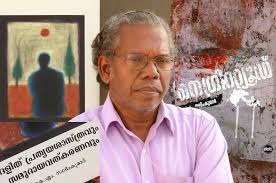
Salimkumar was part of a generation of leaders who re-evaluated their ideological roots, transitioning from strict Marxist lines to a framework informed by Ambedkarite thought. It feels as though it happened just yesterday – the long, winding bus ride to Thodupuzha, a serene town in Kerala’s Idukki district. It was 2008. We were en route to release ഭൂമിയുടെ ജാതിയും രാഷ്ട്രീയവും (Caste and the Politics of the Land), a powerful book by K.M. Salimkumar. Sitting beside me was the man himself – a relentless voice for Dalit and Adivasi rights, an activist, thinker, and writer who had spent decades challenging the status quo. He passed away on June 29, after a lifetime of confronting dominant narratives with a clarity that few dared to match. During that trip, Salimkumar spoke with thoughtful determination about his political path – from early activism with the Communist Party of India (Marxist–Leninist) Liberation to his eventual estrangement from a Left movement that, in his view, skirted around the issue of caste. His words weren’t bitter or sentimental, they were sharp. He argued that caste, as a deeply entrenched system of oppression in Indian society, often vanished beneath class-based rhetoric. For him, the revolutionary struggle had failed to acknowledge the lived experiences of those most marginalised. That journey wasn’t just about a book, it offered a glimpse into the principled world he inhabited. Born in 1949, in a tribal family in Velliammattom panchayat in Idukki, Salimkumar rose to become a formidable voice for social justice in Kerala. His early years were shaped by Marxist liberation politics, and he was incarcerated for 17 months during the Emergency. But unlike others who moderated their stance afterward, Salimkumar intensified his critique, especially of the movements he once served. He questioned why caste was so often left out of revolutionary discourse and why land struggles didn’t prioritise those without land, Dalits and Adivasis. His involvement in building political and grassroots networks was extensive. As a founder of the Dalit Unity Committee in 1999 and editor of publications like Raktapataka and Dalit Aikyashabdam, he gave platform to marginalised voices. His activism focused not on charity, but on dignity, autonomy, and rightful assertion. Salimkumar was part of a generation of leaders who re-evaluated their ideological roots, transitioning from strict Marxist lines to a framework informed by Ambedkarite thought. While many Left parties in Kerala treated caste as a secondary issue to class, Salimkumar argued it was a primary axis of oppression. He frequently reminded people that caste is not a relic of the past but a system that defines everything – from land rights to social boundaries. He openly criticised symbolic gestures like renaming Dalit colonies with sanitised, Sanskrit-inspired names. For him, such acts were attempts to cover up deeper inequalities. “Changing names doesn’t change realities,” he wrote. “The trauma, the exclusion, the inherited shame – they all remain.” ‘Negritude’, K.M. Salimkumar. His collection of columns under the title Negritude reflected this radical clarity. In them, he explored themes such as Ambedkar’s democratic philosophy, the erasure of tribal identity, and the contradictions in Kerala’s progressive self-image. By drawing connections between caste-based and racial oppression, he built a body of work that was more than literature – it was a political statement. Salimkumar also centred B.R. Ambedkar in his vision of India’s democratic future. He didn’t see Ambedkar merely as a constitutional architect, but as a radical critic of social inequality and a prophet of structural reform. He cited Ambedkar’s assertion that while Hindu privilege maintained Brahminical rule, true democracy meant Dalits must have full participation. He was especially vocal about the contradictions in Kerala’s development model. Though the state is praised for its human development indicators, he pointed out how Dalits and Adivasis continued to face displacement and marginalisation in the name of progress. During protests like the Muthanga agitation, albeit his reservations about the struggle itself, he challenged the hypocrisy of governments that claimed to be for the people while undermining the very communities they displaced. His published works – including Dalit Ideology and Communalisation (2008), Dalit Democratic Thought (2018), Reservation in a Dalit Perspective (2018), and The Subtleties of Casteism (2021) – offer critical insights into how casteism adapts to survive even in secular and progressive settings. His critique extended beyond the obvious culprits. He held the liberal elite and even self-proclaimed progressives accountable for sustaining caste structures. In his later years, Salimkumar emphasised the importance of cultural memory and literature in political struggle. He believed that writing was an act of reclaiming identity, that memory could resist erasure, and that telling one’s story was itself revolutionary. He didn’t aspire to lead in the conventional sense. He wanted to bear witness—to name what others avoided, to stay rooted in difficult truths, and to never allow silence to replace justice. In an age when even dissent is being curated and softened, KM Salimkumar’s legacy stands as a reminder that the fight for equality requires more than slogans—it demands unflinching truth. K.M. Seethi is Director, Inter University Centre for Social Science Research and Extension (IUCSSRE), Mahatma Gandhi University (MGU), Kerala, India. Seethi also served as Senior Professor of International Relations, Dean of Social Sciences at MGU and ICSSR Senior Fellow. K.M. Seethian Courtesy : The Wire Note: This news is originally published on https:/thewire.com/ and is for use by the non-military/non-commercial community, especially those in the human rights sector.
‘I think RSS has moved on’: Did Shashi Tharoor defend the Sangh? Here’s what Congress MP said on Rahul Gandhi’s ‘Manusmriti’ charge
‘I think RSS has moved on’: Did Shashi Tharoor defend the Sangh? Here’s what Congress MP said on Rahul Gandhi’s ‘Manusmriti’ charge’I think RSS has moved on’: Did Shashi Tharoor defend the Sangh? Here’s what Congress MP said on Rahul Gandhi’s ‘Manusmriti’ charge NEW DELHI: Amidst the growing rift with the Congress Party, Thiruvananthapuram MP Shashi Tharoor on Saturday appears to have sided with the RSS-BJP over the leader of the opposition in the Lok Sabha, Rahul Gandhi’s accusation that the RSS wanted ‘Manusmriti’, not the Constitution. While answering to a question over Rahul Gandhi’s tweet that the RSS-BJP want Manusmriti instead of the Constitution, Congress MP said that historically the Raebareli MP is right as then RSS chief MS Golwalkar had said that one of the greatest flaws of the Constitution is that there is nothing of the Manusmriti in it. “But I think the RSS itself has moved on from those days,” Tharoor said. “Historically, he’s (Rahul Gandhi) referring to the fact that that was a criticism expressed at the time of the adoption of the Constitution. Mr Golwalkar, amongst others, said that one of the greatest flaws of the Constitution is that there is nothing of the Manusmriti in it, but I think the RSS itself has moved on from those days. So, as a historical statement, it’s accurate, whether it’s a reflection of how they feel today. The RSS should be in the best position to answer that…” Tharoor said while talking to reporters. Shashi Tharoor’s widening rift with the Congress Party has come under renewed spotlight after a string of pointed remarks and cryptic social media posts seemingly challenging the party’s leadership. One such post read, “Don’t ask permission to fly. The wings are yours. And the sky belongs to no one.” This, followed by a series of similar messages, signaled growing tensions between Tharoor and the party. The tensions between Tharoor and Congress leadership rose after he praised PM Modi’s diplomacy during Operation Sindoor in a Hindu article, describing his “energy” and “dynamism” as assets for India’s global standing. The PMO shared the piece, fuelling speculation about Tharoor’s loyalty. Congress chief Mallikarjun Kharge indirectly rebuked him, suggesting his praise for PM Modi was inappropriate. “We say nation first, but some consider Modi first, country later. What can we do about that?” he asked. Tharoor, however, clarified that his remarks reflected national interest, not support for the BJP. Courtesy : TOI Note: This news is originally published on https:/timesofindia.com/ and is for use by the non-military/non-commercial community, especially those in the human rights sector.
Preamble Row Flares Up- After Tharoor’s ‘RSS Moved On’ Bombshell, RJD Slams VP Dhankhar’s Comments
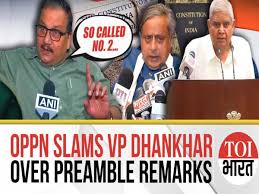
The ongoing Preamble debate has intensified, with sharp political exchanges following remarks by Vice President Jagdeep Dhankhar, who said the Constitution’s Preamble was altered during the Emergency to add “socialist” and “secular,” calling preamble the “seed” of the Constitution. RJD MP Manoj Jha hit back, asking if the issue is with the words or their inclusion. Earlier, Congress MP Shashi Tharoor had responded to Rahul Gandhi’s ‘Manusmriti’ tweet, noting historical RSS criticism of the Constitution but claimed the RSS has “moved on.” The row was first triggered by RSS leader Dattatreya Hosabale, who questioned the additions during an Emergency anniversary event. Courtesy : TOI Note: This news is originally published on https:/timesofindia.com/ and is for use by the non-military/non-commercial community, especially those in the human rights sector.
Congress leadership stuck in its own incompetence trap
Congress’s crown prince Rahul Gandhi has continued to level allegations against the Election Commission over the Maharashtra election results. Unable to digest the defeat in Maharashtra, Rahul Gandhi has targeted the Election Commission. Rahul Gandhi has continued to make a series of false allegations against the Election Commission, saying that the voter turnout in Chief Minister Devendra Fadnavis’ Nagpur South constituency has increased by 8 percent. Chief Minister Devendra Fadnavis, while dispelling Rahul Gandhi’s allegations, presented the statistics of the increase in voters in the constituencies of the Congress- Sharad Pawar led faction’s MLAs. After the results of the assembly elections were announced, the dreams of UBT, senior leader Sharad Pawar and the national leadership of the Congress were shattered. Due to the success of the Lok Sabha elections, the leaders of the MVA were living in the belief that they had also won the assembly elections. The leaders of the MVA were not ready to accept that the success in the Lok Sabha elections was an accident. Even a senior leader like Sharad Pawar forgot that such accidents do not happen frequently in politics. Crown Prince Rahul Gandhi’s flight had soared as he won 99 seats in the Lok Sabha elections. Rahul Gandhi, who is under the illusion that winning 99 seats is a testament to and victory for his leadership, has been living with many such misconceptions about himself. The propaganda of constitutional amendment, the atmosphere of terror created by urban Naxalite forces in many sections of society had an impact on the Lok Sabha elections. The issue of the forms distributed by the Congress to attract voters in the Lok Sabha election campaign came to light after the results. The Haryana assembly elections were held after the Lok Sabha elections. In that election, the voters gave the Congress a shock . The air of the propaganda of constitutional amendment had cleared during the Haryana elections. To win the elections, special effort has to be made on the organizational side. The organization has to pay attention to many things like registration of new voters, corrections in the names in the old voter list, registration of young people voting for the first time, exclusion of names of deceased voters. The Congress organization has not been in the habit of paying attention to such issues for many years. Due to the influence of Mrs. Indira Gandhi, the Congress got a large majority in the Lok Sabha elections in 1971 and 1980 as well as in the assembly elections of many states. Until the 1970s, the Congress organization was significantly active from Vilaages to Delhi. Many activities like registration of party members, study camps for leaders and workers were carried out by the Congress. Mrs. Indira Gandhi gradually dismantled the Congress party organization. The groups that served the Nehru-Gandhi family started gaining respect and position in the government and the organization. Thanks to Pandit Nehru’s grace, Mrs. Indira Gandhi got an important position in Congress. However, after that, Mrs. Indira Gandhi had to struggle a lot while establishing her leadership. And in the post-Emergency elections, Mrs. Indira Gandhi returned to the masses after being jolted by the electorate. Rahul Gandhi is not used to doing politics by struggling in this way. Therefore, he has taken up a one-point program to level all allegations against the Election Commission. With this, he wants to cover up the flaws in his leadership. Mrs. Indira Gandhi recognized the discontent among the voters due to the differences in the Janata Party. Indira Gandhi appealed to the voters using this same issue. Rahul Gandhi’s leadership has repeatedly failed to attract voters to the Congress. Rahul Gandhi was the Congress’s chief campaigner in the 2012 Uttar Pradesh assembly elections. Since then, Rahul Gandhi has been consistently rejected by the voters. Congress won the assembly elections in states like Karnataka and Telangana due to the struggle of the local leadership. Rahul Gandhi has not contributed anything to this victory. Instead of finding out the reasons why the voters are consistently rejecting him and changing his behavior accordingly, Rahul Gandhi has adopted the crooked path of propaganda. Rahul Gandhi is trying to create unrest and dissatisfaction among the voters by spreading absolute false information. A few months ago, Rahul Gandhi crossed all limits of falsehood while participating in the debate on the President’s address in the Lok Sabha. During the debate, Rahul Gandhi raised questions on the Agniveer scheme and alleged that martyr status is not given in the central government’s Agniveer scheme. Apart from this, he had alleged that the families of martyred Agniveer soldiers were not given assistance either. At this time, Rahul Gandhi mentioned the martyred Agniveer Akshay Gawate of Buldhana. Defense Minister Rajnath Singh said in the Lok Sabha that Rahul Gandhi’s allegation was completely false. Also, after Rahul Gandhi’s claim, the father of martyr Agniveer Laxman Gawate said that he had received a total of Rs 1 crore 10 lakh in assistance so far. Even after that, Rahul Baba continued his false narrative. Saying, ‘The protection of truth is the basis of every religion!’ Rahul Gandhi had claimed on the social media platform X that the family of martyred firefighter Ajay Singh had not received any financial assistance from the army. The very next day after Rahul Gandhi made this claim, Ajay Singh’s father clarified that he had received compensation from the army. A video of Ajay Singh’s father Charanjit Kala, requesting not to politicize this issue, went viral on social media. Following the results of the Maharashtra assembly elections, Rahul Gandhi has continued his business of spreading false information with the sole intention of creating distrust and suspicion among the people about the government and the system. The Election Commission has given detailed and to the point answers to every question of Rahul Gandhi. Still, he has not stopped his false narrative. Instead of adopting the challenging path of going into the masses and undergoing the struggle to build an organization, the prince