
Young Indian-AJL transaction a sham: ASG in Herald case

NEW DELHI: Additional solicitor general SV Raju claimed before a Delhi court Tuesday that transaction between Associated Journals Ltd and Young Indian Pvt Ltd was a sham transaction in an alleged money laundering case in the National Herald matter. “All India Congress Committee was given funds, which were to be used properly, but the way they used Rs 90 crore shows they committed criminal breach of trust,” the ASG argued. The ASG’s arguments will continue Saturday before the court of special judge Vishal Gogne, which is hearing arguments on the point of cognisance of chargesheet filed against Sonia Gandhi, Rahul Gandhi, & others. Court posted the matter to July 12 for further proceedings. After rebuttal arguments by all seven accused in the case were completed Tuesday, the ASG submitted his rebuttals before the court. According to ED, Sonia and Rahul Gandhi, along with others and Young Indian, conspired to launder money by fraudulent takeover of properties valued over at Rs 2,000 crore belonging to AJL. As per ED, the Gandhis held a majority 76% shares in Young Indian, which fraudulently usurped assets of AJL in exchange for a Rs 90 crore loan. Courtesy : TOI Note: This news is originally published on https:/timesofindia.com/ and is for use by the non-military/non-commercial community, especially those in the human rights sector.
Shivakumar, Siddaramaiah to meet Rahul Gandhi today amid fresh push to change CM
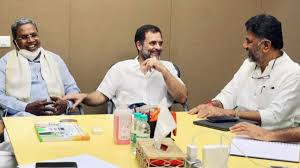
Bengaluru/New Delhi: Chief minister Siddaramaiah and his deputy, DK Shivakumar, are set to meet Congress MP Rahul Gandhi in New Delhi Wednesday night, amid fresh demands from Shivakumar’s supporters for a leadership transition in Karnataka. The meeting comes at a time when tensions within the Congress state unit have resurfaced, with several MLAs publicly backing Shivakumar to take over the chief minister’s post later this year. Shivakumar told reporters in New Delhi Tuesday, “The CM, AICC general secretaries, and I will hold a meeting to discuss party-related matters.” Asked if the meeting would deliberate on making Siddaramaiah the chairman of the party’s OBC committee — seen by some as a possible soft exit strategy — he said: “Siddaramaiah is a prominent leader of the backward classes, and the party is making use of his leadership skills. The national-level OBC committee meeting scheduled for July 15 will be held under his leadership in Bengaluru.” He said that although Siddaramaiah may not formally head the committee, the meeting would be conducted under his leadership due to his stature and contribution to the OBC movement. “Congress is making use of his leadership and capabilities,” Shivakumar said. Asked about growing calls within the party for his elevation, Shivakumar said, “The CM post is not vacant. So, this is not the right time to talk about it.” The latest push for a change at the helm comes despite repeated denials from Congress’ high command and Siddaramaiah himself, who has asserted he will complete a full five-year term. Shivakumar, too, has previously said he has no choice but to support the CM. But several legislators, especially from Bengaluru south district, have reignited the debate. “All our district MLAs want Shivakumar to become CM. There’s no discrepancy about it. High command should decide,” Channapatna MLA CP Yogeeshwara said Tuesday. “We, the MLAs, are demanding it… I want Shivakumar to become CM.” HA Iqbal Hussain, Ramanagara MLA and a staunch Shivakumar supporter, even suggested a change could happen within months. “Yes, I’m saying it. Some functionaries are hinting at revolutionary political developments after Sept. A decision will be made within 2-3 months,” he said. He went on to say: “You all know what our strength was before this govt was formed… His (Shivakumar’s) strategy and programmes are history now. The high command is aware of the situation, and we are confident it will take an appropriate decision at the right time.” Senior Congress MLA and former minister Tanveer Sait, who is from Siddaramaiah’s home district Mysuru said the party must be open to transition. “I feel leadership can’t be stagnant. New leaders must come and grow. Whenever the opportunity is given, it’ll happen,” he said. Calls for a new CM come amid multiple meetings between Randeep Singh Surjewala, AICC general secretary in charge of Karnataka, with Congress MLAs to quell dissent. “The KPCC chief and I have spoken about this… Everyone can have ambitions and desires. I don’t want to say anything more,” Surjewala said. Siddaramaiah will join Shivakumar in Delhi on Wednesday. Shivakumar is scheduled to meet defence minister Rajnath Singh ahead of the meeting with Rahul. It is unclear whether they will meet Singh jointly or separately. Courtesy : TOI Note: This news is originally published on https:/timesofindia.com/ and is for use by the non-military/non-commercial community, especially those in the human rights sector.
Rahul Gandhi to lead Bihar Mahagathbandhan protest: Tyres burnt, roads blocked; what the electoral roll row is about
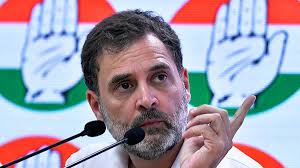
NEW DELHI: The Mahagathbandhan alliance on Wednesday kicked off a “Bihar Bandh” protesting against the ongoing special intensive revision (SIR) of electoral rolls by the Election Commission. Opposition leaders, including Congress leader Rahul Gandhi and RJD’s Tejashwi Yadav, will lead a protest rally in Patna and plan to encircle the Chief Electoral Office in the state capital. Earlier, the former deputy chief minister said that the opposition had called for the Bihar Bandh to vent their ire against the ongoing voter list revision ahead of the upcoming assembly elections. “We will enforce a ‘chakka jam’ on July 9. Both the Election Commission and the government will be targeted by the Opposition. It is quite surprising that the EC is changing its orders every hour. As a result, BLOs and other officials engaged in the verification exercise are confused,” Tejashwi said. Why is the opposition protesting ? The Opposition has alleged that the Election Commission, through its special intensive revision of electoral rolls, is snatching voting rights from migrants, Dalits, Mahadalits, and poor voters, calling the campaign a “conspiracy to block votes” ahead of the Bihar Assembly Elections, which are due in three months. Train halted, tyres Burnt Workers from the Rashtriya Janata Dal (RJD) and CPM burnt tyres and blocked roads in support of the Bihar Bandh on NH-30 in Patna’s Maner. Party workers were seen raising banners and shouting slogans against Prime Minister Narendra Modi, the Bharatiya Janata Party, and the Election Commission. Meanwhile, RJD’s student wing blocked train tracks and NH-82 in Jehanabad. RJD workers also stopped the Namo Bharat train in Darbhanga. “We have called this Bandh against the Election Commission, which is working as per someone’s agenda… The public is tired of the government. RJD and the entire INDIA alliance have called for the Bandh,” an RJD worker said. Supporters of Independent MP Pappu Yadav also stopped an express train in Narpatganj, Araria. Also read | Bharat Bandh today: Public services likely to be hit; 10 things to know about nationwide strike ‘SIR a normal exercise’ The poll body has claimed that the exercise is a standard procedure to update the voter list before every election as mandated by law. It has also undertaken a drive to weed out foreign illegal migrants from the electoral rolls in six states, starting with Bihar. The poll panel reminded the constitutional provision that says only Indian citizens can vote. “The Constitution of India is supreme. All citizens, political parties, and the Election Commission of India follow the Constitution,” EC said in a statement. The poll panel already has nearly 78,000 booth-level officers (BLOs) and is appointing over 20,000 more for new polling stations, it said. More than one lakh volunteers will be assisting genuine electors, particularly the old, sick, persons with disabilities, poor, and other vulnerable groups during the special intensive revision. Out of the existing 7,89,69,844 electors, 4.96 crore electors, whose names are already in the last intensive revision of the Electoral Roll on January 1, 2003, have to “simply verify so, fill the Enumeration Form and submit it.” The enumeration form should be filled between 25 June and 26 July, after which the draft voter list will be published on 1 August 2025; the period for filing claims and objections will be from 1 August to 1 September, and the final voter list will be published on 30 September. Courtesy : TOI Note: This news is originally published on https:/timesofindia.com/ and is for use by the non-military/non-commercial community, especially those in the human rights sector.
Indian Youth Congress file complaints in multiple states for targeting Rahul Gandhi in sanitary pad case
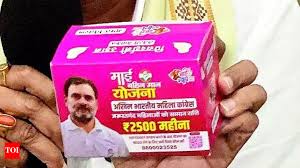
Under the supervision, leadership and instructions of Indian Youth Congress National In-Charge Shri Krishna Allavaru, National President Uday Bhanu Chib, and National Legal Cell Chairman Roopesh Singh Bhadauria, the IYC Legal Cell has launched an all-fronts legal counteroffensive against the coordinated and malicious digital campaign aimed at defaming Rahul Gandhi and mocking women’s dignity, a press release from the Indian Youth Congress said. On July 5, 2025, a doctored image and vulgar video targeting Rahul Gandhi Ji connected to a social welfare campaign to distribute sanitary pads in Bihar was circulated by Ratan Ranjan and further amplified by @MrSinha_, Arun Kosli, Sanjay Nirupam, Adv Sunil Sharma, and Rishi Bagree and multiple other habitual Offenders. The content, deeply offensive, exploited a women-centric issue to spread political misogyny and orchestrated defamation. This is not political expression. This is criminal intent–cloaked in digital propaganda. Legal Action Across Multiple States: In Karnataka, an FIR was registered at High Grounds Police Station, Bengaluru, under Sections 192, 336(4), 354, 294, 196, and 197 of the Bharatiya Nyaya Sanhita, 2023, along with Section 67 of the IT Act, 2000 In Delhi, a complaint has been filed at Mandir Marg Police Station, and a parallel complaint has been submitted via the National Cyber Crime Reporting Portal byDelhi Pradesh Youth Congress Legal Cell Chairman Shri Vivek Punia. In Telangana, under the leadership of State Legal Cell President Adv. Jakkidi Shiva Charan Reddy and Coordinator Adv. Gudur Nikhil Reddy, an FIR has also been registered against the culprits. “BJP has crossed all limits of decency. They’re trying to divert attention from their impending defeat in Bihar by morphing images and insulting women. It’s not just about our leader — it’s about the dignity of every Indian woman. This is unacceptable and legally punishable. This is beyond defamation. This is an outright insult to the dignity of Indian women. The BJP IT cell is spreading filth to mock a welfare initiative. We’ve taken legal action. Let there be no doubt — we will pursue this to its logical end”, IYC Legal Cell Incharge Krishna Allavaru said in his statement. “BJP is a master in manufacturing fake narratives, but this is a new low. Twisting a noble act of public service into obscene propaganda is reprehensible, both politically and morally. The Indian Youth Congress stands firm. We will not allow such degradation to go unpunished”. He even said that Weaponising menstruation to score political points is a misogynistic disgrace. Disinformation against public leaders is not free speech — it’s criminal speech”, IYC National President Shri Uday Bhanu Chib’s statement said. The Indian Youth Congress will pursue every legal remedy under Bharatiya Nyaya Sanhita and Information Technology laws to hold these offenders accountable. There will be consequences – swift, severe, and permanent. And this time, there will be no mercy. “This orchestrated smear campaign is not just about digital hate, it is a criminal conspiracy to degrade women, dehumanise public discourse, and politically vilifya Leader of Opposition. We are responding firmly and lawfully. This is only the beginning. There will be no leniency. Disgusting that The IT cell’s propaganda mocks menstruation and uses it to insult Rahul Gandhi Ji. This isn’t just defamation — this is a crime against every woman. FIRs are being registered. Let the guilty face consequences – legal, harsh, and irreversible”, National Chairman Legal Cell Shri Roopesh Singh Bhadauria said in his statement. Courtesy : TET Note: This news is originally published on https:/theeconomictimes.com/ and is for use by the non-military/non-commercial community, especially those in the human rights sector.
Rahul Gandhi to visit Patna on July 9, will join protests over electoral rolls revision, labour code
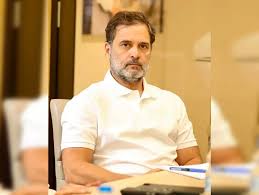
Congress leader Rahul Gandhi will be in Patna on Wednesday for a “chakka jam” against the new labour code and special intensive revision of electoral rolls in Bihar, leaders of the INDIA bloc said. The announcement was made on Monday at a press conference, which was attended by Leader of the Opposition in the assembly Tejashwi Yadav, state Congress president Rajesh Kumar, AICC in charge for Bihar Krishna Allavaru, and leaders of Left parties. Kumar said Gandhi, the leader of the opposition in Lok Sabha, will join the protesters in the state capital, where a march has been proposed to the office of the Election Commission. Yadav said, “We will be with Gandhi in Patna, but the stir will be held across Bihar. We are extending support to the chakka jam against the labour code which is as much an assault on democracy as the revision of electoral rolls.” He also alleged that the special intensive revision, which will be complete in less than a month from now, has so far been mired in “confusion” and accused the EC of trying to help the ruling BJP-led NDA through the exercise. Courtesy : TET Note: This news is originally published on https:/theeconomictimes.com/ and is for use by the non-military/non-commercial community, especially those in the human rights sector.
Gopal Khemka murder: Rahul Gandhi slams Nitish Kumar, BJP over Patna businessman’s murder, calls Bihar ‘India’s crime capital’
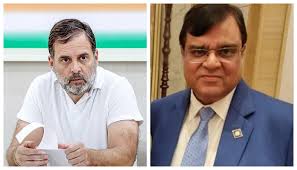
NEW DELHI: Congress leader and leader of opposition Rahul Gandhi on Sunday hit out at the BJP-led NDA government and Bihar chief minister Nitish Kumar over the murder of businessman Gopal Khemka, calling it proof that the state has turned into “India’s crime capital”. In a post on X, Rahul Gandhi said, “The brazen murder of businessman Gopal Khemka in Patna has once again proven – the BJP and Nitish Kumar have together turned Bihar into India’s crime capital. Today, Bihar lives in the shadow of loot, gunfire, and murder. Crime has become the ‘new normal’ here – and the government is utterly ineffective.” Appealing to voters, he added, “Brothers and sisters of Bihar, this injustice can no longer be tolerated. A government that cannot ensure the safety of your children cannot be trusted with your future. Every murder, every robbery, every bullet – is a cry for change. Now is the time for a new Bihar – where there is progress, not fear. This time, your vote is not just to change the government, but to save Bihar.” Businessman Gopal Khemka was shot dead on July 4 around 11 pm near Gandhi Maidan in Patna. Superintendent of Police (SP) Patna, Diksha, confirmed the incident, stating, “On the night of July 4, at around 11 pm, we received information that businessman Gopal Khemka has been shot dead in the south area of the Gandhi Maidan. The crime scene has been secured, and further investigation is underway. One bullet and one shell have been recovered.” Director general of police (DGP) Vinay Kumar said a Special Investigation Team (SIT) has been constituted to probe the case, and will be headed by the SP, City Central. The incident bears resemblance to the 2018 killing of Gopal’s son, Gunjan Khemka, a BJP leader and then state convener of the party’s small industries cell. Gunjan was shot dead at his cotton bandage factory in Hajipur. Following his murder, there was a reported lack of presence by top BJP leadership at the funeral, which left the family disappointed. Ram Khemka, uncle of the deceased, told TOI at the Gulbi Ghat crematorium, “Gunjan used to spend 3–4 hours every day working for the BJP. Yet no senior leader or minister even raised their voice against his killing.” Only a few BJP MLAs, including Nitin Navin, Arun Kumar Sinha, and Sanjeev Chaurasia, were present at the funeral. Though state BJP president Nityanand Rai visited later, the family had by then decided not to take Gunjan’s body to the party office for last rites. Reacting to the killing, RJD leader Mrityunjay Tiwari said, “It is very sad. The government will have to answer as a businessman was killed in the posh area of Gandhi Maidan. The police reached after two hours. It happened near the police headquarters. Tejashwi Yadav has been showing the crime bulletin, but this government is sleeping. Bihar wants to get rid of this government now. It is a Gunda Raj, what else?” Courtesy : TOI Note: This news is originally published on https:/timesofindia.com/ and is for use by the non-military/non-commercial community, especially those in the human rights sector.
FIR filed in Bengaluru for defamatory content on Rahul Gandhi
Bengaluru: High Grounds police have registered an FIR against Ratan Ranjan and others for allegedly publishing obscene and defamatory content targeting leader of the Opposition of Lok Sabha Rahul Gandhi and outraging the modesty of women. According to the complaint, filed by Priyanka Devi, a Congress worker, Ranjan, a resident of Vaishali district in Bihar, posted a digitally altered image of Rahul Gandhi on social media platform X, placing his photo inside a sanitary pad, accompanied by a mocking caption. The post was in reference to a recent women’s health initiative led by the All India Mahila Congress, which involved distribution of sanitary pads to underprivileged women in rural Bihar to raise awareness about menstrual hygiene. The Karnataka unit of the Indian Youth Congress’ legal cell in a statement alleged that the post, far from being satirical, was “lewd, derogatory, and intentionally crafted to outrage the modesty of women,” while also trivialising a health campaign aimed at dismantling menstrual taboos. Police said they will issue notices to the people named in the FIR. Courtesy : TOI Note: This news is originally published on https:/timesofindia.com/ and is for use by the non-military/non-commercial community, especially those in the human rights sector.
Rahul, Tejashwi attack NDA over law and order
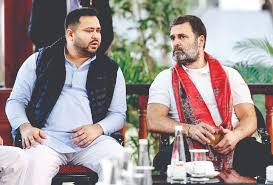
Patna: A day after a prominent businessman, Gopal Khemka, was killed in cold blood just outside his residence in Patna, leader of opposition in Lok Sabha, Rahul Gandhi, launched an attack on the NDA. Taking to social media, Rahul said Bihar lives in the shadow of loot, gunfire, and murder as crime has become the “new normal” here while the govt is ineffective. “The brazen murder of businessman Gopal Khemka in Patna has once again proven the BJP and Nitish Kumar together have turned Bihar into ‘India’s crime capital’,” Rahul posted on X on Sunday. The Congress MP said now is the time for a “new Bihar” where there is no fear, only progress. “This time, the vote is not just to change the govt, but to save Bihar,” he said. Leader of opposition in state assembly, Tejashwi Prasad Yadav, also joined the Congress in castigating the NDA regime, alleging the law and order situation has totally collapsed in the state. “If the poor law and order and corruption in Bihar aren’t making anyone angry in the state, then we must say that the person’s sense of justice and compassion has died,” Tejashwi told the media on Sunday. He, after meeting the grieving family members of Khemka, alleged that the CM is neither talking to the media nor fixing accountability. Courtesy : TOI Note: This news is originally published on https:/timesofindia.com/ and is for use by the non-military/non-commercial community, especially those in the human rights sector.
Invisible no more: One Dalit woman’s reckoning with India
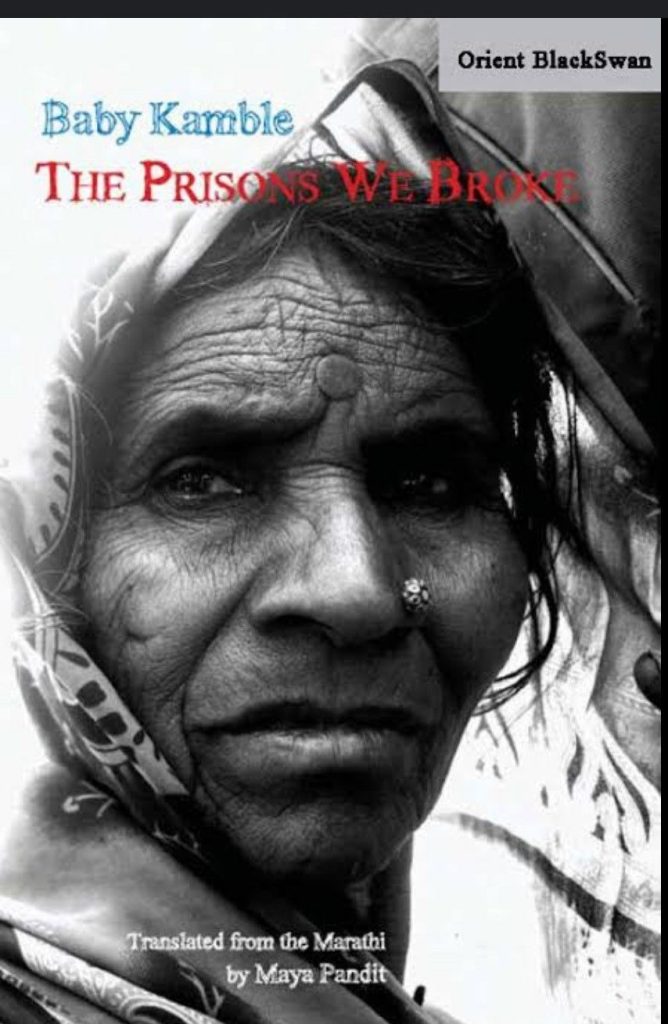
As India’s Prime Minister Narendra Modi concluded his first state visit to Trinidad and Tobago last week (July 3-4), Bookshelf turns its attention to the women whose lives remain far from the glare of diplomatic ceremony—specifically, one Dalit woman whose literary voice has, at last, been restored to India’s bookshelf. In a republic where women are both talismans and casualties of development, Babytai Kamble’s memoir The Prisons We Broke (1986) remains a visceral, necessary reckoning. India is unmistakably global: a nuclear and space power with the world’s fifth-largest economy, a rising voice in G20 diplomacy, and a nation whose digital reach now stretches from the mangrove swamps of the Sundarbans to the arid edges of Rajasthan, from the Himalayan foothills to the beaches of Kanyakumari. Its cities—Bengaluru, Hyderabad, Gurugram—are latticed with flyovers, metro rails, and IT campuses. Its marbled shopping centres are crammed with international brands. Undersea cables thread the coasts of Kerala and Tamil Nadu, feeding the world’s data demand. Expressways cleave through farmland, connecting state capitals to Special Economic Zones. And yet: less than ten per cent of Indians own 77 per cent of the nation’s wealth (Oxfam India, 2023). In 2025, 20 protests occur daily. Seven states—including Jammu and Kashmir, Punjab, Nagaland, Manipur, Assam, Mizoram, and Tripura—signal separatist aspirations. And for the vast majority of India’s women, class, caste, and gender remain overlapping restraints. The tensions that grip India—economic inequality, regional unrest, and daily dissent—are mirrored most acutely in the lives of its women, especially those at the bottom of the caste ladder. To understand Babytai Kamble’s voice, one must understand caste. Though outlawed by India’s 1950 Constitution, caste remains the invisible architecture of Indian society. There are four traditional varnas—Brahmins (priests), Kshatriyas (warriors), Vaishyas (traders), and Shudras (labourers)—but Dalits, formerly called “Untouchables”, fall outside this system altogether. They are often assigned the most stigmatised and dangerous forms of labour and are subject to violent discrimination and social exclusion. India has over 600,000 villages. While its megacities—Mumbai, Delhi, Chennai—are connected to global circuits of capital, fashion, and information, its villages often lack running water, functioning schools, or electricity. The worlds of village and city rarely converge. In the villages, caste still determines one’s job, marriage prospects, and even access to drinking water. Babytai Kamble was born in 1929 in Maharashtra to a Dalit family of the Mahar caste. To understand the force of her life and work, one must understand that Dalits—the so-called “broken people”—have historically been barred from temples, schools, wells, and even the shadow of upper-caste Hindus. They were condemned to “polluting” work: leather tanning, waste removal, corpse disposal. Even today, Dalits face systemic discrimination in education, employment, and justice. Dalit women endure a double marginalisation. They are often victims of caste-based sexual violence, denied political voice, and excluded even from feminist discourse. The 2022 UN Women India report documented that Dalit women suffer higher rates of illiteracy, child marriage, and domestic abuse. Their lives remain largely unrecorded. Kamble broke that silence with her memoir, Jina Amucha (Our Life)/ Translated in English as The Prisons We Broke by Maya Pandit and published by Orient Blackswan (2008), it was among the first autobiographies by a Dalit woman. Kamble wrote not in English or Sanskritised Hindi, but in raw, spoken Marathi. Her story of growing up in Phaltan, a village where menstruating women were sent to cow sheds and Dalits to the margins, is told in searing detail: “We were surrounded by dirt and squalor. The stench of dead animals filled the air. The Brahmins and Marathas walked past us holding their noses, their heads high, like we were invisible.” Kamble describes watching her mother sweep dung from upper-caste homes before being handed stale bread for wages. When her father, a labourer, fell ill, no Brahmin doctor would treat him. The women in her mohalla ( neighbourhood) worked from before dawn until dusk, and were often mocked or assaulted by the men whose homes they scrubbed. Kamble was a follower of B R Ambedkar, the Dalit lawyer and economist who drafted India’s Constitution and converted to Buddhism, rejecting Hindu casteism. Kamble followed him, both spiritually and intellectually. Education, for her, was a form of resistance. She wrote by night, after tending to her children and chores, her fingers aching from the day’s work. “We had no lamp oil. I wrote with the firelight from our chulha (mud stove). I wrote because I had to remember. If I didn’t, who would?” Kamble’s work remained unpublished for decades. She was a school dropout, a woman, a Dalit—three strikes in India’s literary world. But by the 1980s, Marathi Dalit literature had begun to find voice, and Kamble’s work was passed from hand to hand, copied by women who recognised their lives in it. In The Prisons We Broke, Kamble writes: “We were women twice bound. First by men, then by caste. Our wombs birthed labourers for the world that despised us.” This was no lament. It was a ledger of what had been done and by whom. If Kamble’s childhood was spent watching from outside the classroom door, today’s middle- and upper-class Indian girls walk into air-conditioned international schools, toggling between Instagram and exam prep. The gulf is not merely of wealth, but of inherited dignity. Dalit girls still face the possibility of rape on the walk to school. In a 2020 Human Rights Watch report, Dalit students were routinely denied entry to temples, made to clean toilets at school, and barred from dining halls. Meanwhile, India’s privileged women—especially urban professionals—inhabit a different republic. They wear shorts in nightclubs, brunch in rose gardens, and glide through traffic in Pradas and Bentleys along highways and byways built under the ocean. They have destination weddings in Europe, spend weekends in Dubai, summers in Switzerland, and have access to the best education in India and abroad at Ivy League universities. In the villages, privileged women of India will never see that girls their age still walk barefoot to government schools without functioning
Dalit pioneer who stood for equalityJagjivan Ram (April 5, 1908-July 6, 1986)
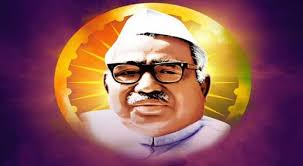
IN the mid-20th century, India’s young democracy found one of its most steadfast champions in Jagjivan Ram-affectionately called Babuji. Born on April 5 at Chandwa village, near Arrah, Bihar, into a Dalit family, he attended high school at Arrah Town School, where he got the opportunity to interact with Madan Mohan Malviya. Young Jagjivan Ram confronted caste discrimination early in life. His defiant act of smashing an ‘untouchables’ water pitcher at his school sparked the end of segregated drinking water there — an early sign of his lifelong fight for equality. In the face of hardship, he achieved academic success and was awarded the Birla scholarship to pursue studies at Banaras Hindu University. At BHU, he mobilised members of the Scheduled Castes to stand up against social discrimination. As a Dalit student, he faced humiliation — he was refused meals in the hostel, local barbers declined to cut his hair, and only occasionally would a Dalit barber come for him. These experiences ultimately led him to leave BHU and complete his graduation at Calcutta University. The discrimination he had encountered at BHU pushed him towards atheism. In 1931, he earned a BSc degree from Calcutta University, where he continued to hold conferences highlighting discrimination and took part in Mahatma Gandhi’s anti-untouchability movement. Article_Author Navya Singh Courtesy : The Tribune Note: This news is originally published on https:/thetribune.com/ and is for use by the non-military/non-commercial community, especially those in the human rights sector.