
This killer stalking Kerala attacks through the nose

On Sept 1, two patients — a threemonth-old baby and a 52-year-old woman — died within hours of each other at Kozhikode Govt Medical College. Doctors confirmed that both were being treated for primary amoebic meningoencephalitis (PAM), an infection caused by the free-living parasite Naegleria fowleri. By mid-Sept, the toll had risen to 19, with 69 suspected or confirmed cases across Kerala. Victims ranged from infants to middle-aged adults. The scale is extraordinary: globally, researchers have identified only 488 documented infections since 1962. Rare And RuthlessPAM is one of the deadliest infections known to science. The parasite lives in warm, stagnant freshwater — ponds, lakes, unchlorinated swimming pools, poorly maintained tanks — and can infect people only when contaminated water is forced up the nose. From there, it travels along the olfactory nerve, burrows into the brain and begins dissolving tissue, unleashing catastrophic inflammation. Symptoms can begin in one to 12 days (typically 3-7 days): fever, headache, nausea and vomiting. Within days, they give way to stiff neck, confusion, seizures, hallucinations and coma. Across six decades, fewer than 20 survivors are documented globally, most with lasting neurological damage. The fatality rate is 97%. There is no vaccine or proven cure. Drugs such as Amphotericin B, Azoles, or Miltefosine are used in combination, sometimes with induced hypothermia, but success is rare. Crucially, PAM does not spread person to person and is not caused by drinking contaminated water; infection occurs via the nose Why Kerala? Worldwide, PAM tends to appear as sporadic, one-off cases, usually tied to a single contaminated reservoir or swimming pool. Kerala’s outbreak is different. Cases have surfaced across Thiruvananthapuram, Kozhikode, Thrissur and Malappuram, with no single identified source. The state’s position as a public health bellwether makes the outbreak more unsettling. Kerala has often been the first to detect emerging threats: India’s first Nipah outbreak in 2018, its early Covid-19 cases in 2020 (detected in returning medical students from Wuhan), and Zika virus in 2021. The arrival of a rare, near-uniformly fatal amoeba on this list has alarmed both doctors and the public. “Eight people died in 15 days. What is the protocol? What are people supposed to do? Even a baby was infected — was that child in a swimming pool?” Opposition leader V D Satheesan asked in the state assembly this month. Protests have broken out in several districts, with residents demanding that wells and public taps be tested. Doctors caution that Kerala’s higher numbers also reflect better detection. “The symptoms — headache, fever and vomiting — are similar to bacterial and viral brain infections. If you don’t suspect amoeba, you’ll miss it completely,” said Dr Rajeev Jayadevan, convener of the Indian Medical Association’s research cell. How Kerala Is Responding Amid mounting panic, Kerala has launched ‘Jalamanu Jeevan (Water is Life)’, a statewide chlorination drive covering wells, pools, etc. Schools have been told to disinfect storage units regularly, while panchayats and municipalities are checking public taps and wells. Hospitals, particularly in Kozhikode, Thrissur and Malappuram, are on high alert. Doctors have been instructed to treat any meningitis-like illness with a history of water exposure as potential PAM. Rapid-response teams have been sent to test community water sources, though no contaminated reservoir has been found yet. Drugs, including Miltefosine, have been stocked. But officials concede that treatment rarely saves lives. Survivors worldwide are exceptional, often treated with a cocktail of antifungals, antibiotics and cooling therapies. That is why prevention — keeping contaminated water out of the nose — remains the focus. Lessons For The World A 2025 review in the Journal of Infection and Public Health, which analysed 488 cases across 39 countries since the disease was first described, shows how there is little room for error — and what others can learn as climate change reshapes risk. The parasite is not the same everywhere: N. fowleri has multiple genetic strains; genotypes II and III predominate in Asia, North America and Europe. Clean water is the strongest defence: Free chlorine ≥ 2.0 mg/L in storage tanks/ pools can eliminate the amoeba; countries like Australia monitor disinfection as a routine public health practice. Surveillance changes the numbers: Strong labs and routine testing mean more detection (not necessarily more disease). Country tallies include India (26), Mexico (33), Czech Republic (17), New Zealand (9), Nigeria (4), Venezuela (7). Everyday habits can raise or reduce risk: In Pakistan, first cases were reported in Karachi in 2008; >140 cases have since been documented. Many were linked to nasal rinsing during ablution or showering, not swimming. A similar ablution-linked case has also been confirmed in the US. Courtesy : TOI Note: This news is originally published on https:/timesofindia.com/bha and is used purely for non-profit/non-commercial purposes, especially human rights
The Aland files: Rahul Gandhi flags ‘mass targeted deletions’ of voters; accuses EC of destroying democracy
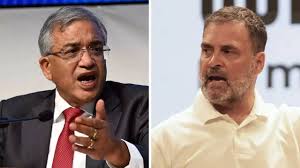
NEW DELHI: Congress leader Rahul Gandhi on Thursday presented evidence on alleged “vote chori”, accusing Chief Election Commissioner (CEC) Gyanesh Kumar of shielding those he claimed had “destroyed Indian democracy.” Speaking at a press conference at the Indira Bhawan Auditorium, the leader of opposition cited Aland constituency in Karnataka, where he alleged that a “targeted” attempt was made to delete 6,018 votes. He claimed that 6,018 applications were filed impersonating voters and this filing was done automatically using mobile numbers from outside Karnataka. Rahul Gandhi also made a claim about CEC Gyanesh Kumar. “CEC is protecting the people who have destroyed Indian democracy,” Gandhi added. “This I am saying with solid proof,” the leader of opposition said. — PTI_News (@PTI_News) The Congress MP said, “Aland is a constituency in Karnataka. Somebody tried to delete 6018 votes. We don’t know the total number of votes that were deleted in Aland in the 2023 election. They are much higher than 6,018, but somebody got caught deleting those 6018 votes, and it was caught by coincidence. What happened was that the booth-level officer there noted that her uncle’s vote was deleted, so she checked who deleted her uncle’s vote, and she found that it was a neighbour who deleted the vote. She asked her neighbour, but they said I did not delete any vote. Neither the person deleting the vote nor the person whose vote was deleted knew. Some other force hijacked the process and deleted the vote…” Rahul Gandhi claimed that in Karnataka’s Aland assembly constituency, 6,018 deletion applications were filed by impersonators to target Congress voters. This deletion of votes was done in “centralised manner” using software and not through individuals, the leader of opposition in Lok Sabha further said, adding that “targeted deletion” of votes was done in Congress stronghold through planned action. Gandhi also said that the Karnataka CID has started investigation seeking details from Election Commission on deletions done, but EC is not providing details. He urged, “Gyanesh Kumar ji, do your job, and you have taken an oath. Give the details to the Karnataka CID.” — ANI (@ANI) This press conference came 40 days after Rahul raised questions on the electoral outcome of Bangalore Central Lok Sabha seat, claiming that there was “chori” (stealing) of one lakh votes in Mahadevapura assembly seat during the 2024 polls. He had then claimed that the Election Commission was colluding with the BJP, which he called a “crime” against the Constitution. What about ‘Hydrogen bomb’? Speaking about the so-called “hydrogen bomb” of revelations, Rahul Gandhi said, “We will present the hydrogen bomb.” He added, “I told my team I would not step on stage without 100% proof.” “We will take two to three months to finish these presentations, and there will be no doubt that elections are being stolen across states in India,” he said. Earlier, addressing the concluding event of his Voter Adhikar Yatra on September 1, Gandhi had said his party will soon come out with a “hydrogen bomb” of revelations about “vote chori” and after that Prime Minister Narendra Modi will not be able to show his face to the country. Last month, Gandhi, citing data from the 2024 Lok Sabha polls, had claimed that over one lakh votes were “stolen” through manipulation in Mahadevapura assembly segment in Karnataka, and asserted that “vote chori” is an “atom bomb on our democracy”. Courtesy : TOI Note: This news is originally published on https:/timesofindia.com/bha and is used purely for non-profit/non-commercial purposes, especially human rights
Tejashwi Yadav’s Bihar Adhikar Yatra: Consolidating Rahul Gandhi’s gains or establishing pre-eminence in alliance?

NEW DELHI: RJD leader and former Bihar deputy chief minister Tejashwi Yadav on Tuesday launched ‘Bihar Adhikar Yatra’ from Jehanabad to raise pitch against Nitish Kumar-led NDA government over issues of unemployment and increasing crime incidents among others ahead of the upcoming assembly elections. Interestingly, Tejashwi’s solo yatra comes close on the heels of the much-hyped “Voter Adhikaar Yatra” which included all Mahagathbandhan leaders and was led by Congress leader Rahul Gandhi. Tejashwi was part of the Voter Adhikaar Yatra, but the limelight was hogged by Rahul – who has been leading a campaign against alleged vote theft across the country accusing the Election Commission of helping the BJP. The RJD, which is going all out to dethrone Nitish Kumar led NDA government in the state, asserted that Tejasjwi’s yatra will cover districts which were left out in the ‘Voter Adhikaar Yatra’. “After the ‘Voter Adhikar Yatra’, some districts were left out. All our workers and leaders from these districts demanded that these areas should be covered, so Tejashwi ji took the decision to take out this yatra respecting their feelings,” RJD MP Sanjay Yadav said yesterday when asked about the launch of the yatra. However, the fact that this new yatra comes amid an ongoing debate over Mahagathbandhan’s CM face and also inconclusive seat-sharing talks makes one wonder if the RJD leader has other objectives in mind also. Recently, the RJD leader had surprised all when during a rally in Muzaffarpur he pronounced: “And this time, Tejashwi will contest all 243 seats, whether it is Muzaffarpur, Kanti or Bochahan.” Tejashwi’s remarks, more than anything, was perhaps an attempt to stamp his pre-eminence as the leader of the opposition alliance across the state. However, Tejashwi later explained that there is “no confusion” regarding the chief ministerial face in the opposition bloc and the name will be announced at the “right time.” So, the question is why was such an assertion needed in the first place? After all, RJD is the largest party in the alliance and in the last elections had won 75 seats, which was the highest as it was one more than BJP’s tally. However, as the opposition alliance gears up for the assembly elections, the Congress has refused to openly endorse Tejashwi as Mahagathbandhan’s CM face. During the “Voter Adhikaar Yatra”, when Rahul Gandhi was pointedly asked why Congress was not endorsing Tejashwi as the CM face, he evaded a direct reply and instead spoke of a good understanding between the partners. This, despite the fact, that Tejashwi had earlier openly announced that Rahul would become the Prime Minister once the opposition won the next Lok Sabha elections. When asked why the Congress was not backing Tejashwi Yadav as the chief ministerial face in Bihar, Rahul Gandhi said: “A very strong partnership had been forged. All the parties (in the bloc) are working in sync. There’s no tension, and there’s mutual respect to help each other as we are ideologically and politically aligned. The result will be good. But the vote theft needs to be stopped.” Rahul’s reply was clearly a calculated and clever deflection of announcing party’s stand on the leadership issue in Bihar. The Congress leader, riding high on his successful “vote chori” campaign, was perhaps not willing to lose the bargaining chip so easily. The seat-sharing talks are underway and all parties are posturing for a higher share. In the 2020 assembly elections, the Rashtriya Janata Dal had contested 144 seats and won 75. The Congress had the worst strike rate as it contested 70 seats but won only 19. In fact, the Left parties had performed very well with the CPI-ML winning 12 out of 19, CPM 2 out of 4 and CPI 2 out of 6. This time around more parties have joined the opposition alliance and hence seat-sharing will not be an easy exercise. Already there are reports of pressure on both the RJD and the Congress to reduce their share so that other parties can be accommodated. While the Congress in Bihar is in no position to question his leadership within the alliance, they can pile pressure on the RJD during seat sharing talks. This, perhaps, explains why RJD and its leader Tejashwi have embarked on a campaign to ensure their pre-eminence in the alliance is not questioned. Courtesy : TOI Note: This news is originally published on https:/timesofindia.com/bha and is used purely for non-profit/non-commercial purposes, especially human rights
‘Mobiles, softwares used’: How Karnataka’s Aland saw massive voter deletions – Rahul Gandhi explains with ‘proof’
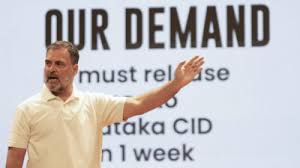
NEW DELHI: Leader of opposition in Lok Sabha Rahul Gandhi presented five evidence of mass deletions in Karnataka’s Aland assembly constituency held by Congress MLA BR Patil. He claimed before the 2023 Karnataka assembly election ‘someone’ tried to delete as many as “6,018 votes.” He added, “nobody knows how many total votes were deleted…someone got caught while trying to delete these votes by coincidence.” He said a booth-level officer discovered her uncle’s vote had been deleted. Upon investigating, she found a neighbour’s name was falsely linked to the deletion- yet neither party was aware of the action, suggesting an external force had hijacked the process. “As luck would have it, they got caught,” he said. Gandhi claimed these 6,018 applications were filed impersonating voters – applications that the supposed applicants never actually submitted. “The filing was done automatically using software…Mobile numbers from outside Karnataka, from different states, were used to delete votes in Aland, specifically targeting Congress voters,” he alleged. Emphasising the political nature of the deletions, he added: “This wasn’t random. These deletions specifically targeted booths where the Congress party was winning.” The Congress MP presented five examples, Evidence number 1: Curious case of Godabai Rahul Gandhi cited a specific case involving a woman named Godabai, whose name was used in a failed attempt to delete 12 voters from the electoral rolls. “Someone created fake logins and attempted to delete voters. Thankfully, this attempt was stopped – but Godabai, of course, had no idea,” he said. He played a clip by the woman Godabai, where she can be heard saying that she has “no idea about anything related to deletion of voters.” According to Gandhi, the operation involved the use of mobile phone numbers from outside Karnataka, raising serious questions about the origin and intent behind the deletions. “These numbers are from different states,” he said, alleging that the system was being misused in a coordinated manner to disrupt the electoral process, “this leads to key questions.” To this Gandhi posed some pin pointed question, listing them out: Whose numbers are these? How were they operated? Where were they operated from? Who generated the OTPs to disturb the process? Gandhi suggested that the deletion process was neither isolated nor accidental but a part of a broader, tech-enabled operation aimed at disenfranchising targeted voters. Evidence number 2: 12 deletions in 14 minutes – and no one knew In another instance, Rahul pointed to a man named Suryakant, who, according to records presented by him, allegedly submitted 12 voter deletion forms in just 14 minutes. One of the voters whose names were removed in this rapid deletion spree was Babita Chaudhary. Both Suryakant and Babita were present with Gandhi on stage, alongside Gandhi, while he was addressing the media. “Babita’s vote was deleted by Suryakant, or so the system says. But here’s the catch – neither Suryakant nor Babita knew anything about it,” Gandhi revealed. Gandhi used the moment to underscore how voter data was being manipulated This, he argued, was further evidence that the deletions were not just bureaucratic errors or isolated incidents but part of a deliberate, technology-driven mechanism designed to interfere with the electoral process, without the knowledge or consent of the individuals involved – specifically targeting voters in Congress-favoured areas. Evidence number 3: 2 forms in 36 seconds – filed at 4:07 am Gandhi further presented the case of Nagaraj, who, according to records, submitted two voter deletion applications in just 36 seconds. “Please try filling these forms yourself and see how long it takes you. I ask the youth of India – try it. Try filling two forms in 36 seconds. You’ll see the answer to this question,” Gandhi said, pointing to the improbability of such rapid submissions without automated tools. He further highlighted the unusual timing of the activity. “Notice also the time this gentleman filled the form. For some reason, he got up at 4:07 in the morning and suddenly filled two forms in 38 seconds.” After presenting the evidence of alleged vote chori, Congress leader went on to make two big assertions: Claim 1: Centralised, software-driven operation – not individual action Rahul Gandhi further asserted that the process was centrally coordinated and executed using software, not by individual volunteers or booth-level workers. “This is being done not by individuals but through the use of software,” Gandhi said, pointing to a pattern in the serial numbers of deleted voters. “Look at the serial numbers: serial number 1 means this is the first name in the booth. So a software is picking up the first name in the booth and using it to delete voters.” He claimed that an automated program was run where the first voter listed in each booth was falsely shown as the applicant requesting deletions. These applications were then submitted using mobile numbers from outside Karnataka, indicating cross-state coordination. “We are pretty certain this was done in a centralized manner, and it was done at scale. This was not done at a worker level. This was done at a call centre level,” Gandhi alleged, suggesting a structured, high-volume effort to influence electoral rolls in specific regions. Claim 2: Targeted Deletions in Congress-Stronghold Booths He also alleged that the voter deletions were not random, but strategically targeted at booths where the Congress party had strong support. “The top 10 booths with maximum deletions were Congress strongholds,” he said, adding that Congress had won 8 out of those 10 booths in the 2018 elections. Calling it a planned operation, not a statistical anomaly, Gandhi claimed that the pattern of deletions clearly showed political intent. “This was not a coincidence; this was a planned operation,” he said. Courtesy : TOI Note: This news is originally published on https:/timesofindia.com/bha and is used purely for non-profit/non-commercial purposes, especially human rights
Pro-Khalistan group SFJ threatens Punjab Congress leaders for honouring Rahul Gandhi with siropa
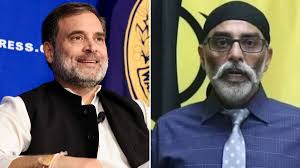
CHANDIGARH: The banned terrorist group Sikhs for Justice (SFJ) has issued direct threats to Punjab Congress President Amarinder Singh Raja Warring and Amritsar MP Gurjit Singh Aujla for facilitating the presentation of a siropa (robe of honour) to Rahul Gandhi during his recent visit to Gurdwara Baba Budha Sahib. In a press release received Wednesday morning, SFJ’s legal counsel Gurpatwant Singh Pannun said Warring and Aujla would be “targets of pro-Khalistan Sikhs” for honouring a member of the Gandhi family, which the group holds responsible for the 1984 anti-Sikh riots. He described them as “dalal (agent) politicians” acting on behalf of a party SFJ accuses of complicity in the Sikh genocide. The siropa was presented to Rahul Gandhi by the management of Gurdwara Baba Budha Sahib during his visit to flood-affected areas in Punjab on Monday. The gesture has drawn sharp criticism from several Sikh organisations, including the Shiromani Gurdwara Parbandhak Committee (SGPC), which has launched an inquiry. The SGPC condemned the act, saying that honouring a Congress leader from the Gandhi family is “absolutely unacceptable under any circumstances.” Warring and Aujla were among the Congress leaders who accompanied Gandhi to the gurdwara. The incident, already politically sensitive, has now escalated following SFJ’s threats. In the same release, Pannun further claimed that SFJ activists had painted pro-Khalistan slogans on the Amritsar-Haridwar train, along with the message: “From Ayodhya to Haridwar, Diwali 2025 will be blacked out.” Courtesy : TOI Note: This news is originally published on https:/timesofindia.com/bha and is used purely for non-profit/non-commercial purposes, especially human rights
After Rahul yatra, Congress & RJD assess options over Bihar CM face

Patna: Until the middle of last month, it was RJD leader Tejashwi Prasad Yadav who appeared to be dictating terms to his INDIA bloc allies, holding frequent conferences at his official residence and announcing his strategies. But since Aug 17, when leader of opposition in the Lok Sabha Rahul Gandhi launched the Voter Adhikar Yatra, it is the Congress that seems to be steering the narrative.The fortnight-long yatra passed through 25 of Bihar’s 38 districts and drew impressive crowds, particularly in rural areas. According to informed sources, Congress sensed a surge of public support during the march and is now keen to test its political impact. That public response has created a new dynamic for Tejashwi, who was appointed chairman of the INDIA bloc’s coordination committee for the Bihar assembly polls at a meeting in Patna on April 17. Despite the role, he still awaits formal projection as the opposition’s chief ministerial face. “Tejashwiji ke haath me hi chunav abhiyan toh phir bach kya jata hai (If Tejashwi is shouldered with the responsibility to launch the election campaign, then what’s left)?” said a senior state Congress leader, requesting anonymity. While allies such as the Left parties and the Vikassheel Insaan Party (VIP) have openly endorsed him as CM face, Congress has carefully avoided making a similar commitment. Rahul, who led the yatra supported by all INDIA bloc partners, party media in-charge Pawan Khera, and Bihar in-charge Krishna Allavaru have all sidestepped the question in press briefings. This studied silence has begun to irritate the RJD, prompting its leaders to assert Tejashwi’s claim on their own. During a media interaction in Araria last month, Rahul deftly evaded the CM question, instead highlighting the unity among opposition parties on the “vote theft” campaign. Later, Allavaru said, “The people of Bihar will choose their leader,” while Khera too avoided a direct answer, adding only that “they (RJD and Congress) enjoy a different kind of relationship.” The RJD’s annoyance is increasingly evident. On Tuesday, the party’s chief spokesperson Shakti Singh Yadav declared, “Tejashwiji happens to be the coordination committee chairman, he is the opposition’s CM face and will become the CM after assembly polls. There is no doubt about it.” He reminded that Tejashwi was the opposition’s CM face in 2020 as well and came close to forming a govt. Congress insiders, however, claim Tejashwi himself agreed at the INDIA bloc’s first meeting, when the coordination committee was set up, that the decision on the opposition’s face would be taken jointly by all allies at the appropriate time. Downplaying talk of friction, state Congress media in-charge Rajesh Rathore said, “The issue of who will be the CM is not to be decided by one party. It will be decided when all the alliance members sit together.” He added that the yatra had boosted Congress morale, saying, “The masses came to the streets in large numbers and reacted to our slogans. We benefited a lot from the yatra.” The BJP, meanwhile, has seized on the discord. Party spokesperson Prem Ranjan Patel said, “Tejashwi projected Rahul as the PM face, but the latter didn’t reciprocate in a similar fashion and declare him as the CM face. That means Rahul has no trust in his friend.” JD(U) also mocked the situation. “Matlab gathbandhan me gaanth hai,” said JD(U) spokesperson Neeraj Kumar. Courtesy : TOI Note: This news is originally published on https:/timesofindia.com/bha and is used purely for non-profit/non-commercial purposes, especially human rights
1st nat’l leader to seek Punjab flood relief, Rahul’s delayed visit sparks mixed reactions
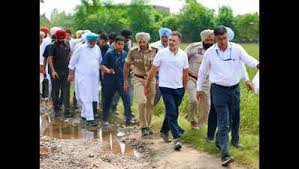
Chandigarh: Despite being among the first national leaders to voice concern over the devastating floods in Punjab, the visit of former Congress president and Lok Sabha leader of the opposition Rahul Gandhi, which was cut short, appears to have had limited political impact. Instead, it has sparked questions over timing, effectiveness, and whether it achieved the desired political resonance. The recent floods, described as Punjab’s worst in 40 years, devastated nearly 2,300 villages across all districts. More than 4 lakh people were affected, 55 lives lost in 14 districts, and 1.72 lakh hectares of farmland in 18 districts damaged, alongside extensive losses to homes, livestock, and infrastructure. There is public anger against the Aam Aadmi Party govt in Punjab over alleged mismanagement, while dissatisfaction has grown with the BJP-led central govt for announcing only a Rs 1,600-crore relief package against estimated losses exceeding Rs 20,000 crore. Against this backdrop, Gandhi’s visit appeared unable to harness prevailing public sentiment. His tour came a week after Prime Minister Narendra Modi’s Sept 9 visit to review the damage. Since the first week of Sept, central BJP leaders have been frequenting Punjab, while strongly criticising AAP govt’s handling of the crisis. Although flood-affected families met him during his visit, Gandhi avoided making direct attacks on either the state or central govt, both of which continue to face negative public opinion over their management of the disaster. Party insiders acknowledged the Punjab Congress leadership, which had been sharply critical of the AAP govt, expected Rahul’s presence to energise them politically. Gandhi was the first national leader to demand a relief package on Sept 2, but explained his delay in visiting Punjab by citing his engagement with the Voter Adhikar Yatra in Bihar, which concluded on Sept 1. Thereafter, he travelled abroad. His foreign visit drew criticism from BJP and AAP leaders, who accused him of shirking responsibility. A Punjab Congress functionary, who did not wish to be named, defended Gandhi’s timing, arguing he chose to visit later so as not to disrupt relief operations. Drawing a contrast with the PM, the functionary remarked: “Unlike PM Modi, who did a photo-op, Rahul Gandhi went on the ground, met affected people, and took details that he will raise at the right platform.” On social media, however, criticism persisted. Tractor2twitr_P, a farmer-support page, asked: “Can anyone explain a single benefit of LoP Rahul Gandhi visiting a flood-affected state one month late? LoP was needed when state and central govts failed rescue ops and when Delhi threw peanuts for rehab. But he was nowhere to be found.” Prof Mohammed Khalid, a former faculty member of Panjab University’s political science depatment, said Gandhi was “a bit late” in visiting Punjab and the Congress failed to gain politically from the exercise. He noted the visit might have gone largely unnoticed had Gandhi not been stopped from visiting areas across the Ravi. “He could have tapped into public anger had he visited a bit sooner,” Khalid observed, adding that all parties appeared more intent on scoring political points than on helping those affected. Gandhi’s plan to visit Toor village, across the Ravi river, had to be cancelled. He reached Makora Pattan for onward travel by boat but, according to the party, could not proceed after Congress president Mallikarjun Kharge received a call from Union home minister Amit Shah advising against crossing the flooded river for safety reasons. Prof Ashutosh Kumar, who too is from the political science department of Panjab University and has an expertise in Indian politics, especially Punjab, took a more measured view. He argued that visits by senior leaders, whether PM Modi or Gandhi, always had political value. He recalled Gandhi’s previous visits to the Golden Temple helped soften Sikh community attitudes toward the Gandhi family. Courtesy : TOI Note: This news is originally published on https:/timesofindia.com/bha and is used purely for non-profit/non-commercial purposes, especially human rights
6 days after PM’s tour, Rahul visits flood-hit Punjab
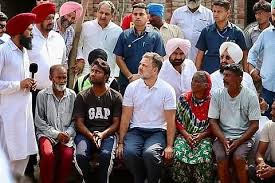
AMRITSAR/GURDASPUR: Congress MP Rahul Gandhi toured several flood-ravaged villages in Amritsar and Gurdaspur districts Monday. His visit came six days after PM Modi dropped by flood-affected areas of Punjab. Rahul chose to keep the media at bay throughout. He later posted on X: “The floods have caused severe devastation in Punjab. I met villagers in Ghonewal where homes are ruined, fields destroyed and lives shattered. Both state & central govts must ensure relief packages and compensation reach victims without delay. In this tragedy, I stand with every affected family. I will amplify their voices and ensure they receive every possible assistance.” Rahul echoed the sentiment of state Congress netas that central relief package of Rs 1,600 crore was far too meagre when compared to the scale of the devastation. State Congress leadership, meanwhile, alleged that Rahul was barred from visiting certain areas under the guise of “security concerns”. PCC chief Amarinder Singh Raja Warring alleged that local police and NDRF officials stopped Rahul from visiting Toor village across Ravi river. Rahul reached Makora Pattan village, around 85km from Amritsar, and was about to set off by boat for the next stop on his itinerary, the marooned Toor. However, he could not, as Congress president Mallikarjun Kharge received a phone call from Union home minister Amit Shah, requesting that Rahul should avoid crossing the flooded river for safety concerns, Warring said. After landing at Amritsar airport Monday morning, Rahul headed for Gurdwara Baba Budha Sahib, where he offered prayers. Courtesy : TOI Note: This news is originally published on https:/timesofindia.com/bha and is used purely for non-profit/non-commercial purposes, especially human rights
‘Good he is going’: Rahul Gandhi welcomes PM Modi’s upcoming Manipur visit; brings focus back on ‘vote chori’
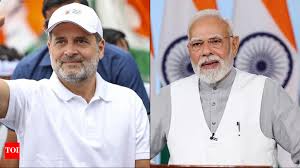
NEW DELHI: Congress leader Rahul Gandhi on Friday welcomed Prime Minister Narendra Modi’s upcoming visit to Manipur. However, he added that the larger concern in the country was “vote chori” which still needs to be addressed. Speaking to reporters, Gandhi said: “The issue in Manipur has been ongoing for a long time. It is good that he is going there now. But the main issue in the country is that of ‘Vote Chori’.” The leader of opposition alleged that the election mandates in Haryana and Maharashtra had been “stolen,” adding that people across the country were calling the prime minister a “vote chor.” — ANI (@ANI) Prime Minister Modi is scheduled to visit both Mizoram and Manipur on September 13. This will be his first trip to Manipur since ethnic clashes broke out between the Kuki and Meitei communities in May 2023. The violence, which has claimed more than 260 lives, displaced thousands of families, and destroyed homes and businesses. It led to the imposition of President’s Rule in the state in February this year following the resignation of chief minister N Biren Singh. According to officials, PM Modi will inaugurate and launch development projects worth Rs 8,500 crore during the visit. His itinerary includes programmes in Churachandpur and Imphal, symbolic centres of the Kuki-Zo and Meitei communities. He is expected to meet displaced families and announce rehabilitation packages. Analysts say the dual engagement is being seen as an attempt to strike a balance between the two communities and signal neutrality in the ongoing humanitarian and political crisis. The prime minister is also scheduled to address a gathering at Kangla Fort in Imphal. His visit comes amid continuing uncertainty in the state, where thousands of displaced families are still struggling to rebuild their lives. The Mizoram Chief Minister’s Office confirmed on X the Prime Minister’s visit. It said the state was “fully prepared to receive the Hon’ble Prime Minister” and that the people were “eagerly looking forward” to it. Courtesy : TOI Note: This news is originally published on https:/timesofindia.com/bha and is used purely for non-profit/non-commercial purposes, especially human rights
Bajwa condemns AAP govt for ‘obstructing’ Rahul Gandhi’s visit to flood-hit villages
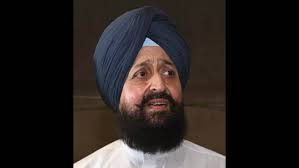
Amritsar: Leader of opposition in Punjab assembly Partap Singh Bajwa on Monday condemned the Aam Aadmi Party (AAP) govt for “deliberately obstructing” the Congress MP and leader of opposition in Lok Sabha, Rahul Gandhi, from visiting the flood-ravaged villages along the Ravi river. In a statement issued here on Monday, Bajwa termed the move as “shameful, insensitive, and politically motivated”, accusing the Bhagwant Mann-led AAP govt of hiding behind flimsy security excuses. “This was not about security, it was a political decision aimed at avoiding accountability. If the govt claims it cannot protect a senior leader like Rahul Gandhi, how will it protect ordinary Punjabis?” Bajwa questioned. Despite these obstructions, Rahul Gandhi stood firm in solidarity with the flood-hit people of Punjab. He reached Amritsar and personally visited Ghonewal village in Ajnala, one of the worst-affected areas, he said. The Qadian legislator slammed both AAP and BJP leaders for allegedly neglecting the border villages. “These are our people, our brothers and sisters. Just because they live along the border does not make them any less Indian. The silence and absence of the ruling parties is a betrayal of their suffering,” he alleged. MSID:: 123902642 413 | Courtesy : TOI Note: This news is originally published on https:/timesofindia.com/bha and is used purely for non-profit/non-commercial purposes, especially human rights