
From Mallikarjun Kharge’s lawn, 250 opposition MPs ‘impeach’ CEC Gyanesh Kumar
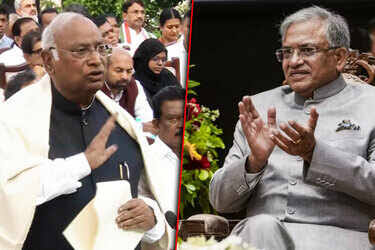
NEW DELHI: With Rahul Gandhi terming “public impeachment” and Sunday’s Ramlila Maidan rally a “dangerous political weapon” targeting Modi-Shah-Gyanesh, the INDIA bloc, in a symbolic move, Saturday passed a “resolution” to “impeach” CEC Gyanesh Kumar accusing it of colluding with the ruling BJP to compromise national election management. It also sought that Kumar be “tried for treason”. Six “charges” of “premeditated attack on poll process” – as part of “criminal conspiracy” of BJP, PM Modi and Union minister Amit Shah – span questionable handling of poll rolls, “manipulated” SIR to delete 14 crore voters, illegal changes to Form 6 to block new voters, deletion of voters through software. CEC Kumar has also been accused of ignoring the two ECs in decision making. The “public impeachment” held in the lawns of the residence of Congress chief Mallikarjun Kharge involved around 250 MPs from opposition. The venue was designed with Parliament chamber like decor, with former Speaker Meira Kumar in the high chair. LoP Rajya Sabha Kharge tabled the resolution while Rahul concluded the debate, before Meira Kumar put the resolution to vote that was passed by a voice vote. The slogan ‘vote chor gaddi chhod’ ended the assembly after three hours of debate. Setting the tone, Kharge said Modi has hatched conspiracies to retain power, which include engineering defections, splitting parties, electoral bonds, misuse of agencies, while adding the 2023 “immunity law” for the CEC is another such instrument. Underlining the need for “public impeachment”, Kharge said RS and LS rejected the opposition notices for removal of Kumar. Rahul said 15% of 2024 voters have been deleted by SIR, which means the LS polls were illegal. “I can comfortably say Kumar will not survive as CEC. We have enough proof. If BJP keeps him after we reveal what we know, then the BJP game would be clear,” he argued. Harendra Malik of SP said SIR has sought to target “PDA voters” of his party ahead of UP polls. Sagarika Ghose of TMC said 2026 Bengal polls were stolen after 29 lakh voters “vanished” under “Vanish Kumar’s SIR”. John Brittas (CPM), in a searing warning, said India should not be the Germany of 1930s, a parallel also drawn by Mamata TMC’s Mahua Moitra. Those who spoke were Mehbooba Mufti (PDP), Arvind Sawant (Shiv Sena), Abhay Sinha (RJD), NK Premachandran (RSP), Sandosh Kumar (CPI), Rajeev Rai (SP), Durai Vaiko (MDMK), Kapil Sibal, Jose Mani (KCM), Devarajan (FB), ET Muhammed Basheer (IUML), Sudama Prasad (CPI-ML), Nasir Aslam (NC), Thol Thirumavalavan (VCK), Baidyanath Ram (JMM). Civil society luminaries like Yogendra Yadav, Nikhil Dey, Sharukh Alam advocate, Anjali Bharadwaj, Noor Shridhar provided incisive arguments and data to put the EC in the dock. Neha Bora of AISA and NSUI volunteer Ritu Barala also spoke. Courtesy : TOI Note: This news is originally published on https:/timesofindia.com/bha and is used purely for non-profit/non-commercial purposes, especially human rights
India’s opposition set to hold mega rally seeking election chief’s resignation
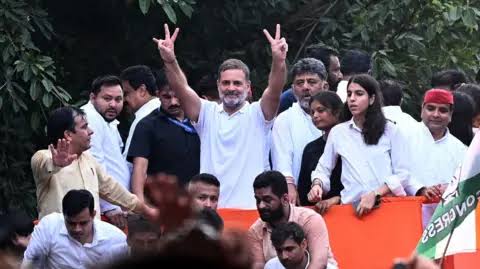
Tens of thousands of people are expected to gather in the Indian capital, Delhi, for a mega opposition rally, seeking the resignation of chief election commissioner and electoral reforms. The rally, called by the main opposition Congress party, will begin around noon at the famous Ramlila Maidan grounds, with leaders claiming a million people could attend. Several top leaders of the Congress-led INDIA alliance have said they would attend and the influential Gen Z-led pressure group Cockroach Janta Party (CJP) has also pledged support. The rally comes amid growing criticism of a voter-list revision exercise that has removed 130 million names from the draft rolls across India. The Election Commission of India (ECI) says the exercise is aimed at updating the voters’ list by purging names of people who have died or moved away from their registered addresses. But opposition parties allege that the exercise – known as the Special Intensive Revision (SIR) – could benefit Prime Minister Narendra Modi’s Bharatiya Janata Party (BJP) by removing eligible voters from the rolls. They accuse the Chief Election Commissioner (CEC) and the BJP of “vote chori (theft)”. Both the BJP and the ECI have denied the allegations. The controversy intensified in September when The Indian Express newspaper in its investigation reported that the CEC, Gyanesh Kumar, made key decisions related to the exercise without the agreement of the two other election commissioners, who had raised objections on more than a dozen occasions. NurPhoto via Getty Images Protesters form human chains while holding placards and Indian national flags demanding the resignation of Chief Election Commissioner Gyanesh Kumar over alleged irregularities in voter rolls and the scrapping of the Special Intensive Revision (SIR) of electoral rolls in Hyderabad, India, on October 24, 2026NurPhoto via Getty Images Protests have been going on for weeks seeking CEC Kumar’s resignation and electoral reforms The Election Commission said differences of opinion were normal in any institution and did not affect its functioning. But concerns over the revision process have continued, with the opposition parties, the CJP and student groups organising a number of protests in Delhi and other Indian cities. Last month, Congress MP and leader of the opposition Rahul Gandhi led tens of thousands of protesters in a march from Connaught Place in central Delhi to the Supreme Court, seeking the CEC’s resignation. “The march was just the trailer,” a party leader told the BBC, adding that “Sunday’s rally will be several times bigger than that”. Ahead of the rally, Gandhi said their protest was against “the demolition of Indian democracy”, adding that “all the opposition parties and everybody who wants to come, political or non-political, is welcome”. “There is huge anger, huge emotional pain because millions are being disenfranchised,” he said. “We are all standing together because we are defending the Constitution. We are defending the idea of India. We are defending the vote, which is the expression of all Indians.” Getty Images Protesters gather around a bus carrying Leader of the Opposition Rahul Gandhi during a demonstration on October 12, 2026 in New DelhiGetty Images Thousands gathered for the last Congress rally in Delhi on 12 October Delhi police have given permission to hold Sunday’s rally, but it comes with several conditions. Media reports say the rally must end by 5pm, CCTV cameras must be installed at the venue and no marches will be allowed outside the designated protest site. The planned mega rally has also divided opinion among traders in Chandni Chowk, one of Delhi’s oldest and busiest markets, located less than a kilometre from Ramlila Maidan. Earlier this week, a group of traders said the protest could hurt business during the festive season, coming just a week before Diwali. But a rival group of traders said they supported Gandhi’s rally and criticised the BJP for taking out a march through the market on Thursday, saying that disrupted the festive season more. Rekha Gupta/X Bharatiya Janata Party (BJP) National President Nitin Nabin (centre L) with Delhi Chief Minister Rekha Gupta (centre R) take part in a “Save Democracy, Remove Anarchy” protest march in New Delhi on October 28, 2026.Rekha Gupta/X Leaders of the ruling BJP party also carried out a march in Chandni Chowk market on Thursday Authorities have deployed thousands of police and paramilitary personnel across the city, including the roads leading up to Ramlila Grounds, Sunday’s protest venue. The opposition, which has been preparing for the rally for days now, has accused the government of trying to stop people from travelling to Delhi to take part in the protest. Rahul Gandhi has appealed to people to turn up in large numbers. “Don’t worry about the police, don’t worry about lathis [batons] – the BJP will not have the guts to try any of their antics,” he wrote on X. His comments come amid growing concerns about the policing of recent protests in the capital. On 10 October, thousands of security personnel were deployed and large parts of the city were shut down to thwart protests called by the CJP against CEC Gyanesh Kumar. All of the top CJP leaders were detained and many demonstrators were beaten and dragged through the streets to break up their protests. BBC reporters covering demonstrations saw police dragging away protesters and using batons on some of them. The CJP has publicly backed the INDIA bloc rally, but it is unclear whether its senior leaders will attend. Geeta Pandey and Nikita Yadav Courtesy : BBC Note: This news is originally published on https:/bbc.com/bha and is used purely for non-profit/non-commercial purposes, especially human rights
India Alliance Rally: Traders fear losses of ₹12,000 crore or gains of ₹50 crore? Rahul Gandhi has made a big move!
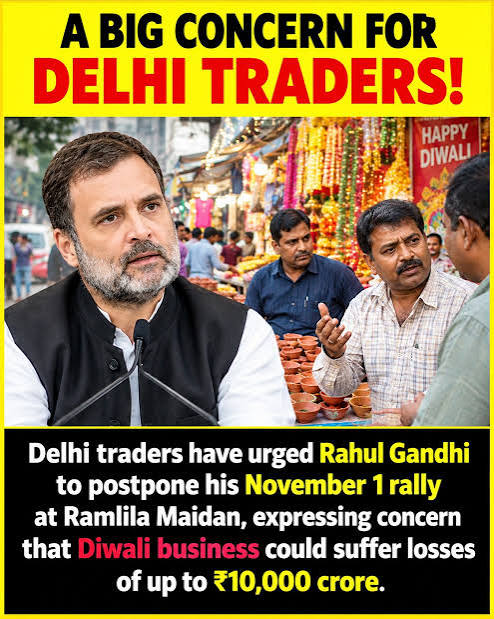
Congress Protest in Delhi: Traders fear losses due to Rahul Gandhi’s rally at Delhi’s Ramlila Maidan. According to trade organizations, business could be affected by up to ₹12,000 crore. However, markets are also expecting business worth up to ₹50 crore due to Rahul Gandhi’s appeal. Will the opposition rally benefit or harm Delhi’s traders? New Delhi: A major rally by the Congress and India Alliance is scheduled to be held today, November 1, 2026, at Delhi’s Ramlila Maidan. Congress and opposition parties have organized this protest against alleged irregularities in the voter list and Chief Election Commissioner Gyanesh Kumar. Rahul Gandhi, Congress President Mallikarjun Kharge, and leaders from several opposition parties are expected to attend the rally. The opposition alliance has claimed that around 1 million people will attend the rally. Meanwhile, Delhi’s business organizations and the BJP have raised questions about the impact of this rally on business. Meanwhile, Rahul Gandhi has also posted a business-related post on Instagram. He appealed to the millions of people attending the rally, “It’s the festival season. It’s the time of Diwali, Chhath, and Bhai Dooj. I want the millions of people coming to Delhi from outside to help the local businesses. Protest, march, rally, and do some shopping as well—it will benefit the businesses.” Some estimates suggest that people coming to Delhi from other states for rallies or other purposes often buy something. If Rahul Gandhi’s appeal works, Delhi’s businesses could benefit significantly from this rally. What are the businesses worried about? This rally, scheduled to be held at Ramlila Maidan, is expected to impact business in approximately 20 major markets in the capital. Business organizations claim that this could impact business worth between ₹10,000 and ₹12,000 crore per day. According to the Chamber of Trade and Industry (CTI), the rally is expected to disrupt business in major markets like Chandni Chowk, Sadar Bazaar, Chawri Bazaar, Khari Baoli, Connaught Place, and Daryaganj. These markets typically see a large crowd of customers during Diwali. Traffic jams, road closures, and police restrictions could make it difficult for customers to reach the shops. 1 million people expected to gather According to trade organizations, approximately 1 million people are expected to attend the rally. Additionally, 15,000 to 20,000 vehicles are expected. The large number of people and vehicles could cause heavy traffic jams in central Delhi. This could impact the movement of goods and services. Markets to remain open on Sundays Generally, major markets in Delhi, such as Sadar Bazaar, Chawri Bazaar, and Chandni Chowk, are closed on Sundays. Since it’s Diwali season, most shops in the markets are expected to remain open on Sundays. Because of this, it’s been said that the rally will impact business on Sunday. However, most big businesses keep their shops closed on Sundays. Benefits or losses from the rally? While the Congress rally is said to cause losses to businesses, another aspect also emerges. Whenever someone comes to Delhi from another state, they usually buy something. Since 1 million people are expected to attend the rally, if Rahul Gandhi’s appeal impacts the rally’s attendees, businesses could see substantial profits. Assuming an average person spends ₹500 on shopping, food, and drinks, then 1 million people will spend approximately ₹50 crore. This means that this amount will go into the pockets of Delhi’s businesses. How accurate is the claim of a loss of ₹12,000 crore? Business organizations claim that the rally could impact business by up to ₹12,000 crore. This figure could be significantly lower on Sunday. Major markets in Delhi typically see higher business volumes from Monday to Saturday. Sundays are closed, which reduces business. Therefore, traders can benefit from the purchases made by rally-goers during Sunday’s market hours. This means the rally will not significantly impact business due to the Sunday market closure. A chance for significant shopping in many places As festivals like Diwali, Bhai Dooj, and Chhath are approaching, and the cold has also arrived in a significant way, rally-goers may be interested in purchasing festival-related items, warm clothing, shoes, cosmetics, and makeup items. The wedding season is also about to begin, which could lead to increased business for these businesses. Curated by: Rajesh Bharti About the Author Rajesh Bharti is an Assistant News Editor at Navbharat Times (Digital). He joined Navbharat Times, the digital wing of the Times of India Group, in July 2024. Rajesh Bharti works on the Business Desk at NBT Digital. Courtesy: Hindi News
India’s poverty will be down from 14.2% to 12.1% in 2 years: World Bank
NEW DELHI: World Bank has said that poverty in India, defined at $4.2 a day, will decline from 14.2% in 2026 to 12.1% by 2028. Between 2011 and 2023, it is estimated that the share of the population living below $4.2 a day declined from 57.7% to 16.1%, lifting an estimated 496 million people out of poverty. It said that extreme poverty ($3 a day) declined from 27.1% to 2.6% during this period. “This progress was mainly driven by strong consumption growth; rising employment, especially among women; and expanded social transfers, including food subsidies. As poverty declined, it became increasingly concentrated among households with lower education, fewer assets, limited access to stable employment, and higher dependency ratios. Wage disparities, however, remain pronounced, as median earnings among the top 10% of workers were about 13 times those of the bottom 10% in 2023,” World Bank said in its latest Poverty & Equity brief. Finance minister Nirmala Sitharaman cheered the decline in poverty in the country, pointing out that the report recognised India’s progress as a country with one of the fastest poverty declines in the world. “Under the leadership of PM Narendra Modi, govt’s sustained policy efforts are yielding tangible results, strengthening the foundations for inclusive growth and greater economic opportunity. This is the reason why NDA govt wins people’s trust and mandate of our citizens. We remain committed to building on this progress through productive employment, stronger household incomes and effective delivery of public services, so that aspirations of our people are met,” she posted on X. World Bank also noted that between 2017 and 2023, employment increased by about 134 million people, nearly twice the growth of the working-age population, with major gains driven by rural women entering paid work and raising the number of earners in households. “Labour market conditions continue to be broadly resilient, with labour force participation and employment rates stable between Q1 FY 2026 and Q1 FY 2027. However, youth unemployment rose from 14.6% to 15.9% between the two quarters, particularly among rural young women. Moreover, real earnings remained broadly unchanged with employment growth concentrated in relatively low-productivity activities,” it said. Courtesy : TOI Note: This news is originally published on https:/timesofindia.com/bha and is used purely for non-profit/non-commercial purposes, especially human rights
BJP mock Parliament cruel joke on democracy: Congress
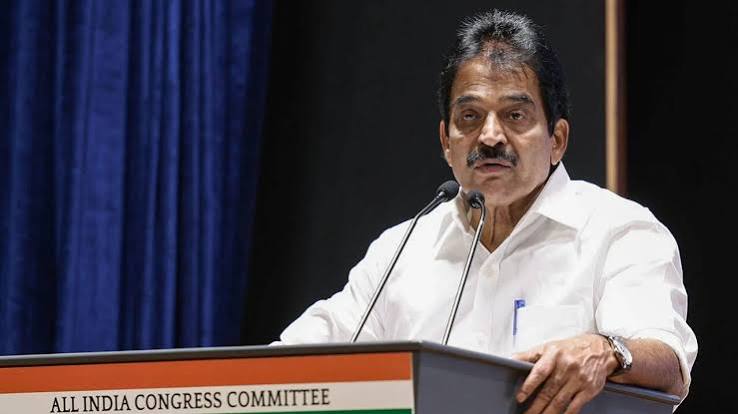
NEW DELHI: Congress Friday mocked the “BJP-sponsored mock parliament” in the capital as a “cruel joke”, even as opposition was forced to postpone its “public impeachment” of CEC Gyanesh Kumar to Saturday because of bad weather. Congress general secretary KC Venugopal claimed “BJP-sponsored outfits” held a ‘mock parliament’ Friday after BJP has made a “mockery” of Parliament for the last 12 years. “First treat Parliament as rubber-stamp to steamroll bills and silence opposition and now run a ‘mock parliament’ to make a cruel joke of democracy,” he said, referring to a ‘mock parliament’ on ‘democracy vs anarchy’ at NDMC Convention Centre. Amid rain and flanked by INDIA bloc members, Congress MP Rahul Gandhi Friday invited all to attend the Nov 1 “Chalo Dilli” rally at Ramlila Maidan. Courtesy : TOI Note: This news is originally published on https:/timesofindia.com/bha and is used purely for non-profit/non-commercial purposes, especially human rights
Rahul Gandhi vs Nirmala Sitharaman round 2, this time over IDBI Bank stake sale
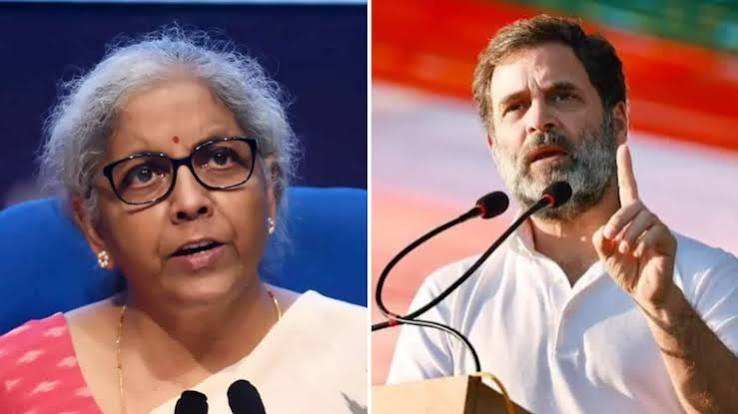
NEW DELHI: Congress’s Rahul Gandhi and finance minister Nirmala Sitharaman sparred on social media over govt’s decision to sell its stake in IDBI Bank with the leader of the opposition in Lok Sabha backing protesting employees.A day after he wrote to “members of the IDBI bank family”, Rahul accused govt of selling banks in contrast to banks being established during Congress’s tenure. “During Congress’ time, IDBI was established – to build the nation’s industry. During Modi’s time, first the bidding was seen, then the price was set,” he posted on X. He also questioned the need to sell stake in the bank, which registered a profit of Rs 9,000 crore last year. Responding to him, Sitharaman accused Congress of using banks and financial institutions as “personal entities” and pressurising employees to “extend loans at their whim, bypassing prudent lending norms”. She said Modi govt inherited IDBI Bank, which was in poor shape, as Congress politicians forced it to lend money to business houses, such as Videocon, Winsome Diamond, ABG Shipyard and Kingfisher, with which they had close ties. “These turned into bad loans, causing huge losses for IDBI Bank, which we recognised.” She said with a recapitalisation of Rs 25,000 crore, Modi govt brought it back to health. “IDBI Bank is now poised for its next phase of growth,” FM said, while asserting that due process has been followed in the “strategic restructuring” of IDBI, rebutting reports of govt not following rules while finalising the transaction, which will generate over Rs 52,000 crore for Centre and LIC. “Congress-era banking had a phonebook for the powerful and a rulebook for common citizens. The era of ‘connection and setting banking’ is over. Common people now have easy access to loans, and employees are not under pressure to extend loans on the phone calls,” she said. IDBI Bank unions have called a strike on Nov 2 and 3 against govt’s move to sell its stake. Rahul backed the employees. “I stand with you in your fight today, and fully support all your legitimate demands,” he said. Rahul said he had asked a question in Parliament about the reason for the decision to sell a profitable bank. “Govt gave no reason. Now it has decided to sell IDBI Bank to Fairfax, a Canadian company,” he wrote, referring to his meeting with employees last March. Courtesy : TOI Note: This news is originally published on https:/timesofindia.com/bha and is used purely for non-profit/non-commercial purposes, especially human rights
Rahul Gandhi says ‘Chalo Dilli’ march a singular protest for nation; urges people to join to save democracy
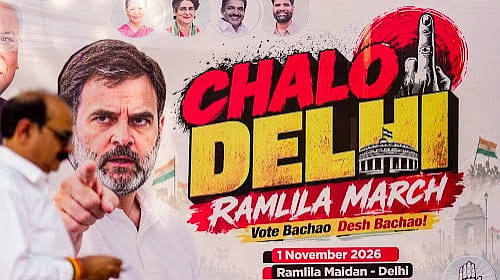
In a video on X, Rahul Gandhi said it is a singular protest for the nation, urging student groups, regardless of their political affiliations, to join the march. Congress leader Rahul Gandhi on Thursday urged student groups, regardless of their political affiliations, to join the INDIA bloc’s November 1 march in Delhi to save democracy, stop “vote theft” and protect the Constitution. In a video on X, Gandhi said it is a singular protest for the nation. “The ‘Chalo Delhi’ Ramlila March is a march to save democracy, to put an end to the theft of votes, and to protect the Constitution,” the leader of opposition in the Lok Sabha said. This is not a march for any single political party; it is a march for the very soul of India, he asserted. “To all those who are fed up with Narendra Modi, Amit Shah and Gyanesh Kumar, and everyone who wishes to save democracy and defend the Constitution, I invite you all to join,” Gandhi said. Don’t worry about police, don’t worry about lathis. The BJP will not have the guts to try any of their antics, he said. “Come march with us – we will walk together to protect the Constitution, to protect the Indian nation,” he said. “I urge all student groups, regardless of your political affiliation – if you feel that India is under attack, if you feel you are under attack, your expression, your ideas, your way of thinking is under attack, come and join us,” he said. “It will be a fantastic march, and it’s a march for the soul of this country,” Gandhi said. “Looking forward to seeing all of you there,” he added. The INDIA bloc will be holding a “public impeachment” proceeding against Chief Election Commissioner Gyanesh Kumar on October 30 at Congress president Mallikarjun Kharge’s 10, Rajaji Marg residence, over alleged irregularities in the Special Intensive Revision of electoral rolls. After the public impeachment, there will be ‘Dilli Chalo March’ against “vote chori” culminating at Ramlila Maidan on November 1, and a rally will be held there. Courtesy : TNIE Note: This news is originally published on https:/thenewindianexpress.com/bha and is used purely for non-profit/non-commercial purposes, especially human rights
“Banks were created during the Congress regime, but are sold during Modi’s rule,” Rahul Gandhi lashed out at IDBI Bank’s privatization, offering support to employees.
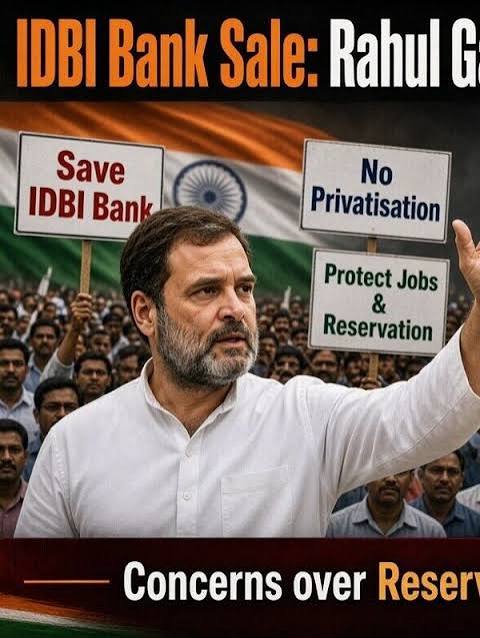
Congress MP Rahul Gandhi has targeted the central government over the privatization of IDBI Bank. He sarcastically said, “Banks were created during the Congress regime, but are sold during Modi’s rule.” He also expressed support for the bank employees’ protest and pledged his support. New Delhi: Congress MP and Leader of the Opposition in the Lok Sabha, Rahul Gandhi, has targeted the Narendra Modi government over the privatization of IDBI Bank. He alleged that the government first called for bids to purchase the bank and then fixed its price. Rahul Gandhi said that during the Congress regime, banks were created for the country’s industrial development, whereas under the Modi government, public sector banks are being sold. He has pledged his support for IDBI Bank employees. On Friday, Rahul Gandhi posted on the social media platform X, writing, “IDBI was created during the Congress regime to build the country’s industry.” During Modi’s tenure, bids were first reviewed, then the price was finalized. Banks were created during Congress’s tenure. They are sold during Modi’s tenure. I stand with the employees of IDBI Bank. Rahul Gandhi writes a letter to IDBI employees Rahul Gandhi has written a letter addressing the employees of IDBI Bank. In the letter, Rahul Gandhi explained that in March last year, a delegation of bank employees met him in Parliament. The employees questioned why the government was selling the bank he had brought to profit. According to Rahul Gandhi, “He raised this issue in the Lok Sabha, asking the government why a profitable public sector bank needed to be sold and how the interests of its employees and depositors would be protected. He alleged that the government failed to provide a satisfactory answer to this question. Now, the decision has been made to sell the bank to the Canadian company Fairfax.” ‘The bank went from losses to profits of ₹9,000 crore in 7 years’ Rahul Gandhi, in his letter, highlighted IDBI Bank’s performance, saying it began as a development bank. The subsequent transition to a commercial bank wasn’t easy, but the employees overcame the challenges. He claimed that about seven years ago, IDBI Bank was incurring losses, but last year, the bank earned profits of over ₹9,000 crore. Rahul Gandhi credited the bank’s employees for this turnaround, saying it was the result of their hard work. Objection raised to the reduction of government stake The Congress MP also questioned the change in the bank’s ownership. He said that currently, the government and LIC hold approximately 95% of IDBI Bank. After privatization, this stake will be reduced to approximately 34%. Rahul Gandhi also referred to the promise made in Parliament in 2003, in which the government had pledged to retain at least a 51% stake in IDBI Bank. He said that even if this promise is not enshrined in law, a promise made in Parliament is a promise made to the people of the country. He expressed concern that reservations for SC, ST, and OBC categories could be eliminated after the bank goes into private hands. He assured IDBI Bank employees that he stands with them in their struggle and fully supports all their legitimate demands. Why is IDBI Bank in the news? The IDBI Bank privatization issue involves selling the government’s stake and transferring control of the bank to a private foreign company. The central government has approved the sale of 60.72% of IDBI Bank’s stake to Canadian company Fairfax. This deal is worth approximately ₹52,878 crore. When was IDBI Bank established? IDBI Bank was established in 1964 to boost the country’s industrial development. Its purpose was to provide loans to companies and large projects. The bank was established in 1964 when it was formerly owned by the RBI. Its ownership was transferred to the Central Government in 1976. Why are bank employees protesting? Reservation issue: Whether the reservation system for SC, ST, and OBC categories in public sector banks will continue after becoming private banks is a major question. Employees are vocal about this issue. Job security: There is a fear that service conditions, promotions, and job security will be affected after private management comes into place. Public control: Employees believe that public sector control should remain over banks built with public money. Authored by: Abhishek Pandey About the author Abhishek Pandey is a digital journalist at Navbharat Times. He joined Navbharat Times, the digital wing of the Times of India Group, in July 2025. He currently covers news for the National and Delhi desks. I have 4 years of experience in journalism, working as a reporter and on the desk. Courtesy: Hindi News
Supreme Court cancels bail of expelled JD(U) leader Anant Singh in Dularchand Yadav murder case
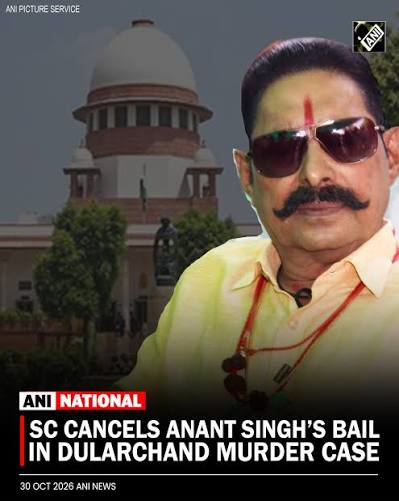
NEW DELHI: The Supreme Court on Friday cancelled the bail granted to expelled JD(U) leader Anant Singh in the murder case of Dularchand Yadav and directed him to surrender before the authorities on or before December 1, 2026. A bench of Justices MM Sundresh and PV Varale observed that the Patna high court had erred in granting bail to Singh without considering the nature of the offence and his criminal antecedents. The Supreme Court suspended the high court’s order and cancelled the bail granted to Singh, directing him to surrender within the stipulated deadline. Courtesy : TOI Note: This news is originally published on https:/timesofindia.com/bha and is used purely for non-profit/non-commercial purposes, especially human rights
Yet to test legality of logical discrepancy in SIR: Supreme Court
NEW DELHI: The Supreme Court on Wednesday said that even though the validity of SIR in Bihar was upheld, the court had no occasion to test the legality of the ‘logical discrepancy’ criterion as it was not used during the Bihar exercise. When EC’s counsel referred to smooth conduct of Bihar and West Bengal elections after SIR, the bench said, “Logical discrepancy (mode for deletion) was first resorted to in West Bengal. We are yet to examine its validity. We will go into logical discrepancy in detail later.” When petitioner Anjali Bhardwaj’s counsel claimed that lakhs of voters were deleted from the draft Delhi rolls on grounds of ‘logical discrepancy’, the bench asked how EC could reopen entries in the 2003 voter list and issue notices for logical discrepancy.“In a voter enumeration exercise like SIR, EC has taken the 2003 voter list as the base. If that is so, how could it classify those whose names figured in that list as ineligible on grounds of logical discrepancy? Can EC go beyond the list and reopen it?” the bench asked. During the last hearing, the bench had suggested that EC examine putting additional filters to avoid mechanical issuance of notices under ‘logical discrepancy’. SC: Can EC go beyond 2003 list to scrutinise logical discrepancy? In a voter enumeration exercise like SIR, EC has taken the 2003 voter list as the base. If that is so, how could it classify those whose names figured in that list as ineligible on grounds of logical discrepancy? Can EC go beyond the list and reopen it?” the bench asked. During the last hearing, the bench had suggested that EC examine putting additional filters to avoid mechanical issuance of notices under ‘logical discrepancy’. Opposition INDIA bloc functionaries, led by Rahul Gandhi, have filed a joint petition challenging many issues, including the SIR process, and questioned the allegedly arbitrary non-inclusion of names because of ‘logical discrepancy’. In its May 27 judgment, SC had examined the following questions — whether EC had the power to conduct SIR; whether SIR had a legitimate purpose and the process was proportionate to the object to be achieved; and whether the SIR procedure was contrary to Representation of the People Act, 1951, and Registration of Electors Act, 1960 — and found that there was nothing amiss in the conduct of SIR or the process adopted to achieve the object of weeding out voters who had died, shifted house or had duplicate entries. SC had categorically ruled that the SIR exercise “neither stands in direct conflict with RP Act and 1960 Rules, nor does it detract from the constitutional imperative of free and fair elections”. It had said, “The impugned SIR exercise, as conducted, satisfies the requirements of proportionality. The measures adopted bear a rational nexus to the objective sought to be achieved, are not manifestly excessive, and are accompanied by sufficient procedural safeguards to prevent arbitrary exclusion. “We are equally satisfied that, in its object and design, the impugned SIR bears a direct nexus to the constitutional goal of free and fair elections. Free and fair elections do not rest merely upon the mechanics of polling. They equally depend upon the integrity, accuracy and purity of the electoral roll which forms the foundation of the democratic process.” Courtesy : TOI Note: This news is originally published on https:/timesofindia.com/bha and is used purely for non-profit/non-commercial purposes, especially human rights